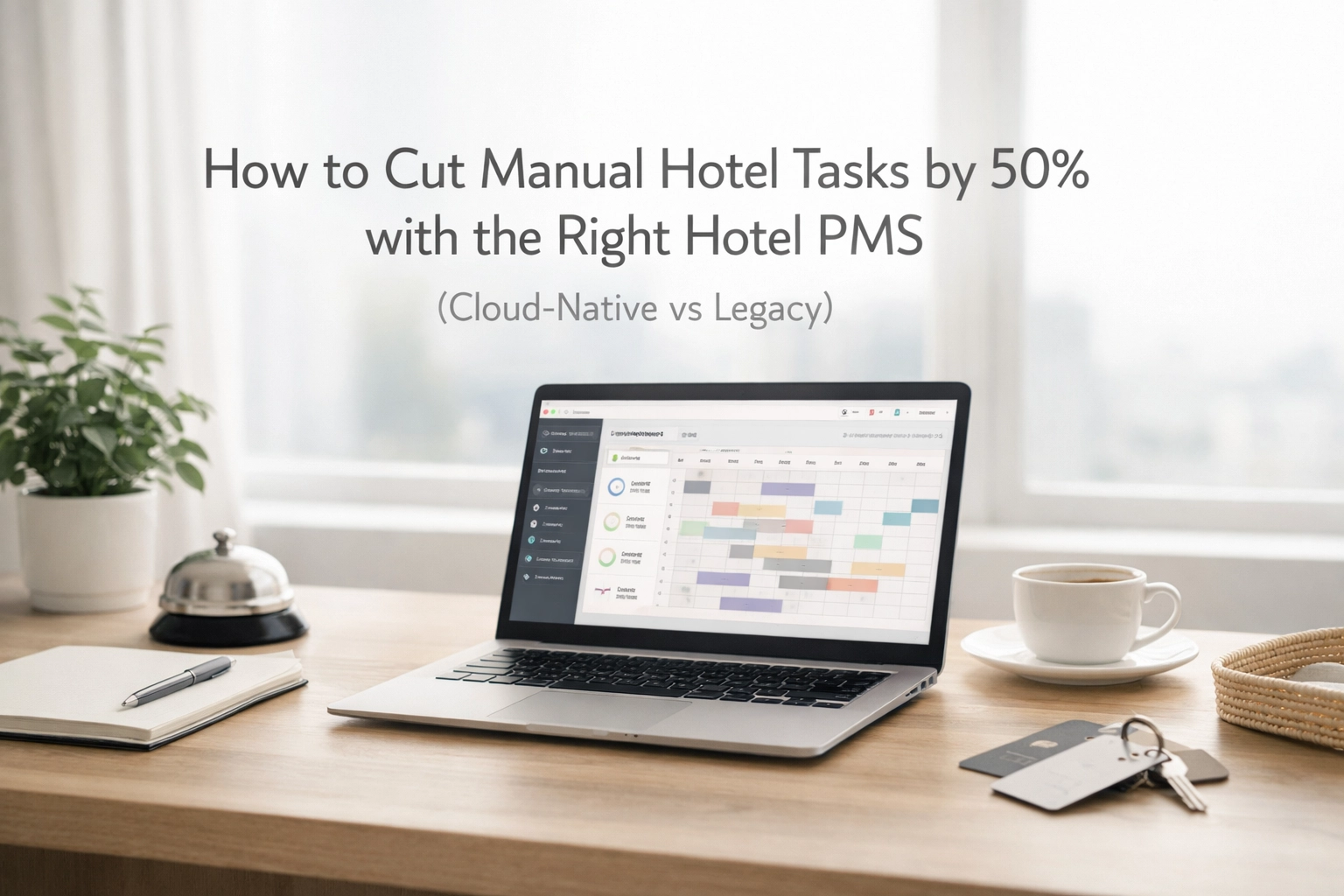
Your front desk team is drowning in spreadsheets. Your housekeeping staff is chasing down room statuses. Your night auditor is manually reconciling payments until 3 AM.
Sound familiar?
Here's the thing, 63.5% of that manual work could disappear with the right hotel PMS. Not "could maybe possibly help a little." Actually vanish.
The difference? Cloud-native architecture versus legacy systems built in the early 2000s that were never meant to handle modern hotel operations.
The Real Cost of Manual Tasks
Every manual task in your hotel costs you three things: time, money, and guest experience.
Let's talk numbers. The average hotel wastes 16 hours per employee per week on tasks that could be automated. That's two full workdays. Multiply that across your entire team, and you're looking at dozens of hours weekly that could be spent on actual hospitality, not data entry.
Manual reservation processing. Double-checking channel manager updates. Chasing payments. Updating housekeeping boards. Printing folios. Re-entering guest information across multiple systems.
All of it adds up. And all of it is unnecessary with a modern hotel PMS.
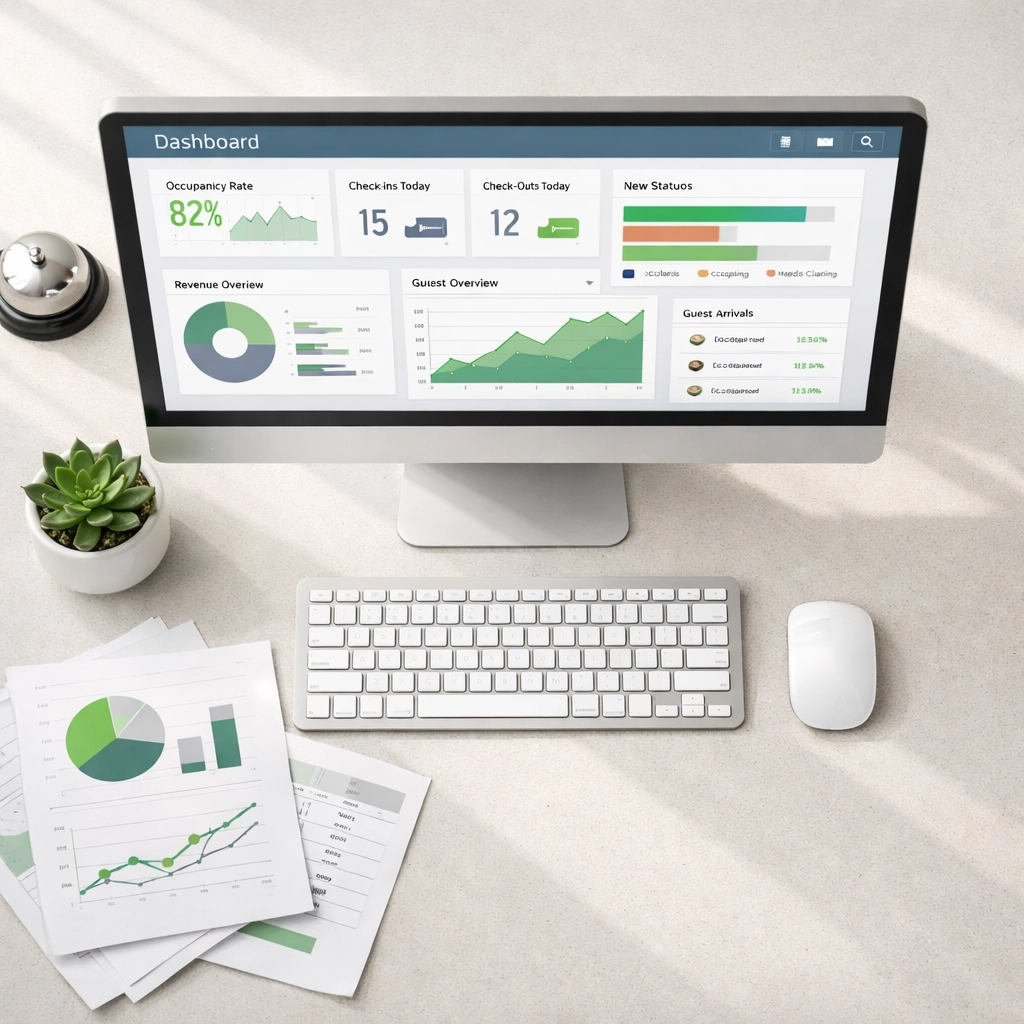
Cloud-Native vs Legacy: What's Actually Different?
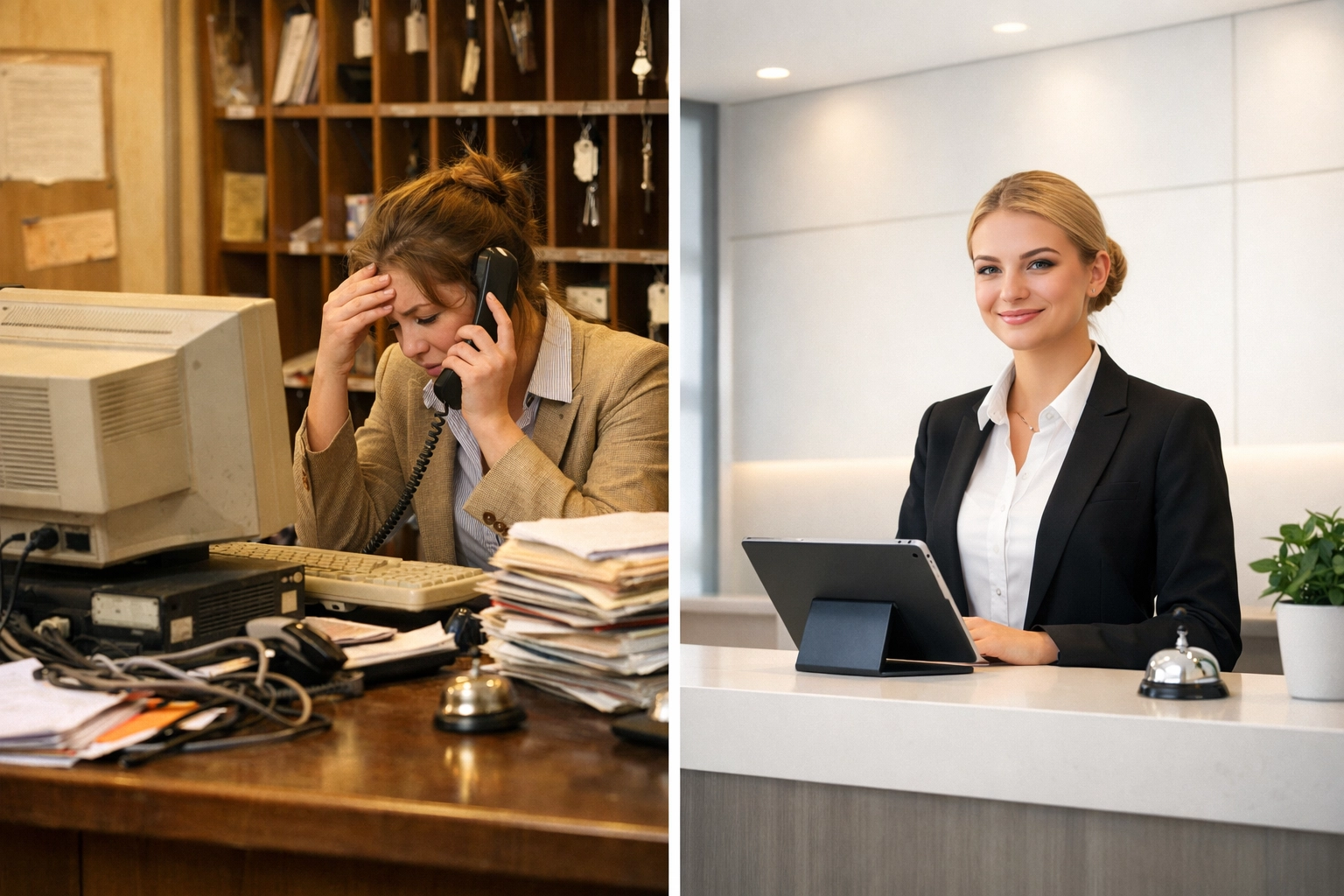
Legacy systems weren't built for automation. They were built for record-keeping.
Cloud-native systems were designed from the ground up to eliminate manual work through intelligent automation and real-time connectivity.
Legacy PMS Systems:
- Require manual updates between modules
- Store data in isolated silos
- Need IT staff for maintenance and updates
- Force you to train staff on complicated interfaces
- Crash during peak check-in times
Cloud-Native PMS Systems:
- Sync automatically across all tools in real-time
- Connect your booking engine, channel manager, CRM, and operations seamlessly
- Update instantly without downtime
- Work from any device, anywhere
- Scale with demand during busy periods
The architecture matters. Legacy systems treat automation as an add-on. Cloud-native platforms build it into every function.
Where Automation Actually Cuts Manual Work
Let's get specific about where you'll see that 50% reduction.
Reservations and Bookings
Your booking engine connects directly to your PMS. No manual entry. A guest books online at 2 AM, the reservation flows automatically into your system, updates room availability across all channels, and triggers a confirmation email.
Properties using integrated booking systems see a 25% increase in bookings simply by eliminating the friction of manual processing. Guests can book faster. Your team isn't stuck entering reservations one by one.
No double-bookings. No missed revenue. No guests arriving to "We don't have your reservation."
Channel Management
Remember logging into five different OTA extranets to update rates and availability? That's over.
A proper channel manager integrated with your cloud-native PMS updates all channels simultaneously. You change a rate once: it pushes everywhere instantly.
One hotel reported saving their revenue manager 12 hours weekly just by eliminating manual rate updates. That's 624 hours annually. More than a full-time employee's worth of work, gone.
Payment Processing and Billing
Automated payment processing removes the entire manual reconciliation nightmare. Payments post automatically. Invoices generate without touching a keyboard. No more night audit spreadsheet marathons.
The average property saves 16 hours per week per employee through payment automation alone. Think about what your team could do with that time back.
Housekeeping Operations
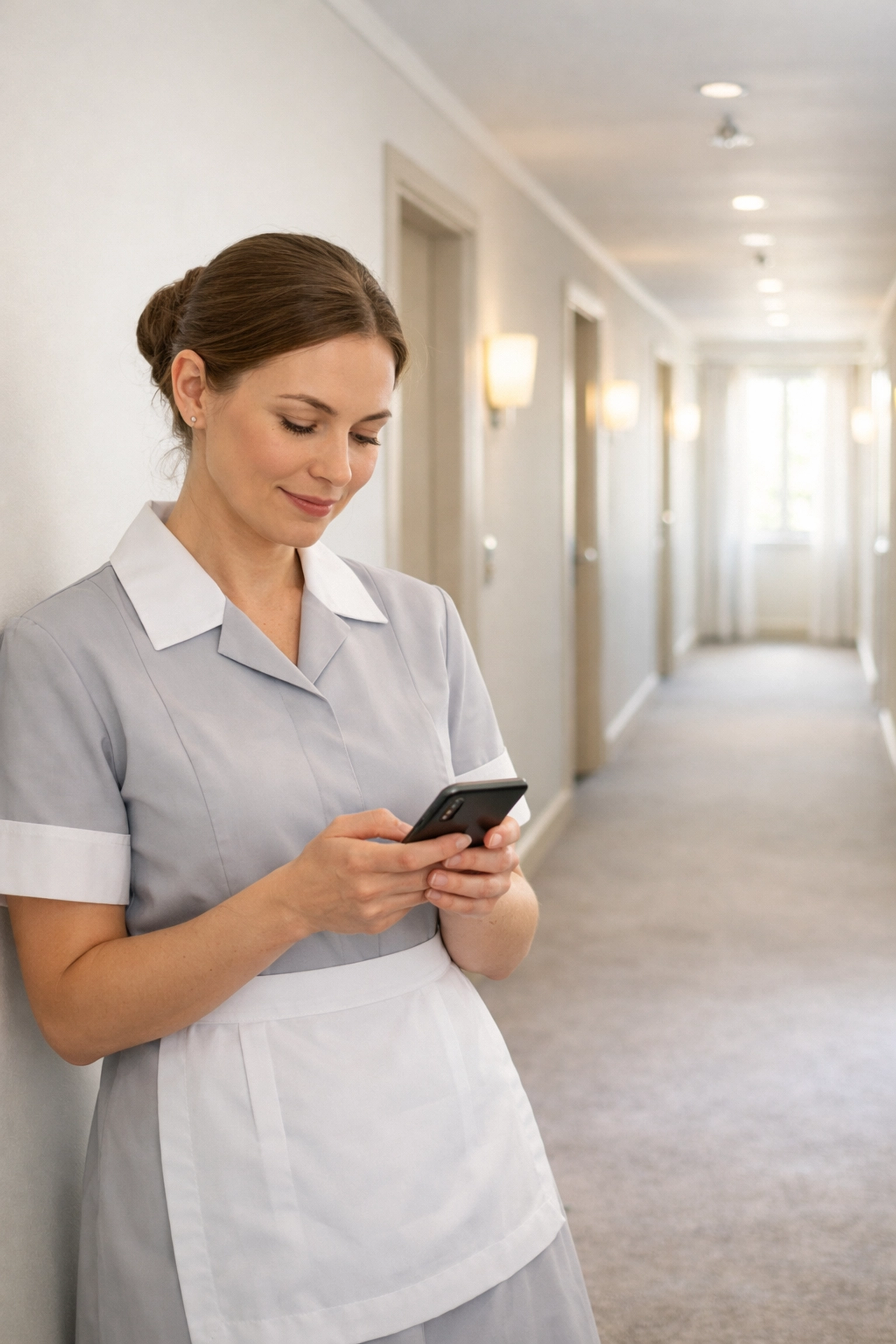
Real-time room status updates change everything. When a guest checks out, housekeeping sees it immediately on their mobile device. When a room is cleaned, the front desk knows instantly.
No more radio calls. No more whiteboard updates. No more guests waiting in the lobby because "we thought that room was still dirty."
Guest wait times drop. Staff coordination improves. Everyone knows the actual status of every room, always.
Guest Communication and CRM
Your CRM should work for you, not create more work. Pre-arrival emails, upsell offers, post-stay feedback requests: all triggered automatically based on guest journey stages.
Personalized without being manual. Relevant without requiring staff to remember every guest preference.
One property manager told us: "We went from spending 10 hours a week on guest emails to maybe 30 minutes checking automated campaigns. The guests get better communication, and my team gets their evenings back."
Staff Onboarding and Training
Here's one people don't talk about enough: training new staff on legacy systems takes forever. Complicated interfaces, weird workarounds, undocumented processes.
Cloud-native systems cut training time by 50% because they're actually intuitive. Your new front desk agent can learn the system in a day, not a week.
Less training time means faster onboarding, which means you're not short-staffed as long when someone leaves.
Self-Service Changes Everything
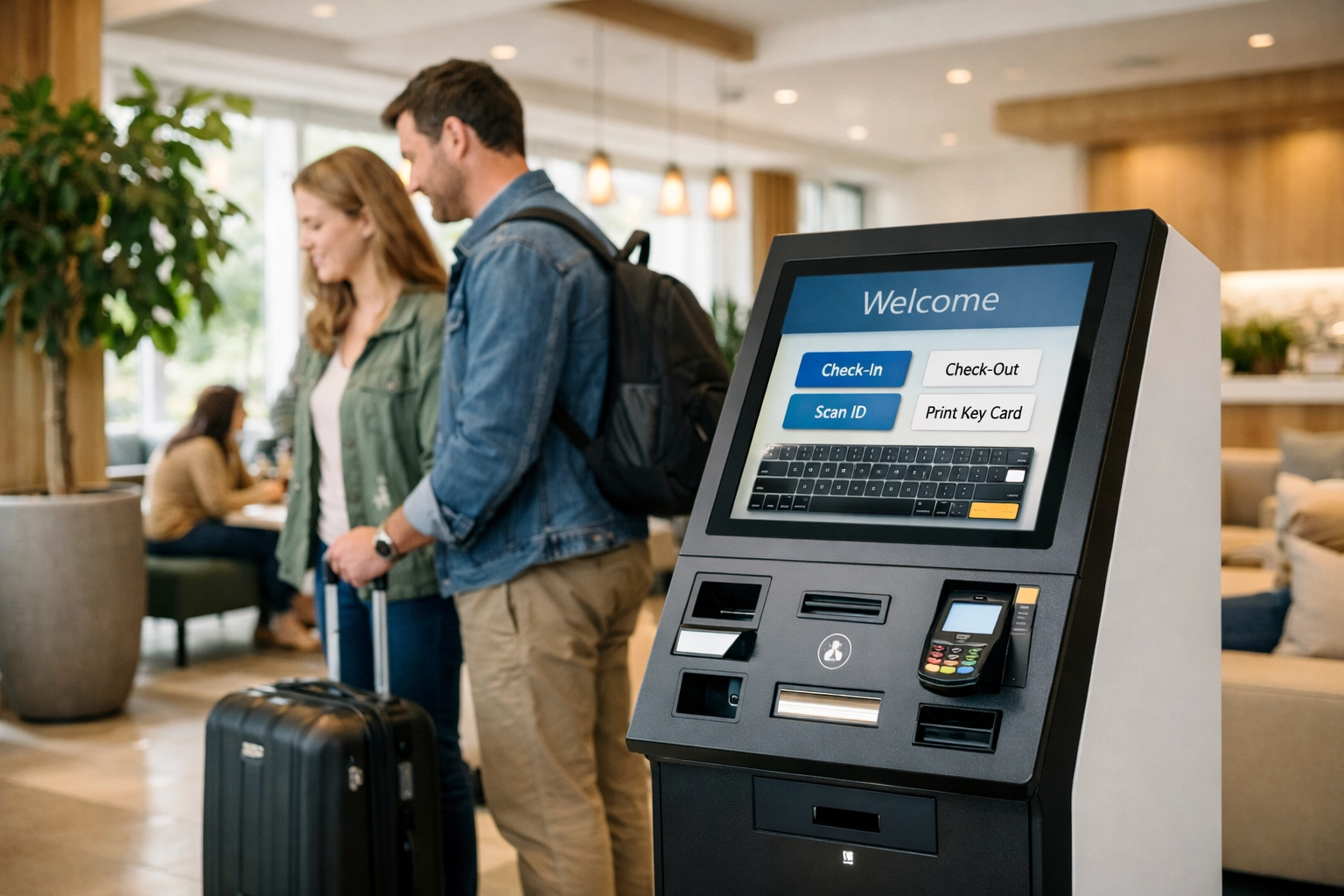
Self-check-in kiosks represent the ultimate manual task reduction. Guests check themselves in. They select their room. They get their key. Your front desk handles exceptions and hospitality, not transactions.
Properties using self-service check-in reduce front desk transaction time by up to 70%. During peak arrivals, that's the difference between a calm lobby and complete chaos.
Guests arriving at midnight don't need to wake up a staff member. Business travelers can check in during their Uber ride from the airport. Families can take their time without holding up a queue.
You still have staff available for guests who need help. But the routine transactions? Automated.
The Numbers Don't Lie
Let's bring it all together with real impact:
- 63.5% increase in overall operational efficiency
- 25% more bookings through integrated booking engines
- 16 hours saved per employee weekly through payment automation
- 50% reduction in staff training time
- 90% fewer no-shows through automated confirmations and reminders
That's not theory. That's what happens when you replace manual processes with intelligent automation.
Making the Switch
Moving from a legacy system to cloud-native doesn't mean months of downtime and chaos. Modern platforms like Mews handle migration smoothly: your data transfers, your staff gets trained, and you're live faster than you think.
The process looks like this:
- Data migration: Your existing reservations, guest profiles, and historical data move automatically
- Team training: Intuitive interfaces mean days, not weeks, of training
- Integration setup: Connect your booking engine, channel manager, and payment processor
- Go live: Start cutting manual tasks immediately
Most properties are fully operational on a new system within 2-4 weeks. Compare that to the years you'll spend doing manual work on your current legacy system.

The Cloud-Native Difference
Here's what we believe: Hotel technology should eliminate work, not create it. Systems should be so intuitive that training takes hours, not weeks. Automation should be built-in, not bolted on.
That's why Mews built a cloud-native hotel PMS from scratch. No legacy code. No complicated workarounds. Just a platform designed for modern hoteliers who want to focus on hospitality, not manual tasks.
Every function connects automatically. Your booking engine, channel manager, CRM, payment processing, and housekeeping operations work together seamlessly. Updates happen in real-time across every device.
The result? Manual tasks cut by 50% or more. Teams working on guest experience instead of spreadsheets. Properties operating efficiently even during peak periods.
Ready to see what actual automation looks like? Check out Mews and discover how cloud-native technology eliminates the manual work holding your property back.
Your team deserves better than endless data entry. Your guests deserve better than "the system is slow." And your property deserves technology that actually works the way hotels operate today.
Leave a Reply