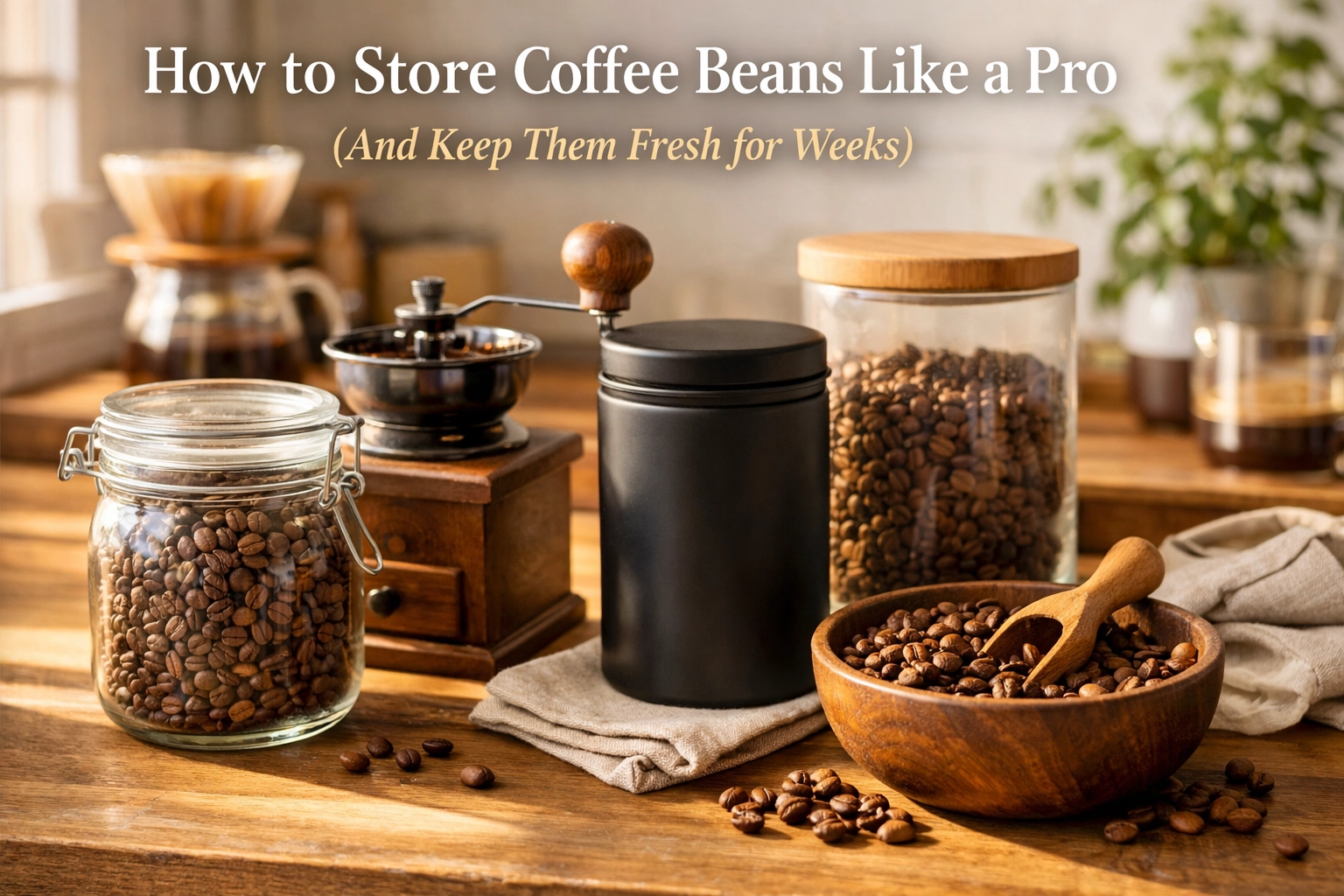
You've just bought a bag of beautiful speciality coffee. Maybe it's from Limini Coffee, roasted fresh that very morning. The aroma when you open it? Incredible. But here's the thing, that freshness won't last forever if you don't store it properly.
Most people don't realise how quickly coffee can lose its magic. Within days of improper storage, those complex flavours and aromas start fading. The good news? With a few simple practices, you can keep your beans tasting fantastic for weeks after opening.
So let's talk about how to store coffee beans like a proper coffee geek (without actually needing to be one).
The Four Enemies of Fresh Coffee
Think of coffee beans as little flavour treasure chests. Inside each bean are hundreds of aromatic compounds and oils that create all those delicious notes you love, chocolate, berries, caramel, nuts. But these compounds are incredibly vulnerable.
There are four main culprits that destroy coffee freshness:
Air (Oxygen) is the biggest villain. When oxygen comes into contact with your beans, it triggers oxidation. This is the same process that makes apples turn brown or metal rust. For coffee, it means those precious volatile compounds break down and disappear. The result? Flat, stale coffee that tastes like cardboard.
Light accelerates the degradation process. UV rays break down the organic compounds in coffee beans, much like how sunlight fades furniture or photographs. Even indirect light over time will dull your coffee's character.
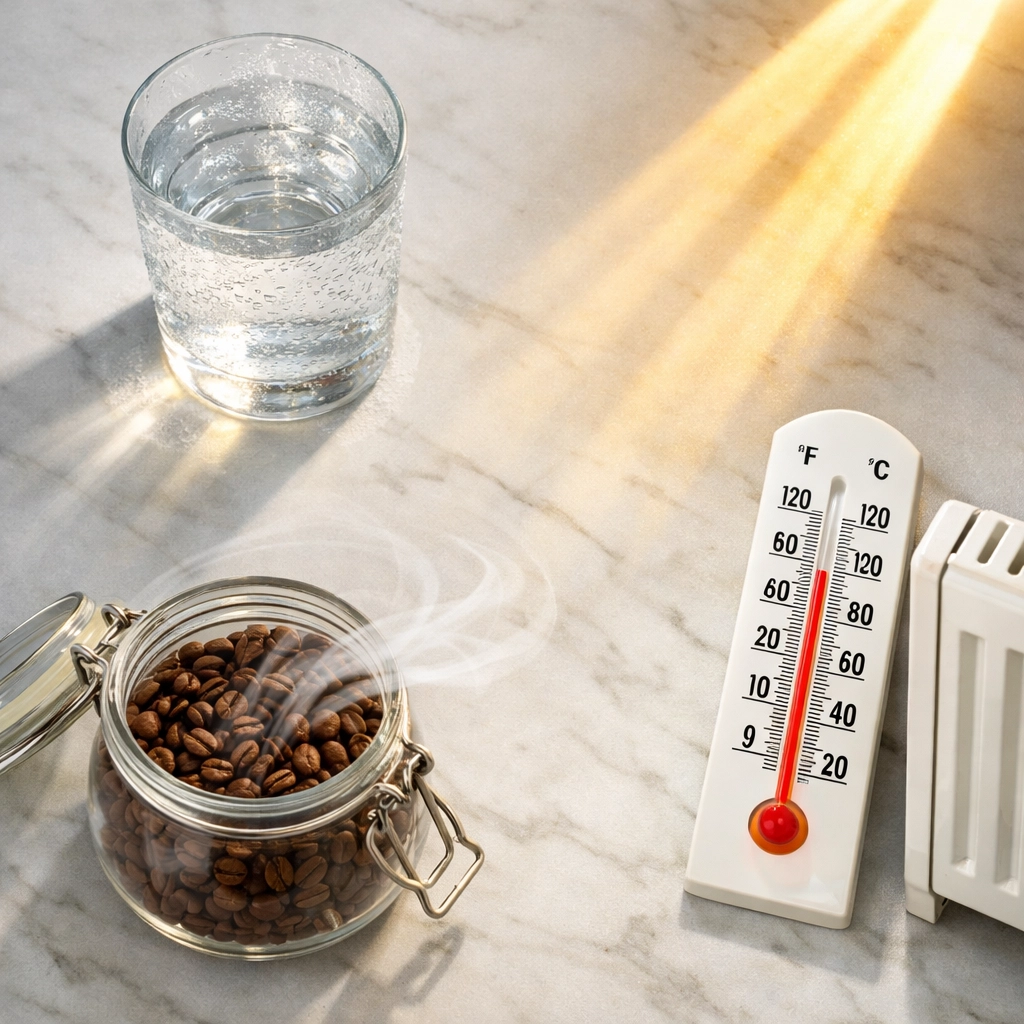
Heat speeds up all chemical reactions, including the breakdown of flavour compounds. Coffee stored in warm environments loses its freshness significantly faster. Those lovely oils become rancid, and delicate aromatics evaporate.
Moisture is perhaps the sneakiest enemy. Coffee beans are porous and will absorb moisture from the air. This doesn't just make them stale, it can actually cause mould growth. Plus, wet beans extract poorly and taste absolutely terrible.
Understanding these enemies is half the battle. Now let's talk about how to protect your beans.
Choose the Right Container
Not all containers are created equal when it comes to coffee storage.
Your first priority is finding something airtight. We're talking a proper seal here, not just a lid that sits on top. Every time air gets in, oxygen attacks your beans. So after each use, make sure that lid clicks or seals properly.
Opaque containers are better than clear ones. If you love those glass jars for aesthetic reasons (and honestly, whole beans do look gorgeous), at least store them inside a dark cupboard away from any light source.
The best storage containers have one-way valves. These clever designs let CO2 escape (fresh roasted beans release carbon dioxide for days after roasting) while keeping oxygen out. If you're serious about coffee, investing in one of these containers is worth every penny.
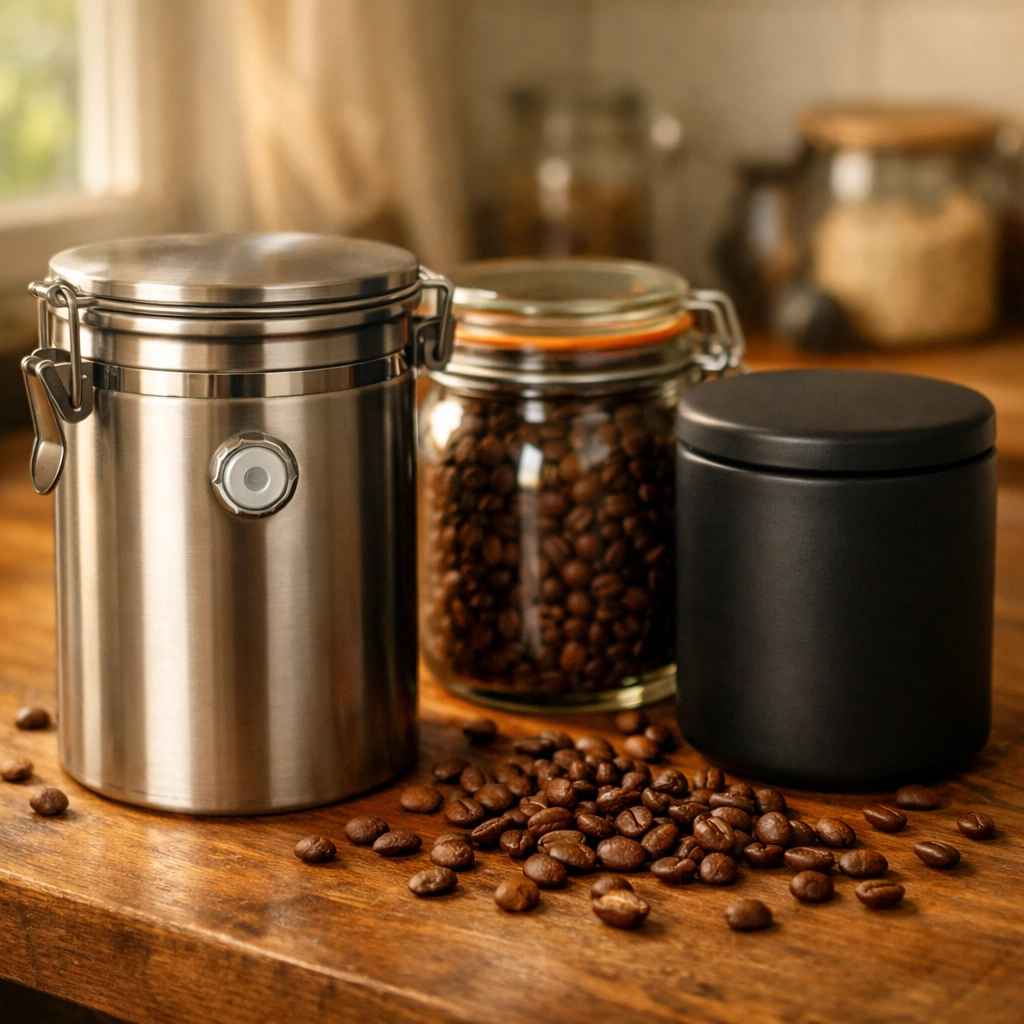
Mason jars work in a pinch, as do stainless steel canisters with rubber seals. Even the bag your coffee came in can work well initially, many roasters use bags with one-way valves and zip seals. Just make sure you squeeze out excess air before sealing it up.
What doesn't work? Those decorative tins with loose lids, open bowls, or anything that lets air flow freely. And please, never store beans in the grinder hopper. We know it's convenient, but those beans are sitting there exposed to air 24/7.
Location, Location, Location
You've got the right container. Now where do you put it?
Cool and dark is the golden rule. Think pantry, cupboard, or drawer: somewhere away from windows and heat sources. The ideal temperature is between 15-24°C (that's roughly 60-75°F).
Here's where people often go wrong: storing coffee near the stove, oven, or coffee machine itself. These appliances radiate heat, and even that subtle warmth degrades your beans faster than you'd think. So find a spot that maintains a stable, moderate temperature.
Avoid anywhere humid. This means not in the bathroom (obviously), but also be cautious with cupboards above dishwashers or near sinks. If you live in a particularly humid climate, you might need to be extra vigilant about airtight storage.
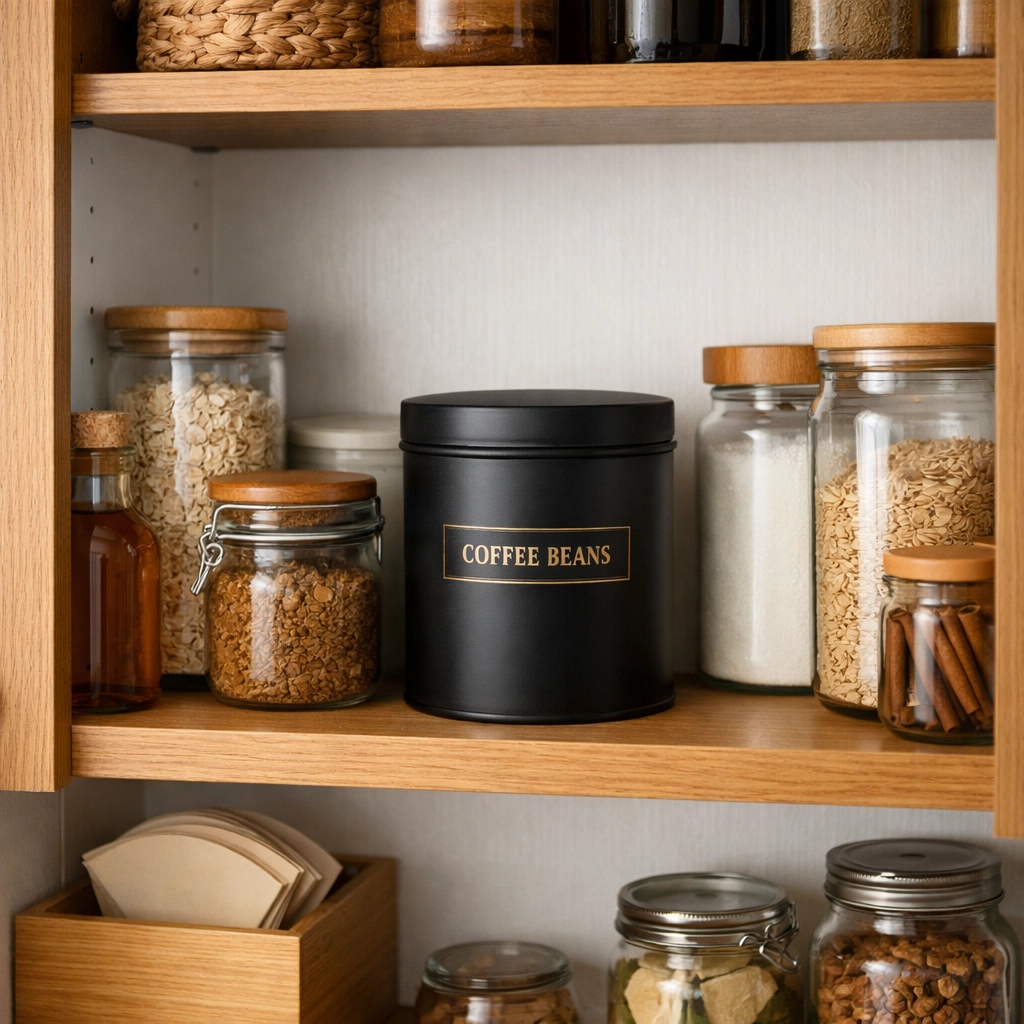
And keep your coffee away from strong-smelling foods. Coffee beans are incredibly absorbent: they'll happily soak up the aromas of garlic, onions, spices, or whatever else is nearby. Unless you fancy a cumin-flavoured latte, give your beans their own dedicated space.
The Fridge and Freezer Debate
Let's address this head-on: Don't put your daily coffee in the fridge.
The fridge is full of moisture and odours: two of coffee's worst enemies. Every time you take the bag out, condensation forms on the cold beans. That moisture seeps in, and your coffee quality plummets.
What about the freezer? This is contentious in the coffee world, and honestly, it's rarely necessary for home use.
If you absolutely must freeze coffee: maybe you bought way too much or received a huge gift: here's how to do it properly. Divide your beans into small, weekly portions in airtight containers or freezer bags. Remove as much air as possible. Freeze once, and when you're ready to use a portion, let it thaw completely (overnight is best) before opening the container. Never refreeze.
But here's the thing: if you're buying fresh coffee in sensible quantities, you shouldn't need to freeze anything. Which brings us to…
The Best Storage Strategy: Buy Fresh, Buy Often
The absolute best way to ensure fresh coffee? Don't store it for too long in the first place.
Coffee is at its peak from about 7-30 days after roasting. After that, it's still drinkable, but you're gradually losing flavour complexity. So instead of buying a massive bag that'll last three months, buy smaller amounts more frequently.
This is where roasters like Limini Coffee really shine. They roast daily, which means when you order, your beans are incredibly fresh to begin with. Starting with peak freshness gives you the longest possible window to enjoy your coffee at its best.
Think about it this way: would you buy fresh bread for the month and expect it to taste great on day 30? Coffee is similar. It's a fresh product, and treating it that way makes all the difference.
A 250g bag typically makes about 16-18 cups of coffee. If you drink one or two cups daily, that's a perfectly sized portion to finish within 2-3 weeks while the coffee is still singing.
Practical Day-to-Day Habits
Beyond the big-picture storage stuff, a few simple habits will keep your coffee tasting great:
Grind right before brewing. Whole beans stay fresh exponentially longer than ground coffee. Once you grind, you've massively increased the surface area exposed to air. Those aromatics start escaping immediately. So if you want the freshest cup possible, grind your beans right before you brew.
Keep the bag sealed. It sounds obvious, but we all get busy. Make it a habit to properly reseal your coffee container or bag after every use. Those few seconds matter.
Label your coffee. Write the roast date and the date you opened it on the bag or container. This helps you track freshness and rotate through your stash if you're one of those people who has multiple bags on the go (no judgment).
Use a clean, dry scoop. Never dig into your beans with wet hands or a damp scoop. Even tiny amounts of moisture can cause problems over time.
What Fresh Coffee Actually Tastes Like
When you store coffee properly and drink it fresh, you'll notice the difference immediately.
Fresh coffee has clarity. Each flavour note is distinct rather than muddled together into a generic "coffee" taste. You might pick up on berries, florals, citrus, chocolate, or nuts: whatever characteristics that particular coffee is known for.
The aroma is intoxicating. When you open a bag of fresh, properly stored beans, the smell should make you pause and appreciate it. If you're just getting a faint, flat scent, that's a sign of staleness.
Fresh coffee has body. It feels fuller in your mouth, with a silky or creamy texture depending on the origin and roast. Stale coffee often tastes thin and hollow by comparison.
And perhaps most importantly, fresh coffee has a clean finish. Old, improperly stored coffee can leave an unpleasant, lingering bitterness or dusty aftertaste. Fresh coffee finishes cleanly, leaving you wanting another sip rather than reaching for water.
It All Starts With Quality Beans
Of course, proper storage only works if you're starting with quality coffee in the first place.
This is why we think buying from speciality roasters who roast frequently makes such a difference. When beans come to you days (not weeks or months) after roasting, you're already ahead of the game. Combine that fresh start with proper storage, and you're in for consistently excellent coffee.
Whether you're brewing espresso, pour over, French press, or any other method, freshness is the foundation. You can have the most expensive equipment and perfect technique, but if your beans are stale, the cup will disappoint.
So treat your coffee with respect. Give it the storage it deserves. And maybe stock up a little less, a little more often. Your taste buds will thank you.
After all, life's too short for stale coffee.
Leave a Reply