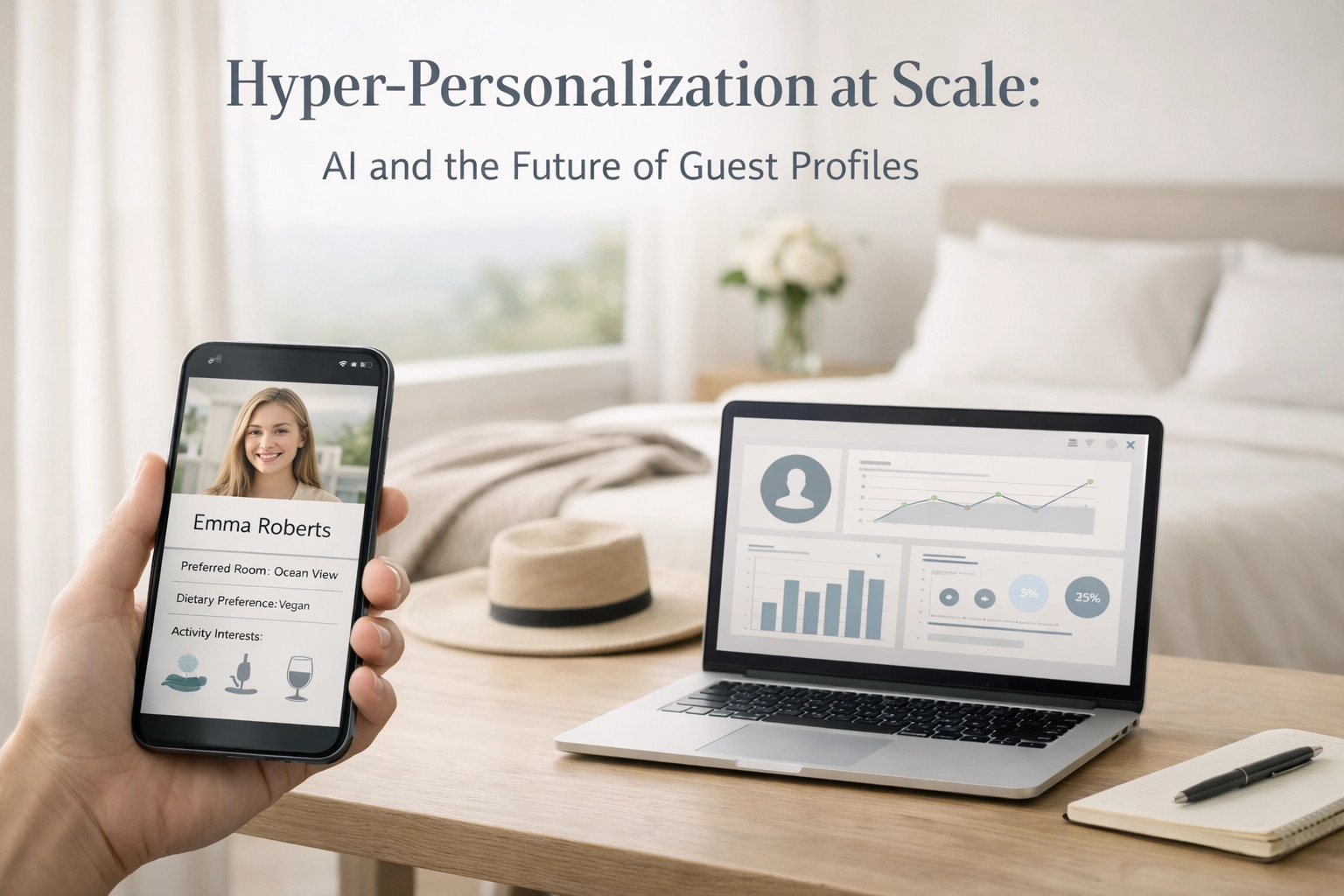
Know them. Surprise them. Keep them.
The era of the generic guest experience is officially over. For years, the hospitality industry relied on broad buckets to define who was staying in their rooms. You were either a "business traveler" or a "leisure guest." You were a "family" or a "couple." It was better than nothing, but it was far from personal.
Today, we’re moving into the age of the individual. We call it hyper-personalization at scale. It’s the ability to treat ten thousand guests like they are the only person in the building, all from one innovative platform.
Beyond the segment. Into the signal.
Traditional segmentation is lazy. Just because two guests are both 35-year-old men traveling for work doesn't mean they want the same things. One might be a fitness fanatic who needs a gym map and a protein shake at 6 AM. The other might be a night owl who needs a quiet corner and a double espresso at midnight.
We believe the future isn't in segments; it’s in signals.
AI-driven hospitality focuses on micro-behaviors. It looks at booking patterns, previous amenity choices, dietary preferences mentioned in passing, and even the sentiment of past reviews. These are the signals that build a true guest profile. When you stop looking at demographics and start looking at intent, the magic happens.
- Ditch the labels. Stop categorizing and start observing.
- Listen to the data. Every click is a preference.
- Predict the need. Use AI to see the pattern before the guest does.
Scalable intimacy. The hospitality paradox.
The biggest challenge in a modern hotel is maintaining that boutique, "we know your name" feeling while managing hundreds of rooms and thousands of bookings. It’s a paradox: how do you get closer to the guest as you get bigger?
The answer is scalable intimacy.
AI solves this by automating the heavy lifting of data analysis. Instead of a front desk agent trying to remember that Mr. Smith likes extra pillows, the system identifies that preference across his entire history and flags it for housekeeping before he even arrives. It’s personal, but it’s automated. It’s intimacy that doesn't break when you add another hundred rooms to your portfolio.
We think that technology shouldn't replace the human touch: it should provide the context that makes the human touch possible. When your staff isn't buried in manual data entry, they can actually look a guest in the eye and say, "Welcome back, we’ve already set up your favorite corner table for breakfast."
Pre-arrival magic: Winning before check-in
The stay doesn't start at the front desk. It starts the moment the guest thinks about booking.
Modern AI capabilities allow Mews users to analyze guest data long before the "Welcome" mat is rolled out. Predictive guest profiling uses historical data and real-time behavior to anticipate what a guest will want. If a guest always books a spa treatment within 24 hours of arrival, the AI can trigger a personalized offer for their favorite massage the moment the booking hits the system.
This isn't just about being nice: it’s about revenue.
- 35% increase in ancillary revenue through personalized upselling.
- 150% increase in overall guest satisfaction scores.
- 125 hours saved monthly at the front desk through automation.
When you offer the right thing to the right person at the exact right time, it doesn't feel like a sales pitch. It feels like a service.
The intelligent guest profile
At the heart of this transformation is the Mews guest profile. In the old days, a guest profile was a static digital folder with a name, an email, and maybe a credit card number. Today, it’s a living, breathing data set.
We’ve built a system where guest profiles are centralized and portable. Whether a guest stays at your property in London or your resort in the Maldives, the system knows them. It remembers that they prefer oat milk, that they hate being near the elevator, and that they usually check out thirty minutes late.
This level of intelligence allows for smart room assignments. AI algorithms can optimize room allocation based on guest history. If a guest has previously complained about street noise, the system won't just find an empty room; it will find the quietest empty room.
It’s about making the guest feel seen without them having to say a word. To see how this works in practice, you can explore the Mews platform here.
Real-time adaptation
Hyper-personalization doesn't stop once the guest has their key. The best AI systems continue to learn throughout the stay.
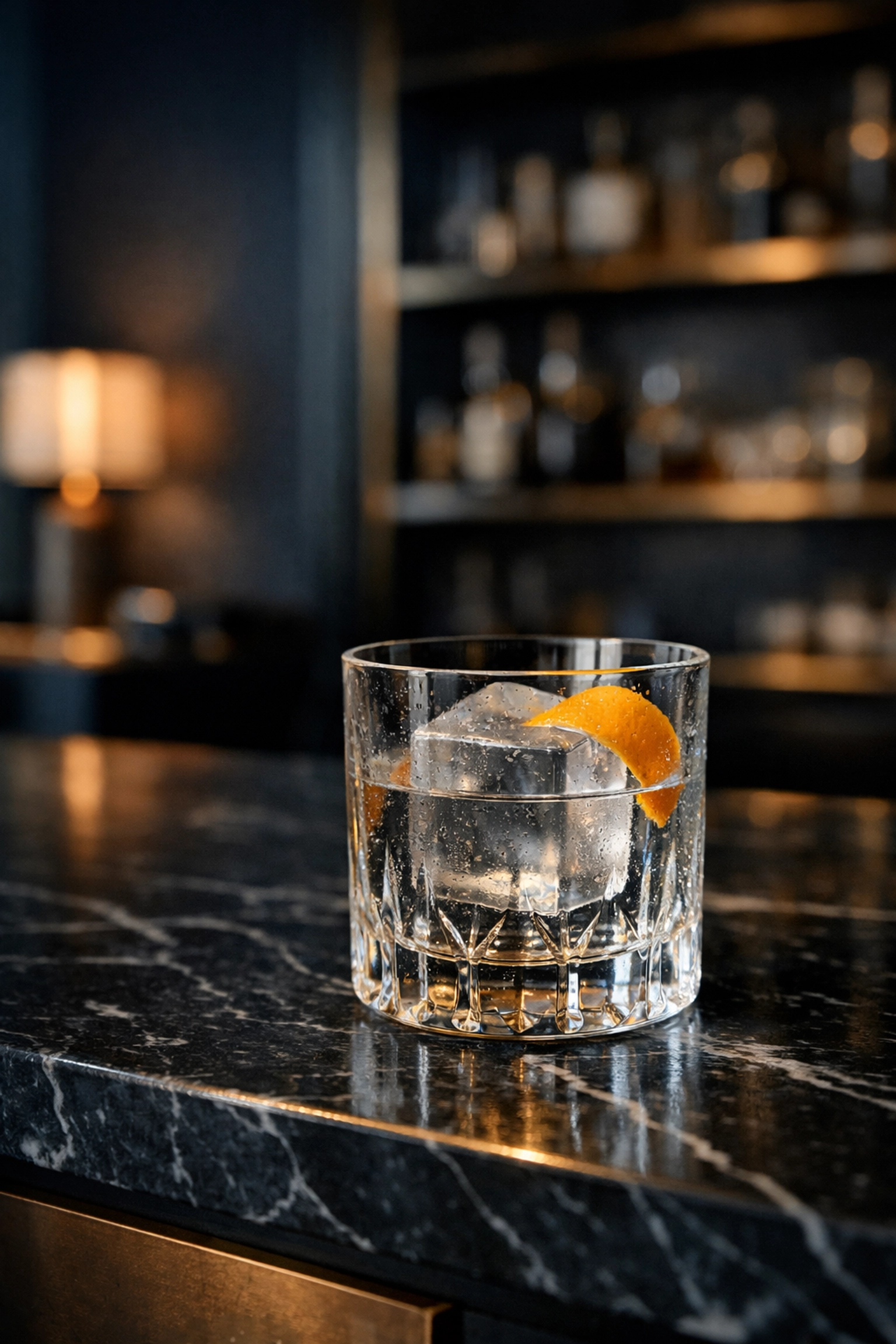
If a guest visits the hotel bar three nights in a row and orders a specific craft gin, the system can log that preference. The next time they book, that gin can be waiting in their mini-bar. This is real-time service adaptation. It’s the ability to pivot your offering based on observed behavior (the cool stuff).
We’ve seen properties like the Mercure Paddington in London use these types of AI-driven insights to push their occupancy from 64% to 92%. They didn't do it by lowering prices; they did it by being more relevant to their guests than the competition.
The death of the front desk?
We often get asked if all this AI means the end of the front desk. We don't think so. We think it’s the end of the front desk as a "transaction station."
When AI handles the data, the profiles, and the room assignments, the front desk is liberated. Your staff is no longer staring at a screen typing in passport numbers (which everyone hates). Instead, they are acting as hosts.
The future of guest profiles lies in systems that operate behind the scenes. The AI provides the context, and the human provides the empathy. It’s a partnership where the technology handles the scale, and the people handle the soul.
Privacy, trust, and the "Creepy" line
There is, of course, a line between being helpful and being "creepy." We’re very aware of that. Hyper-personalization requires a high degree of trust. Guests are willing to share their data, but only if they see a clear benefit and feel that their information is secure.
We believe in transparency. Guests should have control over their profiles. At Mews, we prioritize privacy-enhancing technologies to ensure that personalization never comes at the cost of security. When guests see that their data is being used to make their life easier: like skipping the check-in line or getting a room that actually suits their needs: they aren't just okay with it; they expect it.
Building the future today
The jump from "standard hotel stay" to "hyper-personalized experience" can feel like a leap. But it’s a series of small, smart steps.
- Centralize your data. You can't personalize if your data is stuck in three different legacy systems.
- Activate your guest profiles. Move beyond names and emails to preferences and behaviors.
- Automate the routine. Let AI handle the predictable so your team can handle the exceptional.
The technology to do this isn't "coming soon." It’s already here. The hotels that are winning in 2026 are the ones that have stopped treating guests like numbers and started treating them like individuals.
We’re helping 12,500+ properties redefine what hospitality looks like. If you're ready to move beyond the segment and start listening to the signal, we’re ready to get you there.
Get started with a more innovative way to manage your guests. It’s easy, it’s fast, and it’ll get you earning more revenue in no time.
The future of hospitality is personal. Let’s build it.
Leave a Reply