So, you’ve decided to take the plunge and open a coffee shop. Or maybe you’re already running a successful business and you’ve realised that the "standard" commercial beans you’ve been using just aren’t hitting the mark anymore. Either way, you’re now on the hunt for wholesale coffee roasters who can provide something special.
Finding the right partner is, to be honest, one of the most important decisions you’ll make. It’s not just about who has the prettiest packaging or the lowest price per kilo. It’s about quality, consistency, and a shared passion for the craft. Here at Limini Coffee, we’ve helped hundreds of businesses navigate this journey, and we’ve learned a thing or two along the way.
Choosing between various coffee suppliers can feel a bit overwhelming, especially when everyone claims to have the "best" beans in the world. To help you cut through the noise, we’ve put together this guide of 10 essential things you should know before signing on the dotted line.
1. Specialty Coffee is a Formal Standard, Not Just a Buzzword
You’ll hear the term "specialty" thrown around a lot in the industry. But did you know it actually has a technical definition? It’s not just a fancy way of saying "this tastes nice."
Specialty coffee is graded on a 100-point scale by certified Q-Graders. To earn the title, the coffee must score 80 points or higher. This grading looks at everything from the number of defects in the green beans to the clarity of flavour in the cup. When you work with wholesale specialty coffee providers, you are paying for a product that has been rigorously vetted for quality.
Commercial-grade coffee, on the other hand, is often built for volume rather than flavour. It’s the difference between a mass-produced sliced loaf and an artisanal sourdough from a local bakery. We believe that if you want your customers to keep coming back, starting with a 80+ point foundation is non-negotiable.
2. Quality Scores Reflect Flavour Complexity
When you’re looking at a roaster's offering, you might see "cupping scores" attached to different beans. These scores tell a story about what you can expect in the cup.
A coffee scoring 82 might be a fantastic, reliable "all-rounder": think chocolatey, nutty, and great with milk. A coffee scoring 88 or 90, however, is going to be much more complex, perhaps with bright acidity, floral notes, or distinct fruit flavours.
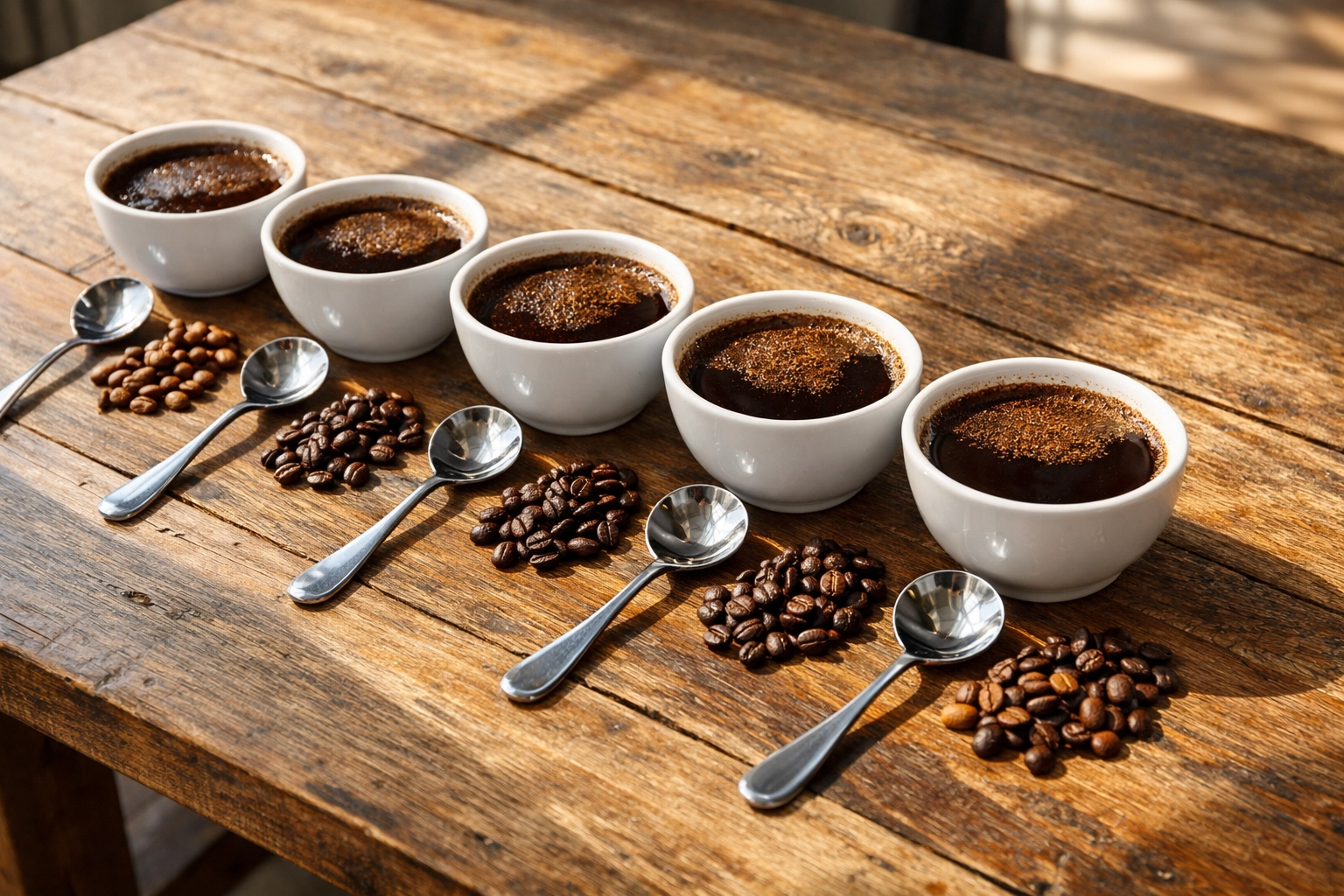
Understanding these scores helps you choose the right beans for your specific customer base. If you’re running a busy high-street café where most people order lattes, a high-scoring, delicate Ethiopian Yirgacheffe might actually get "lost" in the milk. In that case, a well-structured blend with a solid body is usually the way to go.
3. The Great Debate: Blends vs. Single Origins
This is a question we get asked all the time: "Should I serve a blend or a single origin?" The answer, quite simply, is usually "both": but for different reasons.
Coffee Blends are the workhorses of the specialty world. They are designed for consistency. By mixing beans from different origins, roasters can create a balanced flavour profile that stays relatively the same all year round. This is crucial for your "house" espresso. You want your regulars to know exactly what their morning flat white will taste like every single day.
Single Origins, meanwhile, come from one specific farm or region. They are seasonal and highlight the unique "terroir" of that location. They are perfect for filter coffee or as a "guest" espresso for the real coffee geeks. They offer an adventure, but they change frequently as harvests come and go.
4. Freshness and the "Roast Date" Rule
Freshness is the absolute king of specialty coffee. Once coffee is roasted, it starts to lose its volatile aromatic compounds (the stuff that makes it smell and taste amazing).
When evaluating coffee suppliers, always check their roast dates. You want coffee that is roasted to order. However, there is a common misconception that coffee is best the second it comes out of the roaster. In reality, espresso needs time to "degas": to release carbon dioxide trapped during the roasting process.
We usually find that coffee hits its peak between 7 and 14 days after roasting. If it’s too fresh, the gas can cause uneven extraction and a "fizzy" mouthfeel. If it’s too old (say, more than 6 weeks), it starts to taste flat and woody.
5. Request and Evaluate Samples (On Your Gear!)
Never commit to a wholesale partner without tasting the coffee first. Any reputable roaster should be happy to send you samples. But here is the secret: don't just taste them at the roastery. Taste them in your own environment, using your own water and your own equipment.
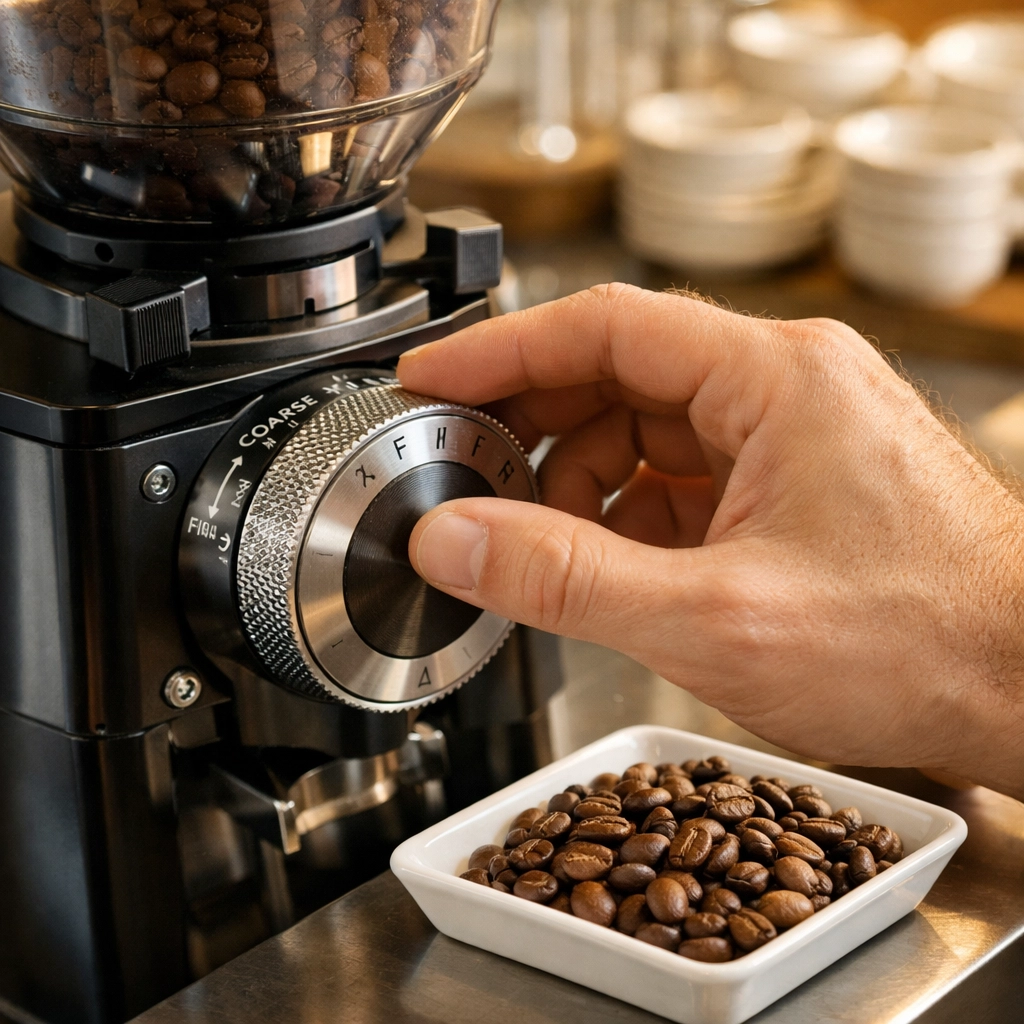
Water chemistry plays a massive role in how coffee tastes. The same bean can taste bright and fruity in one city and dull and bitter in another just because of the mineral content in the water. Plus, you need to see how the beans behave in your grinder.
We always recommend trying the roaster's main espresso blend first. If you can't get their flagship coffee to taste great on your machine, then it’s probably not the right fit for your business. You can check out our own wholesale offerings here to see how we handle our sampling process.
6. Support Services Are Just As Important As The Beans
This is perhaps the biggest thing people overlook. When you buy wholesale specialty coffee, you aren't just buying a product; you're buying a support system.
If your espresso machine stops working on a busy Saturday morning, who are you going to call? If your new staff members don't know how to texture milk correctly, who is going to teach them?
A great supplier offers:
- Comprehensive barista training
- Equipment maintenance and emergency repairs
- Advice on choosing espresso equipment
- Business growth support
At Limini Coffee, we don't just ship boxes. We view ourselves as an extension of your team. If you succeed, we succeed. It’s that simple.
7. Prioritise Ethical Sourcing and Traceability
Your customers care about where their food and drink comes from, and you should too. Specialty coffee is built on the foundation of transparency. You should be able to ask your roaster exactly which farm your coffee came from, how much the farmer was paid, and what the environmental practices are on-site.
Many specialty roasters use "Direct Trade" models, which cut out the middleman and ensure more money goes back to the producers. This isn't just about feeling good; it’s about sustainability. If farmers aren't paid a fair wage, they can't afford to keep producing the high-quality coffee we love.
We take sourcing our coffee very seriously, ensuring that every bean in our warehouse has a story we are proud to tell.
8. Visit the Roastery in Person
If they are local enough (or even if they aren't), go and see them! A roastery visit is the ultimate "vibe check."
Is the space clean and organised? Is the team passionate and welcoming? Do they actually seem to care about the coffee, or is it just a factory to them? Meeting the people who will be roasting your beans builds a level of trust that an email chain never can.
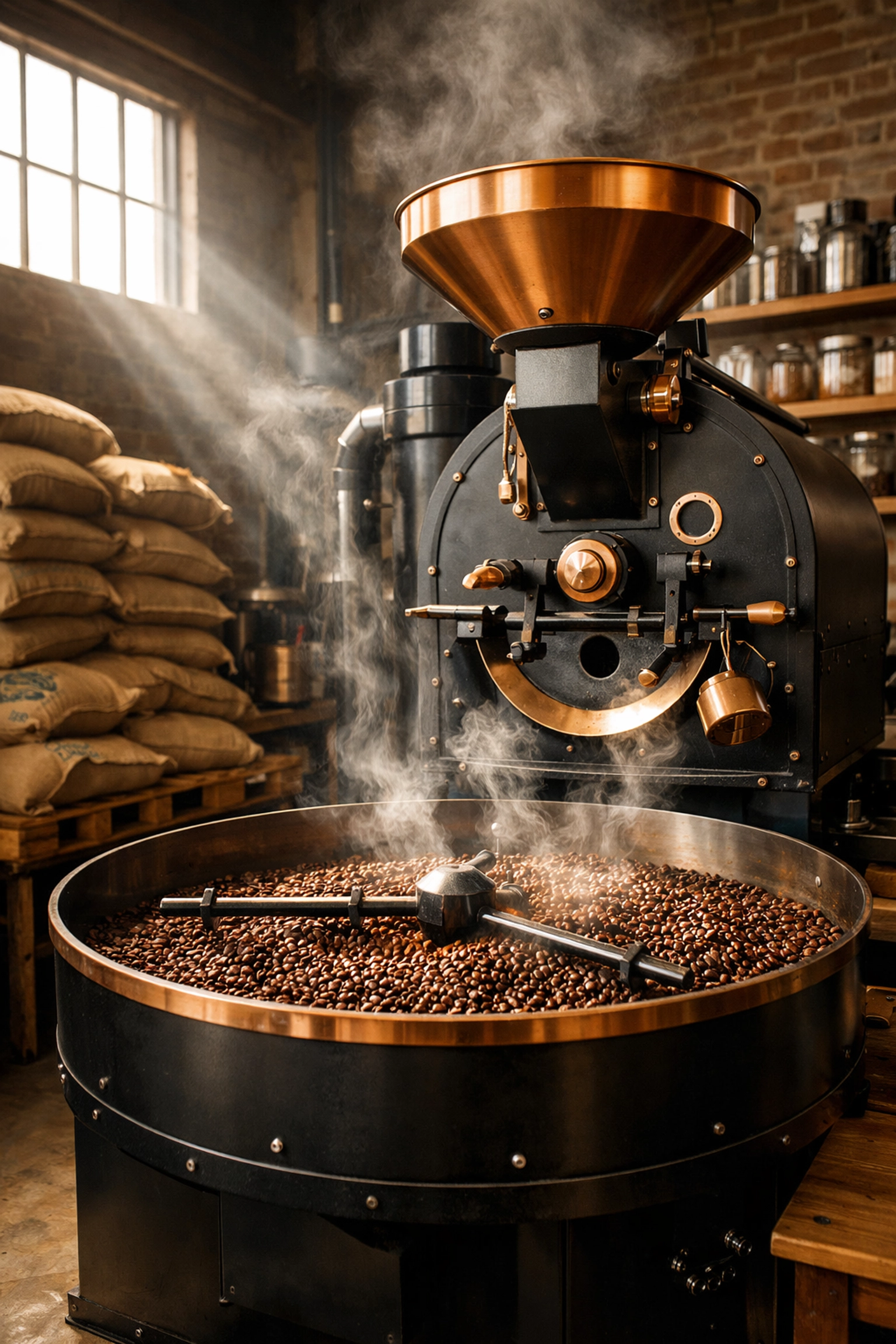
Plus, it’s usually quite fun. There is nothing quite like the smell of a roastery in full swing and the sight of a 15kg or 30kg roaster doing its thing. It helps you understand the "theatre" of coffee, which you can then translate to your own shop.
9. Equipment Maintenance is Non-Negotiable
We’ve seen it a thousand times: a café buys the best beans in the world but runs them through a machine that hasn't been cleaned in months. The result? Bitter, burnt-tasting coffee that ruins the brand.
When choosing coffee suppliers, ask about their equipment programs. Do they offer La Spaziale machines? Do they have technicians who can come out and perform a front-end service?
Your espresso machine is the heart of your business. If it’s not running at the right pressure (usually around 9 BAR) or the right temperature (often between 88 ºC and 95 ºC), the quality of the bean won't matter. A supplier who understands the technical side of the machinery is worth their weight in gold.
10. Logistics and Reliability: The "Boring" But Essential Stuff
Finally, let's talk about the practicalities. You can have the best-tasting coffee on the planet, but if the delivery driver consistently misses your Tuesday slot, your business is in trouble.
Before committing, ask:
- What is the lead time from order to delivery?
- Is there a minimum order quantity (MOQ)?
- What happens if a shipment is damaged?
- Do they have an easy online ordering system?
Reliability is the foundation of a good B2B relationship. You need a partner who is organized and communicative. We pride ourselves on being there when our partners need us, because we know how stressful running a café can be.
Wrapping It Up
Choosing between wholesale coffee roasters is a big step, but it’s also an exciting one. It’s the moment your vision for your business starts to take on a real, tangible flavour.
Remember, you aren't just looking for a vendor; you're looking for a partner. Someone who will support you, train your staff, and provide a product that makes you proud to open your doors every morning.
If you’re ready to take that next step and want to chat about how we can help your business grow, we’d love to hear from you. You can check out our about us page to learn more about our philosophy, or better yet, take a look at our wholesale specialty coffee options and let’s start a conversation.
Running a coffee business is a wild ride: make sure you’ve got the right people in your corner!
Leave a Reply