Blog

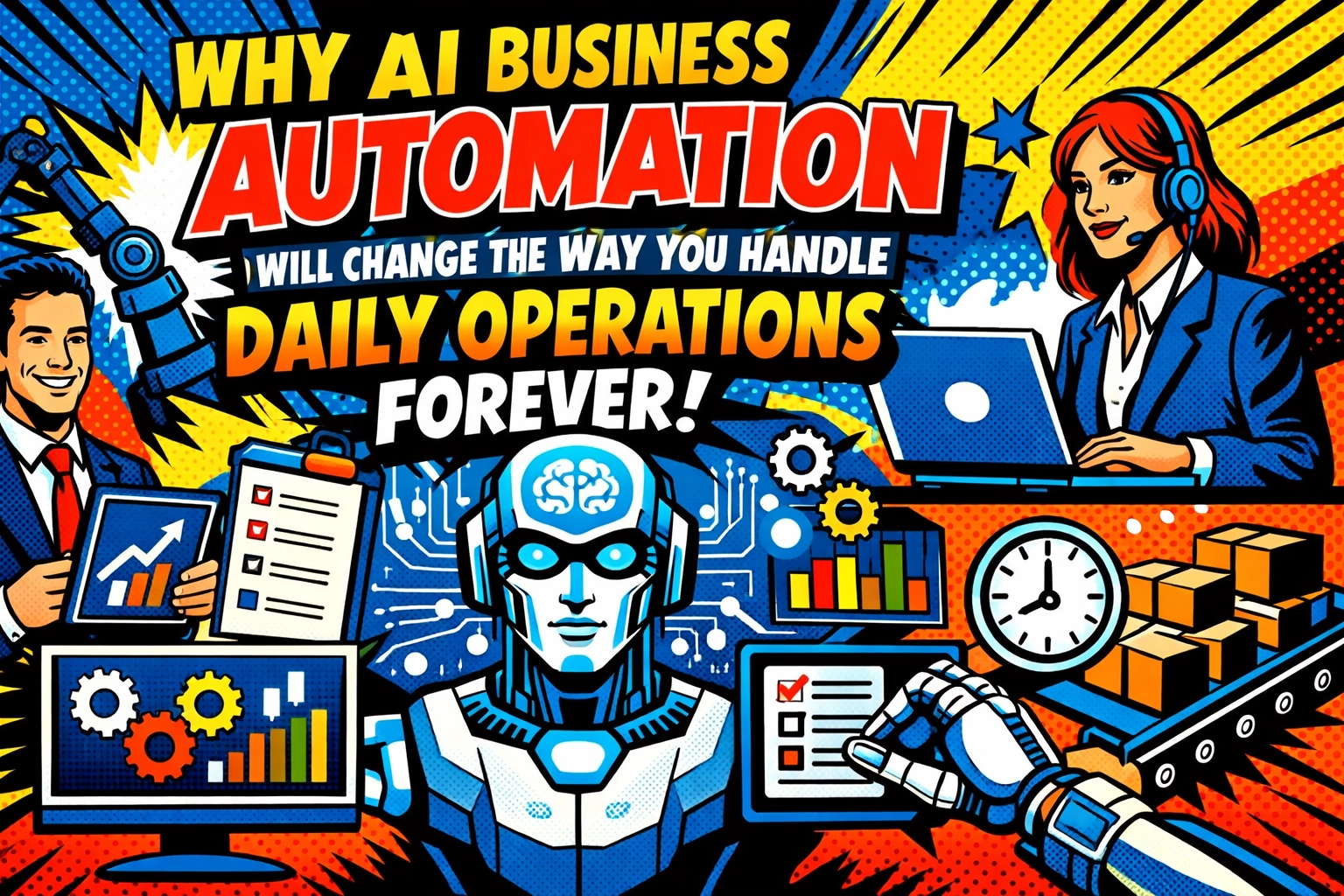
  • Why AI Business Automation Will Change the Way You Handle Daily Operations Forever

    Why AI Business Automation Will Change the Way You Handle Daily Operations Forever

    You wake up. It’s 6:30 AM. Before you even brush your teeth, your hand reaches for the phone. It’s a reflex. You check the emails. You check the Slack messages. You check the Stripe notifications.

    Your heart does that little double-thud because there are three "urgent" requests and a lead that probably went cold while you were sleeping…

    This is the "Small Business Grind." It’s the constant, low-level hum of anxiety that comes with trying to be everywhere at once. You’re the CEO, the marketing department, the customer service rep, and occasionally the person who reminds everyone to buy more coffee filters.

    But what if you weren't?

    What if the most tedious, brain-melting parts of your day simply… vanished? This isn’t about some futuristic sci-fi dream. It’s about ai business automation. It’s the shift from doing the work to managing the systems that do the work for you. And it’s about to change your life forever.

    THE END OF THE "ALWAYS ON" TRAP

    You’ve been told that "hustle" is the only way to scale. That if you aren’t grinding 14 hours a day, you don’t want it bad enough. Honestly? That’s a lie designed to burn you out.

    The real secret to scaling isn't working harder. It’s working smarter, or rather, letting business automation tools do the heavy lifting. We’re talking about recovering 15 to 40 hours of employee time per week. Imagine what you could do with an extra 40 hours. You could finally launch that new product. You could spend a Wednesday afternoon at the golf course. Or, you know, you could just sleep.

    Business owner breaking free from manual task chains through AI business automation.

    A DAY IN THE LIFE: THE AI TRANSFORMATION

    Let’s look at how your day changes when you stop being a manual operator and start being a strategic owner.

    ☕ 7:00 AM: THE INBOX IS ALREADY CLEANED

    Usually, you’d spend the first hour of your day triaging emails. Flagging the junk, replying to the "how much is it?" questions, and hunting for the actual money-making opportunities.
    With Marblism-style automation, an AI agent has already scanned your inbox. It’s archived the noise, drafted replies to the FAQs based on your past conversations, and highlighted the one high-ticket lead that needs your personal touch.
    You haven't even finished your coffee yet, and you're already winning.

    📱 10:00 AM: LEADS ARE GENERATING THEMSELVES

    In the old world, you’d spend this time manually searching LinkedIn or cold-emailing prospects. It’s soul-crushing work.
    In the automated world, your AI business automation system is running in the background. It’s identifying your ideal customers, verifying their data, and sending personalized outreach that sounds exactly like you, minus the typos.
    You just look at your dashboard and see three new meetings booked.

    🤝 1:00 PM: CUSTOMER SUPPORT WITHOUT THE TEARS

    The afternoon slump hits. This is usually when a customer emails with a complex problem that takes you 30 minutes to solve.
    Instead, your AI chatbot (which actually knows your business inside and out) handles the query in seconds. It doesn't get tired. It doesn't get annoyed. It provides 24/7 availability while reducing your operating costs by about 22%.
    You smile. The chaos is gone before you even take your first sip of lunch.

    🔍 4:00 PM: DATA THAT ACTUALLY MAKES SENSE

    You used to stare at spreadsheets until your eyes crossed, trying to figure out why sales were down or where your best traffic was coming from.
    Now, AI identifies patterns you’d never see. It tells you: "Hey, your conversion rate jumps by 15% when you send emails on Tuesday afternoons."
    Strategic decisions are no longer guesses. They’re certainties.

    Multitasking AI assistant handling operations while a small business owner drinks coffee.

    EMPLOYEE OF THE MONTH. EVERY MONTH.

    When we talk about ai business automation, people often worry about "replacing" humans. But here’s the reality: AI isn't here to take your job; it’s here to take the parts of your job you hate.

    Research shows that AI can automate tasks that consume 60% to 70% of an employee’s time. Think about your best team member. Now imagine if they never had to do data entry, manual scheduling, or basic reporting ever again. They’d be free to focus on the big stuff, strategy, creativity, and building actual relationships with your customers.

    That’s how you elevate a workforce. You turn your team into a group of high-level thinkers rather than overworked button-pushers.

    THE COLD, HARD ECONOMICS OF AUTOMATION

    Let’s talk numbers. Because at the end of the day, your business needs to make sense on paper.

    • Productivity: Companies using intelligent automation report a 40% improvement in productivity.
    • Cost Savings: Implementing these systems can slash operating costs by an average of 22%.
    • Error Reduction: Humans make mistakes when they’re bored. AI doesn't. Whether it's finance or quality control, automation eliminates the "oops" factor that costs you thousands.

    Traditional automation was rigid. You had to tell it exactly what to do: "If X happens, do Y." But business automation tools powered by AI are different. They learn. They adapt. They interpret data and get better over time. It’s like hiring a consultant who works for free and gets smarter every single day.

    If you’re ready to see how this looks in your own business, you should check out the interactive tools we’ve built at Marblism: https://marblism.link/scott-bowen.

    A rocket ship made of currency and charts representing business scaling via automation.

    STOP JUGGLING, START SCALING

    You’ve reached a ceiling. Every small business owner does. You can only work so many hours, and you can only hire so many people before the overhead eats your margins alive.

    AI automation is the "cheat code" that lets you break through that ceiling. It allows you to scale your operations without scaling your stress levels. You can handle 10x the volume of leads, 10x the customer queries, and 10x the data analysis without adding a single person to your payroll.

    Scaling shouldn’t be this easy. But here we are.

    "BUT ISN'T IT COMPLICATED?" (THE FAQ)

    "I'm not a tech person. Can I really use this?"
    Yes. Modern ai business automation is designed for people who have a business to run, not a computer science degree. If you can use a smartphone, you can use these tools.

    "Is it expensive?"
    It’s much cheaper than a mistake. When you factor in the 22% reduction in operating costs and the massive time savings, the ROI usually pays for itself in the first month.

    "Will my customers hate talking to a bot?"
    Not if the bot actually solves their problem. People don't hate automation; they hate bad automation. AI-driven support is fast, accurate, and personalized. Most customers won't even realize they aren't talking to a human: they'll just be happy they got an answer in 5 seconds.
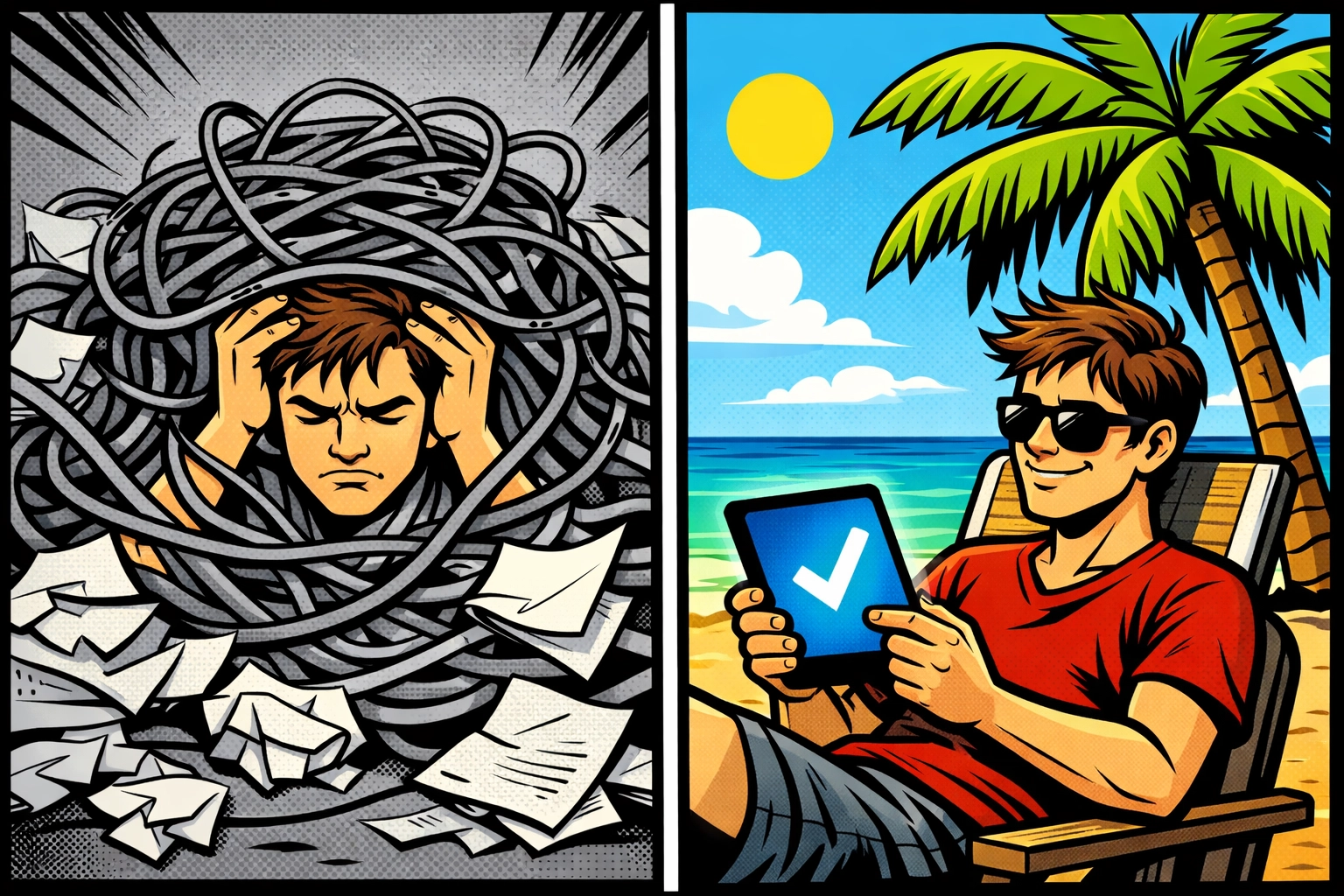
    Comparison showing the stress of manual work versus the freedom of business automation tools.

    THE NEW REALITY OF BUSINESS

    The world changed while we were all busy answering emails. The businesses that will dominate the next decade aren't the ones with the biggest teams; they're the ones with the smartest systems.

    You have a choice. You can keep doing things the "manual" way: tethered to your inbox, stressed about lead follow-ups, and constantly feeling behind. Or, you can embrace the shift.

    You can become the owner who watches their business grow from a distance while they focus on the things that actually matter. The vision. The growth. The life you started this business to have in the first place.

    The tools are ready. The tech is here. The only thing missing is you.

    Stop grinding. Start automating. See how Marblism can flip the switch for your daily operations right here: https://marblism.link/scott-bowen.

    …Your future self (the one who's currently on vacation) will thank you.

    THE FUTURE IS AUTOMATED. DON'T GET LEFT IN THE MANUAL PAST.

  • The Ultimate Guide to the Modern Hotel PMS: Everything You Need to Scale Your Property in 2026

    The Ultimate Guide to the Modern Hotel PMS: Everything You Need to Scale Your Property in 2026

    Transform your operations. Scale your brand. Delight your guests.

    The hospitality world in 2026 doesn't look like it did even three years ago. If you’re still managing your property through a patchwork of legacy systems and frantic sticky notes, you’re not just behind: you’re invisible to the modern traveler.

    A modern Property Management System (PMS) is no longer a digital filing cabinet. It is the central nervous system of your business. Hotels using agile, cloud-native platforms are seeing revenue growth driven by smart upsells and direct bookings, with many reporting time savings of over 500 hours annually.

    That is more than twelve weeks of work reclaimed. All from one innovative platform.

    The 2026 Landscape: Why "Good Enough" is Failing

    The global hotel PMS market has surged to nearly $10 billion this year. This isn't just a tech boom; it’s a survival pivot. Travelers today expect a frictionless journey that starts on their smartphone and ends with a digital key. They want personalization without the prying.

    We believe that hospitality should be about people, not paperwork. Yet, many hoteliers are still bogged down by manual data entry and disconnected silos. When your booking engine doesn't talk to your housekeeping app, your guest experience suffers.

    Modern hotel guest using a tablet in a minimalist lobby, reflecting a seamless digital guest experience.

    The Cost of Friction

    • Lost Revenue: 30% of potential income vanishes through unoptimized OTA commissions.
    • Burnout: Staff spending 4 hours a day on "admin" rather than "hospitality."
    • Data Blindness: Making big decisions based on last month's gut feeling instead of today's real-time data.

    The Pillars of a Scalable PMS

    To scale in 2026, your tech stack needs to be invisible. It should work in the background, allowing your team to focus on the human elements that define a stay.

    1. Cloud-Native Architecture

    If you can't run your hotel from a tablet while sitting in a cafe, you don't have a modern PMS. Cloud systems allow for instant updates, remote management, and zero "on-site server" headaches.

    2. The Integrated Ecosystem

    We think the era of the "all-in-one" that does everything poorly is over. The modern PMS should be a hub. It should connect seamlessly to your favorite POS, your smart room controls, and your local tour operators.

    3. Automation-First Housekeeping

    Efficiency is the new luxury. Smart scheduling based on real-time check-out data means your rooms are turned over faster, and your team isn't wandering hallways wondering which door to knock on.

    The AI Revolution: It's Finally Useful

    In 2026, AI in hospitality has moved past the "clunky chatbot" phase. It is now deeply embedded in how the most successful properties operate. We’re seeing a shift where AI acts as a co-pilot for General Managers.

    Predictive Intelligence

    Modern systems now analyze hyper-local trends: festivals, flight delays, even weather patterns: to adjust your rates dynamically. This isn't just revenue management; it's revenue foresight.

    Hyper-Personalized Communication

    Imagine a system that knows a guest prefers a quiet room and a decaf oat latte before they even arrive. AI processes these guest preferences across entire portfolios, ensuring that whether a guest stays in your London property or your Lisbon boutique, they feel "known."

    "Since we switched to an automated guest journey, our front desk team has regained 10 hours a week. They’re finally hosts again, not just data entry clerks." : Sarah J., Boutique Hotel Owner

    A hotel manager using mobile PMS software on a smartphone to streamline daily operations and efficiency.

    Operational Excellence: The Silent Revenue Generator

    Scaling isn't just about getting more bookings; it's about keeping more of the money from the bookings you already have. This is where operational excellence comes in.

    Direct Booking Power

    Every percentage point you claw back from an OTA is pure profit. A modern PMS includes a booking engine that is as sleek and fast as the big players.

    • Zero Commission: Keep 100% of your room rate.
    • Direct Interaction: Own the guest relationship from second one.
    • Loyalty Integration: Offer instant perks for direct bookers.

    Seamless Payments

    Payments should be a non-event. In 2026, guests expect to pay via Apple Pay, crypto, or local fintech apps without ever pulling out a physical card. Integrated, PCI-compliant payment processing reduces "no-show" losses and eliminates manual reconciliation errors.

    Secure contactless payment terminal on a marble hotel bar for frictionless guest transactions.

    The Guest Journey: From Arrival to Advocacy

    The "check-in" desk is becoming a relic. In its place is the "arrival experience."

    We believe the best check-in is the one that doesn't happen at a desk. By the time your guest walks through the door, they should already have their room number and digital key on their phone.

    The Modern Guest Flow

    1. Pre-Arrival: Automated SMS with an upgrade offer for a balcony room.
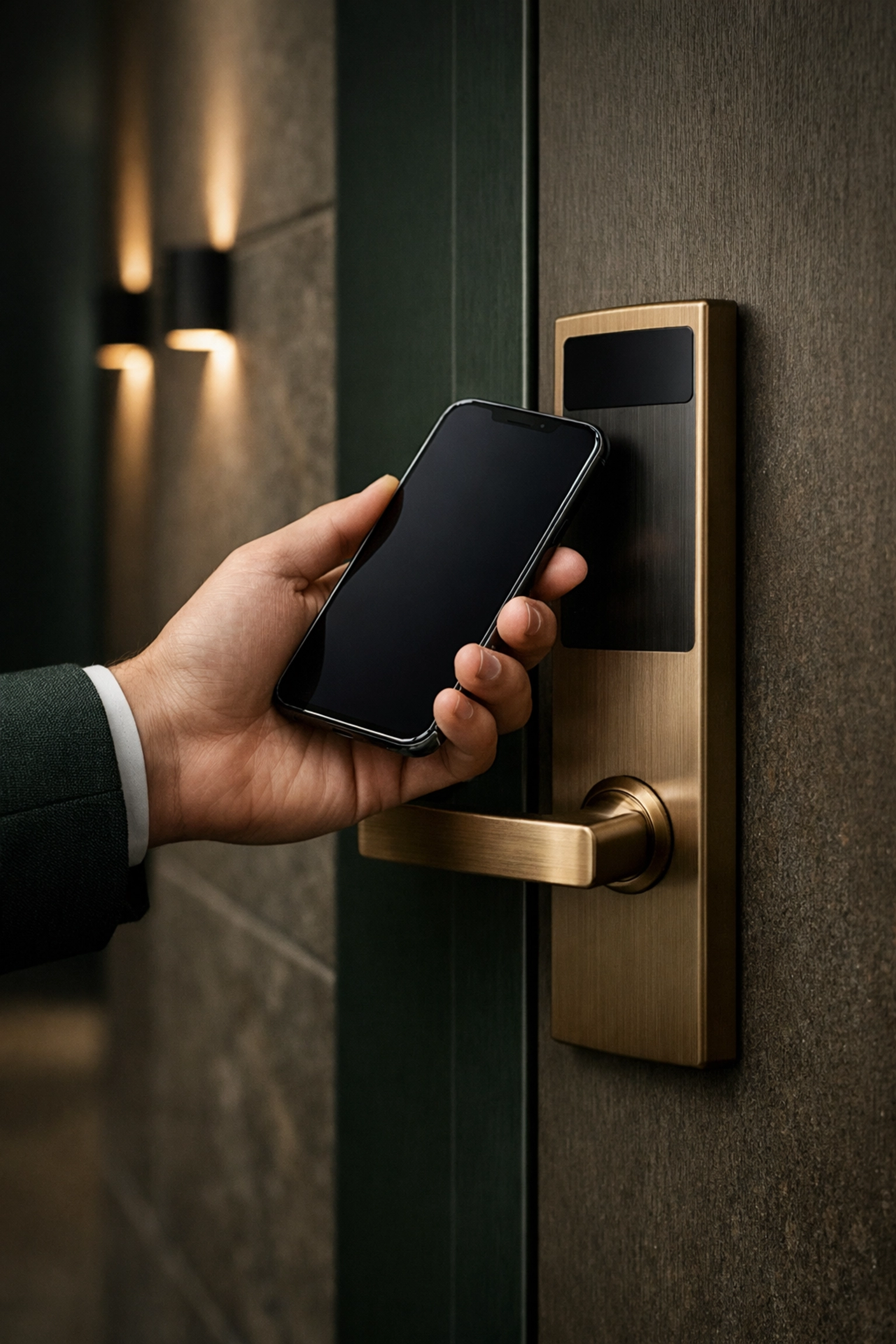
    2. Arrival: Keyless entry. The guest goes straight to the room.
    3. Stay: Real-time chat for extra pillows or a dinner reservation.
    4. Departure: One-tap check-out. No queues. No "did you use the minibar?" awkwardness.

    This isn't just "techy": it's respectful of the guest's time.

    Guest using a mobile digital key for keyless entry at a modern hotel room door.

    Scaling Your Portfolio: 1 to 100 Properties

    If your goal is growth, your PMS must be your foundation. When you add a second or third property, you shouldn't be multiplying your workload; you should be leveraging your existing systems.

    Centralized Management

    A modern platform allows you to manage multiple properties from a single login.

    • Unified Guest Profiles: Know your VIPs across your entire brand.
    • Standardized Reporting: Compare performance between properties with one click.
    • Shared Resources: Use one central reservation team for five different locations.

    The API Economy

    Your PMS should play well with others. Whether you want to integrate a niche sustainability tracker or a high-end spa management tool, a strong API (Application Programming Interface) ensures your tech stack grows with your ambitions.

    Why Mews is Leading the Charge

    At Mews, we don't just build software; we design experiences. We’ve helped over 12,500 properties move away from the "way things have always been done" toward a future of total flexibility.

    Our platform is built for the innovative hotelier. The one who cares about design, speed, and the guest's smile. We prioritize automation because we know your time is your most valuable asset.

    Ready to see how the modern PMS can transform your property? You can explore the platform and start your journey here. It takes less time than you think to start seeing the results.

    Innovative boutique hotel interior with an open atrium, symbolizing modern hospitality scaling and design.

    Final Thoughts: The Future is Friendly

    The hospitality industry is reclaiming its soul. By offloading the "robotic" tasks to a modern PMS, we are freeing up humans to do what they do best: provide genuine, warm hospitality.

    2026 is the year of the agile hotelier. It’s the year where technology finally gets out of the way.

    Quick Checklist for Your Next PMS

    • Mobile-first: Does it work on every device?
    • Open API: Does it connect to everything you need?
    • Guest-centric: Does it make the guest's life easier or harder?
    • Scalable: Can it handle your growth for the next five years?

    Don't let your technology be the ceiling of your success. Make it the floor.

    If you’re looking to scale with a partner that understands the future of travel, reach out and see what’s possible. Let’s get you earning more and stressing less in no time.

  • 25 Creative Travel Tech Innovation Ideas You’ve Never Thought Of (But Your Competitors Have)

    25 Creative Travel Tech Innovation Ideas You’ve Never Thought Of (But Your Competitors Have)

    Automate the boring. Delight the guest. Scale your brand.

    In 2026, the gap between "fine" and "phenomenal" is measured in milliseconds and micro-interactions. If you’re still thinking of travel tech as just a way to book a room, you’re already behind. Innovation today is about removing the friction you didn't even know existed, all from one hospitality platform.

    The Future is Frictionless (and a Little Bit Psychic)

    We believe the best technology is invisible. It shouldn't feel like a "system"; it should feel like magic. While your competitors are busy updating their legacy software, the leaders are reimagining what a guest journey actually looks like.

    82%
    Increase in guest satisfaction scores when check-in takes under 30 seconds.

    40%
    Higher revenue per available room (RevPAR) for hotels using automated upsell tools.

    15 hours
    Saved per week by staff when manual data entry is eliminated.

    See how Mews can transform your operations in minutes.


    25 Innovation Ideas to Steal Today

    1. Palm-Scan Entry

    Forget keycards. Forget mobile keys. Use biometric palm-scanning for room entry. It’s more secure than a face scan and feels like something out of a sci-fi movie. Your guests literally carry the "key" in the palm of their hand.

    2. Weather-Based Dynamic Upselling

    If the forecast says rain, your PMS should automatically send a "2-for-1 cocktails at the bar" or "Spa afternoon" offer to every guest’s phone. When the sun comes out? Pivot to bike rentals and picnic baskets.

    3. The "Self-Healing" Room

    Predictive maintenance sensors can detect if an AC unit is vibrating slightly out of spec before it actually breaks. The system logs a maintenance ticket in Mews, the part is fixed, and the guest never even knew they almost had a sweaty night.

    4. Hyper-Local AI Concierge

    Standard chatbots are boring. A hyper-local AI trained on your staff’s actual recommendations, the hidden dive bar, the specific barista to ask for, provides a curated experience that feels human, even at 3 AM.

    5. Tokenized Loyalty (The NFT Pivot)

    Move away from boring points. Offer digital collectibles for stays that grant lifetime perks, like a "Founder’s Club" NFT that guarantees a room upgrade whenever available. It’s tradable, trackable, and trendy.

    A hotel guest accessing digital loyalty assets and NFT room upgrades on a smartphone in a luxury suite.

    6. RFID Inventory Control

    No more manual counting of robes and towels. RFID tags allow your housekeeping team to scan an entire floor in minutes, knowing exactly what’s in the laundry and what’s in the closet.

    7. Automated Carbon Offsetting

    Integrate a feature at checkout that calculates the exact carbon footprint of the guest's stay and offers a one-tap option to offset it via local green projects. Transparency is the new luxury.

    8. Spatial Audio Sleep Suites

    Partner with sound designers to offer "spatial audio" environments in-room. Guests can choose "Rainforest in Bali" or "Brooklyn Loft" via the room's integrated speakers to mask city noise and improve sleep quality.

    9. Geofenced Automated Check-out

    When the guest’s phone leaves the hotel perimeter on their departure date, the system asks: "Heading out? We've checked you out and sent the receipt to your email." No desk, no line, no drama.

    10. Dynamic Co-working Passes

    If your lobby or restaurant is empty between 10 AM and 4 PM, sell "micro-access" passes to local nomads. Integrated billing through your PMS makes this a zero-effort revenue stream.

    11. AR Room Customization

    Let guests view their room via an app before they arrive and "place" extra pillows, a yoga mat, or a specific bottle of wine using Augmented Reality. What they see is what they get.

    12. Smart Minibar with Auto-Restock

    Weight-sensing shelves that automatically charge the folio and alert the "Runner" app when a Gin & Tonic has been liberated. No more awkward "Did you consume anything?" questions at checkout.

    13. AI Staff Mood/Fatigue Monitoring

    Innovation isn't just for guests. Use AI to analyze scheduling patterns and guest feedback to identify when staff are burning out before they quit. Happy staff = happy guests.

    14. Digital Twin Operations

    Create a digital twin of your property. Test different furniture layouts or guest flow patterns in a virtual space to see how they impact staff efficiency before moving a single chair.

    15. Smart Gym Integration

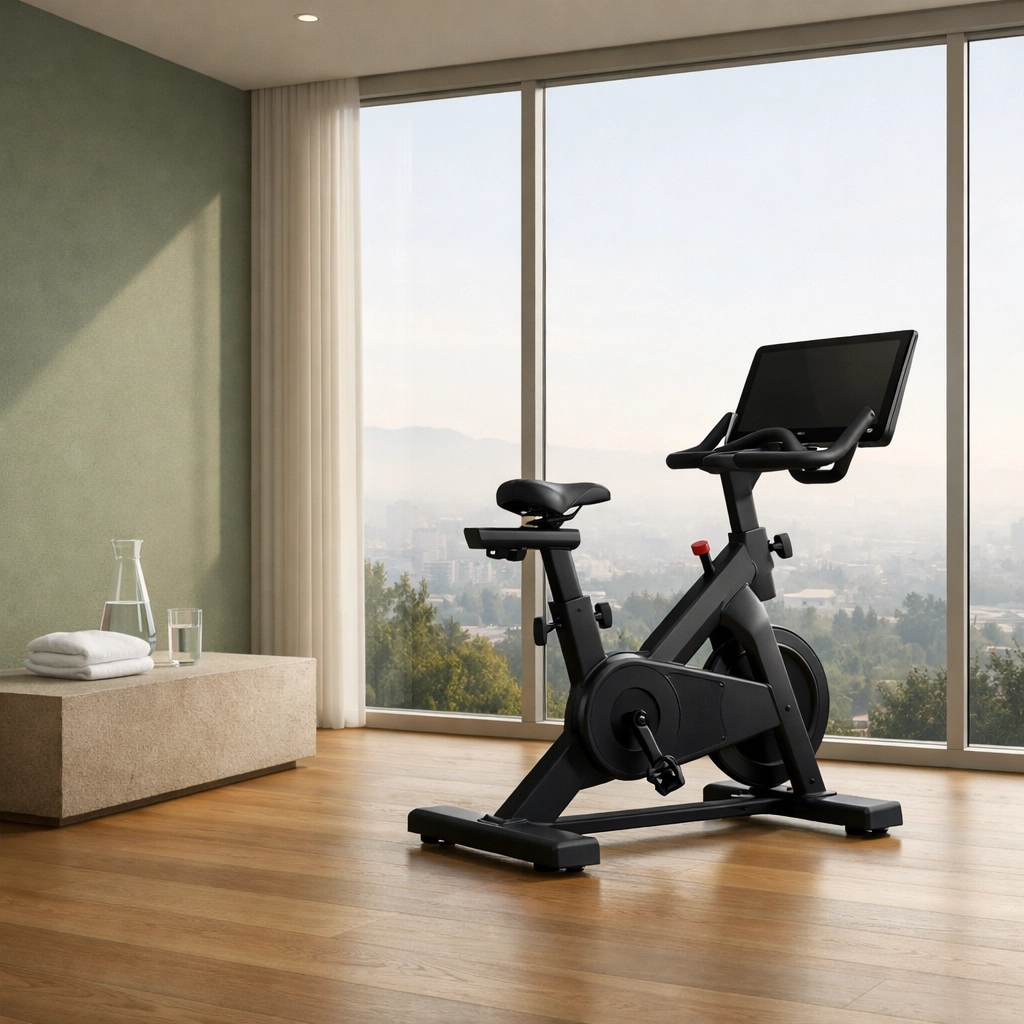
    Allow guests to sync their Peloton or Strava accounts to the hotel gym equipment. Their "usual" workout loads up the moment they log in.

    Modern hotel gym with smart stationary bike and minimalist design highlighting guest wellness technology.

    16. Voice-First Amenity Requests

    "Hey [Hotel Name], bring up two extra towels." Integrating voice assistants with your task management software means guests don't have to hunt for the "0" button on a dusty desk phone.

    17. Automated 24/7 "Dark Kitchen" Access

    Partner with local high-end restaurants to use your kitchen during off-hours for delivery-only services. Your PMS handles the external billing and facility fees.

    18. Real-time Noise Monitoring

    Use privacy-safe decibel sensors to alert your night manager before a party gets out of hand. Proactive peace of mind for everyone else on the floor.

    19. "Vibe" Control (Scent & Light)

    Let guests choose a "Vibe" in the app, Productive, Romantic, or Zen. The room's smart lighting and scent diffusers adjust automatically upon entry.

    20. Bio-adaptive Lighting

    Circadian lighting in rooms that shifts from blue-tones in the morning to warm, melatonin-friendly amber in the evening to help travelers beat jet lag.

    21. Automated EV Valet Billing

    When a guest plugs their car into your charger, the cost is automatically pushed to their room bill. No separate apps, no friction.

    22. Collaborative "Trip Boards"

    In-app digital boards where groups (weddings, corporate retreats) can vote on activities, share photos, and see the daily itinerary, all managed through your guest portal.

    23. Personalized Digital Art Frames

    Ask guests for their favorite artist or style during booking. When they enter the room, the digital frames on the walls display art curated just for them.

    24. Wearable Payment Ecosystems

    Issue guests a stylish, waterproof silicone wristband that acts as their room key and wallet. It’s perfect for poolside drinks where phones and wallets are a liability.

    25. Autonomous Luggage Delivery

    Robotic bellhops are no longer a gimmick. They’re efficient, they don't need tips, and they’re a massive hit on social media.


    Why It Matters

    "We used to spend hours every day just reconciling payments and checking people in. Since switching to an automated ecosystem, our team actually has time to talk to guests. It’s changed the entire energy of the lobby."
    , Operations Manager, 150-room Boutique Hotel

    We believe that technology should empower humans, not replace them. When you automate the mundane, you liberate your team to provide the kind of hospitality that guests actually remember.

    See what a modern PMS can do:

    1. Schedule a 30-minute discovery call
    2. Get a customized tour of the Mews ecosystem
    3. Start transforming your guest experience

    Friendly interaction between hotel staff and a guest in a modern lobby powered by an innovative PMS.

    Stop Thinking Like a Hotelier (Start Thinking Like a Tech Pro)

    The most successful brands in 2026 don't see themselves as "lodging providers." They are experience designers. They use data to anticipate needs and technology to execute them flawlessly.

    Whether it’s using AI to optimize your staff rotas or implementing biometric entry, the goal is always the same: make it easy. Make it memorable. Make it Mews.

    Ready to leave the legacy tech in the rearview mirror? Explore how the Mews platform can get you earning more revenue in no time. (And hey, maybe you'll finally have time to try that palm-scanning thing).

  • The Ultimate Guide to AI in Hospitality: Everything You Need to Succeed in 2026

    The Ultimate Guide to AI in Hospitality: Everything You Need to Succeed in 2026

    Automate your operations. Personalize every stay. Scale your brand.

    It is March 2026, and the hospitality landscape has shifted. If you’re still thinking of AI as a "future trend" or a simple chatbot on your homepage, you’re already behind. Today, artificial intelligence isn't just a tool; it’s the operating system for the world’s most successful hotels. It’s the difference between a guest feeling like a number and a guest feeling like the center of the universe.

    We’ve moved past the experimental phase. The most profitable properties are now using a cloud-native hotel pms to unify data and let AI handle the heavy lifting. The result? A 25% average increase in operational efficiency and a 15% boost in guest satisfaction scores: all from one innovative platform.

    The New Discovery Landscape

    The way guests find you has fundamentally changed. In 2026, traditional search is being displaced by AI-driven discovery. Travelers aren't scrolling through pages of blue links anymore; they are asking their personal AI agents to "find a boutique hotel in London with a gym and a sustainable ethos."

    If your data isn't structured, you’re invisible. Your website, your booking engine, and your amenities need to be machine-readable. We believe that discoverability is the new SEO. It’s no longer about keywords; it’s about semantic clarity.

    • Implement rich schema markup for every room type and policy.
    • Ensure your distribution data is standardized for agent-to-agent communication.
    • Focus on context-aware content that AI search engines can parse instantly.

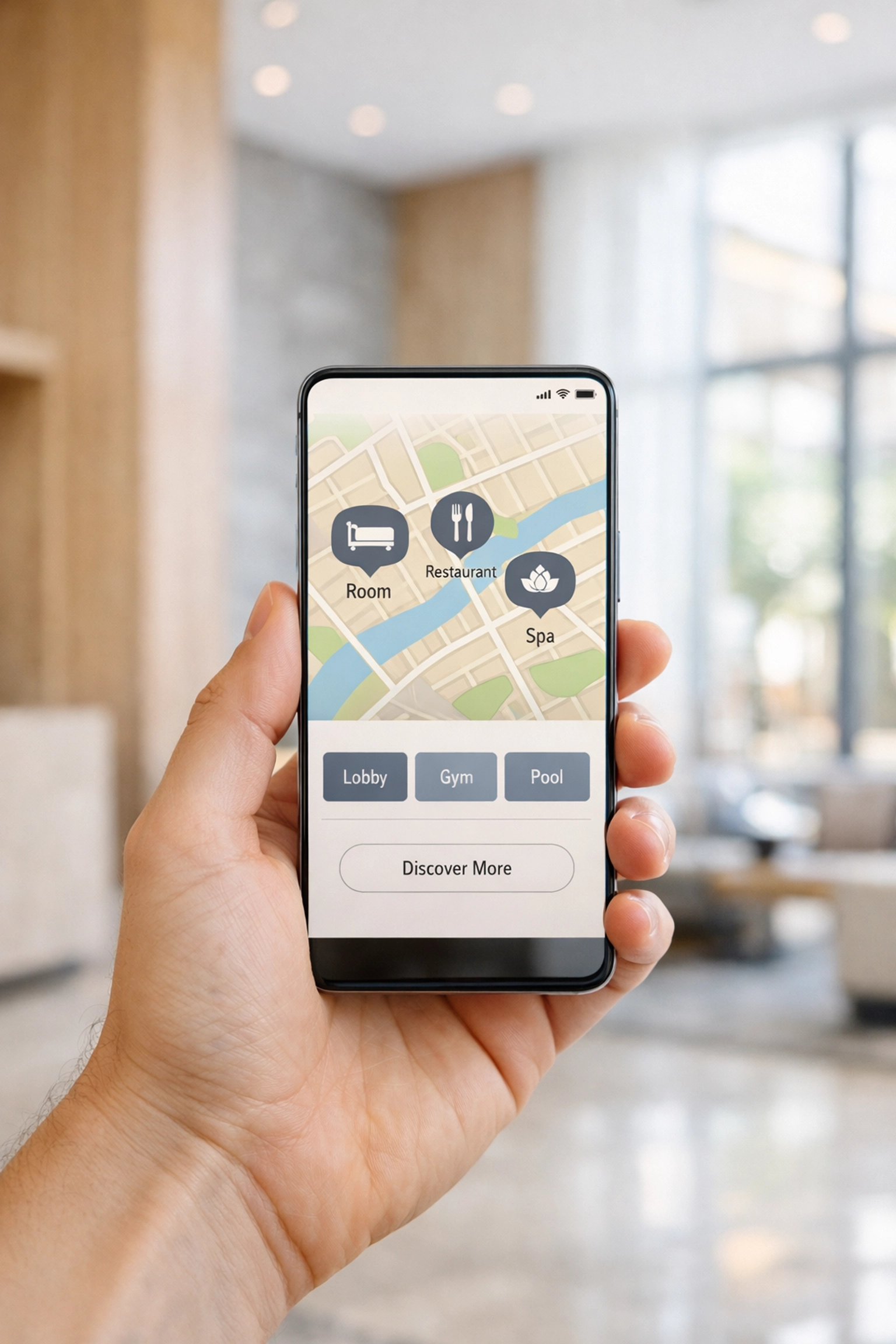
    Guest using a mobile booking engine on a smartphone in a minimalist hotel lobby.

    Revenue Management on Autopilot

    Static pricing is a relic of the past. In the current market, prices change in heartbeats, not days. AI-powered revenue management systems now process massive streams of data: local events, weather patterns, competitor shifts, and historical booking trends: to suggest the perfect rate at the perfect second.

    We think revenue management should be proactive, not reactive. By integrating your channel manager directly with AI-driven pricing logic, you ensure that your ADR is always optimized without a human needing to touch a slider. It’s about maximizing yield while you sleep.

    "We saw a 12% revenue lift in three months just by letting the system handle the mid-week fluctuations," says one Mews user. "It’s like having a data scientist working 24/7."

    Hyperpersonalization as a Standard

    Generic experiences are officially outdated. In 2026, guests expect instant relevance. They want their preferred room temperature set before they arrive and a dining recommendation that accounts for their specific allergies and past orders.

    This is where your CRM becomes your secret weapon. By using AI to analyze stay history and behavioral patterns, you can move from standardized service to individualized relationships. This isn't just about "customer management"; it's about creating a community of believers.

    • Automate guest messaging based on real-time triggers and location context.
    • Use predictive scoring to identify high-value guests before they even check in.
    • Serve context-aware offers through your booking engine instead of static banners.

    Smart hotel architecture at night representing AI-driven revenue management and pricing.

    Operations and the Self-Check-In Era

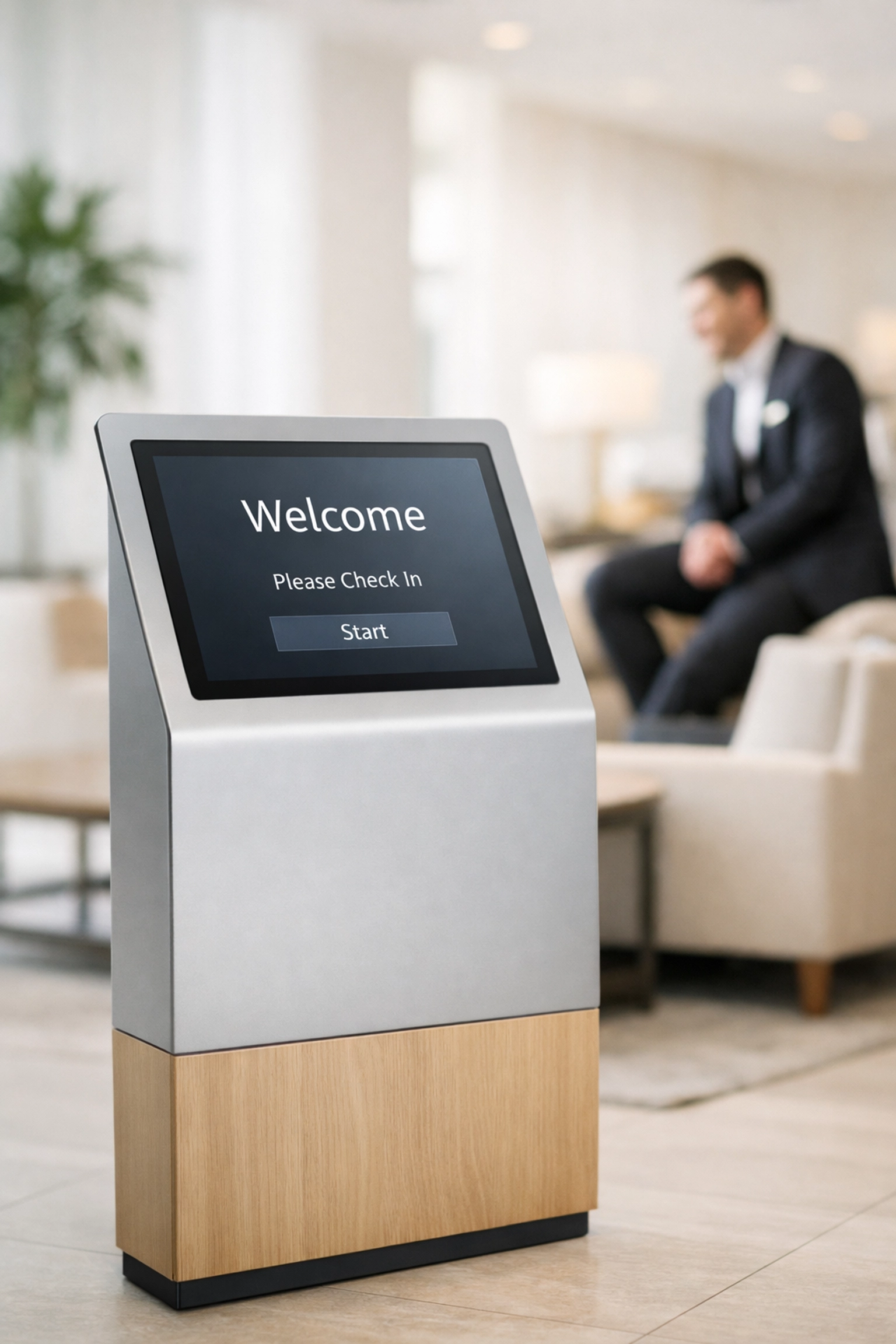
    The front desk shouldn't be a barrier; it should be a gateway. We’ve seen a massive shift toward self-check-in kiosks and mobile journeys. By automating the administrative parts of the guest arrival, you free up your staff to actually engage with people.

    A cloud-native hotel pms allows these kiosks to sync instantly with housekeeping and back-office systems. When a guest checks in via their phone at 10:00 AM, the system knows if the room is ready, updates the status, and sends the digital key: all without a single manual click.

    We believe technology should enable human connection, not replace it. When your team isn't staring at a screen typing in passport details, they’re looking the guest in the eye and offering a local tip that makes the stay memorable.

    • Deploy self-check-in kiosks to eliminate lobby queues.
    • Automate repetitive back-office tasks like night audits and payment reconciliation.
    • Use AI to predict staffing needs based on real-time occupancy and arrival patterns.

    Personalized guest welcome amenity showcasing automated CRM and hyperpersonalization in hospitality.

    The Rise of Agent-to-Agent Distribution

    The biggest shift in 2026 is the "Agent-to-Agent" economy. It’s no longer just a human interacting with your booking engine. It is a guest’s AI agent negotiating with your hotel’s AI system. Your distribution strategy must now account for these digital intermediaries.

    This requires your inventory, fees, and upsells to be available in high-fidelity, standardized formats. If your tech stack is legacy and siloed, these AI agents won't be able to "talk" to your hotel, and you’ll lose the booking to a competitor who is AI-ready. Innovation isn't just a buzzword here; it’s a survival requirement.

    "The transition was easy," notes a boutique owner in Berlin. "Once we moved to a cloud-native system, the AI tools just plugged right in. We’re getting bookings from platforms we didn't even know existed two years ago."

    Building Your AI Strategy for 2026

    Success in this era isn't about buying every new shiny tool. It’s about building a foundation that allows for agility. You need a platform that is open, automated, and easy to use.

    How to get started:

    1. Audit your data: Ensure your CRM and PMS are talking to each other. Clean data is the fuel for AI.
    2. Automate the basics: Start with self-check-in and automated guest messaging to see immediate ROI.
    3. Optimize for discovery: Update your website schema and ensure your channel manager is pushing rich data to all partners.

    We believe the future of hospitality is bright for those who embrace the change. AI doesn't make hospitality less "human": it removes the mechanical tasks that prevent us from being human in the first place.

    Modern self-check-in kiosks in a hotel lobby powered by a cloud-native hotel PMS.

    The Mews Advantage

    Mews is built for this world. As a cloud-native platform, we provide the infrastructure that makes AI implementation seamless. Whether it’s our industry-leading hotel pms, our intuitive booking engine, or our automation-focused CRM, every part of the ecosystem is designed to help you thrive in 2026.

    We don't just provide software; we provide the freedom to focus on your guests. Our platform is easy to use, meaning your team can master it in minutes, not weeks. We think you should spend less time managing software and more time managing experiences.

    Ready to see how the most innovative hotels are winning in 2026? It’s time to move your property into the future.

    Start your journey with Mews today.

    Join over 12,500 properties that have already made the switch to a smarter, more automated way of working. It’s a 30-minute conversation that could get you earning more revenue and saving hours of manual work in no time.

    Final Thoughts: The 2026 Mandate

    The hospitality industry has always been about people. In 2026, the hotels that win are the ones that use AI to give those people: both guests and staff: the best possible experience.

    By prioritizing hyperpersonalization, embracing agent-to-agent distribution, and leaning into cloud-native automation, you’re not just keeping up; you’re leading the way. The technology is here. The guests are ready. The only question is: are you?

    Don't wait for the future to happen to you. Define it.

    Visionary guest experience in a modern suite managed by integrated hotel management software.

  • The Solopreneur’s Guide to Workflow Automation for Small Business: Stop Doing the Busy Work for Good

    Workflow Automation for Small Business: Stop Doing the Busy Work

    You didn't start your business to become a professional copy-paster.

    You started it to build something. To create. To escape the 9-to-5 grind. But lately, the grind has found you… and it’s wearing a disguise made of unread emails and manual invoices.

    8:00 AM
    The day begins. You open your laptop, ready to conquer the world. Instead, you're greeted by 47 unread messages. Three are potential leads. Twelve are receipts you need to log. The rest? Noise. You spend the next two hours manually moving data from your email to a spreadsheet.

    Stop. Just stop.

    This is "busy work." It feels like progress because your fingers are moving, but your bank account disagrees. You’re a high-level strategist acting like a low-level clerk.

    THE 30-DAY ESCAPE PLAN

    Getting your time back isn't a pipe dream. It's a process. And it starts with admitting you can't , and shouldn't , do it all.

    Days 1-7: The Audit
    Stop guessing where your time goes. Write down every repetitive task you do this week. If you do it more than twice, it’s a candidate for execution. Note the tools you use. Is it Gmail? Stripe? Slack?

    Days 8-14: The Blueprint
    Before you touch a single automation tool, map the flow. If a customer fills out a form (Trigger), then what happens? You send a "Hello" email (Action). Then you add them to your CRM (Action). Map it out on paper first.

    Solopreneur managing tasks with workflow automation for small business using connected gears.

    Days 15-30: The Launch
    Pick one "quick win." Maybe it's automated invoicing. Use a no-code tool to connect your payment processor to your accounting software. Test it. Watch it work while you sleep. Then, move to the next.

    WORKFLOWS YOU SHOULD KILL TODAY

    • The "Welcome" Dance: Stop manually emailing new leads. Set up a trigger so every form submission gets an instant, personal-sounding reply.
    • The Receipt Rabbit Hole: Use AI to scan your inbox for receipts and automatically categorize them in your expense tracker.
    • The Scheduling Ping-Pong: "Does Thursday work?" "No, how about Friday at 2?" "I can do 4." Stop. Use a booking link that syncs with your calendar.

    Automation isn't about being lazy. It's about being effective. When you automate the boring stuff, you free up the mental bandwidth to do the work that actually moves the needle.

    If you're ready to stop being the bottleneck in your own business, it's time to look at how Marblism can turn your manual chaos into a streamlined machine.


    Why Your Business Needs an AI Virtual Assistant (Before Your Competitors Get One)

    Your competitor isn't smarter than you. They aren't harder working.

    They just have more "hands" on deck… and those hands don't need coffee breaks, health insurance, or sleep. They’re using an AI Virtual Assistant. While you’re sleeping, their business is alive. While you’re at lunch, their leads are being qualified.

    📱 11:00 PM
    You’re finally winding down. Your phone buzzes. It’s a lead asking about your pricing. You’re exhausted. You figure you’ll respond in the morning.

    3:00 AM
    While you’re dreaming, your competitor’s AI VA has already answered that same lead’s questions, handled their objections, and booked a discovery call for tomorrow at 10:00 AM.

    You just lost the deal before you even woke up.

    MEET YOUR NEW BEST EMPLOYEE

    An AI Virtual Assistant isn't just a chatbot that says "How can I help you?" and then fails to understand your answer. It's a sophisticated layer of intelligence that lives inside your business.

    It learns your tone. It knows your products. It never has a "bad day."

    24/7 Responsiveness
    The "speed to lead" is the only metric that matters in 2026. If you don't respond within five minutes, the lead is gone. An AI VA ensures that no matter when a question hits your inbox or your site, the conversation starts immediately.

    Data-Driven, Not Guess-Driven
    You might think your customers are confused about your shipping policy. Your AI VA knows they are, because it’s tracked 400 conversations where that specific question came up. It identifies bottlenecks you didn't even know existed.

    A multi-tasking ai virtual assistant for business handling emails and scheduling for a solopreneur.

    THE COMPETITIVE EDGE

    In a year, every small business will have some form of AI help. Right now? It's your secret weapon.

    🤝 10:00 AM
    You sit down for your first meeting of the day. Instead of spending 30 minutes prepping, you check a summary generated by your AI. It tells you exactly what the client's pain points are based on their previous chats with the assistant.

    You walk in looking like a mind reader.

    THE MARBLISM DIFFERENCE

    Most people think setting up an AI assistant requires a PhD in computer science. It doesn't. Not anymore.

    We’ve moved past the era of "coding" and into the era of "configuring." You tell the AI what you want it to do, and it does it. It's about connecting the dots between your sales, your marketing, and your operations.

    Scaling shouldn't be this easy. But here we are.

    Stop playing catch-up. Your business deserves a teammate that works as hard as you do : without the burnout. Whether it's managing your calendar, qualifying leads, or handling customer support, the future of your business is automated.

    Don't wait until your competitors have fully integrated these tools to realize you're falling behind. The best time to start was yesterday. The second best time is right now.

    🔍 The verdict?
    The busy work is dying. Let it. You have bigger things to do.

    See how Scott Bowen and the team at Marblism are helping solopreneurs reclaim their lives through smart automation.

    It's time to get your time back. 🌙

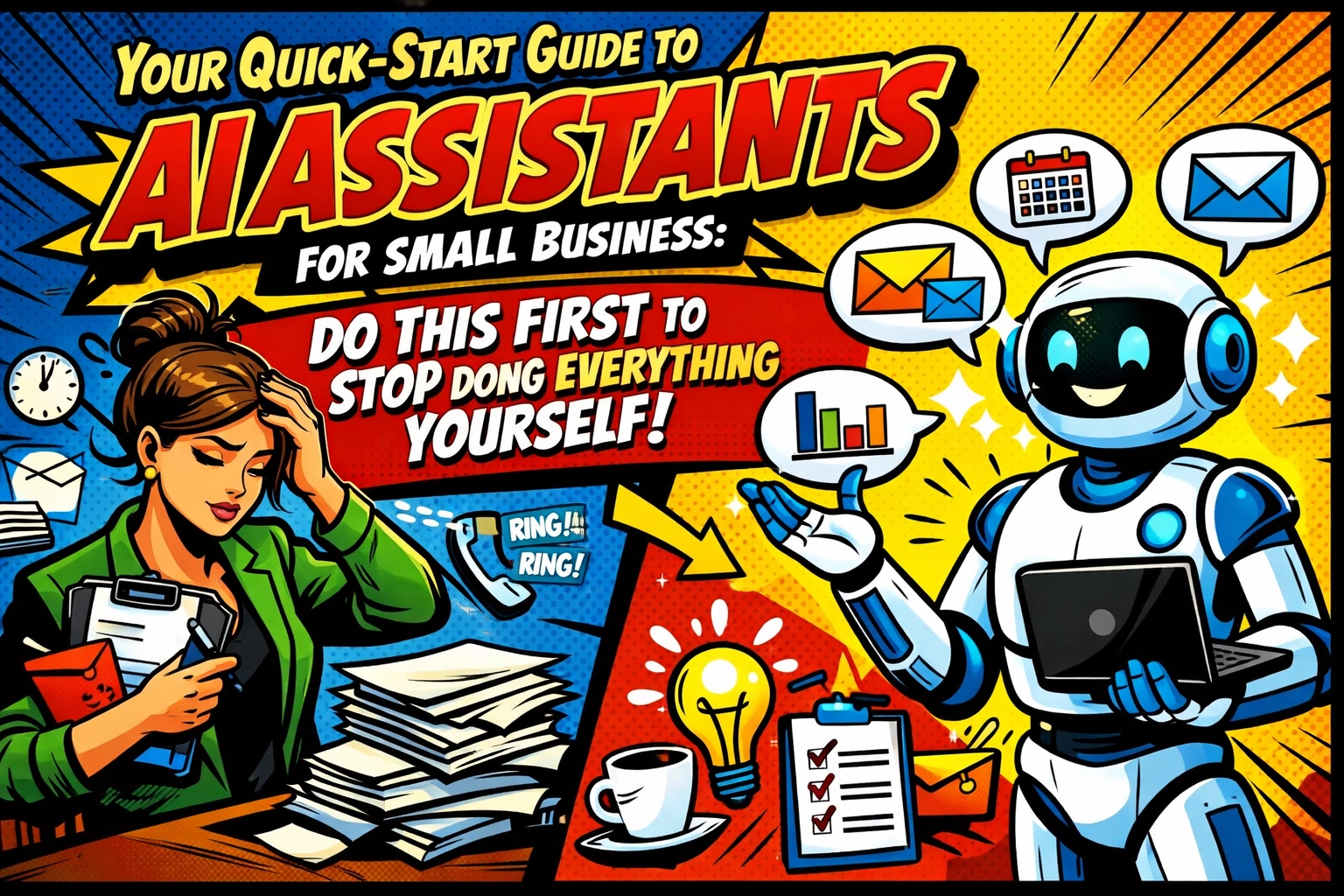
  • Your Quick-Start Guide to AI Assistants for Small Business: Do This First to Stop Doing Everything Yourself

    Your Quick-Start Guide to AI Assistants for Small Business: Do This First to Stop Doing Everything Yourself

    7:00 AM

    The sun isn’t even fully up, but your phone is already screaming at you.

    Three "Where is my order?" emails. Two Instagram DMs asking about pricing. A LinkedIn notification from a "lead" who’s actually just trying to sell you lead-gen services.

    You haven’t even finished your first cup of coffee, and you’re already behind. You’re the CEO, the marketing department, the janitor, and, most painfully, the customer support desk.

    You started this business for freedom. But right now? You’re just an employee with a really expensive hobby and no health insurance.

    … It doesn't have to be this way.

    STOP JUGGLING. START DELEGATING.

    You’ve heard the buzz about AI. You’ve seen the headlines. Maybe you’ve even played with ChatGPT a little bit. But when it comes to actually using an ai virtual assistant for business, you feel stuck.

    Where do you even start? Do you need a developer? A degree in prompt engineering? A sacrificial lamb?

    Actually, you just need a plan.

    The biggest mistake small business owners make is trying to automate everything at once. They want a digital twin that can handle sales, accounting, and emotional support for their employees by Tuesday.

    Spoiler alert: That’s how you end up with a messy, broken system and a headache.

    If you want to stop doing everything yourself, you need to do one thing first.

    Overwhelmed small business owner multitasking and juggling office tasks before using AI.

    THE WEEK OF TRUTH: YOUR TIME AUDIT

    Before you buy a single tool or hire a single AI, you have to find out where your life is leaking.

    For the next five business days, I want you to be a spy in your own life. Every time you switch tasks, write down what you’re doing and how long it took.

    • "Answering the same shipping question for the 10th time today." (15 mins)
    • "Formatting a spreadsheet because the data is wonky." (30 mins)
    • "Searching for that one invoice from three months ago." (20 mins)

    By Friday, the data will hurt your feelings. But it’s the good kind of hurt, the kind that leads to change. Look for the "High-Frequency, Standardized" tasks.

    If you find yourself typing the same three sentences over and over again, that is a prime candidate for an AI assistant. Usually, for small businesses, this is customer support.

    AUTOMATE CUSTOMER SUPPORT WITH AI (WITHOUT LOSING THE SOUL)

    Most people think "AI Support" means those clunky, annoying chatbots from 2015 that never understood a word you said.

    "I want to return this."
    "Did you say 'I want a pepperoni pizza'?"

    Those days are dead.

    Modern AI assistants are smart. They’re empathetic. They can read your entire knowledge base, your previous emails, and your product guides in seconds. When you automate customer support with ai, you aren’t replacing yourself; you’re replacing the boring parts of yourself.

    Imagine an AI that handles 80% of your inquiries, order tracking, basic troubleshooting, pricing, before they ever hit your inbox.

    The other 20%? The complex stuff? That’s what you actually enjoy doing. That’s where the human touch matters.

    🤝 11:00 AM

    Your phone buzzes. It’s a notification that three customers just had their questions answered. You didn't touch your phone once.

    You’re at the gym. Or you’re at lunch. Or you’re actually working on that big project that’s been sitting on your desk for six months.

    The chaos is gone before you even take your first sip of water.

    You just send a thumbs-up to your screen and keep moving.

    AI virtual assistant for business handling automated customer support with a headset.

    THE TWO-MONTH BLUEPRINT TO FREEDOM

    Scaling shouldn't be this hard. But here we are. If you want to get this right, follow this timeline. Don't rush it. Building a foundation is better than building a house of cards.

    Weeks 1-2: The Foundation

    This is where you do your time audit. Identify your top three "time drains." Define what success looks like. Is it saving 10 hours a week? Is it responding to customers in under 2 minutes? Write it down.

    Weeks 3-4: The Setup

    Research the tools. You don't need fifty of them. You need one that works. If you’re looking for a partner who actually understands how to bridge the gap between "cool tech" and "business results," check out what we're doing at https://marblism.link/scott-bowen.

    Pick one use case. Just one. Maybe it’s an AI chatbot for your Shopify store or an AI meeting assistant for your consulting business. Sign up for the trial. Test it with your most common questions.

    Weeks 5-8: The Refinement

    Let the AI loose on a small group of real scenarios. Watch it work. See where it trips up. Adjust the "brain" (the instructions you give it).

    This isn't "set it and forget it" yet. It's more like training a new employee. You wouldn't hire a human and walk away on day one, right? Treat your ai virtual assistant for business with the same respect.

    Rocket ship launching from an office desk symbolizing business growth and AI scaling.

    EMPLOYEE OF THE MONTH. EVERY MONTH.

    The best thing about an AI assistant?
    It doesn't get "Monday blues."
    It doesn't need a coffee break.
    It doesn't get offended when a customer uses all caps to complain about a shipping delay.

    It just works.

    Whether you’re in e-commerce, professional services, or retail, the "Quick Win" is usually the same: stop being the gatekeeper of information.

    If a customer has to wait 24 hours for you to wake up and tell them their tracking number, you’ve already lost. If an AI can do it in 24 seconds, you’ve just won a customer for life.

    REAL TALK: WHAT TO EXPECT

    Let’s be real. This isn't magic.
    You’ll spend about 1-4 hours on the initial setup.
    You’ll probably spend another 20 hours over the next six weeks tweaking things.

    But the ROI? Small businesses using these systems see up to a 35% increase in inquiry handling without adding a single human staff member.

    It’s about leverage. You are one person. AI is a force multiplier.

    🔍 2:00 PM

    You check your dashboard.
    15 inquiries resolved.
    0 emails in your "Action Required" folder.
    1 new lead qualified and scheduled for a call tomorrow.

    You didn't do any of it. But it all got done.

    That’s the power of a well-oiled ai virtual assistant for business.

    Business owner relaxing in a hammock after delegating tasks to an AI virtual assistant.

    THE "DO THIS FIRST" CHECKLIST

    If you’re feeling overwhelmed, just do these three things today:

    1. Stop searching for tools. Start searching for problems. What is the one task you absolutely loathe doing every day?
    2. Quantify the pain. How many hours a week does that loathsome task take? Multiply that by your hourly rate. That’s what you’re losing.
    3. Find a guide. Don't try to build a custom AI empire from scratch on your own. Use a platform that makes it easy. Start your journey over at https://marblism.link/scott-bowen to see how simple the transition can actually be.

    FREQUENTLY ASKED QUESTIONS (THE NO-BS VERSION)

    Is AI going to hallucinate and tell my customers I'm giving away free products?
    Not if you set it up right. Modern AI assistants use "grounding", which means they only talk about the info you give them. If it’s not in your manual, the AI won't make it up.

    Is it expensive?
    Compared to a full-time salary? It’s basically free. Most tools cost less than your monthly Starbucks habit.

    Will my customers hate talking to a bot?
    They hate waiting for an answer more than they hate talking to a bot. If the AI is fast, accurate, and helpful, they’ll love it. If it’s slow and stupid, they’ll hate it. (See: Weeks 5-8 Refinement).

    Do I need to know how to code?
    Nope. If you can write an email, you can "program" an AI assistant. It’s all plain English now.

    THE LAST WORD

    The gap between the businesses that scale and the businesses that burn out is getting wider.

    The "hustle harder" crowd is tired. They’re stressed. They’re missing their kids' soccer games because they’re stuck replying to DMs about return policies.

    The "automate smarter" crowd is… well, they're at the soccer games.

    The technology is here. It’s accessible. It’s waiting for you to stop being the bottleneck in your own company.

    🌙 8:00 PM

    The laptop is closed.
    The lights are off.
    Your phone is silent.

    Somewhere, in a data center far away, your assistant is still working. It’s greeting a late-night shopper. It’s answering a question from a different time zone.

    You’re not doing everything yourself anymore.

    … And that feels pretty good.

    Stop being the bot. Start being the boss. Check out Marblism and let's get your time back.

    Scaling Shouldn't Be This Easy. But Here We Are.

  • 7 Mistakes You’re Making with Fresh Roasted Coffee (and How to Fix Them)

    7 Mistakes You’re Making with Fresh Roasted Coffee (and How to Fix Them)

    So, you’ve decided to level up your morning routine. You’ve moved past the supermarket "burnt-and-stale" blends and stepped into the glorious world of fresh roasted speciality coffee. We love that for you. There is honestly nothing quite like the aroma of a freshly opened bag of beans that were in the roaster just days ago.

    But here’s the thing: fresh coffee is a bit like a high-performance sports car. It’s capable of incredible things, but if you don't know how to handle it, you’re going to end up with a bit of a mess. We see it all the time here at Limini Coffee, passionate home brewers who have the best intentions (and the best beans) but are accidentally sabotaging their brew.

    Whether you're roasting your own green beans at home or buying bags of our carefully crafted roasts, there are a few common pitfalls that can turn a premium experience into a mediocre cup. Let’s dive into the seven most common mistakes and, more importantly, how you can fix them to ensure your coffee is always hitting those sweet, complex notes we all crave.


    1. The "Fresh is Best" Trap: Not Letting Your Beans Rest

    It sounds counterintuitive, doesn't it? We spend so much time talking about "freshness," so you’d think brewing the coffee the second it comes out of the roaster would be the ultimate goal. Well, to be honest, it’s actually one of the biggest mistakes you can make.

    When coffee is roasted, carbon dioxide (CO2) gets trapped inside the bean. In the days following the roast, the beans undergo a process called degassing. If you brew coffee that is too fresh: say, less than 48 hours old: that CO2 is still rushing out. When water hits those grounds, the gas creates a physical barrier that prevents the water from properly extracting the flavors.

    The Fix: You need patience. For filter coffee, we generally recommend waiting at least 3 to 5 days after the roast date. If you’re brewing espresso, you’ll want to wait even longer: usually 7 to 10 days. This allows the gas to dissipate and the flavors to settle. You’ll notice the crema is more stable and the flavor profile is much more balanced. If you brew too early, expect a cup that tastes surprisingly sour or metallic, which is just a real shame when you’ve got high-quality beans.

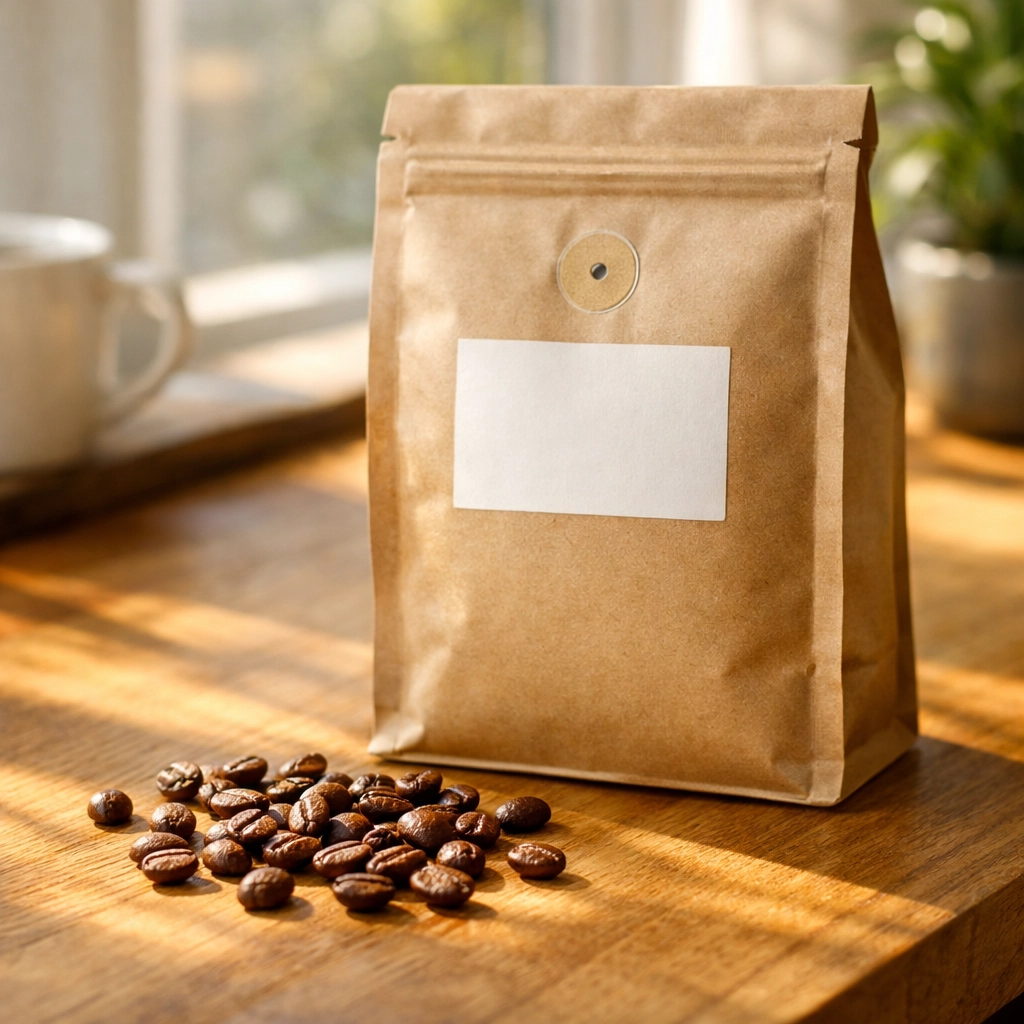
    Freshly roasted coffee beans resting in a bag on a sunlit counter to allow for degassing.


    2. Overloading the Roaster (For the Home Roasting Hobbyists)

    We know the feeling. You’ve got a bag of green beans and you want to get through them so you can start drinking. It’s tempting to cram as many beans as possible into your home roaster to save time. However, roasting is all about airflow and heat transfer.

    When you overload the roasting chamber, you restrict the movement of hot air. Instead of the beans tumbling and roasting evenly, they end up "baking" or roasting inconsistently. Some beans will be scorched on the outside while remaining raw in the middle, while others might not reach the necessary temperature at all.

    The Fix: Stick to the manufacturer's recommended batch size. If you’re just starting out, we actually suggest going slightly under the limit: maybe 100g to 200g. This ensures the beans have plenty of room to dance around in the heat. Even roasting is the secret to a clean, sweet cup. If you're looking for that perfect consistency without the DIY headache, you can always check out our range of freshly roasted single origins where we've done the hard work for you.


    3. Ignoring the "Cracks"

    If you’re roasting at home, you need to use your ears as much as your eyes. Coffee goes through two distinct audible milestones during the roast: First Crack and Second Crack.

    First Crack sounds like popcorn popping. This is the moment the moisture inside the bean turns to steam and breaks through the cell wall. It’s a signal that the light-to-medium roast stage has begun. Second Crack sounds more like the "snap, crackle, and pop" of cereal; it’s more delicate and indicates you’re moving into dark roast territory. Ignoring these cues is a recipe for disaster.

    The Fix: Listen carefully. For a bright, acidic "blonde" or light roast, you’ll want to stop the roast shortly after First Crack begins. For a "City Roast" (a nice medium), give it about a minute or two of development time after First Crack finishes. We generally advise against going too far into Second Crack unless you really love that smoky, oily profile, as it can hide the unique characteristics of the bean’s origin.


    4. Grinding Way Too Far Ahead

    This is perhaps the most common mistake of all. You buy a bag of beautiful, fresh roasted beans, and then you grind the whole bag at once to "save time."

    The problem is surface area. As soon as you grind a coffee bean, you increase the surface area exposed to oxygen by thousands of percent. Oxidation happens almost instantly. Those volatile aromatic compounds: the stuff that makes coffee smell like blueberries, chocolate, or jasmine: begin to evaporate the moment the bean is shattered. Within 15 to 20 minutes, pre-ground coffee has already lost a significant portion of its magic.

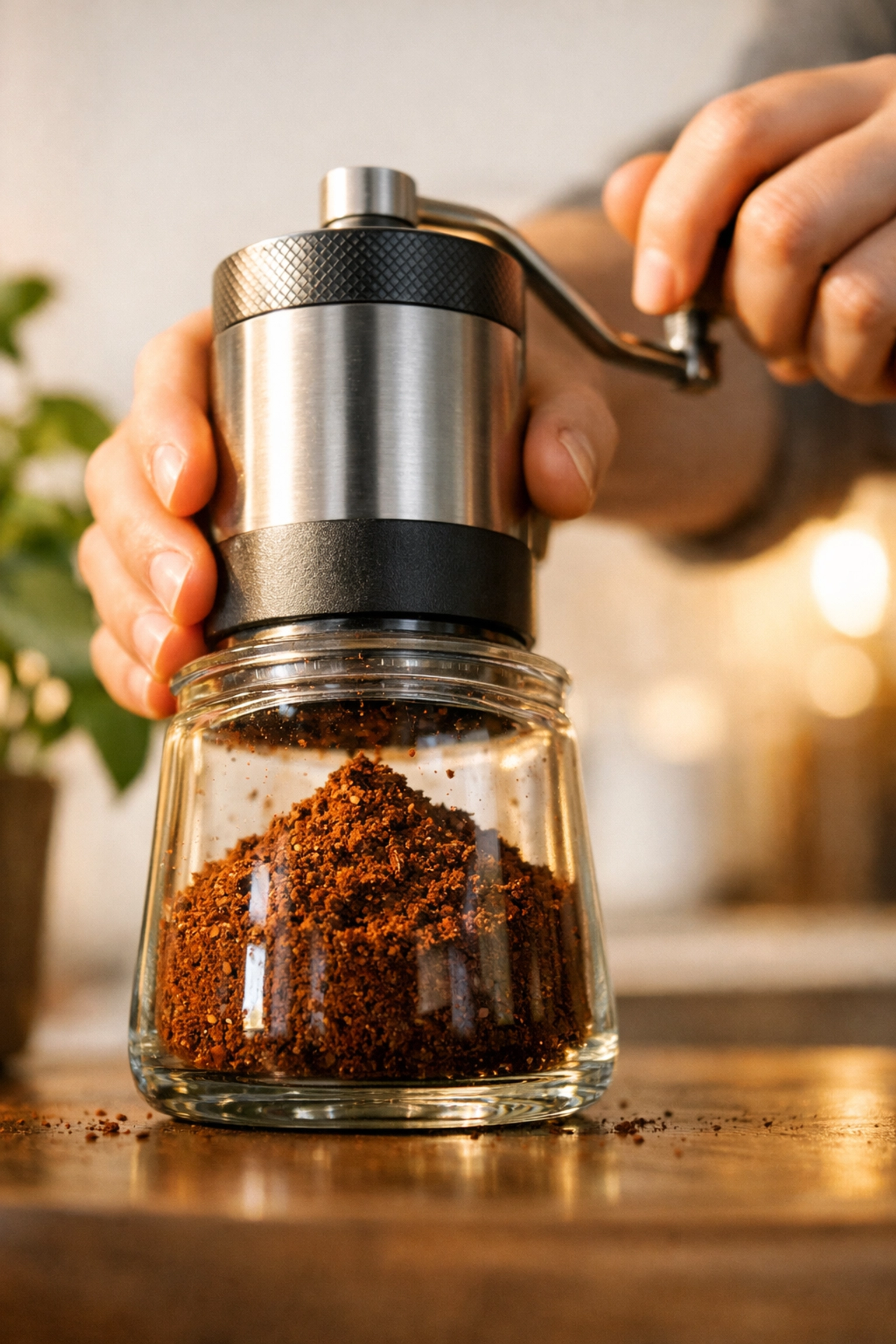
    The Fix: Invest in a decent burr grinder. It doesn’t have to be a commercial-grade beast, but it should be a burr grinder rather than a blade grinder to ensure consistency. Grind your beans immediately before you brew. If you’re still choosing espresso equipment, prioritize the grinder as much as the machine. It’s that important.

    Manual coffee grinder with fresh grounds, highlighting the importance of grinding before brewing.


    5. Using Water That's "Too Hot" (or Too Cold)

    We’ve all been told to use "boiling water," but in the world of speciality coffee, that’s actually a bit of a myth. If you pour rolling, boiling water (100 °C / 212 °F) directly onto your grounds, you risk "scorching" the coffee, which brings out unpleasant, bitter ash-like flavors. Conversely, if the water is too cool (below 88 °C / 190 °F), you won’t extract enough of the sugars and oils, leaving you with a sour, thin, and watery cup.

    The Fix: Aim for the "Goldilocks zone" of 195°F to 205°F (roughly 90.5°C to 96°C). If you don't have a temperature-controlled kettle, simply let your kettle sit for about 30 to 60 seconds after it finishes boiling before you pour. Light roasts generally benefit from the higher end of that scale (around 95 °C) to help extract those dense flavors, while darker roasts shine at the lower end (around 91 °C) to keep bitterness at bay.


    6. Roasting Too Fast (The "Flash" Mistake)

    In a world where we want everything now, it’s tempting to crank up the heat to finish a roast in five minutes. However, rushing the process results in what we call "underdevelopment." The outside of the bean looks a beautiful chocolatey brown, but the inside is still essentially raw. It’s like cooking a steak on a blowtorch: burnt on the outside, blue on the inside.

    The Fix: Use a "low and slow" approach. Start at a moderate temperature: around 350°F (175°C): and gradually increase it. You want your total roast time to land somewhere between 8 and 12 minutes. This ensures the heat has time to penetrate to the center of the bean, developing those complex sugars properly.


    7. Eyeballing Your Ratios

    "Two scoops and a bit more" is not a recipe; it's a gamble. Because different coffees have different densities (a dark roast is much less dense than a light roast), a "scoop" can vary significantly in weight. If you're using too much water, you’ll over-extract the coffee and get bitterness. Too little water, and it’ll be a sour, concentrated mess.

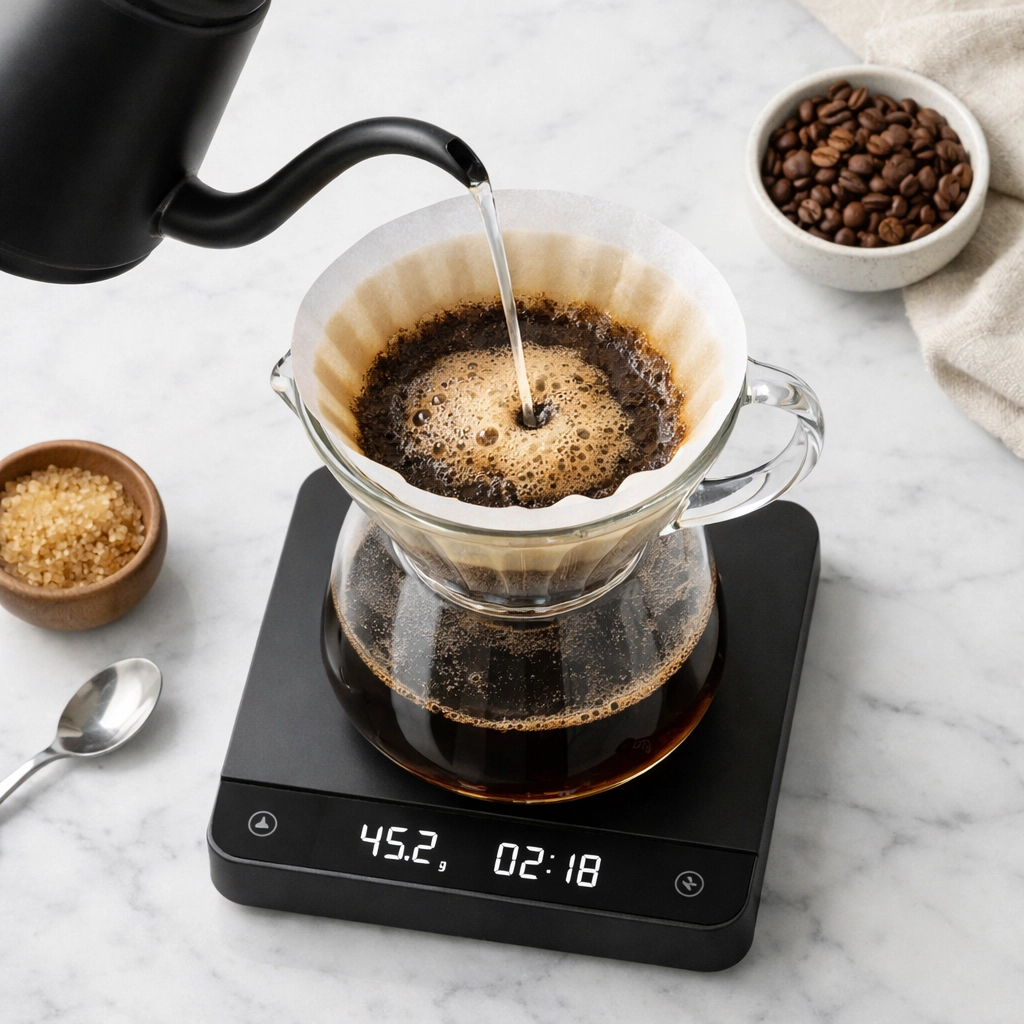
    The Fix: Use a scale. We can't stress this enough. Weighing both your coffee and your water is the only way to get consistent results every single morning. A standard starting ratio is 60g of coffee per 1 liter of water (or a 1:16 ratio). If you find that a bit confusing, we actually have a coffee brewing calculator on our site that does the math for you. It’s a game-changer, honestly.

    Pour-over coffee brewing on a digital scale to ensure precise coffee to water ratios.


    Bringing It All Together

    Brewing (or roasting) coffee is a journey. It’s part science, part art, and a whole lot of personal preference. We don't expect everyone to be a world-class barista overnight, but avoiding these seven mistakes will put you miles ahead of the average drinker.

    At the end of the day, the quality of your cup starts with the quality of your beans. If you start with stale, low-grade coffee, no amount of perfect water temperature or resting time will save it. But when you start with something special: like the beans we source and roast at Limini Coffee: and you treat them with a little bit of respect, the results are nothing short of transformative.

    So, take a second to check your water temp, wait a few days for that bag to degas, and please, for the love of all things caffeine, grind your beans fresh. Your taste buds will thank you.

    If you ever feel stuck or want to dive deeper into the technical side of things, we offer a range of barista training courses that cover everything from milk texture to advanced extraction. We're here to help you make the best coffee of your life.

    Happy brewing!

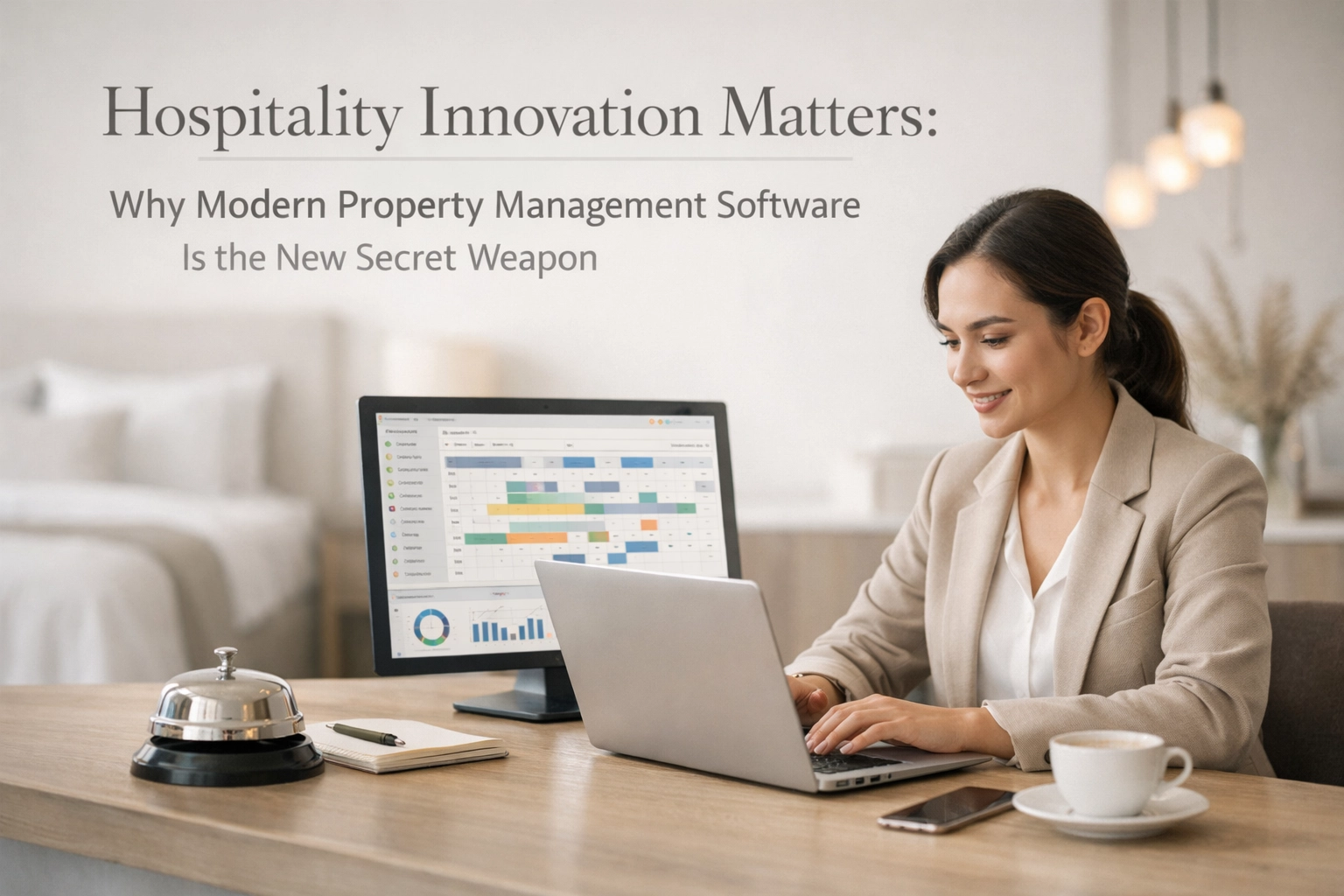
  • Hospitality Innovation Matters: Why Modern Property Management Software Is the New Secret Weapon

    Hospitality Innovation Matters: Why Modern Property Management Software Is the New Secret Weapon

    Stop fighting your software. Start delighting your guests. Master the art of the modern stay.

    In the high-stakes world of hospitality, your Property Management System (PMS) is either the engine driving your growth or the anchor dragging you down. We believe that technology should be invisible, a silent partner that empowers your team to do what they do best: provide incredible service. When you move away from legacy systems that feel like they were designed in the era of dial-up, you unlock a level of operational excellence that was previously unimaginable.

    Hotels transitioning to modern, cloud-native platforms are seeing transformative results: an 8.1% increase in occupancy and a staggering 25.2% jump in RevPAR. This isn't just about changing software; it’s about changing your entire business model, all from one innovative platform.

    Efficiency is the new luxury

    We think the best guest experience starts in the back office. If your staff is bogged down by manual data entry, they aren't looking your guests in the eye. They’re looking at a flickering screen, apologizing for a slow system. Modern innovation fixes this by automating the mundane, the repetitive, and the frankly boring.

    Operational efficiency isn't just a buzzword; it’s a competitive advantage.

    • Automate everything. From reservation processing to invoice generation, let the machines handle the paperwork.
    • Empower your team. Give your staff mobile tools that allow them to manage the hotel from the palm of their hand.
    • Eliminate errors. Real-time syncing means no more double bookings or lost maintenance requests.

    Consider your housekeeping team. In the old world, they’d wander the halls with clipboards, guessing which rooms were ready. With modern tech, integrated mobile housekeeping tools result in 20–30% efficiency gains. Turnover speed increases, coordination improves, and the "is my room ready yet?" conversation at the front desk becomes a thing of the past.

    Hotel employee managing room readiness with a mobile PMS tablet in a sun-lit modern guest room.

    Revenue isn't a guessing game

    Fragmented systems are expensive. In fact, running a hotel on disconnected software can cost you 12–15% in lost revenue opportunities every single year. That’s money left on the table because your systems weren't talking to each other.

    Innovation in hospitality technology means moving toward dynamic pricing and centralized data. We believe that every guest interaction is an opportunity to provide more value. A modern PMS identifies the guest who is celebrating an anniversary before they even step through the door. It suggests a spa package or a room upgrade exactly when the guest is most likely to say "yes."

    The numbers don't lie:

    • 16.1% increase in ADR. Modern systems optimize your pricing based on real-time demand.
    • 25.2% growth in RevPAR. Better visibility leads to better profitability.
    • Zero revenue leakage. Centralized operations mean every coffee, every late check-out, and every minibar item is accounted for.

    "Switching to a modern platform saved our management team 10 hours a week on reporting alone," says one of our partners. That’s 10 hours put back into strategy, guest connection, and growth.

    The AI revolution is already here

    AI in hospitality is often discussed as a "future" trend, but the future arrived while we were all busy checking in guests. We’re seeing AI transition from a gimmick to a core operational pillar. It’s not about robots carrying suitcases (though that’s cool, too); it’s about predictive intelligence.

    Imagine a system that predicts your maintenance needs before a pipe even leaks. Or an AI-driven guest communication tool that handles 80% of routine inquiries: like "what’s the Wi-Fi password?": instantly and in any language. This leaves your human staff to handle the complex, emotional, and high-value interactions that define true hospitality.

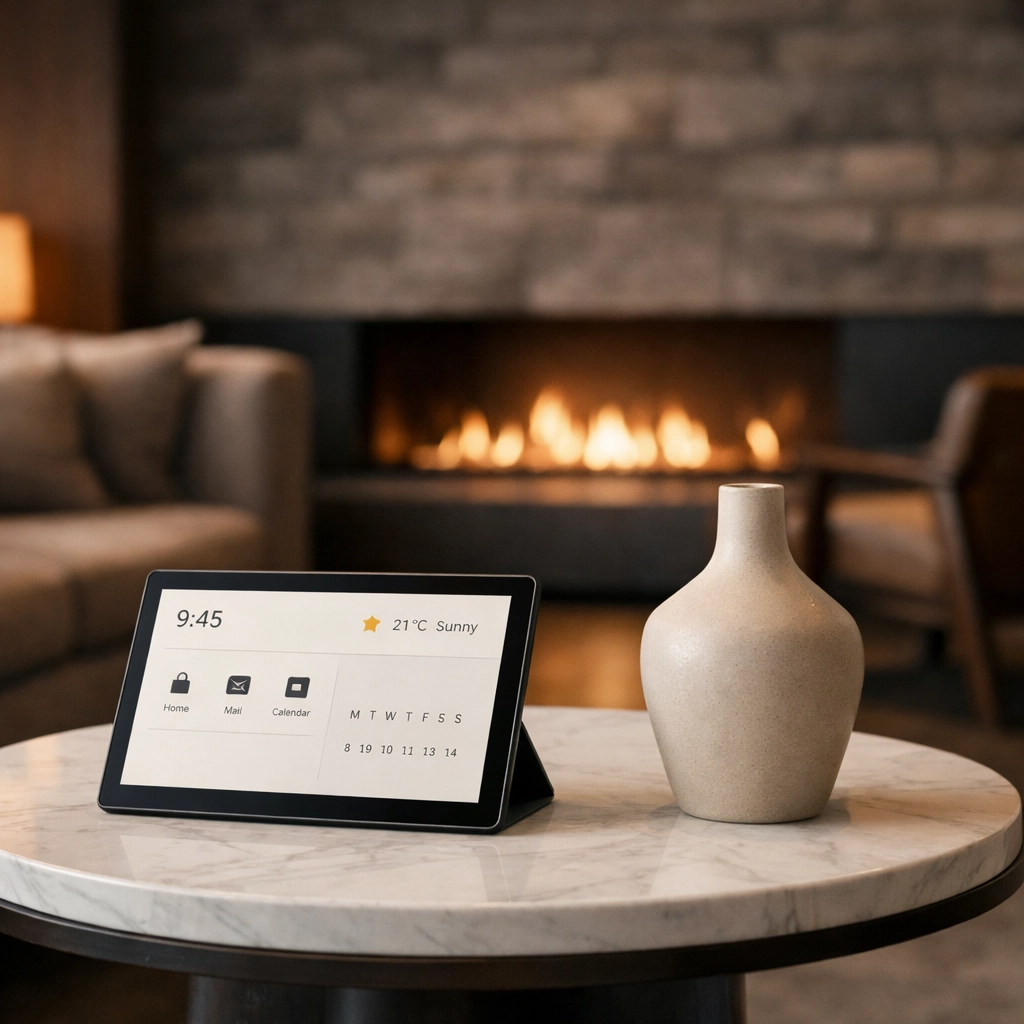
    A minimalist hotel lounge featuring a guest service tablet powered by AI property management software.

    We believe the most successful hotels of 2026 and beyond will be the ones that use AI to become more human, not less. By offloading the mechanical tasks to intelligent software, your team is free to create those "wow" moments that drive five-star reviews and lifelong loyalty.

    Data-driven decisions in real-time

    Waiting until the end of the month to see how your property performed is like trying to drive a car while looking only at the rearview mirror. You might see where you’ve been, but you’re going to miss the turn coming up.

    Modern property management is about real-time visibility.

    1. Monitor instantly. Check occupancy, revenue, and guest feedback the moment it happens.
    2. Adjust dynamically. Shift your pricing or staffing levels based on live data.
    3. Forecast accurately. Use historical data and AI trends to predict your next peak season.

    When you have a centralized dashboard for all your properties, you stop managing by gut feeling and start managing by insight. This visibility supports a more responsive operational style that can pivot as fast as the travel market does.

    Why Mews is the secret weapon

    At Mews, we don't just build software; we build the future of hospitality. We are a leader in guest experience because we understand that the stay starts long before the guest arrives and ends long after they leave. Our platform is designed to be the heart of your hotel, connecting everything from your booking engine to your smart locks.

    We’ve seen 12,500 properties transform their operations by embracing innovation. It’s about more than just a check-in; it's about creating a seamless, frictionless journey for every traveler.

    If you're ready to see how a modern cloud-native PMS can redefine your business, check out the Mews platform here. It’s designed to get you earning more revenue and spending less time on admin in no time.

    The Guest Journey: Beyond the Lobby

    The modern guest doesn't want to stand in a line. (Actually, does anyone like lines?) Innovation allows you to kill the traditional front desk. Mobile check-in, digital keys, and self-service kiosks mean your guests can go straight to their room: or to the bar: without the friction of a 15-minute paperwork session.

    Guest using a mobile check-in app and digital key to unlock a hotel room door via a smartphone.

    This freedom is what modern travelers crave. They want to be in control of their stay. By providing tools that allow them to message the front desk, book a dinner table, or request more towels from their own smartphone, you aren't just being "techy": you're being thoughtful.

    Operational Excellence: The Quiet Winner

    We think the secret to a great hotel is a happy team. High turnover has plagued this industry for years, often because the work is repetitive and the tools are frustrating. When you implement a PMS that actually works: one that is intuitive and easy to learn: you reduce the stress on your employees.

    • Easy onboarding. Train new staff in minutes, not weeks.
    • Less friction. No more fighting with printers or crashing legacy systems.
    • Better communication. Housekeeping, maintenance, and the front desk all see the same data at the same time.

    When the technology "just works," your team can focus on the guest. That’s the true definition of operational excellence. It’s the invisible foundation that allows the visible parts of your hotel to shine.

    Conclusion: The Future is Built on Innovation

    The hospitality landscape is shifting. Travelers are more tech-savvy, expectations are higher, and the competition is fiercer than ever. Relying on outdated property management software is no longer just a minor inconvenience: it’s a business risk.

    Embracing modern innovation is the secret weapon that allows you to scale your business, maximize your revenue, and provide a guest experience that feels like magic. It’s time to move beyond the limitations of the past and step into a platform built for the future.

    Ready to lead the pack? Discover how the right technology can transform your property. Join the hospitality revolution with Mews. We’ll get you set up and focused on what matters most: your guests.

  • The Guide to Coffee Dropshipping UK: Scale Your Business Without the Stress

    The Guide to Coffee Dropshipping UK: Scale Your Business Without the Stress

    So, you want to start a coffee brand? It’s a brilliant idea. The UK’s appetite for high-quality, ethically sourced beans is at an all-time high. But then the reality hits. You start looking at the price of industrial roasters (ouch), the cost of warehouse space in the UK (double ouch), and the logistics of hand-packing 50 bags of coffee at 11 PM on a Tuesday.

    Suddenly, the dream feels like a lot of heavy lifting.

    This is where coffee dropshipping UK comes into play. It’s the ultimate "shortcut" that doesn't sacrifice quality. We’ve seen hundreds of entrepreneurs go from "just an idea" to a fully functioning coffee brand in weeks, not years, simply by leveraging the right partners.

    At Limini Coffee, we believe that you shouldn't need a massive bank balance to share great coffee with the world. If you’ve got the brand and the passion, we’ve got the roaster and the postman.


    What Exactly is Coffee Dropshipping?

    Let’s strip away the jargon. Dropshipping is a retail fulfillment method where you, the store owner, don't keep the products you sell in stock. Instead, when you sell a bag of coffee, you purchase it from us (the roaster), and we ship it directly to your customer.

    The customer thinks the coffee came straight from your boutique HQ. In reality, it was roasted, packed, and labeled right here at Limini Coffee.

    Why is this a game-changer?

    1. Zero Inventory Risk: You don't have 50kg of beans going stale in your spare room.
    2. No Upfront Roaster Costs: You don't need to drop £20k on a Probat.
    3. Total Scalability: Whether you sell five bags or five thousand, your workload stays basically the same.

    If you’re ready to see how this works in practice, you can explore our wholesale and dropshipping options here.


    Why the UK Market is Ready for Your Brand

    The UK coffee scene has evolved. People are moving away from the "dust in a jar" instant stuff and looking for something special. They want origin stories, they want sustainability, and they want freshness.

    When you look for coffee dropshipping UK, you’re looking for a partner who understands the local palate. Shipping coffee from overseas is a nightmare, it’s slow, it’s expensive, and by the time it clears customs, that "freshly roasted" smell is a distant memory. By partnering with a UK-based roaster like us, your customers get their coffee within days of it being roasted.

    Fresh is best. It’s that simple.

    Freshly roasted coffee in a white mug next to a minimalist kraft bag for coffee dropshipping UK.


    The Limini Way: Quality Without the Headache

    We’ll be honest: not all dropshipping is created equal. A lot of services out there use "commodity grade" coffee. It’s bitter, it’s old, and it’s frankly a bit boring.

    At Limini Coffee, we only deal with Speciality Coffee. This means every bean has a high cupping score and a transparent supply chain. We treat our dropshipping partners exactly like our high-end cafe clients. You get access to the same sourcing expertise that we pride ourselves on.

    No Setup Fees? Really?

    Yes, really. We’ve noticed that many companies charge a "membership fee" just for the privilege of selling their coffee. We think that’s a bit of a shame. We want you to succeed, because when you sell more coffee, we roast more coffee. It’s a partnership.

    We offer a white-label service where we put your labels on our bags. Your customers see your beautiful branding, and they taste our expertly roasted beans. It’s a win-win.


    How to Set Up Your Coffee Empire (Step-by-Step)

    1. Define Your Brand

    Are you selling to the "early morning gym-goer" who needs a high-caffeine punch? Or the "Sunday morning connoisseur" who wants a delicate Ethiopian Yirgacheffe? Your brand is your superpower. Since you aren't roasting the coffee yourself, your focus should be 100% on the customer experience and marketing.

    2. Choose Your Beans

    Don't offer fifty different coffees. It’s overwhelming. Start with three:

    • A crowd-pleasing house blend (great for lattes).
    • A single-origin with a unique profile (like something fruity or floral).
    • A top-tier decaf (because decaf drinkers deserve great coffee too!).

    3. Design Your Labels

    This is where the magic happens. We provide the coffee, but the label is all you. You’ll need to ensure your labels meet UK food standards (weight, ingredients, etc.), but beyond that, the world is your oyster. High-quality labels make the difference between a "hobby" and a "premium brand."

    4. Build Your Online Store

    Most of our partners use Shopify. It’s robust, easy to use, and integrates perfectly with the dropshipping model. You can set up your store to automatically send orders to us, or you can place them manually through our portal.

    An entrepreneur managing their online coffee store from a minimalist workspace with fresh coffee.


    The Tech Side: Automating Your Freedom

    The beauty of coffee dropshipping UK is the automation. Imagine you’re on holiday, and you get a notification on your phone: New Order – £45.00.

    In a traditional business, you’d be stressed about who is going to pack that order. In a dropshipping model, that order flows through to us. We print your label, we pick the freshly roasted beans, we pack the box, and we ship it.

    This means you can focus on:

    • SEO: Ranking for keywords like "best organic coffee UK."
    • Social Media: Showing off those latte art shots.
    • Customer Service: Building a community of loyal coffee lovers.

    If you’re curious about how we handle the logistics and the roasting, check out how we do things at Limini.


    Money Talk: Margins and Pricing

    Let's talk numbers. To run a sustainable business, you need a healthy margin.

    Typically, a 250g bag of speciality coffee in the UK retails between £9 and £14, depending on the rarity and the brand positioning. Your wholesale/dropshipping cost will be significantly lower than that, leaving you room for:

    • Marketing costs (Facebook/Instagram ads).
    • Shopify monthly fees.
    • Profit for your back pocket.

    We recommend aiming for at least a 40-50% gross margin. Because you don't have the overhead of a physical shop or a roastery, a lot more of that "gross profit" turns into "net profit."


    Common Myths About Coffee Dropshipping

    "Customers will know it’s not from me."
    Not if you do it right. We use "blind" shipping, meaning our name doesn't appear on the external packaging or the shipping label. As far as the customer knows, it came from your "distribution center."

    "The coffee won't be fresh."
    Actually, it’s often fresher than what you’d find in a small cafe. Because we roast in high volumes for many clients, our beans are constantly moving. We roast to order, meaning the coffee is usually dispatched within 24-48 hours of leaving the roaster.

    "I can't offer coffee gear."
    Actually, you can! Many of our partners choose to sell espresso machines or brewing kits alongside their beans to increase their average order value. While we specialize in the beans, we can help guide you on what equipment your customers might actually want.

    Enjoying the freedom of a stress-free coffee dropshipping business from a sunny outdoor patio.


    Is Dropshipping Right for You?

    We’ll be the first to say it: dropshipping isn't for everyone. If your dream is to stand over a 12kg roaster and get covered in chaff and silver skin every morning, then you should probably look into our barista training and save up for a machine.

    But, if your dream is to build a lifestyle business, a creative brand, or a side hustle that has the potential to become a full-time career without the massive capital risk: then coffee dropshipping UK is your best bet.

    It’s about working smarter, not harder. It’s about leveraging our 20+ years of roasting experience so you can focus on what you’re good at: selling.


    Ready to Start?

    The best time to start was yesterday. The second best time is today. The UK coffee market isn't slowing down, and there is always room for a brand with a unique voice and great-tasting beans.

    If you’re ready to take the leap, we’d love to help you. No complicated contracts, no scary setup fees: just great coffee delivered to your customers.

    Take the first step toward your own coffee brand:
    Visit Limini Coffee and let's get roasting!

    We’ve spent years perfecting our craft so that you can look like an expert from day one. Let’s build something brilliant together. 🙂

  • Are You Still Doing Your Own Admin? How to Save 10+ Hours Every Week with Business Automation Tools

    You’re staring at your screen. It’s 6:00 PM. Your "real" work, the stuff that actually grows your business, hasn’t even started yet. Why? Because you’ve spent the last eight hours playing digital paper-pusher.

    You’ve been chasing calendar invites. You’ve been manually copying lead data from an email into a spreadsheet. You’ve been trying to remember what exactly was decided in that 10:00 AM Zoom call.

    It’s exhausting… and it’s completely unnecessary.

    In 2026, doing your own admin isn't a sign of hard work. It's a sign that you haven't discovered the right business automation tools yet. You’re leaving at least 10 hours on the table every single week. Imagine what you could do with an extra 40 hours a month. You could scale. You could sleep. You could actually have a weekend.

    Let’s look at how to get those hours back.

    1. Automate Admin Tasks: How to Save 10+ Hours Every Week

    ☕ 7:00 AM. Your day hasn't even started, but the anxiety has. You know there are at least three dozen "quick tasks" waiting to hijack your morning.

    The secret to saving time isn't working faster. It's making sure the work never reaches your desk in the first place.

    THE MEETING TRAP

    You spend an hour in a meeting. Then you spend thirty minutes writing the summary, another ten minutes assigning tasks, and five more minutes realizing you forgot to hit "record."

    Stop. Just stop.

    AI-powered business automation tools now handle the entire lifecycle of a conversation. They record, transcribe, and, most importantly, extract the "who does what by when" automatically.

    Comic illustration of business automation tools rescuing an overwhelmed office worker from tedious admin tasks.

    THE SCHEDULING DANCE

    "Does Tuesday at 2:00 work?"
    "No, how about Wednesday at 4:00?"
    "I can do Wednesday, but only if it's 4:15."

    This is a ghost-task. It’s a parasite on your productivity. In 2026, if you aren't using an automated scheduler that integrates with your CRM, you’re losing 2 hours a week just on email back-and-forth. Modern tools like those highlighted at Marblism ensure that the moment a lead shows interest, they’re booked, synced, and notified, without you lifting a finger.

    DATA ENTRY IS A CHOICE

    If you are manually typing information from one app to another, you aren't a business owner, you're a bridge.

    • The Lead Flow: A prospect fills out a form. They get an automated "Hello." Their details are sent to your CRM. A Slack notification hits your phone.
    • The Invoice: A project is marked "Complete." An invoice is generated. A follow-up is scheduled for 7 days later if it’s unpaid.

    None of this requires your brain. It just requires a system.

    "I used to spend my entire Sunday night prepping for the week. Now? I don't even open my laptop until Monday morning. Everything just… happens." , Sarah, Small Agency Owner

    If you want to stop the grind, you need to see how the pros do it. Check out the latest in automation over at https://marblism.link/scott-bowen.


    2. The Best AI Assistant for Small Business in 2026

    📱 11:00 AM. Your phone is buzzing. Your inbox is a crime scene. You need a dedicated assistant, but your budget says "maybe next year."

    Except it’s 2026. The ai assistant for small business isn’t just a glorified chatbot anymore. It’s a digital employee that actually knows your business.

    BEYOND THE CHATBOX

    The old assistants could tell you the weather or set a timer. The new ones? They have context. They know who your top 10 clients are. They know your pricing tiers. They know your brand voice.

    An ai assistant for small business today can:

    • Draft responses to "frequently asked questions" that actually sound like you.
    • Monitor your inventory and suggest a reorder before you run out.
    • Scan your emails for "urgent" sentiment and move those to the top.

    A professional AI assistant for small business managing multiple digital tasks and email filters efficiently.

    THE VIRTUAL GATEKEEPER

    Your biggest productivity killer is interruption. Your AI assistant acts as the filter. It handles the low-level noise, the "is this still available?" or "can I get a quote?", and only lets the high-value opportunities through to your inbox.

    It’s about protecting your focus.

    THE MEMORY FACTOR

    The most powerful feature of an AI assistant in 2026 is its memory. It remembers that a client mentioned their kid’s graduation three months ago. When you go to draft an email, the AI suggests adding a personalized note about it.

    That’s not just automation. That’s relationship building at scale.

    "It’s like having a chief of staff for the price of a Netflix subscription." , Mark, E-commerce Founder

    Scaling shouldn't be this hard. But here we are. You can get the same edge the big guys have by using the tools found at https://marblism.link/scott-bowen.


    3. AI Content Generator for Small Business: Your Secret Marketing Weapon

    🔍 2:00 PM. You know you need to post to LinkedIn. You know you need an email newsletter. You know you need a blog post for SEO.

    But the cursor is just blinking. Staring at you. Judging you.

    The ai content generator for small business is no longer about pumping out robotic, soulless text. In 2026, it’s about taking your unique ideas and turning them into a content machine.

    STOP REINVENTING THE WHEEL

    You had a great conversation with a client this morning. You shared three tips that really helped them.

    In the old days, that knowledge stayed in that one call.
    Today? You feed that transcript into your ai content generator for small business.

    Within 60 seconds, you have:

    • A 1,000-word blog post.
    • A three-part email sequence.
    • Five LinkedIn posts.
    • A script for a 60-second video.

    An AI content generator for small business exploding with creative marketing posts and social media content.

    THE BRAND VOICE REVOLUTION

    The biggest fear used to be "AI sounds like a robot." Not anymore. Modern tools allow you to upload your previous writing so the AI learns your rhythm, your quirks, and your specific industry jargon.

    It doesn't write for you. It writes as you.

    SEO WITHOUT THE HEADACHE

    Keywords, meta-descriptions, H1 tags… it’s enough to make your head spin. A high-quality content generator handles the technical side of SEO while you focus on the strategy. You get the traffic without having to become a full-time Google whisperer.

    🤝 4:00 PM. The content is scheduled. The leads are being nurtured. The admin is handled.

    You stand back. You look at your dashboard.
    The chaos is gone.

    Everything is organized. Everything is moving. And you? You’re going to leave the office on time today.

    "I thought AI would make my business feel cold. It actually did the opposite, it gave me the time to be more human with my clients." , Elena, Consultant

    Stop fighting the future. The tools are ready. The question is: are you?

    The secret marketing weapon you’ve been looking for is waiting. See how to start generating results at https://marblism.link/scott-bowen.

    A triumphant business owner saving time and achieving work-life balance through automated business systems.

    FAQS ABOUT BUSINESS AUTOMATION

    Is it hard to set up?
    No. Most tools in 2026 are "plug and play." If you can use a smartphone, you can automate your admin.

    Will I lose the personal touch?
    Quite the opposite. By automating the boring stuff, you have more time for real, high-value human interactions.

    Is it expensive?
    It’s much cheaper than hiring a full-time assistant or losing 10 hours of your billable time every week.

    Does it work for any industry?
    Yes. Whether you’re a plumber, a lawyer, or a SaaS founder, admin is the universal tax on your time. Automation is the refund.

    🌙 6:00 PM. The lights are off. Your computer is closed. You're heading home.

    The day was productive, but not exhausting.
    That’s the power of automation.

    SCALING SHOULDN'T BE THIS EASY. BUT HERE WE ARE.

    Go see for yourself: https://marblism.link/scott-bowen