Blog

  • Why Travel Tech Innovation Will Change the Way You Scale in 2026

    Why Travel Tech Innovation Will Change the Way You Scale in 2026

    Automate. Optimize. Ascend.

    The hospitality landscape isn’t just shifting; it’s being entirely rewritten. It’s March 2026, and the gap between hotels that "manage" and hotels that "scale" has become a canyon. If you’re still relying on manual workflows and siloed data, you’re not just behind: you’re invisible to the modern traveler.

    We’re seeing properties increase their operational efficiency by over 40% while simultaneously raising guest satisfaction scores. This isn't magic. It’s the result of a unified approach to travel tech. All from one innovative hospitality platform.

    The end of the "Headcount equals Growth" myth

    For decades, the industry operated on a simple, albeit flawed, logic: if you want to grow, you hire more people. More front desk agents. More night auditors. More manual coordinators.

    In 2026, that logic is officially dead.

    We believe that human talent is too precious to waste on data entry. With global personnel shortages still a reality, scaling now requires a "digital-first" mindset. AI-driven automation has moved from a "nice-to-have" feature to the primary engine of profitability. By automating end-to-end processes: from the initial booking to the final tax invoice: you can handle double the volume without doubling your staff.

    • Eradicate manual check-in queues forever.
    • Synchronize inventory across every channel in real-time.
    • Empower your team to focus on high-value guest interactions.

    Automated hotel check-in at a modern reception desk allowing staff to focus on guest interaction.

    Meet your new guest: The Autonomous AI Agent

    This is where things get really interesting. We’ve moved beyond travelers booking on their laptops. Today, your guest is just as likely to be an autonomous AI agent.

    By the end of this year, half a billion smartphone users will be carrying digital identity wallets. These aren’t just for storing credit cards; they’re trust infrastructures. These AI agents can negotiate rates, verify identity, and finalize a booking on behalf of a human traveler: all without a single click from the user.

    If your tech stack can’t "talk" to these agents, you’re missing out on a massive, frictionless revenue stream. To scale in 2026, your PMS must be an open ecosystem, ready to verify biometrics and process digital identities instantly. It’s about building a bridge between your property and the traveler’s digital self.

    "We used to spend hours every week just verifying IDs and chasing payments. Now, the system handles it before the guest even steps foot on the property. It’s freed up 15 hours of my week." : Sarah J., Boutique Hotel Group Manager.

    Hyper-personalization is now an automated standard

    In the past, personalization was hard. It meant guest preference notes scribbled in a CRM that nobody looked at. It meant a "welcome back" that felt scripted and hollow.

    In 2026, big data and IoT sensors have changed the game. Scaling your guest experience no longer requires a concierge with a photographic memory. It requires a platform that remembers everything for you.

    We think the best service is the one the guest doesn't have to ask for. IoT-enabled rooms now automatically adjust lighting, climate, and even entertainment based on a guest’s profile the moment they arrive.

    • Predictive analytics suggest the perfect upsell at the perfect time.
    • Smart rooms sync with guest wearables for a seamless transition from home to hotel.
    • Environmental sensors optimize comfort across thousands of rooms simultaneously.

    This is hyper-personalization at scale. You’re not just selling a room; you’re selling an environment that knows its inhabitant.

    Smart hotel room technology on a minimalist nightstand showing personalized guest experience automation.

    The power of the frictionless ecosystem

    Friction is the enemy of scale. Every time a guest has to stop, pull out a passport, wait for a key, or sign a paper receipt, your growth hits a bottleneck.

    The most successful brands in 2026 are those that have achieved "zero-friction" operations. This is made possible by the consolidation of biometrics, digital wallets, and deep connectivity. Imagine a traveler moving from the airport curb to their hotel room without ever reaching for a wallet or a physical ID.

    This hyperconnected ecosystem isn't just about guest convenience; it’s about operational throughput. When you remove the friction, you can move more people through your system more efficiently. You can turn rooms faster, process payments instantly, and eliminate the errors that come with manual handling.

    We believe in a world where the technology stays out of the way. It should be the invisible hand that makes everything feel effortless.

    Why data-driven decisions are your best scaling tool

    Scaling isn't just about doing more; it’s about doing the right things. In 2026, "gut feeling" has been replaced by real-time data analytics.

    Modern travel tech allows you to see patterns before they become problems. You can see demand surges months in advance and adjust your pricing strategy dynamically. You can identify which guest segments are the most profitable and tailor your marketing specifically to them.

    12,500 properties are already using these insights to outpace their competition. They aren't guessing where to invest their next dollar; they’re letting the data show them the way.

    • 30% increase in RevPAR through dynamic AI pricing.
    • 95% accuracy in occupancy forecasting.
    • Real-time reporting that actually makes sense.

    Hospitality data analytics dashboard on a laptop for strategic hotel revenue and occupancy planning.

    The Mews advantage: Built for the future

    Scaling in 2026 requires more than just a software update. It requires a fundamental shift in how you think about your business. You need a partner that is as innovative as you are.

    At Mews, we’ve built a platform designed for the next era of hospitality. We don't just follow trends; we set them. Our focus is on creating a seamless experience for both your guests and your staff, ensuring that as you grow, your complexity doesn't.

    We think hospitality should be about people, not processes. That’s why we’ve built the most flexible, open, and automated PMS on the market. Whether you’re managing a single boutique hotel or a global portfolio, our tech scales with you.

    Take the next step in your scaling journey

    The future of travel tech is here, and it’s waiting for you to lead. Don't let the innovations of 2026 pass you by while you're stuck in the workflows of 2020.

    Ready to see how the right technology can transform your property? It’s time to move beyond the status quo and embrace a platform that empowers you to scale effortlessly.

    Modern architectural hotel terrace at dusk representing the innovative future of scalable hospitality.

    Schedule a 30-minute demo today and see what the future of hospitality looks like in action.

    Get started with Mews today:
    https://referrals.mews.com/umqhyito

    Simple steps to start scaling today:

    1. Audit your current friction points. Where are your guests waiting? Where is your staff frustrated?
    2. Prioritize automation. Identify the three most repetitive tasks in your day and find a digital solution.
    3. Embrace the open ecosystem. Ensure your tech stack can talk to the latest AI agents and digital ID systems.
    4. Partner with leaders. Choose a platform that stays ahead of the curve so you don't have to.

    The world is moving fast. Your technology should move faster. We’ll see you in the future.
    https://referrals.mews.com/umqhyito

  • 7 Mistakes You’re Making with Your Hotel CRM (and How to Fix Them)

    7 Mistakes You’re Making with Your Hotel CRM (and How to Fix Them)

    Capture the guest. Scale the brand. Drive the revenue.

    Most hoteliers are sitting on a goldmine of guest data and letting it gather digital dust. It’s a common story. You invest in a CRM, but your team still relies on manual spreadsheets. You have the tech, but the guest experience still feels generic. It’s time to stop treating your CRM like a digital Rolodex and start treating it like the heartbeat of your operation.

    We believe that great hospitality isn't about managing rooms: it's about managing relationships. When your technology works, your staff is free to be human. When your data is clean, your marketing becomes magnetic. It’s all about moving from reactive management to proactive innovation.

    At Mews, we see thousands of properties navigating the digital shift. The most successful ones don't just "use" a CRM. They weave it into a cloud-native ecosystem that automates the boring stuff so they can focus on the remarkable.

    Here are the 7 biggest mistakes you’re making with your hotel CRM: and exactly how to pivot toward excellence, all from one innovative platform.

    1. Using Your CRM as a Glorified Spreadsheet

    The biggest mistake? Underutilization. Many sales and marketing teams treat their CRM as a static list of names and emails. They ignore the deep features like automated follow-ups, predictive analytics, and guest segmentation. If you’re only using your CRM to blast a monthly newsletter, you’re leaving money on the table.

    We think technology should do the heavy lifting for you. A CRM should tell you who your guests are before they even walk through the door.

    How to fix it:

    • Invest in comprehensive training to unlock automation workflows.
    • Use guest segmentation to send targeted offers based on past behavior.
    • Leverage predictive analytics to anticipate booking trends.

    Hotel reception desk with laptop showing CRM guest data from a self-check-in kiosk and hotel pms.

    2. The Integration Gap

    A CRM that doesn’t talk to your hotel pms is a silo. If a guest updates their preferences at a self-check-in kiosk, that data needs to live in your CRM instantly. When your systems are disconnected, you end up with manual data entry, double bookings, and: worst of all: frustrated guests who have to explain their pillow preferences for the third time.

    We believe in a connected ecosystem. Your booking engine, channel manager, and CRM should function as a single unit.

    How to fix it:

    • Choose a cloud-native platform like Mews that prioritizes open APIs.
    • Ensure real-time data syncing between your CRM and your hotel pms.
    • Automate the flow of information from the booking engine directly to guest profiles.

    3. Letting Your Data Go Stale

    Dirty data is the silent killer of ROI. Bounced emails, duplicate profiles, and outdated preferences make your CRM nearly useless. If your sales team can't trust the data, they won't use the system. It’s a vicious cycle that leads back to the very spreadsheets you tried to escape.

    Innovative hospitality requires clean, actionable insights.

    How to fix it:

    • Implement automated data validation to scrub duplicates.
    • Establish a "source of truth" (hint: it should be your cloud-native PMS).
    • Conduct quarterly data audits to keep your database lean and mean.

    4. Prioritizing Cost Over Hospitality Logic

    Hotels often pick a CRM because it was cheap or because it’s popular in the real estate or retail world. But hospitality is different. We deal with group blocks, event inquiries, and complex guest journeys. A generic CRM won’t understand the nuances of a 50-room wedding block or the specific needs of a corporate traveler.

    We think your software should speak your language.

    How to fix it:

    • Select a CRM specifically built for the hospitality industry.
    • Prioritize features like group booking management and event tracking.
    • Look for a partner that understands the guest journey from click to stay.

    Luxury hotel suite welcome tray highlighting the guest journey managed through a hospitality CRM.

    5. Blocking Automation with Manual Overrides

    It’s tempting to jump in and manually adjust prices or availability because of a "gut feeling." But when you constantly override your automation settings, you create inconsistencies. This leads to inaccurate updates across your channel manager and ruins the efficiency of your automated revenue strategy.

    Trust the machine. Let the automation do the routine work so you can handle the exceptions.

    How to fix it:

    • Set clear parameters for your automation and stick to them.
    • Use manual overrides only for genuine emergencies or unique events.
    • Document every override to identify if your automation rules need tweaking.

    6. Fearing the "New Way"

    Resistance to change is the final boss of tech implementation. If your staff is comfortable with legacy systems, they’ll find reasons to avoid the new CRM. They might see automation: like self-check-in kiosks: as a threat to their jobs rather than a tool that frees them to provide better service.

    We believe that automation doesn't replace people; it empowers them.

    How to fix it:

    • Communicate the "why" behind the tech: focus on time-saving benefits.
    • Identify "tech champions" within your team to lead the transition.
    • Use easy-to-use interfaces that reduce the learning curve for new hires.

    7. Ignoring the "Story" in the Data

    If you aren't running reports, you're just guessing. Many hotels collect data but never look at it. They don't know which channels bring the most profitable guests or which rate plans convert best. Decisions are made based on what happened last year, not what the data says is happening right now.

    Innovation starts with a question. The data provides the answer.

    How to fix it:

    • Make reporting a non-negotiable part of your weekly leadership meetings.
    • Track the lifetime value of guests, not just their one-time spend.
    • Analyze which booking sources have the highest conversion and lowest commission.

    Hotel manager workspace with tablet showing reporting analytics from the hotel pms and booking engine.

    The Mews Approach to CRM Excellence

    We don’t just build software; we build a better way to run a hotel. Mews is designed to be the core of your hospitality tech stack. Because we are cloud-native and automation-focused, we eliminate the friction that usually bogs down CRM performance.

    "Mews allowed us to stop being data entry clerks and start being hosts again. We saved 10 hours a week just by automating our guest profile syncing." : Verified Mews User

    Ready to transform your guest experience?

    Stop fighting your software and start scaling your brand. The future of hospitality is automated, integrated, and incredibly personal.

    • 30-minute setup for core features.
    • Easy to use for every staff member.
    • Seamless integration with your favorite CRM tools.

    Get started with Mews today and see how a truly innovative hotel pms can get you earning more revenue in no time.

    Let’s recap the wins:

    • Save time: Let automation handle the guest data.
    • Drive loyalty: Use personalized insights to wow your guests.
    • Scale fast: Use a cloud-native platform that grows with you.

    The mistakes of the past don't have to be the reality of your future. By fixing these seven CRM errors, you aren't just improving your software; you're elevating your entire guest journey. All from one innovative platform.

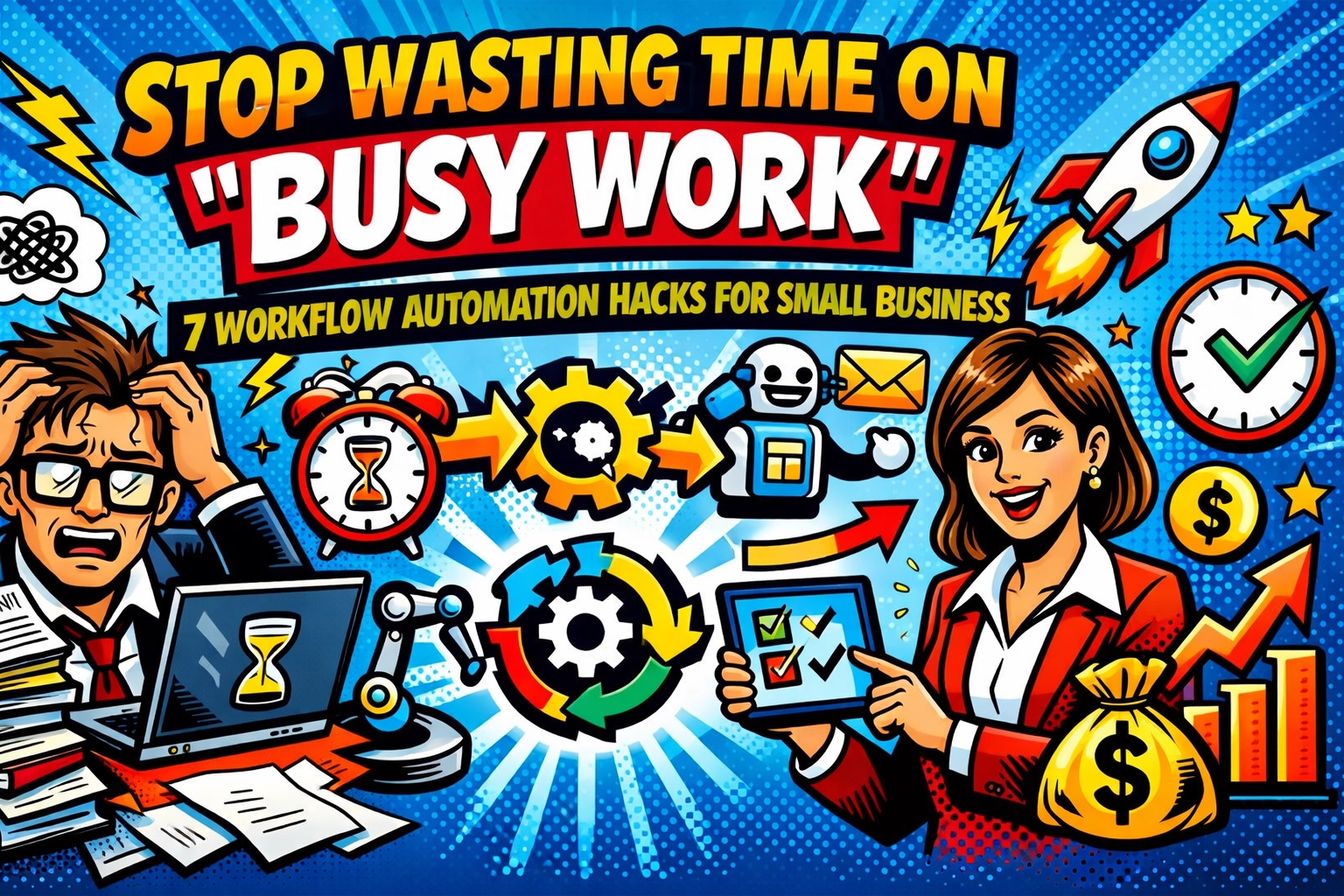
  • Stop Wasting Time on “Busy Work”: 7 Workflow Automation Hacks for Small Business

    Stop Wasting Time on “Busy Work”: 7 Workflow Automation Hacks for Small Business

    ☕ 7:00 AM.

    The sun is barely up, but your brain is already running a marathon. You haven't even finished your first cup of coffee, and you're already thinking about that mountain of "busy work" waiting for you.

    The unread emails. The invoices that need chasing. The manual data entry that makes your eyes glaze over.

    You didn't start a business to become a professional copy-paster. You started it to build something. To create. To lead. But right now? You're just a glorified paper-pusher in your own office… and it’s exhausting.

    It’s time to stop.

    WORKFLOW AUTOMATION FOR SMALL BUSINESS: STOP DOING THE BUSY WORK

    Let’s be real. "Workflow automation" sounds like a fancy term for Fortune 500 companies with massive IT budgets. It’s not. It’s for you. It’s for the person who is tired of doing the same three steps every single morning just to get the day started.

    Here are 7 hacks to reclaim your sanity.

    1. CONNECT YOUR APPS (AND YOUR BRAIN)

    You use Shopify. You use Mailchimp. You use Slack. But do they talk to each other? Or are you the middleman, manually moving data like a digital carrier pigeon?

    Stop.

    Use tools like Zapier to bridge the gap. When a customer buys something on your site, they should automatically go into your email list. When they leave a cart empty, an email should fire off without you lifting a finger.

    Digital brain hub connecting business apps for seamless workflow automation and data syncing.

    2. ONBOARDING ON AUTOPILOT

    🤝 9:30 AM.

    You just hired a new team member. Exciting, right? Except now you have to find the tax forms, send the handbook, set up their email, and order their laptop.

    Or… you could just click one button.

    By automating the employee lifecycle, you ensure every document is signed and every system access is granted before they even walk through the door. It turns a week of chaos into a morning of "Welcome to the team."

    3. STOP CHASING CHECKS

    Invoices are the worst. Creating them, sending them, following up when they aren't paid… it's a full-time job you didn't ask for.

    Automated invoice processing handles the generation, the sending, and the "Hey, you're late" reminders. You just see the money hit the account.

    4. SMART TICKET ROUTING

    🔍 11:15 AM.

    A customer has a problem. They email your general "info@" address. It sits there. You find it three hours later. You realize it’s a tech issue, so you forward it to your dev. They see it the next day.

    Too slow.

    Use AI to classify requests the second they arrive. If it’s a billing question, it goes to finance. If it’s a bug, it goes to tech. No more manual sorting.

    5. LEAD SCORING FOR THE WIN

    Not every lead is a good lead. Some are just "window shoppers." Why are you spending your precious time calling people who aren't ready to buy?

    Automated lead scoring prioritizes the "hot" leads based on how they interact with your site. Your sales reps (or you) get a ping only when someone is actually ready to talk business.

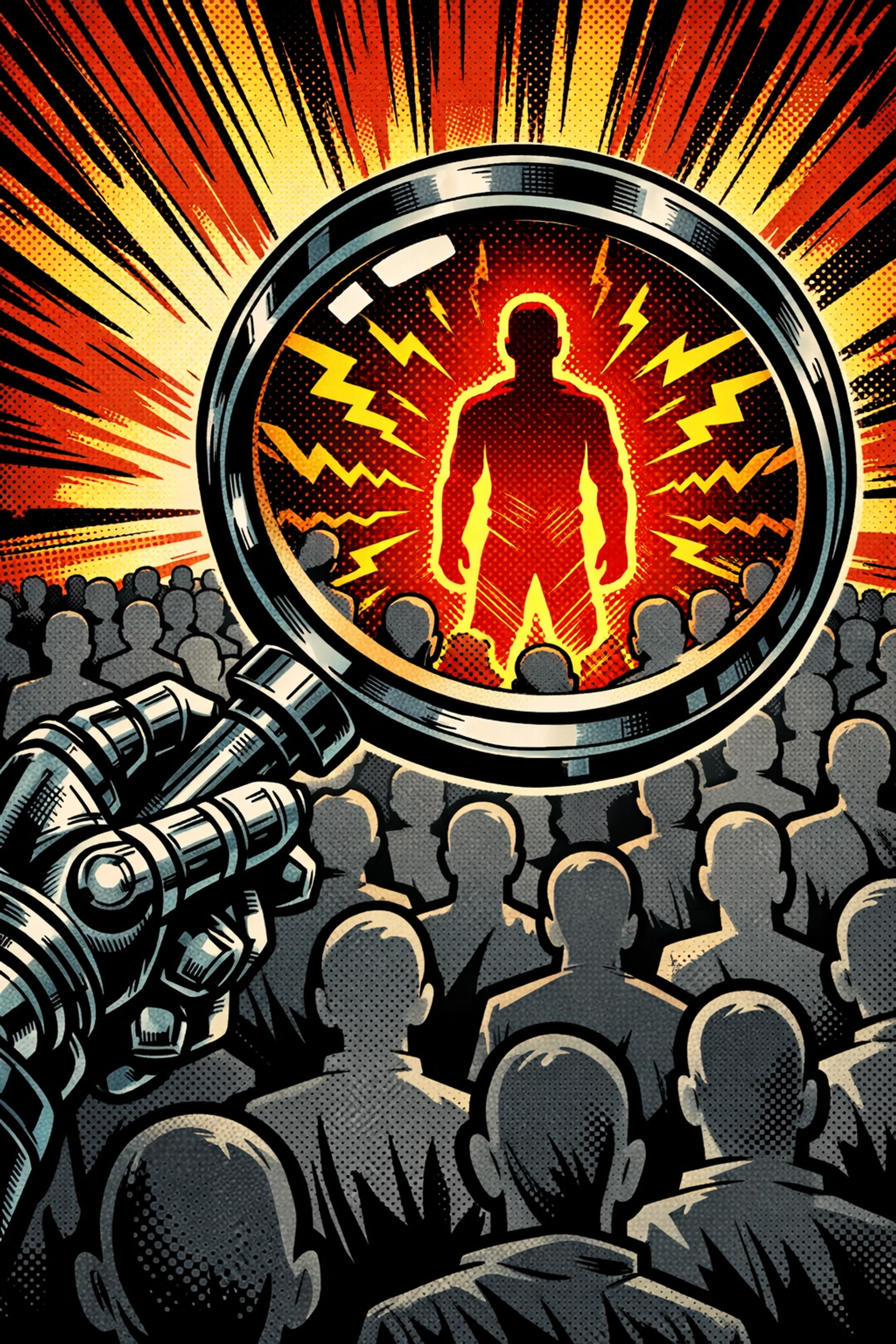
    Robotic hand using a magnifying glass to identify high-priority sales leads through automated lead scoring.

    6. PAYROLL WITHOUT THE PANIC

    The end of the month shouldn't be a nightmare of spreadsheets and tax calculations. Automating your payroll and compliance reporting means the math is always right, the taxes are always filed, and you never have to deal with a "where is my check?" email again.

    7. INVENTORY THAT REPLENISHES ITSELF

    📱 2:00 PM.

    You just realized you're out of your best-selling product. Panic sets in.

    If you automate your reorder triggers, this never happens. When your stock hits a certain level, the system automatically places an order with your supplier. You stay in stock. You keep making money.

    The chaos is gone before you even take your first sip of afternoon tea.

    Scale shouldn't be a struggle. It should be a system. If you want to see how this actually looks in practice, check out what we're doing over here.


    WHY YOUR BUSINESS NEEDS AN AI VIRTUAL ASSISTANT (BEFORE YOUR COMPETITORS GET ONE)

    🌙 8:00 PM.

    You’re finally sitting down for dinner. Your phone buzzes. It’s a lead asking a question about your pricing. Do you answer it now and ignore your family? Or do you wait until tomorrow and risk losing the sale to the guy down the street?

    This is why you’re falling behind. Not because you aren’t working hard enough, but because you’re still working like it’s 2015.

    Your competitors aren't working harder. They’re just using AI virtual assistants.

    THE 24/7 EMPLOYEE WHO NEVER SLEEPS

    An AI virtual assistant isn't just a chatbot that says "How can I help you?" It's a member of your team. It understands your business, your tone, and your goals.

    While you're sleeping, it’s answering questions. While you're at your kid’s soccer game, it’s booking meetings. While you're focused on high-level strategy, it’s handling the "busy work" we talked about above.

    An AI virtual assistant for business handling repetitive tasks and meetings 24/7 to save time.

    WHY "SOON" IS THE SAME AS "NEVER"

    In the world of SaaS and business automation, the "early adopter" advantage is real.

    Right now, an AI virtual assistant for business is a competitive edge. It makes you look bigger, more professional, and more responsive than you actually are. But in two years? It will be the bare minimum.

    If you wait until everyone else has one, you aren't gaining an advantage. You're just playing catch-up.

    IT’S NOT ABOUT REPLACING PEOPLE. IT’S ABOUT RECLAIMING TIME.

    People get nervous about AI. They think it’s coming for their jobs.

    But ask yourself: Do you want the job of manually entry-ing data? Do you want the job of answering the same 50 FAQs every single week?

    Of course not.

    You want the job of growing the company. An AI assistant handles the repetitive so you can handle the creative. It’s that simple.

    THE "MARBLISM" ADVANTAGE

    We see it all the time. Small businesses that are stuck in the "hustle" phase because they're afraid to let go of the manual tasks. They think they're saving money by doing it themselves.

    They aren't. They're losing time. And time is the only thing you can't buy more of.

    Business owner escaping administrative stress and relaxing thanks to time-saving workflow automation.

    Imagine a world where:

    • Your inbox stays organized without you touching it.
    • Your leads are nurtured while you're offline.
    • Your calendar fills up with qualified meetings automatically.

    It’s not science fiction. It’s just good business.

    THE CHOICE IS YOURS

    You can keep doing things the "manual" way. You can keep letting the busy work dictate your schedule. You can keep feeling like you're one unread email away from a breakdown.

    Or… you can automate.

    Stop juggling. Start leading. The tools are here. The AI is ready. And your competitors are already looking at the "Buy" button.

    Don't let them get there first.

    If you're ready to see how an AI virtual assistant can transform your specific workflow, you need to talk to someone who knows the ropes. Scott Bowen is ready when you are.

    SCALING SHOULDN'T BE THIS EASY. BUT HERE WE ARE.

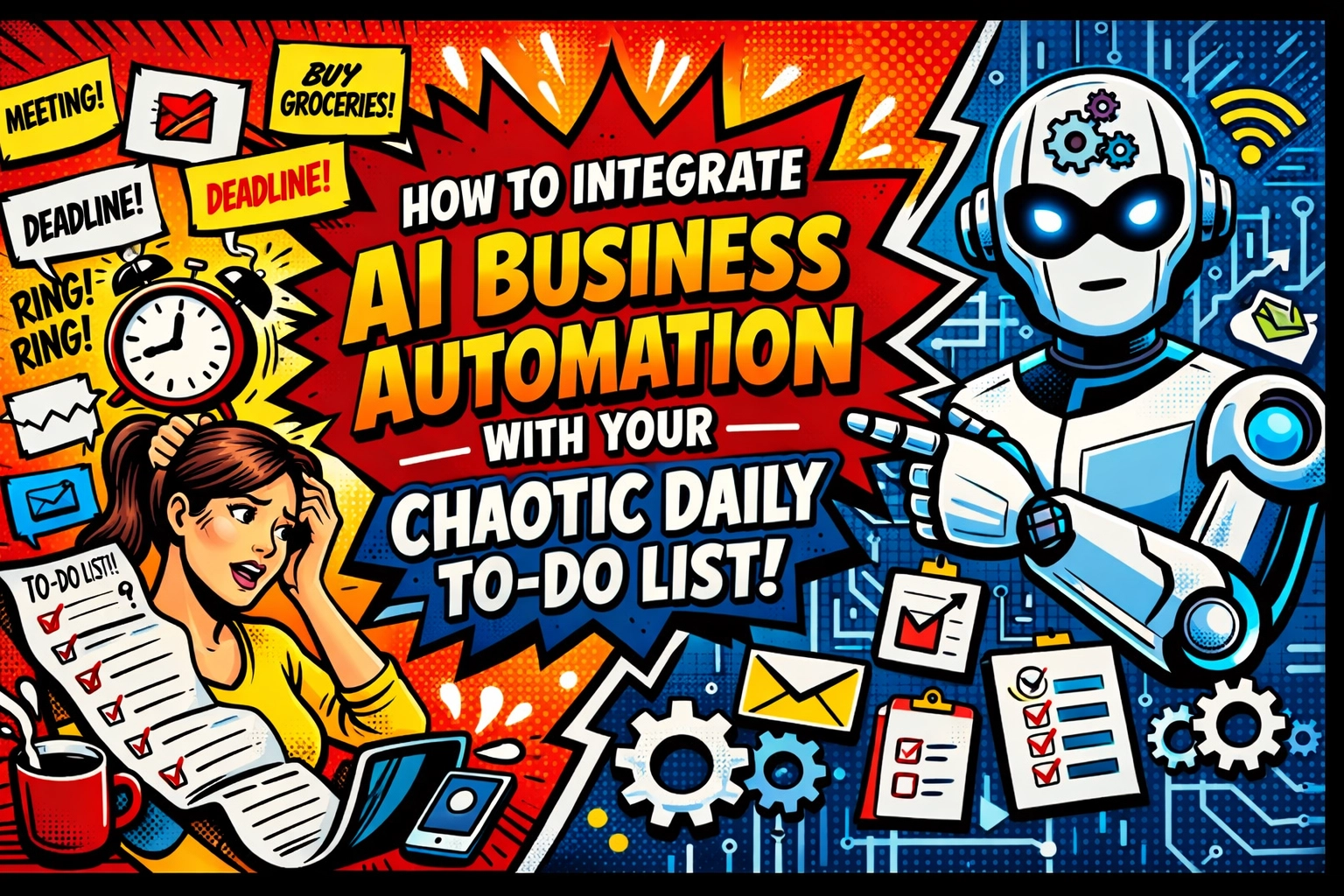
  • How to Integrate AI Business Automation With Your Chaotic Daily To-Do List

    How to Integrate AI Business Automation With Your Chaotic Daily To-Do List

    ☕ 7:15 AM.
    The sun isn’t even fully up, but your brain is already running a marathon.
    You reach for your phone before you’ve even reached for the caffeine.
    Bad move.
    Forty-two unread emails. Three missed Slack messages from your VA who’s in a different time zone. A calendar that looks like a game of Tetris played by someone who’s losing.

    Your to-do list isn't a list anymore… it's a hostage situation.
    You’ve got "Follow up with lead," "Check shipping status for Mrs. Higgins," and "Fix the broken link on the landing page" all screaming for attention at once.
    You feel the familiar tightening in your chest.
    Another day of playing whack-a-mole with tasks.
    But it doesn't have to be this way.

    The secret isn't a new planner or a "miracle morning" routine that involves cold plunging at 4 AM.
    The secret is an ai virtual assistant for business that actually does the heavy lifting while you're still dreaming about your next vacation.

    STOP REACTING. START AUTOMATING.

    You’ve heard the buzzwords. AI. Automation. Machine Learning.
    It sounds like something for Silicon Valley giants with bloated budgets, right?
    Wrong.
    It’s for you. Especially if you’re a small business owner currently wearing seventeen different hats: most of which don’t fit quite right.

    Integrating AI into your daily chaos isn't about replacing your brain.
    It’s about offloading the stuff that doesn't need your brain.
    Think about it.
    How much of your day is spent answering the same three questions?
    "Where is my order?"
    "Do you have this in blue?"
    "Can we hop on a quick call?"

    Overwhelmed small business owner juggling tasks manually before using an AI virtual assistant.

    📱 9:30 AM.
    Normally, this is when you’d be drowning in the "quick questions" from customers.
    But today, something is different.
    While you’re actually finishing your first cup of coffee, your customer support is being handled.
    You didn't hire a new team.
    You decided to automate customer support with ai.

    A lead asks about pricing. The AI knows your tiers.
    A customer asks for a refund. The AI checks your policy and generates the draft.
    A potential partner wants to book a meeting. The AI checks your calendar: the real one, not the one you wish you had: and offers three slots.
    You just watch the notifications roll in.
    No typing. No stress.
    Just… done.
    You can see how this works in real-time by checking out the tools at https://marblism.link/scott-bowen.

    YOUR TO-DO LIST IS LYING TO YOU

    Most to-do lists are just graveyards for good intentions.
    You write "Update CRM" at the top of the list every Monday.
    It’s still there on Friday.
    Why? Because it’s a soul-sucking task that requires manual data entry.

    Enter the AI workflow.
    Imagine if every time a new lead filled out your contact form, an ai virtual assistant for business automatically researched their company, found their LinkedIn profile, and added them to your CRM with a personalized note.
    No copy-pasting. No "I'll do it later."
    The task never even makes it to your to-do list because it’s already finished.

    🔍 11:45 AM.
    You check your project management tool.
    Usually, this is where you spend an hour moving cards around and trying to figure out what’s actually urgent.
    But today, an AI-powered scheduler like Motion has already reorganized your day.
    A meeting got canceled? The AI didn't just leave a hole: it moved your deep-work task up.
    A new high-priority project landed? The AI pushed back the "research new office plants" task to next week.
    It’s like having a chief of staff who never sleeps and doesn't take lunch breaks.

    EMPLOYEE OF THE MONTH. EVERY MONTH.

    You might be thinking, "But Penny, my business is personal. I don't want a robot talking to my people."
    I hear you.
    But let’s be real: how personal are you being when you’re stressed, rushed, and replying to an email with a typo because you’re trying to type while eating a sandwich?
    AI doesn't have to be cold.
    In fact, when you use the right tools, it sounds more like you than you do on a Friday afternoon.

    Friendly AI assistant robot with a headset providing efficient automated customer support.

    🤝 1:30 PM.
    A tricky customer email arrives.
    They’re unhappy. They want something you can't give them.
    Normally, you’d stare at the screen for twenty minutes, drafting and deleting, trying to find the right tone.
    Instead, your AI support agent drafts a response.
    It’s empathetic. It’s professional. It offers a clear solution.
    You read it. You tweak one word. You hit send.
    Total time: 45 seconds.
    That's the power when you automate customer support with ai.
    You’re still the pilot; the AI is just the autopilot keeping the plane level while you navigate the storm.

    THE ADMIN TRAP IS REAL

    Admin tasks are the "silent killers" of small business growth.
    They don't feel like much: five minutes here, ten minutes there.
    But by the end of the day, you’ve spent three hours on "stuff" and zero hours on "strategy."

    • Sorting receipts? AI can do that.
    • Transcribing meeting notes? AI can do that.
    • Invoicing late clients? AI can definitely do that.

    When you integrate these functions, your to-do list shrinks from a scroll to a sticky note.
    You start focusing on the things only you can do.
    The creative stuff. The big deals. The vision.

    ☎️ 3:15 PM.
    A potential client calls.
    You’re actually available to pick up.
    Why? Because you weren't buried in a spreadsheet or fighting with a chatbot that wasn't working.
    You have a real conversation. You close the deal.
    While you're talking, your ai virtual assistant for business is already drafting the contract based on the verbal agreement you just made.
    This isn't the future.

    This is what's happening right now for people using https://marblism.link/scott-bowen.

    HOW TO START WITHOUT CRASHING THE SYSTEM

    You don't need to automate everything at once.
    That’s a one-way ticket to a different kind of chaos.
    Start with the "Papercuts."

    What are the tasks that irritate you every single day?
    The ones that make you sigh when you see them on your list?
    Start there.

    1. Map the Flow: Don't just buy a tool. Look at how a task moves from "Start" to "Done."
    2. Identify the Trigger: Every automation needs a "When this happens…"
    3. Set the Action: "…then do this."
    4. Connect the Dots: Use platforms like Zapier or Lindy.ai to make your different apps talk to each other.

    Activating AI business automation to streamline daily tasks and connect to-do list workflows.

    🌙 5:00 PM.
    The lights are starting to dim in the office.
    Normally, this is the "Golden Hour" of panic where you try to finish everything you missed during the day.
    But today… the list is empty.
    The emails are handled. The support tickets are closed. The admin is done.
    You don't feel like you've been in a brawl.
    You feel… organized.

    THE "SILENT PARTNER" ADVANTAGE

    "I finally feel like I’m working ON my business instead of IN it."
    : Sarah, Boutique Agency Owner

    "The AI doesn't just save me time; it saves my sanity. I don't wake up at 3 AM wondering if I replied to that lead anymore."
    : Mark, E-commerce Founder

    These aren't people with computer science degrees.
    They're people who realized that their time is the most expensive resource they have.
    And they stopped wasting it on $15-an-hour tasks.

    SCALING SHOULDN'T BE THIS EASY. BUT HERE WE ARE.

    The transition from "Chaotic Solopreneur" to "Efficient Business Owner" isn't about working more hours.
    It’s about leverage.
    AI is the ultimate leverage.
    It’s the bridge between the to-do list you have and the life you want.

    If you’re ready to stop the manual grind and start the automated growth, you need to see the stack we’ve built.
    It’s not just a bunch of apps; it’s a cohesive system designed to give you back your day.

    Stop juggling.
    Start building.
    The chaos ends when the automation begins.

    Check out the full suite of tools and get started today:
    https://marblism.link/scott-bowen

    The only thing you have to lose is your stress.
    And maybe those 3 AM panic attacks.
    (Those won't be missed.)

    Scaling your business is a choice.
    Choose the path that lets you breathe.
    Your to-do list is waiting for a rewrite.

    ONE SYSTEM. TOTAL CONTROL. YOUR LIFE BACK.

  • 10 Reasons Your Home Coffee Setup Isn’t Working (And How to Fix It)

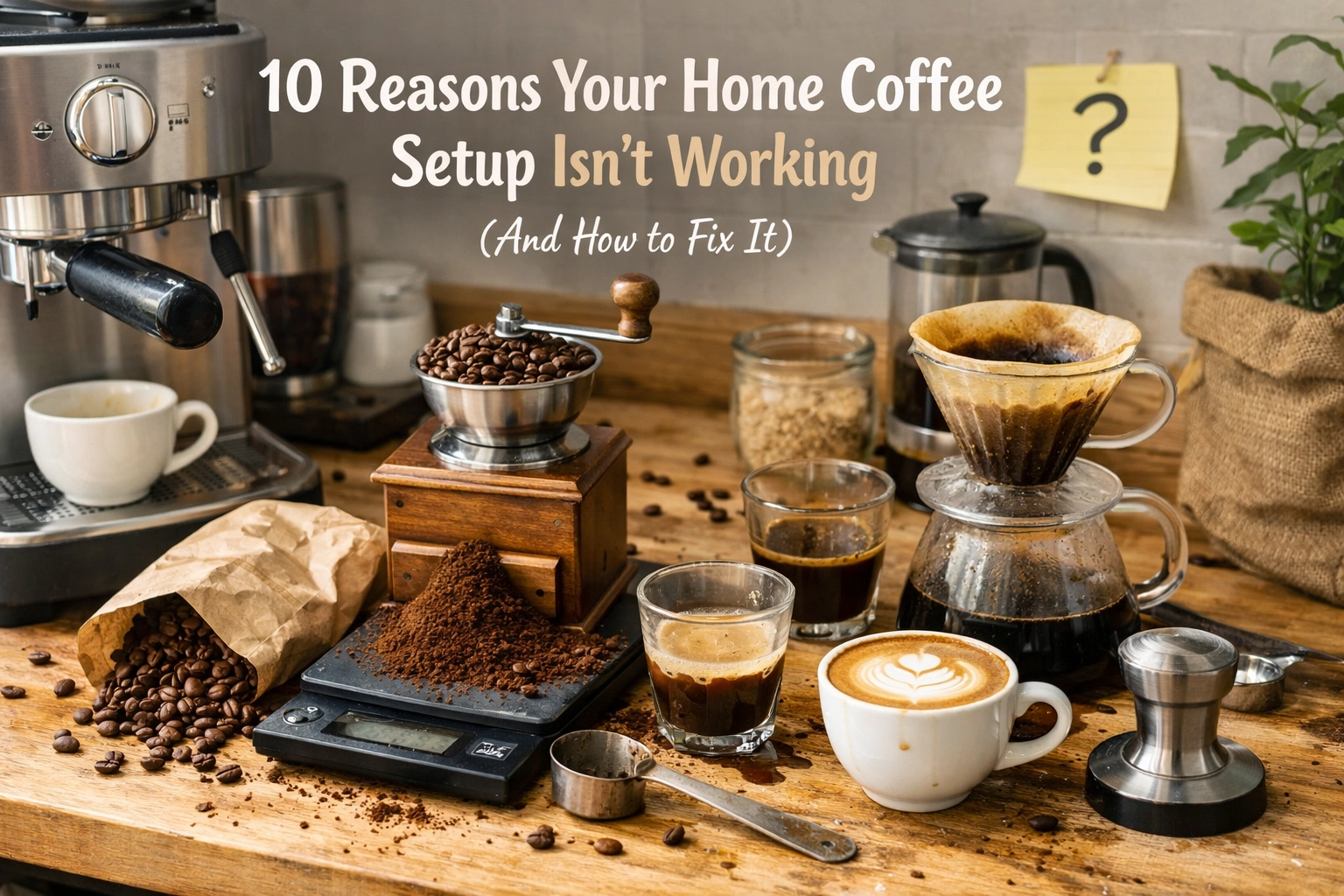
    10 Reasons Your Home Coffee Setup Isn’t Working (And How to Fix It)

    So, you’ve spent a small fortune on a shiny new espresso machine, a fancy-looking gooseneck kettle, and enough gadgets to stock a laboratory. You’ve watched the YouTube videos, you’ve bought the "Instagram-famous" beans, and yet… your morning cup still tastes like a mixture of old pennies and burnt toast.

    Believe us, we’ve all been there. There is nothing more frustrating than having the gear but not the gear-output. The good news? It’s probably not you, and it’s probably not even your machine. Usually, it’s a few small, annoying variables that are throwing your entire brew off-balance.

    At Limini Coffee, we spend our lives obsessing over the perfect extraction. We want your home setup to feel like a mini-sanctuary, not a source of stress. So, let’s troubleshoot. Here are 10 reasons your home coffee setup isn’t working and exactly how to fix it.


    1. You’re Using "Zombie" Beans

    We’re going to be blunt here: if you’re buying your coffee beans from a supermarket shelf, you’ve already lost the battle. Those beans were likely roasted months ago. By the time they hit your grinder, they are "zombies": dead on the inside with no soul left to give.

    Coffee is a fresh agricultural product. Once roasted, it begins to degas and oxidize. For the best results, you want beans roasted within the last 2 to 4 weeks. If you’re looking for that vibrant, sweet, and complex cup, you need to be looking at freshly roasted coffee beans from Limini Coffee.

    The Fix: Buy small bags, buy often, and always check the "roasted on" date. Fresh is best. Period.

    2. Your Grinder is a "Whirly-Blade" Nightmare

    If you are still using a blade grinder (the kind that looks like a tiny blender), we have some bad news. Blade grinders don’t actually grind coffee; they shatter it into random, uneven shards. You end up with "fines" (microscopic dust) and "boulders" (huge chunks).

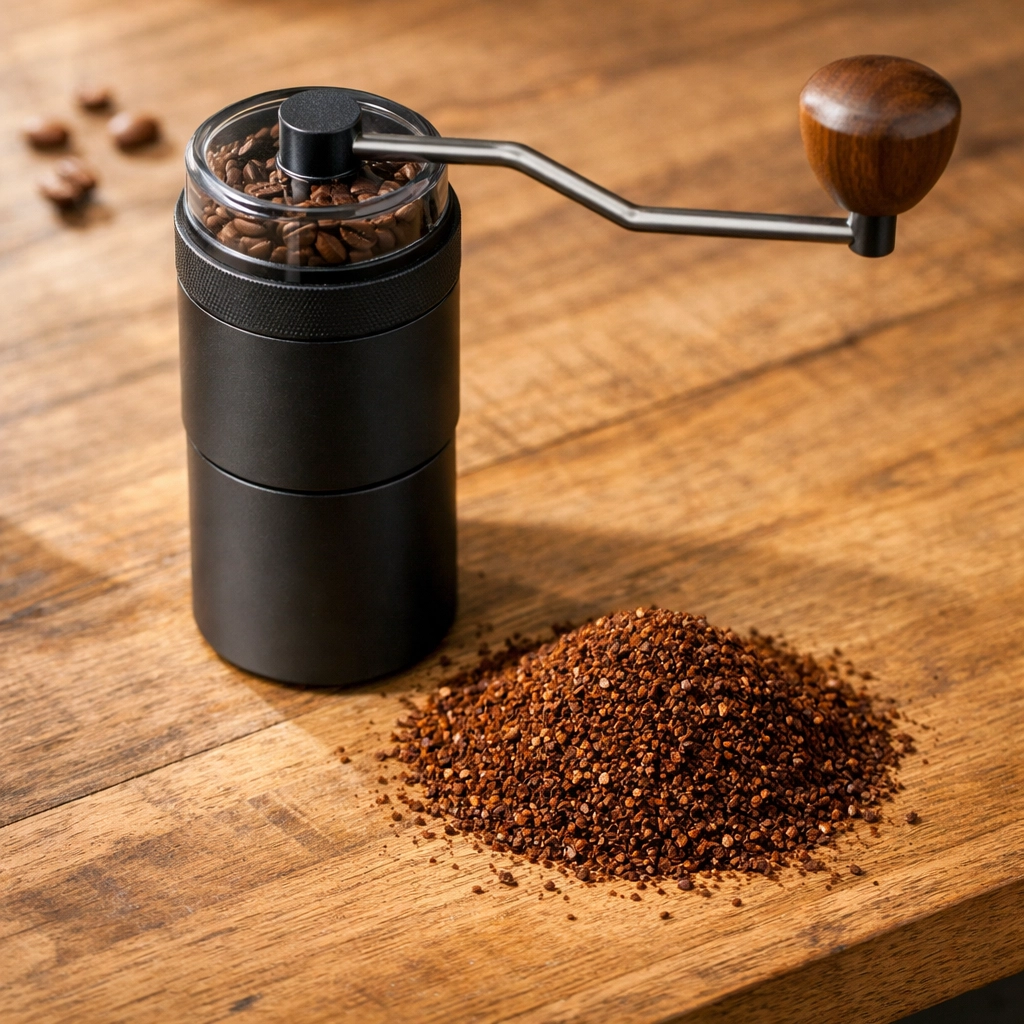
    When you brew, the dust over-extracts and tastes bitter, while the boulders under-extract and taste sour. It’s a mess. To get a balanced cup, you need a burr grinder. Burr grinders crush the beans to a uniform size, which is the secret sauce to great coffee.

    Professional manual burr grinder on a wooden counter with perfectly uniform coffee grounds for home brewing.

    The Fix: Invest in a decent burr grinder. It is, without a doubt, the most important piece of home brewing gear you will ever own. Even a basic hand-cranked burr grinder will outperform a high-end blade grinder every single time.

    3. The "Goldilocks" Grind Size Problem

    So you’ve got a burr grinder, but your coffee still tastes "off." Is it sour and sharp? Or is it bitter and dry?

    This is all about extraction surface area. If your grind is too coarse, the water rushes through too fast (under-extraction). If it’s too fine, the water gets stuck and cooks the grounds (over-extraction).

    • Sour/Thin? Your grind is too coarse. Make it finer.
    • Bitter/Harsh? Your grind is too fine. Make it coarser.

    The Fix: Don’t be afraid to adjust your grinder daily. Beans change as they age, and the weather (humidity) actually affects how they grind. It’s a moving target, so keep aiming.

    4. You’re Not Using a Scale

    "I just use a scoop."

    Stop right there. Using a scoop to measure coffee is like using a handful to measure flour for a cake: it’s never the same twice. Different beans have different densities. A scoop of a dark roast might weigh 12 grams, while a scoop of a light roast might weigh 16 grams.

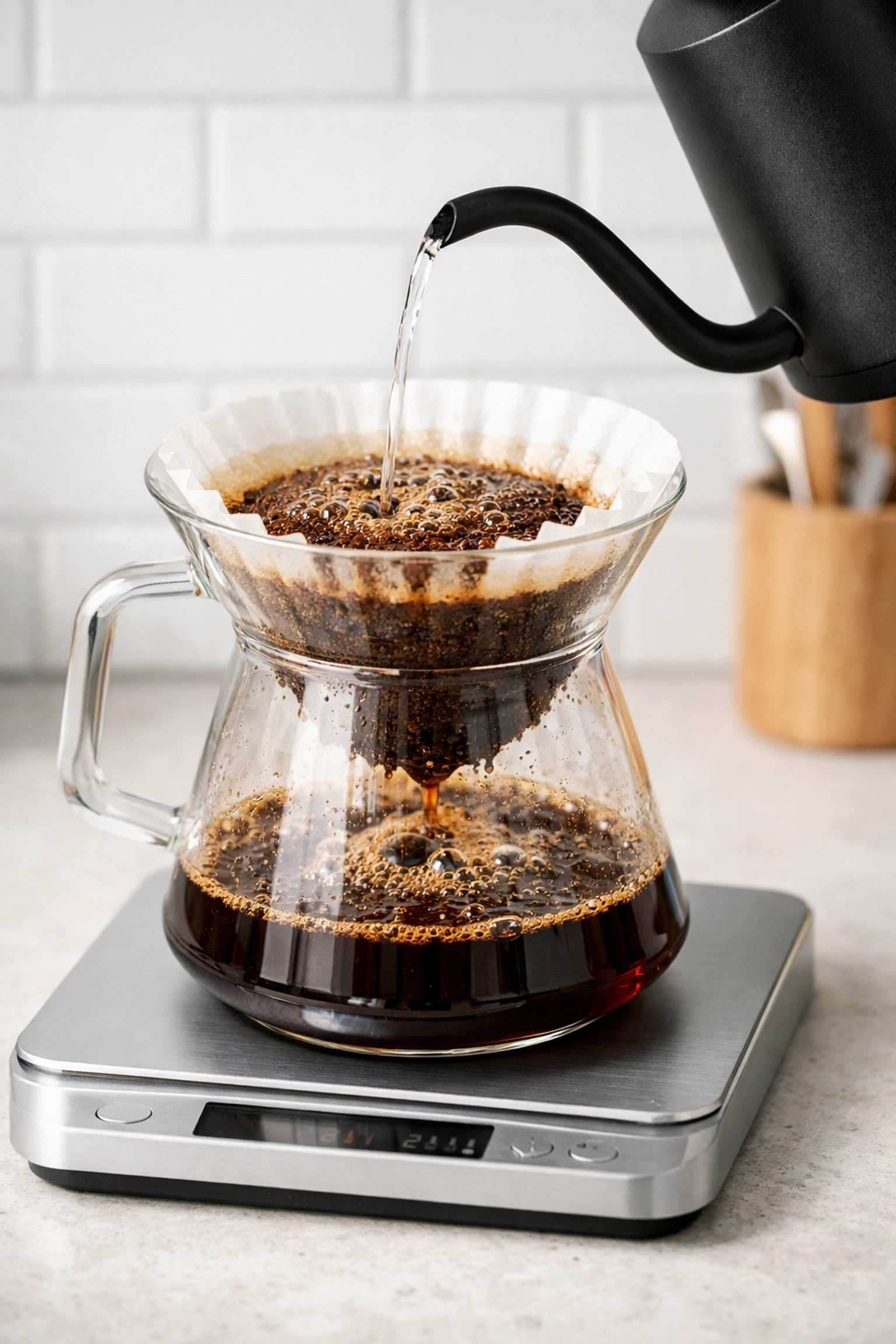
    If you want to fix your coffee, you have to be consistent. We use grams because they don't lie. For a standard filter coffee, we generally recommend a 1:16 ratio (1 gram of coffee for every 16 grams of water). For espresso, we usually aim for 1:2 (18g of coffee in, 36g of liquid out).

    Precision digital coffee scale and glass carafe being used to measure exact water-to-coffee brewing ratios.

    The Fix: Buy a cheap digital scale that weighs to 0.1g. Use our coffee brewing calculator to find your perfect numbers and stick to them. Consistency is the bridge to quality.

    5. Your Water is Too Hot (or Too Cold)

    Boiling water (100 ºC / 212 ºF) is generally too aggressive for most coffees, especially darker roasts. It can "scorch" the grounds and bring out unpleasant ashy notes. On the flip side, if you’re using water that’s cooled down too much, you won’t extract the sweetness.

    We find the "sweet spot" is usually between 92 ºC and 96 ºC (198 ºF to 205 ºF).

    The Fix: If you don't have a temperature-controlled kettle, let your boiling water sit for about 60 to 90 seconds before pouring. This simple pause can transform a bitter cup into a smooth one.


    6. You’re Ignoring the Water Quality

    Coffee is about 98-99% water. If your tap water tastes like chlorine or is incredibly "hard" (full of minerals), your coffee will taste muted and flat. Hard water also leads to scale buildup, which is the number one killer of espresso machines.

    We’ve seen beautiful La Spaziale machines ruined in months because of untreated hard water.

    The Fix: At the very least, use a basic water filter jug. If you want to go pro, look into third-party water minerals or bottled water with a low mineral content. Your taste buds (and your machine's boiler) will thank you.

    7. The Dreaded "Channeling"

    This one is for the espresso lovers. Have you ever noticed your espresso shot spraying everywhere or coming out of only one side of the portafilter? That’s channeling.

    Water is lazy; it wants to find the path of least resistance. If your coffee bed has clumps or isn't level, the water will blast a hole through the weak spot, leaving the rest of the coffee dry. The result? A shot that is simultaneously sour and bitter. Yuck.

    Flawless espresso extraction from a bottomless portafilter showing rich golden crema and steady flow.

    The Fix: Focus on your prep. Use a WDT tool (basically a few thin needles) to break up clumps before you tamp. And when you do tamp, make sure it's perfectly level. You don't need to push with 50lbs of pressure; you just need to make sure the air is gone. Check out our guide on proper tamping technique for more.

    8. Your Equipment is Dirty

    Be honest: when was the last time you backflushed your machine or cleaned your grinder? Old coffee oils are hydrophobic (they hate water) and turn rancid very quickly. If your portafilter basket is covered in black sludge, every shot you pull is being filtered through "trash flavor."

    A dirty machine produces bitter, "dirty" tasting coffee regardless of how expensive your beans are.

    The Fix: Backflush your espresso machine with water every day and with cleaner once a week. Take your grinder apart once a month and vacuum out the old stale grounds. It’s a bit of a chore, but looking after your espresso machine is non-negotiable for good flavor.

    9. The Milk is "Cooked," Not Steamed

    If you’re making lattes or cappuccinos and the milk tastes like sulfur or is full of giant "bath bubbles," your technique needs a tweak. Many home baristas over-steam their milk, heating it way past 70 ºC (160 ºF). At this point, the proteins break down and the sweetness vanishes.

    You want that "wet paint" look: glossy, silky, and micro-foamed.

    Barista pouring silky micro-foamed milk into a ceramic cup to create latte art with perfect texture.

    The Fix: Aim for a final temperature of around 60 ºC to 65 ºC (140 ºF to 150 ºF). Use cold milk and a clean pitcher. We have a deep dive on understanding milk that will help you get those silky textures every time.

    10. You’re Changing Too Many Things at Once

    This is the most common mistake for passionate home brewers. You pull a bad shot, so you change the grind, and the dose, and the temperature all at once. Now you have no idea which change actually helped (or hurt).

    Coffee brewing is a science experiment you get to drink. If you change three variables, you’ve lost the plot.

    The Fix: Change one thing at a time. If the coffee is sour, make the grind finer and keep everything else the same. Still sour? Go finer again. This systematic approach is the only way to truly "dial in" a coffee.


    Ready to level up?

    The journey from "okay" coffee to "wow" coffee is usually just a series of small adjustments. It starts with the right equipment and, most importantly, the right beans.

    If you're ready to stop settling for mediocre brews, head over to Limini Coffee and grab a bag of our latest single-origin roast. Whether you need a new espresso machine, some barista training, or just some solid advice, we're here to help you make the best coffee of your life.

    Remember, the best cup of coffee is the one you enjoy making as much as you enjoy drinking. Happy brewing!

  • Looking For Wholesale Coffee Roasters? Here Are 10 Things You Should Know

    Looking For Wholesale Coffee Roasters? Here Are 10 Things You Should Know

    So, you’re looking for a coffee roaster. Whether you are just starting your journey into the world of hospitality or you’re a seasoned café owner looking to level up your brew game, choosing a wholesale partner is probably the single most important decision you’ll make. It’s the difference between a customer coming in once for the "cute decor" and a regular who wouldn’t dream of starting their day without your flat white.

    But here’s the thing: the world of wholesale coffee roasters is crowded. Really crowded. Everyone has a shiny bag and a story about a mountaintop in Ethiopia. How do you cut through the noise?

    At Limini Coffee, we’ve spent years roasting, training, and supporting businesses just like yours. We’ve seen what works and, more importantly, what causes a total meltdown on a busy Saturday morning.

    Before you sign on the dotted line, here are 10 things you absolutely need to know.


    1. Define Your Priorities (Before You Start Dialling)

    Before you even open Google, you need to know who you are. Are you a high-volume takeaway spot near a train station where speed and cost are king? Or are you a boutique specialty shop where customers want to discuss the altitude and soil acidity of their pour-over?

    Most roasters fall into specific niches. Some focus on volume, others on "art." We believe the best partners are the ones who offer a balance of both, high-quality specialty beans backed by the logistical muscle to make sure you never run out.

    Think about what you need most:

    • Is it the lowest price per kilo?
    • Is it world-class barista training?
    • Is it 24/7 technical support for your espresso machine?

    Knowing this upfront stops you from being swayed by a cool logo when what you actually needed was a roaster who could fix your pump at 8:00 AM on a Bank Holiday.

    2. Not All Roasters Are Created Equal

    In the industry, we generally see three types of wholesale coffee roasters:

    • Commodity Roasters: These guys deal in massive volumes. The coffee is often roasted dark to hide inconsistencies, and it’s cheap. Great for budget hotels; usually not great for independent cafes.
    • Boutique/Micro Roasters: These folks are all about the craft. The coffee is usually incredible, but they might struggle with consistency or providing the scale of support (like equipment and training) that a growing business needs.
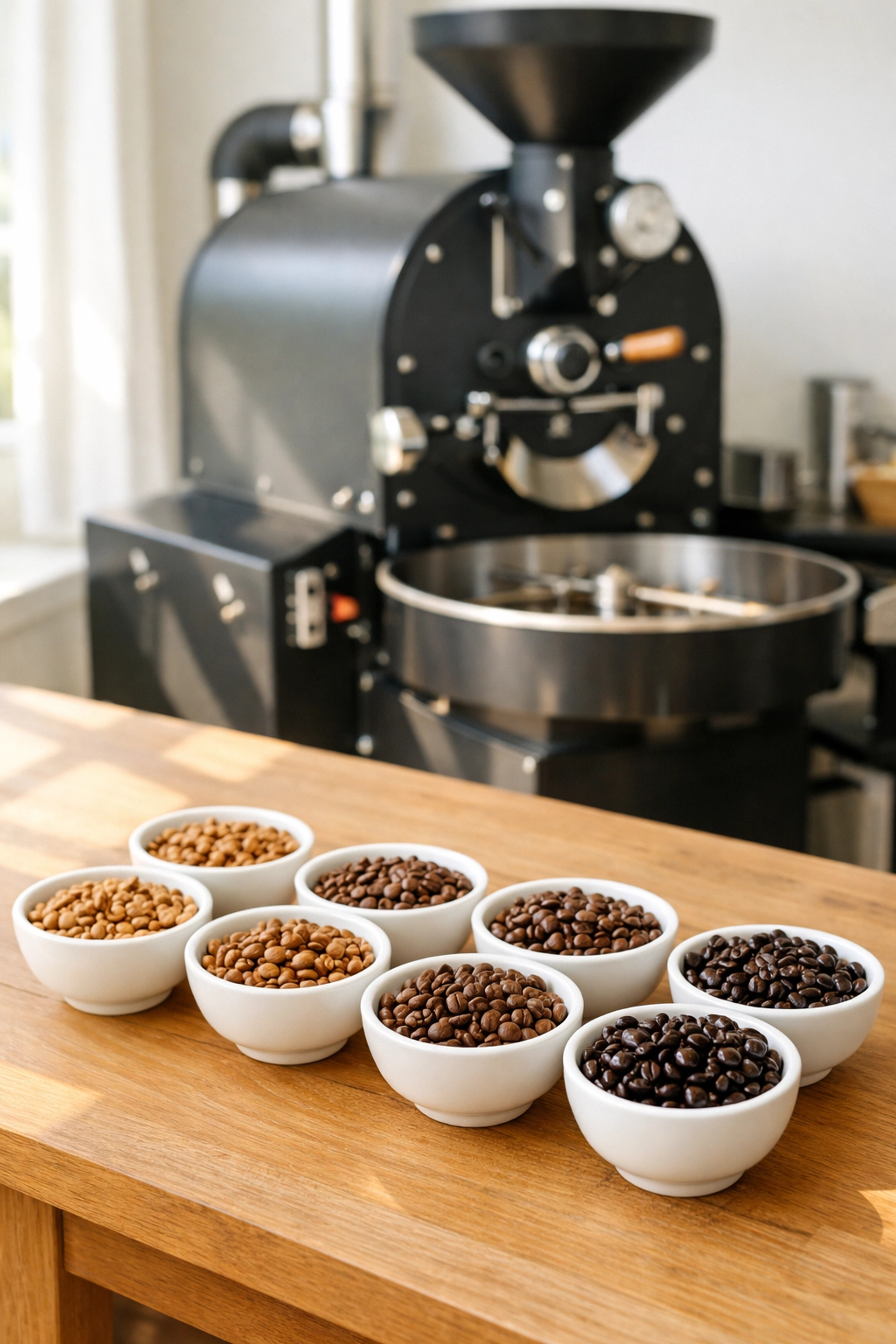
    • The Solution Providers: This is where we like to sit. We combine the obsession with quality found in micro-roasters with the professional infrastructure of a larger operation.

    Professional coffee cupping table with various specialty roasts at a wholesale coffee roastery.

    3. Consistency is More Important Than "The Best Coffee Ever"

    This might sound like heresy coming from a specialty roaster, but hear us out. Having a "mind-blowing" coffee that tastes like blueberries one week and burnt toast the next is a nightmare for your business.

    Your customers want the coffee they loved yesterday to be the coffee they get today. This comes down to the roasting technology. We use high-end equipment like the Loring S35 Kestrel. Why? Because it uses a closed-loop system that is incredibly precise. It allows us to profile a roast and repeat it with surgical accuracy.

    When you’re looking for wholesale coffee roasters, ask them how they ensure consistency. If the answer is "we just feel it," you might want to keep looking. Consistency is what builds brands.

    4. Freshness Has a "Goldilocks" Zone

    We’ve all heard that fresh is best. And it is! But there is such a thing as too fresh.

    Coffee needs to "degas", releasing carbon dioxide, for a few days after roasting. If you use it too soon, the gas creates bubbles that interfere with extraction, leading to a sour, uneven cup. Typically, coffee hits its peak between 7 to 14 days after roasting.

    A good wholesale partner will manage their stock so that when the beans arrive at your door, they are ready to be dialed in. Check if your roaster roasts to order or if they have bags sitting on a shelf for months. (Spoiler: You want the roast-to-order folks).

    5. It’s About the Support, Not Just the Beans

    Let’s be honest: any decent roaster can sell you a bag of beans. But what happens when your steam wand loses pressure? Or when your new staff member doesn't know the difference between a Latte and a Cappuccino?

    Wholesale coffee roasters should be your "silent partner." At Limini Coffee, we offer everything from café layout assistance to help with menu development. If your roaster isn't helping you grow your business, they’re just a vendor.

    A coffee shop owner and trainer discussing menu development and specialty coffee services.

    6. The Equipment Connection

    Your coffee is only as good as the machine it’s pushed through. Many wholesale roasters have "preferred" equipment brands. This is usually because they know those machines inside out and stock the parts to fix them.

    We are huge fans of La Spaziale machines. They are workhorses with incredible thermal stability (meaning the water temperature stays consistent even when you're slammed). Whether you’re looking for a lever or automatic machine, make sure your roaster can provide technical repair services.

    Getting your beans and your machine from the same place simplifies your life immensely. One phone call fixes everything.

    7. Education is Your Greatest Asset

    You can buy the most expensive coffee in the world, but if your barista doesn't understand tamping or how to create perfect silk-like milk, it’s money down the drain.

    Look for a roaster that prioritises training. And we don't just mean a one-off 20-minute session. We mean deep-dive courses that cover everything from the science of crema to the "theatre" of coffee service. When your staff are confident, your customers are happy. It’s that simple.

    8. Sustainability and Traceability Matter (to Your Customers)

    In 2026, "it tastes good" isn't enough. People want to know where their coffee came from and if the farmers were paid a fair wage.

    Ask your potential roaster about their sourcing. Do they have direct relationships with farms? Can they tell you the story behind the blend? Being able to share these details with your customers adds value to every cup you sell. It moves coffee from being a "commodity" to being an "experience."

    Sourcing high-quality green coffee beans for artisanal roasting and sustainable wholesale supply.

    9. Understand the "Fine Print"

    Contracts can be a bit of a minefield in the wholesale world. Some roasters will give you "free" equipment in exchange for a higher price per kilo and a three-year exclusivity deal.

    There’s nothing inherently wrong with this, it’s a great way to start with low capital, but you need to do the math.

    • How much extra are you paying over the life of the contract?
    • What happens if you want to leave?
    • Are maintenance costs included?

    We prefer to be transparent. Whether you're buying equipment outright or looking for a wholesale deal, we want you to understand exactly where your money is going.

    10. The "Vibe" Check

    This sounds fluffy, but it’s vital. You are going to be talking to these people every week. You’ll be calling them when things go wrong and celebrating with them when your shop hits a new sales record.

    Do you like them? Do they share your passion for coffee? Are they responsive?

    We pride ourselves on being warm and approachable. We aren't here to lecture you; we’re here to help you succeed. If a roaster makes you feel like you’re "not cool enough" for their coffee, they probably won't be there for you when you need a favor on a Friday afternoon.


    Why Partner with Limini Coffee?

    Choosing between wholesale coffee roasters is about finding a fit. At Limini, we’ve built our business on three pillars: Quality, Consistency, and Support.

    We don't just ship boxes of beans. We provide the barista training that turns beginners into pros. We offer the technical expertise to keep your gear running smoothly. And we roast some of the best specialty coffee in the UK (if we do say so ourselves).

    Premium latte art in a café, representing the quality of specialty wholesale coffee partnerships.

    So, if you’re ready to take the next step and want a partner who cares about your bottom line as much as your latte art, come and say hi to us at Limini Coffee.

    We’d love to hear about your plans, show you our reviews, and maybe even help you figure out which espresso equipment is right for your space.

    Running a coffee business is hard work, but with the right roaster in your corner, it’s a whole lot more fun. Let’s make some great coffee together. 🙂

  • Why Everyone Is Talking About AI in Hospitality (And You Should Too)

    Why Everyone Is Talking About AI in Hospitality (And You Should Too)

    Transform your guest journey. Automate your back office. Scale your brand.

    The year is 2026, and the "future of hospitality" has officially arrived. If you’re still thinking about Artificial Intelligence as a "cool tech trend" to explore next quarter, you’re already behind. Today, AI isn’t just a feature; it’s the foundational architecture of every successful hotel on the planet.

    At Mews, we’ve seen the shift firsthand. We’ve watched as 12,500 properties moved from legacy systems to a unified, AI-driven platform that handles the heavy lifting so their teams can actually talk to guests again. The results? 40% higher operational efficiency and guest satisfaction scores that are through the roof.

    It’s all about working smarter, not harder, all from one innovative platform.

    The New Front Door: AI Agents Are Your Best Sellers

    Remember when the hotel website was the most important digital asset you owned? That’s changing. We’ve entered the era of agent-mediated discovery.

    Today’s travelers aren't spending hours scrolling through OTA search results or clicking through twenty different hotel galleries. Instead, they’re asking their personal AI agents to "Find me a boutique hotel in London with a gym and a great breakfast for under £300."

    A traveler using a smartphone to search for boutique hotels via an AI agent in a luxury lobby.

    By 2030, forecasts suggest that 30% of all travel bookings will be executed by AI agents autonomously. In 2026, we are at the critical tipping point. If your property’s data, your room types, your amenities, your real-time pricing, isn't machine-readable and perfectly synced, you effectively disappear. You aren't just losing a booking; you're becoming invisible to the primary way people find travel.

    We believe your technology should work as hard as you do. That’s why we focus on:

    • Structured data that AI agents can crawl and understand instantly.
    • Direct connectivity that bypasses the friction of old-school middle-men.
    • Real-time inventory updates that ensure no double-bookings or lost revenue.

    Operations on Autopilot

    Let’s talk about the "back of house." For decades, hospitality has been bogged down by manual checklists, walkie-talkies, and frantic morning meetings.

    In 2026, those days are over. AI is now managing the chaos of housekeeping and maintenance in real-time. Imagine a world where your PMS knows the exact moment a guest checks out via their mobile device, instantly pings the nearest housekeeper with the most efficient route, and updates the room status to "Clean" the second the job is done.

    "We used to spend three hours every morning just coordinating room turns. Now, the system does it all before I’ve finished my first coffee," says one Mews partner in Amsterdam.

    It’s about more than just speed; it’s about precision.

    • Maintenance: Predictive AI identifies that an AC unit is likely to fail before it actually stops working.
    • Waste Reduction: Properties using AI waste-tracking tools have seen food waste drop by 50% in less than a year.
    • Labor: Teams are focused on high-value service rather than administrative data entry.

    A minimalist luxury hotel room highlighting the efficiency of AI-driven housekeeping and operations.

    The Human Element (Yes, AI Makes You More Human)

    There’s a common fear that AI makes hospitality cold and robotic. We think the opposite is true.

    The most "robotic" part of hospitality has always been the check-in desk. Standing behind a piece of mahogany, typing into a computer while a guest waits, isn't hospitality: it’s data entry. By automating the "boring" stuff, you give your staff the freedom to actually be hosts.

    When the AI handles the identity verification, the payment processing, and the room allocation, your team is free to offer a glass of champagne, share a local secret, or simply make eye contact.

    We believe that technology should fade into the background. It should be the invisible hand that makes everything feel seamless. When a guest arrives and you already know they prefer a quiet room away from the elevator and a late checkout, that’s not "creepy tech": that’s personalized service.

    Sustainability as a Standard, Not a Suggestion

    In 2026, guests aren't just looking for a comfortable bed; they’re looking for a brand that aligns with their values. AI is the most powerful tool we have to meet those expectations.

    Modern sustainable hotel exterior with vertical gardens and AI-powered smart building technology.

    Beyond just cutting food waste, AI-driven energy management systems are now standard. These systems adjust heating, cooling, and lighting based on occupancy patterns and real-time weather data.

    • 30% reduction in energy costs.
    • Lower carbon footprint without sacrificing guest comfort.
    • Transparent reporting that you can share with your eco-conscious guests.

    It’s good for the planet, and it’s even better for your bottom line.

    Why 2026 is the Year of No Turning Back

    The conversation around AI in hospitality has shifted from "Why should we use it?" to "How fast can we implement it?"

    The gap between the "AI-haves" and the "AI-have-nots" is widening. Hotels running on legacy systems are finding themselves buried under technical debt, unable to connect to the AI agents that are driving bookings, and struggling to retain staff who are tired of manual work.

    Modern hospitality requires a modern foundation. You need a system that is open, API-first, and built for the intelligence of today.

    "The transition to Mews wasn't just a software upgrade; it was a mindset shift. We stopped fighting our tools and started using them to grow," says Scott, one of our leading Affiliates.

    Ready to Join the Conversation?

    The jump to AI-driven hospitality doesn't have to be a leap of faith. It’s about taking smart, incremental steps toward a more efficient, guest-centric future.

    We’ve helped thousands of properties make the switch, and we’d love to help you too. Whether you're a boutique gem or a global brand, the principles remain the same: simplify the operations, delight the guests, and let the technology handle the rest.

    A hotel host and guest interacting in a modern lounge, emphasizing personalized human hospitality.

    Get started with a 30-minute demo. See how our AI-powered features can save your team 10 hours a week and get you earning more revenue in no time.

    The future is here. Let’s make sure you’re part of it.
    Explore the Mews Platform: https://referrals.mews.com/umqhyito

  • The Ultimate Guide to Wholesale Specialty Coffee: Everything You Need to Succeed

    So, you’ve decided to dive into the world of coffee. Maybe you're dreaming of a bustling café on a sun-drenched corner, or perhaps you're looking to upgrade the caffeine game in your existing business. Either way, you’ve likely realized that the bag of beans sitting on your counter is more than just a commodity: it’s the heartbeat of your operation.

    Choosing a wholesale specialty coffee partner is one of the biggest decisions you'll make. It’s the difference between a customer coming in once out of convenience and a regular who wouldn't dream of starting their day anywhere else. At Limini Coffee, we’ve seen it all, and we’re here to help you navigate the beautiful, sometimes complex, world of wholesale specialty coffee.

    What is "Specialty" Wholesale Anyway?

    Before we get into the nitty-gritty of logistics and contracts, let's clear one thing up. Specialty coffee isn't just a marketing buzzword. It refers to coffee that has been graded 80 points or above on a 100-point scale by certified coffee tasters (Q Graders).

    But for you, the business owner, it means something much more practical: quality, consistency, and a story. It means beans that have been sourced ethically, roasted with precision, and delivered fresh. When you partner with a wholesale coffee roaster, you aren't just buying beans; you're buying into a supply chain that cares about the farmer, the roast profile, and ultimately, the person holding the cup.

    Professional coffee cupping session at a wholesale specialty coffee roastery with white bowls and green beans.

    The Core Pillars of a Successful Coffee Business

    Starting a café or adding a high-end coffee service to your business requires more than just a passion for a good flat white. You need a foundation.

    1. A Solid Business Plan
    We know, it sounds a bit "corporate," but a plan is your roadmap. You need to understand your market analysis, your financial projections, and your marketing strategy. Who is your target customer? Are they commuters looking for a quick, reliable brew, or coffee nerds who want to talk about the terroir of an Ethiopian Yirgacheffe?

    2. Understanding Your Margins
    Wholesale coffee is typically sold in bulk (often 1kg bags for specialty roasters). While price is important, it shouldn't be your only metric. You need to look at the "overall value proposition." A cheaper bean that is inconsistent or comes with zero support will cost you more in the long run through wasted milk, lost customers, and equipment downtime.

    3. Licensing and Legalities
    Don't forget the boring stuff. Food hygiene ratings, local council permits, and insurance are the "invisible" parts of a successful coffee business.

    Finding and Vetting Your Supplier

    This is where the magic happens. Your supplier should be more than just a name on an invoice; they should be your biggest cheerleader. Here is how we recommend you find the right fit:

    The Research Phase
    Start with a simple search for "specialty coffee wholesale" or "coffee suppliers" in your area. Look at their websites. Do they care about sourcing their coffee ethically? Is their tone warm and approachable, or cold and clinical?

    The "Real World" Test
    Go to the best cafes in your town. Look at whose beans they are using. Ask the baristas (when they aren't busy!) what the support is like from their roaster. People in this industry love to talk shop, and they’ll give you the honest truth about reliability and delivery times.

    Requesting Samples
    Never sign a contract without tasting the goods. Most reputable roasters will happily send samples of their house blends and single origins. When you get them, brew them on the equipment you plan to use. A coffee might taste incredible on a professional cupping table but behave differently in a high-volume espresso machine.

    The Roastery Visit
    If you can, visit the roastery. We love having people over. It’s the best way to see the operation firsthand. Is it clean? Is the team passionate? Do they seem like people you actually want to talk to at 8:00 AM on a Monday when your grinder is acting up?

    Blends vs. Single Origins: The Great Debate

    One of the first choices you’ll make with your supplier is what to put in your hoppers.

    Blends
    Most successful wholesale operations rely on a signature blend for their milk-based drinks (lattes, cappuccinos, etc.). Blends are designed for consistency and balance. They combine beans from different origins to create a reliable flavor profile that cuts through milk beautifully. It’s the "comfort food" of coffee.

    Single Origins
    These are beans from a single farm or region. They offer a unique expression of terroir. One might taste like blueberries; another might have a tea-like floral quality. We think single origins are fantastic for filter coffee or as a guest espresso for the "coffee curious" customers.

    Comparison of rich espresso with golden crema and amber pour-over filter coffee on a marble counter.

    It’s Not Just About the Beans: Equipment and Support

    You could have the best coffee in the world, but if your espresso machine is calibrated incorrectly or your water temperature is off, the results will be mediocre at best.

    When looking at wholesale coffee roasters, look at what else they offer. A full-service partner provides:

    • Equipment Sourcing: Helping you navigate the minefield of choosing espresso equipment. Do you need a dual-boiler or a heat exchanger? We can help you decide.
    • Barista Training: This is non-negotiable. Your staff are the final link in the quality chain. We believe in comprehensive barista training that covers everything from dialling in the grind to the science of understanding milk.
    • Technical Assistance: Machines break. It’s a fact of life. Having a partner who offers maintenance and quick repairs is the difference between a profitable Saturday and a closed shop.

    Why "The Theater" Matters

    In the B2B world, we often talk about efficiency, but in a café, we talk about "the theater." This is the experience of the customer watching their drink being made.

    Everything matters: the way the milk is steamed to a glossy, silky texture (around 140 °F / 60 ºC for the perfect sweetness), the way the espresso flows from the portafilter like warm honey, and even the tamping technique of the barista. This "theater" justifies the price of a specialty cup of coffee. It shows the customer that you care about the craft.

    Barista pouring silky steamed milk into a specialty coffee cup to create latte art at a café.

    Understanding the Wholesale Agreement

    When you finally settle on a partner, you’ll likely enter into a wholesale agreement. These aren't just about the price per kilo. They often cover:

    • Minimum Order Quantities (MOQs): How much do you need to buy to get free shipping?
    • Equipment Leasing: Some roasters offer equipment as part of the coffee price. This can be great for cash flow when you're starting out, though it usually means a slightly higher price per kilo of coffee.
    • Training Schedules: How often can your new staff come in for a refresher?

    We believe in transparency. No hidden fees, no "gotcha" clauses. Just great coffee and honest support.

    The Math of Coffee

    Let’s talk numbers for a second, because we know you’re thinking about them.

    Let's say you're using a 18g dose for a double shot. A 1kg bag of coffee will give you approximately 55 coffees. If you're paying a fair price for high-quality specialty beans, your cost per cup for the coffee itself is actually quite low: often around 20p to 30p. When you consider that you might be selling that latte for £3.50, you can see why coffee is such a great business model.

    The "expensive" part of coffee isn't the beans; it's the rent, the staff, and the electricity. This is why it makes zero sense to buy cheap, oily, commodity-grade beans. Saving 5p a cup on lower-quality coffee is a quick way to lose the customers who actually value a good brew.

    Inviting modern specialty coffee shop interior with natural lighting, plants, and a professional coffee bar.

    Creating Your Unique Selling Proposition (USP)

    In a sea of coffee shops, how do you stand out? Your wholesale partner should help you define your USP.

    • The Brand: Maybe you focus on sustainability and eco-friendly packaging.
    • The Menu: Perhaps you offer unique drinks like a "Flat White Flight" or specialized latte art.
    • The Vibe: Are you a "grab and go" spot for commuters or a slow-paced sanctuary for freelancers?

    We love helping our partners figure this out. We’ve spent years exploring what makes a coffee shop successful, from the shop fitting to the final pour.

    Final Thoughts: Choosing the Right Path

    Opening a business is a whirlwind. It’s stressful, exhausting, and: if done right: incredibly rewarding. Your coffee supplier shouldn't be another source of stress. They should be the person you call when you're excited about a new seasonal roast or the person who helps you troubleshoot a murky espresso shot.

    At Limini Coffee, we take pride in being more than just a roaster. We are partners in your success. Whether you need help with a brewing calculator or you're just starting to look at wholesale options, we’re here to help.

    Fresh is best. Quality is king. And a friendly face behind the counter (and at your roastery) makes all the difference.

    If you’re ready to take the next step in your coffee journey, we’d love to chat. Let's make something brilliant together. 🙂

  • Why Everyone is Talking After AI Virtual Assistants (And Why Your Business Needs One Now)

    AUTOMATE ADMIN TASKS: HOW TO SAVE 10+ HOURS EVERY WEEK

    ☕ 7:00 AM.

    You wake up. You reach for your phone, bracing for the impact of 47 unread emails, three "urgent" Slack pings, and a calendar that looks like a game of Tetris gone wrong.

    But it’s quiet.

    The chaos is gone before you even take your first sip of coffee.

    Why? Because while you were sleeping, your business automation tools were actually doing the work. Not just moving data around, actually thinking.

    You're likely spending about 30% of your week on "the grind." You know the one. Rescheduling that one client who can never make a Tuesday. Formatting invoices. Digging through threads to find that one attachment from three weeks ago. It’s death by a thousand papercuts.

    THE INVISIBLE CLOCK IS TICKING

    Every minute you spend on admin is a minute you aren't growing your revenue. It's a trade-off you didn't sign up for when you started this business.

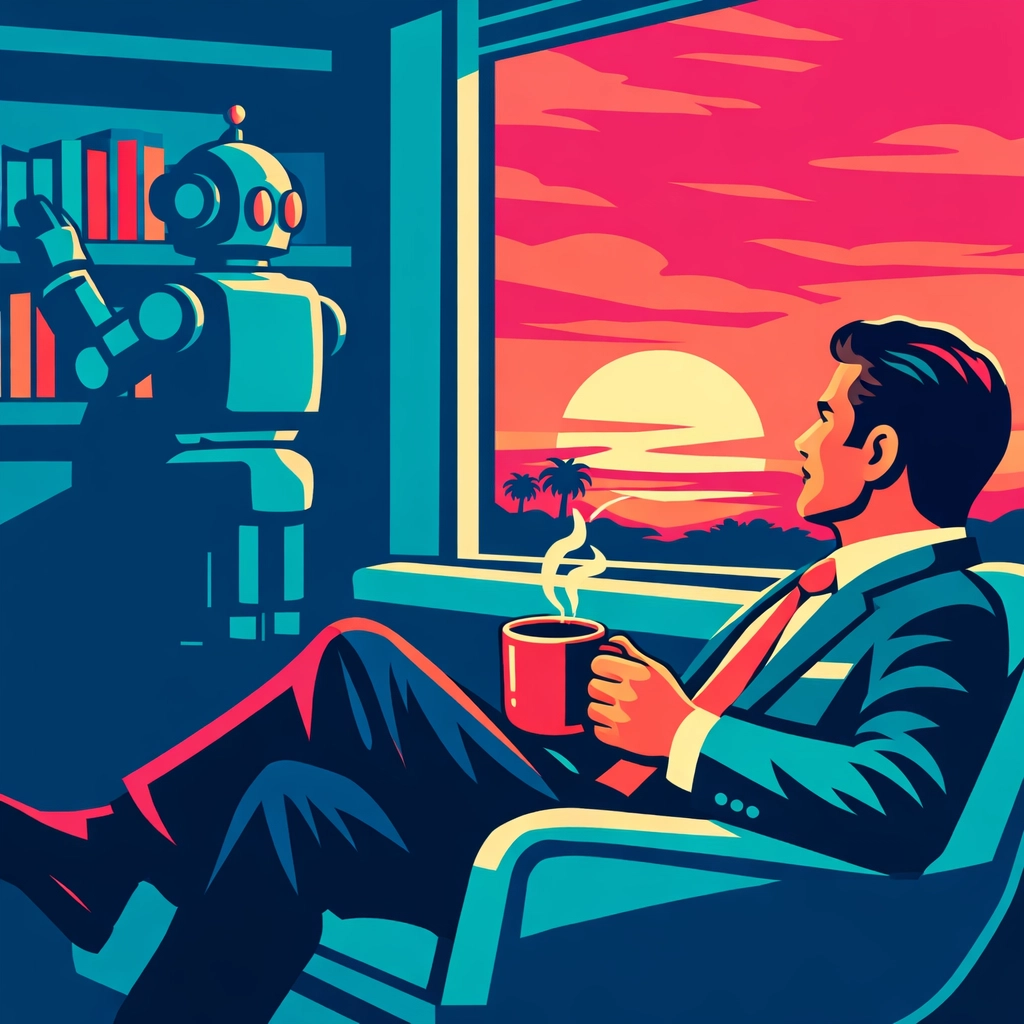
    Business owner enjoying coffee while an AI robotic arm automates administrative tasks and emails.

    But here is the shift: in 2026, admin isn't a human job anymore.

    When you implement a dedicated workflow, you aren't just "getting organized." You're reclaiming your life. Small business owners are currently clawing back an average of 13.4 hours every single week by letting AI handle the heavy lifting.

    That’s a full day and a half. Every. Single. Week.

    Imagine what you could do with an extra 50 hours a month. You could finally launch that new product line. You could actually take a Friday off without your phone vibrating off the table. Or, you know, you could just sleep.

    If you're ready to stop being the bottleneck in your own business, it's time to see how the pros are doing it at https://marblism.link/scott-bowen.


    THE BEST AI ASSISTANT FOR SMALL BUSINESS IN 2026

    📱 1:00 PM.

    You’re at lunch. A potential lead hits your website. They have a specific question about your pricing tiers and they want an answer now.

    Old you would have seen this email at 4:30 PM, replied by 5:00 PM, and realized the lead already went to your competitor who picked up the phone.

    New you? Your AI assistant for small business responded in 2.8 seconds.

    It didn't just give a canned "we'll get back to you" response. It analyzed their site, understood their pain points, and offered a personalized demo slot based on your real-time availability.

    THE SPEED OF TRUST

    In 2026, the "best" assistant isn't the one with the most buttons. It’s the one that requires the least amount of your attention.

    We’ve moved past the era of clunky chatbots that frustrate your customers. Today’s AI assistants are empathetic. They’re fast. And they’re scarily good at building trust.

    A business owner at lunch while an AI assistant for small business captures and manages customer leads.

    Why this matters right now:

    • Response Time: Customers now expect a reply within 10 minutes. AI does it in three seconds.
    • 24/7 Presence: 67% of small businesses lose sales because inquiries happen after hours. Your AI doesn't sleep. It doesn't take lunch breaks. It just converts.
    • Consistency: Unlike a tired employee on a Friday afternoon, your AI gives the perfect, on-brand answer every single time.

    Stop juggling. Start scaling.

    The competitive landscape has changed. If you aren't using an intelligent partner to manage your front lines, you're essentially leaving the door to your shop unlocked and the lights off.

    You can check out the latest in high-performance AI setups right here: https://marblism.link/scott-bowen.


    AI CONTENT GENERATOR FOR SMALL BUSINESS: YOUR SECRET MARKETING WEAPON

    🌙 6:00 PM.

    The shop is closed. The lights are off. But your marketing engine is just hitting its stride.

    You used to stare at a blinking cursor for three hours trying to write a single blog post. You knew you needed to post on LinkedIn, send a newsletter, and update your site, but the "creative well" was dry.

    Now, you just feed a few notes into your AI content generator for small business.

    Three minutes later? You have a week’s worth of high-converting social posts, a polished newsletter, and a blog post that actually sounds like you.

    STOP GUESSING. START RANKING.

    Marketing is no longer a luxury, it’s a volume game. To stay relevant in 2026, you need to be everywhere. But you’re one person. You can't be a CEO and a full-time content agency.

    An AI content generator for small business creating high-volume marketing content and social media posts.

    This is your secret weapon. It’s not about "faking" content; it’s about amplifying your expertise.

    The AI takes your raw ideas, those brilliant thoughts you have while driving or in the shower, and polishes them into professional assets. It handles the SEO. It handles the formatting. It handles the "boring" part of being creative.

    The result?

    • 3x Increase in Satisfaction: Customers feel more connected because you're actually talking to them.
    • Cost Reduction: You aren't spending $3,000 a month on a boutique agency that doesn't understand your "voice."
    • Data-Driven Content: The AI knows what’s trending before you do.

    Scaling shouldn't be this easy. But here we are.

    If you’re tired of the "content treadmill" and want to start seeing actual ROI from your marketing, you need to see what Scott is building over at https://marblism.link/scott-bowen.


    EMPLOYEE OF THE MONTH. EVERY MONTH.

    Look, the world is moving fast.

    The gap between the businesses that use AI and the ones that don't is widening every day. It’s not about replacing people; it’s about giving your people (and yourself) the room to do the work that actually matters.

    The "Before" state: Overwhelmed, reactive, and tired.
    The "After" state: Calm, proactive, and profitable.

    Award-winning AI virtual assistant representing efficiency and increased ROI for small business owners.

    The numbers don't lie. A 156% ROI isn't a "maybe" anymore, it's the standard for businesses that adopt early. You're already doing the hard work of running a business. Why not let the machines handle the heavy lifting?

    FAQ

    Is it hard to set up?
    No. Most modern business automation tools are plug-and-play. You can be up and running before your next meeting.

    Will it sound like a robot?
    Only if you want it to. Modern AI learns your specific brand voice and tone. It sounds like you on your best day.

    Is it expensive?
    Compared to the $15,000+ most small businesses save in their first year? Not even close. It’s an investment that pays for itself in weeks, not years.

    Where do I start?
    The best way to see the potential is to look at a real-world implementation.

    You can see exactly how to bridge the gap between "busy" and "productive" by visiting https://marblism.link/scott-bowen.

    The future of your business is waiting. And it’s a lot quieter than you think.

  • Can AI Business Automation Really Help You Reclaim 10 Hours a Week? Find Out Here

    Can AI Business Automation Really Help You Reclaim 10 Hours a Week? Find Out Here

    You wake up at 6:30 AM. Before your feet even hit the cold floor, your hand is reaching for the nightstand.

    Your thumb finds the screen.

    The blue light hits your eyes, and there they are… 42 unread emails. Three LinkedIn messages. A Slack notification from a client wondering if you saw that "quick thing" they sent last night.

    By the time you’ve finished your first cup of coffee, you haven’t actually started work. You’ve just been reacting to it.

    You’re a small business owner. You’re the CEO, the marketing department, the customer service rep, and occasionally the janitor. You’re spinning plates. And honestly? One of them is starting to wobble.

    What if you could just… stop?

    What if those "busy work" tasks, the ones that eat your soul and your Saturday mornings, just handled themselves?

    We’re talking about ai business automation. It sounds like a buzzword. It sounds like something only Silicon Valley giants use. But for people like you and me, it’s the difference between burnout and a breakthrough.

    The question isn’t whether it works. The question is: what would you do with an extra 10 hours this week?


    STOP THE CLOCK. YOU’RE LEAKING TIME.

    You don't lose your day in one big chunk. You lose it in minutes.

    Five minutes here to respond to a "What are your rates?" email. Ten minutes there to find a time for a Zoom call that works for everyone. Another fifteen to copy-paste lead data from a Facebook ad into your CRM.

    It feels like "just a second."

    But seconds turn into hours. Hours turn into late nights. Late nights turn into "Sorry, honey, I have to work this weekend."

    Stressed business owner losing time to manual tasks with melting alarm clocks representing the need for automation.

    Research shows that the average small business owner is wasting anywhere from 8 to 15 hours every single week on repetitive, manual tasks. That is a full day and a half of your life. Gone. Every. Single. Week.

    This is where business automation tools come in. They aren't here to replace you. They’re here to give you your life back.

    Think about it…

    If you could automate your lead routing, that's 3 hours back.
    If you could automate your email follow-ups, that's another 4 hours.
    If you could automate your scheduling, you’ve just saved a literal day.

    It’s not magic. It’s just math. And the math says you're working too hard on the wrong things.


    MEET YOUR NEW AI TEAM. NO BENEFITS REQUIRED.

    Imagine you had an assistant who never slept, never complained, and never forgot to follow up with a lead.

    That’s what happens when you lean into ai business automation. You stop being the bottleneck in your own business.

    Let’s look at how this actually plays out in the wild. This isn't theory. This is how the most efficient owners are winning right now.

    ☕ 7:00 AM , THE INBOX TRIAGE

    While you’re still waiting for the toaster to pop, your AI is already working. It scans your incoming mail. It identifies which ones are junk, which ones are "later," and which ones are urgent.

    It sees an inquiry from a high-value prospect. Instead of waiting for you to see it at noon, the AI sends a polite, personalized response immediately. It offers them a link to book a call.

    The chaos is gone before you even take your first sip.

    📱 10:30 AM , THE LEAD MACHINE

    You’ve got a Facebook ad running. Usually, you’d have to download a CSV file, upload it to your email list, and then manually send a welcome message.

    Not today.

    The moment that lead clicks, the AI captures the data. It checks if they’re a good fit. It tags them in your system. It sends them a "Welcome" video.

    You didn't lift a finger. You just see a notification: New Qualified Lead Ready.

    🤝 2:00 PM , THE SCHEDULING DANCE

    The "Are you free at 3:00? No, how about 4:00?" dance is dead.

    Your business automation tools handle the calendar. A prospect picks a time. The AI checks your availability, creates the Zoom link, sends the invite, and adds a reminder to your phone.

    All you have to do is show up and be brilliant.

    Futuristic lead generation funnel using business automation tools to capture and organize new customer leads.


    THE HIDDEN COST OF DOING IT YOURSELF

    You might think, "I can't afford to set up automation."

    The truth? You can't afford not to.

    Most small businesses can implement a powerhouse automation suite for $200 to $400 a month. Compare that to the cost of a full-time employee. Or, more importantly, compare it to the cost of your own time.

    If you value your time at $50 an hour (and let's be real, it’s worth more), reclaiming 10 hours a week is worth $2,000 a month to your business.

    Suddenly, that $200 tool looks like the bargain of the century.

    When you use a platform like Marblism, you aren't just buying software. You're buying freedom. You're buying the ability to scale without adding more stress to your plate.

    Scaling shouldn't be this easy. But here we are.


    🌙 8:00 PM , THE WINNING LAP

    The day is over. In the "Before Times," you’d be sitting on the couch with your laptop, squinting at spreadsheets and trying to remember who you forgot to email back.

    But now?

    The lights are off in the office. Your CRM is updated. Your leads are nurtured. Your meetings for tomorrow are set.

    You close your eyes. You aren't thinking about work. You’re thinking about the movie you’re about to watch or the book you’re finally going to finish.

    This is what 10 extra hours feels like.

    Scales showing a single AI microchip outweighing a pile of paperwork, representing AI business automation efficiency.


    EMPLOYEE OF THE MONTH. EVERY MONTH.

    When we talk about ai business automation, people often worry it will feel "robotic" to their customers.

    The irony? It actually makes you more human.

    When you aren't bogged down by data entry and scheduling, you have the mental energy to actually talk to your clients. You can provide better service because you aren't exhausted.

    Your "AI team" handles the boring stuff so you can handle the important stuff.

    "I used to spend my entire Sunday preparing for the week," says Sarah, a boutique agency owner. "Now, I spend it at the park. Marblism handles my lead routing and initial touches. It literally gave me my weekends back."

    That’s not an outlier. That’s the new standard.


    STILL HAVE QUESTIONS? WE GET IT.

    Does this take months to set up?
    No. Most high-impact workflows can be live in 2 to 4 weeks. Some basic ones? Minutes.

    Is it expensive?
    Most small businesses spend less on their entire automation stack than they do on their monthly coffee bill.

    Will I lose the 'personal touch'?
    Only if you want to. Good automation mimics your voice and handles the logistics so you can provide the actual personal touch where it matters most.

    Do I need to be a tech genius?
    Absolutely not. If you can use a smartphone, you can use business automation tools.

    Business owner relaxing while helpful AI business automation tools handle background tasks and organization.


    THE TRUTH ABOUT THE 10 HOURS

    The 10 hours aren't just sitting there waiting for you to find them. You have to take them.

    You have to decide that your time is too valuable to spend on $15-an-hour tasks. You have to decide that your business deserves to grow without you having to sacrifice your health or your family.

    The tools are here. The AI is ready.

    You can keep doing it the hard way. You can keep waking up to that mountain of unread emails.

    Or, you can start automating.

    Check out how we’re helping owners just like you flip the switch at https://marblism.link/scott-bowen.

    It’s time to stop working in your business and start working on it.

    The clock is ticking. But for once, it's on your side.

    Go ahead. See for yourself what life looks like with an extra 10 hours.

    You might just find you've forgotten how to relax.

    But don't worry… we're sure you'll figure it out.

    Human and robot hands shaking in a partnership symbolizing the success of implementing AI business automation.