Blog

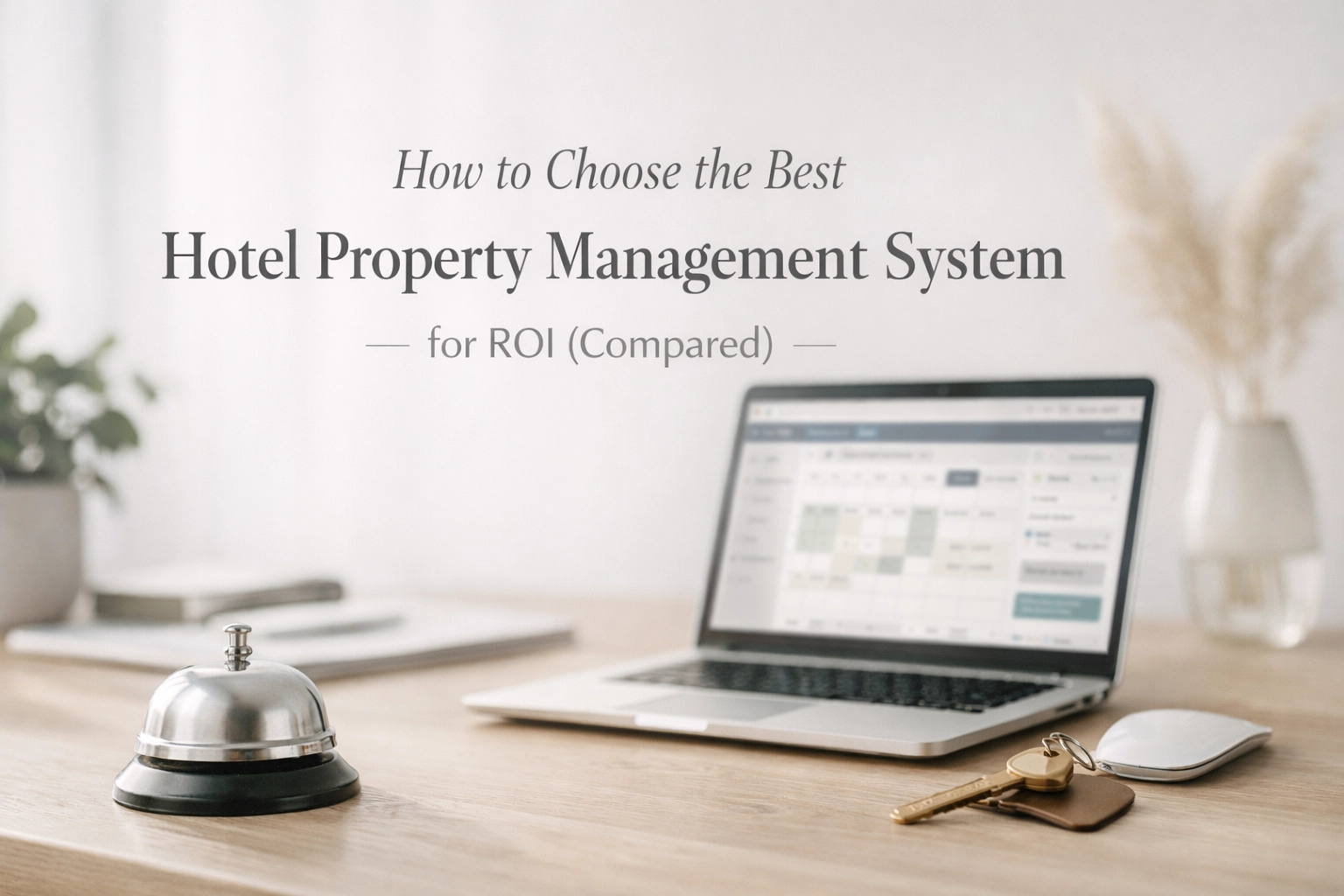
  • How to Choose the Best Hotel Property Management System for ROI (Compared)

    How to Choose the Best Hotel Property Management System for ROI (Compared)

    Automate your operations. Elevate your guest experience. Maximize your bottom line.

    Choosing a Property Management System (PMS) isn't just about finding a place to check guests in and out. It’s about building a digital foundation that actually pays for itself. In an era where labor costs are climbing and guest expectations are through the roof, the "standard" PMS just doesn’t cut it anymore. You need a revenue engine.

    Most hoteliers see technology as a cost center. We think that’s a missed opportunity. When you switch from legacy hardware to a cloud-native platform, you aren’t just buying software: you’re reclaiming time and uncovering hidden revenue streams. It’s the difference between managing a building and running a high-performance hospitality business, all from one innovative platform.

    Modern minimalist hotel lobby featuring a tablet-based check-in system for streamlined guest management.

    The Real Cost of "Cheap" Software

    We believe the most expensive software is the one that limits your growth. A low monthly subscription fee looks great on a spreadsheet until you realize you’re losing 20% of your revenue to OTA commissions because your booking engine is clunky. Or when you realize your staff spends four hours a day manually reconciling payments.

    To calculate true ROI, you have to look beyond the sticker price. You need to account for:

    • Direct booking conversion rates: Can your guests book in three clicks?
    • Operational automation: How many manual tasks can you delete from your to-do list?
    • Integration flexibility: Does your PMS play well with others, or are you locked in a walled garden?

    Revenue Generation: Beyond the Bed

    A modern PMS should be a salesperson that never sleeps. It’s not just about occupancy; it’s about RevPAR and, more importantly, TRevPAR (Total Revenue Per Available Room).

    We think hospitality is moving toward "Space as a Service." Why let a meeting room sit empty or a parking spot go unused? A high-ROI PMS allows you to monetize every square meter of your property. Whether it's upselling a late checkout, offering a breakfast add-on during the mobile check-in flow, or renting out co-working desks, your tech should facilitate the transaction effortlessly.

    • Native Revenue Management: Stop guessing your rates. Use data-driven insights to price rooms dynamically based on real-time demand.
    • Direct Booking Engine: Reduce your dependency on high-commission channels by providing a seamless, "Amazon-like" checkout experience on your own site.
    • Ancillary Upsells: Automated guest messaging can drive upsells at the exact moment a guest is most likely to buy: right before they arrive.

    Versatile hotel co-working area and meeting space designed to generate additional property revenue and ROI.

    Operational Excellence as a Profit Margin

    Efficiency is the silent partner of ROI. When your staff is bogged down by "click-heavy" workflows, they aren't looking after your guests. They're looking at a screen.

    We believe in a world where the front desk doesn’t exist: at least not as a physical barrier. By moving to a mobile-first environment, your team can roam the lobby, greet guests by name, and handle check-ins on a tablet.

    "Since we automated our payment settlements, we’ve saved 10 hours a week in the back office," says one of our partners. That’s ten hours that can be reinvested into guest experience or marketing.

    • Automated Payments: No more manual card entries or "no-show" payment headaches.
    • Housekeeping Apps: Real-time room status updates mean faster turnovers and happier guests.
    • Open API: Connect to over 1,000 industry-leading apps: from smart locks to POS systems: without a massive headache.

    Comparing the Players: Which PMS Fits Your ROI Goals?

    Not every property is built the same. A 10-room boutique inn has different needs than a 500-room international chain. Here is how the market shapes up for ROI in 2026.

    Platform Best ROI For Core Strength Implementation
    Mews Innovation-focused hotels & groups Automation, Open API, Space optimization Medium effort, high long-term value
    eviivo Independent & Multi-property All-in-one simplicity for small owners Fast, intuitive setup
    Cloudbeds Mid-market operations Strong distribution and channel reach Medium implementation effort
    WebRezPro Small to mid-size hotels Budget-friendly per-room pricing Low effort, fast initial ROI
    Oracle OPERA Large global chains Enterprise-level standardization High effort, high upfront cost

    Mews: The Automation Powerhouse

    Mews is designed for the hotelier who wants to lead the market, not just keep up with it. By focusing on guest journey automation and a "Space as a Service" model, Mews delivers ROI through massive operational savings and new revenue streams (like parking and day-use rooms). It’s for those who want to build a tech stack that’s future-proof.

    eviivo: The Independent’s Choice

    If you run a boutique property and want everything: channel manager, website, and PMS: in one box, eviivo is a strong contender. Its ROI comes from its all-in-one pricing and ease of use, making it perfect for owners who don't have an IT department on speed dial.

    Cloudbeds: The Distribution Specialist

    Cloudbeds excels at getting your rooms in front of as many eyes as possible. For properties that struggle with occupancy, their integrated channel manager and distribution tools provide a quick ROI by filling beds.

    WebRezPro: The Budget Optimizer

    For smaller properties looking for the fastest path to a "digital" upgrade, WebRezPro offers a low-cost entry point. The ROI here is found in the simplicity and low monthly overhead.

    Hotel employee using a mobile property management system to improve operational efficiency and guest service.

    The Role of AI in Your ROI

    AI isn't a buzzword anymore; it’s a utility. In the context of a PMS, AI should be working in the background to make your life easier. Think of smart guest communication that answers FAQs instantly, or predictive analytics that tell you exactly how many housekeepers you need on a Tuesday in November.

    We think the best use of AI is to make hospitality feel more human, not less. By letting the machine handle the data entry and the repetitive queries, your team is free to do what they do best: provide genuine hospitality.

    Implementation: The "Speed to Value" Metric

    The longer it takes to set up your PMS, the longer your ROI is deferred. You want a system that gets you earning revenue in no time. While enterprise systems can take months (and a small army) to deploy, modern cloud systems prioritize a 30-minute task approach.

    1. Map your guest journey: Identify every manual touchpoint.
    2. Integrate your "best-of-breed" tools: Connect your CRM, POS, and Keys.
    3. Train your team on mobile: Get them out from behind the desk.
    4. Go live: Start measuring the time saved immediately.

    Why Mews is the Innovative Choice

    At Mews, we aren't just building a database for rooms. We’re building a platform for the future of travel. We believe that hotels should be hubs of the community: blending stay, work, and play seamlessly.

    Our ecosystem allows you to experiment with new business models without switching platforms. Want to start a membership club? Easy. Want to offer "work from hotel" packages? Done. That’s the kind of flexibility that drives long-term ROI. (Check out how we do it at mews.com).

    Final Thoughts: Making the Move

    Choosing a PMS is a big decision, but it shouldn't be a scary one. Focus on the transformation, not just the technology. Look for a partner that shares your vision for innovation and understands that every minute saved is a dollar earned.

    If you’re ready to see how a modern, automated PMS can change your bottom line, it’s time to stop managing and start growing.

    Get started with a platform that works as hard as you do. Schedule a demo today and get your property earning the ROI it deserves.
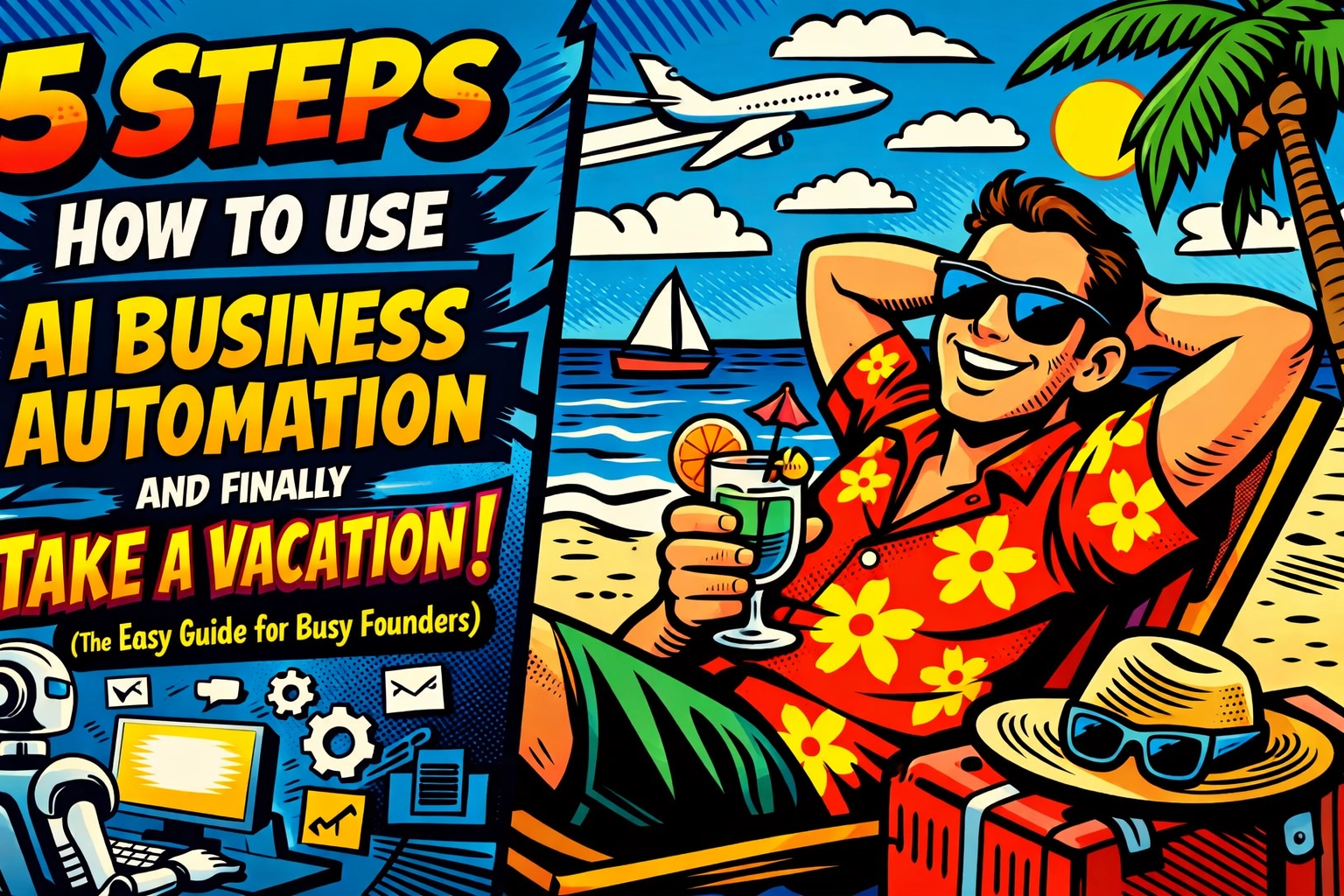

  • 5 Steps How to Use AI Business Automation and Finally Take a Vacation (The Easy Guide for Busy Founders)

    5 Steps How to Use AI Business Automation and Finally Take a Vacation (The Easy Guide for Busy Founders)

    7:00 AM.

    Your eyes aren't even fully open, but your hand is already reaching for the phone.

    📱 ☕

    The screen glows. 43 unread emails. Three Slack notifications from the team asking for "quick approvals." A LinkedIn message from a lead you haven't followed up with since Tuesday.

    Your heart does that little caffeine-free flutter. Not the good kind. The "I’m drowning in my own success" kind. You built this business for freedom, right? But somehow, you’ve become the bottleneck for everything from invoice processing to Instagram captions.

    You haven't taken a real vacation, one where you actually leave your laptop at home, since the iPhone 11 was new.

    It’s time to stop being the engine and start being the driver.

    Here is your 5-step roadmap to using business automation tools so you can finally book that flight and actually enjoy the view.


    STEP 1: AUTOMATE ADMIN TASKS: HOW TO SAVE 10+ HOURS EVERY WEEK

    Let's be real. You’re spending way too much time on "invisible work."

    The data entry. The "let me find a time that works for both of us" dance. The manual invoicing. It’s not "growing the business." It’s just keeping the lights on. And it’s stealing 10+ hours of your life every single week.

    The first step to freedom is an admin audit.

    Take a look at your last seven days. Every time you did a task that felt like a chore, something repetitive, boring, and predictable, put a red dot next to it.

    🔍 The Admin Purge:

    • Scheduling meetings? Stop. Use an AI-driven calendar tool.
    • Data entry between apps? Stop. Use a workflow connector.
    • Sorting emails? Stop. Let an AI filter the noise.

    When you remove the friction of admin, you don't just save time. You save your brainpower. Imagine finishing your "to-do" list by noon because the robot handled the drudgery.

    A calm business owner meditating while AI robotic arms handle administrative tasks and scheduling.


    STEP 2: THE BEST AI ASSISTANT FOR SMALL BUSINESS IN 2026

    It’s 2026. If you’re still doing your own research or manual reporting, you’re living in the past.

    You need a digital twin. A "person" (or code) that knows your business logic as well as you do. The best AI assistant for small business isn't just a chatbot that writes poems; it’s a system that lives inside your workflow.

    Imagine this scenario:
    11:00 AM. A potential client asks for a quote based on three different variables.

    In 2024, you’d open Excel, crunch numbers, and draft a response.
    In 2026, your AI assistant sees the request, pulls your current pricing, checks your inventory, and drafts the reply in your "voice."

    You just see a notification: "Drafted quote for Client X. Send?"

    One tap. Done.

    This isn't sci-fi. It’s what happens when you integrate business automation tools that actually talk to each other. You need an assistant that doesn't just "chat," but "does."

    By delegating the "doing" to an AI, you move from being a manager to being a visionary. And visionaries have time for poolside margaritas.

    STEP 3: AI CONTENT GENERATOR FOR SMALL BUSINESS: YOUR SECRET MARKETING WEAPON

    "I need to post on LinkedIn."
    "The newsletter is due tomorrow."
    "Why is our blog three months behind?"

    Sound familiar? Marketing is usually the first thing founders sacrifice when they get busy. But if you stop marketing, the leads dry up. If the leads dry up, the business dies.

    Enter the AI content generator for small business.

    This isn't about "spinning" low-quality articles. It’s about taking one great idea, maybe a 5-minute voice memo you recorded while driving, and turning it into:

    • A high-converting blog post.
    • Four LinkedIn updates.
    • A weekly newsletter.
    • Caption ideas for Instagram.

    🤝 The Content Secret:
    Stop starting from a blank page. Your AI should know your brand’s tone better than your summer interns do. It should know that you hate corporate speak and love short, punchy sentences.

    When your marketing is automated, your brand stays alive while you’re offline. Your content keeps working. Your SEO keeps climbing. Your leads keep coming.

    And you? You're snorkeling.

    An AI assistant robot helping a small business owner manage digital files and marketing workflows.


    STEP 4: PERFORM A "DECISION TRIAGE"

    Not everything should be automated.

    If you try to automate your human relationships, your business will feel like a cold, metallic machine. Your customers will feel it. Your team will feel it.

    The secret to a vacation-ready business is "Decision Triage." You need to categorize every task into three buckets:

    1. Full Automation: The task is repetitive and follows clear rules (e.g., sending an invoice after a contract is signed). 🤖
    2. AI-Augmented: The AI does the heavy lifting, but you give the final "Yes" (e.g., drafting a complex strategy proposal). 🧠
    3. Human Only: Tasks requiring deep empathy, high-level strategy, or personal touch (e.g., a "we messed up" phone call to a major client). ❤️

    The goal is to get 80% of your day into buckets 1 and 2.

    If you can get to that point, your "Human Only" tasks can be batched or handled by a trusted team member. This is the moment the "vacation" becomes possible. You aren't leaving a mess behind; you’re leaving a well-oiled machine that only needs a "Human" check-in once a day, if that.

    Check out how we handle this at Marblism.


    STEP 5: THE VACATION TEST (BUILDING MOMENTUM)

    Don't book a two-week trip to the Maldives immediately. You’ll spend the whole time staring at your phone in a panic.

    Start small.

    The Friday Test:
    Automate one core workflow this week. Maybe it’s your lead intake.
    Then, on Friday, turn off your notifications at 12:00 PM.
    Don't check them until Monday.

    Did the world end?
    Did a client scream?
    Or… did the AI handle the intake, send the welcome email, and schedule the call for Tuesday morning?

    Once you see the system work for 4 hours, you’ll trust it for 4 days. Once you trust it for 4 days, you’re ready for the big one.

    Scaling shouldn’t be a weight that gets heavier as you grow. It should be a system that gets smarter.

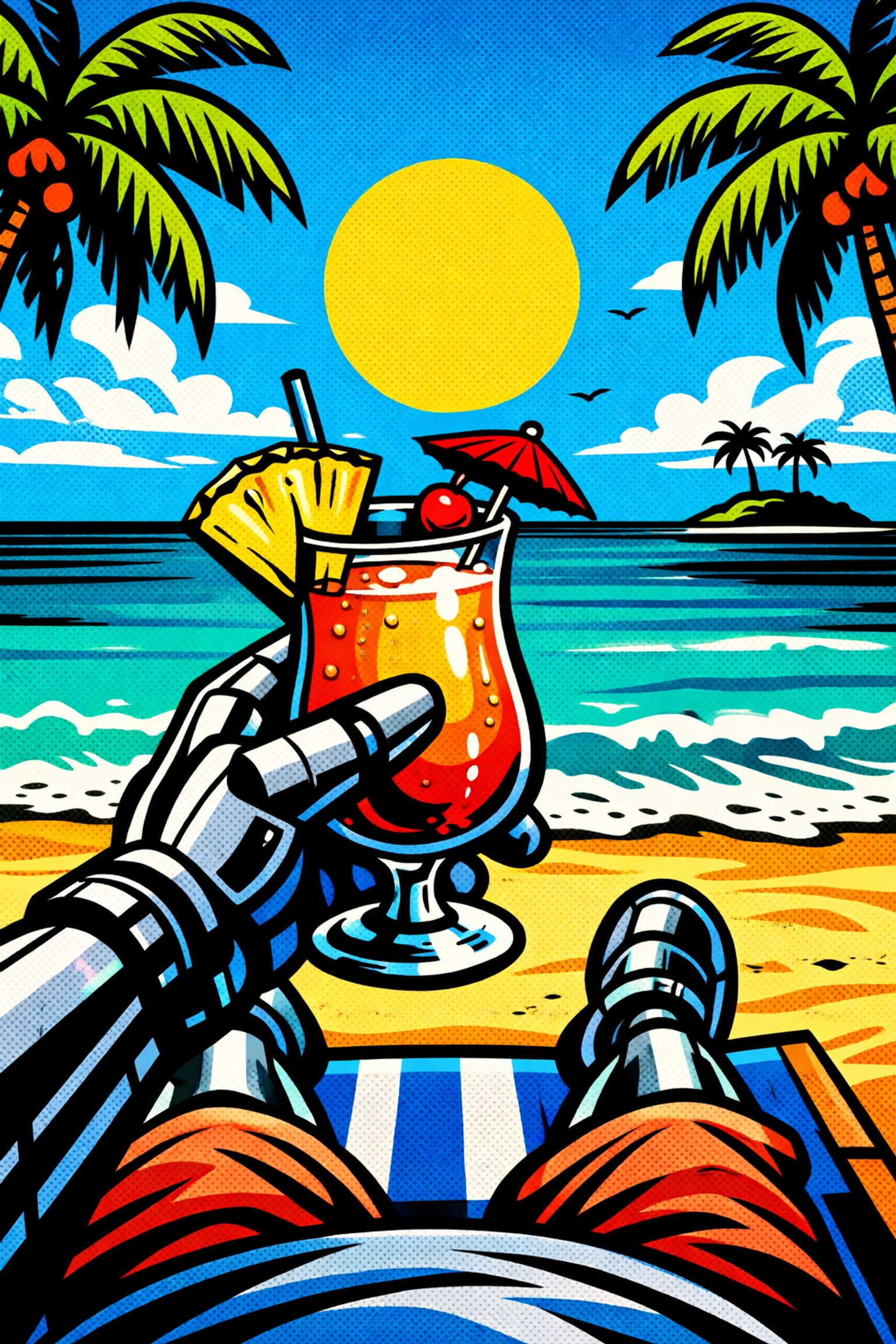
    A founder enjoying a beach vacation while AI business automation tools handle the daily operations.


    MEET YOUR NEW REALITY

    1:00 PM. (Somewhere with no cell service).

    ☀️ 🌴

    The sun is warm. The water is clear.

    Back home, your ai assistant for small business is sorting through support tickets. Your ai content generator just pushed a brilliant post about industry trends to your LinkedIn. Your business automation tools are syncing sales data to your accounting software.

    The business is breathing. It’s moving. It’s growing.

    And you?

    You’re finally taking a breath, too.

    You aren't a founder because you wanted to be a slave to a laptop. You're a founder because you wanted to build something that lasts.

    The tools are here. The steps are clear.

    Stop juggling. Start automating.

    If you’re ready to see how fast you can actually move when you aren't doing the "busy work," take a look at what we're building.

    👉 Start your automation journey here.

    Scaling shouldn’t be this hard. But here we are. Let's make it easy.


    FAQ: YOUR AUTOMATION QUESTIONS, ANSWERED

    Is AI going to make my business feel "robotic"?
    No. Only if you let it. Use AI to handle the "data" so you have more energy to be "human." It’s about clearing the junk so you can focus on the relationships that matter.

    Which tool should I start with?
    Start with whatever is hurting the most. If you hate your inbox, start with an AI email assistant. If you hate writing, start with a content generator. Small wins build the momentum you need.

    How long does it take to set up?
    You can automate your first task in under 30 minutes. You don't need a degree in computer science. You just need to know your own process.

    Can I really take a vacation?
    Yes. But only if you stop being the "fixer" for every tiny problem. Automation is the only way to replicate yourself.

    What if the AI makes a mistake?
    It might. But you also make mistakes when you're tired, overworked, and on your 5th cup of coffee. The difference? The AI doesn't get "tired." You set the guardrails, and it stays inside them.


    The quiet is nice, isn't it?

    That's the sound of a business that doesn't need you to survive.

    It just needs you to lead.

    See you on the beach.

    Marblism.

  • Stop Wasting Time on Manual Admin: Try These 7 Quick AI Business Automation Hacks

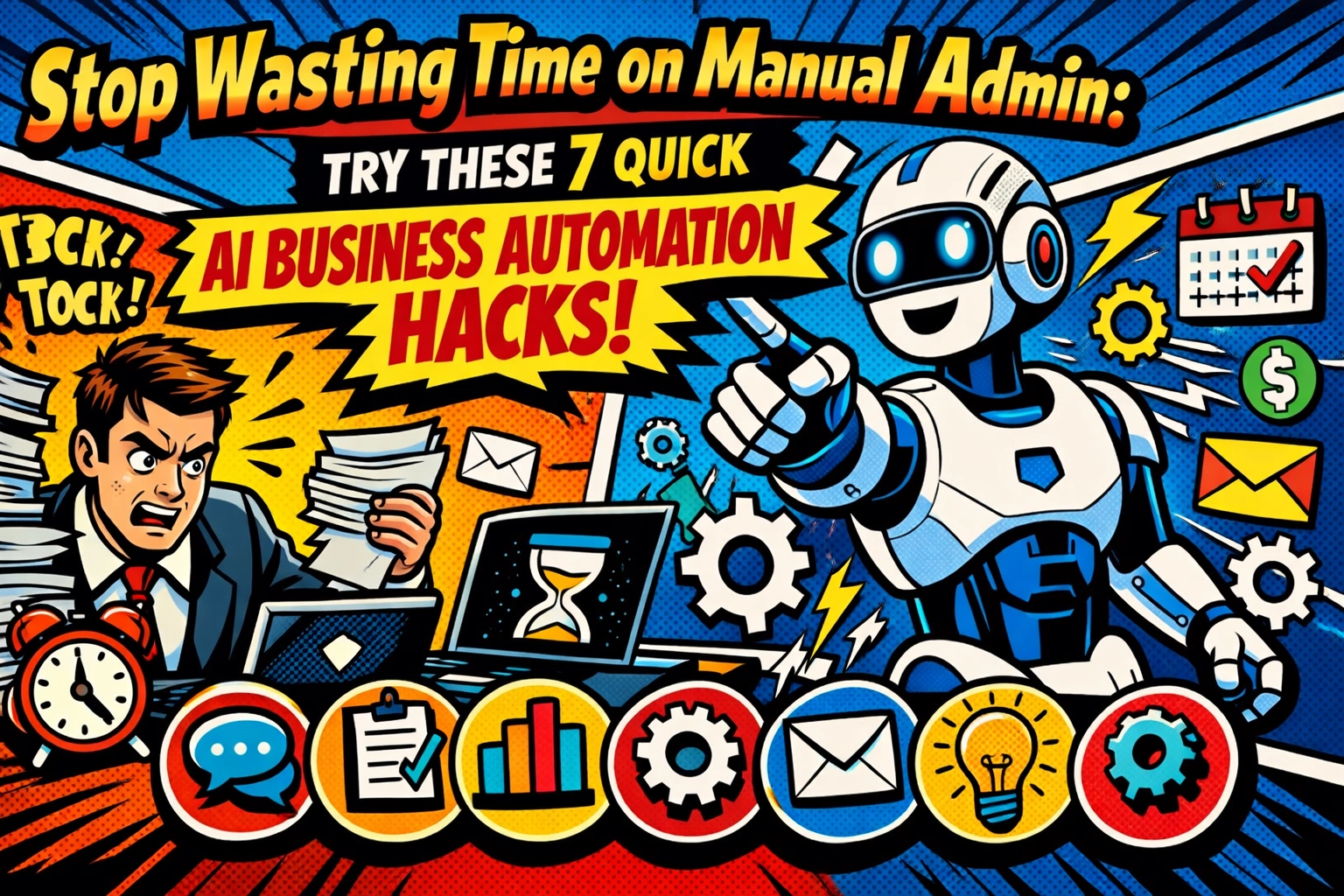
    Stop Wasting Time on Manual Admin: Try These 7 Quick AI Business Automation Hacks

    You wake up. Your phone is already screaming.

    It’s 7:00 AM, and your inbox is a graveyard of "urgent" requests, unread newsletters, and half-baked inquiries from people who definitely didn't read your FAQ page. You haven't even had coffee yet, but the weight of manual admin is already pressing down on your chest.

    The invoice that needs checking. The lead that needs a follow-up. The contract that needs five different fields updated manually because "that's just how we do it."

    Stop.

    You're not a data entry clerk. You’re a business owner. But right now? You’re a highly paid secretary for your own company. It’s slow. It’s draining. And honestly… it’s beneath you.

    The good news is that the "robots" aren't coming for your job. They’re coming for the parts of your job that make you want to scream into a pillow. We’re talking about ai business automation. It’s not just a buzzword; it’s your ticket to getting your Tuesday afternoons back.

    If you’re ready to stop drowning in the shallow end of the admin pool, let’s walk through a day where you actually get to lead, while the AI does the heavy lifting.


    ☕ 8:15 AM: THE INVOICE NIGHTMARE ENDS

    You’re sitting at your desk. Usually, this is where you spend an hour squinting at PDFs, making sure the PO numbers match and the totals aren't hallucinated.

    Hack #1: Automate Your Invoice Processing

    Instead of manual entry, you set up an AI tool to extract data automatically. It doesn't just "read" the text; it understands it. It validates purchase orders, flags duplicates, and routes the invoice to the right person for approval.

    And the best part? It integrates directly with your accounting software. What used to take days of back-and-forth now happens in minutes. You’re not chasing paper; you’re just clicking "approve" while your coffee is still hot.

    Business owner relaxing while paper invoices are digitized using AI business automation tools.

    📱 10:00 AM: THE SUPPORT DESK THAT NEVER SLEEPS

    Your phone buzzes. A potential client has a question. Usually, you’d drop everything to answer, or worse, ignore it and lose the lead.

    Hack #2: Deploy Conversational Chatbots

    While you’re focused on high-level strategy, your AI chatbot is on the front lines. It’s not those old-school, "I don't understand that" bots from 2015. These are smart. They answer FAQs, guide users through your services, and capture lead info 24/7.

    When a query gets too complex? It escalates to you with a full transcript. You step in only when it matters. The rest of the time? The bot is your most polite, tireless employee.

    🔍 11:30 AM: NO MORE TRASH LEADS

    Your CRM is full of "leads," but half of them are students doing research or competitors "mystery shopping." Sorting through them is a slog.

    Hack #3: Qualify Leads Automatically

    Use business automation tools to evaluate every person who enters your orbit. The AI looks at their industry, their job title, and their location. It assigns a score.

    The "hot" leads get sent to your phone immediately. The "maybe later" leads get funneled into an automated nurturing sequence. You stop chasing ghosts and start closing deals. It’s clinical. It’s efficient. It’s exactly how you scale without losing your mind.

    For those looking to skip the learning curve and jump straight to the results, https://marblism.link/scott-bowen is where the real magic happens.


    🥪 1:00 PM: THE INBOX TRIAGE

    Lunch is over. Normally, you’d spend the next two hours "sorting" through 150 emails. Most of them are noise.

    Hack #4: Categorize and Triage Emails

    Imagine an AI that acts as a digital air traffic controller. It reads incoming mail and automatically labels it: "Urgent Support," "Billing," or "Spam." Even better, it routes those emails to the specific team member who can actually solve the problem.

    You don’t even see the noise. You only see what requires your specific brainpower. The chaos is gone before you even take your first sip of afternoon tea.

    AI email triage system directing messages into organized streams for efficient business automation.

    ✍️ 2:45 PM: THE CONTRACTS THAT WRITE THEMSELVES

    You need to send out a new agreement. In the old world, you’d open a Word doc, find-and-replace the name, change the dates, and pray you didn’t leave the last client's name in paragraph four.

    Hack #5: Generate Documents Automatically

    AI platforms can now pull data directly from your CRM to create customized contracts, reports, and proposals. The system knows the customer segment, adjusts the terms based on compliance requirements, and spits out a perfect document in seconds.

    No typos. No manual "find-and-replace" errors. Just professional, consistent output every single time.

    🛠️ 4:00 PM: THE "NO-CODE" SUPERPOWER

    You have an idea for a workflow, but you’re not a programmer. You don't have $10k to throw at a developer.

    Hack #6: Build Custom Workflows Without Coding

    With tools like Lindy or Gumloop, you can build complex automations using simple drag-and-drop interfaces. Want your meeting notes to automatically become a task list in Trello and an email to your client? Done. Want your social media mentions to trigger a Slack notification for your sales team? Easy.

    You can launch your first major automation in under 60 minutes. You’re not just a user anymore; you’re an architect.

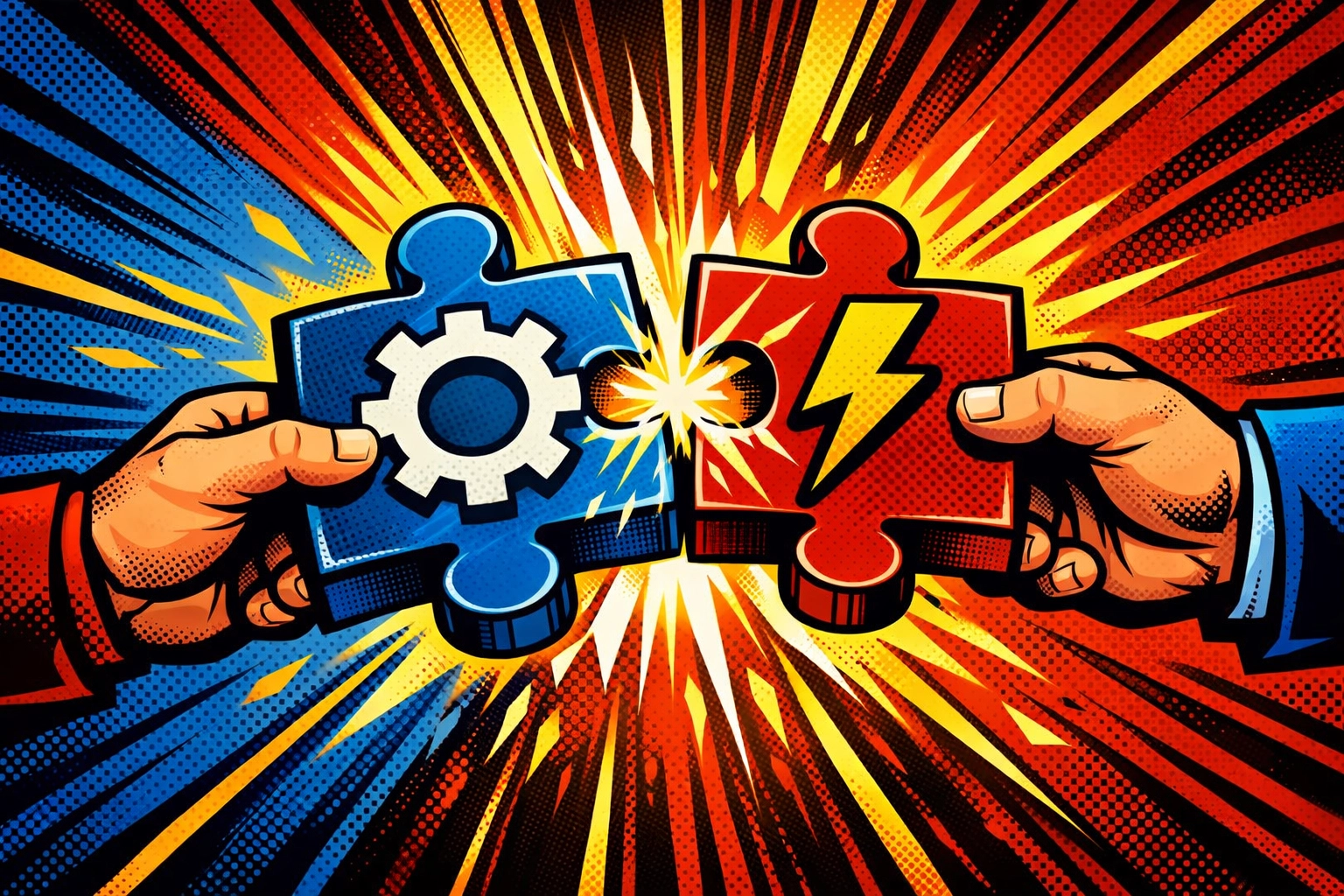
    Connecting puzzle pieces to create custom AI business automation workflows without writing code.

    🌙 5:30 PM: THE END-TO-END REVOLUTION

    The day is winding down. But your business isn't.

    Hack #7: Automate End-to-End Business Processes

    This is the holy grail of ai business automation. You combine AI logic with Robotic Process Automation (RPA). Customer onboarding? The AI handles the document ingestion, verifies the ID, sets up the account, and sends the welcome email. All without you touching a single key.

    You’ve transformed a slow, manual pathway into a high-speed digital highway. While you’re closing your laptop for the day, the system is still working.


    EMPLOYEE OF THE MONTH. EVERY MONTH.

    "I used to spend three hours a day on data entry. Now? I spend thirty minutes reviewing what the AI did. My revenue is up because I’m actually selling again." , Mark, Small Agency Owner

    "The chatbot isn't just a tool; it's a team member. It caught a lead at 3 AM that turned into a $5k contract. I was asleep." , Sarah, E-commerce Founder

    SCALING SHOULDN'T BE THIS EASY. BUT HERE WE ARE.

    The truth is, your competitors are already doing this. Or they’re about to. The gap between businesses that use business automation tools and those that don't is widening every single day.

    You don't need a massive IT budget. You don't need to be a tech genius. You just need to decide that your time is worth more than $15 an hour. Because that's what you're paying yourself when you do manual admin.

    Ready to see how this looks for your specific business? Don't just read about it. Experience it. Check out https://marblism.link/scott-bowen to see how we’re turning the "grind" into a well-oiled machine.


    FAQ: THE STUFF YOU’RE WONDERING ABOUT

    Is this going to replace my team?
    No. It’s going to make your team capable of doing 10x more. It replaces the "robotic" tasks, so your people can do the "human" tasks, like building relationships and solving complex problems.

    Is AI automation expensive?
    It’s much cheaper than a full-time hire. Many of these tools have free tiers or low-cost entry points. The real question is: how much is your wasted time costing you?

    Do I need to know how to code?
    Zero code required. If you can move a mouse and follow a logic flow (If this happens, do that), you can automate.

    Can it really handle my specific niche?
    Yes. Whether you’re in real estate, legal, retail, or consulting, manual admin is a universal plague. AI is the universal cure.


    The sun is setting.

    You’re not stressed. You’re not staring at a mountain of "to-do" items for tomorrow. The invoices are processed. The leads are qualified. The contracts are sent.

    You just send a thumbs-up to your team and close your laptop.

    The chaos is gone… and it didn't even take a miracle. It just took a little bit of intelligence. The artificial kind.

    Go see what the future looks like: https://marblism.link/scott-bowen

    SCALING IS A CHOICE. CHOOSE WISELY.

  • Why Wholesale Specialty Coffee Will Change the Way You Serve Your Customers

    So, you’re thinking about opening a café, or maybe you’re already behind the bar and wondering why the shop down the road has a queue out the door while you’re checking your watch. Running a coffee business is tough. It’s early starts, endless cleaning, and the constant pressure to keep customers coming back. But here is the secret: the beans in your hopper are doing a lot more heavy lifting than you might think.

    Choosing a coffee supplier isn't just about finding the cheapest bag of brown beans that looks the part. It’s about a partnership. When you switch to wholesale specialty coffee, you aren’t just buying a product; you’re buying a standard of excellence that transforms your entire business model.

    At Limini Coffee, we believe that specialty coffee is the foundation of every successful café startup. And we aren't just saying that because we roast it. We’ve seen it happen time and time again.


    What Exactly Is "Specialty" Anyway?

    You hear the word "specialty" thrown around a lot these days. It’s become a bit of a buzzword, which is just a real shame because it actually has a very specific meaning.

    In the industry, specialty coffee refers to beans that score 80 points or higher on a 100-point scale by certified coffee tasters (Q Graders). Commodity coffee, the stuff you find in most supermarkets or massive chains, is often full of defects and relies on being roasted "into oblivion" to hide the fact that the beans aren't actually that great.

    Specialty coffee is different. It’s grown at the right altitude, picked at the peak of ripeness, and processed with incredible care. This means you get a cup that is naturally sweet, complex, and free from that nasty "burnt" bitterness that people have come to associate with "strong" coffee.

    When you partner with wholesale coffee roasters who focus on specialty grades, you are serving a product that is ethically sourced and transparent. You can tell your customers exactly where their coffee came from. That story? That’s what builds loyalty.

    Hands holding freshly roasted specialty coffee beans sourced from ethical wholesale coffee suppliers.


    The Shift in Customer Experience

    Imagine a customer walks in. They’re used to the bitter, watery stuff from the office vending machine. You serve them a flat white made with a perfectly dialed-in specialty roast. It’s creamy, it has notes of milk chocolate and maybe a hint of red berries, and it’s silky smooth.

    That "aha!" moment is what changes your business.

    Why is this important?
    Because you stop being a utility and start being a destination. People don’t just stop by because you’re on the way to the train station; they stop by because your coffee is the highlight of their day.

    By offering a diverse range of premium selections, you cater to the growing "coffee nerd" demographic while still making high-quality "comfort coffee" for everyone else. We think it’s essential to have a house blend that is approachable but also to offer something exciting, maybe a single-origin from Ethiopia or Colombia, to keep things fresh. You can explore our range of wholesale offerings here to see what we mean.


    It’s Not Just Beans, It’s a Support System

    This is where a lot of café owners get tripped up. They find a supplier, get the beans delivered, and then… nothing. Silence.

    A true wholesale partner doesn't just drop off boxes and send an invoice. They should be your biggest supporters. At Limini, we provide more than just coffee; we provide the blueprint for your success. This includes everything from barista training to technical help when your machine starts acting up at 8:00 AM on a Tuesday.

    The Power of Training

    You can have the best beans in the world, but if your barista doesn't know how to tamp correctly or understand the importance of milk texture, the coffee will be mediocre.

    We take training very seriously. We want your team to know the difference between a latte and a cappuccino (yes, there is a difference!) and how to dial in an espresso shot so it hits that sweet spot every single time.

    A skilled barista pouring a latte art heart, highlighting the results of professional barista training.


    The Technical Side: Equipment That Actually Works

    Let’s talk gear. You wouldn’t put budget tires on a Ferrari, right? So why would you use a low-grade espresso machine for specialty beans?

    The equipment you choose is the bridge between the roasted bean and the customer's cup. We are big fans of La Spaziale machines because they are absolute workhorses. Whether you’re looking at a traditional lever or an automatic, the goal is thermal stability and consistency.

    Some technical bits for you:
    Most specialty coffee tastes best when extracted at a consistent temperature (usually between 88 C to 95 C) and a steady 9 BAR of pressure. If your machine fluctuates, your coffee will taste different every time. That’s a nightmare for customer retention. Consistency is king in the wholesale world.

    If you’re currently in the middle of choosing espresso equipment, please reach out. We’ve tested almost everything under the sun and we’re happy to help you avoid the expensive mistakes.


    The Economics of Going Specialty

    "But Penny," you might say, "specialty coffee is more expensive per kilo!"

    Well, yes. To be honest, it is. But looking at the price per kilo is a bit like looking at the price of a car without checking the fuel efficiency.

    Here is why the math works in your favor:

    1. Higher Margins: Customers are willing to pay a premium for specialty coffee. You can charge more for a product that tastes significantly better.
    2. Reduced Waste: When your staff is properly trained, you have less wasted milk and fewer "sink shots" from bad extractions.
    3. Customer Loyalty: It is much cheaper to keep a regular customer than to find a new one. If your coffee is the best in town, they aren't going anywhere.
    4. Bulk Savings: Buying through a wholesale coffee supplier gives you access to volume pricing that you simply can't get as a retail buyer.

    We also provide tools like our coffee brewing calculator to help you keep your recipes precise and your costs under control. Every gram of coffee counts when you're running a business!

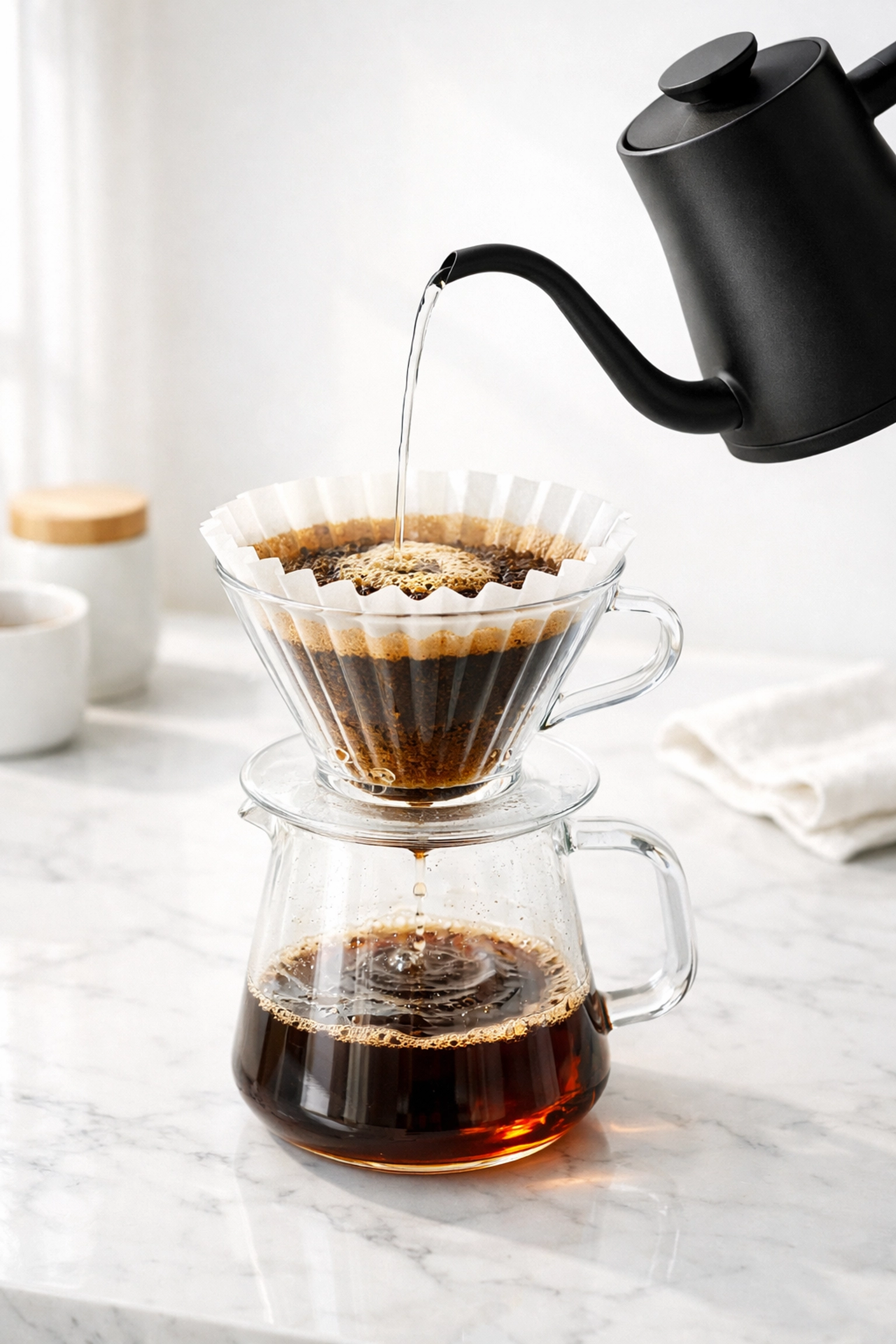
    A precise pour-over coffee brewing ritual, demonstrating the quality expected in a specialty café.


    Branding and Your Unique Identity

    In a sea of generic coffee shops, how do you stand out? Specialty coffee gives you a platform to build a brand.

    When you work with a roaster like Limini Coffee, you aren't just selling "coffee." You're selling a commitment to quality. You can use our sourcing stories to decorate your menu or your walls. People love knowing that their morning caffeine fix is helping a specific farm or co-op in Brazil or El Salvador.

    It creates a sense of "theatre." (We actually have a whole article on the theatre of coffee if you're interested in the psychology of the café experience). From the way the steam wand hisses to the beautiful crema on top of an espresso, every detail matters.


    Let’s Build Something Great Together

    If you’re a café startup, the road ahead is exciting but admittedly a bit daunting. We’ve helped hundreds of businesses go from an empty shell to a bustling hub of the community. Whether it’s shop-fitting advice or just figuring out which cups you should buy, we are here to help.

    The switch to wholesale specialty coffee isn't just a menu update. It’s a statement of intent. It says you care about quality, you care about your farmers, and most importantly, you care about your customers.

    So, are you ready to change the way you serve your customers? We’d love to have you join the family. Check out our wholesale page to get started, or browse our reviews to see what other café owners think of us.

    And remember, if you ever have a question: no matter how small or technical: just ask. That is the beauty of coffee, and that's the beauty of a partnership with Limini Coffee.

    Let’s get brewing! 🙂

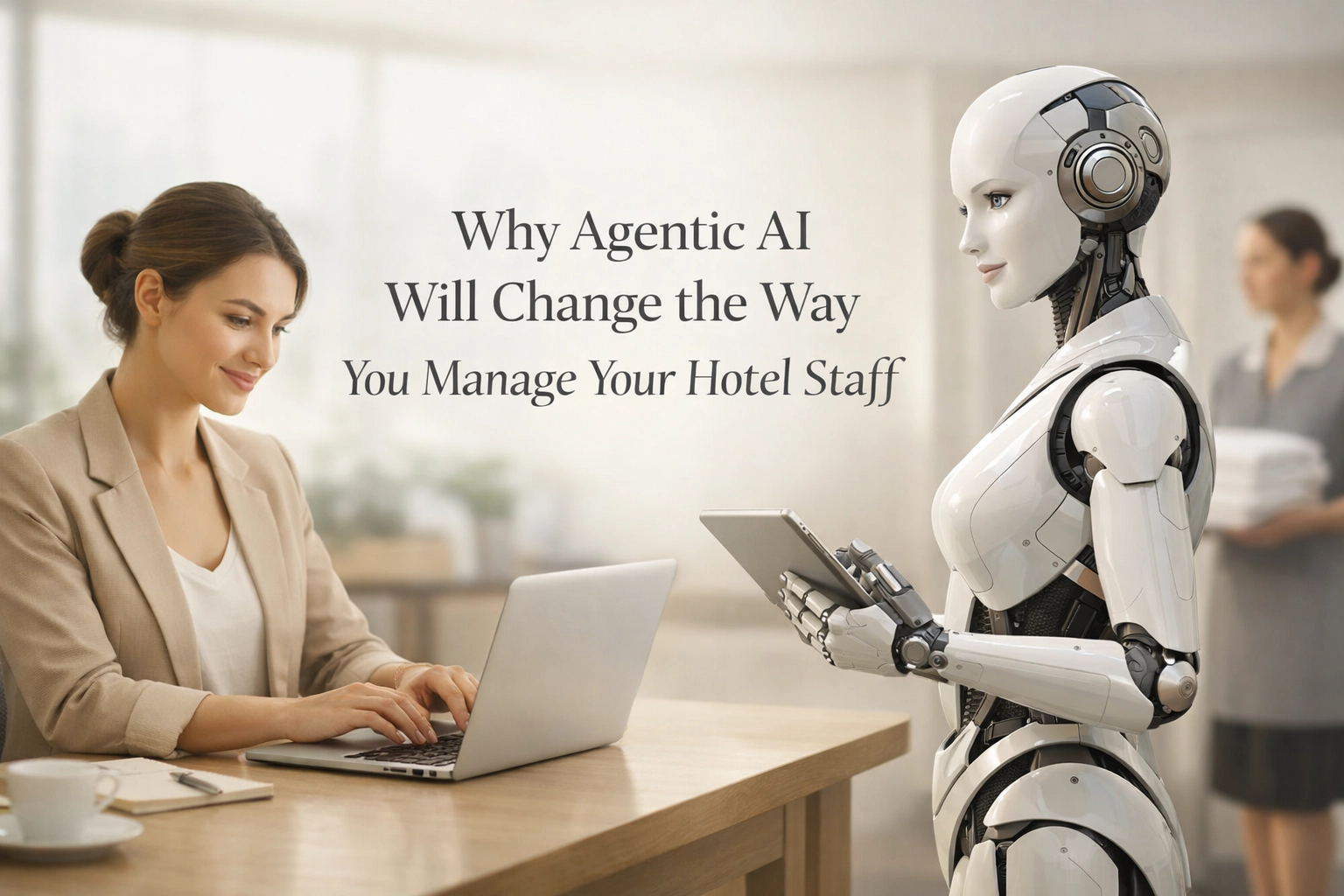
  • Why Agentic AI Will Change the Way You Manage Your Hotel Staff

    Why Agentic AI Will Change the Way You Manage Your Hotel Staff

    Automate routine tasks. Elevate human service. Scale your operations.

    In the next 24 months, the way you lead your team will undergo a radical shift. It’s not just about "going digital" anymore: we’ve already done that. It’s about moving toward a model where your software doesn't just store data, but actually thinks and acts on behalf of your team. This is the era of Agentic AI.

    At Mews, we see a future where technology handles the complexity, leaving your staff free to do what they do best: provide genuine hospitality. Over 12,500 properties are already looking for ways to streamline their operations, and the answer lies in turning your property management system into an active participant in your daily workflow.

    All from one innovative platform.

    Beyond simple automation

    Traditional automation is reactive. You set a rule: "if X happens, then do Y": and the system follows it blindly. It’s useful, but it’s rigid. Agentic AI is different. It’s proactive, goal-oriented, and capable of making decisions within the parameters you set.

    Think of it as a digital coworker that doesn't just wait for instructions. It understands the context of your hotel. It knows that a VIP check-in at 2:00 PM requires a specific room to be prioritized by housekeeping by 1:00 PM. It doesn't need you to click a button to assign that task; it simply sees the goal and orchestrates the result.

    We believe the most successful hotels of the future won't be the ones with the most staff, but the ones who use their staff the most effectively.

    Minimalist luxury hotel suite with a guest amenity, illustrating efficient automated room preparation.

    Reclaiming the clock

    The biggest drain on your staff isn't the guests; it's the "hidden" work. The administrative friction that eats up hours of every shift. Agentic AI acts as a 24/7 digital employee that absorbs these low-value tasks.

    • Zero-touch coordination. Multi-step workflows: like processing a maintenance request, notifying the guest, and updating the room status: happen autonomously.
    • Dynamic scheduling. Housekeeping routes are optimized in real-time based on actual guest behavior, not just a static morning list.
    • Proactive guest recovery. If a system detects a delay or an issue, the agent can initiate a service recovery protocol before the guest even has a chance to complain.

    When you remove the burden of manual data entry and task assignment, you give your team their time back. We’ve seen that reducing this "digital noise" can save teams significant chunks of their work week.

    The Impact by the Numbers

    • 3.5x increase in operational efficiency for high-frequency tasks.
    • 24/7 autonomous coverage across housekeeping and maintenance.
    • 0 minutes spent on manual email confirmations or basic data syncing.

    A new philosophy for staff management

    We think the role of a Hotel Manager is changing from a "task master" to a "experience curator."

    When an AI agent handles the logistics, your management focus shifts. You stop worrying about whether the towels were changed and start focusing on whether your team has the emotional capacity to delight a guest. This represents a fundamental change in staff management philosophy.

    Instead of hiring for technical "system knowledge," you hire for personality, empathy, and problem-solving. You aren't managing people to be machines; you're using machines to let your people be human. It’s a win for your culture and a massive win for your guest satisfaction scores.

    Modern hotel lobby where staff focus on high-touch guest interactions instead of administrative tasks.

    Orchestrating the complex workflow

    Your hotel is a web of interconnected systems. Your PMS, your CRM, your channel manager, and your smart room tech all need to talk to each other. Agentic AI functions as the conductor of this orchestra.

    Through deep API integrations, these agents can navigate across platforms. If a guest mentions a preference for a high floor in a chat message, the agent doesn't just "flag" it: it looks at the availability in Mews, assigns the room, and updates the housekeeping notes. It closes the loop without a human ever touching a keyboard.

    We believe technology should feel invisible. It should work in the background, ensuring everything is in its right place, so that when a guest walks through your doors, everything "just works."

    (And if you want to see how this fits into your specific property, you can always check out Mews Referrals to get started.)

    Scaling the human touch

    A common fear is that AI will make hospitality feel cold. We believe the exact opposite is true.

    By scaling the "boring" parts of service, you create the space for more "magic" moments. When a front desk agent isn't buried in a screen trying to fix a reservation error, they can look the guest in the eye. They can offer a local recommendation. They can actually be there.

    Agentic AI isn't about replacing human service. It’s about augmenting it. It’s about giving your team the superpowers they need to handle a 200-room property with the same grace and attention to detail as a 5-room boutique bed and breakfast.

    • Focus on high-value work. Strategy, guest relations, and brand building.
    • Reduce burnout. Eliminate the repetitive "grunt work" that leads to high turnover.
    • Continuous operations. Your hotel stays smart and responsive even when you're asleep.

    Sleek modern hotel corridor representing the seamless, invisible orchestration of continuous AI-led operations.

    How to begin the transition

    Moving toward an agent-led operation doesn't happen overnight, but the steps are surprisingly simple. It starts with your core infrastructure.

    1. Audit your friction. Identify the top 3 tasks your staff hates doing every day.
    2. Centralize your data. Ensure your PMS is the single source of truth for all guest and operational data.
    3. Integrate your agents. Deploy AI agents that can "read" your PMS data and trigger actions across other tools.

    We think the transition to Agentic AI is the single biggest competitive advantage available to hoteliers today. The properties that embrace this digital coworker model will operate with lower overhead, higher staff retention, and superior guest loyalty.

    Get ahead of the curve

    The hospitality industry is at a crossroads. You can continue to manage your staff the old way: chasing tasks and fighting fires: or you can step into a model where your technology does the heavy lifting for you.

    We believe in a world where hotels run themselves, so you can focus on the people who stay in them. It’s about freedom. It’s about innovation. It’s about the future of how we work.

    See what a truly modern, AI-ready platform can do for your property.

    Schedule your 30-minute discovery call and get your team moving toward a more efficient, high-value future that will get you earning more revenue in no time.

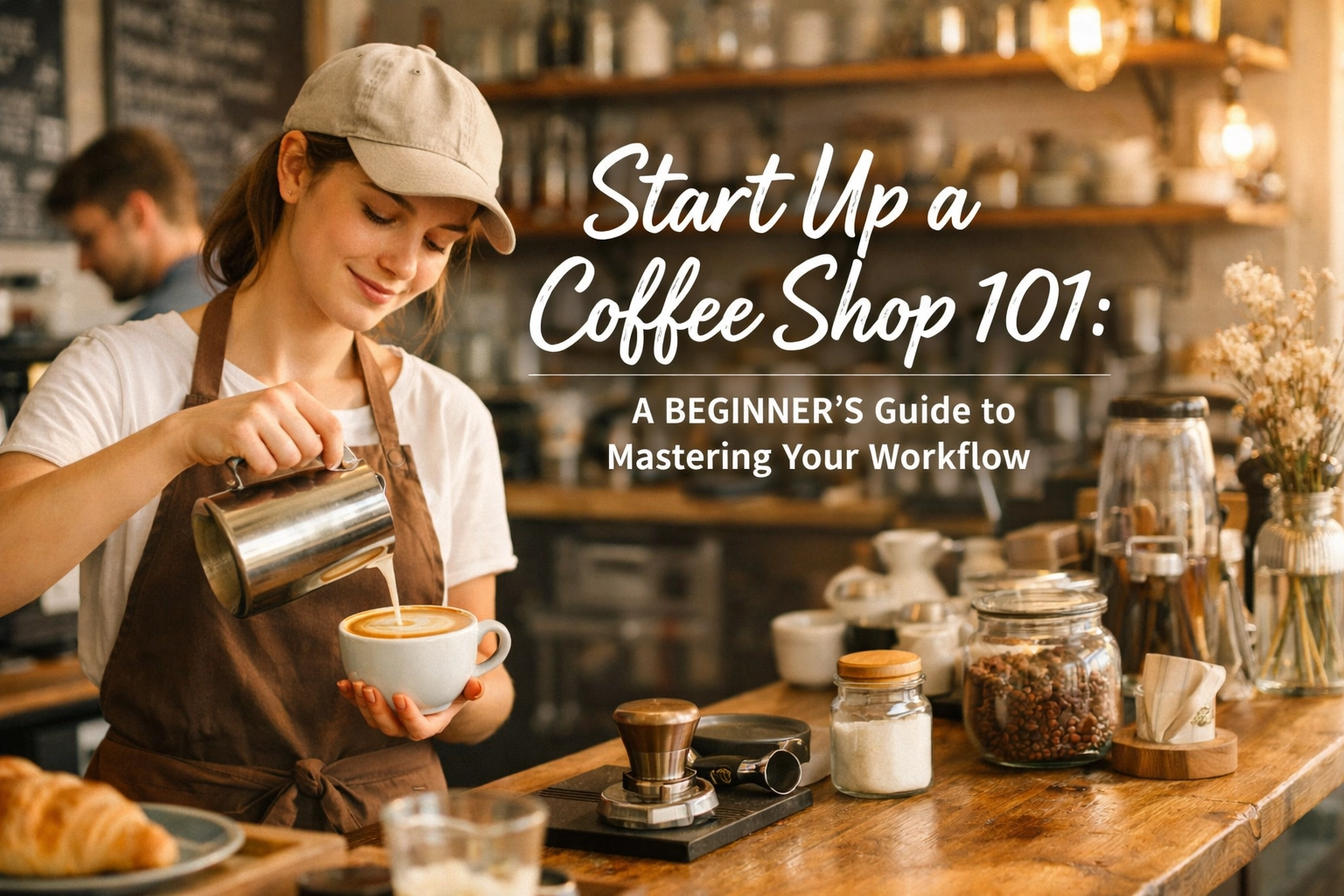
  • Start Up a Coffee Shop 101: A Beginner’s Guide to Mastering Your Workflow

    Start Up a Coffee Shop 101: A Beginner’s Guide to Mastering Your Workflow

    So, you want to open a coffee shop? It’s a beautiful dream, isn’t it? The smell of freshly ground beans, the hiss of the steam wand, and a community of regulars who can’t start their day without you.

    But let’s be honest for a second. Between the Pinterest boards of exposed brick and the perfect latte art, there is a reality involving 8:00 AM rushes, complex plumbing, and the desperate need for a workflow that doesn't crumble the moment three people walk through the door at once.

    At Limini Coffee, we’ve seen it all. We’ve helped hundreds of new shops go from an empty shell to a thriving business. The secret isn't just having the best coffee (though that’s non-negotiable); it’s about how you move behind the bar.

    Efficiency is the difference between a profitable, happy cafe and a stressed-out owner who hasn't sat down in six months. Let’s dive into how you can master your workflow from day one.


    The Concept: More Than Just "Cool Vibes"

    Before you even touch an espresso machine, you need to know who you are. Are you a high-volume "grab-and-go" spot near a train station, or a slow-paced specialty nook where people linger over a V60?

    Your concept dictates your workflow.

    If you’re focused on volume, your bar needs to be a well-oiled machine where the barista barely has to move their feet. If you’re focused on the "theatre" of coffee, you might prioritize a layout that allows for more customer interaction. We actually think the theatre of coffee is a huge part of why people choose independent shops over big chains, so don't hide your baristas away!

    Designing Your Layout: The Golden Triangle

    In kitchen design, they talk about the "work triangle." In a coffee shop, we have something similar. Your workflow should follow a logical path: Order -> Grinding -> Extraction -> Milk/Finishing -> Serving.

    Imagine a barista standing at the machine. They shouldn't have to walk three steps to get a jug, or turn around completely to find the fridge. Everything needs to be within arm’s reach.

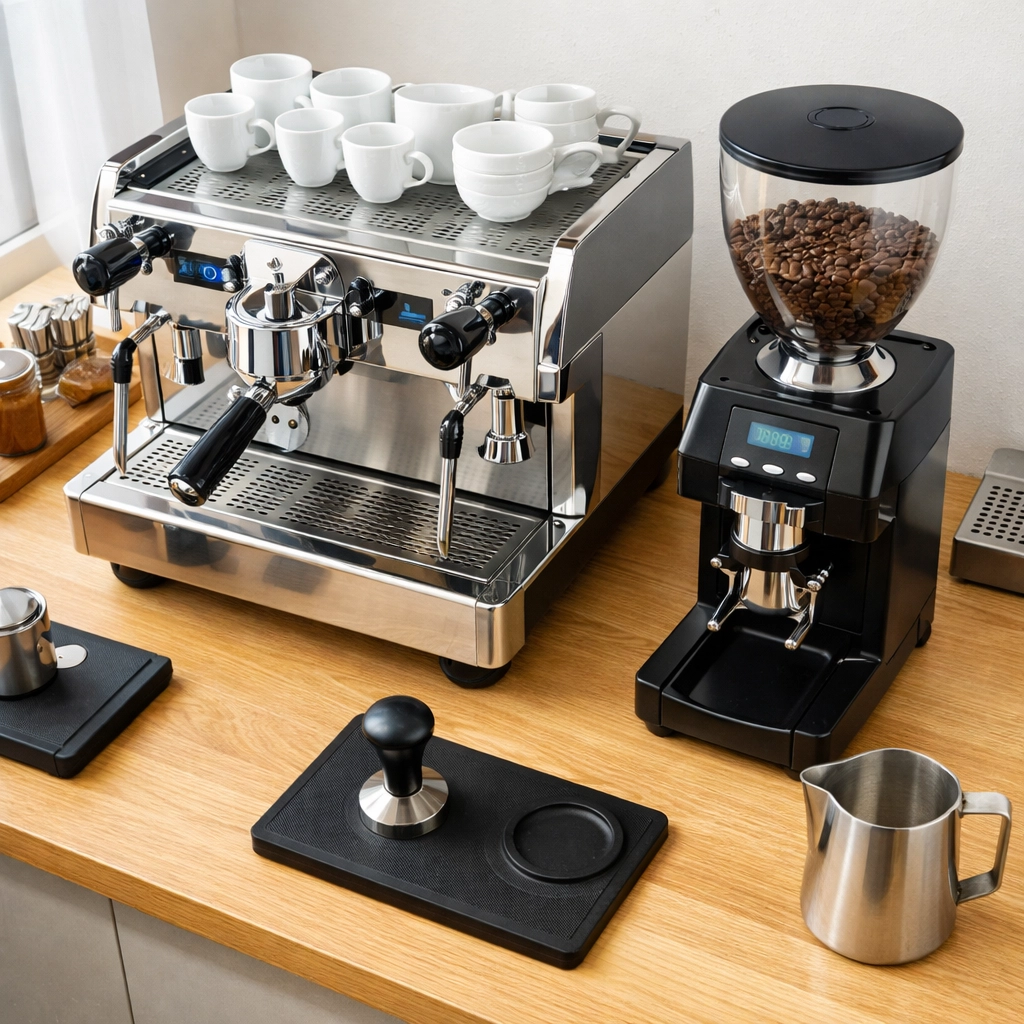
    Efficient coffee shop layout showing a professional espresso machine and grinder placed side-by-side for barista workflow.

    1. The Grinder and Machine Placement

    Your grinder should be right next to your espresso machine. Sounds obvious, right? You’d be surprised how many shops put them on separate counters. You want to minimize the "travel distance" of the portafilter.

    2. The Milk Station

    The fridge should be directly under or right next to the steam wand. If your barista has to walk across the floor to get a fresh carton of oat milk, you’ve already lost 10 seconds. In a rush, those 10 seconds are an eternity.

    3. The Knockbox and Bin

    Ideally, your knockbox should be cut into the counter (a "knock-through") so the pucks drop directly into a bin below. It’s cleaner, faster, and saves your wrists from the repetitive strain of hitting a drawer-style knockbox.

    If you’re still in the planning phase, we highly recommend reading our guide on building a coffee shop and shop fitting. It’s worth getting the plumbing and electrics right the first time!


    Choosing Your Engine: Equipment That Works for You

    You wouldn't buy a race car to deliver milk, and you shouldn't buy a domestic espresso machine for a busy cafe.

    When you’re starting out, you need reliability. We are huge fans of La Spaziale machines. Why? Because they are workhorses. They use a unique heat exchange system that provides incredible thermal stability, which is a fancy way of saying your coffee will taste the same at 8:00 AM as it does at 2:00 PM.

    Whether you prefer a lever or automatic machine depends on your skill level and the "vibe" of your shop, but for most beginners, an automatic volumetric machine is a lifesaver. It allows the barista to start the shot and then focus on steaming the milk, rather than staring at a timer.

    Close-up of a professional commercial espresso machine with steam rising from the wand in a sunlit specialty cafe.

    And don't forget the grinder! We often say the grinder is more important than the machine. If your grinds are inconsistent, your espresso will be too. Look for "on-demand" grinders that grind straight into the portafilter to keep things fresh.

    If you’re feeling overwhelmed by the options, our wholesale partnership includes expert advice on choosing the right equipment for your specific needs.


    The Technical Workflow: Precision is Speed

    Many people think that being "precise" (weighing shots, using timers) slows you down. We believe the exact opposite.

    When you have a set "recipe," you don't have to guess. You aren't standing there wondering why the coffee tastes sour; you know exactly what’s happening because you’ve measured it.

    The Standard Espresso Shot

    • Dose: 18g to 21g (depending on your basket)
    • Yield: 36g to 42g of liquid espresso
    • Time: 25 to 30 seconds
    • Pressure: 9 BAR
    • Temperature: 197 °F to 203 °F / 92 ºC to 95 ºC

    If you want to dive deep into the math, check out our coffee brewing calculator. It’s an incredibly helpful tool for dialing in your beans every morning.

    Tamping: The Often-Overlooked Step

    Consistent tamping is vital. If one barista tamps like a bodybuilder and the other barely touches it, the coffee will be wildly inconsistent. We recommend using a calibrated tamper or, even better, an automatic tamper like a Puqpress if your budget allows.


    Mastering Milk: The Science of Silk

    In the UK, about 80% of the drinks you sell will be milk-based. This means your milk workflow is actually more important than your espresso workflow for total speed.

    Understanding milk chemistry is key. You’re looking for "microfoam": that glossy, wet-paint look.

    The Workflow Tip: Steam your milk while the espresso is pouring. By the time the shot finishes, your milk should be ready to pour. If you do them sequentially rather than simultaneously, you're doubling your service time per drink.

    Barista pouring silky microfoam milk into an espresso cup to create tulip latte art in a specialty coffee shop.

    Do you know the difference between a latte, cappuccino, and flat white? It sounds basic, but having a clear standard for your shop ensures that customers get what they expect every single time.


    Why Your Wholesale Partner is Your Best Friend

    Starting a coffee shop is lonely work. You have a million decisions to make, and the stakes feel high. This is where your wholesale supplier comes in.

    We don't just see ourselves as a speciality coffee roaster; we see ourselves as your consultant. When you join the Limini family through our wholesale program, you aren't just buying beans. You’re buying years of experience.

    We help with:

    The goal is to remove the guesswork. We want you to focus on your customers while we handle the technical heavy lifting.


    Consistency: The Ultimate Workflow Goal

    The best coffee shop in the world isn't the one that makes the best cup once; it’s the one that makes a great cup every single time, regardless of who is behind the bar.

    This requires systems.

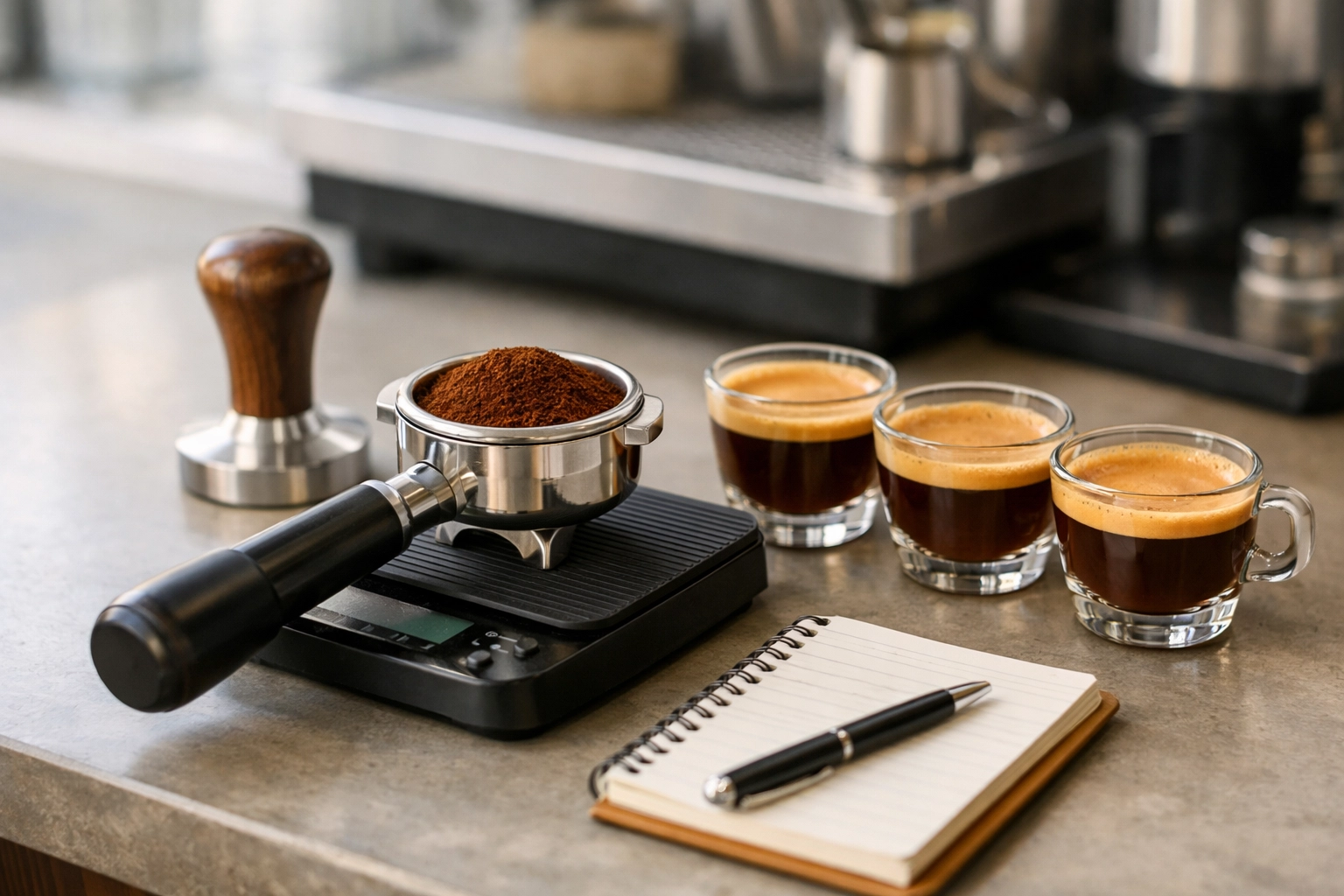
    • Morning Dial-in: Every morning, the lead barista must taste the espresso and adjust the grinder.
    • Cleaning Schedules: A dirty machine makes bad coffee. Learn the workings of your machine so you can keep it pristine.
    • Checklists: Have a closing checklist so the morning crew isn't walking into a mess.

    A barista station with a precision scale and portafilter, ready for dialing in espresso at a new coffee shop.

    Final Thoughts for the Beginner

    Opening a shop is a marathon, not a sprint. You will make mistakes. You will probably burn some milk, and you might even forget to put the portafilter in once or twice (we've all done it).

    The key is to keep learning. Take advantage of training overviews and keep refining your processes.

    If you’re ready to take the leap and want a partner who cares about your margins as much as your latte art, we’d love to chat. Our wholesale coffee is designed to help businesses like yours thrive from day one.

    So… are you ready to start brewing? It’s a lot of work, but we think it’s the best job in the world. 🙂

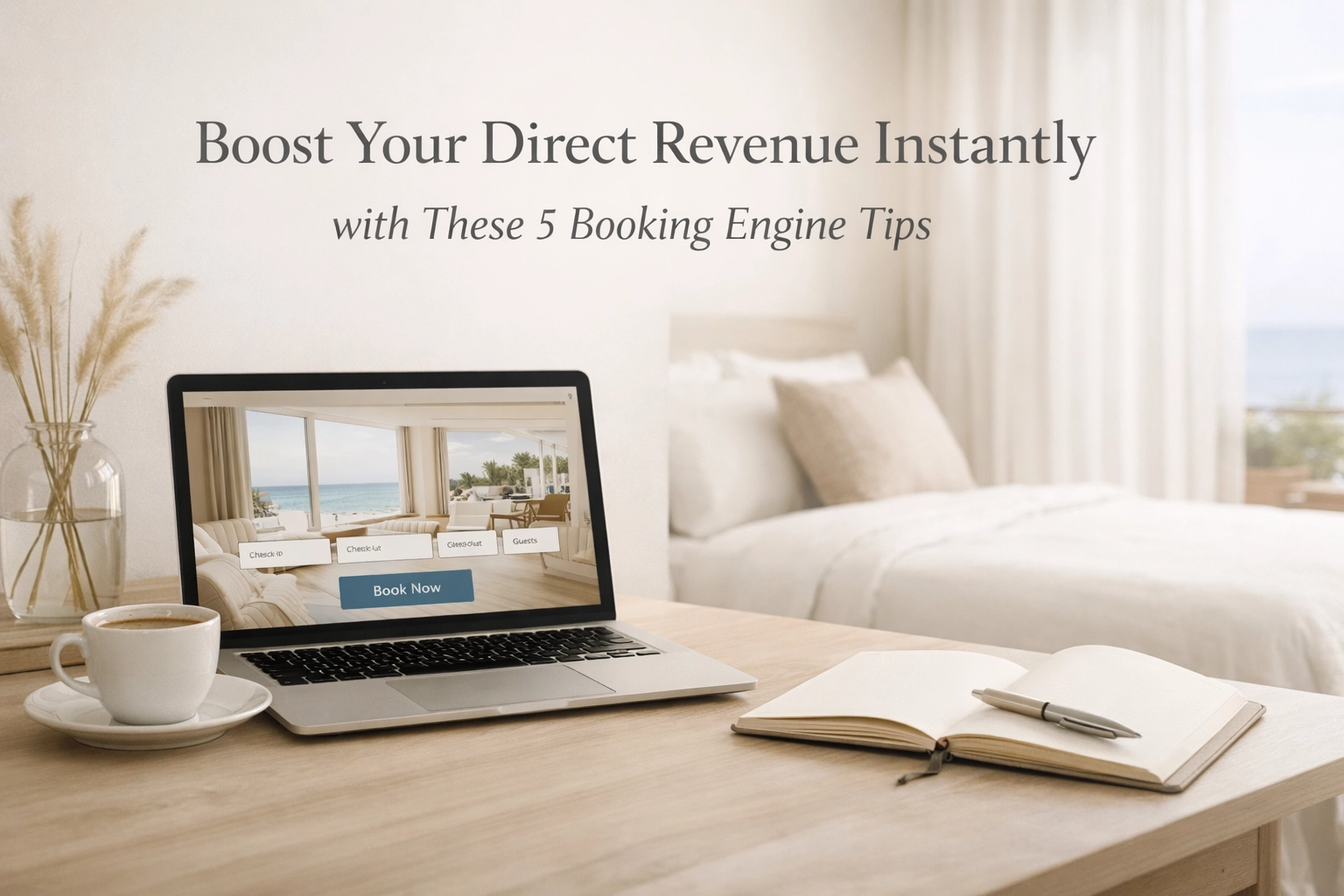
  • Boost Your Direct Revenue Instantly with These 5 Booking Engine Tips

    Boost Your Direct Revenue Instantly with These 5 Booking Engine Tips

    Capture more guests. Lower your commissions. Own the relationship.

    In the fast-moving world of hospitality, your booking engine isn't just a tool; it’s the digital front door to your property. If that door is sticky, hard to find, or requires a secret password to open, guests will simply walk next door to an OTA. We’ve seen properties increase their direct booking share by 20% in just a few months by making small, strategic tweaks to their digital journey. It’s about moving away from fragmented legacy systems and embracing a high-performance guest experience: all from one innovative hospitality platform.

    We believe the guest journey starts long before they arrive at your desk.

    The moment a traveler hits your website, the clock is ticking. You have roughly seven seconds to prove that booking directly with you is easier and better than going back to a third-party site. Most hotels lose this battle because their booking engine feels like an afterthought: a clunky pop-up from 2005 that asks for too much information too soon.

    A traveler using a smartphone to book a hotel room, highlighting a frictionless mobile booking experience.

    1. Eliminate the Friction

    Complexity is the enemy of conversion. Every extra field you ask a guest to fill out is an opportunity for them to get distracted, annoyed, or bored. We see it all the time: hotels asking for home addresses, car license plate numbers, and "how did you hear about us" surveys before the guest has even secured a room.

    Stop it.

    Keep the final booking page lean. You only need three things to secure a reservation: a name, an email, and payment details. Everything else: from dietary requirements to pillow preferences: can be handled during the online check-in process. By deferring data collection, you create a frictionless path to purchase that mirrors the speed of modern e-commerce.

    • Simplify the flow. Use progress bars to show guests they are only seconds away from finishing.
    • Default to ease. Pre-select the most common occupancy (usually two adults) to save users a click.
    • Visual clarity. Use high-res imagery for room types so guests know exactly what they’re buying.

    2. Think Mobile-First (Or Mobile-Only)

    By 2026, the majority of travel research and booking happens on a device that fits in a pocket. If your booking engine requires a "pinch and zoom" maneuver to read the room descriptions, you’re essentially handing your revenue to Expedia on a silver platter.

    A truly innovative booking engine is fully responsive, but "responsive" is the bare minimum. You need to optimize for the thumb. This means big buttons, vertical scrolling, and: most importantly: integrated mobile payments.

    • One-tap payments. Support Apple Pay and Google Pay to eliminate the need for guests to dig out their credit cards.
    • Fast loading. Every second of delay on mobile increases bounce rates by over 10%.
    • Minimalist UI. Hide the fluff and focus on the "Book Now" button.

    A sleek tablet on a linen surface representing a minimalist and fast-loading hotel booking engine UI.

    3. Radical Price Transparency

    Nothing kills a conversion faster than a "hidden" resort fee or an unexpected tax added at the final step. It feels dishonest. Modern guests value transparency over almost everything else. If your room is $200 but ends up being $260 after fees, tell them that on page one.

    We think that building trust is the most effective long-term marketing strategy. When guests see that the price on your website is clear, consistent, and inclusive, they stop price-shopping.

    85% of guests feel more loyal to brands that are upfront about total costs.

    Instead of overwhelming potential guests with 15 different rate codes (the "Special Summer Pre-Paid AAA Member Rate" is a mouthful), simplify your offering. Stick to two or three clear options: a non-refundable "Best Value" rate and a flexible "Peace of Mind" rate. It works for airlines, and it works for the world’s most successful hotels.

    4. Keep the Guest in Your House

    One of the biggest SEO and conversion mistakes is sending guests to a separate domain (like bookings.thirdpartyengine.com) when they click "Book Now." This breaks the digital "scent." The URL changes, the branding often shifts slightly, and the guest suddenly feels like they’ve left your secure site.

    By embedding your booking engine directly into your website's architecture, you maintain a seamless brand experience. This keeps your domain authority high because search engines see that users are staying on your site to complete their transaction.

    • Maintain Brand Consistency. Use the same fonts, colors, and tone across the entire journey.
    • Boost SEO. Keep all user engagement on your primary URL.
    • Build Authority. A unified site signals to the guest that you are a professional, tech-forward operator.

    Contemporary hotel lobby with clean lines, symbolizing a professional and unified guest journey.

    5. Incentivize the Direct Relationship

    OTAs have massive marketing budgets, but you have something they don't: the actual guest experience. You don't always have to win on price (though parity is important); you can win on value.

    Use your booking engine to highlight the perks of going direct. Maybe it’s a free welcome drink, a late checkout, or access to a secret "member-only" rate. Tools like Mews allow you to capture guest data early, enabling you to offer personalized incentives that make the guest feel like a VIP before they even step foot in the lobby.

    Transform your offers with AI.

    We are entering the era of hyper-personalization. Innovative booking engines can now use AI to suggest add-ons that actually make sense. If a guest is booking a suite for two on Valentine’s Day, don't just offer them a parking pass: offer them a chilled bottle of champagne and a bouquet of roses.

    • Value-adds over discounts. Offer a $20 breakfast credit instead of a $10 discount to protect your ADR.
    • Smart Upsells. Use data-driven insights to suggest the right room upgrades at the right time.
    • Loyalty through data. Use the direct booking to start a personalized email sequence that builds anticipation.

    Luxury welcome amenity representing personalized guest incentives that drive direct hotel bookings.

    See what Mews can do.

    At the heart of a high-performing hotel is a tech stack that works as hard as you do. We believe that guest experience shouldn't be a series of manual tasks and clunky interfaces. It should be an effortless, automated journey that lets your team focus on what they do best: being hospitable.

    Mews provides the ecosystem you need to turn your booking engine into a revenue-generating powerhouse. By connecting your PMS directly to a modern, conversion-optimized booking flow, you can stop worrying about commissions and start focusing on growth.

    1. Schedule a demo. See how our intuitive interface can transform your operations.
    2. Get a 30-minute consultation. Let our experts show you where your current site is leaking revenue.
    3. Go live. Start capturing more direct bookings and get you earning revenue in no time.

    Ready to take control of your distribution? Join over 5,000 innovative properties that have ditched the old way of doing things.

    Explore the Mews Platform today.

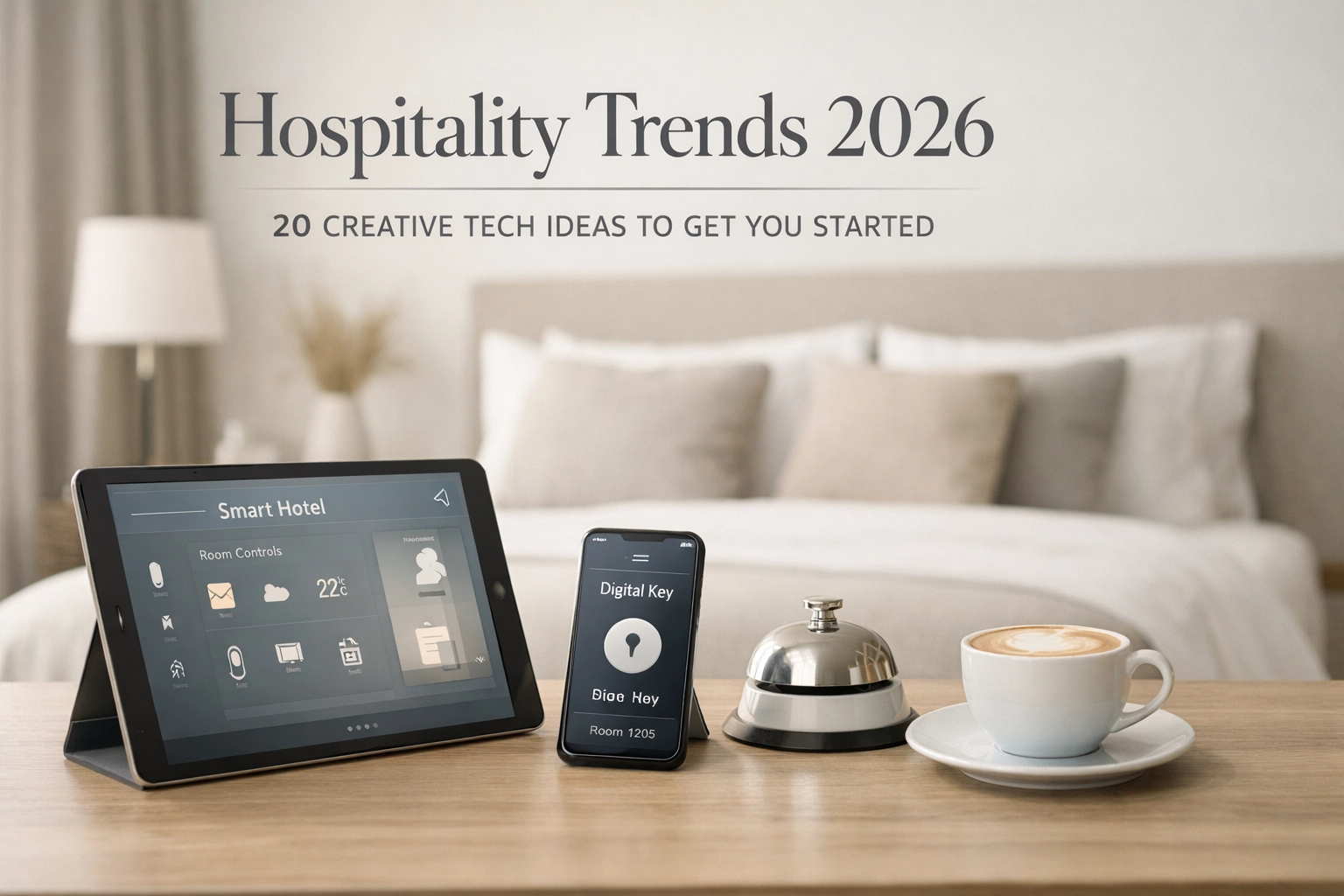
  • Hospitality Trends 2026: 20 Creative Tech Ideas to Get You Started

    Hospitality Trends 2026: 20 Creative Tech Ideas to Get You Started

    Personalize every stay. Predict every need. Automate every touchpoint.

    The hospitality landscape in 2026 isn't about "trying out" technology anymore: it’s about how fast you can execute. We’ve moved past the era of clunky tablets and basic chatbots into a world where AI and connected ecosystems do the heavy lifting for you. Today, the most successful properties are those that leverage a unified platform to create invisible, seamless experiences that guests don't just notice: they feel.

    Whether you’re managing a boutique hotel or a global brand, staying ahead means embracing tools that talk to each other. It means moving from data silos to a centralized ecosystem where your PMS, marketing tools, and guest apps work in perfect harmony.

    Here are 20 creative tech ideas to transform your operations and guest experience this year, all from one innovative platform.

    The Hyper-Personalized Guest Journey

    We believe the best service is the one that anticipates a guest’s needs before they even open their mouth. In 2026, personalization isn't just a "nice to have": it’s the standard.

    1. AI-Powered Wine and Dining Pairings

    Forget generic menus. Properties are now using AI-enabled platforms to analyze guest preferences and suggest regional wine pairings or custom tasting menus. It’s about taking local expertise and scaling it through technology.

    2. Micro-Preference Profiles

    Your CRM should do more than just store names. It should track "invisible" preferences.

    • The exact pillow density a guest prefers.
    • Their "guest rhythm" (Are they a 6 AM coffee drinker or a 2 AM night owl?).
    • Specific pet accommodations for returning furry friends.

    3. Contextual Dynamic QR Codes

    Move beyond the static PDF menu. Dynamic QR codes in 2026 change based on the time of day and the guest’s history. If a guest just checked in after a long flight, the QR code on the desk highlights "In-room late-night dining" and "Express spa recovery treatments."

    4. Voice-Activated Room Environments

    Guests want to control their environment without leaving the bed. Voice integration for lights, temperature, and music is no longer a gimmick: it’s a central hub for guest comfort.

    5. Interactive Smart Mirrors

    Turn a functional object into a service portal. Smart mirrors provide weather updates, flight statuses, and dining recommendations while guests get ready for their day.

    6. Conversational Messaging on Every Channel

    Meet your guests where they are. Whether it’s WhatsApp, SMS, or Instagram DM, your virtual concierge should be powered by intelligent AI that understands intent, not just keywords.

    Guest using a smartphone in a minimalist hotel suite for seamless AI virtual concierge service.

    AI-Driven Operations: Data Without the Drama

    We think the best way to empower your staff is to take the administrative weight off their shoulders. Modern hospitality technology should turn complex metrics into actionable insights automatically.

    7. Real-Time Dynamic Pricing

    Machine learning doesn't sleep. By analyzing market conditions, competitor rates, and even local weather patterns, AI optimizes your room rates in real-time to ensure you never leave money on the table.

    8. Smart Summaries for Commercial Teams

    Stop digging through spreadsheets. Modern PMS platforms now offer "Smart Summaries" that convert complex weekly performance data into quick, readable reports.

    • Identify occupancy trends in seconds.
    • Spot revenue leaks before they become problems.
    • Focus on strategy instead of data entry.

    9. Automated Sentiment Analysis

    AI can now read every online review and guest comment, identifying semantic fields to tell you exactly why guests are happy (or why they aren't). It’s like having a 24/7 focus group for your property.

    10. Predictive Staffing Models

    Don't guess how many housekeepers you need for a Tuesday in November. Predictive analytics analyze historical occupancy and check-out patterns to create optimized staff schedules.

    11. AI Content Generation for Reputation Management

    Speed up your response times. Automated systems can now draft personalized, brand-aligned responses to guest reviews, allowing your team to review and send in half the time.

    12. Automated A/B Testing for Direct Bookings

    Your website should be a conversion machine. AI tools can automatically test different layouts and calls-to-action to see what drives the most direct bookings without any manual intervention.

    "We saved over 15 hours a week just by letting the system handle the basic guest inquiries and data reporting. It’s given my team their personalities back." : General Manager, Lifestyle Boutique Hotel

    Hotel manager using a tablet in a modern lobby to manage automated hotel operations and data.

    The Connected Tech Stack

    A fragmented hotel is a frustrated hotel. In 2026, the "all-in-one" approach is being replaced by the "best-of-breed" approach: where every piece of software you use is connected via a seamless API.

    13. Unified Housekeeping Apps

    Eliminate the walkie-talkies. Housekeeping teams should access real-time room status updates on mobile devices, integrated directly with the PMS. When a guest checks out on their phone, the room turns "dirty" on the staff app instantly.

    14. Centralized Data Ecosystem

    When your PMS, RMS, and marketing tools share the same data, magic happens. You get a single source of truth that ensures every department is working from the same guest profile. Check out how Mews can centralize your operations today.

    15. Automated Occupancy Pattern Analysis

    See where your demand is coming from months in advance. AI can detect when seasonal demand is migrating into shoulder months, allowing you to adjust your marketing spend dynamically.

    16. Robotic Amenity Delivery

    For high-volume urban hotels, robots are taking over the "toothbrush run." This frees up front desk staff for meaningful guest interactions while providing a novel, high-tech touch for the guest.

    17. Sustainable Smart Water Systems

    Sustainability is now a tech play. Smart recycling systems and leak detection sensors reduce operational costs while proving your commitment to the planet.

    Close-up of a guest using a mobile device for seamless room control and digital hotel services.

    Distribution in the Age of AI Agents

    The way guests find you has changed. In 2026, travelers aren't just searching Google; they are asking their AI agents to find and book the best stay for them.

    18. AI-Mediated Search Readiness

    Your property needs to be "readable" by AI agents like ChatGPT and Google Gemini. This means having structured data and a connected tech stack that allows these agents to check availability and book directly.

    19. Frictionless Mobile Check-In

    The lobby is for lounging, not for waiting in line. Mobile check-ins with digital keys allow guests to bypass the front desk entirely, moving straight from their car to their room.

    20. Social Media "Trip Matching"

    Platforms like TikTok and Instagram now offer in-app booking through AI "Trip Matching." By integrating your inventory with these platforms, you capture guests exactly where they are getting their travel inspiration.

    See what the right platform can do

    The difference between a thriving property and one that struggles in 2026 comes down to connectivity. Properties that remain siloed risk becoming invisible in an AI-mediated world. We believe in providing the tools that give you the freedom to focus on what matters most: your guests.

    Ready to see how a modern PMS can transform your operations?

    Schedule a 30-minute demo and get your property ready for the future of hospitality. It’s easy to set up and will get you earning revenue in no time.

    Transform your guest experience. Streamline your operations. Lead the trend.

    Modern minimalist hotel lobby at dusk showcasing innovative hospitality design and technology.

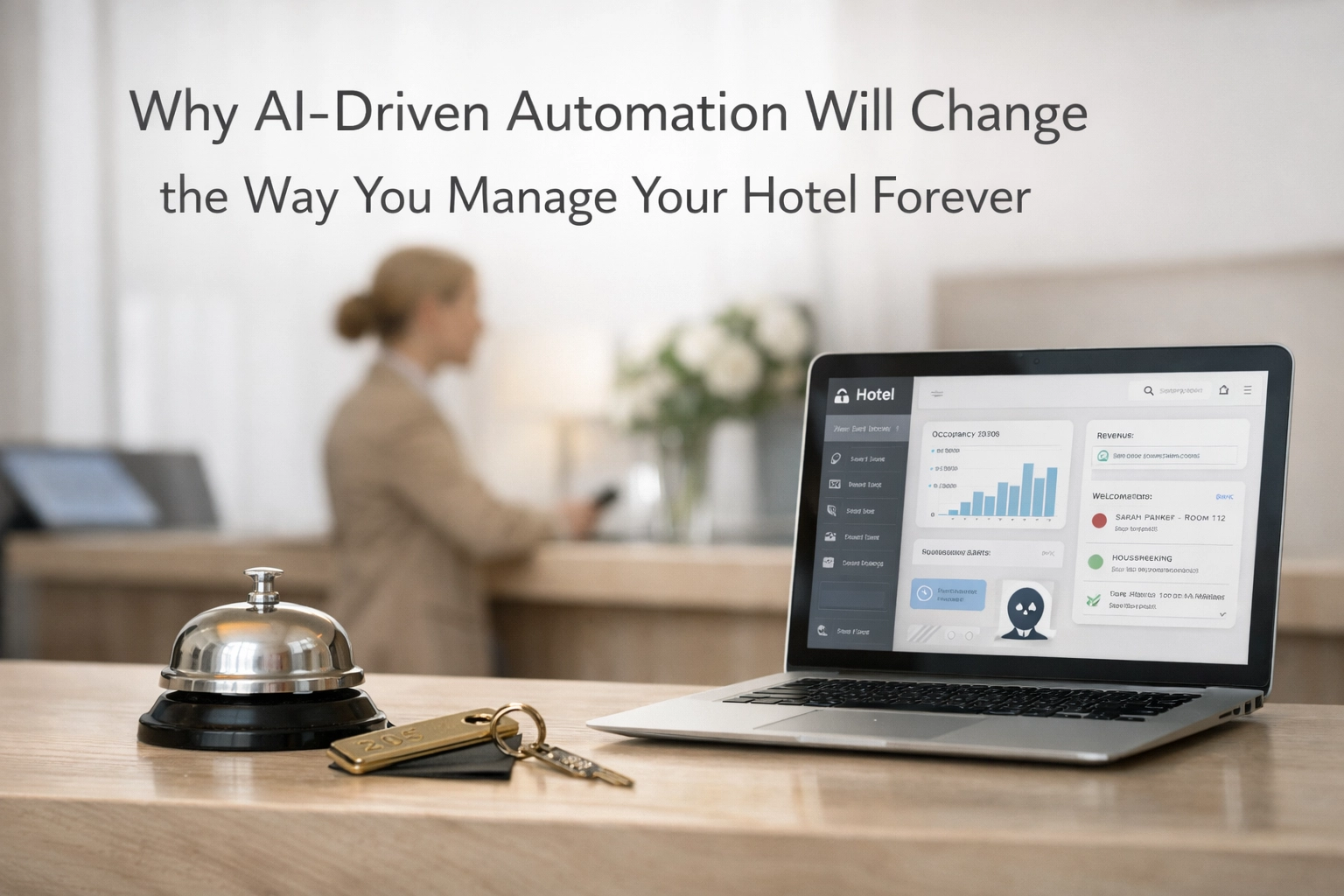
  • Why AI-Driven Automation Will Change the Way You Manage Your Hotel Forever

    Why AI-Driven Automation Will Change the Way You Manage Your Hotel Forever

    Automate routine tasks. Empower your staff. Elevate every guest stay. The hospitality industry is currently undergoing the most significant shift since the invention of the internet. It’s no longer about simply having a digital calendar; it’s about building a proactive, intelligent ecosystem that anticipates needs before they arise.

    In 2026, we’re seeing a massive 67% of hotels still struggling with staffing shortages. This isn't a temporary dip: it's a fundamental change in the labor market. To thrive, you need a system that works as hard as you do, processing millions of data points to ensure your property runs like clockwork. Whether you're managing a boutique stay or a global chain, the goal remains the same: high efficiency and high touch, all from one innovative hospitality platform.

    The end of manual drudgery

    We believe your staff should be hosts, not data entry clerks. For too long, the "front desk" has been a barrier between the guest and the experience: a wall of monitors, cables, and manual keyboard clicks. AI-driven automation changes the narrative by moving the heavy lifting to the background.

    • Zero-touch reservations: Let your hotel PMS handle the heavy lifting of room allocations and booking confirmations without human intervention.
    • Error-free billing: AI eliminates the manual input errors that lead to frustrated guests and financial leaks.
    • Instant synchronization: Your booking engine, channel manager, and CRM talk to each other in real-time, ensuring no overbookings or missed opportunities.

    When the system handles the "what," your team can finally focus on the "who." It’s about reclaiming hours of the day to spend on the things that actually drive loyalty: like a personalized welcome or an expert local recommendation.

    Revenue as a science, not a guess

    Gone are the days of static seasonal rates and "gut feeling" pricing. The market moves too fast for human spreadsheets. AI-driven dynamic pricing processes seasonality, local events, weather, and competitor behavior to adjust your rates in a heartbeat.

    Modern hotel lounge with a tablet displaying dynamic pricing data and revenue management analytics.

    We think revenue management should be effortless. By utilizing advanced algorithms, properties see a marked increase in their average daily rate (ADR) because the system knows exactly when to push and when to hold. It’s not just about filling rooms; it’s about filling them at the most profitable price possible.

    By the numbers:

    • 8% annual growth: The projected rise in the hotel automation market through 2031.
    • 15% higher ADR: Achieved by properties utilizing real-time dynamic pricing.
    • 70% guest satisfaction: Reported when AI chatbots handle simple, immediate requests like Wi-Fi passwords or towel deliveries.

    Check out how these tools can work for you at Mews.

    The hyper-personalized guest journey

    Modern guests don’t just want a room; they want an experience that feels tailored specifically to them. AI makes this possible at scale. By analyzing guest interactions and previous requests, your CRM can build a profile that knows your guest prefers a high floor and a late-night decaf espresso before they even check-in.

    Personalized luxury hotel guest experience featuring espresso, reflecting data-driven room preferences.

    We believe technology should feel invisible. This is where self-check-in kiosks and mobile check-in come into play. By removing the queue, you give the guest the most valuable gift of all: time. They can head straight to their room or the bar, while the system securely handles the ID verification and payment.

    • Conversational AI: 24/7 support that breaks down language barriers and provides instant answers.
    • Smart profiling: Auto-syncing guest preferences across your entire tech stack.
    • Targeted upsells: Offering the right upgrade at the right moment, driven by behavioral data rather than a generic script.

    Solving the staffing puzzle

    Smart scheduling is the secret weapon of the modern hotelier. Instead of over-staffing "just in case" or being caught short during a sudden surge, AI analyzes historical trends and real-time occupancy to predict exactly how many hands you need on deck.

    Relaxed hotel staff in a modern hallway, empowered by smart scheduling and automated workflows.

    This isn't just about saving on labor costs: it's about preventing burnout. When your team isn't overwhelmed by a 4:00 PM check-in rush (thanks to those self-check-in kiosks), they stay happier, they stay longer, and they provide better service. It’s a win for your bottom line and a win for your culture.

    Proactive operations and maintenance

    The worst time to find out an HVAC unit is broken is when a guest calls the front desk to complain. AI-driven predictive maintenance shifts you from reactive "fixing" to proactive "prevention." IoT sensors can alert your maintenance team to a potential leak or a failing motor before it results in a room being taken out of inventory.

    Housekeeping cart in a clean hotel corridor, managed through automated housekeeping optimization software.

    Similarly, housekeeping optimization uses live occupancy data to prioritize which rooms need cleaning first. If a guest has already used a mobile check-out, the housekeeping team is alerted instantly. No more "knock and hope" or manual radio calls. Everything is coordinated through a single, cloud-native dashboard that keeps everyone in sync.

    Security that sleeps with one eye open

    Security is often the overlooked hero of automation. Integrated surveillance and intelligent access control use AI to detect unusual patterns or unauthorized access in real-time. This provides a safer environment for guests and staff alike, while also mitigating the growing risks of cybersecurity threats in the digital age.

    Why Mews is the future

    We’re not just building software; we’re building the future of hospitality. Mews was designed from the ground up to be cloud-native, easy to use, and entirely focused on automation. We believe that by removing the technical friction, we can unlock the true potential of your property.

    • Cloud-native: Access your entire operation from anywhere in the world on any device.
    • Open API: Connect to the tools you already love without the headache.
    • Intuitive design: A UI that your team will actually enjoy using: minimal training required.

    The shift toward AI-driven automation isn't a trend you can wait out. It is the new baseline for success in a competitive global market. By embracing these tools today, you’re not just keeping up; you’re staying ahead.

    Take the next step

    Ready to see what a truly automated hotel looks like? It takes less time than you think to start transforming your operations. From smarter booking engines to seamless self-check-in, the journey to a more profitable and guest-centric property starts here.

    See what the future looks like at Mews and get your property earning more with less effort in no time.

    How to get started with automation

    1. Audit your current stack: Identify where your team spends the most time on manual data entry.
    2. Prioritize guest-facing tools: Start with a booking engine and self-check-in kiosks to see immediate ROI.
    3. Connect your data: Ensure your PMS, CRM, and channel manager are speaking the same language.
    4. Launch and iterate: Use the data provided by your AI tools to refine your strategy every single month.

    The world of hospitality is moving fast. Don't let your technology be the thing that holds you back. Embrace the automation revolution and get back to what you do best: being a great host.

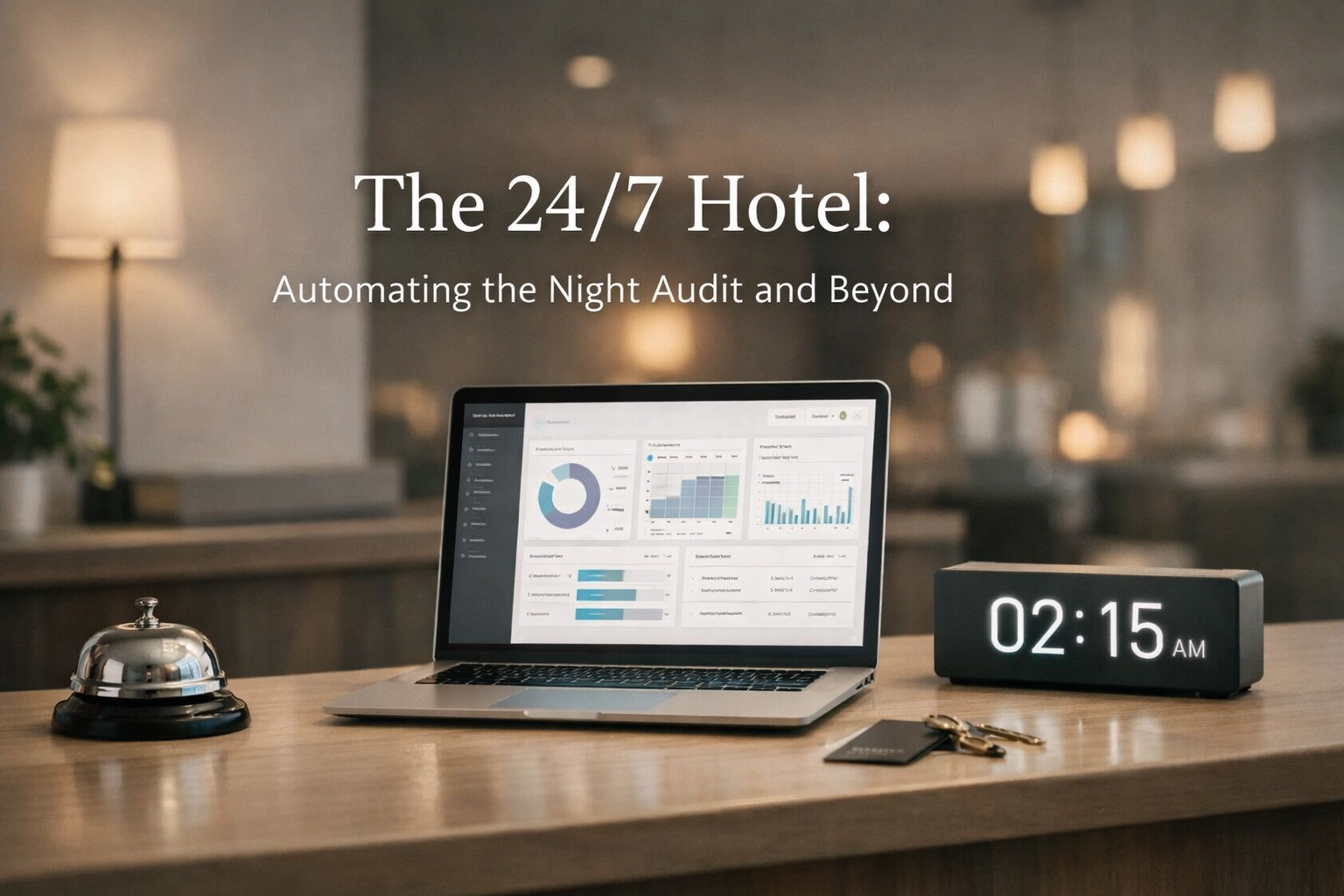
  • The 24/7 Hotel: Automating the Night Audit and Beyond

    The 24/7 Hotel: Automating the Night Audit and Beyond

    Picture this: It's 3 AM, and while you're sleeping, your hotel is balancing books, posting charges, and reconciling accounts. No bleary-eyed night auditor. No manual spreadsheets. No errors from end-of-shift fatigue.

    That's the power of modern hotel management software.

    The night audit has been a hospitality staple for decades: a necessary evil that keeps your books balanced and your operations running smoothly. But here's the thing: in 2026, there's absolutely no reason you should still be doing it manually. Automation has transformed what was once a labor-intensive, error-prone process into something that happens seamlessly in the background while you focus on what actually matters: creating exceptional guest experiences.

    The Night Audit Problem

    Let's be honest. The traditional night audit is a pain. It ties up staff for hours during the graveyard shift, requires meticulous attention to detail when humans are naturally at their worst, and leaves plenty of room for costly mistakes. One misplaced decimal point or forgotten transaction can throw everything off.

    Your night auditor is manually posting room charges, processing no-shows, running credit card batches, and generating reports: all while trying to stay awake and handle any guest requests that pop up. It's exhausting, expensive, and frankly, inefficient.

    The real kicker? Most of this work doesn't need human intervention at all.

    How Automated Night Audit Actually Works

    Empty hotel reception desk at night with automated hotel management software running

    Modern hotel management software handles night audit automatically. Every single night. Without fail.

    Here's what happens behind the scenes: The system continuously tracks all transactions throughout the day: room charges, minibar purchases, restaurant bills, spa services. When the audit time hits (you set it), the software automatically posts all charges to guest folios, calculates room and tax, applies any packages or rate adjustments, and balances everything against your payment processor.

    No manual data entry. No cross-checking spreadsheets. No hoping your night auditor remembered to post that late check-in from the bar.

    The system flags discrepancies immediately, not the next morning when you're trying to check out a guest who's disputing a charge. It processes credit card batches, updates your property management system, and generates detailed reports: all while you're sleeping.

    One hotel automated 13,700 tasks and recovered nearly 150 hours of staff time. That's almost a full month of work redirected from administrative busywork to guest-facing service.

    Beyond the Books: What Else Runs on Autopilot

    Once you've automated the night audit, you start seeing what else can run 24/7 without constant human oversight. Spoiler: it's a lot.

    Check-in and check-out happens on guest schedules, not yours. Self-service kiosks, mobile apps, and keyless entry mean arrivals at 2 AM are just as smooth as arrivals at 2 PM. Your guest gets a notification, accesses their digital key, and walks straight to their room. Your front desk? Closed for the night, saving you money while delivering better service.

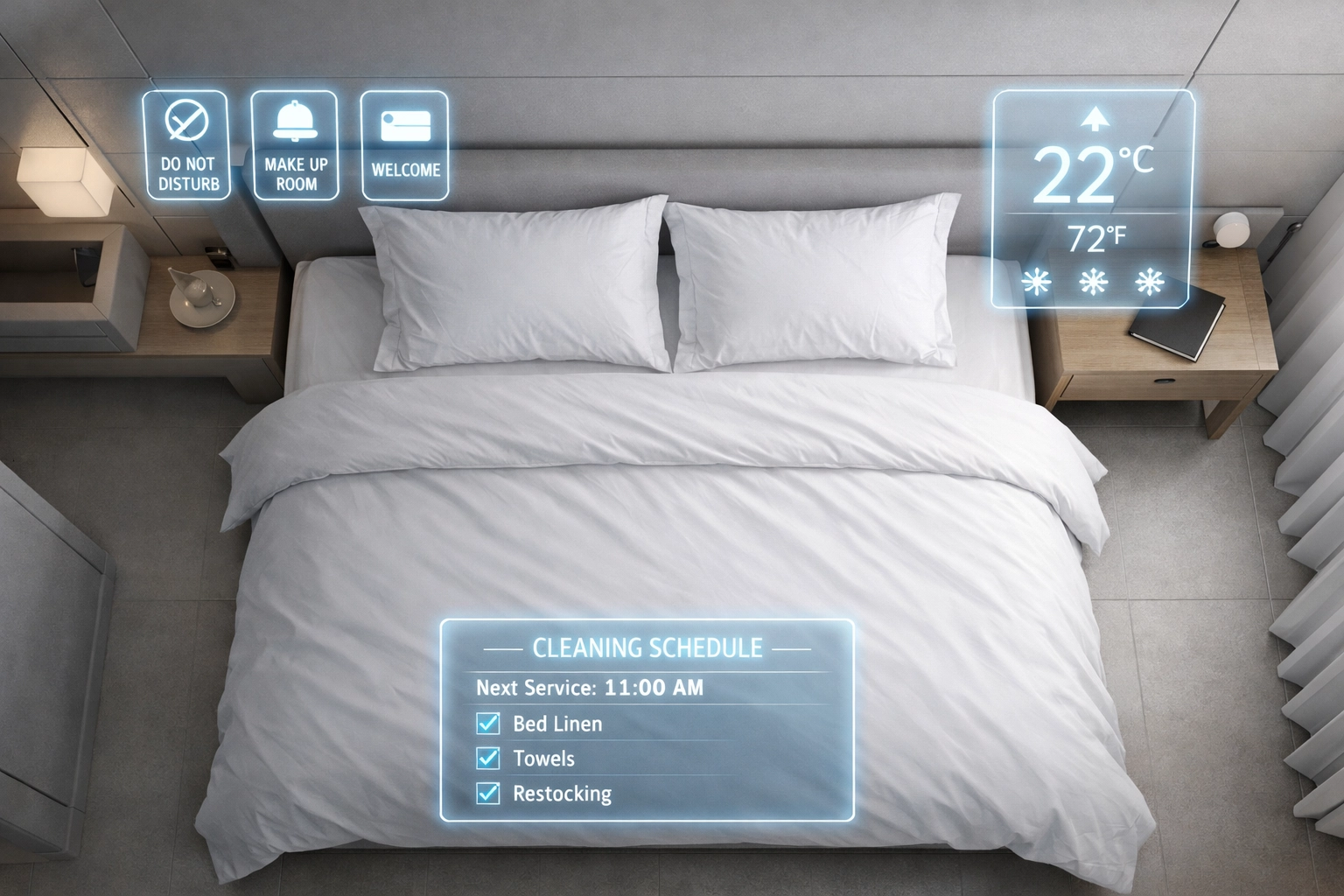
    Room status updates happen automatically. When a guest checks out via mobile app, housekeeping gets an instant notification. Sensors detect when rooms are vacant. The system optimizes cleaning schedules based on actual occupancy, not guesswork. No more calling housekeeping to confirm which rooms are ready. No more walking the floors with a clipboard.

    Inventory management keeps itself in check. Your hotel management software monitors everything from minibar stock to bathroom amenities. When supplies hit preset thresholds, reorder alerts trigger automatically. You'll never face a morning scramble because you ran out of coffee pods overnight.

    Modern hotel room with automated temperature and room status controls

    Energy management adjusts in real-time. Empty rooms automatically dial back heating and cooling. Lights dim in unoccupied hallways. It's better for your budget and better for the planet: all without anyone flipping a switch.

    Guest communications flow automatically. Pre-arrival emails with check-in instructions. Welcome messages when they enter their room. Restaurant recommendations. Late checkout reminders. These touchpoints happen at optimal times based on guest behavior, not when someone remembers to send them.

    The Real-World Impact

    Let's talk about what this actually means for your operation.

    Your staff shifts from administrative work to guest service. That person who spent hours on night audit? They're now available for genuine hospitality: helping guests with recommendations, handling special requests, solving problems before they become complaints.

    Your error rate drops dramatically. Computers don't forget to post charges. They don't transpose numbers. They don't skip steps because they're tired. One property owner put it simply: "We went from catching several billing errors a week to maybe one a month, and those are usually legitimate disputes, not our mistakes."

    Your labor costs become more flexible. You don't need someone sitting at the desk from midnight to 6 AM just to run reports and handle the occasional late arrival. You can staff for actual guest needs, not administrative requirements.

    Your data becomes instantly accessible. Real-time dashboards show occupancy, revenue, and performance metrics without waiting for end-of-shift reports. You can make decisions based on what's happening right now, not what happened yesterday.

    Making the Transition

    Hotel corridor with housekeeping cart showing automated operations efficiency

    Moving to automated operations isn't as complicated as you might think. Modern hotel management software is designed for implementation, not endless configuration.

    The key is choosing a platform that's built for automation from the ground up. Look for systems where night audit automation is standard, not an add-on. Where integrations with payment processors, channel managers, and other tools are native, not patched together.

    You'll want robust support, especially during the first few audit cycles. Technical issues at 3 AM need immediate attention, and the best platforms offer 24/7 support that matches your 24/7 operations.

    Start by automating the night audit, then expand from there. Get comfortable with automated posting and reconciliation before you add self-check-in or smart energy management. Build confidence in the system with your most critical processes first.

    The Platform That Makes It Possible

    This level of automation requires sophisticated hotel management software that integrates every aspect of your operation. From reservations and check-in to housekeeping and revenue management, everything needs to talk to everything else.

    Mews offers exactly that kind of unified platform. Built for modern hospitality, it automates night audit completely while powering 24/7 operations across your entire property. Properties using Mews have eliminated manual audit processes, reduced errors, and freed up countless hours for actual guest service.

    Want to see what automated operations can do for your property? Check out Mews and discover how hotel management software is transforming the way properties operate around the clock.

    Your Hotel Never Sleeps (But You Can)

    The 24/7 hotel isn't some futuristic concept. It's happening right now at properties around the world. Hotels are running leaner operations, delivering better service, and generating more revenue: all while their owners actually get a good night's sleep.

    Automation handles the repetitive, time-consuming tasks that drain resources and create opportunities for error. Night audit, guest communications, inventory management, room status updates: these things happen seamlessly in the background while your team focuses on what automation can't do: genuine human connection and exceptional hospitality.

    The question isn't whether to automate. It's how quickly you can get started. Every night you run a manual audit is a night you're paying someone to do work a computer can do better, faster, and without breaks. Every guest who waits for a staff member when they could check themselves in is a small friction point that modern travelers don't expect to encounter.

    Your competition is already automating. Your guests expect 24/7 service. Your staff deserves better than mind-numbing administrative work.

    The technology is ready. The question is: are you?