Blog

  • How to Integrate Your Hotel CRM With Smart Automation to Boost Guest Loyalty

    How to Integrate Your Hotel CRM With Smart Automation to Boost Guest Loyalty

    Connect data. Personalize stays. Drive loyalty.

    In the modern hospitality landscape, guest data is your most valuable asset. But data alone isn't enough. When you integrate your hotel CRM with smart automation, you transform raw information into meaningful guest experiences that keep people coming back.

    We’ve seen properties increase their repeat booking rates by 25% just by closing the gap between their PMS and their guest communication tools. The secret isn't working harder; it's making your tech stack work smarter.

    It all starts with a unified platform. One that bridges the gap between your booking engine, your hotel PMS, and your marketing tools: all from one cloud-native platform.

    Stop the data silos.

    We believe that a hotel is only as good as its data. If your CRM doesn't talk to your PMS, you’re flying blind. You have a "silent guest" problem: people stay with you, but you don't actually know them.

    Integration solves this by creating a two-way flow of information. When a guest updates their preferences in a pre-arrival email, that data should automatically populate their profile in the Mews PMS. No manual entry. No mistakes.

    • Centralize guest profiles. Eliminate duplicates using AI-assisted deduplication tools.
    • Sync in real-time. Ensure your marketing team sees what’s happening at the front desk.
    • Identify high-value guests. Automatically flag VIPs based on lifetime spend and stay frequency.

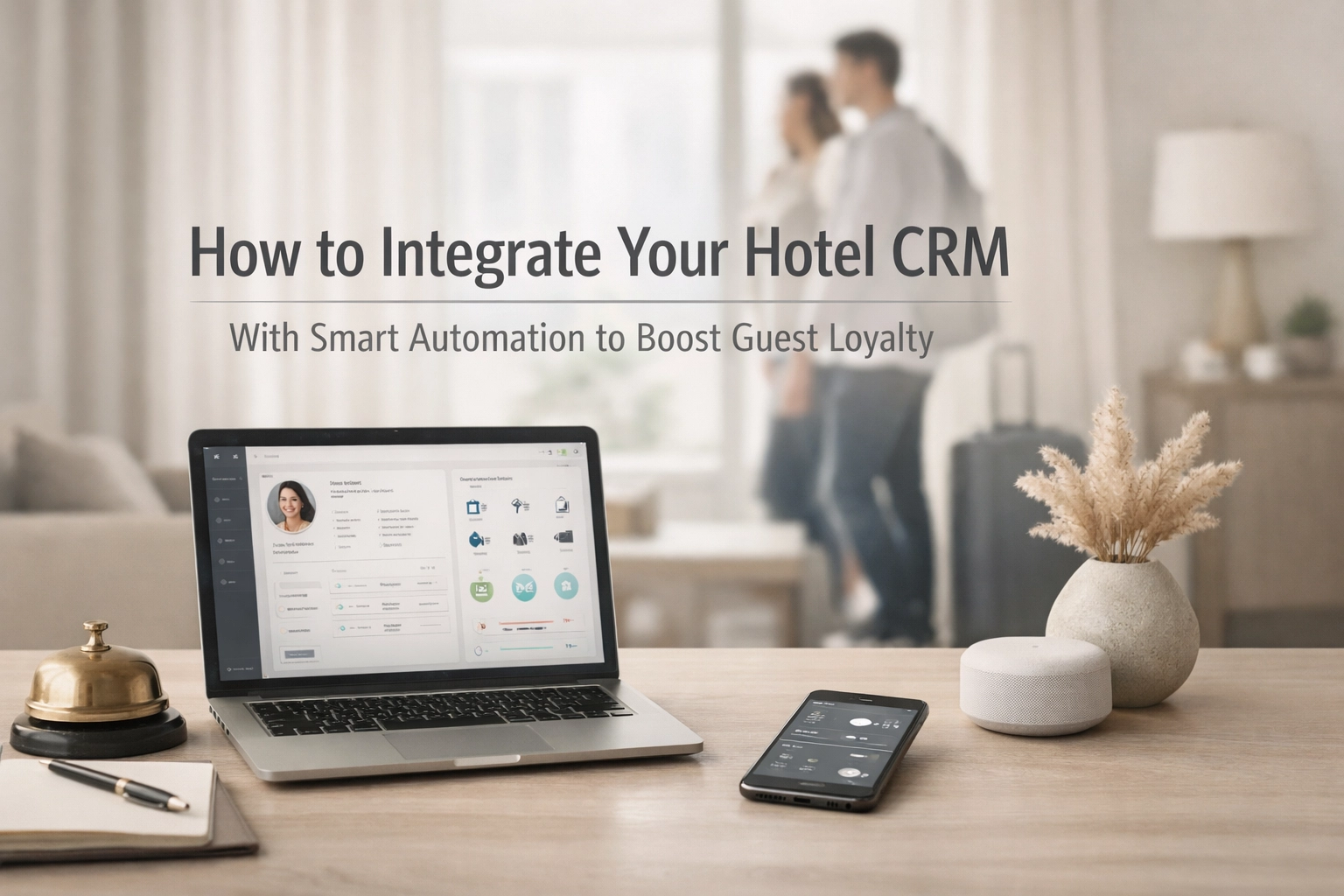
    A hotel back office desk with a laptop showing integrated CRM data visualizations for guest management.

    Personalize the pre-arrival phase.

    The guest journey starts long before they walk through your lobby doors. Once the booking engine confirms a reservation, the clock starts ticking. This is your prime window to establish a connection.

    Smart automation takes the weight off your team by triggering personalized messages based on the booking type. A business traveler doesn't need the same info as a family of four. By segmenting your CRM data, you can send tailored welcome sequences that feel human, even though they’re automated.

    • Offer relevant upsells. Send room upgrades or breakfast packages 48 hours before arrival.
    • Gather essential info. Use automated forms to collect passport details and dietary requirements.
    • Digital check-in. Direct guests to self-check-in kiosks or mobile check-in to skip the queue.

    "We saved 10 hours a week on admin by automating our pre-arrival flows. Now our team actually spends time talking to guests."

    Streamline the on-site experience.

    Integration means your CRM knows exactly when a guest checks in and out. This allows for hyper-relevant automation during the stay. Imagine a guest checks in via your self-check-in kiosks, and three minutes later, they receive an SMS with the Wi-Fi code and a link to your digital concierge.

    We think hospitality should feel effortless. Automation shouldn't replace the human touch; it should clear the way for it. When your staff isn't buried in a legacy PMS interface, they can focus on making guests feel welcome.

    • Trigger "Room Ready" alerts. Notify guests automatically when housekeeping marks a room as clean.
    • In-stay check-ins. Send an automated message after the first night to ensure everything is perfect.
    • Real-time requests. Connect your CRM to guest messaging apps for instant service.
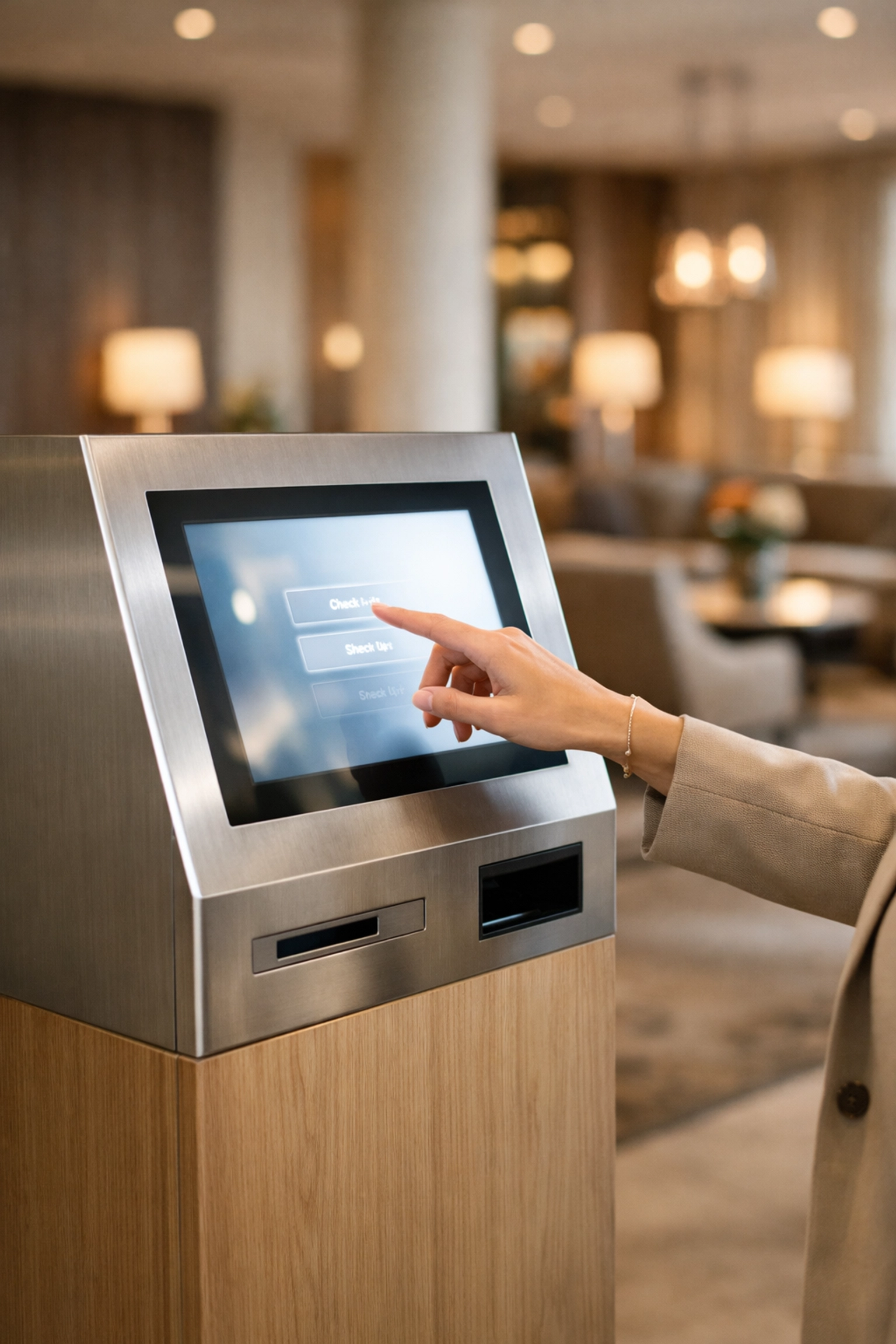
    A guest using a sleek self-check-in kiosk in a modern hotel lobby to skip the front desk queue.

    Automate the checkout friction.

    The biggest buzzkill for guest loyalty is a long checkout line. If the last thing a guest remembers about your hotel is standing in a queue for 20 minutes to pay a bill, they probably won't be back.

    By integrating your CRM with your payment gateway and channel manager, you can offer a seamless "one-click" checkout. Send the invoice automatically at 8:00 AM on the day of departure. Let them settle the bill on their phone and leave their key in the room.

    • Automated billing. Send digital receipts the moment they check out.
    • Late checkout offers. Trigger an automated SMS on the final morning offering a late checkout for a small fee.
    • Transportation help. Offer to book a taxi or provide airport shuttle times automatically.

    Build loyalty that lasts.

    True loyalty isn't a plastic card in a wallet; it’s a relationship. Your CRM should be the memory of your hotel. When you integrate it with smart automation, you can maintain that relationship long after the guest has gone home.

    Post-stay engagement is where most hotels fail. They either send nothing or they send generic "come back soon" emails that end up in the spam folder. With an integrated Mews system, you can send "Welcome Home" messages that include a personalized discount code based on their specific stay history.

    • Automated review requests. Send a survey link exactly two hours after checkout.
    • Birthday and anniversary triggers. Use CRM data to send celebratory offers automatically.
    • Segmented newsletters. Stop blasting your entire list; send family offers to families and corporate rates to business travelers.

    A personalized welcome amenity on a luxury hotel bedside table reflecting guest loyalty and care.

    The numbers don't lie.

    Hotels that lean into automation see massive gains in both efficiency and revenue. We’ve tracked the impact across thousands of properties globally.

    • 15% increase in ancillary revenue through automated upselling.
    • 40% reduction in front desk wait times using self-check-in kiosks.
    • 20% higher guest satisfaction scores for automated communication.

    "Switching to an automation-focused PMS changed our culture. We stopped being data entry clerks and started being hoteliers again."

    Why Mews is the answer.

    Legacy systems are heavy, clunky, and hate talking to other software. Mews is different. We built a cloud-native platform designed to integrate. Our open API means you can connect your favorite CRM, booking engine, and channel manager without the typical IT headaches.

    We believe in making hospitality easy. Our interface is intuitive, our automation is powerful, and our focus is always on the guest experience. If you’re ready to see how a modern tech stack can transform your loyalty levels, check out Mews and our referral program.

    Steps to get started.

    You don't need to automate everything overnight. Start small and scale as you get comfortable.

    1. Audit your data. See where your guest information currently lives.
    2. Choose your triggers. Pick three key moments (e.g., booking, 2 days before arrival, checkout).
    3. Set up the integration. Connect your CRM to your Mews PMS.
    4. Test and refine. Look at your open rates and guest feedback to tweak your tone.

    A minimalist flat-lay of mobile devices representing a smooth hotel PMS and CRM integration process.

    Focus on the guest.

    At the end of the day, all this technology serves one purpose: making your guests feel seen. When a guest arrives and you already know they prefer a high floor and extra pillows because your CRM told your PMS, you’ve won.

    That’s the power of integration. It’s not about the software; it’s about the freedom that software gives you to be a better host.

    Ready to level up your guest experience? It's easier than you think. Explore how Mews can help you automate the boring stuff so you can focus on the remarkable stuff.

    Get started with Mews today and get your team earning more revenue in no time.
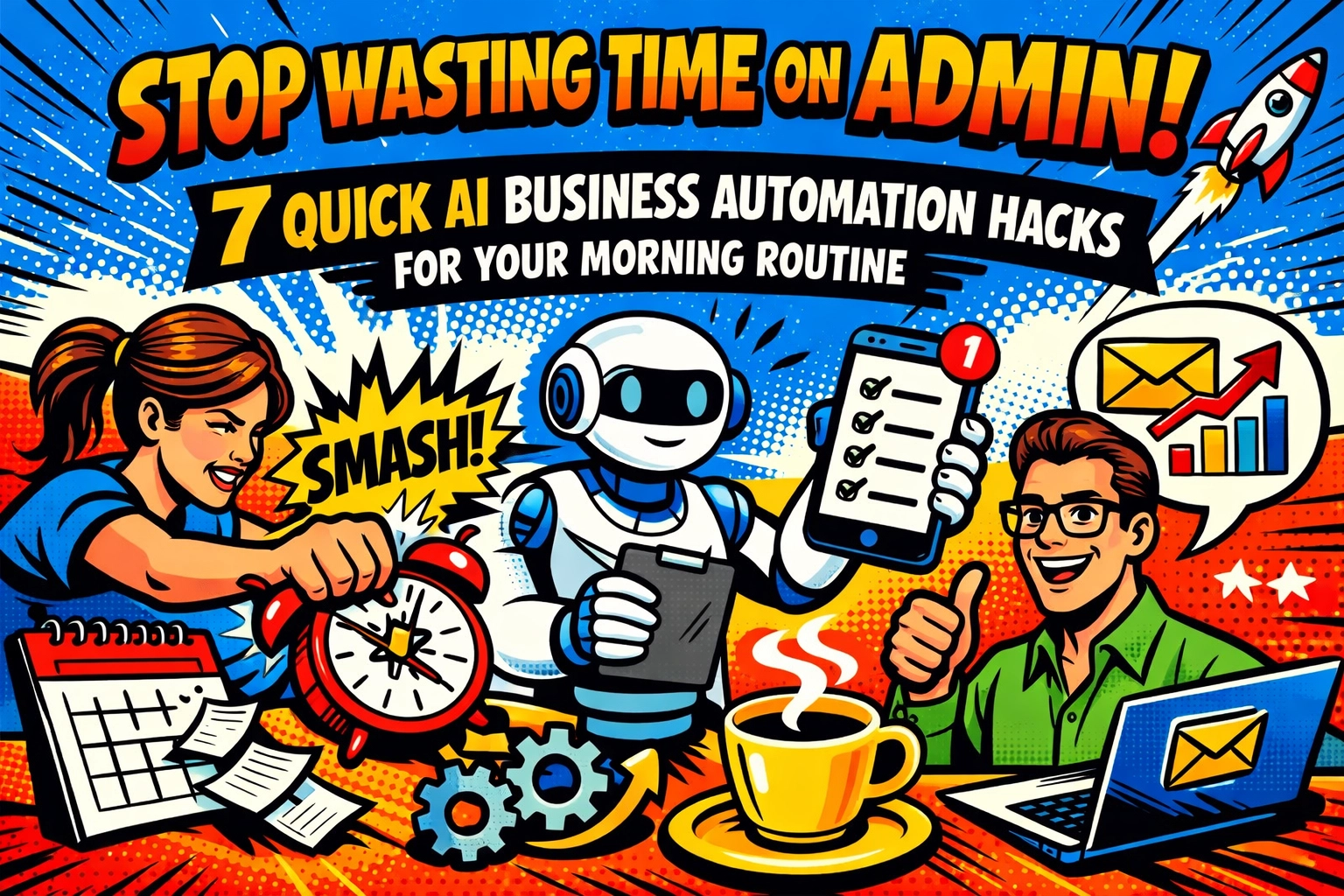
  • Stop Wasting Time on Admin: 7 Quick AI Business Automation Hacks for Your Morning Routine

    Stop Wasting Time on Admin: 7 Quick AI Business Automation Hacks for Your Morning Routine

    ☕ 7:00 AM. Your eyes aren't even fully open yet, but your thumb is already doing that rhythmic, soul-crushing scroll through your lock screen notifications.

    Three "urgent" emails. Five Slack pings. A LinkedIn DM from someone trying to sell you a "guaranteed" lead gen system that looks like it was written by a 1990s chatbot.

    You haven't even had a sip of coffee, and you’re already behind.

    Your brain starts calculating the admin debt. That's 20 minutes of sorting through the inbox noise, another 15 minutes checking the CRM, and at least half an hour of copy-pasting data between spreadsheets just so you know where your business stands.

    By the time you actually start "working," you're already exhausted.

    But it doesn't have to be this way. Imagine if the boring stuff, the repetitive, brain-draining admin, just… happened. While you were making toast.

    This isn't science fiction. It’s ai business automation. And it’s about to give you your mornings back.


    ☕ 7:15 AM: THE INBOX SMOKE-CLEARER

    Hack 1: Summarize Email Threads Instantly

    You open your laptop. Usually, this is where the panic sets in. A 14-email thread about a project delay? You could spend 10 minutes reading every "Please see below" and "Thanks for the update" to find the actual point.

    Or, you let AI do the heavy lifting.

    With business automation tools like Microsoft Copilot 365, you don't read threads anymore. You scan summaries. It extracts the key points, the action items, and the "who said what" in three bullet points.

    Suddenly, a 10-minute task becomes a 30-second glance. You know exactly what’s going on before the kettle has even whistled.

    Pop art illustration of AI business automation tools condensing email threads into a single summary.

    📱 7:30 AM: THE GHOSTWRITER IS IN

    Hack 2: Auto-Draft Response Emails

    Now that you know what needs doing, you usually have to write back. "Thanks for the feedback, I’ll get on that," or "Yes, we can meet at 2 PM."

    Typing that out 20 times a morning is a waste of your human intellect.

    Instead, use ChatGPT Enterprise or native AI integrations in your mail app. You click one button, and it drafts a professional, contextual response based on the email content. You review it, hit send, and move on.

    You’re not a typist. You’re a business owner. Start acting like it. If you want to see how deep this rabbit hole goes, check out what we're building at Marblism.

    🔍 8:00 AM: THE PRIORITY ENGINE

    Hack 3: Predict Your Day’s Priorities

    Most people start their day by doing whatever is at the top of their list. But the top of the list isn't always the most important thing. It’s just the most recent thing.

    Tools like ClickUp Brain act as your digital Chief of Staff. It analyzes your team’s capacity, looks at project deadlines, and flags potential delays before they happen.

    It tells you: "Hey, that proposal for the big client? It’s stalled. Focus there first."

    No more guessing. No more "busy work." Just high-impact decisions.

    Comic book style image of a business owner using AI automation to predict daily workflow priorities.

    🤝 8:15 AM: THE CONTENT CONVEYOR BELT

    Hack 4: Batch-Process Content Workflows

    You know you need to post on social media. You know you should send that nurture email. But writing is hard, and your coffee is starting to get cold.

    Enter Jasper AI or similar ai business automation tools. You give it one core idea, maybe a win you had yesterday, and it generates a LinkedIn post, a Twitter thread, and a short email update in your brand voice.

    It doesn't replace your voice; it amplifies it. You spend 5 minutes editing instead of 45 minutes staring at a blinking cursor.

    The internet never sleeps, but with automation, you don't have to stay up all night keeping it fed.


    STOP JUGGLING. START SCALING.

    You didn't start a business to become a professional data-entry clerk. You started it to build something. But the "admin tax" is real, and it’s eating your growth.

    Every minute you spend syncing data between your CRM and your project management tool is a minute you aren't talking to a lead or refining your product.

    Scaling shouldn't be this hard. But here we are.

    That’s why we built Marblism. We saw business owners drowning in the "middle work", the stuff between having an idea and actually making money. Our goal is to make that middle work disappear.

    📊 8:30 AM: THE INSTANT GENIUS

    Hack 5: Generate Daily Reports and Dashboards

    Spreadsheets are where dreams go to die. Or at least, where they go to get buried in row 452.

    Manually cleaning Excel sheets is a relic of the past. Modern business automation tools can take raw data from your sales platforms and turn it into a polished, visual dashboard while you're still in your pajamas.

    Microsoft Copilot can literally analyze your data and tell you, "Your sales are up 12% in the Midwest, but your lead conversion rate is dropping in the South."

    You don't need a math degree. You just need the right AI in your corner.

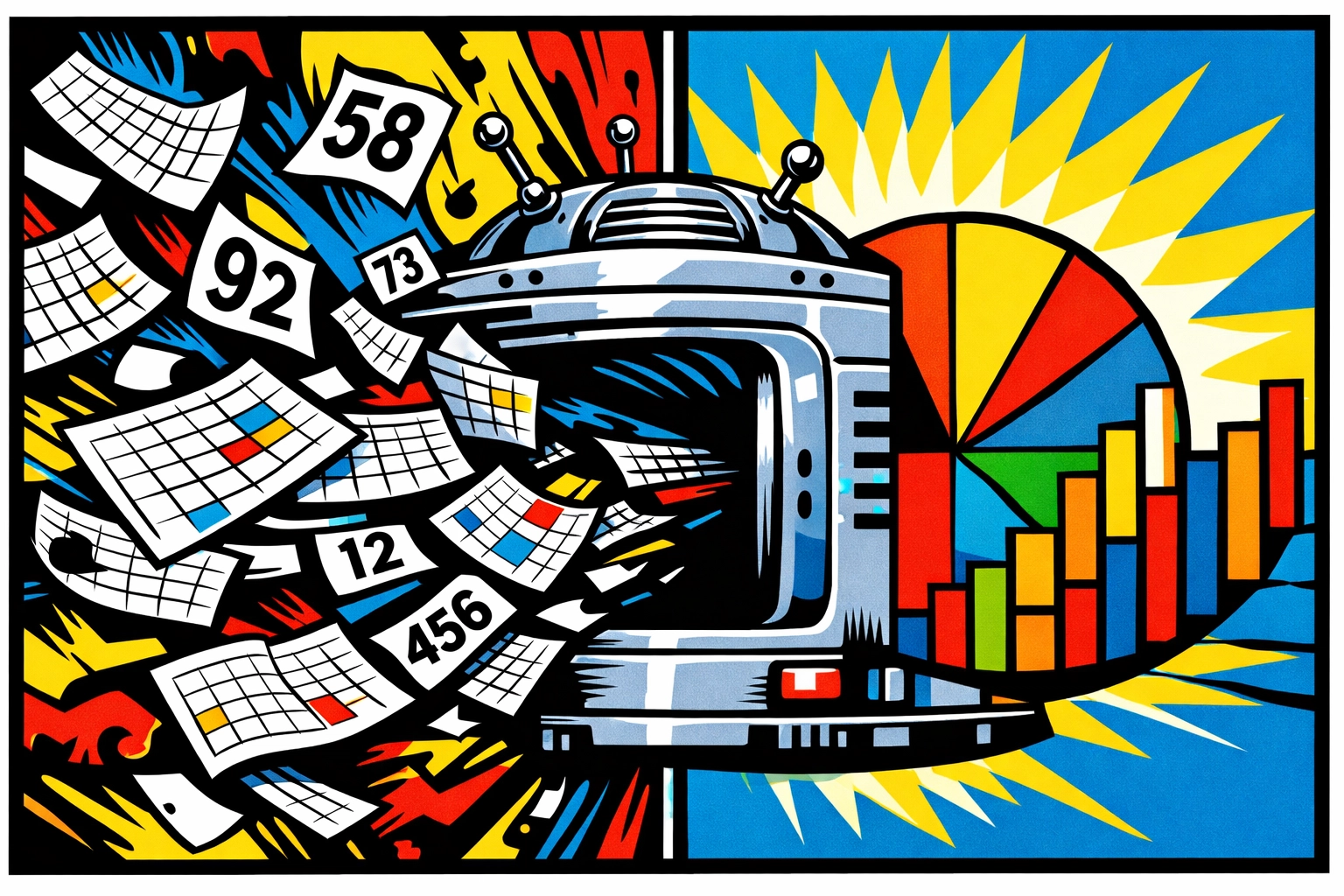
    Pop art graphic of AI business automation tools transforming messy spreadsheets into clean reports.

    🤖 8:45 AM: THE VIRTUAL ASSISTANT THAT NEVER SLEEPS

    Hack 6: Automate Repetitive Task Creation

    When a new lead comes in through your website, what happens?

    In the old world: You get an email. You manually add them to your CRM. You manually create a task to follow up. You manually send them a "Welcome" message.

    In the AI world: Zapier AI Agents handle the handshake. The lead hits your site, the CRM is updated, the task is assigned to the right person, and a personalized intro is drafted and ready for your approval.

    It’s like having a 24/7 assistant who doesn't take lunch breaks and never forgets a name.

    🛠️ 9:00 AM: THE MASTER SYNC

    Hack 7: Manage Admin Tasks Across Tools

    The biggest time-waster isn't any single task. It’s the gap between your tools.

    Your calendar doesn't talk to your billing software. Your billing software doesn't talk to your project management tool. You are the human bridge holding it all together.

    Stop being a bridge.

    By using AI-driven connectors, you can ensure that when a project is marked "Done," an invoice is automatically generated, the client is thanked, and a testimonial request is queued up for next week.

    No copy-pasting. No "Did I send that?" panic. Just flow.


    EMPLOYEE OF THE MONTH. EVERY MONTH.

    The beauty of ai business automation is that it doesn't get tired. It doesn't have "off days." It just works.

    By 9:00 AM, you've already done more "admin" than most people do in a full day. But you didn't actually do any of it. You just supervised it.

    You’re sitting at your desk, the house is quiet, and your to-do list is already green.

    "Is it really this easy?" you might wonder.

    Yes. If you use the right tools.

    Don't take our word for it. Look at what some of our users are saying:

    "I used to spend my first two hours every morning just 'catching up.' With the automation workflows we set up through Marblism, I start my day actually doing the work I love. It’s a total game-changer." , Sarah K., Agency Owner

    "The ROI on AI automation isn't just about money. It's about mental clarity. I'm not stressed about my inbox anymore because I know the AI has already sorted the wheat from the chaff." , Mark T., E-commerce Founder

    Illustration of a relaxed business owner using AI automation to handle repetitive admin tasks.


    FAQ: YOUR AUTOMATION QUESTIONS ANSWERED

    Q: Isn't this expensive to set up?
    No. Most of these tools have free or affordable tiers for small businesses. The "cost" of not automating: in lost time and missed opportunities: is much higher.

    Q: Will AI make my business feel "robotic"?
    Only if you let it. Use AI to handle the boring stuff so you have more time to be human with your customers. It’s about replacing tasks, not people.

    Q: Do I need to be a tech genius?
    Absolutely not. Most modern business automation tools use "No-Code" or "Natural Language" interfaces. If you can write a text message, you can set up an automation.

    Q: Where do I even start?
    Start small. Pick one thing: like your email summaries: and automate that first. Once you feel the relief, you’ll never want to go back.


    YOUR NEW MORNING STARTS HERE.

    The chaos is gone before you even take your first sip of coffee.

    You step back into your day feeling like a CEO, not an assistant. You have the data you need, your messages are drafted, and your priorities are clear.

    This isn't just about "saving time." It's about buying back your freedom.

    If you're ready to stop the morning madness and see how AI can transform your workflow, take a look at what we're doing at Marblism.

    We’ve helped hundreds of founders reclaim their mornings. You’re next.

    Go ahead. Click through and see how easy it can be.

    The future is automated. Don't get left behind in the manual era.

    Bold pop art of a professional scaling their business fast with heroic AI automation workflows.

    SCALING SHOULDN'T BE THIS EASY. BUT HERE WE ARE.

  • Wholesale Specialty Coffee Secrets Revealed: What Experts Don’t Want You to Know

    Wholesale Specialty Coffee Secrets Revealed: What Experts Don’t Want You to Know

    So, you’re thinking about opening a café, or maybe you’re looking to level up your existing coffee game? First off, welcome to the madness. It’s a world filled with the scent of roasted beans, the hiss of steam wands, and, if we’re being honest, a fair amount of industry gatekeeping.

    When you start looking for wholesale coffee roasters, you’ll notice that everyone claims to have the "best" beans. But what does that actually mean? Behind the glossy bags and the trendy branding, there are secrets that many coffee suppliers don't really want to shout from the rooftops.

    At Limini Coffee, we’ve always believed in transparency. We’re not just here to sell you bags of beans; we’re here to be your partner in this caffeinated journey. Whether you’re a seasoned pro or a complete newcomer, we want you to know exactly what goes into the cup. If you're ready to see how we do things differently, you can check out our wholesale specialty coffee options here.


    The Great Freshness Lie

    If there is one thing that "big coffee" loves to hide, it’s the roast date. You’ll go into a supermarket or even some large-scale commercial distributors, and you’ll see a "Best Before" date that is eighteen months in the future.

    Here is the secret: Coffee doesn't "go bad" in the sense that it becomes toxic, but it absolutely dies in terms of flavour.

    Coffee is a fresh agricultural product. Once it’s roasted, the clock starts ticking. Carbon dioxide begins to escape (a process called degassing), and oxygen starts moving in. This oxidation turns those beautiful, vibrant notes of blueberry or chocolate into something that tastes like… well, cardboard.

    Most mass-market wholesale coffee is roasted in massive batches, stored in warehouses for months, and then shipped to you. By the time it hits your hopper, the soul of the bean is long gone.

    We believe that fresh is best. Period. We look for a "Roasted On" date, not a "Best Before" date. Ideally, you want to be using your beans between 7 and 30 days after roasting. This gives the coffee enough time to degas so it doesn't taste "fizzy," but ensures the oils are still volatile and delicious. If your supplier can’t tell you exactly when the beans were roasted, that’s a massive red flag.

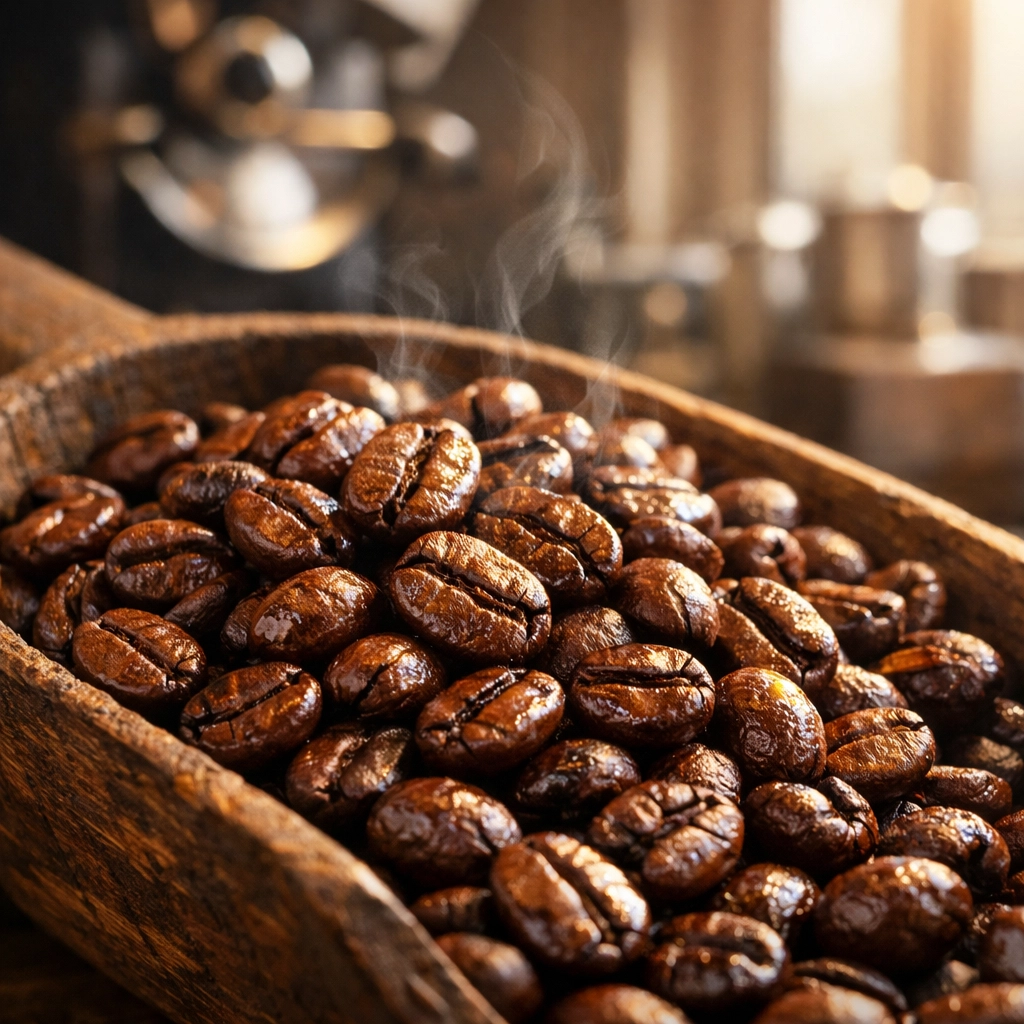
    Freshly roasted specialty coffee beans from wholesale coffee roasters, showcasing quality and aroma.

    The "Specialty" Label: It's Not Just Marketing

    You see the word "Specialty" everywhere these days. It’s become a bit of a buzzword, hasn't it? But in the industry, "Specialty Coffee" actually has a very specific, technical meaning. It’s not just a fancy adjective we use to justify a higher price point.

    Coffee is graded on a 100-point scale by certified "Q Graders." To be legally classified as specialty, the coffee must score 80 points or higher. Most of the stuff you find in tins at the grocery store? That’s commodity coffee, often scoring in the 60s or 70s.

    Why does this matter for your business? Because specialty coffee (the 80+ stuff) is grown with more care, harvested by hand to ensure only the ripe cherries are picked, and processed with extreme precision. This results in a cleaner cup with more complex acidity and sweetness.

    When you're looking for wholesale specialty coffee, you’re essentially paying for the absence of defects. No mouldy beans, no sour under-ripe cherries, no sticks or stones. Just pure, high-quality Arabica. Speaking of which, most specialty coffee is 100% Arabica, as Robusta (the other main species) rarely hits those high scores due to its more bitter, rubbery flavour profile: though it does have twice the caffeine, if you're just looking for a heart-thumping kick!


    The Relationship Secret: Direct Trade vs. The Exchange

    The way coffee is bought and sold is often a mystery to café owners. Historically, coffee is a commodity traded on the "C-Market." The price fluctuates based on global supply and demand, often leaving farmers struggling to cover their production costs.

    The secret that high-end coffee suppliers know is that the best coffee comes from long-term relationships. This is often called "Direct Trade." Instead of buying from an anonymous exchange, roasters work directly with farmers or small cooperatives.

    Why should you care? Because when a farmer is paid a premium (well above the C-Market price), they can afford to invest in better equipment, better drying beds, and better wages for their pickers. This creates a virtuous cycle of quality. You get better beans, and the farmer gets a sustainable livelihood.

    At Limini, we are incredibly proud of how we source. We want to know the story behind every bag. You can read more about our sourcing philosophy here. It’s not just about being "nice"; it’s about ensuring that the coffee you serve in 2026 is just as good, if not better, than the coffee you serve today.

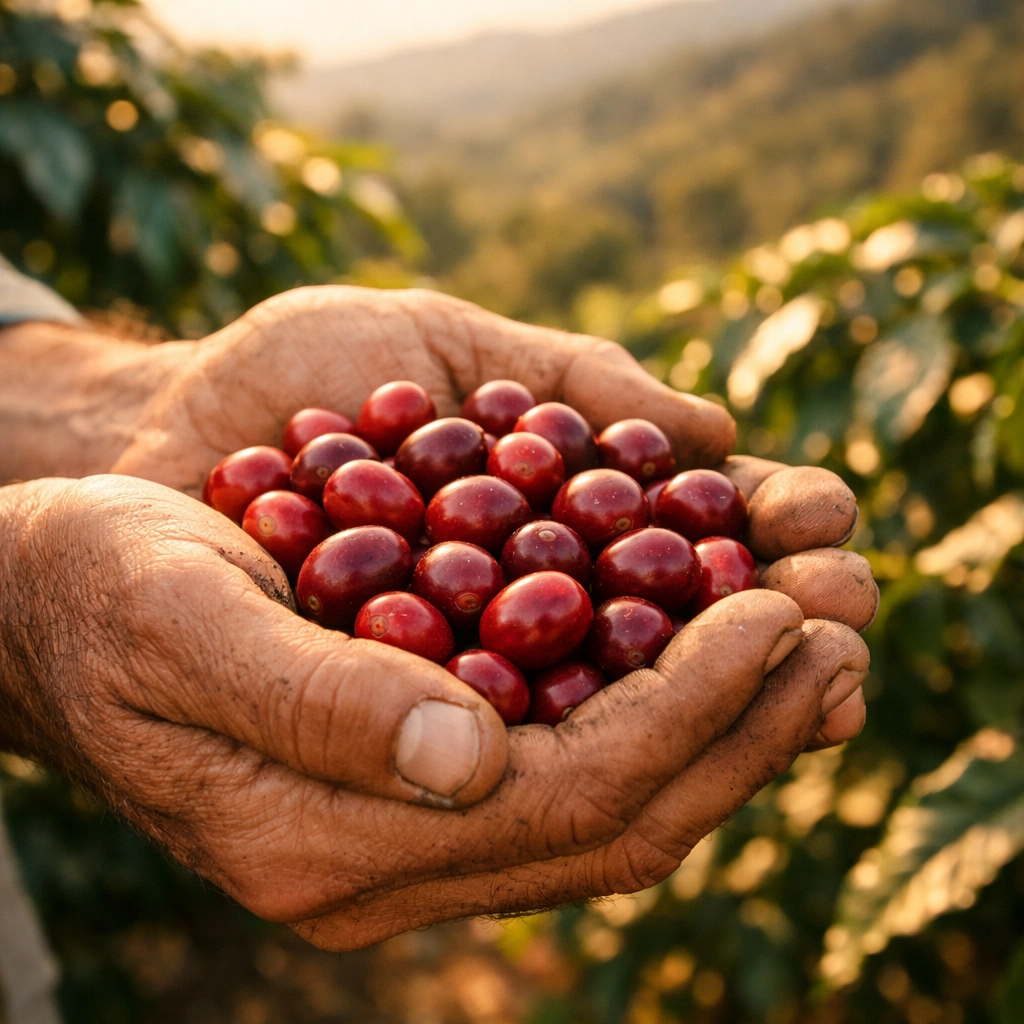
    Ripe red coffee cherries held by a farmer, representing ethical sourcing from premium coffee suppliers.

    Equipment: The Hidden Cost of "Free"

    Here is a big one that catches out café startups all the time. You’re looking for wholesale coffee roasters, and someone offers you a "free" espresso machine if you buy their coffee.

    Sounds like a dream, right? It’s usually a nightmare.

    Nothing is ever truly free. Usually, that "free" machine comes with a contract that forces you to buy mediocre coffee at a massively inflated price. Even worse, those machines are often refurbished older models that lack the temperature stability you need for specialty coffee.

    If you want to serve great drinks, you need to understand your equipment. Whether it’s a lever or an automatic machine, the goal is consistency. You need a machine that can hold a steady 92 °C (roughly 198 °F) and a consistent 9 BAR of pressure.

    We always recommend that our partners invest in their own kit if they can. It gives you the freedom to choose the best beans and ensures you aren't tied into a bad deal. If you're feeling overwhelmed by the choices, we have a great guide on choosing espresso equipment to help you navigate the shiny world of stainless steel.


    The "Invisible" Ingredient: Barista Training

    You could have the most expensive beans in the world and a £15,000 La Marzocco, but if your barista doesn't know how to "dial in," the coffee will taste like battery acid.

    One of the biggest secrets in the wholesale world is that your supplier’s support is more important than their price per kilo. A good supplier should be an educator.

    Are your shots running too fast? Is your milk texture more "bubble bath" than "silky microfoam"? You need a partner who can jump on a call or visit your site to fix those issues. We take this so seriously that we offer comprehensive barista training because we know our beans deserve to be prepared perfectly.

    Everything from understanding milk to the fine art of tamping makes a difference. If your current supplier just drops the bags at the door and disappears, they aren't helping you grow; they’re just taking your money.

    Barista pouring latte art, highlighting professional training provided by wholesale specialty coffee suppliers.

    Why Consistency is King (and How to Keep It)

    In the B2B world, your customers don't just want a great coffee; they want the same great coffee every single Tuesday morning at 8:15 AM.

    This is where many wholesale coffee operations fail. Coffee is a seasonal fruit. A crop from Ethiopia might taste like jasmine and lemon in June, but by December, those notes might have faded. A great roaster knows how to manage these seasonal shifts, adjusting roast profiles to maintain a consistent flavour profile for your "house blend."

    We use tools like brewing calculators and precise extraction measurements to ensure that what we roast is hitting the mark every time. We also encourage our cafés to look at the theatre of coffee. Watching a skilled barista work is part of the product you are selling. It creates an experience that keeps people coming back.


    How to Choose the Right Coffee Supplier

    So, how do you cut through the noise? When you’re vetting potential partners, ask them these four questions:

    1. When was this coffee roasted? (If they say "we roast to order," that’s a win.)
    2. What is the SCA score of this coffee? (Look for 80+.)
    3. What kind of tech support do you offer if my machine breaks on a Sunday morning?
    4. Can you help me with my shop fit-out and workflow? (Check out our advice on building a coffee shop for more on this.)

    The best wholesale coffee roasters won't just talk about beans; they’ll talk about your business. They’ll care about your margins, your workflow, and your customer satisfaction.

    Final Thoughts: Let's Get Brewing

    Starting or running a coffee business is a lot of work, but it’s also incredibly rewarding. There is nothing quite like the feeling of serving a perfect Americano or a glossy flat white to a regular who truly appreciates the craft.

    Don't let the "experts" intimidate you with jargon. At the end of the day, it’s about fresh beans, clean equipment, and a passion for service.

    If you’re looking for a partner who lives and breathes this stuff, we’d love to chat. You can explore everything we offer, from beans to machines, via Scott’s affiliate link right here.

    Whether you need wholesale support or just want to learn more about us, we’re here to help. Let’s make the world of specialty coffee a little less mysterious and a lot more delicious, one cup at a time.

    Keep roasting, keep brewing, and most importantly, keep enjoying the process!

  • Maximising Your Margin: How to Price Your Coffee Menu for Profit

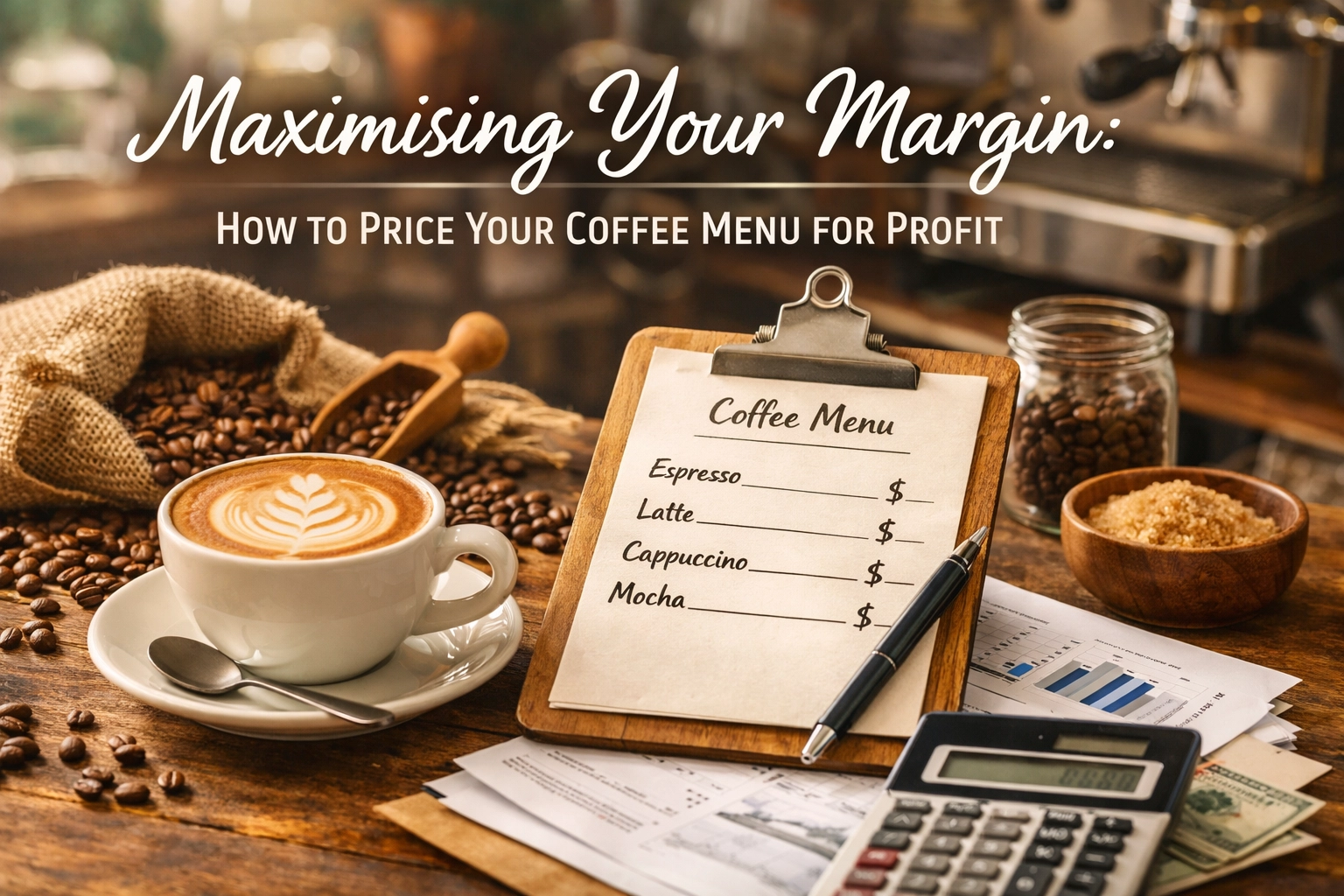
    Maximising Your Margin: How to Price Your Coffee Menu for Profit

    Let's talk about something every cafe owner thinks about but few get completely right: pricing your coffee menu for actual profit.

    You've invested in a quality espresso machine, trained your baristas, and created the perfect atmosphere. But if your pricing strategy isn't dialled in, you're leaving money on the table, or worse, operating at margins that make long-term sustainability a struggle.

    The good news? Pricing isn't some dark art. It's a strategic process you can master with the right approach and understanding of your costs. And yes, the quality of your beans plays a bigger role in your pricing power than you might think.

    Understanding Your Baseline: Know Your Numbers

    Before you can price effectively, you need to understand exactly what each drink costs you to produce. And we mean exactly.

    Your cost per drink includes:

    • Coffee beans (the most variable and crucial element)
    • Milk or alternative milks
    • Syrups, flavourings, and extras
    • Cups, lids, and packaging
    • Labour time per drink
    • A portion of your overhead (rent, utilities, equipment maintenance)

    Most successful coffee shops target a 60-70% gross margin on standard drinks like lattes and cappuccinos. Premium specialty drinks: your seasonal specials, single-origin pour-overs, or signature creations: can justify margins of 70-80% because customers perceive higher value.

    Let's say your flat white costs £2.40 to produce (including all factors above). With a 65% target margin, you'd price it at around £6.85. Round that to £6.90 for psychological pricing (more on that later), and you've got your baseline.

    The critical insight here? Your ingredient quality directly impacts both your cost and your pricing power. Using cheap, commodity-grade coffee means you're competing purely on price. Using specialty-grade beans from a roaster like Limini means you can justify premium pricing based on genuine quality.

    Coffee shop cost calculations with calculator, receipts, and espresso on wooden desk

    Three Core Pricing Strategies That Actually Work

    Cost-Plus Pricing: The Foundation

    This is your starting point. Calculate your production cost and add your target profit margin percentage. It's straightforward, reliable, and ensures you're covering costs.

    The formula is simple: Cost ÷ (1 – Target Margin) = Price

    So if your latte costs £2.80 to make and you want a 65% margin, that's £2.80 ÷ 0.35 = £8.00.

    Cost-plus pricing keeps you profitable, but it doesn't account for what customers are willing to pay or what competitors are charging. That's where the next two strategies come in.

    Competitor-Based Pricing: Know Your Market

    You're not operating in a vacuum. Research what other cafes in your area charge for comparable drinks. This doesn't mean you should match their prices: it means you should understand where you sit in the market.

    Are you positioning as the premium option with superior beans and expert baristas? Price above market rates. Are you the neighbourhood favourite competing on value and atmosphere? Price at or slightly below market rates. Just make sure your margins still work.

    The key is differentiation. If you're charging £5.20 for a cappuccino when everywhere else charges £4.50, customers need to understand why. Which brings us to…

    Value-Based Pricing: The Premium Play

    This is where specialty coffee really shines. Value-based pricing means charging based on perceived quality and customer experience rather than pure cost calculation.

    When you serve coffee from ethically sourced, specialty-grade beans, you're not just selling caffeine. You're selling traceability, flavour complexity, and the story behind the cup. Customers increasingly appreciate: and will pay for: this level of quality.

    Your value proposition might include:

    • Single-origin beans with traceable farms
    • Expert roasting that highlights unique flavour profiles
    • Skilled baristas who can discuss tasting notes
    • Sustainable sourcing practices
    • Consistency and quality standards

    These elements justify higher prices because customers recognise tangible value. The cafe down the street might charge £3.80 for a cappuccino made with generic beans. You can charge £5.20 for one made with carefully sourced Ethiopian Yirgacheffe from a reputable specialty roaster: and customers will queue for it.

    Why Your Bean Choice Matters More Than You Think

    Here's something that doesn't get discussed enough: your coffee supplier is one of your most important pricing decisions.

    Commodity coffee limits your pricing power. You're competing with every other cafe using similar beans, which means competing primarily on price or convenience. Your margins stay squeezed because customers don't perceive differentiation.

    Specialty coffee from a quality roaster expands your pricing power. When you can tell customers their flat white is made with beans scored 85+ by Q Graders, roasted just days ago, and sourced directly from specific farms: that's a different conversation. That's a story worth paying for.

    This is why partnering with a roaster like Limini makes strategic sense. Their range of specialty coffees gives you the quality and traceability that justifies premium pricing. More importantly, their consistency means your customers get the same exceptional cup every time, which builds loyalty and allows you to maintain those prices.

    Three coffee drinks showing tiered menu pricing from standard to specialty options

    Practical Tactics to Maximise Revenue

    Once your baseline pricing is solid, these tactics can increase average transaction values without alienating customers:

    Bundling: Offer a pastry and coffee combo for £7.50 when they'd cost £8.50 separately. Customers feel they're getting value, and you're increasing basket size while maintaining healthy margins on both items.

    Tiered Pricing: Create natural upsell opportunities. Your standard latte is £4.20, but an extra shot is £0.50, oat milk is £0.40, and a large size is £0.60 more. These small additions have minimal cost but significant margin impact.

    Seasonal Specials: Add £0.80-£1.20 to your base drink price for seasonal offerings. The additional ingredients (pumpkin spice, peppermint, etc.) might only cost you £0.40, but customers expect and accept premium pricing for limited-time drinks.

    Size Strategy: Many cafes make their biggest margins on large sizes. If a regular latte uses 30ml of espresso and 180ml of milk, a large might use 30ml of espresso and 240ml of milk. Your cost increases by perhaps £0.25, but you charge £0.80 more.

    The Psychology of Pricing

    How you present prices matters as much as the prices themselves.

    Use £4.90 instead of £5.00. That lower leftmost digit genuinely feels more approachable to customers, even though the difference is minimal. This works for mid-range items where customers are price-conscious.

    Use round numbers for premium items. A £10.00 single-origin pour-over feels more premium and intentional than £9.90. It signals quality and confidence in your offering.

    Anchor with your premium items. When your menu shows a £12.00 specialty coffee flight, your £5.20 flat white suddenly feels quite reasonable. This isn't manipulation: it's helping customers understand your range and positioning.

    Remove currency symbols from your menu board. Studies show that seeing "5.20" rather than "£5.20" reduces price sensitivity slightly. Every little bit helps.

    Freshly roasted specialty coffee beans cascading from sack onto rustic surface

    Implementation: Making Changes Without Losing Customers

    Here's what not to do: suddenly increase all your prices by 15% overnight. Here's what works:

    Make gradual adjustments. Increase prices by £0.20-£0.30 annually rather than £0.80 every few years. Customers barely notice small, regular adjustments but definitely notice big jumps.

    Communicate your value. When you do increase prices, explain why. "We've switched to specialty-grade single-origin beans to give you the best possible coffee" is a message customers respect. Quality-focused customers actually appreciate this transparency.

    Start with new items. Launch new seasonal drinks or specialty options at your target margins. This establishes price expectations without changing existing favourites.

    Monitor and adjust. Track your sales data religiously. If a price increase on flat whites drops volume by 20%, your margin improvement might not offset the lost sales. If volume only drops 5%, you've successfully optimised.

    The Quality-Price Connection

    Let's bring this full circle. Your pricing strategy is intimately connected to your product quality, and your product quality starts with your beans.

    When you source from a specialty roaster with a proven track record, you're not just buying coffee: you're buying the credibility and quality that justifies your pricing. Your customers taste the difference between a carefully sourced Ethiopian natural process coffee and generic "house blend." They notice the complexity, the sweetness, the clean finish.

    That quality difference is your pricing power. It's what separates a £3.80 commodity cappuccino from a £5.20 specialty cappuccino that customers rave about.

    Ongoing Optimisation: This Isn't Set-and-Forget

    Your pricing strategy should evolve continuously:

    • Review your costs quarterly. Coffee prices fluctuate. Milk prices change. Don't wait until your margins are underwater to adjust.
    • Analyse your menu performance monthly. Which drinks sell best? Which have the highest margins? Promote your profitable items and reconsider underperformers.
    • Test and learn. Try a new specialty drink at a premium price point. If it sells well, you've found a new high-margin offering. If it doesn't, you've learned something about your market.
    • Stay connected to your supplier. A good wholesale partner will alert you to price changes, help you understand market dynamics, and work with you to maintain your margins while delivering quality.

    The Bottom Line

    Pricing your coffee menu for profit isn't about charging the maximum possible price. It's about understanding your costs, positioning your quality appropriately, and creating a pricing structure that keeps your business sustainable while delivering genuine value to customers.

    The cafes that thrive aren't necessarily the cheapest or the most expensive: they're the ones that align their quality with their pricing and communicate that value effectively.

    Your beans matter. Your pricing strategy matters. And the connection between the two matters most of all. When you're ready to refine your pricing strategy with beans that justify premium positioning, explore what specialty-grade coffee can do for your margins.

    Because at the end of the day, sustainable profitability and exceptional quality aren't mutually exclusive; they're two sides of the same perfectly pulled espresso shot.

  • The Business That Never Sleeps: Why 24/7 AI Automation is Your New Competitive Edge

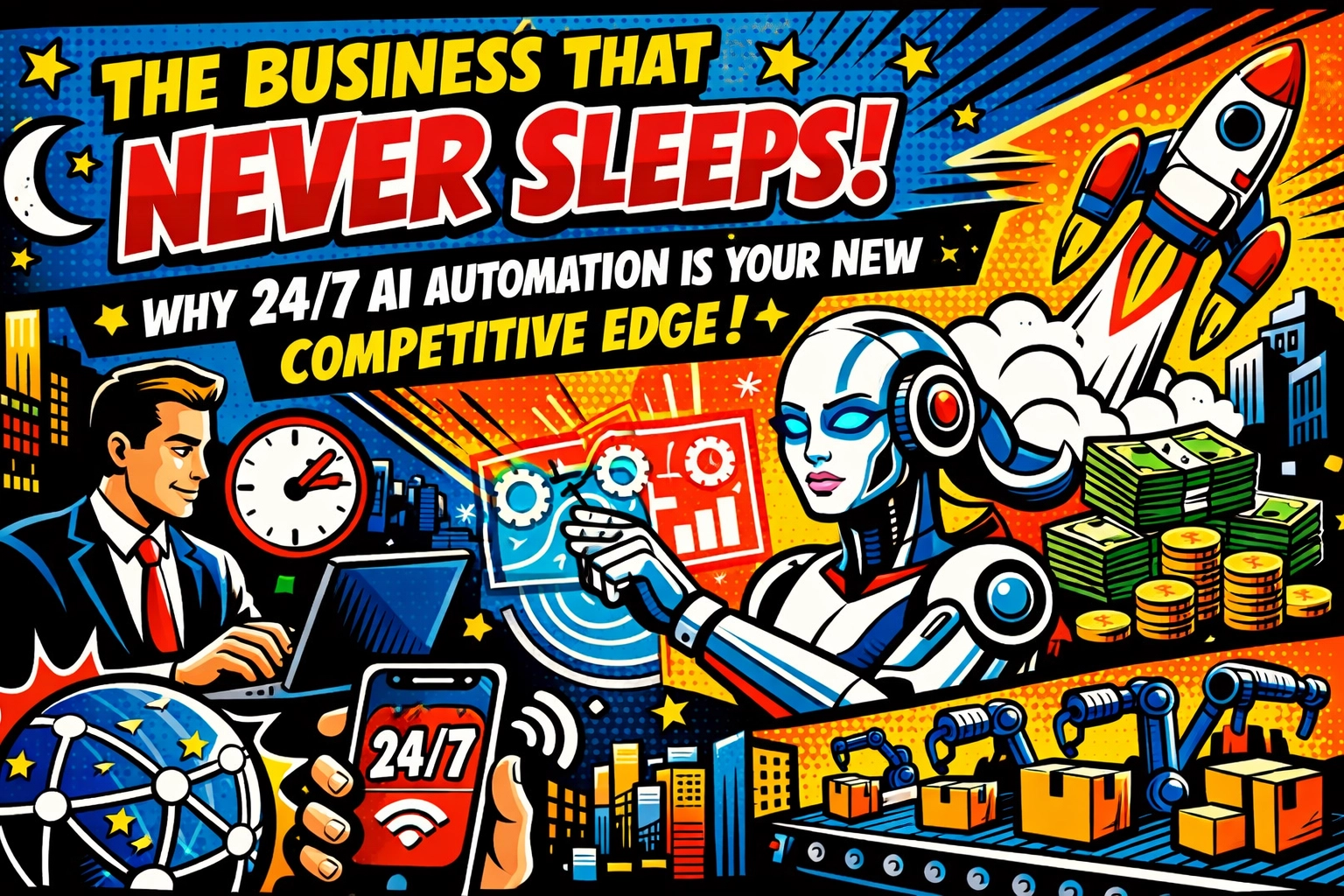
    The Business That Never Sleeps: Why 24/7 AI Automation is Your New Competitive Edge

    [HERO] The Business That Never Sleeps: Why 24/7 AI Automation is Your New Competitive Edge

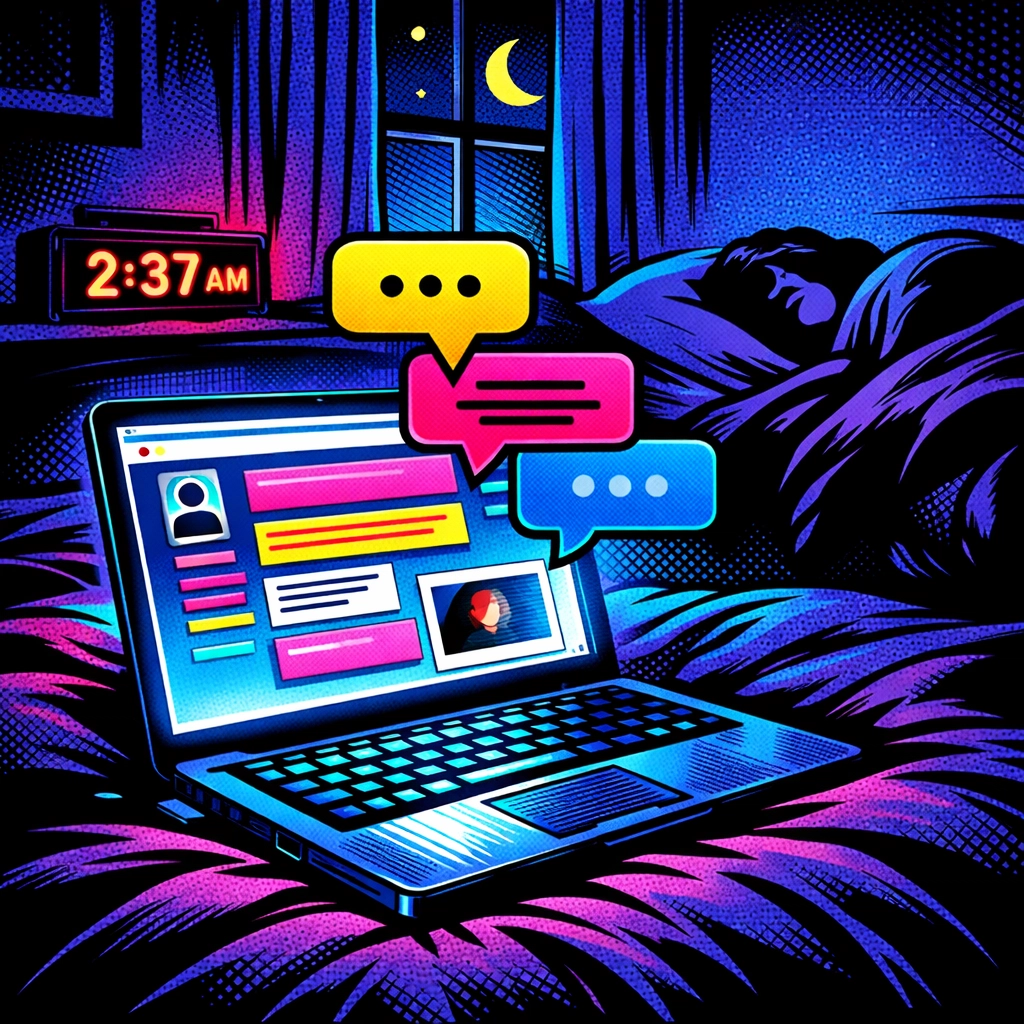
    It's 2:37 AM.

    You're asleep. Your office lights are off. Your phone is on silent.

    And somewhere across the world , or maybe just across town , a potential customer lands on your website. They have a question. A simple one. "Do you ship to Canada?" or "What's your return policy?" or "Can I get this in blue?"

    They wait.

    They leave.

    Your competitor's chatbot just answered the same question in 4 seconds. Their sale went through at 2:38 AM.

    You'll never even know they were there.

    THE MIDNIGHT ECONOMY IS REAL

    Here's the thing nobody talks about: the internet doesn't sleep. Your customers don't operate on your schedule. They browse at midnight. They comparison shop during their lunch break in Tokyo. They make buying decisions while you're watching Netflix.

    AI chatbot answering customer questions at 2 AM while business owner sleeps peacefully

    The old model , the 9-to-5, Monday-through-Friday, "we'll get back to you during business hours" approach , isn't just outdated. It's actively costing you money.

    Every unanswered question is a lost lead. Every delayed response is a customer walking to your competitor. Every time zone you don't cover is a market you're ignoring.

    And the worst part? You don't even realize it's happening.

    WHILE YOU SLEEP, YOUR COMPETITORS DON'T

    Let's get uncomfortably honest for a second.

    Your competitor , the one who keeps undercutting you, the one who seems to be everywhere at once , they're not working harder than you. They're probably not even smarter than you.

    But they're available more than you.

    They've figured out how to automate customer support with AI. Their chatbots are qualifying leads at 3 AM. Their email responders are nurturing prospects while they're asleep. Their systems are capturing information, booking demos, and moving people through the funnel 24/7/365.

    You're working 40 hours a week.

    They're working 168.

    That's not a fair fight.

    THE MYTH OF "BUSINESS HOURS"

    Remember when businesses had hours? When you could close up shop, go home, and genuinely disconnect?

    Yeah… that died somewhere around 2010.

    Global 24/7 AI business automation serving customers across all time zones simultaneously

    Now your customers expect instant answers. Same-day shipping. Real-time updates. Support that's there when they need it , not when it's convenient for you.

    And here's the brutal reality: if you're not available, someone else is.

    The global marketplace doesn't care about your work-life balance. It doesn't pause because you need dinner with your family. It keeps moving, keep transacting, keep rewarding the businesses that show up.

    ENTER: AI BUSINESS AUTOMATION

    But here's where it gets interesting.

    You don't have to choose between burning out and falling behind. You don't have to hire a night shift or set alarms for 2 AM customer inquiries.

    You just need to automate the always-on parts of your business.

    AI automation isn't about replacing humans. It's about handling the repetitive, predictable, round-the-clock tasks that would otherwise require an army of employees working in shifts.

    Your AI chatbot answers "What are your hours?" at 2 AM.

    Your AI lead qualifier sorts through inquiries while you're at your kid's soccer game.

    Your AI customer support handles order tracking, password resets, and basic troubleshooting 24/7 , and escalates to a real human only when it truly matters.

    You get the efficiency of never closing. Without actually never closing.

    WHAT HAPPENS WHEN YOU'RE ALWAYS ON

    7:00 AM , Sydney, Australia

    A potential client visits your site before her morning meeting. She has questions about pricing. Your AI chatbot walks her through your packages, collects her email, and books a demo for next week.

    You're still asleep. The lead is already qualified.

    📱 12:30 PM , London

    Someone's browsing your product catalog during their lunch break. They add items to cart but hesitate. Your AI sends a perfectly timed "Still interested?" message with a limited-time offer.

    You're in a meeting. The sale goes through anyway.

    Business owner relaxing while AI automation handles customer support and sales operations

    🌙 11:00 PM , Your Living Room

    You're winding down for the night. Meanwhile, your AI is answering support tickets, following up with abandoned carts, and nurturing leads across three continents.

    Your business is working. You're not.

    THE UNFAIR ADVANTAGES

    When you automate customer support with AI, you're not just saving time. You're fundamentally changing the rules of competition.

    You scale without hiring. Handle 10 conversations or 10,000 , same system, same cost. Your competitor needs to hire, train, and manage more people. You just… turn up the volume.

    You never miss a hot lead. That person researching at midnight? They're usually the most motivated buyers. They're problem-solving right now. Your AI captures them when they're warmest.

    You cut costs while improving service. No overtime pay. No shift differentials. No "sorry, our support team is offline." Just instant, accurate, 24/7 assistance that gets better over time.

    You operate globally without thinking about it. Time zones become irrelevant. Your AI serves customers in Mumbai and Miami with the same attentiveness. No jet lag required.

    THE COMPOUND EFFECT

    Here's what most people miss: being "always on" isn't just about the individual interactions you capture.

    It's about the cumulative advantage over time.

    Every lead your competitor misses at 2 AM, you capture. Every support question they delay until morning, you answer instantly. Every frustrated customer who bounces from their site lands on yours and gets immediate help.

    24/7 AI automation capturing leads and serving customers around the clock at all hours

    Day after day. Week after week.

    The gap widens.

    Not because you're working harder. Because you're working smarter. Because you've built a business that operates on internet time, not office time.

    BUT WHAT ABOUT THE "HUMAN TOUCH"?

    You're probably thinking: "Won't customers hate talking to a bot?"

    Only if it's a bad bot.

    Modern AI automation isn't those clunky "press 1 for sales" phone trees from 2005. It's conversational, contextual, and legitimately helpful. It understands natural language. It remembers previous interactions. It knows when to handle things itself and when to escalate to a human.

    Your customers don't want to wait 12 hours for a simple answer just because a "real person" will eventually give it to them. They want their problem solved. Fast.

    AI does that.

    And when complexity requires human expertise? The handoff is seamless. Your AI has already gathered all the context, so your team can jump straight to solving the real issue.

    You get the efficiency of automation AND the expertise of humans. Just deployed strategically.

    THE BUSINESSES WINNING RIGHT NOW

    The companies crushing it in 2026 aren't the ones working hardest. They're the ones that figured out how to leverage AI business automation while their competitors were still debating whether it was "worth it."

    They're capturing leads at midnight. Qualifying prospects during holidays. Serving customers across continents without opening international offices. Growing revenue without proportionally growing headcount.

    They're not superhuman. They're just never offline.

    Business growth rocket powered by AI automation competitive edge and scalable technology

    YOUR COMPETITIVE EDGE STARTS HERE

    The businesses that win in the next decade won't be the biggest.

    They'll be the ones that are always there when opportunity knocks.

    While your competitors are closed, you're open. While they're sleeping, you're serving. While they're "getting back to people," you've already closed the deal.

    That's not just an advantage. That's a moat.

    Want to see what an always-on business actually looks like? Check out how Marblism helps you automate customer support with AI : and build the business that never sleeps.

    Because the midnight economy isn't coming.

    It's already here.

    And it's rewarding the businesses that show up.

  • 7 Mistakes You’re Making with Your Legacy Hotel PMS (and How to Fix Them with Automation)

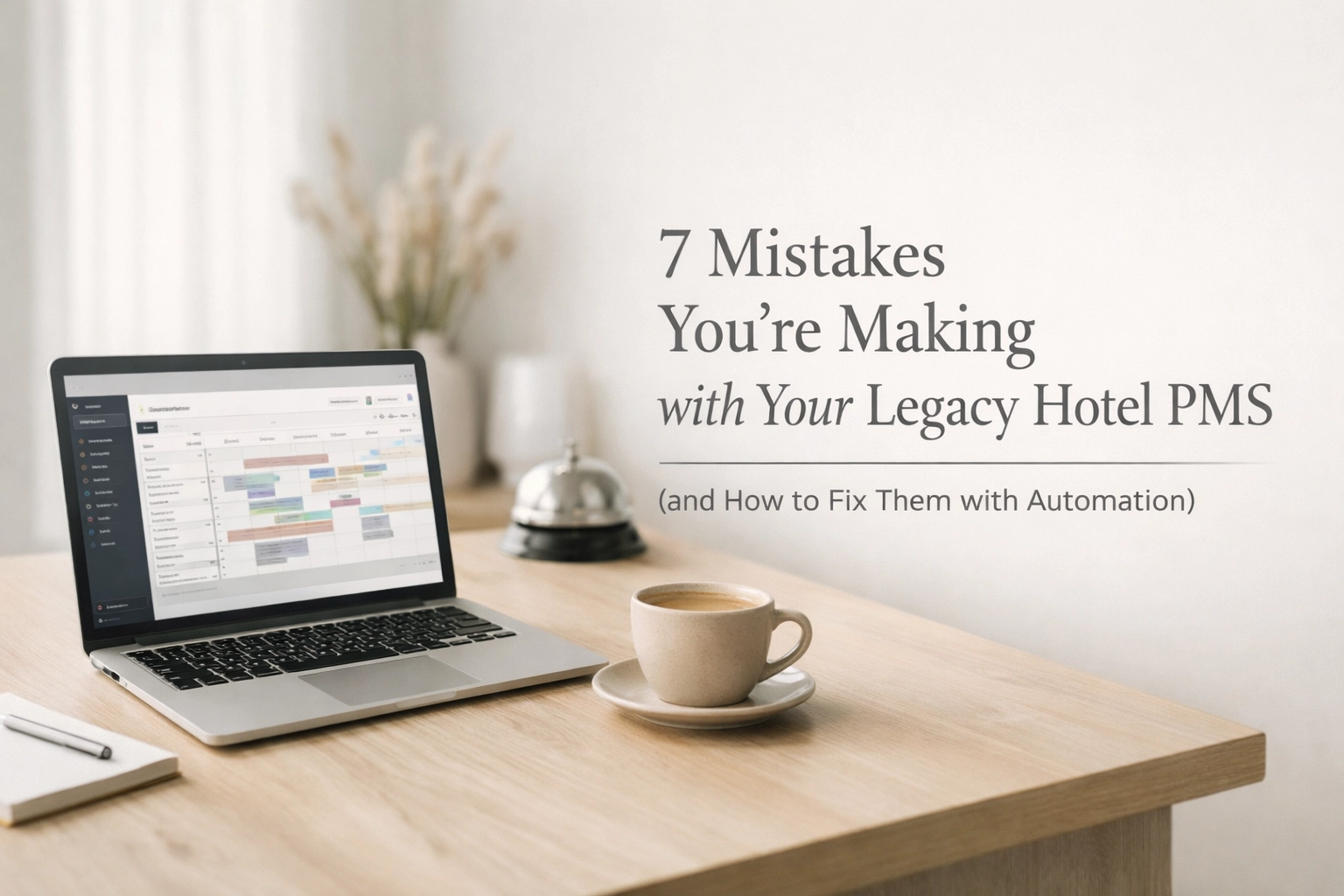
    7 Mistakes You’re Making with Your Legacy Hotel PMS (and How to Fix Them with Automation)

    Automate your operations. Delight every guest. Grow your revenue.

    The hospitality industry is evolving faster than ever. In 2026, guests expect seamless, digital-first experiences that start long before they arrive at your lobby. Yet, many hoteliers are still tethered to legacy systems that belong in a museum. If your property management system (PMS) feels like a chore rather than a tool, you’re likely leaking revenue and frustrating your team.

    We see it every day. Hoteliers lose 10+ hours a week on administrative tasks that could, and should, be automated. It’s time to move away from fragmented setups and embrace a unified cloud-native platform.

    Here are the seven biggest mistakes you’re making with your legacy hotel PMS and exactly how automation can fix them.

    1. Drowning in Manual Data Entry

    If your front desk team spends more time typing names into a computer than looking at guests, you have a problem. Legacy systems often require manual entry for every booking, payment, and guest profile update. This isn't just slow, it's dangerous. One typo in a credit card number or a missed dietary requirement can ruin a guest's stay.

    We believe your staff are hospitality professionals, not data entry clerks. Automation removes the friction of manual input, ensuring your data is clean and your team is present.

    • Reduce human error by 95% through automated profile syncing.
    • Capture guest data directly from the booking engine.
    • Process payments instantly without manual card swiping.

    Modern hotelier at a minimalist reception desk using a tablet for automated guest check-in.

    2. Neglecting the Power of Self-Check-In

    The traditional check-in desk is a bottleneck. We’ve all seen it: a tired traveler arrives after a ten-hour flight, only to stand in a queue for twenty minutes. Legacy systems rarely offer flexible check-in options, forcing guests into a rigid, outdated process.

    Modern guests want autonomy. By implementing self-check-in kiosks and mobile check-in options, you give guests the freedom to head straight to their room. This doesn't replace service; it enhances it by removing the transactional barrier between your staff and your guests.

    • Cut front desk wait times to zero.
    • Increase upsell revenue through automated digital prompts.
    • Let staff focus on high-value guest interactions.

    "Since we moved to Mews, our check-in process takes less than 30 seconds," says one boutique hotel manager. "The guests love the kiosks, and our lobby feels like a lounge, not a bank."

    3. Using a Fragmented Channel Manager

    Are you still manually updating inventory across OTAs? Or worse, dealing with overbookings because your legacy PMS doesn't talk to your channel manager in real-time? Fragmented systems create data silos that lead to lost revenue and operational headaches.

    An integrated, cloud-native hotel PMS ensures that your inventory is always in sync. When a room sells on Expedia, it’s instantly removed from Booking.com and your own website. No lag, no double-bookings, no stress.

    • Maintain 100% inventory accuracy across all platforms.
    • Manage rates and availability from a single dashboard.
    • Maximize occupancy without the fear of overbooking.

    See how a unified platform can streamline your distribution: https://referrals.mews.com/umqhyito

    4. Failing to Leverage a Modern CRM

    Your guests are more than just a room number. However, legacy systems often treat them that way. If your guest data is trapped in an old database that doesn't talk to your marketing tools, you’re missing out on massive personalization opportunities.

    A modern CRM integration allows you to understand guest behavior. Do they always order a latte in the morning? Do they prefer high floors? Automation allows you to use this data to send personalized pre-stay emails and targeted offers, turning a one-time visitor into a loyal advocate.

    We believe every guest stay should be personalized.

    • Automate post-stay surveys to boost your online reputation.
    • Create targeted email campaigns based on real spending habits.
    • Build a loyal community with automated rewards.

    Minimalist hotel bedside table with coffee and a welcome card reflecting personalized guest service.

    5. Sticking to Static Pricing Strategies

    The market changes by the hour. If you’re still setting your rates once a month (or once a year), you’re leaving money on the table. Legacy PMS software often lacks the sophisticated integrations needed for dynamic pricing.

    Automation allows you to connect with Revenue Management Systems (RMS) that analyze competitor rates, local events, and historical data to adjust your prices automatically. This ensures you’re always priced competitively, whether it’s a quiet Tuesday or a sold-out festival weekend.

    • Achieve up to a 15% increase in RevPAR through dynamic pricing.
    • React instantly to market fluctuations.
    • Save hours of manual price adjusting every week.

    6. Managing Hardware Instead of Hospitality

    Does your hotel have a server room? If it does, you’re likely spending thousands on IT maintenance, cooling, and security for a system that’s prone to crashing. Legacy on-premise systems are a liability. They require manual backups and are a nightmare to update.

    Switching to a cloud-native hotel PMS means you never have to worry about server failures again. Updates happen automatically, your data is secured with enterprise-grade encryption, and you can access your dashboard from anywhere in the world, even your phone.

    • Eliminate expensive IT maintenance costs.
    • Access your hotel data from any device, anywhere.
    • Benefit from automatic feature updates every week.

    "We stopped being IT managers and went back to being hoteliers," says a resort owner. "Mews handles the tech; we handle the guests."

    A guest relaxes in a modern, tech-enabled hotel lobby using a mobile device for seamless interaction.

    7. Ignoring the Guest Journey Beyond the Room

    A legacy PMS often sees its job as starting at check-in and ending at check-out. But the guest journey is much longer. From the first search on your booking engine to the final review, every touchpoint matters.

    Automation allows you to manage the entire lifecycle. You can automate "know before you go" messages, offer digital room keys, and provide instant checkout via a guest's mobile device. By ignoring these touchpoints, you're missing opportunities to provide "wow" moments that drive repeat business.

    • Automate guest communication at every stage of the journey.
    • Provide digital keys for a truly frictionless experience.
    • Offer easy, one-click checkout to end the stay on a high note.

    How to Fix These Mistakes Today

    Transitioning from a legacy system might feel daunting, but the cost of staying still is far higher. The future of hospitality is automated, data-driven, and guest-centric. By choosing a cloud-native platform like Mews, you’re not just buying software; you’re investing in the freedom to grow.

    Step 1: Audit your current workflow

    Identify where your team spends the most time. If it's manual admin, it's time for a change.

    Step 2: Consolidate your tech stack

    Look for a platform that integrates your booking engine, channel manager, and CRM into one intuitive ecosystem.

    Step 3: Empower your guests

    Implement self-check-in kiosks and mobile tools to give guests the digital experience they crave.

    Step 4: Automate the boring stuff

    Let the software handle billing, rate updates, and data entry so your team can focus on what they do best: taking care of people.

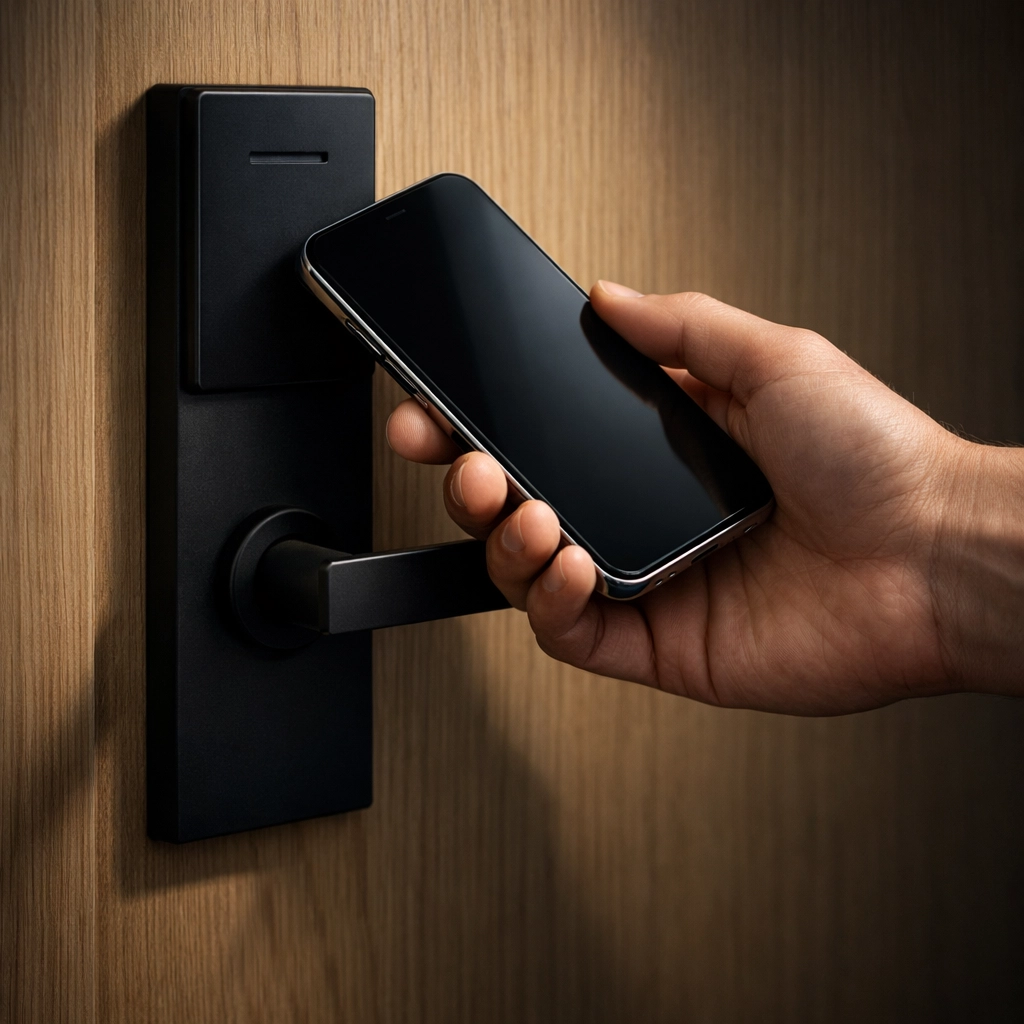
    Close-up of a guest using a smartphone as a digital room key for a frictionless hotel stay.

    Experience the Mews Difference

    We believe that technology should be invisible. It should sit in the background, making everything run smoothly while you focus on creating unforgettable memories for your guests. Mews is designed for the modern hotelier who isn't afraid to challenge the status quo.

    Ready to see what an automation-focused platform can do for your property?

    • 12,500+ properties worldwide.
    • Easy-to-use interface.
    • Cloud-native security and reliability.

    Start your journey toward a more efficient, more profitable hotel today.

    Get started here: https://referrals.mews.com/umqhyito

    The era of the legacy PMS is over. It’s time to embrace the future of hospitality technology. Stop making these seven mistakes and start building a smarter, more automated hotel that guests will love. It’s easy, it’s innovative, and it’s exactly what your business needs to thrive in 2026.

  • The Ultimate Guide to Brewing Espresso at Home: Everything You Need to Succeed

    So… you want café-level espresso at home? The good news: you absolutely can. The slightly annoying news: espresso is basically a tiny science experiment you repeat daily, except the variables fight back.

    The trick is learning what matters (and what doesn’t), getting a repeatable workflow, and then making small, deliberate adjustments. If you do that, your shots stop being “random” and start being reliable. And reliability is what makes espresso fun.

    If you need fresh beans, home gear, and a place to nerd out, we’ve built all of that into Limini Coffee, start here: https://www.liminicoffee.co.uk/?af=1471531379787


    The 6 variables that make (or break) espresso

    What’s the difference between “wow” and “why is this sour and bitter”? Usually one of these:

    1. Grind size (particle size = flow rate)
    2. Dose (how much coffee in the basket)
    3. Distribution + tamp (even resistance across the puck)
    4. Water temperature (how easily flavours dissolve)
    5. Time (contact time, measured from pump on)
    6. Brew ratio / yield (how much liquid espresso you produce)

    Basically… espresso is controlled resistance. Water will always take the path of least resistance. If your puck is uneven, water will “channel” through weak spots and you’ll taste it immediately.

    Want a quick deep-dive on puck prep and tamping? We’ve got a dedicated piece here: https://www.liminicoffee.co.uk/article_tamping
    And if you’re after coffee and gear to practise with, this is our home base: https://www.liminicoffee.co.uk/?af=1471531379787


    What you actually need at home (and what’s optional…)

    Let’s keep this real. You can spend a fortune. You can also spend sensibly and get 90% of the results.

    The essentials:

    • Espresso machine (stable temperature helps a lot; PID is a bonus)
    • Burr grinder (this matters more than the machine, honestly)
    • Tamper matched to your basket size
    • Scales accurate to 0.1 g
    • Timer (phone is fine)
    • Fresh beans (non-negotiable)

    Nice-to-have (but very useful):

    • WDT tool (thin needles for declumping and distribution)
    • Bottomless portafilter (diagnostic tool + messy truth-teller)
    • Knock box (your bin will thank you)
    • Milk jug + thermometer if you’re steaming milk

    If you’re choosing a setup right now, we’d genuinely start with this guide: https://www.liminicoffee.co.uk/choosing_espresso_equipment
    And when you’re ready for beans worth dialling in, you know where we are: https://www.liminicoffee.co.uk/?af=1471531379787


    Coffee freshness… the part most people ignore (and it’s a real shame)

    Question: are you pulling shots with coffee that’s been open for 6 weeks?

    Unfortunately, that’s one of the fastest ways to make espresso feel impossible.

    Our rule of thumb:

    • Best window for espresso is often 7–30 days post-roast (depending on roast level and how it was stored).
    • Keep beans in a cool, dry place, sealed.
    • Grind right before you pull the shot. Always.

    Fresh is best. Not “freshly opened supermarket bag” fresh, roasted recently fresh.

    If you want to know how we think about sourcing and roasting, here’s a good read: https://www.liminicoffee.co.uk/sourcing_our_coffee
    And if you just want to grab fresh coffee and get brewing: https://www.liminicoffee.co.uk/?af=1471531379787


    Your go-to espresso recipe (a repeatable starting point)

    So what should you aim for?

    Here’s a classic baseline for a modern double espresso:

    • Dose: 18 g (0.63 oz) in
    • Yield: 36 g (1.27 oz) out
    • Ratio: 1:2
    • Time: 25–30 seconds
    • Temperature: ~200 °F / 93 °C
    • Pressure: ~9 bar (on most machines)

    You don’t worship these numbers, they’re just a stable “home base” to adjust from.

    If you like using a calculator to stay consistent (we do), this is handy: https://www.liminicoffee.co.uk/coffee_brewing_calculator
    And yes, you can absolutely run this recipe with any good espresso from: https://www.liminicoffee.co.uk/?af=1471531379787


    Temperature: a practical guide by roast level

    Water temperature sounds nerdy… because it is. But it also saves shots.

    General ranges that work well:

    • Light roasts: 199–205 °F / 93–96 °C
    • Medium roasts: 194–200 °F / 90–93 °C
    • Dark roasts: 188–194 °F / 87–90 °C

    Why is this important? Lighter roasts are harder to extract (they’re less soluble), so they usually like hotter water and/or slightly longer contact time. Darker roasts extract quickly and can taste harsh if you push them too hot.

    If you’re shopping for a single origin specifically to explore this stuff (highly recommended), browse and experiment from: https://www.liminicoffee.co.uk/?af=1471531379787


    Step-by-step workflow… from cold machine to great shot

    This is the part that makes your espresso consistent.

    1) Warm everything up properly

    Yes, your machine needs time. Many machines perform best after 20–30 minutes of heat soak.

    Do this:

    • Lock the portafilter in while heating
    • Flush a little water through the group head to stabilise heat
    • Preheat your cup (hot water in the cup, then dump it)

    Cold portafilter + cold cup = sad espresso. Thin body, muted sweetness.

    2) Dose and grind (fresh, every time)

    • Place your portafilter on scales
    • Dose 18.0 g (0.63 oz) of beans
    • Grind fine: espresso fine (think: somewhere around powdered sugar, but not clumpy)

    If your grinder is inconsistent, everything downstream becomes guesswork. That’s why we always prioritise grinder quality when helping people build setups via: https://www.liminicoffee.co.uk/choosing_espresso_equipment
    And yep, fresh beans matter just as much: https://www.liminicoffee.co.uk/?af=1471531379787

    3) Distribute (don’t skip this)

    Question: do you tamp and still get random fast shots?

    That’s usually distribution. Clumps and voids create weak spots and channeling.

    A simple method:

    • Tap the portafilter gently to settle grounds
    • Use a WDT tool (or careful finger distribution) to break clumps
    • Level the bed before tamping

    4) Tamp level, not “insanely hard”

    We see this all the time: people think harder tamp = slower shot. Not really.

    • Aim for 20–30 lb / 9–14 kg of pressure
    • The real goal is level and consistent
    • A tiny “polish” twist at the end is fine (lovingly called “polishing”), but don’t overdo it

    If you want the full tamping rabbit hole, it’s here: https://www.liminicoffee.co.uk/article_tamping
    Then come back and pull shots with coffee that behaves properly: https://www.liminicoffee.co.uk/?af=1471531379787

    5) Pull the shot (and actually watch it)

    Lock in, start the pump, and start the timer immediately.

    What you’re looking for:

    • A steady, even flow after initial drips
    • A stream that resembles little “mouse tails”
    • Stop the shot when it starts to blonde (turn pale/yellow and watery), often around your target yield

    Target: 36 g (1.27 oz) out in 25–30 seconds.

    Bottomless portafilter pulling espresso with rich crema, showing ideal flow for home brewing


    Dialling in: the simple adjustment rules we use every day

    So your shot didn’t land. Good. That means you have information.

    If it runs too fast (e.g., 36 g out in 15–20s)

    You’re under-extracting and likely tasting sourness, sharpness, thin body.

    Fixes:

    • Grind finer (first move, almost always)
    • Or increase dose slightly (e.g., 18.5–19 g), if your basket allows
    • Check for channeling (uneven distribution, cracked puck)

    If it runs too slow (e.g., 36 g out in 35–45s)

    You’re over-extracting and likely tasting bitterness, dryness, harsh finish.

    Fixes:

    • Grind coarser
    • Or reduce dose slightly (e.g., 17.5 g)
    • Make sure you’re not tamping unevenly (level matters)

    If it tastes both sour and bitter

    This is the classic “channeling” signature.

    Fixes:

    • Improve distribution (WDT helps a lot)
    • Keep tamp level
    • Consider a paper filter at the bottom of the basket (optional, but can improve flow)

    And if you want to keep your experiments structured, use a consistent ratio and log it. This calculator makes that easy: https://www.liminicoffee.co.uk/coffee_brewing_calculator
    Then treat yourself to a bag that’s worth the effort: https://www.liminicoffee.co.uk/?af=1471531379787


    Crema: what it is… and what it isn’t

    Crema is that golden foam on top of espresso. It’s a mix of emulsified oils and trapped gases (mostly CO₂) from freshly roasted coffee.

    But… crema is not a quality guarantee. You can have loads of crema on a shot that tastes awful. And you can have less crema on a shot that tastes beautifully sweet and balanced (especially with certain coffees and roast styles).

    If you want the full crema breakdown, we’ve got it here: https://www.liminicoffee.co.uk/article_crema
    And if you want to see how different coffees behave in the cup, our reviews are a fun rabbit hole: https://www.liminicoffee.co.uk/reviews
    Grab beans to test your theory on: https://www.liminicoffee.co.uk/?af=1471531379787


    Milk drinks at home: silky microfoam without the stress

    If you’re doing cappuccinos and lattes, espresso is only half the game. Milk texture is the other half… and it’s where home setups can feel “not quite café”.

    Good milk is about:

    • Stretching (adding air early)
    • Texturing (breaking bubbles into microfoam)
    • Temperature control (sweet spot, not scalded)

    Targets we like:

    • Heat milk to 140–150 °F / 60–65 °C for sweetness and texture
    • Stop before 160 °F / 71 °C (beyond that, it starts tasting “cooked”)

    If you want a clear breakdown, start here: https://www.liminicoffee.co.uk/article_understanding_milk
    And if you want the differences between latte / cappuccino / flat white spelled out properly: https://www.liminicoffee.co.uk/article_latte_cappuccino_etc

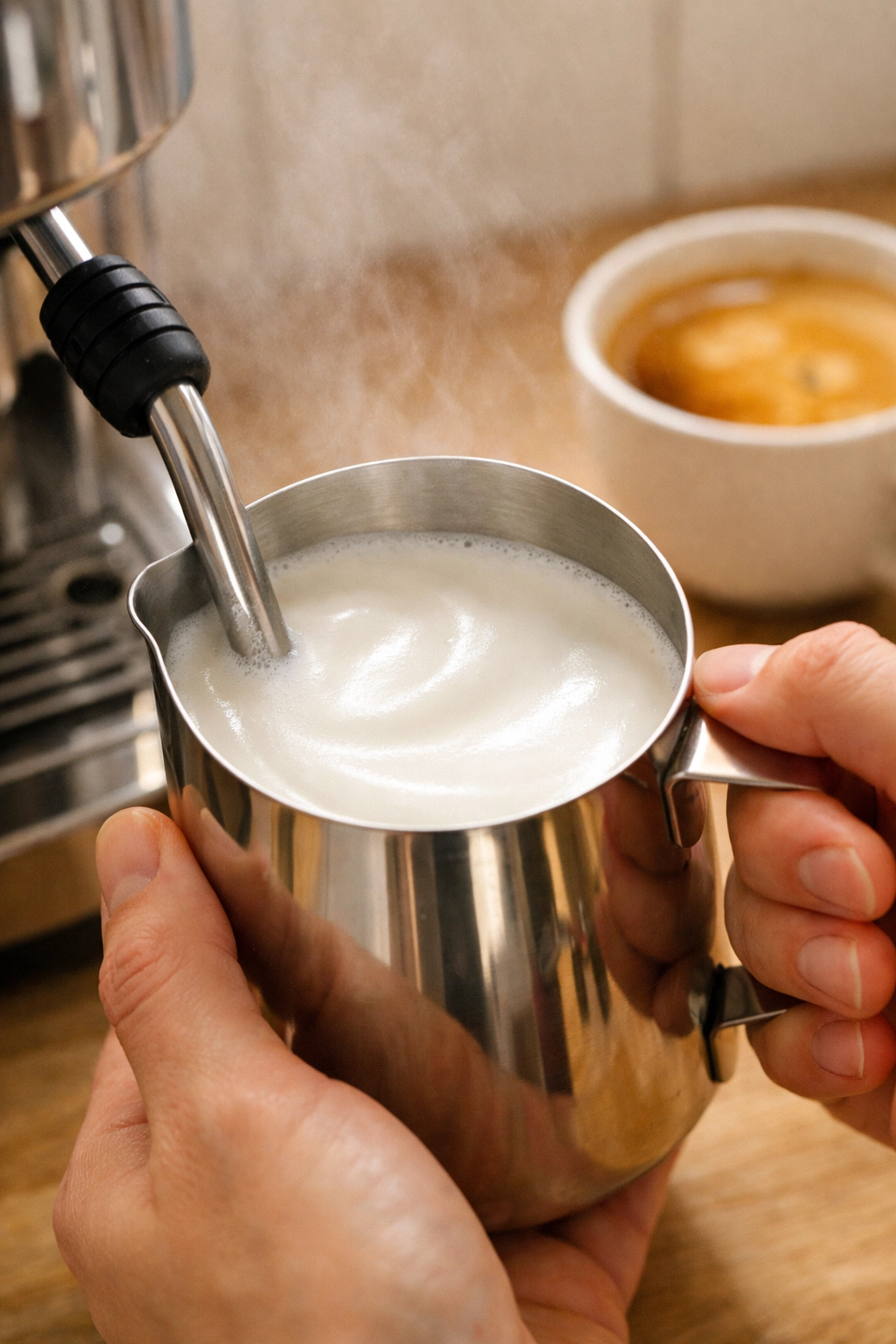
    Steaming milk into silky microfoam for latte art, perfect texture for home espresso drinks


    Common home espresso problems (and the quick fixes)

    “My shots are inconsistent day to day”

    Totally normal… at first. Here’s why it happens:

    • Beans age (degassing changes flow)
    • Humidity changes grind behaviour
    • Grinder retention adds randomness
    • Prep varies (distribution is often the culprit)

    Fix: change one variable at a time, and weigh everything (dose and yield). Keep the rest constant.

    “My machine feels weak / pressure seems off”

    The problem is sometimes not you: it can be the machine needing a service, a gasket replacement, or a scale build-up clean.

    If your machine is acting up, we do repairs too: https://www.liminicoffee.co.uk/espresso_machine_repair
    And while it’s getting sorted, you can still plan your next coffee order here: https://www.liminicoffee.co.uk/?af=1471531379787

    “My puck is soupy”

    A wet puck isn’t automatically bad, but it can indicate:

    • Too coarse a grind (fast flow)
    • Low dose for the basket size
    • Basket/headspace mismatch

    Focus on taste and shot metrics first. Puck aesthetics are… entertaining, but not always diagnostic.


    A simple “espresso at home” checklist we swear by

    Before you blame your grinder, your machine, or the universe:

    • Machine fully warmed up (20–30 mins)
    • Portafilter + basket dry and hot
    • Fresh beans (ideally 7–30 days post-roast)
    • Dose weighed (e.g., 18.0 g / 0.63 oz)
    • Yield weighed (e.g., 36.0 g / 1.27 oz)
    • Timer running (aim 25–30s)
    • Distribution tidy, tamp level
    • Adjust grind first, then dose, then temperature (if you have PID)

    And when you want to stock up on coffee that makes dialling in feel rewarding, not frustrating, we’ve got you: https://www.liminicoffee.co.uk/?af=1471531379787


    Want to go further? Lever vs automatic machines… and why it matters

    Question: do you want espresso to feel like a craft ritual or a push-button repeatable process?

    • Automatic/pump machines give you consistency and convenience
    • Lever machines give you tactile control (and a very satisfying workflow), but they demand more technique

    We’ve put together thoughts on lever vs automatic here: https://www.liminicoffee.co.uk/lever_automatic
    And if you’re shopping for coffee to match your style: chocolatey, fruity, classic, experimental: start browsing here: https://www.liminicoffee.co.uk/?af=1471531379787

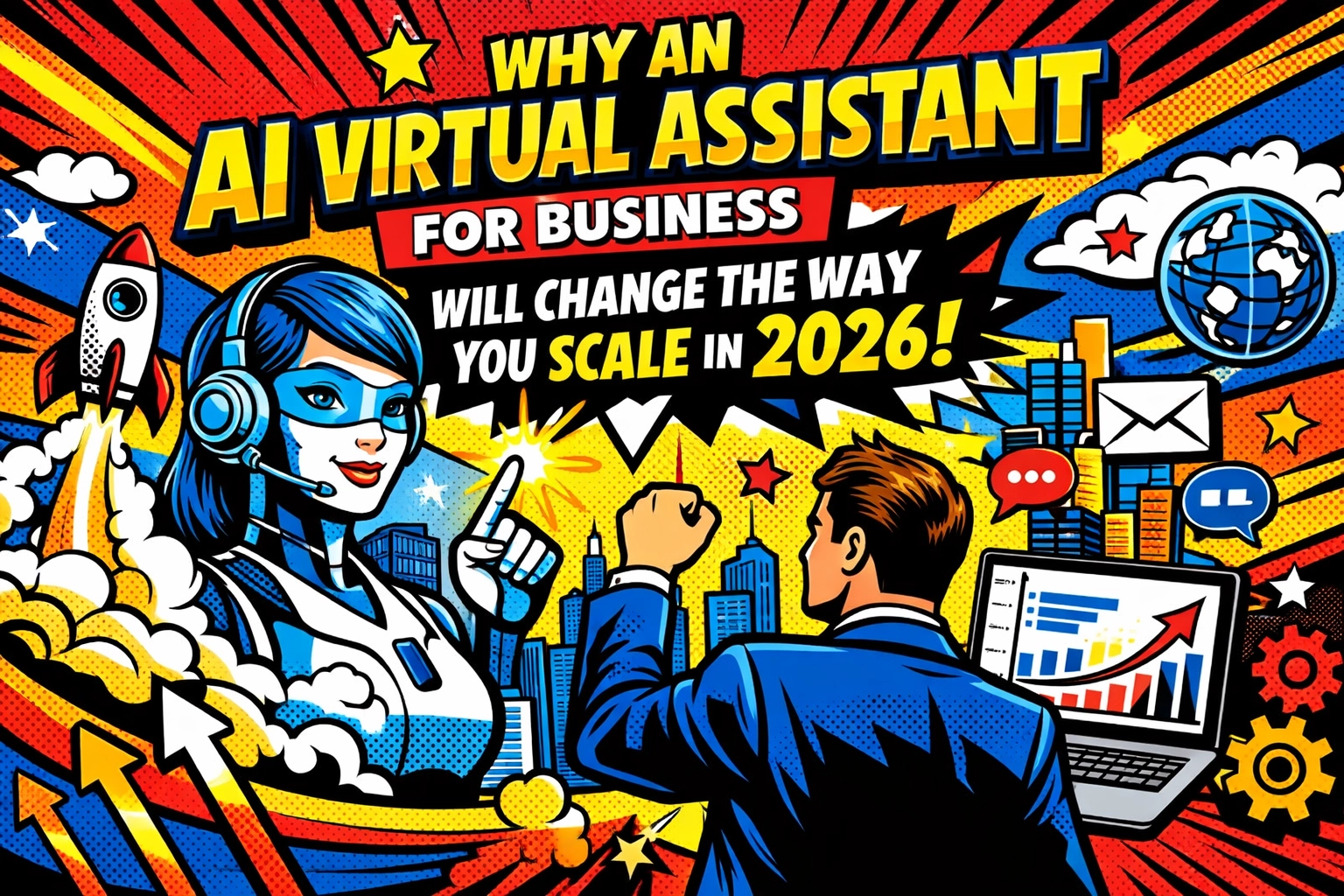
  • Why an AI Virtual Assistant for Business Will Change the Way You Scale in 2026

    Why an AI Virtual Assistant for Business Will Change the Way You Scale in 2026

    You start your day with 100+ unread emails… and somehow 60 of them are “quick questions.”
    Your DMs have turned into a second inbox.
    Your customers are polite… until they aren’t.

    And you keep telling yourself the same thing:

    “I just need one calm week to catch up.”

    But that week never shows up.
    Because growth doesn’t arrive politely. It arrives like a toddler with a drum set.

    What changes in 2026 is this: an AI virtual assistant for business isn’t just “nice automation.” It’s the thing that lets you scale without turning into the full-time manager of your own chaos.

    So let’s walk through your day… the 2026 version.


    STOP JUGGLING. START MULTIPLYING.

    Scaling used to mean hiring.
    More customers → more staff → more overhead → more “Why is payroll shaped like a mountain?”

    But an AI virtual assistant flips the math.

    Instead of adding fixed costs, you add capacity.
    Not in a theoretical way. In a “your phone stops buzzing” way.

    Think of it like this:

    • You spend a little time setting the rules (what to answer, how to route, when to escalate).
    • Your assistant handles the repeatable stuff… forever.
    • Your time comes back in chunks big enough to actually use.

    That’s not cost-cutting. That’s leadership leverage.

    And that’s why this year feels different.

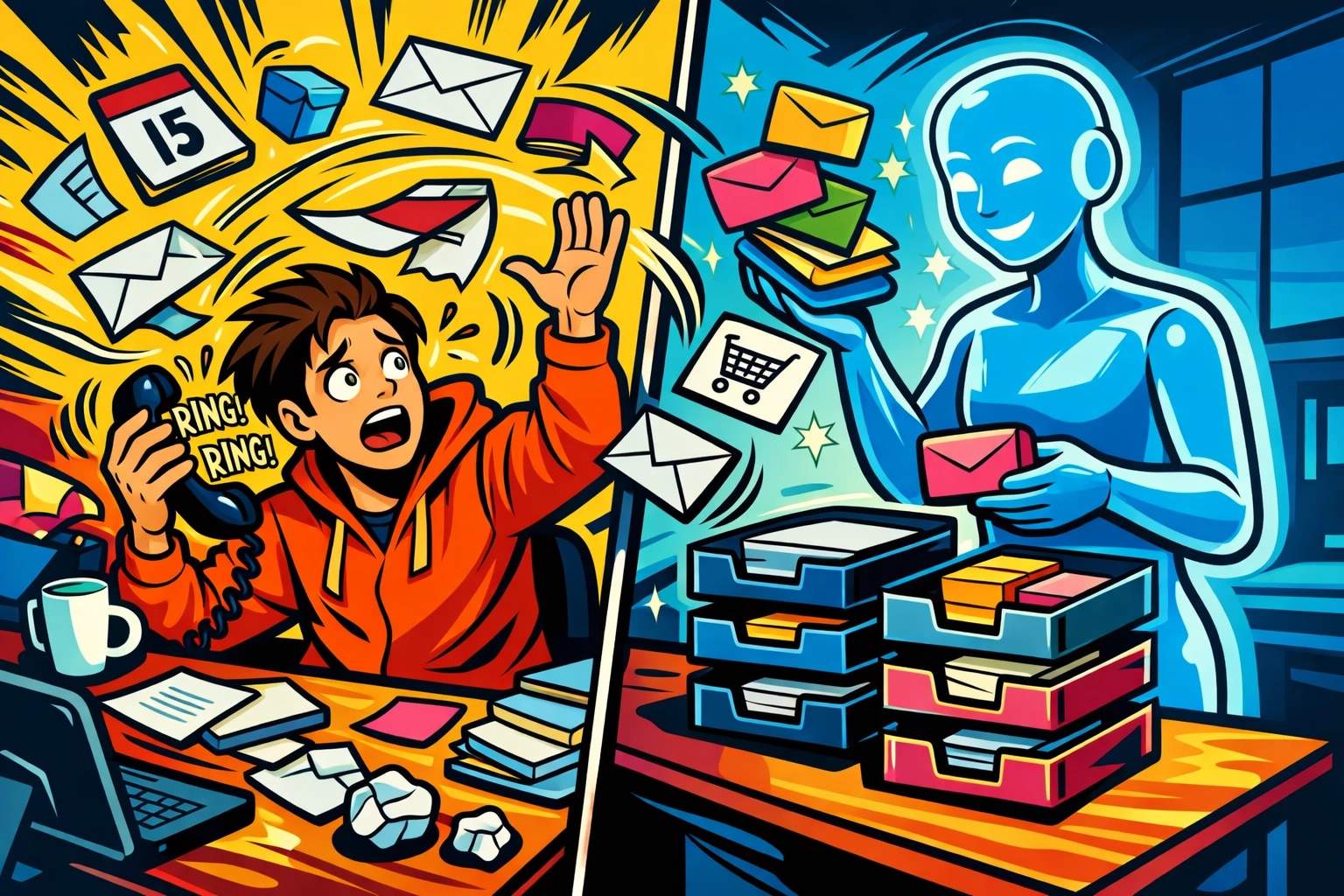
    An AI virtual assistant for business helps a small business owner organize chaotic emails and automate support to scale.


    ☕ 7:00 AM , YOUR INBOX IS QUIET. ON PURPOSE.

    You open your laptop, bracing for impact.
    But it’s… calm.

    Not empty. Just organized.

    Your AI assistant has already:

    • answered the common questions (“What are your hours?” “Can I reschedule?” “Do you ship to…?”)
    • tagged urgent messages
    • routed weird edge cases to a real human (you, or your team)
    • summarized long email threads into 3 lines you can actually read

    You’re not “caught up.”
    You’re in control.

    And here’s the sneaky part: this is where scaling starts, because you’re no longer starting the day behind.


    📱 9:30 AM , YOU AUTOMATE CUSTOMER SUPPORT WITH AI (WITHOUT SOUNDING LIKE A ROBOT)

    You’ve probably seen bad automation.

    The kind that says:
    “THANK YOU FOR YOUR MESSAGE. PLEASE ENJOY THESE IRRELEVANT OPTIONS.”

    That’s not what you want.

    In 2026, the bar is higher. Your customers expect speed and clarity. And you can deliver both when you automate customer support with AI the right way.

    Your AI assistant can:

    • answer FAQs in your tone (casual, sharp, friendly, whatever your vibe is)
    • handle order status, appointment changes, and basic troubleshooting
    • recognize frustration and escalate fast (“I’m getting a human for you now.”)
    • keep responses consistent (no more “depends who’s on shift” energy)

    Consistency matters more than you think.

    Because customer trust doesn’t come from one perfect reply.
    It comes from a hundred solid ones.


    🤝 11:00 AM , LEADS GET QUALIFIED BEFORE YOU EVEN LOOK

    A lead comes in while you’re busy.
    Normally, that’s a slow drip:

    Day 1: You reply.
    Day 2: They reply.
    Day 3: You ask a question.
    Day 4: They vanish into the mist.

    Now your assistant jumps in immediately.

    It asks the right questions up front:

    • budget range
    • timeline
    • what they actually need (not what they think they need)
    • any deal-breakers

    So when you finally step in, you’re not starting from zero.
    You’re stepping into a warm conversation with context.

    This is where growth gets unfair, in a good way.

    Businesses using AI to qualify faster have seen qualification time drop dramatically (think days to… under two). That means fewer stale leads, fewer wasted calls, and a pipeline that doesn’t feel like a leaky bucket.

    You’re not “doing more sales.”
    You’re doing less guessing.


    🔍 1:00 PM , ADMIN WORK DISAPPEARS (THE BORING STUFF, ANYWAY)

    After lunch, you should be working on the big things.
    Pricing. Offers. Partnerships. Content. Product.

    But instead, you’re stuck doing tiny tasks that nibble your day to death:

    • copying details into a spreadsheet
    • confirming appointments
    • sending the same follow-up message again
    • updating CRM notes you’ll forget to read later

    Your AI assistant handles these workflows quietly:

    • pulls info from forms and emails
    • updates your tools automatically
    • sends reminders and follow-ups
    • logs notes in the right place

    And the real win?

    You stop context-switching.

    No more bouncing between five tabs just to “quickly” do something.
    You keep your brain on one track long enough to actually build something.


    ☎️ 3:00 PM , YOU DON’T LOSE REVENUE AFTER HOURS ANYMORE

    This part stings because you already know it’s true.

    People message you when you’re:

    • in a meeting
    • picking up your kids
    • cooking dinner
    • trying, unsuccessfully, to relax

    And they don’t wait.

    A lot of small businesses lose meaningful revenue simply because inquiries arrive outside business hours and nobody replies in time. Not because your service isn’t good. Because your response time is human.

    Your AI assistant isn’t human.
    It’s available.

    So you capture those late-night questions and weekend inquiries with:

    • instant responses
    • qualification questions
    • booking links
    • clear next steps

    And if something’s complex? It gathers details so you’re not playing 20 Questions later.

    This is the boring secret of scaling: speed wins more deals than fancy branding.


    🧠 4:30 PM , YOU FINALLY DO THE WORK ONLY YOU CAN DO

    Here’s the part nobody tells you about growth.

    It’s not the work that breaks you.
    It’s the constant interruption.

    When your AI assistant handles the repeatable stuff, your brain gets space back. Not “free time.” Space.

    So now you can:

    • improve your offer
    • fix the bottlenecks
    • train your team
    • think about next quarter without feeling guilty

    This is why an ai virtual assistant for business is a growth lever, not an expense.

    It doesn’t just save minutes.
    It gives you back decision-making capacity.

    And that’s the real constraint in a small business.
    Not talent. Not ideas. Not even money.

    Bandwidth.


    EMPLOYEE OF THE MONTH. EVERY MONTH.

    Humans are great.
    Humans are also inconsistent.

    They get tired. They have off days. They forget steps. They interpret “do it like last time” creatively.

    An AI assistant runs the workflow the same way every time.
    No drama. No forgetting. No “Oops, I didn’t see that message.”

    That consistency shows up as:

    • fewer errors
    • fewer angry customers
    • fewer “Wait… who replied to this?”
    • a smoother experience that feels bigger than your headcount

    And the best part?

    You don’t have to build a huge team to look and operate like one.


    WHAT THIS LOOKS LIKE IN REAL LIFE (PEOPLE TALK LIKE THIS)

    “I woke up and my inbox wasn’t scary. That’s… new.” : Sam

    “We stopped missing leads on weekends. Revenue didn’t magically explode, it just… stopped leaking.” : Priya

    “I thought automation would feel cold. Customers actually said the replies were ‘really helpful.’” : Jordan

    No overproduced case-study energy.
    Just the quiet relief of things working.


    THE 2026 PLAYBOOK: YOUR “HYBRID TEAM” (YOU + AI + HUMANS WHEN IT MATTERS)

    You don’t need to replace people.
    You need to stop wasting people.

    A smart setup looks like:

    • AI handles first response + common questions
    • AI qualifies leads + collects details
    • AI routes complex issues to you (or a teammate)
    • Humans handle nuance, relationships, and exceptions

    That’s how you scale without hiring a small army.

    And it compounds over time.
    Because once your workflows are set, you can plug new ones in fast.

    Today it’s support.
    Next month it’s admin.
    Then it’s lead follow-up.
    Then it’s internal ops.

    You’ll wonder why you waited.


    HOW TO GET STARTED (WITHOUT TURNING THIS INTO A 12-WEEK “IMPLEMENTATION PROJECT”)

    Keep it simple. You want fast wins first.

    Start with one of these:

    1. Customer support inbox triage
      Auto-answer common questions. Escalate the rest.

    2. Lead capture + qualification
      Ask the right questions immediately. Book calls only when it’s a fit.

    3. Scheduling + reminders
      Stop the back-and-forth. Reduce no-shows.

    4. Admin updates
      Auto-log notes, update spreadsheets/CRM, and create summaries.

    Pick one pain point that happens daily.
    Automate that.
    Then stack the next.

    If you want to see what this looks like in a clean, practical setup, click through here: https://marblism.link/scott-bowen


    FAQ (THE STUFF YOU’RE PROBABLY THINKING)

    Will this make my business feel “too automated”?

    No: if you set it up with the right tone and clear handoff points. Your assistant should sound like you, not a vending machine.

    Can you still jump in when things get complicated?

    Yes. The best setups escalate fast. The goal isn’t to block customers from you: it’s to stop you from answering the same question 40 times.

    Is this only for big companies with big tools?

    No. It’s actually better for small businesses because you feel every interruption. Getting 10 hours back a week changes everything.

    What’s the biggest mistake people make?

    Trying to automate everything at once. Start with one workflow you repeat daily, prove the win, then expand.


    🌙 6:30 PM : YOU CLOSE YOUR LAPTOP LIKE A NORMAL PERSON

    The day ends… and you’re not still replying to messages from your couch.

    Your assistant keeps working:

    • answering new inquiries
    • collecting details
    • booking appointments
    • keeping your business responsive while you’re offline

    You don’t feel like you’re “behind” when you stop working.

    You just stop.

    And if you’re curious what this could look like in your business: without the tech headache: take a look here: https://marblism.link/scott-bowen

    Scaling shouldn’t feel like drowning.
    But if you’ve been doing it the old way… it kind of does.

    In 2026, you get a different option.

    Quietly.
    Efficiently.
    On YOUR terms.

  • The Solopreneur’s Survival Guide: Scaling to 6 Figures Without a Single Hire

    The Solopreneur’s Survival Guide: Scaling to 6 Figures Without a Single Hire

    You start your day with 47 unread emails, three client requests, and a to-do list that looks more like a novel.

    By noon, you've answered support tickets, updated your social media, invoiced clients, followed up on leads, and somehow squeezed in actual billable work. You're wearing every hat in your business, CEO, marketer, customer service rep, accountant, content creator…

    And you're exhausted.

    This is the solopreneur paradox. You built this business for freedom, but you've created a job that demands more hours than any 9-to-5 ever did. You know you need to scale. But hiring? That's a whole other level of complexity, and expense, you're not ready for.

    What if there was another way?

    THE HIRING TRAP (AND WHY YOU'RE SMART TO AVOID IT)

    Let's talk numbers for a second.

    A full-time employee costs you $40,000–$70,000 per year. Minimum. That's salary, payroll taxes, benefits, training time, management overhead… and the risk that they might not work out.

    For a solopreneur running lean, that's terrifying.

    But here's what's even scarier: staying stuck at your current revenue ceiling because you're the bottleneck. You can't take on more clients. You can't launch that new service. You can't even take a vacation without everything grinding to a halt.

    Overwhelmed solopreneur juggling multiple business tasks without workflow automation

    The traditional advice says "hire virtual assistants" or "outsource to contractors." Sure. But now you're managing people, writing job descriptions, onboarding, explaining processes for the tenth time…

    You didn't escape the corporate world to become a manager. You wanted to build something. Create something. Actually do the work you love.

    So what's the move?

    THE SILENT REVOLUTION: AI AS YOUR INVISIBLE TEAM

    Here's what most solopreneurs don't realize yet: the best team members never complain, never call in sick, and work for pennies on the dollar.

    They're not human.

    An ai virtual assistant for business isn't some sci-fi fantasy anymore. It's the secret weapon behind every solopreneur quietly scaling to six figures without hiring a single person.

    Think about it. What tasks are eating your time right now?

    Email management. Sorting, categorizing, drafting responses to common questions. An AI assistant handles it while you sleep.

    Lead qualification. That painful process of figuring out which inquiries are worth your time? Automated. The AI scores leads, sends follow-ups, and only surfaces the hot ones.

    Content creation. Social posts, blog drafts, email newsletters. You guide the strategy, AI handles the execution.

    Customer support. FAQs, order status updates, scheduling, all handled instantly, 24/7.

    Data entry and organization. CRM updates, invoice tracking, project management. Done automatically, without you lifting a finger.

    This isn't about replacing the human touch. It's about protecting it. You show up for the high-value moments, the strategy calls, the creative work, the relationship building, while workflow automation for small business handles everything else.

    A DAY IN THE LIFE: 6-FIGURE SOLOPRENEUR EDITION

    Let me paint you a picture.

    ☕ 7:00 AM , You wake up to a clean inbox. Your AI assistant already sorted overnight emails, flagged three urgent items, and drafted responses to the routine stuff. The chaos is gone before you even take your first sip of coffee.

    📱 9:30 AM , A potential client fills out your contact form. Within 60 seconds, they receive a personalized response, a link to book a discovery call, and relevant case studies. You didn't touch your keyboard. The AI handled qualification, booking, and follow-up.

    🤝 11:00 AM , You're on a Zoom call with your best client, discussing their next project. Meanwhile, your automated system is processing invoices, sending payment reminders, and updating your project management board. You're fully present in the conversation because you're not mentally juggling ten other tasks.

    Before and after workflow automation for small business owner

    📊 2:00 PM , You check your dashboard. Yesterday's social media posts (written and scheduled by AI) generated 47 new leads. Your email sequence (also automated) converted three of last week's prospects into paying clients. Your revenue tracker shows you're on pace for $140,000 this year.

    All without a single employee.

    🌙 6:00 PM , You close your laptop. Actually close it. Because your business doesn't stop when you do. Customer support is handled. Follow-ups are scheduled. Tomorrow's content is queued. Everything runs while you wind down.

    This isn't fantasy. It's the reality for solopreneurs who've embraced automation.

    THE NUMBERS THAT MATTER

    Let's break down what this actually means for your bottom line.

    Traditional scaling path:

    • Hire VA at $3,000/month = $36,000/year
    • Hire part-time support at $2,500/month = $30,000/year
    • Total: $66,000+ in labor costs
    • Plus: management time, training, turnover risk

    AI-powered scaling path:

    • Workflow automation platform = $1,200–$3,600/year
    • Time saved = 20–30 hours/week
    • New client capacity = 3–5x current load
    • Total labor costs: Zero

    That's not a typo. You're reinvesting $60,000+ back into your business, or your life.

    But here's the real kicker: speed. An AI assistant starts working today. No job posting, no interviews, no two-week notice period. You configure it once, and it scales infinitely.

    Solopreneur scaling to six figures with business automation tools

    WHAT YOU'RE ACTUALLY AUTOMATING

    Let's get specific. Because "automation" sounds vague and intimidating. What does this actually look like in your business?

    Client onboarding. From the moment someone says "yes" to working with you, automation sends contracts, collects information, schedules kickoff calls, and adds them to your project management system. You just show up for the kickoff.

    Lead nurturing. That person who downloaded your free guide three months ago? They've been receiving valuable emails, case studies, and offers: automatically building trust until they're ready to buy.

    Appointment scheduling. No more email tennis. Your calendar syncs with an AI scheduler that only offers available slots, sends reminders, and even reschedules no-shows.

    Financial tracking. Expenses logged, invoices sent, payment reminders dispatched, revenue dashboards updated. Your books practically maintain themselves.

    Content distribution. Write once, publish everywhere. Your blog post becomes social snippets, email content, and newsletter features: distributed across platforms without you manually posting.

    This is workflow automation for small business that actually works. Not complicated software that requires a computer science degree. Just smart systems that remove friction from your day.

    THE SCALE-UP STRATEGY

    Here's how solopreneurs are actually hitting six figures without hiring:

    Phase 1: Automate the repetitive. Start with the tasks you do every single day. Email responses. Scheduling. Social media. Get those off your plate first.

    Phase 2: Systematize client delivery. Create templates, workflows, and processes that your AI can execute. Your unique value stays human. Everything else becomes automatic.

    Phase 3: Build your lead machine. With 20+ hours freed up weekly, you can finally focus on growth. Your ai virtual assistant for business handles the follow-through while you focus on strategy.

    Phase 4: Increase capacity. You're no longer the bottleneck. You can serve 3x the clients with the same 40-hour work week. Or keep the same client load and reclaim your evenings and weekends.

    The result? Revenue scales. Your time doesn't.

    YOUR NEXT MOVE

    You've got two paths forward.

    Path one: Keep doing what you're doing. Wear all the hats. Work longer hours. Hope that somehow you'll break through to the next revenue level without burning out.

    Path two: Let technology handle the tasks that don't require your specific genius. Focus on the work only you can do. Scale without the overhead, stress, or complexity of managing a team.

    The solopreneurs already at six figures aren't working harder than you. They're working smarter. They've built invisible teams that never sleep, never quit, and never ask for raises.

    Want to see what this actually looks like in action? Check out how Marblism builds automated systems for businesses like yours. No corporate speak, no complicated setup: just automation that works.

    Because here's the truth they don't tell you in business school: the most successful solopreneur of 2026 isn't the one who hires first.

    It's the one who never has to.

  • Coffee Storage 101: How to Keep Your Beans Fresh for Longer

    Coffee Storage 101: How to Keep Your Beans Fresh for Longer

    You've just brewed what should have been a brilliant cup of coffee. You used the right water temperature, your technique was spot-on, and you're brewing with beans from a quality roaster. But something's off. The flavour is flat, muted, lacking that vibrant complexity you know should be there.

    The culprit? Storage.

    Even the best coffee in the world won't taste great if you're not storing it properly. And here's the thing – most people are unknowingly sabotaging their beans every single day. So let's fix that.

    The Four Enemies of Fresh Coffee

    Coffee beans are surprisingly delicate. Once they're roasted, they're actively losing freshness, and four main factors accelerate this process: air, light, heat, and moisture.

    Air is probably the biggest offender. When coffee is exposed to oxygen, it begins to oxidise. This means those beautiful aromatic compounds and oils that give your coffee its flavour start breaking down. The result? Stale, cardboard-like flavours that no amount of brewing skill can fix.

    Light – particularly sunlight – causes coffee to deteriorate through a process called photodegradation. Those UV rays are breaking down the molecular structure of your beans, and clear glass jars on sunny countertops are basically speeding up the ageing process exponentially.

    Heat accelerates all chemical reactions, including the ones that make coffee go off. Storing your beans near the stove, on top of the fridge, or anywhere warm is essentially fast-forwarding their expiry date.

    Moisture is perhaps the sneakiest enemy. Coffee beans are porous and hygroscopic, meaning they absorb moisture and odours from their environment. Store them near your garlic or in a humid area, and you'll end up with coffee that tastes… well, not like coffee should.

    Coffee beans in various storage containers showing effects of light exposure and protection

    Container Choices: What Actually Works

    So you've got your beautiful fresh beans – maybe a bag from Limini Coffee's selection that arrived this week. What now?

    The original bag your coffee comes in is fine for the first few days, especially if it has a one-way valve (that little circular disc you see on most specialty coffee bags). This valve lets CO2 escape – which freshly roasted beans release quite a bit of – without letting oxygen in. But here's the catch: most coffee bags aren't completely airtight once opened. Every time you roll down the top and clip it, some air is getting in.

    For serious freshness protection, we recommend transferring your beans to a proper storage container. And not just any container.

    Ceramic or opaque glass containers are your best friends here. Ceramic doesn't hold onto odours and completely blocks light. Opaque glass does the same while letting you see when you're running low (though honestly, if you're a proper coffee lover, you always know).

    Avoid clear glass. Yes, it looks nice on your counter. Yes, you can see the beans. But you're basically giving light a free pass to degrade your coffee. Not worth it.

    As for plastic and metal containers? We're less enthusiastic. Plastic can impart weird odours over time, and some metals can do the same. If you're going to invest in quality beans, invest in a quality container.

    The Container Tech Worth Knowing About

    If you want to get really serious about storage, there are two types of containers that outperform everything else:

    CO2 valve canisters are brilliant for everyday use. These containers have built-in one-way valves that let freshly roasted beans off-gas while keeping oxygen out. They're particularly useful in the first week after roasting when beans are releasing the most CO2. We use these here at Limini for our own daily coffees.

    Vacuum-seal containers take things up another level by removing air entirely. These are ideal if you buy in bulk and want to store beans for longer periods. The key here is not opening them frequently – every time you break the seal, you're reintroducing air. So if you've got a large batch, consider dividing it up: keep one portion in your daily container and the rest vacuum-sealed.

    Ceramic, glass, and stainless steel airtight coffee storage containers on kitchen counter

    Where to Store Your Coffee

    Location matters as much as container choice. Your beans need a cool, dark, stable environment.

    The best spot? A cupboard or pantry away from any heat sources. Think away from the stove, oven, kettle, or that sunny windowsill. Room temperature is fine – we're talking 15–24°C (60–70°F). You don't need anything fancy.

    What you want to avoid is temperature fluctuation. Moving your beans from a warm kitchen to a cold cupboard and back creates condensation inside the container. That moisture is terrible for your beans, causing them to deteriorate faster and potentially even going mouldy.

    And here's where people often go wrong: don't store coffee in the fridge. Yes, it's cool. Yes, it seems logical. But fridges are humid and full of odours. Your coffee will absorb moisture and end up tasting like last night's leftovers. Not the morning experience you're after.

    The freezer is slightly different. If you're storing beans long-term – we're talking weeks or months – freezing in a completely airtight, vacuum-sealed container can work. But here's the critical bit: you can only thaw them once. Once you take them out, that's it. No refreezing. The freeze-thaw cycle creates moisture and ruins the beans. Basically, freezing is only practical if you're batch-storing and can commit to using a whole portion once defrosted.

    Practical Storage Strategies That Work

    Let's talk real-world application. You've ordered a kilo bag of beans because, well, coffee. Here's what we recommend:

    Divide and conquer. Split that kilo into portions. Keep about a week's worth in your daily-use airtight container on the counter (or in the cupboard). Store the rest sealed away – either in the original valve bag rolled tight and clipped, or better yet, in vacuum-sealed bags or containers.

    This approach means you're only exposing a small amount of coffee to air repeatedly, while the bulk of your stash stays sealed and fresh.

    Grind as you go. Pre-ground coffee loses freshness exponentially faster than whole beans. We're talking days instead of weeks. The increased surface area means more exposure to air, and those aromatic compounds vanish quickly. So grind right before brewing, every single time. Yes, it's an extra minute in the morning. Yes, it's absolutely worth it.

    Use a scoop. This might sound pedantic, but when you reach into your container, you're introducing warm air and moisture from your hand. Using a dedicated scoop minimises this. Small detail, noticeable difference over time.

    Seal immediately. Don't leave your container sitting open while you weigh beans or faff about with your grinder. Get what you need and seal it back up straight away. Every second of exposure counts.

    Airtight coffee container stored in cool, dark kitchen cupboard away from heat sources

    The First Step: Start with Fresh Beans

    Here's something we need to be honest about – all the perfect storage in the world can't resurrect beans that were already stale when you bought them. Coffee has a peak window of flavour, and that window starts the moment it's roasted.

    This is why starting with freshly roasted beans is non-negotiable. When you order from a specialty roaster like Limini Coffee, you're getting beans roasted to order, often within days of delivery. That means you're starting with maximum freshness and maximum flavour potential.

    Then it's up to you to maintain that freshness with proper storage. Think of it like buying fresh vegetables – you wouldn't expect a salad to stay perfect for months in the fridge, right? Coffee is similar. It's a fresh product that deserves to be treated as such.

    Most specialty coffee is at its best between 7–30 days after roasting (espresso sometimes benefits from a few days of rest after roasting to let CO2 levels stabilise). After a month, you'll notice the flavour beginning to fade. After two months, you're drinking significantly degraded coffee. And those supermarket beans with no roast date? They could be six months old before they even reach your cupboard.

    How Long Does Coffee Really Stay Fresh?

    With proper storage – airtight container, cool dark place, whole beans – you're looking at peak freshness for about 2–4 weeks after opening. You can stretch it to 6–8 weeks and still get decent coffee, but you'll notice the difference.

    This is why we recommend buying in quantities that match your consumption rate. If you drink a cup a day, a 250g bag will last about two weeks. Perfect. A kilo bag? Consider splitting it up or sharing with a friend.

    The beauty of specialty coffee is that it's meant to be enjoyed fresh. It's not meant to sit in your cupboard for months. Once you experience what truly fresh, properly stored coffee tastes like, there's no going back.

    The Bottom Line

    Storing coffee properly isn't complicated, but it does require a bit of attention. Protect your beans from air, light, heat, and moisture. Use an airtight, opaque container. Keep them in a cool, dark cupboard. Grind just before brewing. And most importantly, start with freshly roasted beans.

    Do these things, and every cup you brew will be showing off the coffee's true potential – those origin characteristics, that careful roasting, all the work that went into creating something special.

    Your morning coffee deserves better than stale beans in a clear jar on the windowsill. Sort your storage, and you'll taste the difference immediately.