Blog

  • Commercial Coffee vs. Wholesale Specialty Coffee: Which is Better for Your Business?

    Commercial Coffee vs. Wholesale Specialty Coffee: Which is Better for Your Business?

    So, you’re standing at the crossroads of your coffee business journey. On one side, you have the massive, shiny world of commercial coffee, big bags, low prices, and the kind of ubiquity that means you can find it in every supermarket and petrol station in the country. On the other side, there is the world of wholesale specialty coffee. It’s a bit more niche, a lot more focused on quality, and carries a story in every bean.

    As a business owner, your first instinct is likely to look at the bottom line. We get it. Running a café or a restaurant is expensive, and if you can save a few quid on your coffee beans, why wouldn’t you? But here’s the thing: coffee isn't just a line item on your spreadsheet. It is the heart of your brand.

    In this post, we’re going to break down the real differences between commercial and specialty coffee, and why choosing the right coffee suppliers might be the most important decision you make for your brand's longevity.


    What Are We Actually Talking About?

    First, let’s clear up the jargon. People throw the word "specialty" around a lot these days, but it actually has a very specific meaning.

    Coffee is graded on a 100-point scale by certified tasters (Q-graders). To earn the title of "Specialty," a coffee must score 80 points or higher. Commercial coffee (or commodity coffee) usually sits somewhere in the 60s or 70s. It’s mass-produced, focused on volume, and often contains defects like broken beans or insect damage that are masked by a very dark roast.

    Imagine it like wine. Commercial coffee is your basic table wine in a box, fine if you just want a drink, but not something you’d write home about. Specialty coffee is that incredible bottle from a small vineyard where the producer knows exactly which slope the grapes grew on.

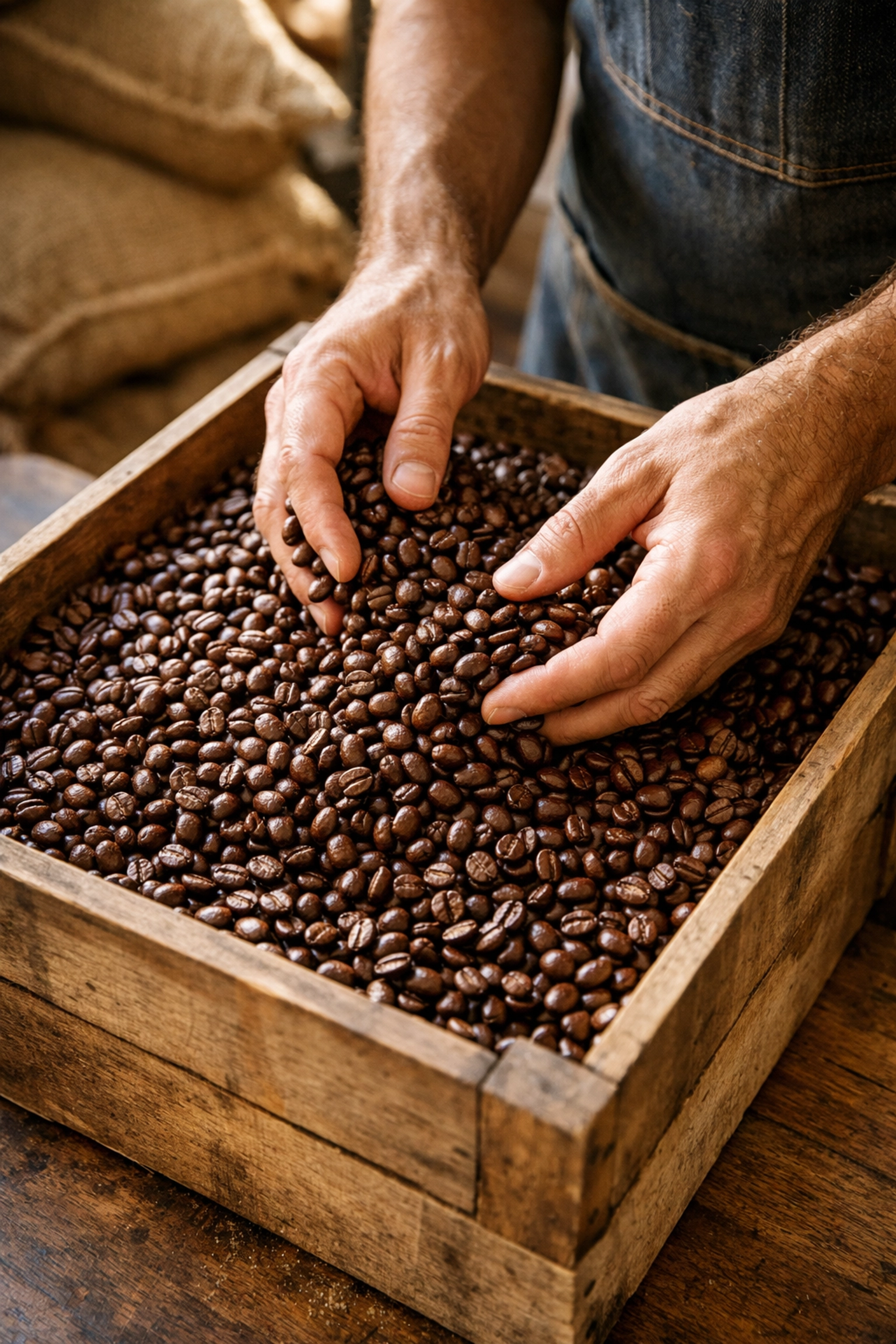
    A visual comparison of dark oily commercial beans versus high-quality wholesale specialty coffee beans.

    The Flavor Factor: Bitter vs. Brilliant

    Why does that score matter to you? Because it translates directly to what your customers taste in the cup.

    Commercial coffee tends to be one-dimensional. Because the beans are lower quality, roasters often burn them (okay, "dark roast" them) to ensure every batch tastes exactly the same: bitter, smoky, and charred. This is why many people think they "need" sugar and loads of milk to make coffee drinkable. They are trying to hide the bitterness.

    Specialty coffee, however, is a different beast entirely. When you work with wholesale specialty coffee, you’re getting beans that have been roasted to highlight their natural characteristics. You might taste notes of chocolate, roasted nuts, bright citrus, or even floral jasmine.

    If you want to understand the science behind why some coffee tastes "cleaner" than others, it often comes down to the roast and the freshness. We’ve even put together a guide on understanding crema and how it affects the sensory experience of your espresso.


    Building a Brand People Actually Care About

    In 2026, the market is crowded. There is probably another coffee shop just a few doors down from yours. If you are both serving the same commercial-grade coffee that tastes like "burnt," why should a customer choose you?

    Specialty coffee gives you a point of difference. It allows you to tell a story. You can tell your customers about the farm in Brazil or the washing station in Ethiopia. This level of sourcing transparency builds trust. It shows you care about quality, ethics, and the craft.

    When you use high-quality beans, your shop becomes a destination. People will walk past three other cafes to get to the one that serves "the good stuff." That is how you build a loyal following that isn't just based on who is the cheapest.

    Barista serving a cappuccino in a warm, inviting specialty coffee shop with natural lighting.

    The Economics: Is Specialty Actually More Expensive?

    Let’s talk about the elephant in the room: the price per kilo. Yes, specialty coffee costs more upfront. You might pay £16-£20 per kilo for specialty beans versus £8-£10 for commercial commodity beans.

    At first glance, that looks like a deal-breaker. But let’s do some "back of the napkin" math.

    A standard double espresso uses about 18g of coffee.

    • With commercial coffee at £9/kg, your coffee cost per cup is about 16p.
    • With specialty coffee at £18/kg, your coffee cost per cup is about 32p.

    That’s a difference of 16p per cup.

    Now, consider your selling price. In a specialty environment, customers are often happy to pay 50p or even £1 more per cup because the experience is significantly better. You aren't just selling caffeine; you're selling a premium product. Suddenly, that 16p investment is returning a much higher margin.

    Plus, specialty beans are usually fresher. Fresher beans mean better extraction, more consistent crema, and less waste from "bad shots" that your baristas have to pour down the sink.


    Consistency and Support: More Than Just Beans

    When you sign up with a massive commercial supplier, you’re often just a number in a database. If your machine breaks or your coffee starts tasting like battery acid, getting help can be a nightmare.

    Coffee suppliers in the specialty world: like us here at Limini Coffee: operate differently. We view our wholesale clients as partners. We know that if your coffee tastes bad, it reflects on us too.

    That’s why we place such a huge emphasis on barista training. You could have the best beans in the world, but if your team doesn't know how to dial in the grinder or tamp correctly, the result will be mediocre.

    Specialty suppliers provide the ecosystem you need to succeed, including:

    Professional barista steaming milk on an espresso machine to create silky micro-foam for specialty coffee.

    Traceability and Ethics

    Today’s coffee drinkers are more conscious than ever. They want to know that the person who grew their coffee was paid a fair wage.

    Commercial coffee supply chains are often opaque. The beans are traded as a commodity, meaning they are mixed together in giant silos, and the farmers are often paid the lowest possible price.

    With wholesale specialty coffee, traceability is part of the DNA. We know the origins, the altitudes, and the processing methods. This doesn't just make for a better story; it ensures a sustainable future for the coffee industry. If farmers aren't paid enough to live, they’ll stop growing coffee. It’s as simple as that.


    Which One is Right for You?

    We’ll be honest: specialty coffee isn’t for everyone.

    If you’re running a high-volume canteen where coffee is just an afterthought to a bacon roll, or a place where the price point is the only thing that matters to your demographic, commercial coffee might be the practical choice.

    However, if you want to:

    1. Build a brand associated with excellence.
    2. Create a loyal base of "regulars" who value taste.
    3. Have a supportive partnership with your roaster.
    4. Charge a premium price for a premium product.

    …then specialty is the only way to go.

    Top-down view of a flat white with tulip latte art, showcasing premium wholesale specialty coffee quality.

    Making the Switch

    If you’re currently using commercial beans and thinking about making the jump, our advice is to start with the taste. Get some samples, brew them side-by-side, and see the difference for yourself.

    The transition can feel daunting, but you don't have to do it alone. From selecting the right espresso equipment to mastering the theatre of coffee service, we’re here to help you every step of the way.

    Ready to level up your business? Check out our wholesale specialty coffee options and let’s start brewing something brilliant together.


    Summary Checklist for Business Owners:

    • Commercial: Low cost per kilo, consistent "dark" flavor, little to no traceability, minimal supplier support.
    • Specialty: High quality (80+ points), complex flavor profiles, full traceability, extensive training and support.

    Ultimately, your coffee is your calling card. Make sure it's saying the right thing about your business. If you'd like to learn more about who we are and what we stand for, feel free to read more about us or have a look at our customer reviews.

  • How to Create a Seamless Guest Journey in 5 Minutes Using Smart Automation

    How to Create a Seamless Guest Journey in 5 Minutes Using Smart Automation

    Automate every touchpoint. Elevate guest satisfaction. Reclaim your time.

    Modern hospitality isn’t about being "busy." It’s about being present. But you can’t be present for your guests if you’re buried under a mountain of manual check-ins, paper registration forms, and repetitive emails. We believe that technology should act as an invisible concierge: working tirelessly in the background so your team can do what they do best: provide genuine human hospitality.

    You can transform your entire guest experience in less time than it takes to brew a pot of coffee. By focusing on high-impact, low-effort automations, you move from a reactive operations model to a proactive guest-centric one. All from one innovative hospitality platform.

    The end of the front desk queue

    Nobody travels across time zones to stand in a line. We think the traditional check-in desk is a relic of the past that serves the hotel, not the guest. In a world of instant gratification, your guests expect to bypass the lobby and head straight to their sanctuary.

    The first step to a five-minute automation overhaul is enabling digital check-in. By sending a secure link 24 hours before arrival, you allow guests to verify their ID, sign registration cards, and provide payment details from their own device.

    • Reduce lobby wait times by 80%.
    • Capture 100% accurate guest data.
    • Boost early check-in revenue automatically.

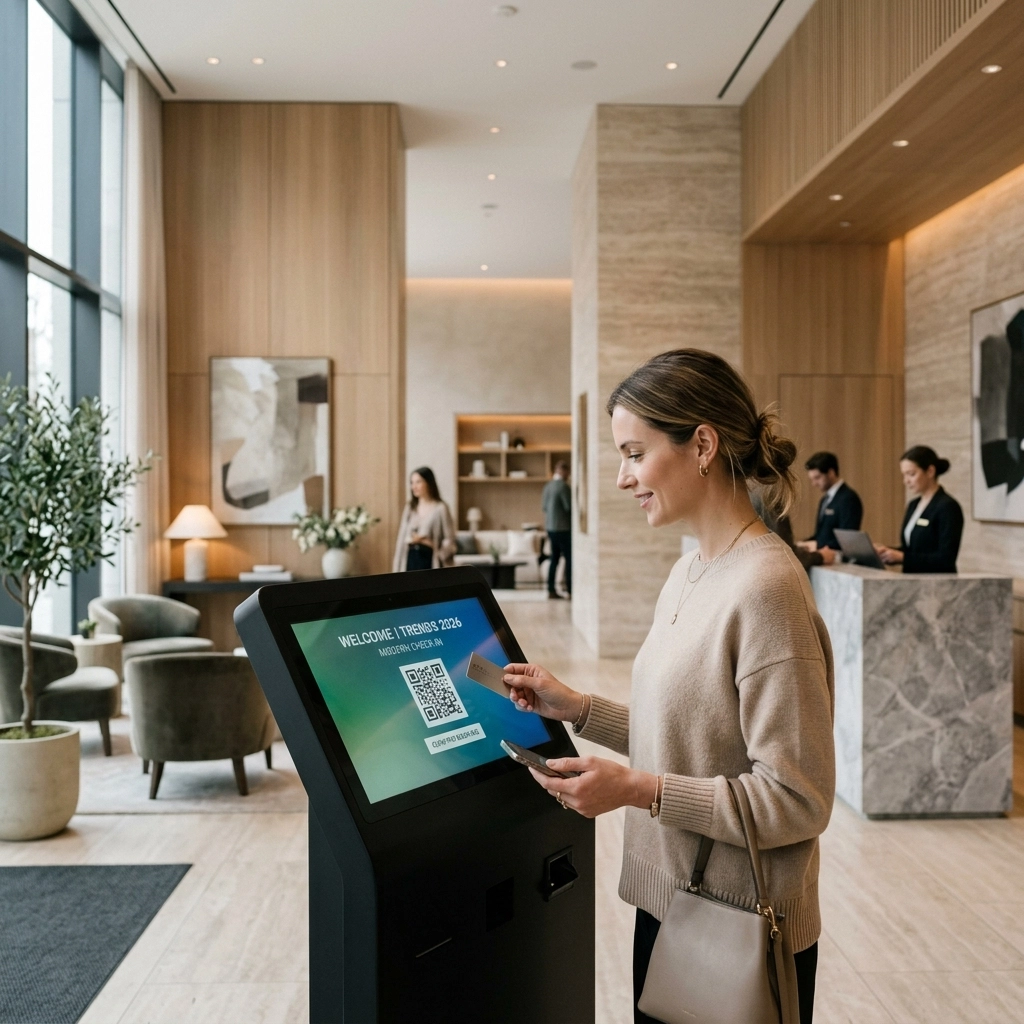
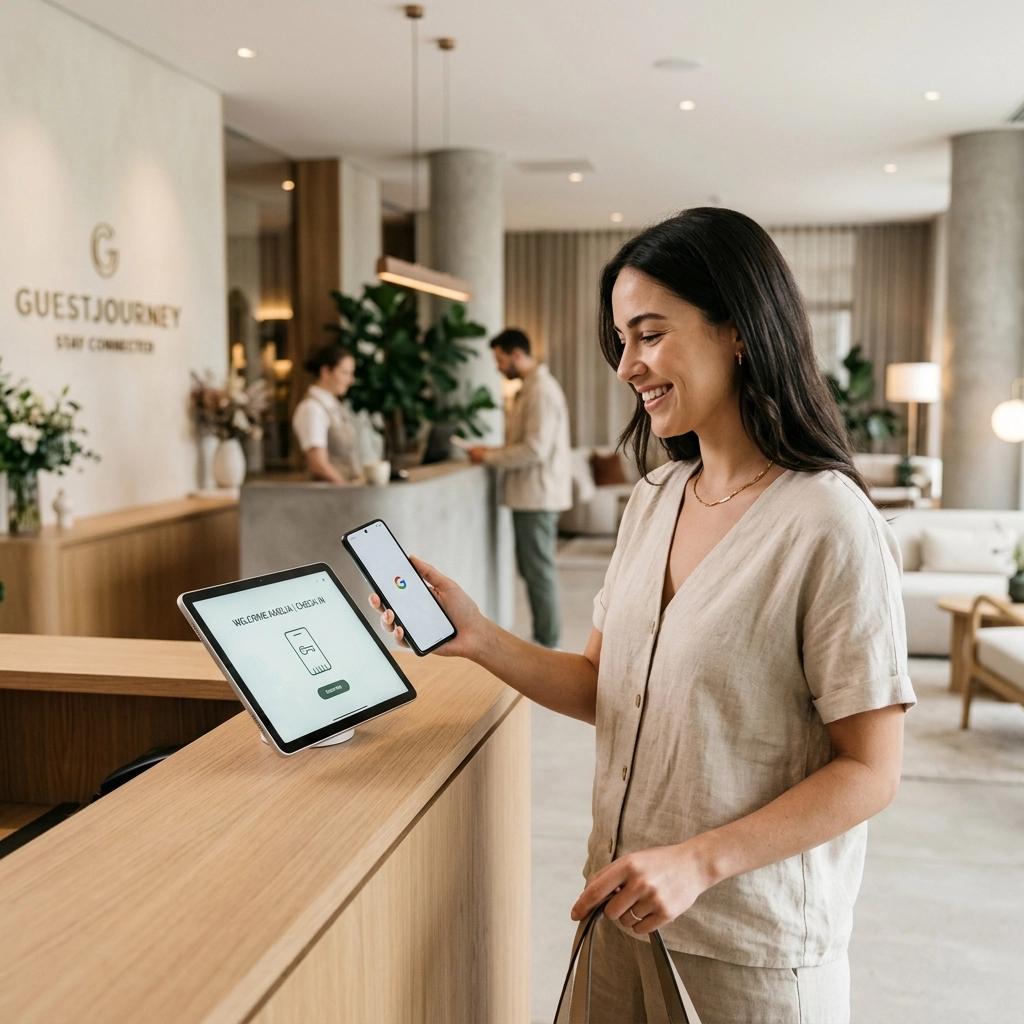
    A guest using a smartphone for digital check-in in a modern hotel lobby with no waiting lines.

    Pre-arrival hype on autopilot

    The guest journey starts the moment the "Book Now" button is clicked, not when the guest walks through your doors. Most properties miss the opportunity to build excitement and drive incremental revenue during the "anticipation phase."

    We believe that every communication should add value. Instead of a bland confirmation email, use smart automation to send personalized pre-arrival sequences. These shouldn't just say "see you soon." They should offer a room upgrade, a spa treatment, or a bottle of wine waiting in the room.

    1. Schedule a confirmation email with clear, visual stay details.
    2. Get preference data through a simple automated form.
    3. Offer hyper-relevant upsells based on the guest's profile.

    When you automate these touchpoints, you aren't just saving time; you’re setting the stage for a premium experience.

    Digital keys and instant access

    The physical key card is a friction point. They demagnetize, they get lost, and they require a face-to-face handoff. Implementing keyless entry is one of the most significant leaps you can take toward a "seamless" journey.

    By integrating your PMS with smart lock providers, you can automatically generate a digital key the moment a guest’s room is ready. This key is sent directly to their smartphone. No stopping at the desk. No plastic waste. Just a straight path to the mini-bar.

    "Since switching to digital keys, we’ve seen a 40% increase in guest satisfaction scores for the arrival experience." This kind of transformation isn't just about tech; it's about the feeling of freedom you give back to your guests.

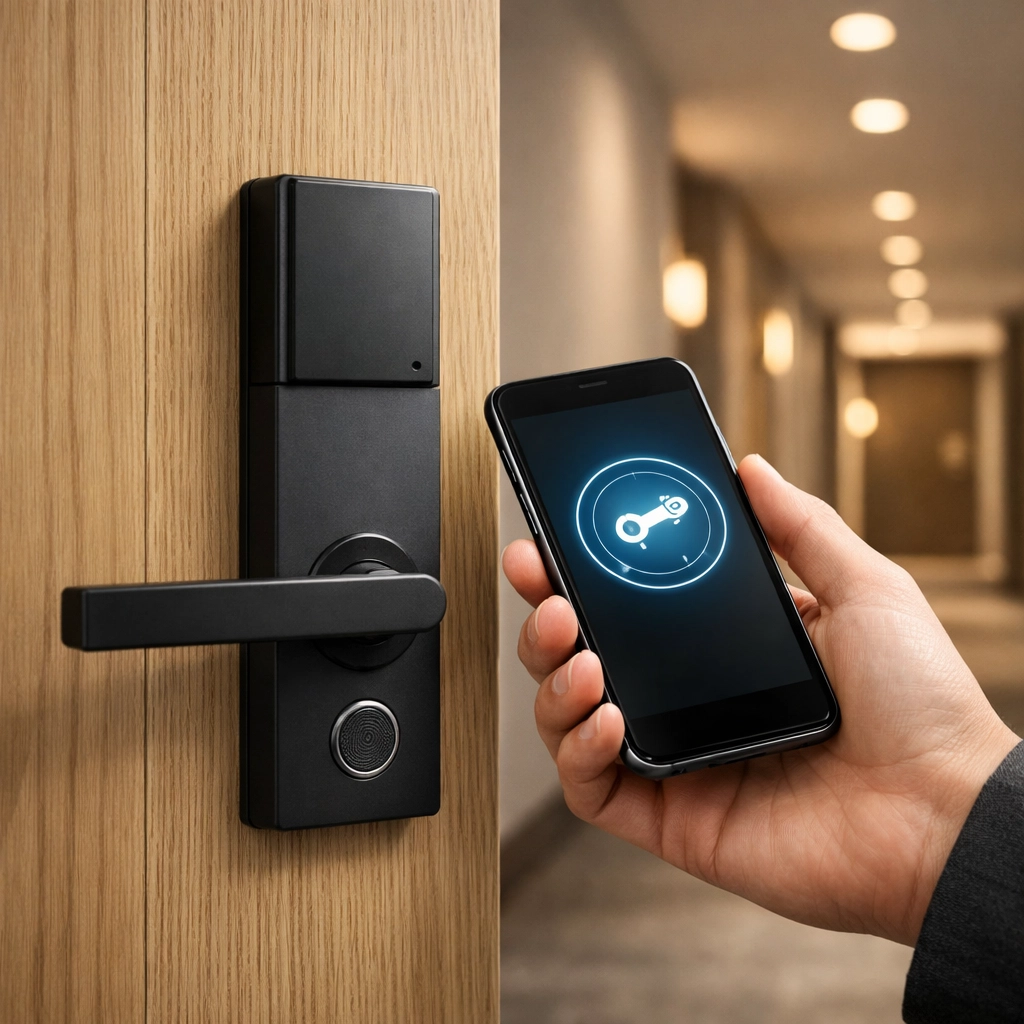
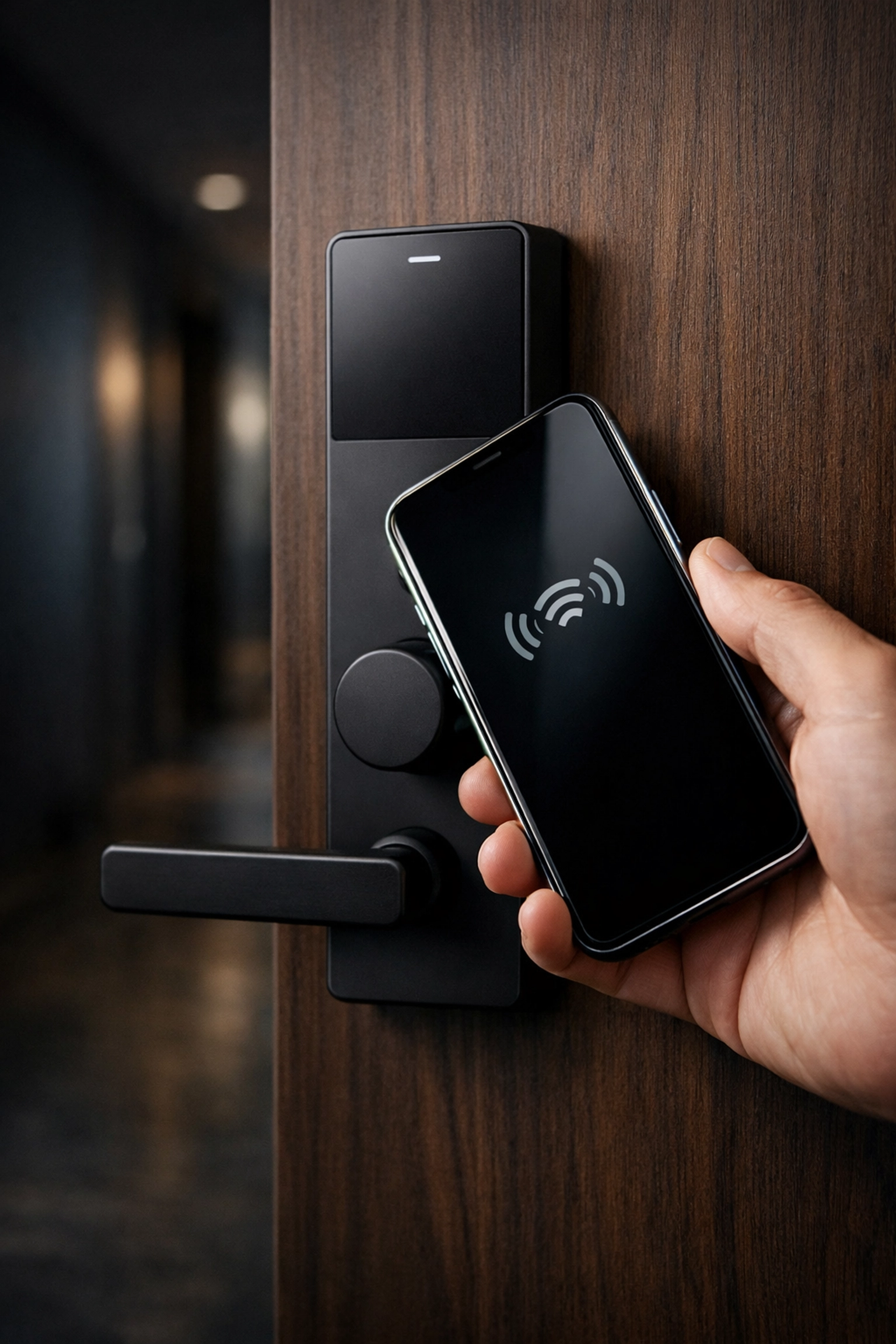
    Close-up of a guest using a digital key on their smartphone to unlock a smart hotel room door.

    AI as your first responder

    Guests have questions. "What’s the Wi-Fi password?" "Can I get extra towels?" "Where is the best coffee nearby?" While these questions are important, answering them manually 50 times a day is a drain on your team’s cognitive load.

    AI-driven messaging handles the routine so your staff can handle the exceptional. Modern chatbots and AI assistants can resolve up to 90% of common guest inquiries instantly. They don't sleep, they don't get tired, and they speak every language.

    • Deploy a website chatbot for instant booking queries.
    • Use WhatsApp integration for in-stay requests.
    • Automate FAQ responses for common property details.

    When a guest gets an answer in 2 seconds rather than 20 minutes, their perception of your service level skyrockets. It’s about being available without being overwhelmed. Explore how to scale your service at https://referrals.mews.com/ulufvqob.

    Real-time housekeeping synchronization

    A seamless journey is easily broken by a "room not ready" message. The disconnect between the front office and housekeeping is the source of most operational friction. We think the solution is a live, automated ecosystem.

    Instead of walkie-talkies and printed clipboards, use an automated task management system. When a guest checks out on their phone, the housekeeping team is notified instantly. When the room is marked "clean" on a tablet, the guest waiting for their room receives an automated SMS saying their stay is ready to begin.

    This creates a virtuous cycle of efficiency. You turn rooms faster, reduce guest frustration, and give your cleaning crew a clear, prioritized schedule without a single phone call being made.

    A tablet on a clean hotel bed representing automated housekeeping and efficient room operations.

    The frictionless departure

    The last thing a guest remembers is the checkout. If that experience involves waiting for a printed folio and a manual credit card swipe, you’ve undone all the "seamless" work from earlier in the stay.

    Automated checkout turns the final touchpoint into a non-event (in a good way). On the morning of departure, the system sends an automated summary of charges. The guest reviews it, hits "confirm," and the invoice is emailed automatically.

    • Eliminate morning lobby congestion.
    • Ensure 100% payment collection through secure gateways.
    • Close the loop with a personalized thank-you message.

    "We save at least 10 hours a week just by not having to manually process checkouts at the desk." This is the reality for properties that embrace the platform approach.

    Turning feedback into future stays

    The journey doesn't end when the guest leaves the parking lot. Post-stay automation is your most powerful tool for reputation management and direct booking growth.

    We believe that feedback is a gift, but only if you actually collect it. Set up a workflow that sends a satisfaction survey two hours after checkout. If the rating is high, trigger an automated prompt to share that experience on TripAdvisor or Google. If it's low, alert a manager immediately so they can recover the relationship before the guest even gets home.

    1. Send automated "Thank You" emails.
    2. Request reviews while the memory is fresh.
    3. Provide a "loyalty-only" discount code for their next stay.

    A happy hotel guest on a smartphone in a lounge after receiving an automated thank-you email.

    The 5-minute setup philosophy

    You might think this sounds like a massive IT project. It isn't. The beauty of modern, cloud-native hospitality technology is that these features are often "plug and play."

    Creating a seamless journey is about choosing the right foundation. When your PMS, your locks, your messaging, and your payments all talk to each other, automation isn't a chore: it's a default. You can literally toggle these settings on in a matter of minutes.

    Start with the pre-arrival email. Then move to digital check-in. Then add the AI chatbot. You don't have to do it all at once, but you should start today. The guest of 2026 isn't looking for a traditional hotel stay; they are looking for a frictionless experience that respects their time.

    Why data-driven hospitality wins

    We live in the era of personalization. Automation isn't about making the experience "robotic"; it's about using data to make it more human. When the system remembers that a guest prefers a high floor and a quiet room, and automates that assignment, the guest feels seen.

    By automating the administrative "garbage" (the forms, the swiping, the printing), you give your team the space to be creative. They can spend their time surprising a guest with a birthday treat or offering personalized local recommendations.

    Innovative hospitality is a balance of high-tech and high-touch. You use the tech to handle the predictable so your people can handle the unpredictable. That is how you create a brand that people don't just visit, but remember.

    Take the leap

    The most successful properties in the world: over 12,500 of them: are already moving in this direction. They understand that the "guest journey" is a continuous loop, not a linear path.

    If you're ready to stop managing software and start managing experiences, it's time to see what a truly integrated platform can do. Get started with the future of hospitality at https://referrals.mews.com/ulufvqob.

    Your guests are waiting. Don't make them stand in line.

  • 7 Mistakes You’re Making with Your Hotel Channel Manager (and How to Fix Them)

    7 Mistakes You’re Making with Your Hotel Channel Manager (and How to Fix Them)

    Connect your inventory. Automate your distribution. Scale your revenue.

    The modern hotel tech stack is a symphony, and your channel manager is the conductor. But even the best conductors can’t fix a broken orchestra. If you’re still fighting with overbookings or spending hours manually updating rates across six different tabs, you aren’t just losing time: you’re losing the guest experience.

    At Mews, we believe technology should set you free. We think the best software is the kind that works so well you forget it’s there. To get there, you need to move past the legacy "set it and forget it" mindset. It’s time to transform your distribution strategy from a chore into a competitive advantage, all from one cloud-native platform.

    1. The Disconnection Dilemma

    Using disconnected systems for your property management system (PMS), channel manager, and reservation tools is the quickest way to create chaos. When your software doesn't talk to each other in real-time, you’re essentially running a business on a delay. This lag causes inconsistent updates across OTAs, leading to the dreaded double booking.

    We believe that data should flow like water: seamlessly and in one direction. If a room sells on Booking.com, your PMS should know instantly, and your direct booking engine should update before you can finish your espresso.

    The transformation:

    • Integrate your entire stack into a single source of truth.
    • Prioritize real-time, two-way synchronization.
    • Eliminate the "buffer" time between systems to stop overbookings.

    Modern hotel PMS on a tablet at a reception desk for real-time inventory synchronization.

    2. Falling into the Manual Entry Trap

    Manual data entry isn't just boring; it’s a revenue killer. Every time a member of your team has to copy reservation details from an OTA email into your system, you’re inviting human error. When you manage shared inventory manually: listing the same room under multiple types without a smart link: you are essentially playing Russian roulette with your availability.

    Modern hospitality isn't about data entry; it’s about guest connection. You didn't get into this business to be a typist.

    How to evolve:

    • Implement a pool inventory model where all rooms live in one central bucket.
    • Let the software map room types based on specific channel formatting.
    • Use automation to pull bookings directly into your hotel PMS without human intervention.

    3. Mismanaging Restrictions and Pricing

    We see it often: a hotel has a great season but misses out on peak revenue because of poorly applied stay restrictions. Using CTA (Closed to Arrival) or CTD (Closed to Departure) can be powerful tools, but when used incorrectly, they create "unbookable" gaps in your calendar.

    Static pricing is a relic of the past. Your channel manager should be a dynamic tool that responds to the market, not a static spreadsheet that needs a manual nudge every morning.

    The strategy:

    • Balance demand by applying minimum and maximum stay restrictions intelligently.
    • Monitor your restrictions from a single dashboard to ensure you aren't accidentally blocking sales.
    • Leverage smart automation to adjust rates based on occupancy and market demand.

    "We saved about 15 hours a week just by letting the system handle our rate updates across channels automatically." : Verified Mews User

    4. The "Single Channel" Blind Spot

    Relying solely on one or two major OTAs is like building a house on a rented plot of land. If your distribution isn't diversified, you are vulnerable to commission hikes and algorithm changes. Many hoteliers stick to the "big players" because managing more channels feels like more work.

    In reality, a diverse channel mix allows you to reach distant markets and niche travel segments that you might otherwise miss. It’s about being where your guests are, even if they aren't on the first page of Expedia.

    The way forward:

    • Analyze your market data to see where your most profitable guests are coming from.
    • Diversify into niche OTAs that cater to your specific property type (e.g., boutique, luxury, or long-stay).
    • Use your channel manager to test new markets without increasing your administrative workload.

    A guest in a high-rise suite, highlighting expanded market reach through a hotel channel manager.

    5. Inconsistent Brand Messaging

    Your hotel's digital identity is everything. A common mistake is updating photos and descriptions on your own website but forgetting to update them on the 10 OTAs you’re connected to. This creates a fragmented guest experience. If a guest sees a beautiful new suite on your Instagram but a grainy, 2018 photo on a booking site, you lose trust.

    Consistency builds credibility. Your channel manager should be the megaphone for your brand, ensuring your best face is forward everywhere at once.

    The fix:

    • Centralize your content management through your distribution platform.
    • Ensure photos, amenities, and property descriptions are identical across all touchpoints.
    • Automate updates so that when you change a room description once, it populates everywhere.

    6. Ignoring the Power of Guest Data

    A channel manager shouldn't just be a pipe for bookings; it should be a goldmine for data. Many properties treat OTA bookings as "one-off" transactions and fail to capture the guest data needed to build a relationship. If you aren't pulling that guest info into your CRM, you’re losing the chance to turn an OTA guest into a direct, loyal customer.

    We believe the guest journey starts long before they walk through your door. It starts at the moment of discovery.

    The innovation:

    • Centralize guest data management to ensure every booking feeds your CRM.
    • Automate pre-stay communication to offer upgrades or self-check-in kiosks options.
    • Use review management tools to capture feedback and protect your online reputation.

    Minimalist guest setup in a hotel lobby, representing personalized service and self-check-in kiosks.

    7. Losing Touch with Your Target Audience

    The final mistake is treating all distribution channels as equal. Not every channel is right for every guest. If you’re a high-end boutique hotel, blasting your inventory on a discount-focused site might attract the wrong crowd: leading to poor reviews and operational friction.

    Understanding your audience means knowing not just who they are, but how they book. Are they using mobile apps? Do they prefer booking via a direct booking engine for perks?

    The solution:

    • Conduct thorough market research to define your "ideal guest."
    • Optimize your channel strategy to favor the platforms your target audience uses most.
    • Tailor your property descriptions and pricing to meet their specific demands.

    The Cloud-Native Edge

    Legacy systems are heavy. They require servers, manual updates, and a lot of patience. Mews is different. We are cloud-native, which means we’re built for the speed of the modern world. Our platform is easy to use, automation-focused, and designed to put you back in control of your property.

    Whether it’s streamlining your check-in with self-check-in kiosks or ensuring your channel manager is perfectly synced with your hotel PMS, we’re here to help you innovate.

    Ready to see how a modern tech stack can transform your operations?

    Schedule a 30-minute demo to see Mews in action.

    Hospitality is changing. The question is: are you ready to lead the way? Focus on the narrative of your guest's journey, embrace the automation that saves your sanity, and let your technology work as hard as you do.

    The future of hotel management isn't about fixing mistakes: it’s about creating opportunities.

    Contemporary hotel exterior at twilight, symbolizing innovative and automated hotel management software.

    Three things to do today:

    1. Audit your OTA listings for photo and description consistency.
    2. Check your PMS-to-Channel-Manager lag time.
    3. Explore one new distribution channel that targets a different guest demographic.

    Building a better hotel experience doesn't happen overnight, but with the right tools, it’s a whole lot easier. Stay innovative, stay curious, and let’s get you earning more revenue in no time.

  • Workflow Automation for Small Business vs. Hiring a Full-Time VA: Which Is Better For You?

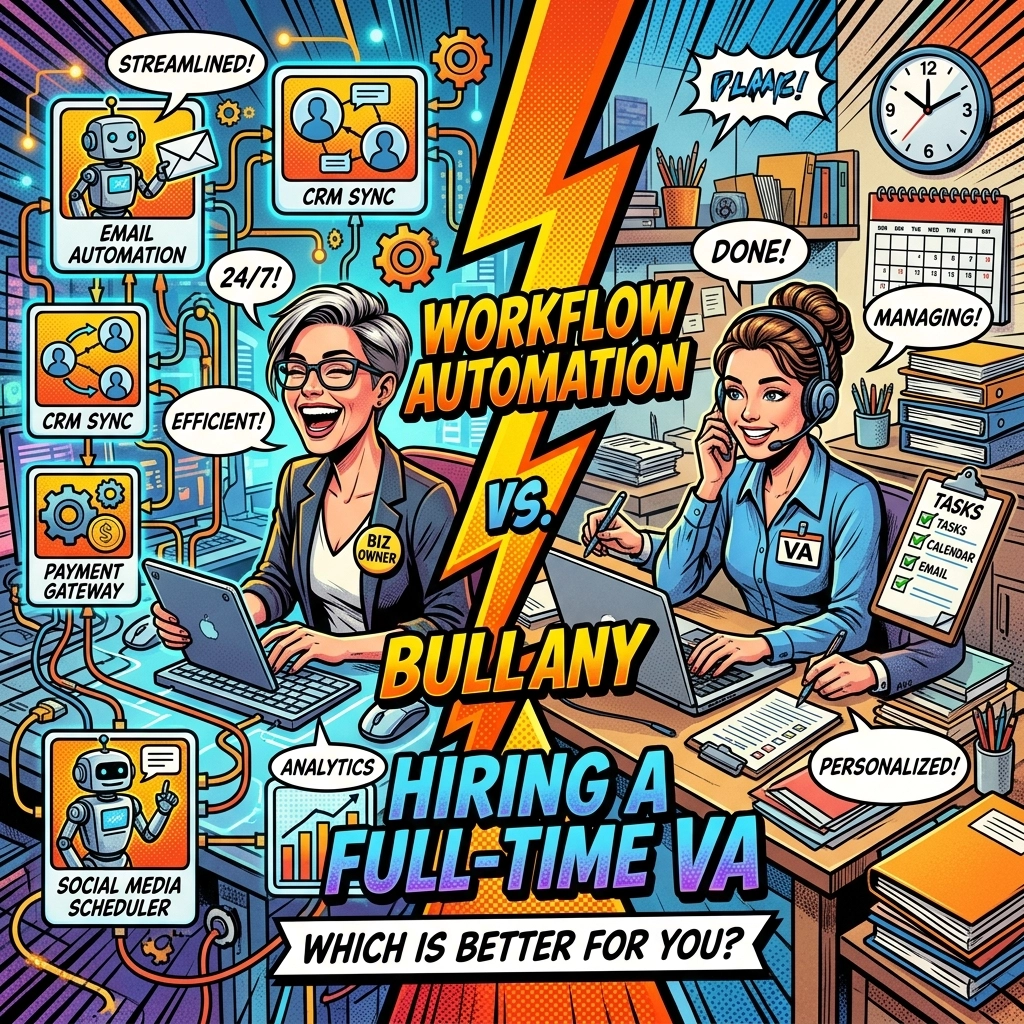
    Workflow Automation for Small Business vs. Hiring a Full-Time VA: Which Is Better For You?

    You wake up. It’s 6:30 AM. Before you’ve even had a sip of coffee, your thumb is already scrolling.

    14 new leads from the website. 3 support tickets about the same login issue. A dozen "quick questions" on LinkedIn. Your calendar looks like a game of Tetris played by someone who hates you.

    You’re drowning in the "busy work." The stuff that makes you feel productive but keeps your bank account stagnant. You know you need help. But now you’re stuck at the crossroads.

    Do you hire a full-time Virtual Assistant (VA) and deal with the payroll, training, and the inevitable "I’m sick today" emails? Or do you lean into workflow automation for small business and let the robots handle the heavy lifting?

    The choice you make right now determines if you’ll be on a beach by summer or still glued to your laptop at midnight.

    Let’s break it down.


    WORKFLOW AUTOMATION FOR SMALL BUSINESS: STOP DOING THE BUSY WORK

    You didn’t start a business to become a data entry clerk.

    But here you are. Copying email addresses into spreadsheets. Manually sending "Thanks for joining" messages. Moving tasks from one Trello board to another like a digital Sisyphus.

    This is the "busy work." It’s the silent killer of growth.

    The Cost of Being Human

    A human VA is great. They’re flexible. They can tell if a client is actually angry or just uses too many periods. But humans are expensive. A decent full-time VA will run you anywhere from $1,500 to $4,000 a month.

    And they have this pesky habit of needing sleep.

    Workflow automation doesn’t sleep. It doesn’t need a lunch break. It doesn’t get "burnout."

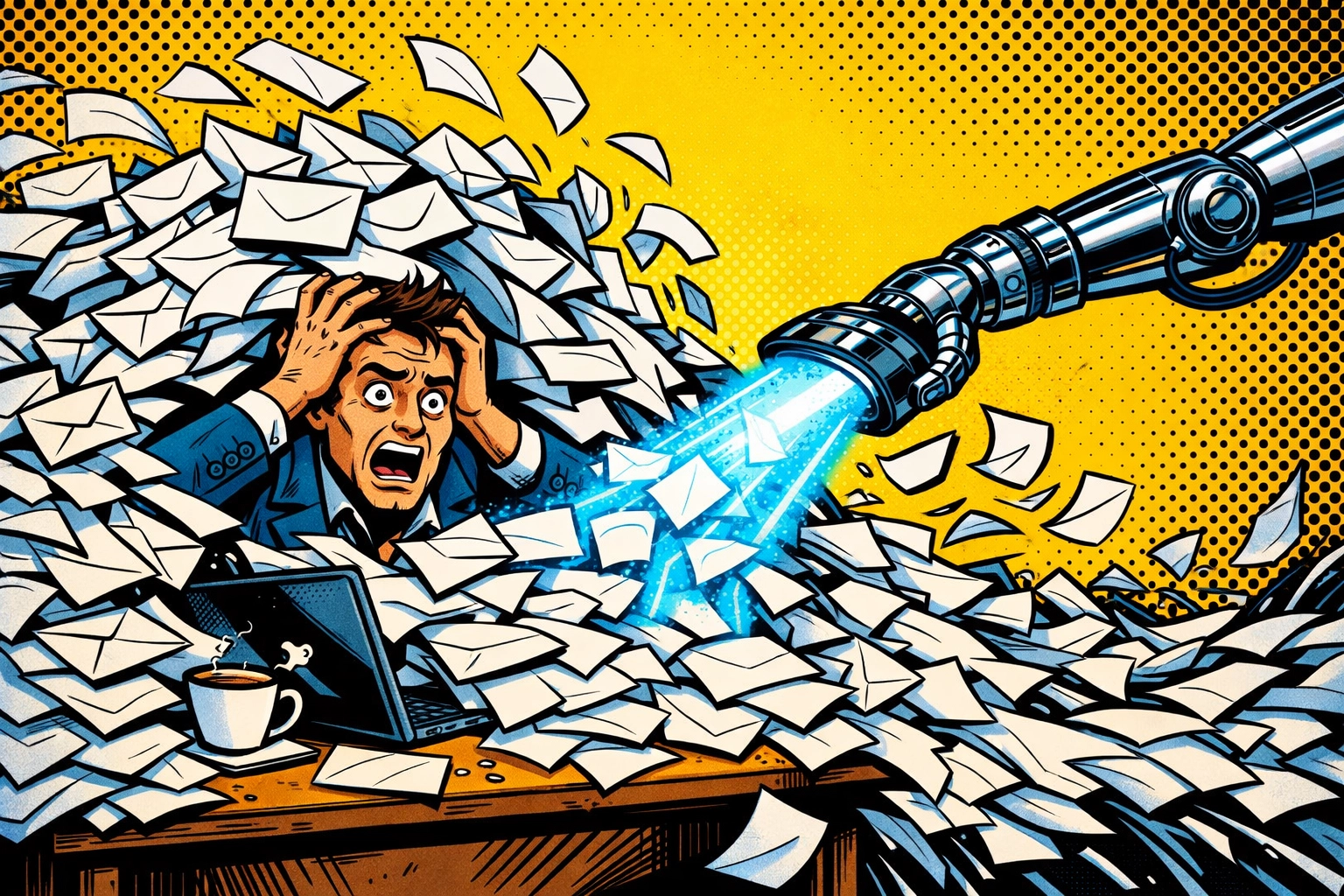
    Robotic arm helping a small business owner clear paperwork through workflow automation.

    Why Automation Wins the "Repetitive" War

    If a task follows a "If This, Then That" logic, you shouldn't be doing it. And honestly, neither should a VA.

    • Lead Capture: A lead fills out a form. Automation tags them in your CRM, sends a personalized intro email, and pings your Slack channel. Total time: 0.2 seconds.
    • Invoicing: The project hits "Complete." Automation generates the invoice, sends it to the client, and follows up every three days until the "Paid" notification hits your phone.
    • Social Posting: You write one post. Automation reshapes it for LinkedIn, X, and Instagram, then schedules it for the exact moment your audience is most likely to see it.

    When you implement workflow automation for small business, you aren't just saving time. You're buying back your sanity. You're ensuring that nothing falls through the cracks. Because a robot doesn't "forget" to follow up.

    If you want to see how this looks in the real world, check out Marblism. It’s basically the "Easy Button" for your backend.


    WHY YOUR BUSINESS NEEDS AN AI VIRTUAL ASSISTANT (BEFORE YOUR COMPETITORS GET ONE)

    It’s 2026. The landscape has shifted.

    Your competitors aren't just working harder; they're working smarter. They aren't hiring three people to manage their operations. They're using an ai virtual assistant for business to do the work of a ten-person team.

    If you're still doing things the "old way," you're bringing a knife to a drone fight.

    The AI VA vs. The Standard VA

    A standard VA follows instructions. An AI virtual assistant understands intent.

    Think about the difference. You tell a standard VA: "Research 50 prospects." They spend eight hours on LinkedIn. They send you a spreadsheet. You spend another two hours vetting them.

    You tell an AI virtual assistant: "Find 50 prospects that look exactly like our top three clients, find their personal emails, and draft a custom outreach message based on their recent LinkedIn posts."

    It’s done before you finish your coffee.

    An entrepreneur partnering with an AI virtual assistant for business to scale growth and efficiency.

    The Competitive Edge

    Why do you need this now? Because the window of "early adoption" is closing.

    1. Speed is the New Currency: If a lead reaches out to you and your competitor, the one who responds first wins. An AI VA responds instantly. At 3 AM on a Sunday.
    2. Scalability Without the Headcount: You can double your output without doubling your payroll. That’s how you hit 7-figures without losing your hair.
    3. Accuracy Over Effort: Humans make typos. Humans forget to CC the accountant. AI doesn't.

    Scaling shouldn't be this easy. But here we are.


    A DAY IN THE LIFE: THE MARBLISM EFFECT

    Let’s look at how your day actually changes when you stop being the bottleneck.

    ☕ 7:00 AM , The Morning Calm
    You wake up. The sun is barely out. Usually, your phone is a graveyard of notifications. But today? It’s quiet. Organized.
    While you were sleeping, your ai virtual assistant for business already cleared out the spam, categorized the "Urgent" emails, and updated your daily to-do list.
    You drink your coffee. In peace.

    📱 10:30 AM , The Lead Machine
    A high-ticket lead hits your site. In the old days, they’d wait four hours for a reply.
    Not today.
    The workflow automation kicks in. The lead gets a calendar link. They book a slot. By the time you sit down at your desk, the meeting is already in your calendar, and the lead has a "Looking forward to it" email in their inbox.
    You just send a thumbs-up.

    🤝 1:00 PM , Deep Work
    You spend three hours on high-level strategy. No pings. No "Hey, where is this file?" messages. Your AI assistant is handling the chatter. It’s finding files, answering basic client questions, and keeping the gears turning.
    The chaos is gone before you even take your first sip of water.

    🔍 4:00 PM , The Revenue Review
    You open your dashboard. The automation has pulled all your sales data into one clean view. You don't have to hunt for it.
    You see exactly where the money is coming from.
    You realize you have time to go to the gym.

    🌙 8:00 PM , Winding Down
    The day ends. The lights are off. Your business is still running.
    Your workflow automation for small business is currently prepping tomorrow’s reports. Your AI assistant is checking for any late-night emergencies.
    You’re not thinking about work. You’re present.


    THE HYBRID ADVANTAGE: WHY NOT BOTH?

    Look, I’m not saying you should never hire a human.

    The smartest move? Use automation for the repetitive stuff and use a VA for the creative stuff.

    Let the robots handle the data entry, the scheduling, and the follow-ups. Let the human handle the strategy, the high-level negotiation, and the brand voice.

    But here’s the secret: You don’t need the human until you’ve maximized the automation.

    Most small businesses are trying to hire people to solve a "process" problem. They think a VA will fix their messy systems. It won't. It just makes the mess more expensive.

    Fix the workflow first. Then hire.

    Human and robot handshake showing how workflow automation for small business combines with human talent.

    The Bottom Line

    Workflow automation is a one-time setup (or a small monthly fee) that works forever. A VA is a recurring, rising expense that requires management.

    If you can automate it, you should.
    If it requires a "soul," hire for it.

    But in 2026, most of what you're doing doesn't need a soul. It just needs to get done.

    READY TO STOP JUGGLING?

    You’ve got two choices.

    You can keep doing the busy work until you burn out. You can keep hiring people and hoping they "figure it out."

    Or, you can build a machine that works while you sleep.

    The tech is here. The competitors are using it. The only question is: Why aren't you?

    If you're ready to see what a truly automated business looks like, the kind that lets you actually enjoy being a business owner, you need to see what we're doing at Marblism.

    Stop being the assistant in your own company.

    Click here to see how Marblism can automate your growth.

    FAQ: THE NO-BS ANSWERS

    Is automation hard to set up?
    No. Not anymore. Tools like Marblism are designed to be "plug and play." You don't need a degree in computer science to make your email talk to your CRM.

    Will an AI assistant sound like a robot?
    Only if you want it to. Modern AI can be trained on your specific voice and style. Your clients won't know the difference, they'll just be impressed by how fast you are.

    Is this going to replace my team?
    It’s going to make your team 10x more effective. Instead of them doing the "busy work," they can focus on the stuff that actually moves the needle.

    Can I start small?
    Yes. Start with one workflow. Automate your invoicing. Or your lead follow-up. Once you feel that relief, you’ll never go back.

    The future of your business isn't more people. It's better systems.

    Don't wait for the competition to show you the way.

    Get started with Marblism today.

    The silence of an automated business is the loudest sound of success.

    YOU’RE IN CONTROL NOW.

  • How to Choose the Best Coffee Beans for Your Home Setup (Compared)

    How to Choose the Best Coffee Beans for Your Home Setup (Compared)

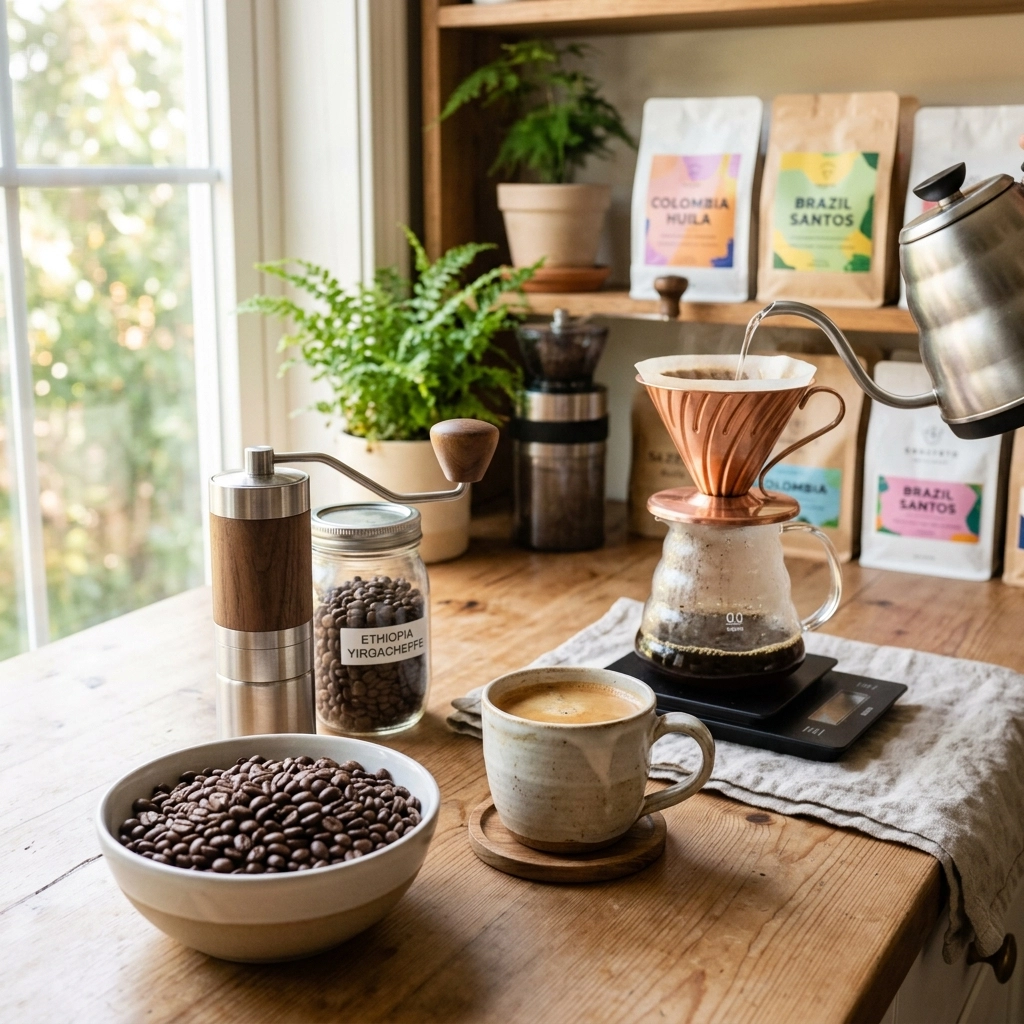
    So, you’ve finally invested in a decent home coffee setup. Perhaps you’ve got a shiny new espresso machine sitting on the counter, or maybe a sleek V60 dripper and a gooseneck kettle that makes you feel like a laboratory scientist every morning. But then comes the big question: what on earth should you be putting into those machines?

    Choosing the right coffee beans can feel like a bit of a minefield. You walk into a shop or browse online and you’re hit with words like "washed process," "altitude," "tasting notes of bergamot," and "medium-dark roast." It’s a lot to take in. We believe that the beans you choose are easily 50% of the battle when it comes to brewing that perfect cup. You can have a £3,000 machine, but if you’re using stale, oily beans from the back of a supermarket shelf, it’s just a real shame.

    In this guide, we’re going to break down everything you need to know about choosing the best beans for your specific home setup. We want to help you navigate the world of speciality coffee so you can stop guessing and start sipping.


    The Great Debate: Arabica vs. Robusta

    Before we get into the nitty-gritty of roasts and brewing methods, we need to talk about the two main species of coffee beans. If you’ve spent any time looking at bags of coffee, you’ve likely seen "100% Arabica" plastered all over them. But why?

    Arabica is the darling of the speciality coffee world. These beans grow at higher altitudes (typically 600 to 2,200 meters above sea level), which means the cherries develop more slowly. This slow growth creates a much more complex flavor profile. Think sweetness, acidity, and a huge range of notes, from chocolate and nuts to bright citrus and delicate florals.

    Robusta, on the other hand, is the hardier, more caffeinated sibling. It’s easier to grow at lower altitudes and is more resistant to pests. Historically, Robusta has had a bad reputation for tasting like burnt rubber or wood. However, high-quality Robusta (yes, it exists!) is a secret weapon for espresso lovers.

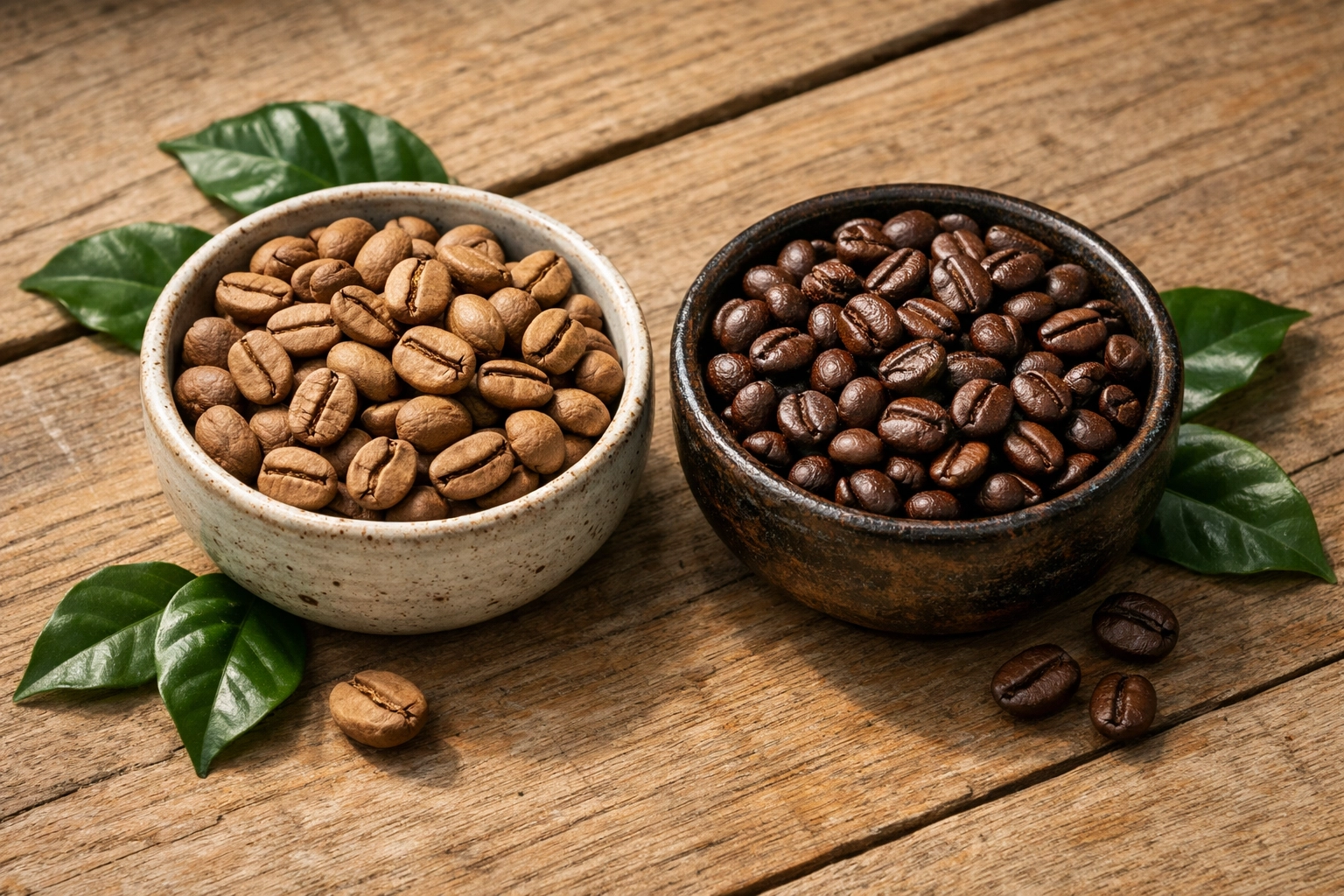
    Comparing whole bean Arabica and Robusta coffee for the perfect home espresso blend.

    Why is this important? Well, Robusta provides incredible body and a thick, persistent crema (that golden-brown foam on top of your shot). Many traditional Italian espresso blends use about 10-15% high-quality Robusta to give the coffee that punchy, velvety mouthfeel that Arabica sometimes lacks on its own.

    If you are looking for fresh, expertly roasted options that balance these profiles perfectly, you should definitely check out our range at Limini Coffee.


    Understanding Roast Levels (And Why Your Kit Cares)

    The roast level is perhaps the most significant factor in how your coffee will taste and, more importantly, how it will behave in your machine. We like to think of roasting as a spectrum of chemical reactions, most notably the Maillard reaction (basically the same thing that happens when you toast bread or sear a steak).

    Here is a quick breakdown of how different roasts perform:

    Roast Type Flavor Profile Texture/Body Best For
    Light Roast Acidic, fruity, floral, tea-like Thin, delicate Pour-over, V60, Chemex
    Medium Roast Balanced, caramel, nutty, stone fruit Smooth, syrupy Drip, Aeropress, Espresso
    Dark Roast Bitter, smoky, chocolate, bold Heavy, oily French Press, Traditional Espresso

    Why roast level matters for your gear

    If you have a manual pour-over setup, a light roast is often the way to go. It preserves the unique characteristics of the bean's origin. However, light roasts are harder to extract. This means you might need water that is quite hot (around 94 °C to 96 °C / 201 °F to 205 °F) to get the flavors out.

    If you are using a home espresso machine, we generally recommend starting with a medium to medium-dark roast. Light roasts can be incredibly "fussy" in an espresso machine; they often end up tasting sour or salty if your temperature and pressure aren't perfectly dialed in. A medium-dark blend is much more forgiving and will give you that classic, sweet espresso taste.


    Matching Beans to Your Brewing Method

    Not all beans are created equal, and some truly shine in specific environments. Let's look at the most common home setups and what we think works best.

    1. The Home Espresso Machine

    Espresso is a high-pressure extraction method (usually around 9 BAR). This intensity amplifies everything. If a bean is slightly acidic, espresso will make it taste like a lemon. If it’s slightly bitter, espresso will make it taste like ash.

    • Our Recommendation: Look for a blend rather than a single origin. Blends are designed for consistency and balance. A great espresso blend often features a Brazilian base for chocolatey sweetness, a bit of Central American coffee for brightness, and maybe a touch of high-quality Robusta for that all-important crema.
    • Top Tip: If you're new to this, avoid very oily, dark beans. They can clog up your grinder and make tamping quite messy.

    2. Pour-Over (V60, Chemex, Kalita)

    This is where you can really experiment with single-origin coffees. Since the water passes through the grounds slowly using only gravity, you get a much cleaner, more nuanced cup.

    • Our Recommendation: Try an Ethiopian or Kenyan single origin. These are famous for their "blueberry" or "citrus" notes. Look for "Washed" process coffees if you want a clean, tea-like finish, or "Natural" process if you want something funky and fruit-forward.

    3. French Press and Cafetière

    The French Press is an immersion method. The coffee sits in the water for several minutes, leading to a full-bodied, heavy cup.

    • Our Recommendation: Go for a medium-dark roast from Sumatra or Guatemala. These coffees often have earthy, spicy, or heavy cocoa notes that stand up well to the long steeping time.

    If you're still choosing your kit, have a look at our guide on choosing espresso equipment to see what fits your lifestyle.

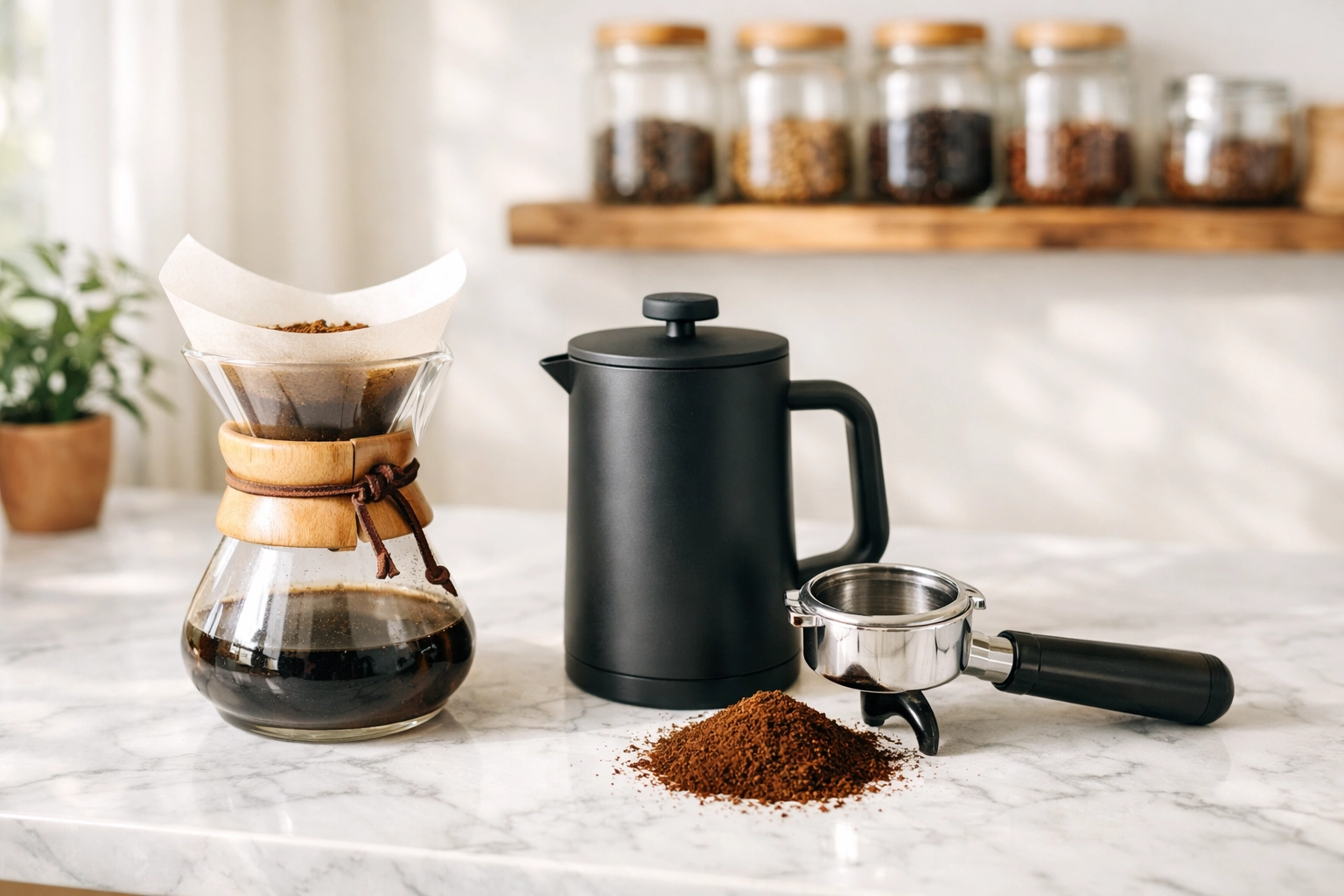
    A professional home coffee setup with a variety of manual and espresso brewing gear.


    Freshness: The Non-Negotiable Factor

    We cannot stress this enough: freshness is everything. When coffee is roasted, it begins to release carbon dioxide (a process called degassing). After about 3 to 4 weeks, most of the volatile aromatics that give coffee its amazing smell and taste have vanished.

    Supermarket coffee often sits on shelves for months. It might have a "Best Before" date a year away, but that doesn't mean it's fresh. You want a "Roasted On" date. Ideally, you should use your beans between 7 and 21 days after roasting.

    At Limini Coffee, we focus on freshly roasted speciality beans because we know that’s the only way you’ll get the best out of your home setup. When you buy from a speciality roaster, you’re not just getting coffee; you’re getting the result of a very careful sourcing process.


    Deciphering the Label: What Do Those Terms Mean?

    When you’re looking at a bag of high-end beans, you’ll see a lot of data. It can be intimidating, but it’s actually there to help you.

    Altitude

    Usually measured in MASL (Meters Above Sea Level).

    • High Altitude (1,500m+): More acidity, more complexity, denser beans.
    • Lower Altitude (under 1,200m): Lower acidity, more earthy and chocolatey notes.

    Process

    This refers to how the coffee seed (the bean) was removed from the fruit (the cherry).

    • Washed: The fruit is stripped off with water. This results in a "clean" taste where you can really taste the bean itself.
    • Natural: The cherry is dried whole in the sun. This often gives the coffee a intense, fruity, sometimes wine-like flavor.
    • Honey Process: A middle ground between the two. Expect a lot of sweetness and a syrupy body.

    Tasting Notes

    Keep in mind that these aren't added flavors. No one is dropping orange peel into the roaster. These are natural aromatic compounds that remind the roaster of certain foods. If it says "Green Apple," it means the coffee has a bright, malic acidity. If it says "Caramel," it likely has a high sugar content that has been beautifully developed during the roast.


    Practical Tips for Your Home Setup

    To wrap things up, here are a few rules of thumb we live by here at the roastery:

    1. Buy Whole Bean: This is the single best thing you can do for your coffee. Coffee starts to go stale within minutes of being ground because the surface area increases and oxygen gets to work. Invest in a decent burr grinder.
    2. Use a Scale: Stop using scoops! Coffee beans vary in density. A scoop of a dark roast weighs much less than a scoop of a light roast. For consistent results, use a coffee brewing calculator and a digital scale.
    3. Store it Right: Keep your beans in a cool, dark place in an airtight container. Please, whatever you do, don't put them in the fridge. The moisture and the smells of your leftover curry will ruin the beans.
    4. Water Quality: If your tap water tastes a bit funny, your coffee will too. We recommend using a simple water filter jug to remove chlorine and heavy minerals.

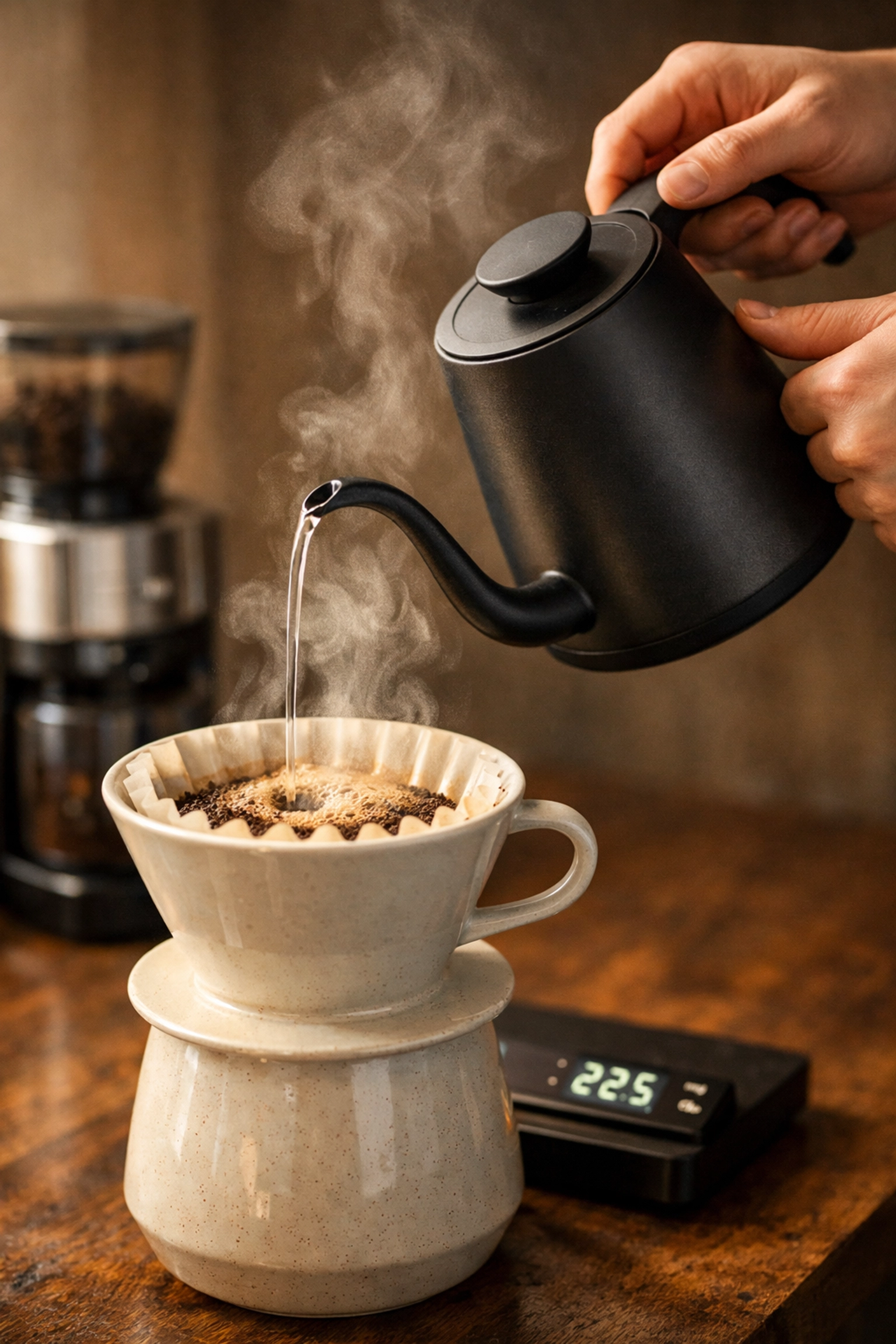
    Brewing fresh speciality coffee at home using a gooseneck kettle and pour-over dripper.


    Final Thoughts

    Choosing the best coffee beans for your home setup is a journey of discovery. Don't be afraid to try something that sounds weird. You might find that you actually love the funky, fruity notes of a Natural Ethiopian, or you might realize you’re a die-hard fan of a traditional, chocolatey Brazilian blend.

    The beauty of coffee is that there is no "right" answer: only what tastes good to you. But starting with high-quality, freshly roasted beans from a source you trust is the best way to ensure your morning ritual is a success.

    If you’re ready to level up your home barista game, head over to Limini Coffee and see what we’ve got roasting this week. Whether you need a forgiving espresso blend or a vibrant single origin for your V60, we’ve got you covered. Happy brewing!

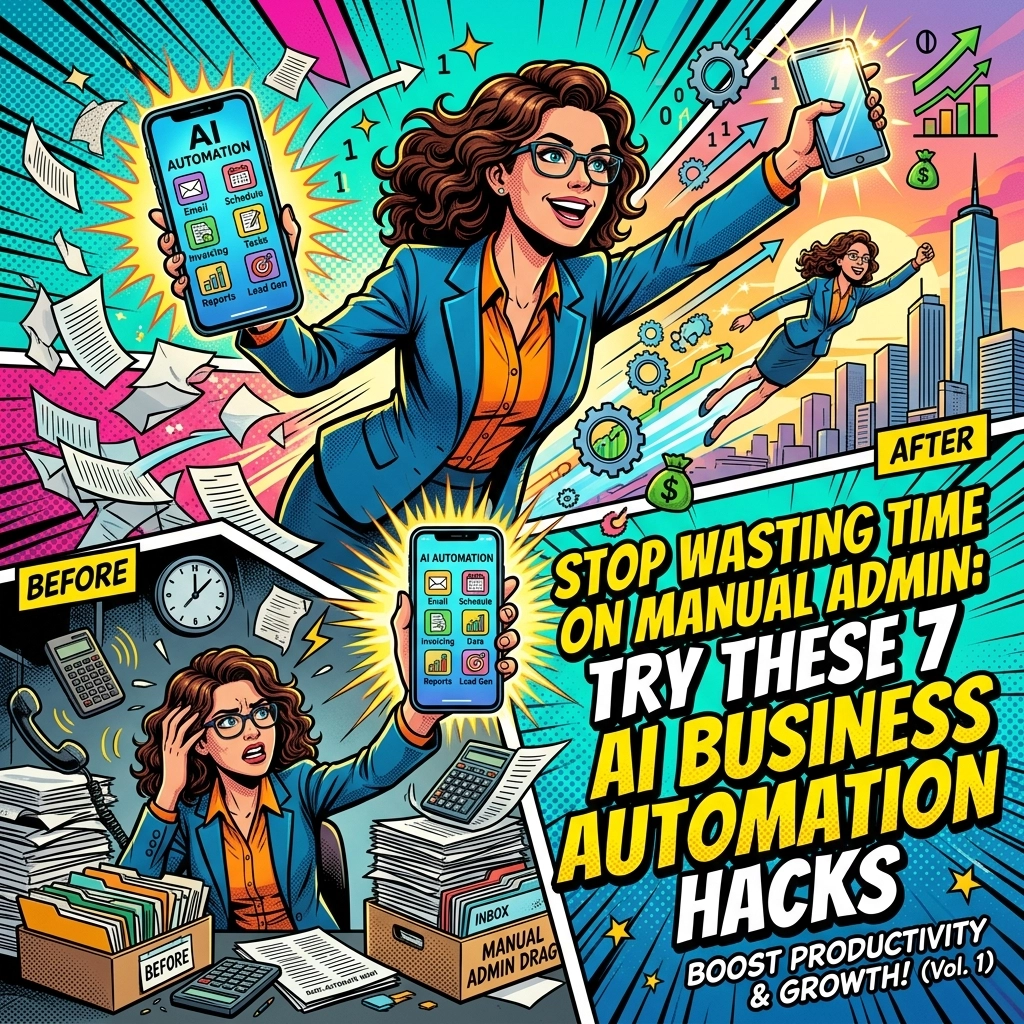
  • Stop Wasting Time on Manual Admin: Try These 7 AI Business Automation Hacks

    Stop Wasting Time on Manual Admin: Try These 7 AI Business Automation Hacks

    ☕ 7:00 AM.

    Your phone vibrates on the nightstand. It’s not a text from a friend. It’s the first wave of a digital tsunami. 14 new emails. Three Slack pings. A "high priority" ticket from a customer who can't find their password.

    You haven't even brushed your teeth yet… and you're already behind.

    This is the "Small Business Tax." It’s that invisible fee you pay in hours, stress, and missed growth because you’re stuck playing digital janitor. You spend more time moving data between spreadsheets than you do actually talking to customers.

    But imagine a version of today where the tsunami never hits. Where the manual grunt work, the stuff that makes your eyes glaze over, is handled before you even pour your first cup of coffee.

    It’s not magic. It’s an ai virtual assistant for business.

    Stop juggling. Let’s look at how you can reclaim your calendar with these 7 automation hacks.


    1. THE INBOX BODYGUARD

    📱 8:15 AM.

    Usually, this is when you’d drown in CC’d threads and newsletters you don’t remember signing up for. Instead, you open a single, three-paragraph summary.

    Your first hack? Deploying an Inbox Summarizer.

    Instead of reading 50 emails to find the two that actually matter, an AI agent scans your inbox every hour. It identifies "Action Items," "FYIs," and "Junk." By the time you sit down, you aren't "checking email." You’re executing a plan.

    It looks like this:

    • Client A: Needs a quote by noon.
    • Team: Weekly report is ready for review.
    • Junk: 12 marketing emails archived.

    You didn’t scroll. You didn’t click "delete" twenty times. You just started working.

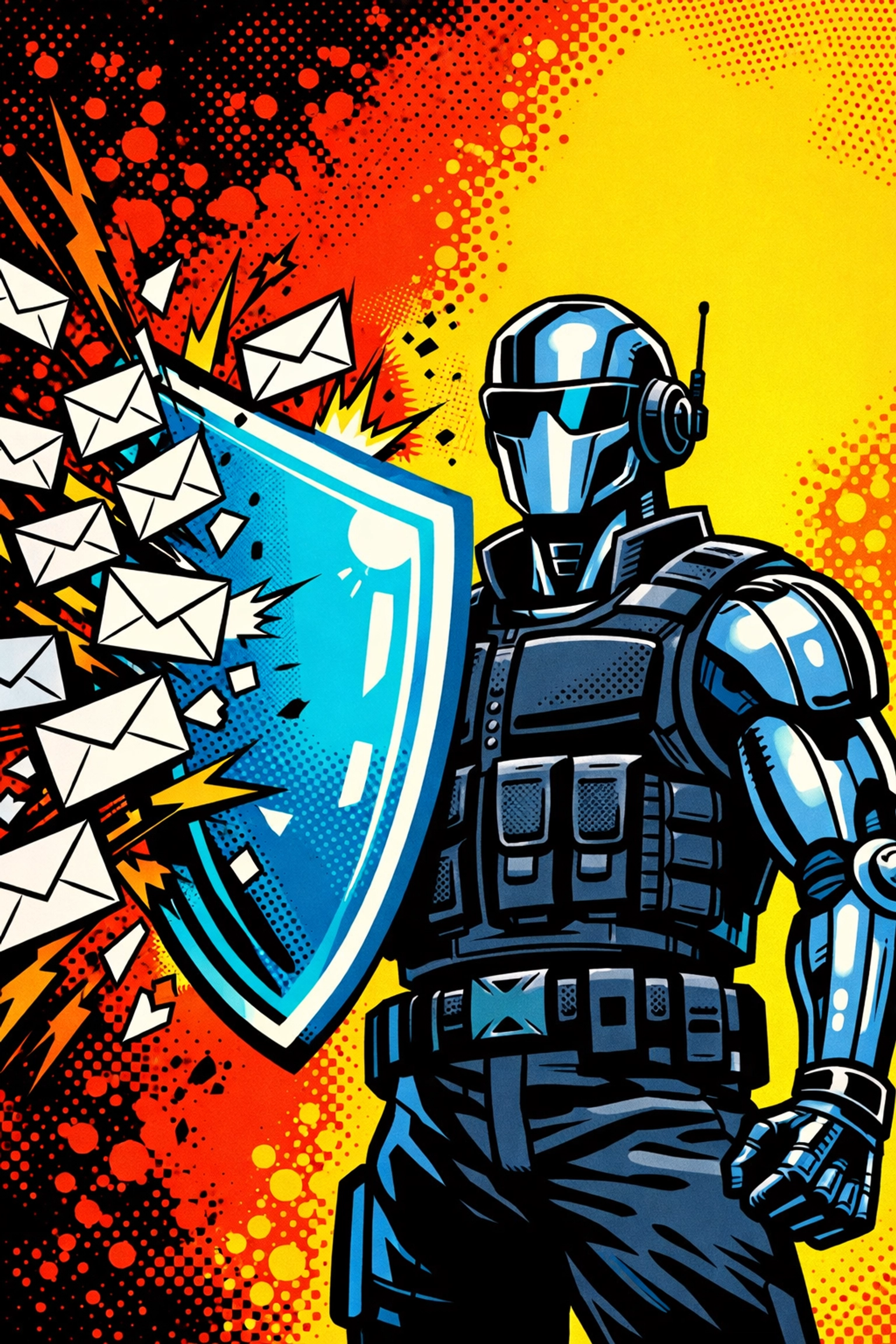
    Pop art illustration of an AI virtual assistant blocking junk emails to improve admin efficiency.

    2. THE LEAD WHISPERER

    🔍 10:00 AM.

    Generating leads is hard. Managing them is harder. You know the drill, you find a potential client on LinkedIn, copy their name, find their website, look for an email, and paste it into a CRM.

    It’s soul-crushing work.

    The hack: A Scrape and Categorize Agent.

    While you’re focusing on strategy, your AI is scouring the web for businesses that fit your criteria. It doesn't just find them, it grades them. It looks at their recent news, their company size, and their current pain points.

    "This guy sounds like a great lead," the AI notes, and drops the contact info directly into your "Hot" folder. No manual entry. No typos. Just a list of people who actually want to hear from you.

    Scaling shouldn't be this hard. But with the right tools, it isn't. Check out how we make this happen at https://marblism.link/scott-bowen.

    3. CUSTOMER SUPPORT ON AUTOPILOT

    ☎️ 11:30 AM.

    "Where is my order?"
    "How do I reset my account?"
    "Can I get a refund?"

    If you’re still answering these manually, you’re losing money. Every minute you spend explaining a "forgot password" link is a minute you aren't growing your revenue.

    It’s time to automate customer support with ai.

    Think of it as a super-powered Slackbot or a website chat agent that has actually read your entire company handbook. It doesn't give canned, robotic responses. It understands context.

    When a customer asks, "Can I change my shipping address?" the AI doesn't just send a link, it checks their order status, confirms it hasn't shipped yet, and walks them through the process.

    The best part? It never sleeps. It doesn't get cranky. And it handles 80% of your tickets before a human ever has to see them.


    "I used to spend three hours a day just answering the same five questions. Now, I don't even look at the support folder until Friday. The AI handles it better than I did." , Marcus, E-commerce Owner


    4. THE DATA DETECTIVE

    📊 1:00 PM.

    You need to know how your business is doing. But getting that "pulse" usually involves exporting CSV files, opening Excel, and squinting at rows of numbers until you get a headache.

    The hack: Automated Reporting Systems.

    Instead of you hunting for data, the data comes to you. Set up an AI agent to monitor your sales, support spikes, and website traffic. If your support requests suddenly jump by 40% on a Tuesday afternoon, the AI pings you.

    "Hey, something's up with the checkout page, tickets are spiking."

    It’s the difference between catching a fire when it’s a spark and finding out your building burned down three days ago.

    AI robot detective analyzing data trends to help automate customer support and catch business issues early.

    5. OUTREACH WITH A SOUL

    🤝 2:45 PM.

    Most automated outreach feels… gross. It’s cold, it’s generic, and it’s an instant "Mark as Spam" for most people.

    But you can scale your sales without being a bot.

    Use Personalized Outreach Agents. These agents don't just "blast" emails. They research. They see that a prospect just won an award or posted a specific thought on LinkedIn. They weave that into the opening line.

    "Hey Sarah, saw your post about AI in manufacturing, really interesting point about the lag times…"

    It looks human because it’s using human-level logic, just at 100x the speed. You’re not "sending spam." You’re starting conversations at scale.

    If you want to see how this kind of ai virtual assistant for business changes the game, you need to see it in action here: https://marblism.link/scott-bowen.

    6. THE SEO GHOSTWRITER (AND AUDITOR)

    📝 4:00 PM.

    You know you need content. You know you need SEO. But who has time to audit 50 blog posts for broken links and keyword density?

    Not you.

    The hack: An SEO Analyzer Agent.

    Instead of hiring an expensive agency to tell you what's wrong with your site, let the AI do a weekly sweep. It identifies which pages are losing rank, which keywords your competitors are beating you on, and exactly what titles you should write next to capture traffic.

    It’s like having a marketing director in your pocket who only cares about the data.

    Multi-armed AI robot managing SEO data and digital workflows as a powerful business automation hack.

    7. THE "GLUE" (NATURAL LANGUAGE WORKFLOWS)

    🛠️ 5:30 PM.

    The biggest hurdle to automation used to be "The Build." You had to be a coder to connect your CRM to your Email to your Slack.

    Not anymore.

    The final hack is using Natural Language Builders (like Zapier’s Copilot). You don't "program" these. You talk to them.

    "Hey, whenever I get a new lead from my website, summarize their LinkedIn profile and send it to me in Slack, then add them to my 'Follow Up' list in Trello."

    The AI builds the workflow for you. It connects the pipes. It tests the links.

    You just sit back and watch the machine hum.


    STOP JUGGLING. START GROWING.

    🌙 6:30 PM.

    The lights are off in the office.

    Normally, this is where you’d be hunched over your laptop, catching up on the "admin" you missed while doing your actual job. Your back would ache. Your eyes would be red.

    But not today.

    Today, the inbox was summarized. The leads were graded. The customers were supported. The reports were filed.

    The chaos is gone before you even took your first sip of coffee this morning.

    You aren't a manual worker anymore. You’re a builder. You’re an owner. And with Marblism, you finally have the team to prove it.

    Ready to stop wasting time on the boring stuff?

    See how Marblism automates your world right here.

    The future of your business is quiet. Organized. And automated.

    Scaling shouldn't be this easy: but here we are.

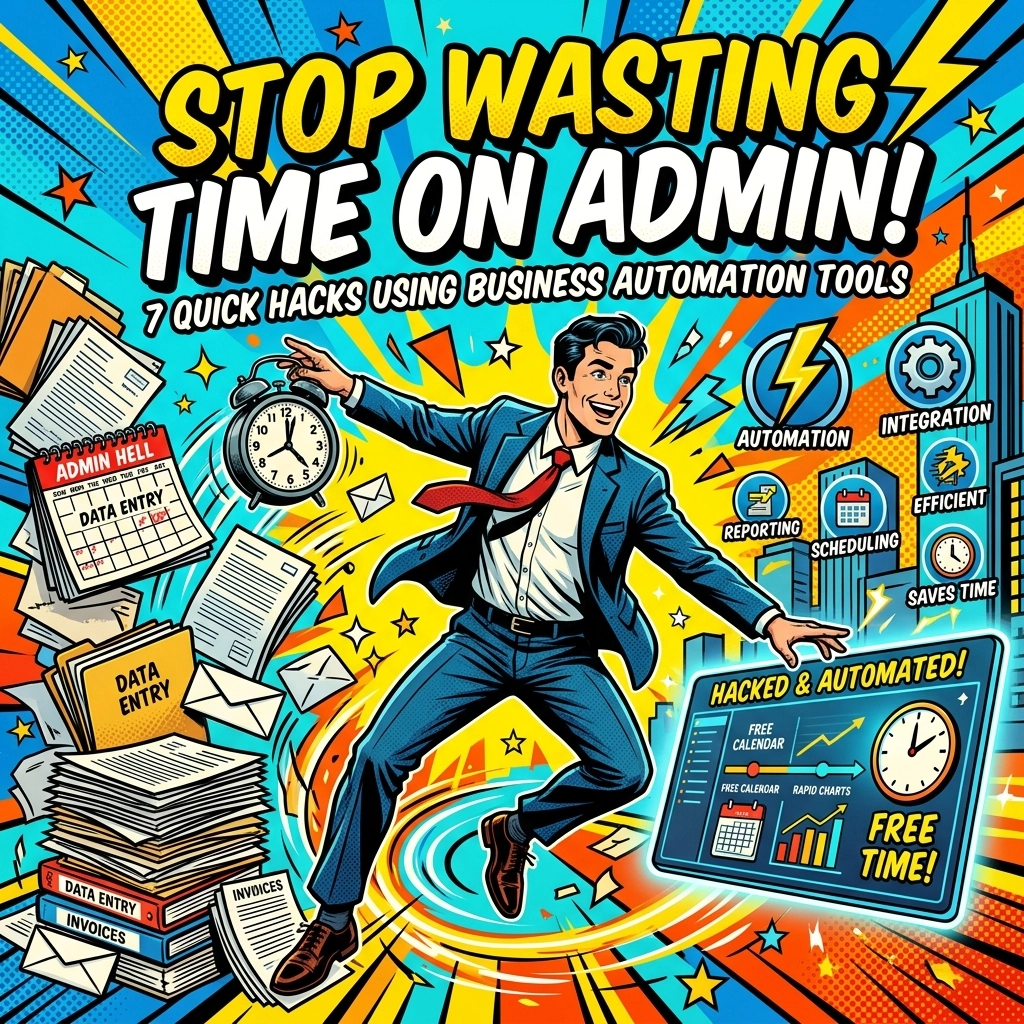
  • Stop Wasting Time on Admin: 7 Quick Hacks Using Business Automation Tools

    Stop Wasting Time on Admin: 7 Quick Hacks Using Business Automation Tools

    7:00 AM.

    You’re staring at a cold cup of coffee and a screen full of notifications. Your inbox is screaming. Your spreadsheet has three "final_version_v4" tabs. And you haven't even started the work that actually makes you money.

    The "grind" is a lie. It’s just admin in a trench coat, stealing your life.

    If you’re running a small business in 2026, you shouldn't be manually moving data from Point A to Point B. You shouldn't be chasing receipts. You definitely shouldn't be spending Sunday nights on payroll.

    It’s time to stop. Here are 7 hacks using business automation tools that will reclaim your sanity and save you at least 10 hours every week.

    1. PAYROLL ON AUTOPILOT

    Remember when payroll meant three hours of soul-crushing math? Forget it. Modern tools now handle wage calculations, tax filings, and direct deposits in about 90 seconds. You set the rules, the AI checks the compliance, and the money moves while you sleep. No errors. No tax penalties. Just freedom.

    2. THE SELF-MANAGING TO-DO LIST

    Stop playing project manager. Use automation to assign tasks based on your team’s capacity. When a designer finishes a logo, the tool automatically pings the copywriter. No "Hey, is this done yet?" Slack messages.

    3. AUTOMATIC EXPENSE TRACKING

    📱 Your phone buzzes. It’s a notification asking you to snap a photo of that lunch receipt. You do it. The AI extracts the vendor, the total, and the tax, then matches it to your bank statement.

    Smartphone scanning a business receipt with automation tools to track expenses automatically.

    4. SPENDING RULES THAT SAY "NO" FOR YOU

    Stop reviewing every $15 software subscription. Set custom expense policies. If a team member spends under $50 on office supplies, it’s auto-approved. If they try to buy a mahogany desk on the company card? The system flags it before the transaction even clears.

    5. THE "ZAP" THAT CONNECTS EVERYTHING

    Manual data entry is a relic of the 2010s. Use workflow platforms to sync your tools. When a lead fills out a form on your site, they should be added to your CRM, sent a welcome email, and added to a Slack channel automatically. If you're doing this manually, you're working for the machine, not the other way around.

    6. ONBOARDING WITHOUT THE PAPERWORK

    New hire? Send one link. The system handles document signing, provisions their software access, and orders their laptop. You just show up for the "Welcome" lunch.

    7. APPROVAL ROUTING

    Stop the email chain of death. Create custom approval workflows where documents move through the chain automatically. If the manager doesn't sign off in 24 hours, the system nudges them. You stay out of the middle.

    Ready to see how this actually looks in the wild? Check out what’s possible at Marblism.


    The Best AI Assistant for Small Business in 2026

    🔍 11:00 AM.

    You’re in the middle of a deep-work session when a client calls. You need their last three months of spend, their current project status, and their daughter’s name (because you’re a professional).

    In 2024, you’d be digging through folders. In 2026, you just ask your ai assistant for small business.

    "Hey, give me the briefing for Sarah from Apex."

    The data appears. Not just a list of files, but a summary. A narrative.

    YOUR NEW CO-PILOT

    An AI assistant isn't just a chatbot anymore. It’s an entity that lives inside your business operations. It knows your brand voice. It knows your margins. It knows that you usually give a 10% discount to "friends of the firm."

    It doesn't ask for a raise. It doesn't get "the Mondays." It just works.

    WHY 2026 IS THE YEAR OF THE ASSISTANT

    The tech has moved past simple "if-this-then-that" logic. Today’s assistants are proactive.

    • Proactive Scheduling: It sees you have three back-to-back meetings and automatically blocks out an hour for "Sanity/Lunch."
    • Inbox Triage: It drafts responses to 80% of your emails. You just hit "Send."
    • Market Research: Want to know what your competitors are charging? It scans the web and gives you a price comparison by the time you finish your bagel.

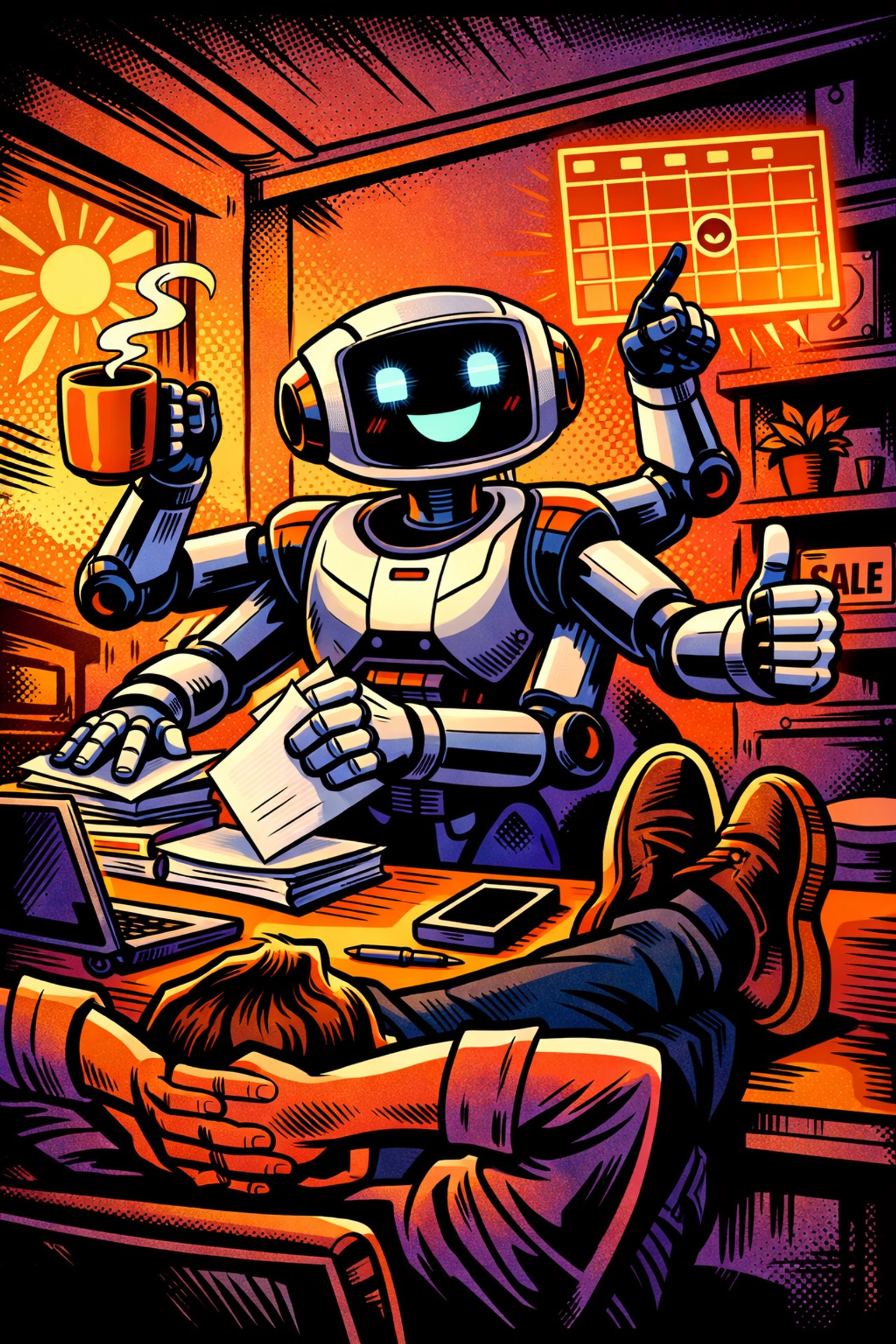
    A multi-tasking AI assistant for small business managing office tasks and schedules.

    THE COMPETITIVE EDGE

    Small businesses used to struggle because they couldn't afford a "Chief of Staff." Now, you have one for the price of a Netflix subscription. It levels the playing field. You can act like a Fortune 500 company while staying a team of three.

    The chaos is gone before you even take your first sip of afternoon tea. It’s not about replacing humans: it’s about making humans less like robots.

    Stop being your own secretary. See how to scale without the stress at https://www.marblism.com/scott-bowen.


    AI Content Generator for Small Business: Your Secret Marketing Weapon

    ✍️ 3:00 PM.

    The blinking cursor. The white screen. The realization that you need to post to LinkedIn, send a newsletter, and update your blog… and you have zero words in your brain.

    We’ve all been there. Marketing is the first thing that gets dropped when the "real work" gets busy. But consistency is the only way to grow.

    Enter the ai content generator for small business.

    STOP WRITING FROM SCRATCH

    You shouldn't be staring at a blank page. Ever.

    An AI content generator is like having a world-class copywriter who has memorized every single thing you’ve ever written. You give it a seed: a thought, a rough transcript of a meeting, or a link to a news article: and it builds the skyscraper.

    THE THREE-MINUTE MARKETING PLAN

    1. The Blog Post: You speak your thoughts into a voice memo while driving. The AI turns it into a 1,000-word SEO-optimized masterpiece.
    2. The Social Snippets: It pulls out 5 punchy "hooks" for Twitter (X) and 3 thought-leadership posts for LinkedIn.
    3. The Email: It writes a summary for your newsletter that actually gets opened.

    An AI content generator for small business creating marketing posts and social media snippets.

    BUT DOES IT SOUND LIKE ME?

    This is the big fear. "I don't want to sound like a computer."

    In 2026, that’s a non-issue. You can feed your AI assistant your previous emails, your favorite books, and your brand guidelines. It learns your cadence. It learns that you like em-dashes and hate the word "leveraging."

    It doesn't just write; it writes for you.

    SCALING SHOULDN'T BE THIS EASY. BUT HERE WE ARE.

    🤝 5:00 PM.

    The sun is starting to set. Usually, this is when you’d start your "second shift" of marketing and admin. But today? The posts are scheduled. The emails are drafted. The payroll is done.

    You close your laptop. The lights are off. And for the first time in months… it’s quiet.

    The secret isn't working harder. The secret is knowing which business automation tools to put in your corner. Marblism is building the future where small business owners actually get to be owners, not just high-level clerks.

    Don't let your business run you. Start running your business with the right tech.

    Take the first step toward your 10-hour-a-week recovery here: Marblism with Scott.

    You smile. You step back into your day. The work is done, and you’re just getting started.

    Scaling shouldn't be a struggle( it should be a sequence of smart clicks.) 🌙

  • Coffee Roaster Wholesale Matters: Why the Right Partner Is Key to Your Growth

    So, you’re thinking about opening a café? Or maybe you’ve already got the keys in your hand, the paint is drying on the walls, and you’re staring at a giant empty space where the espresso machine should be. It’s an incredibly exciting time, but let’s be honest, it’s also a bit terrifying. There are a million decisions to make, from the colour of the napkins to the exact shade of the floor tiles.

    But here is the thing: the most important decision you will make isn’t the décor. It’s the coffee.

    Specifically, it’s about who you choose as your wholesale coffee partner. In the world of specialty coffee, your roaster isn't just a "vendor" who drops off bags of beans once a week. They are the heartbeat of your business. If the coffee is bad, nothing else matters. You could have the most beautiful shop in the world, but if that flat white tastes like burnt rubber, people won't come back.

    Choosing from the sea of wholesale coffee roasters out there is a big task. We’ve seen many café startups flourish and others struggle, and often, the difference comes down to the support system they have behind them.


    It Is Not Just About the Beans (Though the Beans Are Great)

    When people think of "wholesale coffee," they usually just think of the price per kilo. And sure, the math has to work. You’re running a business, not a charity. However, looking at the price tag alone is a classic mistake.

    A true partnership with a roaster like us here at Limini Coffee goes way beyond the bag. It’s about quality, consistency, and a shared passion for the craft. When you work with a specialty coffee roaster, you are buying into a supply chain that cares about everything from the soil the cherry grew in to the way the milk is steamed in your shop.

    Why is this important? Because specialty coffee is a living, breathing product. It changes with the seasons. A bean from Ethiopia will taste vastly different from a Brazilian bean, and even the same farm can produce different results year to year. A great wholesale partner handles that complexity for you. We spend our time sourcing our coffee with extreme care so that you don't have to worry about whether the quality will dip next month.

    A coffee roaster inspecting fresh specialty coffee beans to ensure quality and consistency for wholesale partners.

    The Hidden Power of Consistency

    Have you ever gone to a café, had a mind-blowing espresso, gone back a week later, and found it sour and thin? It’s disappointing, right? That is the "consistency gap," and it’s the silent killer of café startups.

    Consistent quality is what builds customer loyalty. To achieve it, you need two things: high-quality roasted beans and a team that knows how to use them. This is where your wholesale partner steps in. We believe that a roaster’s job doesn't end when the delivery van pulls away.

    Part of our role as your partner is ensuring your staff are experts. This is why coffee barista training is such a massive part of what we do. We teach your team about extraction, the importance of 9 BAR pressure, and how to get that perfect, glossy microfoam (usually around 140 °F / 60 ºC for the best sweetness).

    Basically, we want your customers to have the same "wow" moment every single time they visit.


    Equipment: The Tools of the Trade

    You can have the best beans in the world, but if your espresso machine is acting up or your grinder is inconsistent, you’re fighting a losing battle.

    Choosing the right kit is one of the biggest capital expenses for a new business. It’s easy to get swayed by shiny lights or the cheapest deal online, but choosing espresso equipment should be a strategic move. We often recommend La Spaziale machines because they are absolute workhorses with incredible temperature stability, something that is vital for consistent shots.

    When you partner with us at Limini Coffee, we don't just sell you a box. We help you understand the workings of the machine and how to look after it. A machine that isn't cleaned properly will produce bitter coffee (and potentially break down during a busy Saturday rush, a total nightmare).

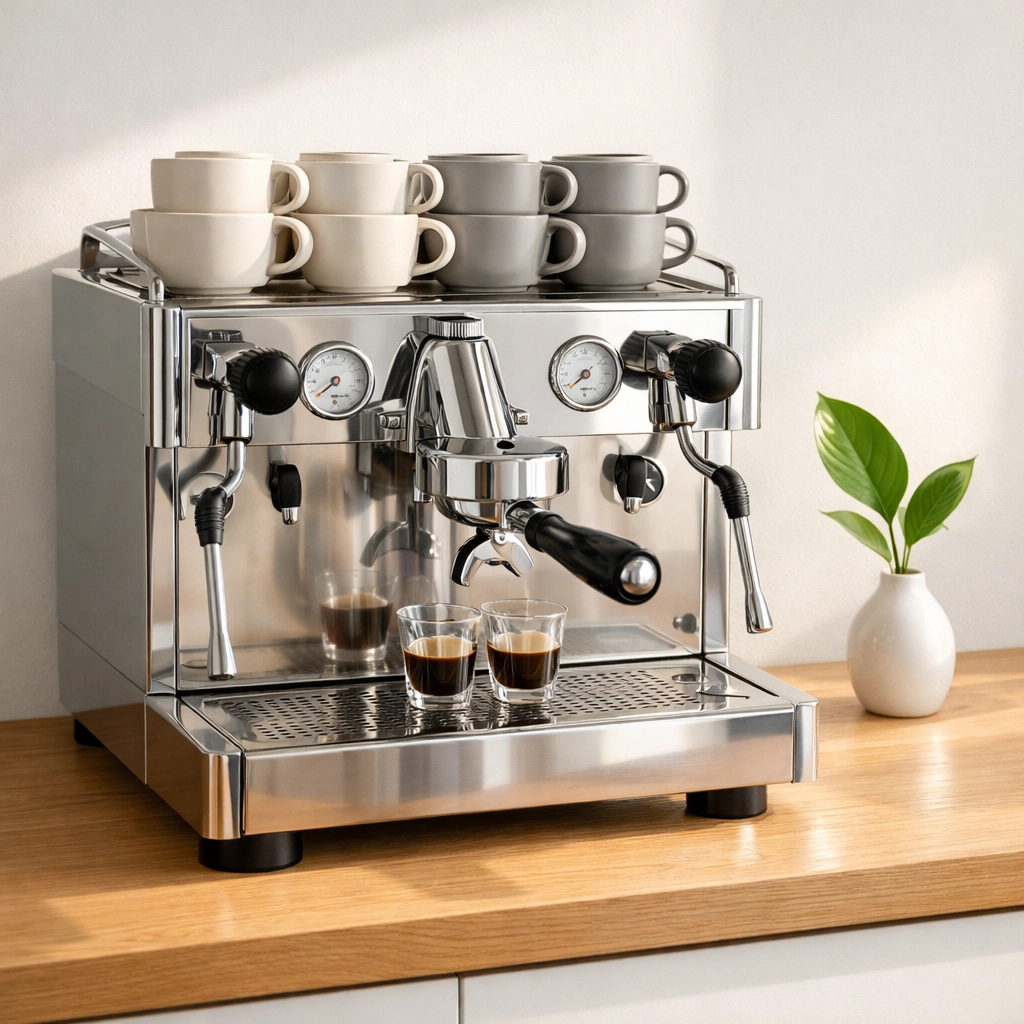
    Clean, professional espresso machine on a wooden counter, key equipment for a successful wholesale coffee shop.

    Financial Growth and the Bottom Line

    Let's talk money for a second. Partnering with a wholesale supplier actually saves you more than just the "bulk discount."

    1. Reduced Waste: When your baristas are properly trained, they waste less milk and less coffee.
    2. Operational Efficiency: We help you dial in your workflow. If you can serve a customer 30 seconds faster because your bar is set up correctly, that adds up to a lot of extra revenue over a year.
    3. Brand Authority: Serving high-quality specialty coffee allows you to charge a premium. Customers are happy to pay a bit more for a coffee that actually tastes like chocolate and berries rather than charcoal.

    We also provide tools like our coffee brewing calculator to help you get your recipes perfect every time, ensuring you get the most out of every gram of coffee you buy.


    More Than a Supplier: A Business Advisor

    The best thing about a wholesale partnership is having someone to call when things go sideways. "The coffee tastes sour this morning, what do I do?" or "Our steam wand is losing pressure, help!"

    We’ve helped countless coffee shops navigate the tricky waters of building a shop. We know what works and what doesn't. We can help you understand the theatre of coffee, how to make the process of making a latte look as good as it tastes.

    We even dive into the nitty-gritty details, like helping you understand the difference between latte and cappuccino milk textures or explaining why crema isn't necessarily the only indicator of a good shot (it’s just the CO2 being forced out of the coffee, after all!).

    Barista pouring silky microfoam for latte art into a cup of specialty espresso with rich golden crema.

    Customisation and Differentiation

    In a crowded market, how do you stand out? Sometimes, it’s about having a unique blend that no one else has.

    Strong wholesale partners (like us!) recognize that every business is unique. Maybe you want a coffee that’s super traditional, heavy body, nutty, chocolatey. Or maybe you want something wild and acidic that will get the coffee nerds talking. We work with our wholesale partners to find the right flavor profile for their specific demographic.

    We believe that coffee should be approachable, not snobby. We want to help you create an environment where a regular person can walk in and get a "normal" cup of coffee that happens to be the best they've ever had.


    Why Limini Coffee?

    We are a small, passionate team of roasters, trainers, and coffee lovers based in West Yorkshire. We aren't a giant corporate machine; we are people who genuinely care about your success. When you succeed, we succeed. It’s that simple.

    Our approach is built on three pillars:

    • Education: We offer comprehensive training because we know knowledge is power.
    • Quality: We roast in small batches to ensure every bag is perfect.
    • Support: We are here for the long haul, from the day you sign your lease to the day you open your second or third location.

    If you’re looking for coffee suppliers who treat you like a partner rather than just an invoice number, we’d love to chat. You can check out what others say about us on our reviews page to see the kind of relationships we build.

    Coffee roaster and cafe owner collaborating during a coffee cupping session to build a strong wholesale partnership.

    Final Thoughts: Investing in Your Future

    Starting a coffee business is a marathon, not a sprint. The "honeymoon phase" of opening week eventually fades into the daily grind of service, cleaning, and ordering. During those times, the quality of your coffee and the reliability of your supplier are what will keep you grounded.

    Don't settle for "good enough" beans. Don't settle for a supplier who doesn't answer the phone. Your growth depends on the quality of the cup you serve and the expertise you have behind the bar.

    If you are ready to take the next step and find a partner who is as invested in your café as you are, come and say hello to us at Limini Coffee. Let’s make some incredible coffee together.

    Whether you need advice on tamping, help choosing the right cups, or just a solid, reliable roast that your customers will love, we’ve got your back. That is the beauty of the wholesale partnership( you don't have to do it all alone. :))

  • 7 Mistakes You’re Making with AI Business Automation That Are Costing You Sleep

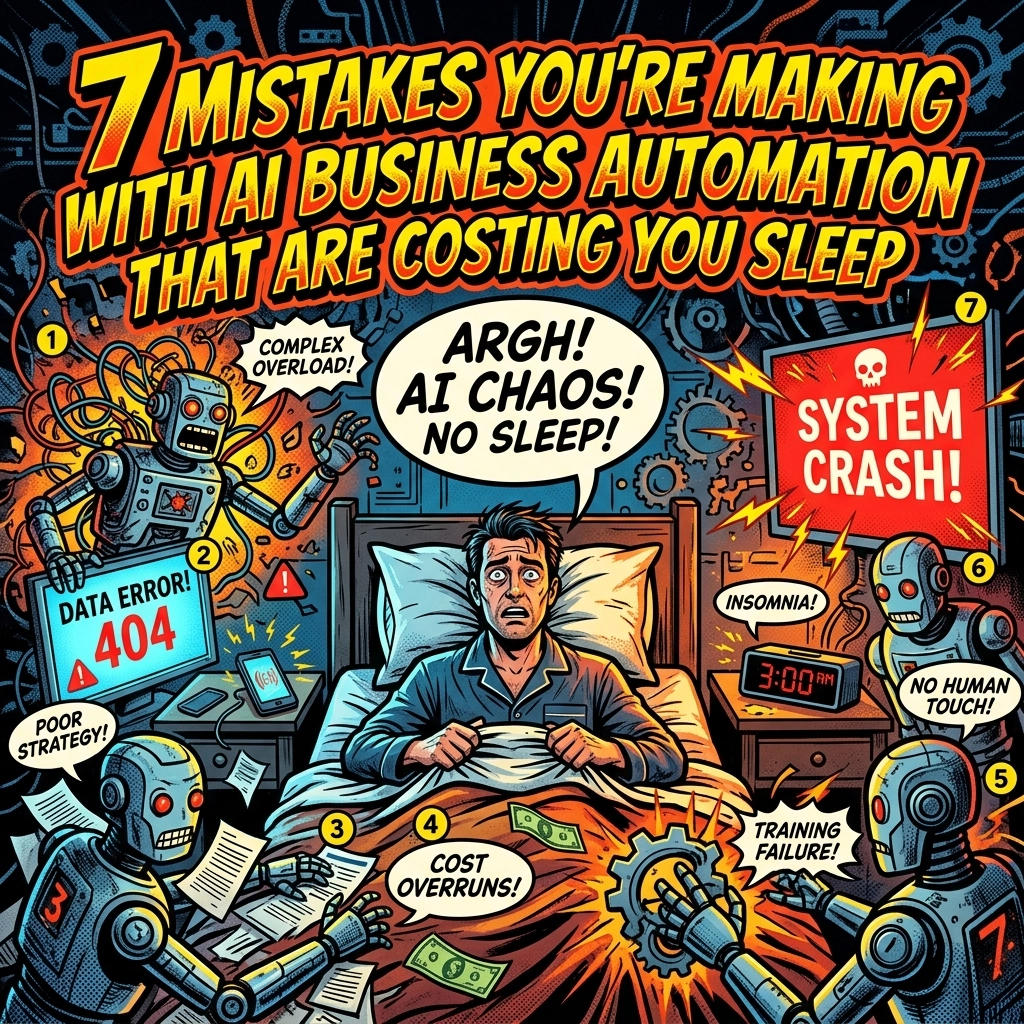
    7 Mistakes You’re Making with AI Business Automation That Are Costing You Sleep

    ☕ 2:14 AM.

    The blue light of your phone is the only thing illuminating your bedroom. You aren't scrolling TikTok or checking the news. You’re staring at a notification from your CRM.

    Something went wrong.

    The AI business automation you spent all weekend setting up just sent 400 personalized emails to your highest-paying clients… addressing them all as "Test Name."

    Your heart sinks. Your stomach does a slow, agonizing somersault. This was supposed to give you your life back. Instead, it’s just giving you a new flavor of anxiety.

    We’ve all been there. The promise of "passive income" and "business on autopilot" is intoxicating. But the reality? If you build your house on a foundation of shaky AI logic, it doesn't just crumble, it explodes.

    Here are the 7 critical mistakes you’re making with AI business automation that are keeping you awake at night, and exactly how to fix them before your inbox becomes a crime scene.


    1. THE "SET IT AND FORGET IT" FALLACY

    Mistake: Over-automating without human review.

    ☕ 7:00 AM.

    The day begins. You check your automated lead gen tool. It’s been busy. It sent out 50 LinkedIn messages while you were dreaming of a beach in Bali.

    But as you read the replies, you realize the "context-aware" AI missed a massive context. It pitched a "brand new startup solution" to a CEO who has been in business for 30 years.

    You look like an amateur.

    The biggest mistake small business owners make is treating AI like a finished employee rather than a talented, slightly chaotic intern. AI can draft, but it shouldn't always hit "send."

    When you deploy automation without a human "kill switch" or a simple review step, you’re playing Russian roulette with your brand's reputation.

    Stop juggling the hope that it "just works." It won't. Not every time.

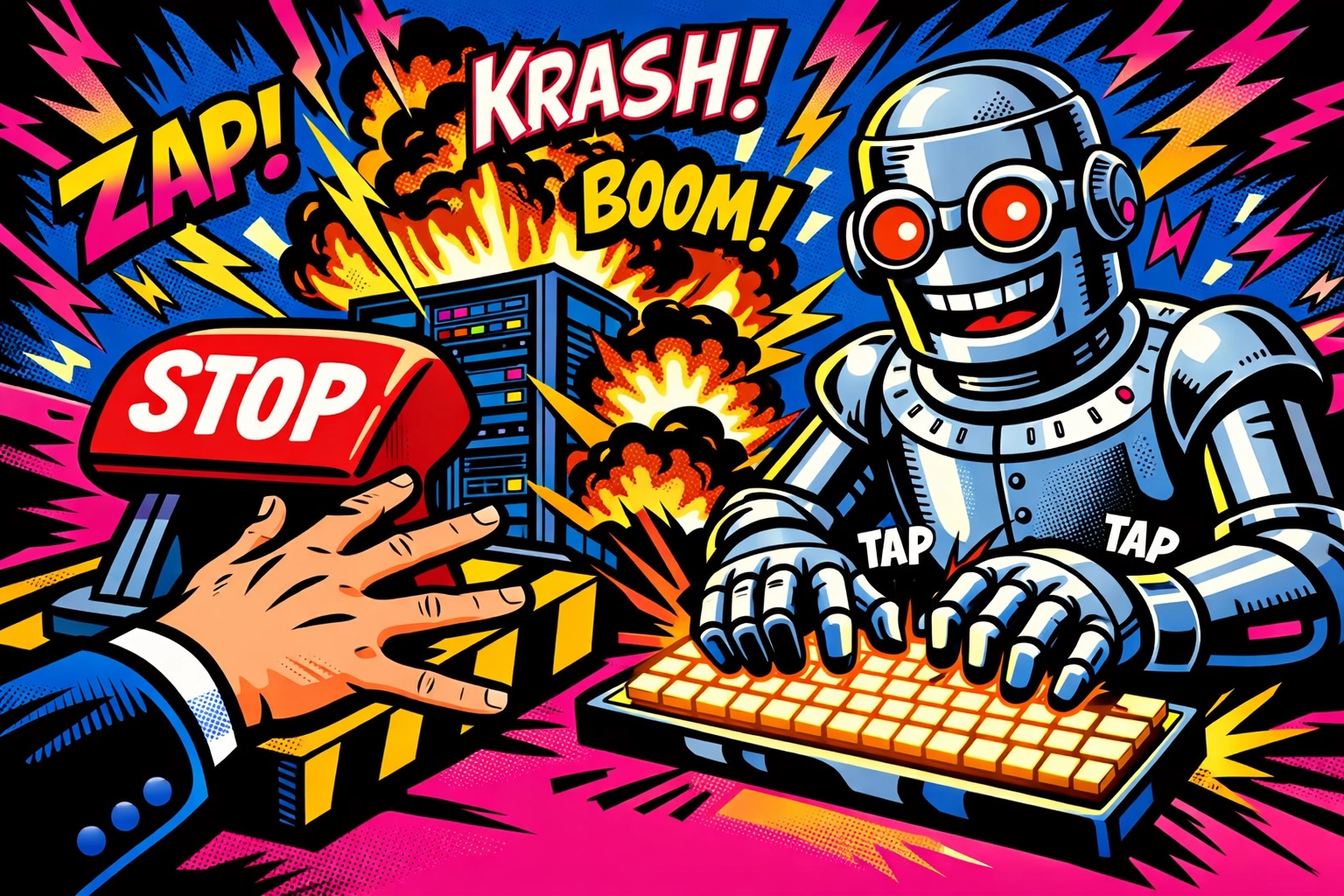
    Robot typing near a server explosion as a person reaches for a stop lever, showing the risk of over-automating your business.

    2. FEEDING THE BEAST TRASH

    Mistake: Using poor-quality input data.

    📱 9:30 AM.

    You’re staring at a spreadsheet. Or rather, the AI is staring at it. You’ve asked your business automation tools to predict your sales for next month.

    The AI gives you a number that looks like a phone number. It’s impossibly high.

    Why? Because your data is a mess. You’ve got duplicate entries, outdated contact info, and "test" purchases from 2023 still sitting in your primary database.

    AI doesn't have "common sense." It doesn't know that $500,000 sale was just you testing the checkout page. It just sees numbers and does math.

    If your input is garbage, your output will be expensive garbage. You need to clean house before you invite the AI in to move the furniture.

    If you want to see how clean, automated systems actually look, you should probably check out what we’re doing over here.

    3. THE "PRETTY GRAPH" HALLUCINATION

    Mistake: Relying on misleading AI-powered visualizations.

    📊 11:15 AM.

    Your new AI dashboard shows a massive spike in user engagement. You’re thrilled. You start thinking about hiring a new assistant or finally upgrading your laptop.

    But wait… you dig deeper.

    The AI misinterpreted the relationship between "clicks" and "bots." It’s showing a correlation that doesn't exist. It’s literally making things up to satisfy the prompt you gave it.

    Automated visualization tools love to tell you a good story. They’ll find patterns in clouds if you ask them to. Without human oversight to cross-check these insights against actual bank statements, you’re making strategic decisions based on a digital daydream.

    Professional inspecting a melting bar chart, representing the danger of relying on misleading AI business automation tools.

    4. WHISPERING SECRETS TO THE VOID

    Mistake: Transmitting sensitive data without protection.

    🔒 1:45 PM.

    You need to summarize a legal contract or a private pricing strategy. You copy the whole thing, sensitive client names, trade secrets, and all, and paste it into a free, public AI tool.

    "Summarize this for me," you type.

    The AI does a great job. But now, your proprietary data is part of a public training set. You’ve essentially just whispered your secret sauce into a megaphone in the middle of Times Square.

    Most business owners don't realize that "free" AI tools often trade convenience for your data. One leak of a client's personal info or your internal margins, and that "time-saving" tool just cost you a lawsuit.

    Keep your secrets secret. Use tools that guarantee data privacy.

    5. THE BLIND SPOT IN THE MACHINE

    Mistake: Failing to address AI bias in your models.

    🤝 3:20 PM.

    Your automated hiring filter or lead scoring tool is running. You notice it’s only suggesting leads from one specific zip code, or it’s rejecting every applicant who didn't go to an Ivy League school.

    AI models inherit the biases of their creators and the data they were trained on. If you aren't auditing your automation, you might be accidentally building a "walled garden" that shuts out incredible opportunities, or worse, discriminates against potential customers.

    A biased AI is a liability. It’s not just "efficient", it’s efficiently wrong.

    Regularly audit your workflows. Ask yourself: "Is this tool making assumptions I wouldn't make?"

    Mechanical claw picking up stones while ignoring gold, showing how AI bias in business automation hurts lead generation.

    6. THE FALSE POSITIVE FEVER DREAM

    Mistake: Ignoring high error rates in AI predictions.

    🔍 5:00 PM.
    Your anomaly detection software flags 20 "critical errors" in your payment gateway. You panic. You cancel your dinner plans. You spend three hours digging through code.

    The result? Nothing was wrong. The AI just didn't understand that a holiday weekend causes a different pattern of traffic.

    False positives are the silent killer of productivity. They create "work about work." If your AI tools are constantly crying wolf, you’ll eventually stop listening to them, which is exactly when a real wolf will show up and eat your profit margins.

    You need to calibrate your tools. Don't just accept a "99% accuracy" claim from a marketing page. Test it against your real-world chaos.

    7. THE CLUTTERED WORKFLOW CATASTROPHE

    Mistake: Assuming automated data preparation is reliable.

    🌙 11:30 PM.

    You’re back where we started. Staring at the screen.

    You realized that the tool you used to "clean" your data actually deleted 15% of your leads because it thought they were "outliers." Those weren't outliers. Those were your biggest potential whales.

    Automation isn't a replacement for strategy. It’s an accelerant. If you’re accelerating in the wrong direction, you’re just going to hit the wall faster.

    Business automation tools are meant to clear your plate, not add more items to your "to-do" list. But that only happens when you treat them with a healthy dose of skepticism.


    HOW TO FINALLY SLEEP THROUGH THE NIGHT

    The common thread in all these mistakes? Over-reliance.

    You’re trying to hand over the steering wheel entirely while the car is still learning what a stop sign looks like.

    The secret to winning at AI business automation isn't finding a "perfect" tool. It’s building a system where AI does the heavy lifting, but you keep your eyes on the road.

    You need a partner in this. A way to build these systems without needing a PhD in Machine Learning or a fleet of expensive consultants.

    Imagine a world where your lead gen actually generates leads. Where your data is clean. Where your security is ironclad. And where you can actually close your laptop at 5:00 PM and not think about it until 9:00 AM the next day.

    It’s not a fantasy. It’s what happens when you stop making these seven mistakes and start building with intent.

    If you're ready to stop the 2:00 AM panic attacks and start actually scaling, see how we can help you automate the right way here.

    Scaling shouldn't be this stressful. But here we are.

    Let's fix it.

    FAQ: YOUR AUTOMATION ANXIETY, ANSWERED

    Q: Is AI automation too risky for a small business?
    No. It’s only risky when it’s unsupervised. Think of it like a power tool: incredibly useful, but you wouldn't leave it running in a room full of toddlers.

    Q: How much human review is "enough"?
    Start with 100%. As the AI proves it can handle specific tasks consistently, dial it back to 10% spot checks. Never go to 0%.

    Q: Can I use free AI tools for my business?
    For brainstorming? Sure. For handling sensitive client data or core business logic? Absolutely not. You get what you pay for, and in this case, you’re paying with your privacy.

    Q: What’s the first thing I should automate?
    The task you hate the most that has the lowest "consequence of error." Don't start with your payroll. Start with your meeting notes or initial lead sorting.

    Q: How do I know if my data is "dirty"?
    If you have to manually fix things in your CRM more than once a week, your data is dirty. If your AI predictions look like lottery numbers, your data is dirty.

    Q: Where can I find tools that actually work?
    The landscape is messy. Start with proven frameworks. Check out Marblism's approach to see what high-level automation looks like without the headaches.

    Stop Guessing. Start Automating. Sleep Better.

  • Hospitality Trends 2026 Matters: Why Your Hotel Needs a Tech Reality Check

    Hospitality Trends 2026 Matters: Why Your Hotel Needs a Tech Reality Check

    Modernize your stack. Delight every guest. Scale with ease.

    In 2026, technology isn't just a "nice to have" or a back-office utility. It’s the central nervous system of your hotel. If your Property Management System (PMS) is still acting like a glorified digital filing cabinet, you aren't just falling behind, you’re losing guests to properties that treat technology as an experience, not an expense.

    Today’s travelers aren't looking for a room. They’re looking for a seamless, frictionless journey that anticipates their needs before they even know they have them. Achieving this requires moving beyond fragmented legacy systems toward a unified platform. One that handles everything from the first search to the final checkout. All from one innovative platform.

    The Shift from Support Tool to Strategic Foundation

    The hospitality landscape has hit a critical inflection point. For years, we treated tech like a support beam, important, sure, but mostly invisible. Now, it’s the foundation. With rising costs and a global labor crunch, technology is the only lever left to pull if you want to increase efficiency without sacrificing the "hospitality" in your service.

    We believe that great technology should be invisible to the guest but indispensable to the staff. It shouldn't feel like "using a system", it should feel like orchestrating a symphony.

    Why the old way is fading:

    • Fragmented data creates "stranger" guests.
    • Manual tasks drain staff morale and energy.
    • Legacy hardware limits your ability to scale.

    Modern hotel lobby at golden hour with staff and guests prioritizing human connection through technology.

    AI: Your New Digital Collaborator

    Artificial Intelligence has officially moved out of the "hype" phase and into the "operational" phase. In 2026, AI isn't a robot butler in the lobby. It’s the invisible intelligence that optimizes your room rates, drafts personalized responses to reviews, and suggests the perfect upsell at the perfect moment.

    We think AI should empower your team, not replace them. By automating the repetitive, you give your staff the freedom to do what they do best: connect with people.

    How AI transforms the guest journey:

    • Predictive intelligence that knows a guest's pillow preference before arrival.
    • Smart chatbots that handle 80% of routine inquiries instantly.
    • Automated marketing content tailored to specific traveler personas.

    “Since we integrated AI into our daily workflow, our front desk team saves 10 hours a week on admin. That’s 10 hours they now spend actually talking to guests,” says one Mews partner.

    The Power of the Unified Tech Ecosystem

    If your staff is jumping between ten different tabs just to check a guest in, your tech stack is broken. Fragmented systems lead to fragmented experiences. The future belongs to the unified ecosystem, a world where your CRM, your PMS, and your payment gateway all speak the same language.

    A unified platform gives you a single source of truth. It allows you to see the guest as a whole person, not just a reservation number.

    The benefits of going unified:

    • Real-time data synchronization across all departments.
    • Elimination of manual data entry and human error.
    • Seamless integration with best-in-class third-party apps.

    Hand reaching for a curated welcome tray in a luxury hotel suite showcasing guest personalization.

    Contactless is No Longer a Differentiator

    Remember when mobile check-in was a "cool feature"? In 2026, it’s the baseline. Guests expect to bypass the queue. They want digital keys, touch-free payments, and the ability to control their room temperature from their own smartphone.

    This isn't just about being "high-tech." It’s about giving guests control over their own time. When you remove the friction of the front desk, you create space for more meaningful interactions later in the stay.

    The smart room standard:

    • IoT sensors that adjust lighting based on occupancy.
    • Voice-controlled concierge services for in-room dining.
    • Instant, secure mobile payments for every hotel service.

    A sleek tablet on a marble surface in a modern hotel office representing a unified tech ecosystem.

    Data-Driven Operations: Stop Guessing, Start Knowing

    Are you making decisions based on "gut feeling" or actual guest behavior? 2026 is the year of predictive maintenance and business intelligence. By analyzing patterns in real-time, you can fix a leaking faucet before the guest even notices it or staff up perfectly for a sudden surge in bookings.

    We believe data should be accessible, not intimidating. It should provide clear insights that lead to immediate action.

    Three ways to use your data:

    • Optimize revenue through hyper-local demand forecasting.
    • Reduce energy costs with smart utility monitoring.
    • Identify high-value guests and reward their loyalty automatically.

    “Having all our data in one dashboard changed how we look at our business. We’re not just reacting anymore; we’re staying two steps ahead,” notes a boutique hotel manager.

    Close-up of a guest using a smartphone for contactless digital key entry at a hotel room door.

    Sustainability Tech as a Value Driver

    Green operations are no longer just about a sign in the bathroom asking guests to reuse towels. Today, sustainability is driven by smart systems that minimize waste without compromising comfort. Travelers, especially Gen Z and Millennials, are actively choosing brands that can prove their environmental credentials with hard data.

    Tech-led sustainability:

    • Smart HVAC systems that reduce energy waste by 30%.
    • Digital-only documentation to eliminate paper waste.
    • Water recycling systems monitored by real-time IoT.

    Minimalist hotel manager workspace on a concrete desk representing organized data-driven operations.

    The 2026 Tech Reality Check: A 30-Minute Audit

    It’s time for an honest assessment. If you answer "no" to more than two of these questions, your hotel is likely leaving money: and guest satisfaction: on the table.

    1. Can your guests check in and access their room without speaking to anyone? (If they want to).
    2. Does your CRM show you a guest's preferences across all your properties instantly?
    3. Are your communication channels (WhatsApp, Email, Chat) integrated into one view?
    4. Can you change your room rates across all channels in under 60 seconds?
    5. Is your staff happy with the tools they use every day?

    If your current system feels like a bottleneck, it’s time to look at what’s next. You can explore how modern hospitality tech changes the game at https://referrals.mews.com/ulufvqob.

    Step Into the Future

    Moving to a modern platform isn't as scary as it sounds. In fact, it’s the most liberating thing you can do for your business. It’s about moving from "management" to "hospitality." It’s about reclaiming your time so you can focus on the reason you got into this industry in the first place: the people.

    Ready to upgrade?

    1. Audit your current tech stack for bottlenecks.
    2. Identify the one area where automation would have the biggest impact.
    3. Schedule a demo to see what a truly unified platform looks like.

    The world is moving fast. Your guests are already there. It’s time for your tech to catch up. Get started today and see how easy it is to get you earning more revenue in no time.

    Check out the future of PMS here: https://referrals.mews.com/ulufvqob.