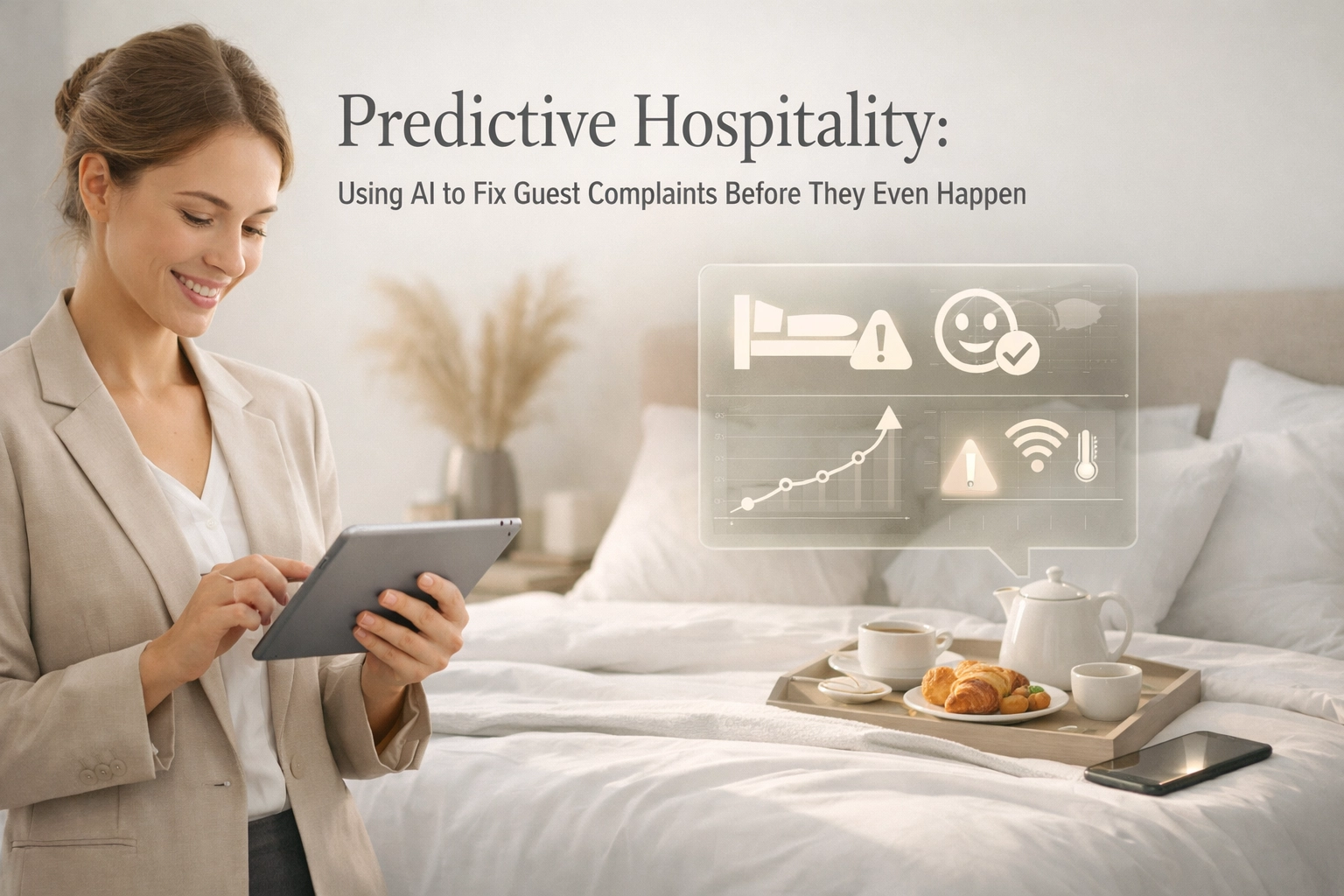
Anticipate needs. Automate solutions. Delight guests.
The traditional hospitality model is built on the "apology tour." A guest calls down because the AC is rattling. You apologize, send maintenance, maybe offer a free drink, and hope they don't leave a scathing review on TripAdvisor. It’s reactive, stressful, and honestly, a bit outdated.
We believe the future isn't about how well you apologize; it’s about making sure you never have to. By leveraging AI-driven predictive hospitality, smart hoteliers are identifying operational friction points before a guest even realizes something is wrong.
Properties using predictive analytics see a 0.6 to 0.8 star rating improvement within just six months. They resolve issues 2-3 days faster than those stuck in the manual loop. It’s about moving from "What can I do for you?" to "We’ve already taken care of that for you."
All from one innovative hospitality platform.
The end of the "Check-in Surprise"
We think the best service is the kind the guest never has to ask for. Predictive hospitality uses machine learning to analyze patterns that humans simply can’t see at scale. While a front desk manager might notice a couple of grumpy guests, AI identifies that eight people mentioned "slow elevators" in the last 48 hours and triggers a maintenance check before the motor actually fails.
It’s about spotting the signal in the noise. By integrating your PMS with AI-driven feedback loops, you can:
- Detect micro-trends: Identify recurring complaints across social media, live chat, and internal notes instantly.
- Predict maintenance needs: Use IoT sensors to monitor room temperature fluctuations that signal a struggling HVAC unit.
- Prevent service gaps: Forecast peak check-in rushes based on historical flight delay data and local traffic.

Using past behavior to script the future
Why ask a returning guest if they want a quiet room when your data already knows they’ve requested one three times in a row? Predictive hospitality takes guest history and turns it into an actionable blueprint.
When your system is integrated with a platform like Mews, that data becomes your most valuable asset. If a guest’s profile shows a preference for a room far from the elevator or a specific ambient temperature, the system can automate those settings before they even land at the airport.
"The AI flagged a room temperature drop in 402 before the guest even checked in," says one London-based GM. "We swapped the unit, and the guest had a perfect stay. They never knew they almost had a cold night."
We believe in making the technology do the heavy lifting so your staff can focus on the human touch.
Proactive maintenance: The "Invisible" fix
Nothing kills a guest’s vibe faster than a "Broken" sign on the gym door or a lukewarm shower. Predictive systems don't wait for things to break. They analyze "dissatisfaction signals": those subtle hints in guest behavior or hardware performance: that precede a total failure.
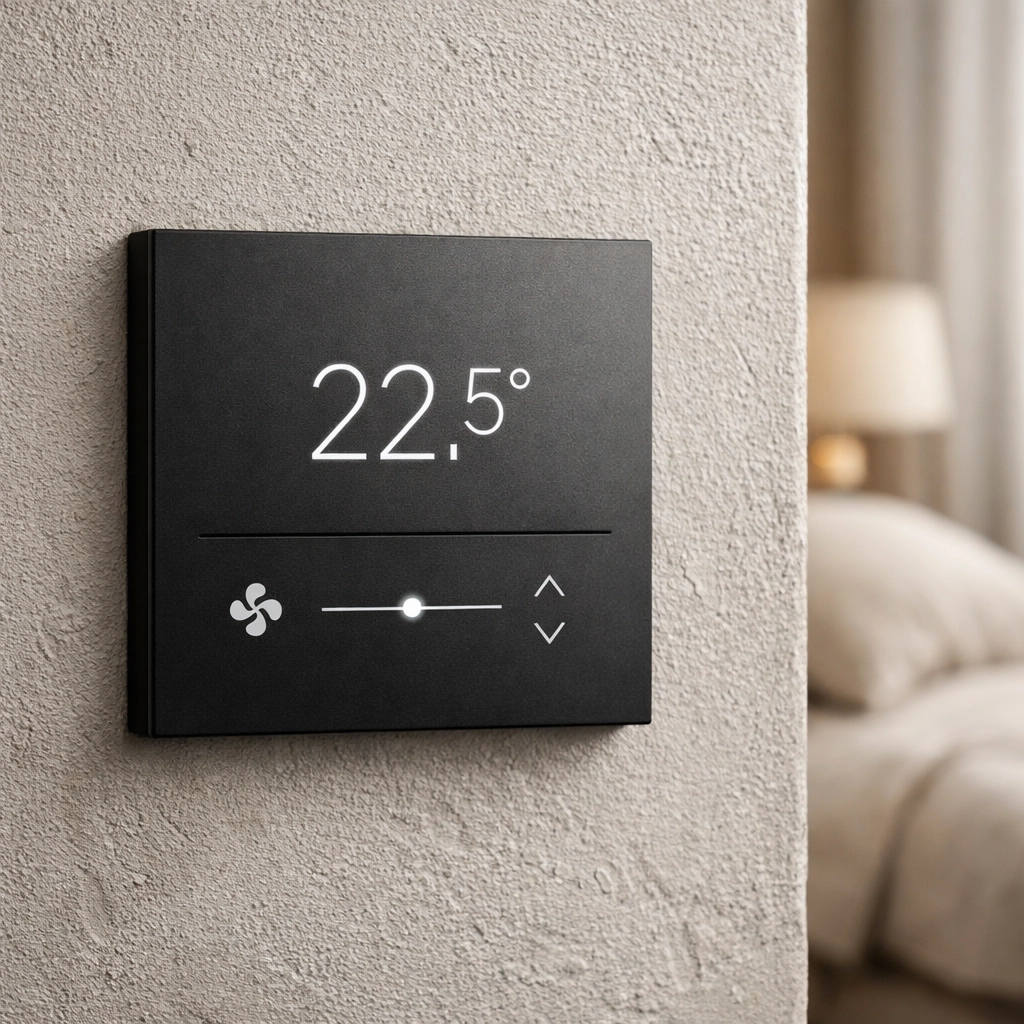
- Smart HVAC: Sensors detect when a unit is working 20% harder than usual to maintain a temperature.
- Usage-based cleaning: AI tracks room occupancy and bathroom usage to alert housekeeping exactly when a refresh is needed, rather than following a rigid, inefficient schedule.
- Water leak detection: Catch a drip in a wall before it becomes a flood that takes three rooms out of inventory.
By fixing things before they fail, you aren't just saving the guest experience; you’re saving your bottom line. Emergency repairs are always more expensive than scheduled maintenance.
Staffing for the "Invisible" rush
We’ve all seen it: the lobby is empty, the staff is relaxed, and then: boom. Three tour buses arrive, and the front desk is underwater for two hours. Predictive hospitality isn't just about the guests; it's about your team.
AI analyzes occupancy data, local event calendars, and even weather patterns to predict when your "rushes" will actually happen.
- Optimize scheduling: Know exactly when you need four people at the desk versus two.
- Reduce burnout: Prevent the "firefighting" mentality that leads to high staff turnover.
- Better breakfast flow: Predict when the dining room will hit capacity so you can suggest "quiet times" to guests via a mobile app.
It’s about being prepared, not just being present.
Turning data into 5-star reviews
The jump from a 4-star to a 5-star review often comes down to the absence of friction. When a guest feels like the hotel "just gets them," they don't just leave a review; they become an advocate.
Statistics show that humans reviewing guest feedback manually miss about 70% of actionable insights. They’re too busy running the hotel to see the pattern in why Room 302 always gets a "just okay" rating. AI doesn't get tired. It processes every chat, every review, and every sensor log to give you a clear roadmap for improvement.

How to get started with Predictive Hospitality
Transitioning to a proactive model doesn't happen overnight, but it is easier than you think when you have the right tech stack.
- Centralize your data. Use a cloud-native PMS like Mews to ensure all guest and operational data lives in one place.
- Connect your "ears." Integrate AI feedback tools that scan reviews and guest messaging for sentiment shifts.
- Deploy IoT sensors. Start with high-impact areas like HVAC and water systems to prevent the most common "hard" complaints.
- Empower your team. Give staff the authority to act on AI alerts without waiting for a manager's approval.
We believe in the power of "No Complaints"
The goal of predictive hospitality isn't to handle complaints better. It’s to eliminate them. When your building, your staff, and your software are all working in a predictive loop, the "apology tour" becomes a thing of the past.
You stop being a firefighter and start being a host. You stop worrying about what might go wrong and start focusing on how to make things even better.
Ready to see how the most innovative hotels are staying one step ahead? Explore how a modern PMS can transform your operations.
Learn more about the Mews platform.
The future of hospitality is invisible. It’s quiet. It’s seamless. And most importantly, it’s already happening. Don’t wait for the next complaint to decide it’s time to change. Predict it. Fix it. Move on.

Summary of the Predictive Shift:
- Reactive: Guest complains about a cold room → Maintenance fixes it → Guest gets a voucher.
- Predictive: System detects HVAC efficiency drop → Maintenance fixes it while the guest is at dinner → Guest never knows there was an issue.
Which hotel would you rather stay in? Which one would you rather run?
The choice is yours, and the technology is here to help you make it. Start your journey toward predictive excellence today and get your property earning 5-star reviews in no time.
Leave a Reply