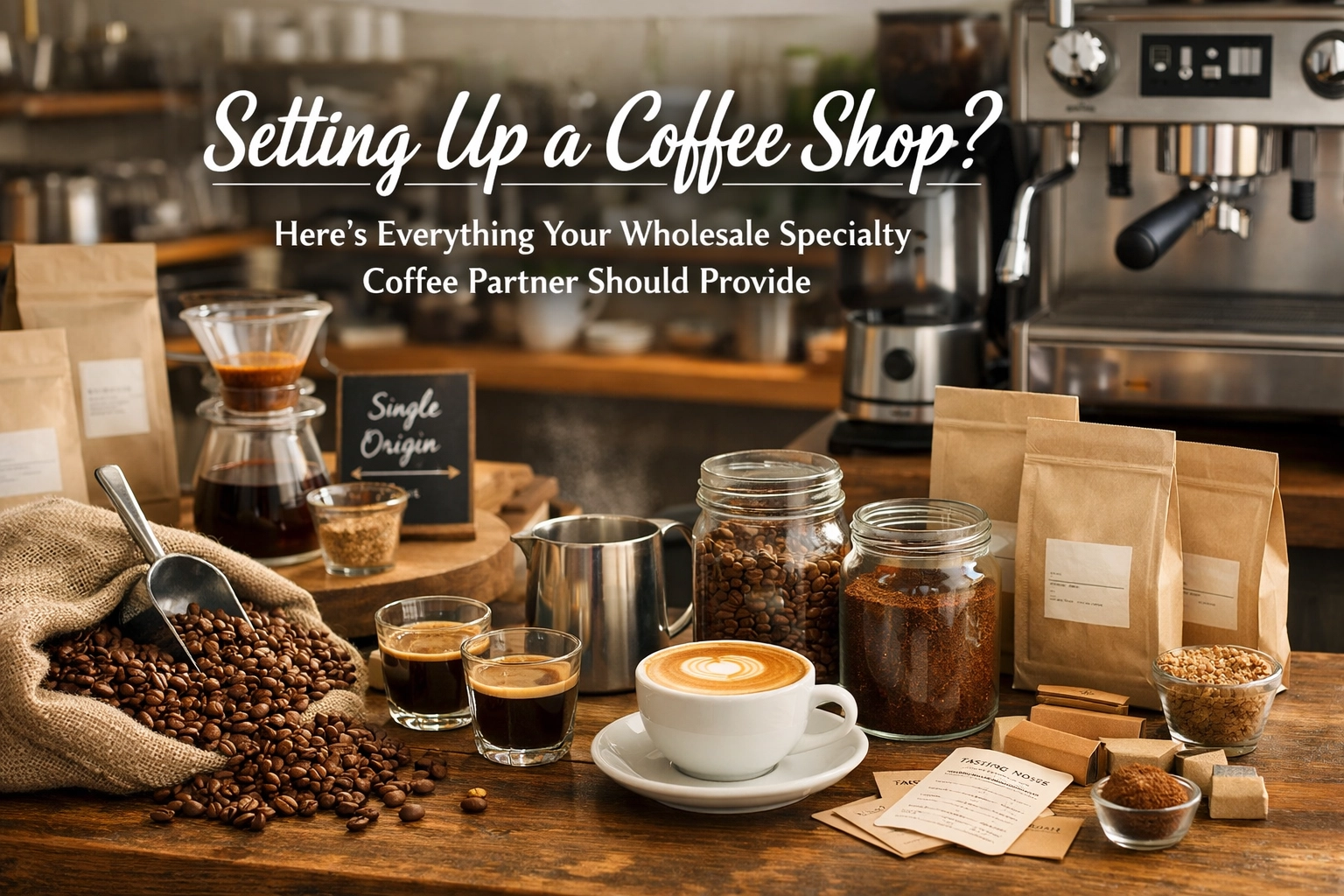
So you're opening a coffee shop. Exciting times ahead. But here's the thing: choosing the right wholesale specialty coffee partner is probably the most critical decision you'll make beyond your lease agreement. And yet, most café owners approach it like they're just buying beans.
They're not just buying beans. You're choosing a business partner.
The difference between a basic bean supplier and a comprehensive wholesale coffee partner can literally make or break your business in the first year. We've seen it happen. The café with exceptional coffee but no barista training struggles. The one with a great machine but inconsistent bean supply frustrates customers. The shop that has both but no ongoing support? They plateau fast.
Let's talk about what you should actually expect: and demand: from your wholesale specialty coffee roaster.
Exceptional Beans With Actual Transparency
First things first: the coffee itself needs to be genuinely specialty grade. And we mean actually specialty, not just marketed as such.
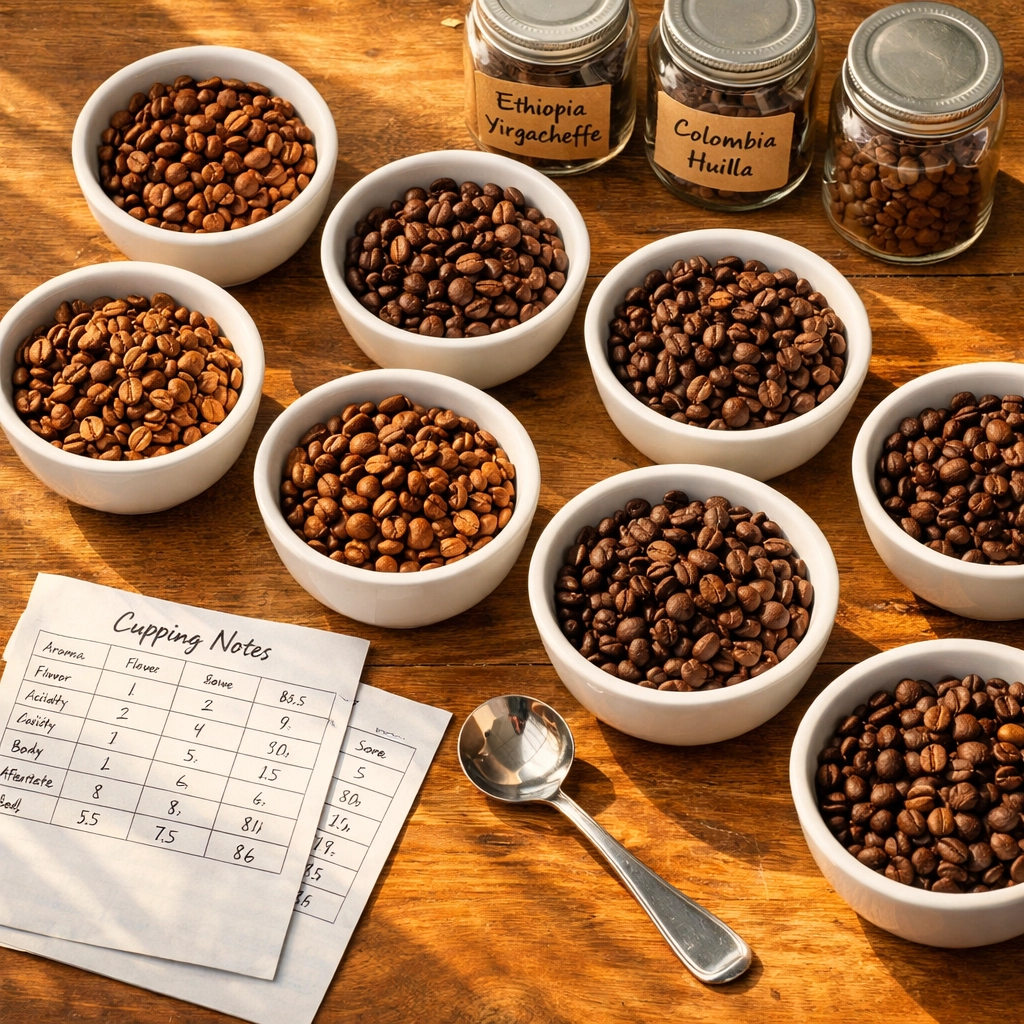
Your supplier should be working exclusively with beans graded 80 points and above on the Specialty Coffee Association scale. This isn't negotiable if you're positioning yourself as a quality-focused café. Ask for cupping scores. Request reports from certified Q Graders. These shouldn't be difficult to provide: any serious roaster has this documentation readily available.
But here's where it gets interesting. Quality scores are just the starting point.
Direct Trade Relationships Matter
The best wholesale partners have direct relationships with coffee farmers and cooperatives. This isn't just feel-good marketing: it directly impacts your coffee quality and consistency. When roasters work directly with producers, they get first pick of the harvest, can provide feedback on processing methods, and ensure fair compensation that incentivizes quality.
You should be able to trace your coffee back to specific farms or cooperatives. Ask about:
- Origin (country, region, specific farm if available)
- Varietal (the actual coffee plant variety)
- Elevation (higher generally means denser, more complex beans)
- Processing method (washed, natural, honey, anaerobic, etc.)
- Harvest dates
- Handling and transport methods
If your supplier can't answer these questions, you're dealing with someone who's buying from importers without much involvement in the supply chain. Not necessarily terrible, but you're missing the quality control and story that customers increasingly care about.
Fair Trade and Direct Trade certifications should be verifiable through public databases. Don't just take claims at face value: verify them. The coffee industry has enough greenwashing as it is.
Equipment Support (Because Most Suppliers Skip This Part)
Here's something most coffee suppliers won't tell you: they're happy to sell you beans but leave you to figure out equipment on your own. This is backwards.
Your wholesale partner should either supply equipment directly or have strong relationships with quality equipment providers. At Limini Coffee, for example, we work closely with equipment manufacturers because we know that even exceptional beans can't perform on inadequate machines.
You need guidance on:
- Espresso machine selection based on your volume and concept
- Grinder specifications (arguably more important than the machine itself)
- Water filtration systems
- Maintenance schedules and support
Some roasters operate as genuine solution providers: offering a complete package that combines beans, equipment, and expertise. This one-stop-shop approach makes your life significantly easier, especially if this is your first café.
And honestly? It should include ongoing technical support. Machines break down. You'll have questions. A good partner doesn't disappear after the sale.

Training Is Non-Negotiable (Here's Why)
Ready for a sobering statistic? Over 95% of new coffee shop owners don't have skilled baristas on staff when they open.
Think about that. You're investing tens of thousands: possibly hundreds of thousands: into a business where the product quality depends entirely on barista skill, and you're starting with zero expertise.
Your wholesale coffee partner needs to bridge this gap. The best ones offer:
- Comprehensive barista training for you and your staff
- Equipment operation and maintenance training
- Espresso extraction theory and troubleshooting
- Milk steaming and latte art fundamentals
- Menu development guidance
We offer barista training programmes specifically because we've seen too many cafés struggle with this. You can have the best beans and equipment in the world, but if your barista doesn't know how to dial in espresso or properly steam milk, you're serving mediocre coffee.
Some progressive roasters even provide remote support: video consultations, troubleshooting assistance, ongoing education as your business grows. This shouldn't feel like an upsell. It should be part of the partnership.
Consistency and Logistics That Actually Work
Exceptional coffee today and nothing next week doesn't build a business. Your supplier needs robust logistics and inventory management.
Confirm these details before committing:
- Minimum order quantities – Can you meet them without overstocking?
- Order frequency flexibility – Weekly? Bi-weekly? Can you adjust seasonally?
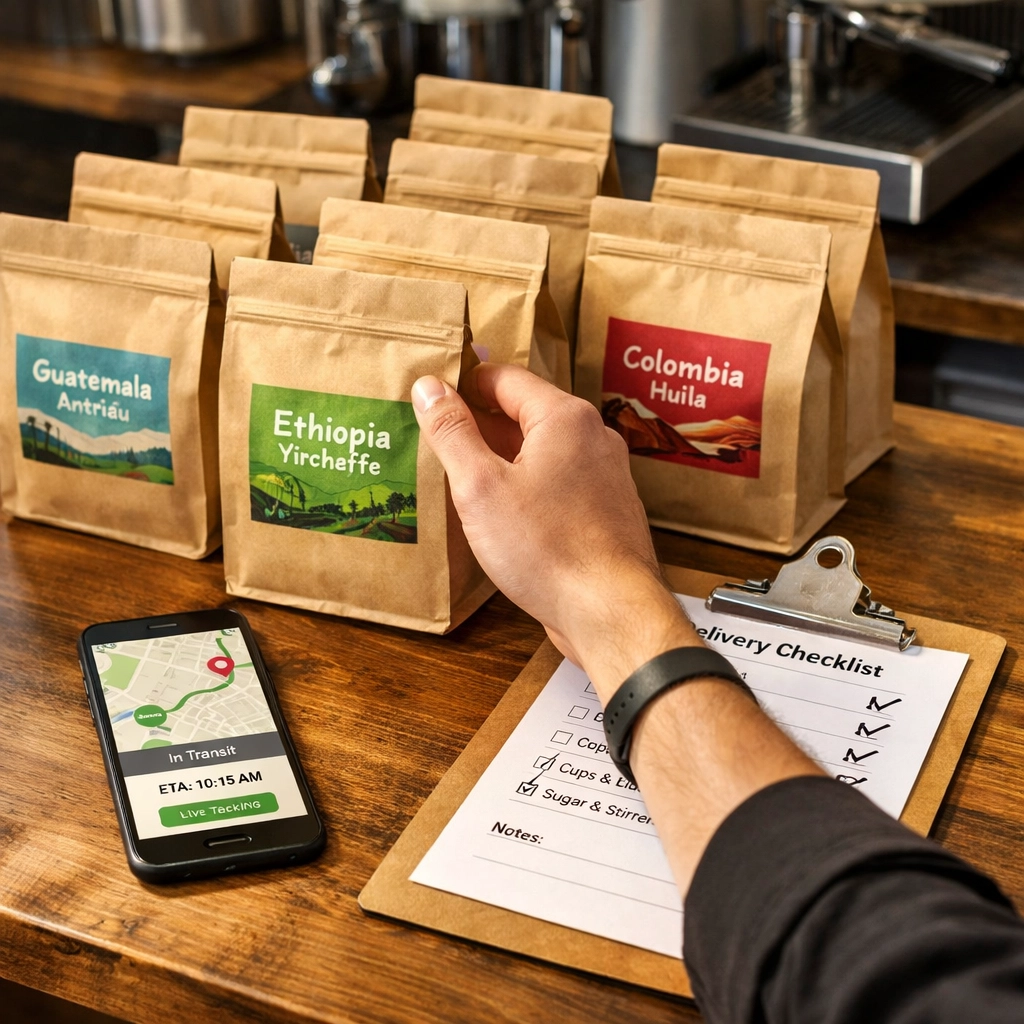
- Delivery reliability – Do they deliver directly or use couriers? What's their on-time record?
- Stock availability – How do they handle seasonal coffees running out? Do they notify you proactively?
- Communication standards – Who's your point of contact? How quickly do they respond?
Ask about their quality assurance protocols. How do they ensure every batch maintains consistency? What happens if you receive a bag that doesn't meet standards?
The supplier should be willing to send samples before you commit to full orders. And frankly, they should actively encourage this. If someone is reluctant to send samples, that tells you something.
Single Origins, Blends, and Flexibility
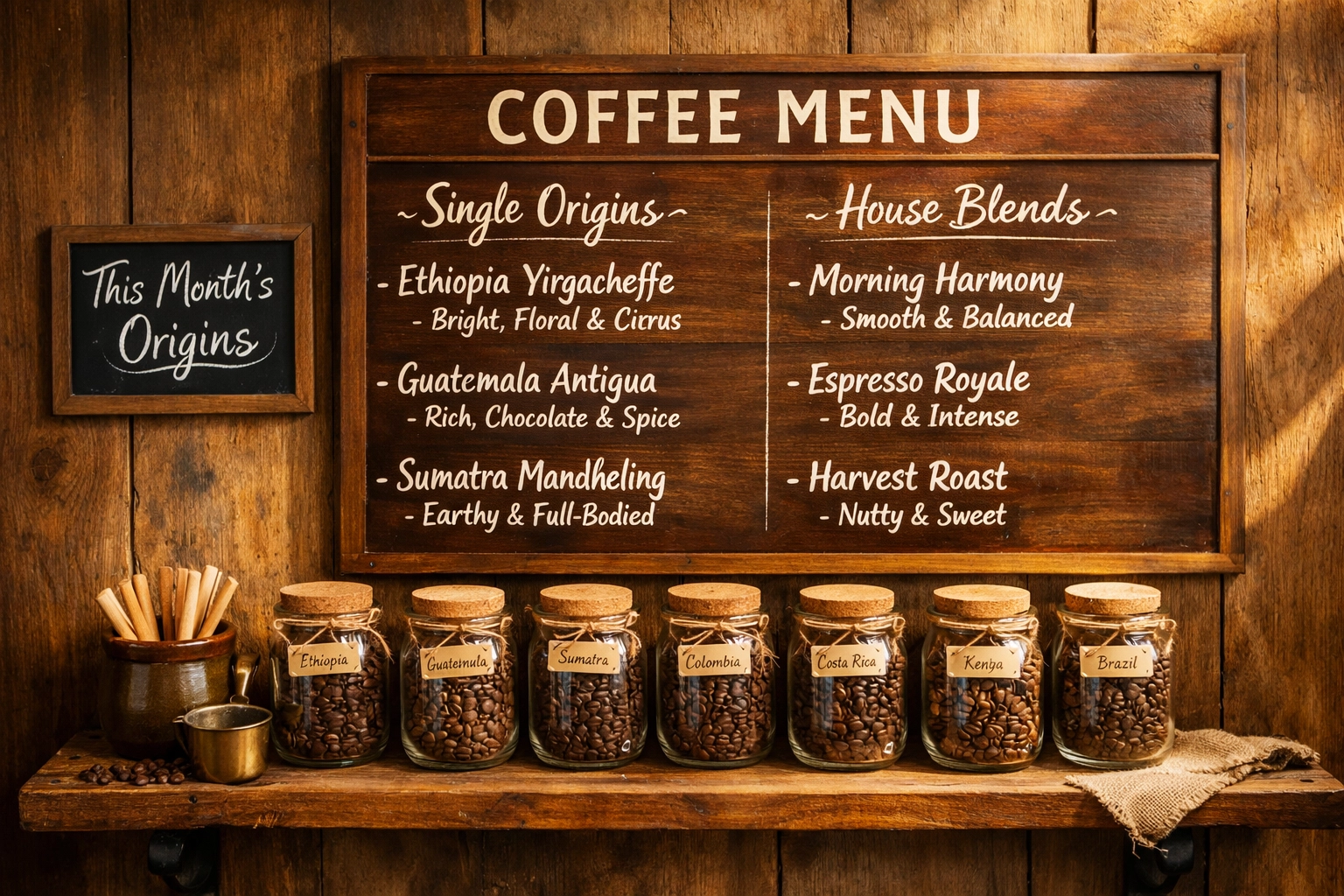
Your menu will likely need both single origin options and blends: different coffees for different drinks and customer preferences.
A comprehensive wholesale partner should offer:
- Signature espresso blends designed for milk-based drinks
- Single origin espressos for purists and black coffee enthusiasts
- Filter coffee options with varied flavor profiles
- Seasonal rotations to keep your menu interesting
- Custom blend development as your business matures
Some roasters are blend-focused, others champion single origins exclusively. The best partners understand that you need variety and will work with you to develop a menu that makes sense for your concept and customer base.
Beyond the Basics: Menu Development and Marketing Support
The truly exceptional wholesale partners go further. They help you understand coffee as a business, not just a product.
This might include:
- Menu development consultation (which drinks work with which beans)
- Pricing guidance based on your local market
- Marketing materials and educational resources for your customers
- Staff training on how to talk about coffee (origin stories, flavor notes, brewing methods)
- Seasonal promotion ideas
Some suppliers provide branded materials, POS resources, or even support with your café's overall coffee narrative. If you're creating a coffee-forward brand, this collaborative approach is invaluable.
At Limini Coffee, we see ourselves as partners in our wholesale clients' success: not just bean sellers. That means being available for menu planning discussions, answering customer questions about our sourcing, and staying involved as the business evolves.
Custom Packaging and Branding Options
If you're planning to retail coffee beans in your shop, your supplier should accommodate custom labeling and packaging. This includes:
- Your café branding on retail bags
- Flexibility in bag sizes and types
- Valve bags for optimal freshness
- Design support or templates
Not every new café needs this immediately, but it's worth confirming the supplier can support it when you're ready. Retailing beans can become a meaningful revenue stream: and it extends your brand into customers' homes.
The Real Cost of Cheap Coffee
Here's the uncomfortable truth: the cheapest wholesale coffee is almost never the best business decision.
When you're comparing suppliers based solely on per-kilo pricing, you're ignoring training costs, equipment support, consistency issues, and ultimately customer satisfaction. A supplier charging £2 more per kilo but including comprehensive training, equipment guidance, and ongoing support is actually the better deal.
Your customers can taste the difference between commodity-grade and specialty-grade coffee. And in 2026, with speciality coffee literacy higher than ever, they absolutely notice. Cutting costs on your core product is cutting costs on your entire brand promise.
Questions to Ask Potential Suppliers
Before you commit, have real conversations with potential partners. Ask:
- What's your minimum coffee grade standard?
- Can I see cupping scores and Q Grader reports?
- How do you source your coffee? Direct trade? Importers?
- What training do you provide, and is it ongoing?
- Do you offer equipment support or supply equipment directly?
- What are your delivery schedules and minimum orders?
- How do you handle quality issues or inconsistencies?
- Can you provide references from current wholesale clients?
- What happens if I need help troubleshooting during service?
The suppliers who genuinely want to partner with you will answer these enthusiastically. The ones who seem annoyed by questions? Keep looking.
It's a Partnership, Not a Transaction
Opening a coffee shop is challenging enough without choosing a wholesale partner who sees you as just another account number. The right supplier becomes an extension of your team: invested in your success because your success is their success.
Look for roasters who understand hospitality, who've worked in or with cafés extensively, and who see wholesale as relationship-building rather than volume-selling. The best partnerships evolve: your second year needs will differ from your first, and your supplier should grow with you.
If you're exploring wholesale options for a new or existing café, we'd love to talk. We've built our wholesale programme specifically around comprehensive support: because we know exceptional coffee requires more than just exceptional beans.
Your coffee is your product, your brand, and your customer experience. Choose your partner accordingly.
Leave a Reply