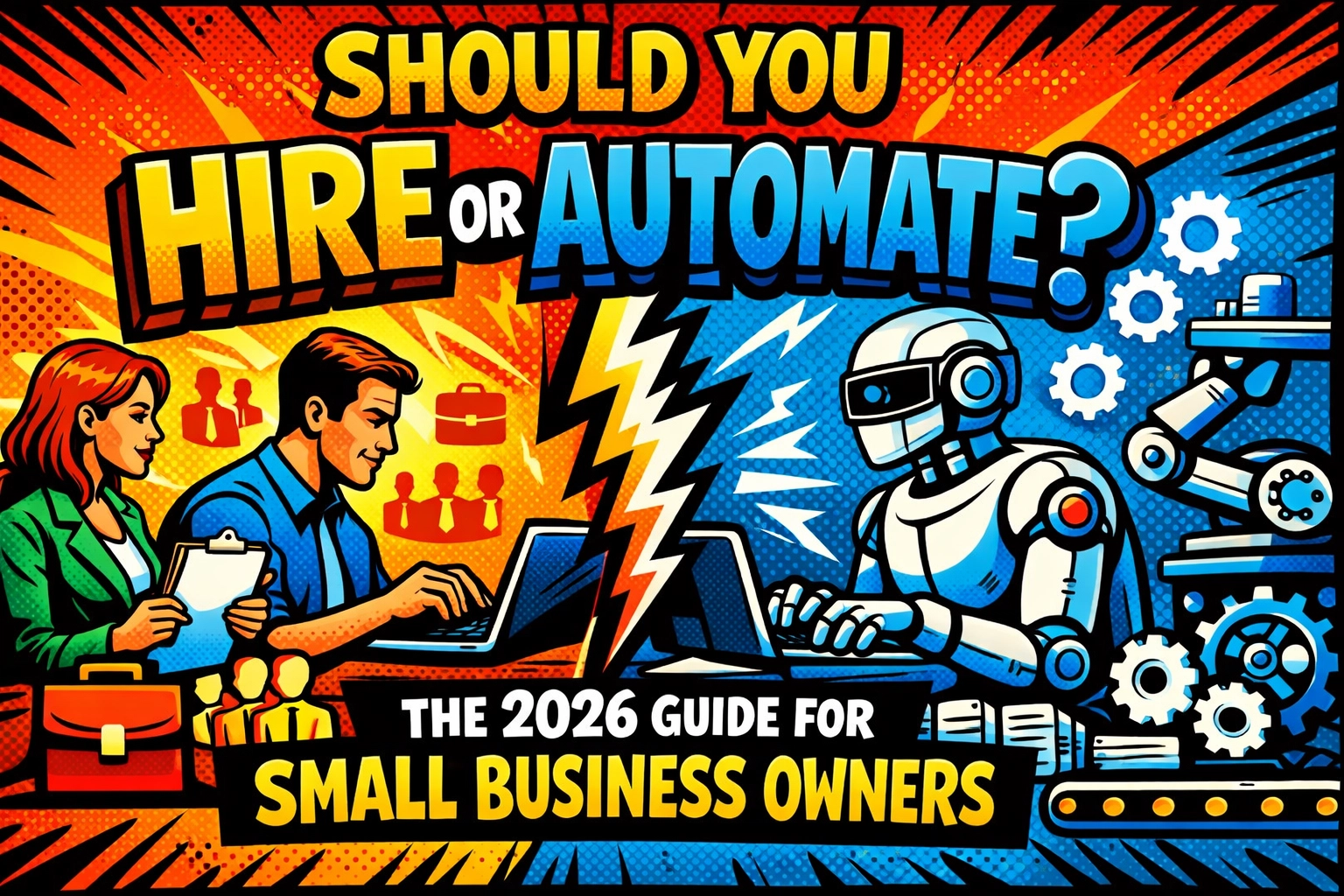
You're staring at a pile of work that's only getting bigger.
Customer emails. Social media posts. Lead follow-ups. Invoice reminders. Calendar chaos. The kind of stuff that eats your entire day but doesn't actually grow your business.
You know you need help. The question is: do you hire someone… or let AI handle it?
It's not 2022 anymore. The answer isn't as obvious as you think.
THE HIRING HEADACHE YOU'RE TRYING TO AVOID
Let's be honest about what hiring actually looks like in 2026.
You post the job. Wait for applications. Sift through resumes that all say the same thing. Schedule interviews. Conduct interviews. Check references. Make an offer. Hope they accept. Wait two weeks for them to start.
Then the real fun begins.

Onboarding takes weeks. You're training someone on your systems, your brand voice, your way of doing things. They're asking questions every 20 minutes. You're still doing your own work while teaching them to do theirs.
Contracts and compliance. Employment agreements. Tax forms. Benefits discussions. HR policies you probably don't have written down yet. One wrong move and you're dealing with labor law headaches.
The monthly burn. Salary. Taxes. Benefits. Sick days. Vacation time. You're looking at $3,000–$5,000 per month minimum for part-time help. More like $50,000+ annually for someone full-time who's actually good.
And here's the kicker , what if they quit in six months? You start the whole process over again.
WHAT AUTOMATION ACTUALLY MEANS IN 2026
Forget the clunky chatbots and robotic email templates you tried three years ago.
AI business automation in 2026 is different. It's not about replacing you , it's about handling the repeatable stuff while you focus on what actually matters.
Think about your typical week. How much of it is spent on tasks that follow a pattern?
- Responding to the same customer questions
- Scheduling meetings back and forth
- Posting to social media
- Following up with leads who went quiet
- Updating your CRM
- Writing routine emails
- Organizing files and data
If you're honest… probably 60–70% of your "work" is just managing the machine. Keeping the lights on. Admin tasks that need to happen but don't require your specific genius.
That's what modern automation handles. Not the creative strategy. Not the client relationships. Not the vision.
The repetitive stuff that drains your energy and kills your momentum.

THE FRAMEWORK: WHEN TO HIRE VS. WHEN TO AUTOMATE
Here's how to actually make this decision without second-guessing yourself for months.
Ask yourself: Is this task low-complexity and high-repeatability?
If yes , automate it. Things like responding to common customer questions, scheduling social posts, sending invoice reminders, or organizing leads in your CRM. These tasks follow patterns. They don't need human creativity.
If no , that's where you want human beings. Complex problem-solving. Strategic decisions. Building relationships. Creative work that requires judgment calls.
Run the real numbers.
A virtual assistant costs $3,000–$5,000 per month. They work during business hours. They need training. They take vacations.
AI tools work 24/7. They handle peak workloads instantly. They cost a fraction of a salary , often under $200/month for small business automation that replaces multiple part-time roles.
But here's what most people miss: it's not always one or the other.
THE HYBRID APPROACH THAT ACTUALLY WORKS
The smartest small business owners in 2026 aren't choosing between hiring and automation.
They're using automation to handle the 70% of work that's automatable… then hiring people for the 30% that requires human touch.
Let's say you're thinking about hiring a social media manager.
What does that role actually involve?
- Researching content ideas (automatable)
- Writing posts (partially automatable)
- Scheduling posts (completely automatable)
- Responding to comments (needs human touch)
- Analyzing performance (automatable)
- Strategic planning (needs human input)
See the pattern? About 60% of that role is administrative execution. Only 40% requires creative strategy and relationship-building.

So instead of hiring a $4,000/month social media manager… you automate admin tasks like research, writing drafts, and scheduling. Then you either handle the strategic parts yourself, or you hire a freelancer for 10 hours a month at $500 to refine the strategy.
You just saved $42,000 a year.
This is how businesses are scaling in 2026. They're not drowning in overhead. They're not micromanaging a team of five people. They're letting AI handle the grunt work and keeping humans for the high-value stuff.
WHERE MARBLISM FITS INTO YOUR DECISION
You're probably wondering: "Okay, but how do I actually do this?"
That's the whole point of Marblism.
You're not hiring five different people to handle your business operations. You're not paying for ten separate tools that don't talk to each other. You're not spending weeks training someone who might quit.
You're getting AI that handles your admin work : customer service, social media, lead generation, content creation : while you focus on running your actual business.
It's not about replacing your judgment. It's about giving you back your time.
Here's what that actually looks like:
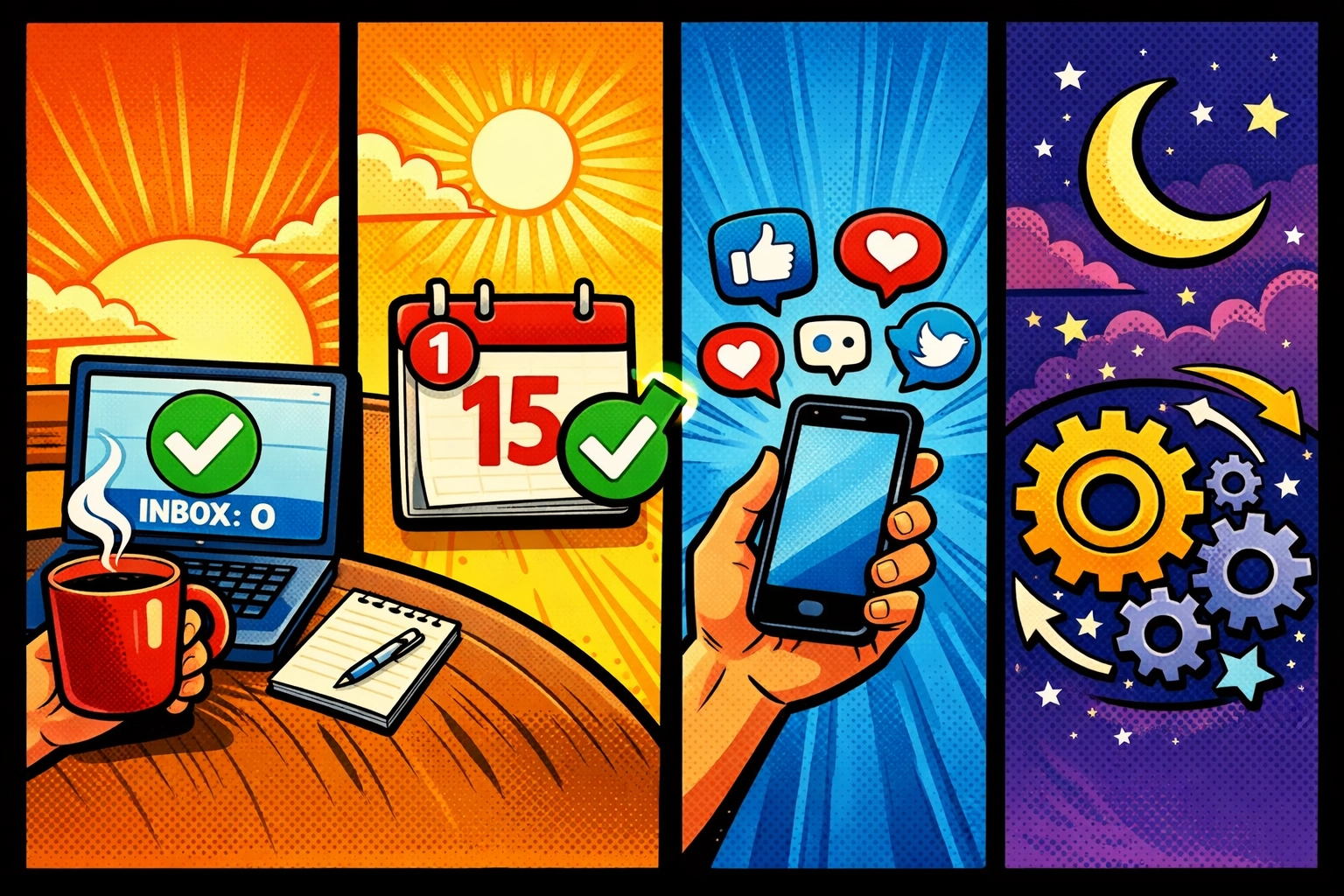
☕ 7:00 AM. You wake up to a tidy inbox. Your AI assistant already organized emails overnight, flagged the urgent ones, and drafted responses to the routine stuff. You review and approve with a quick tap.
📱 10:30 AM. A lead from last week finally responds. Instead of scrambling to remember the conversation and craft a follow-up, your AI already sent a perfectly timed check-in message. The lead books a call. You just show up.
🤝 2:00 PM. Your social media is posting on schedule : content your AI researched, wrote, and scheduled based on what's working for your audience. You didn't lift a finger.
🌙 6:00 PM. While you're wrapping up your day, your AI is still working. Following up with cold leads. Answering customer questions. Organizing your calendar for tomorrow.
No salary negotiations. No sick days. No "Can we hop on a quick call to discuss this?"
Just quiet, efficient execution.
THE REAL COST OF WAITING
Let's talk about what happens if you do nothing.
You keep doing everything yourself. Your to-do list stays overwhelming. You're working 60-hour weeks but your revenue isn't growing because you're stuck in operations instead of strategy.
Or you hire someone. Spend three months recruiting and onboarding. Drop $50,000+ per year in salary and benefits. Hope they work out. Cross your fingers they don't quit right when you need them most.
Meanwhile, your competitor figured this out six months ago. They're using ai business automation to handle their admin work. They're moving faster. Spending less. Scaling without the overhead.
They're not smarter than you. They just stopped trying to do everything manually.
YOUR NEXT MOVE
Here's what you need to know: you don't have to choose between being a one-person show or building a whole team.
There's a third option in 2026. Automate the repetitive stuff. Keep humans for the strategic work. Scale without the overhead.
If you're spending more than 10 hours a week on admin tasks, customer service, social media, or lead follow-up… you're losing money. Not because you're bad at those things. Because your time is worth more than that.
See how Marblism handles the work you're tired of doing manually. No long onboarding. No contracts. No hoping someone shows up on Monday.
Check out what's possible here.
The businesses winning in 2026 aren't the ones with the biggest teams. They're the ones who figured out how to move fast without burning out.
Your move.
Leave a Reply