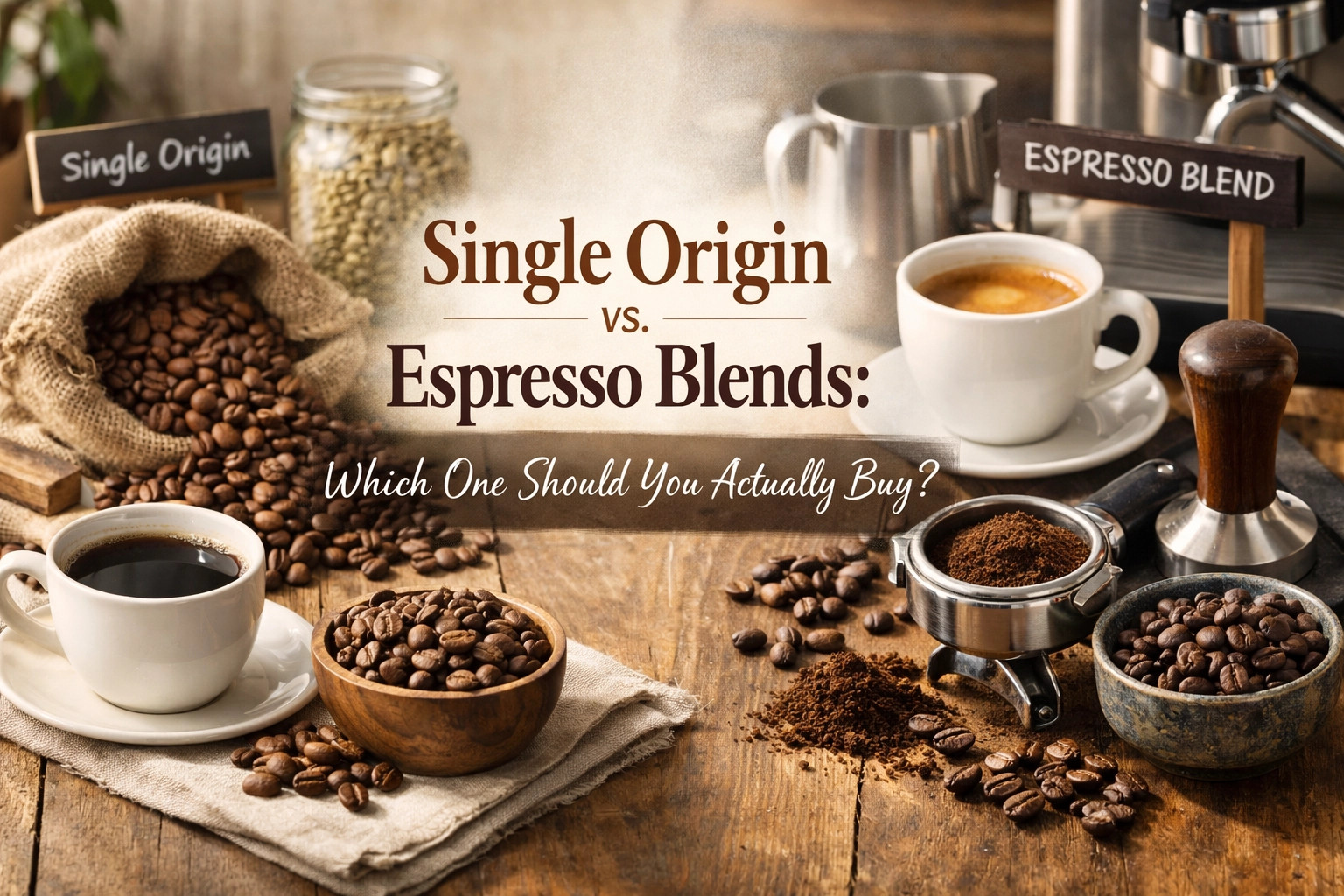
You're standing in front of the coffee selection (whether that's online or in a shop), and you're faced with a choice that seems simple but somehow isn't: single origin or blend?
We get it. The coffee aisle can feel like you need a degree in coffee science just to pick a bag. One promises the "bright, floral notes of Ethiopian Yirgacheffe" while another boasts "smooth, chocolatey consistency perfect for espresso." Which one actually belongs in your basket?
Let's cut through the coffee snobbery and figure out what you actually need based on how you drink your coffee. Because here's the truth: there's no objectively "better" choice. It all comes down to what you're making and what your taste buds are after.
What Exactly Is Single Origin Coffee?
Single origin means exactly what it sounds like , the coffee comes from one place. That could be a single country, a specific region within that country, or even one particular farm or estate.
Think of it like wine. A single origin is your regional vintage , it showcases the unique characteristics of where it was grown. The soil composition, altitude, climate, processing method, and even the specific coffee varietals all contribute to a distinct flavour profile that you simply can't replicate elsewhere.
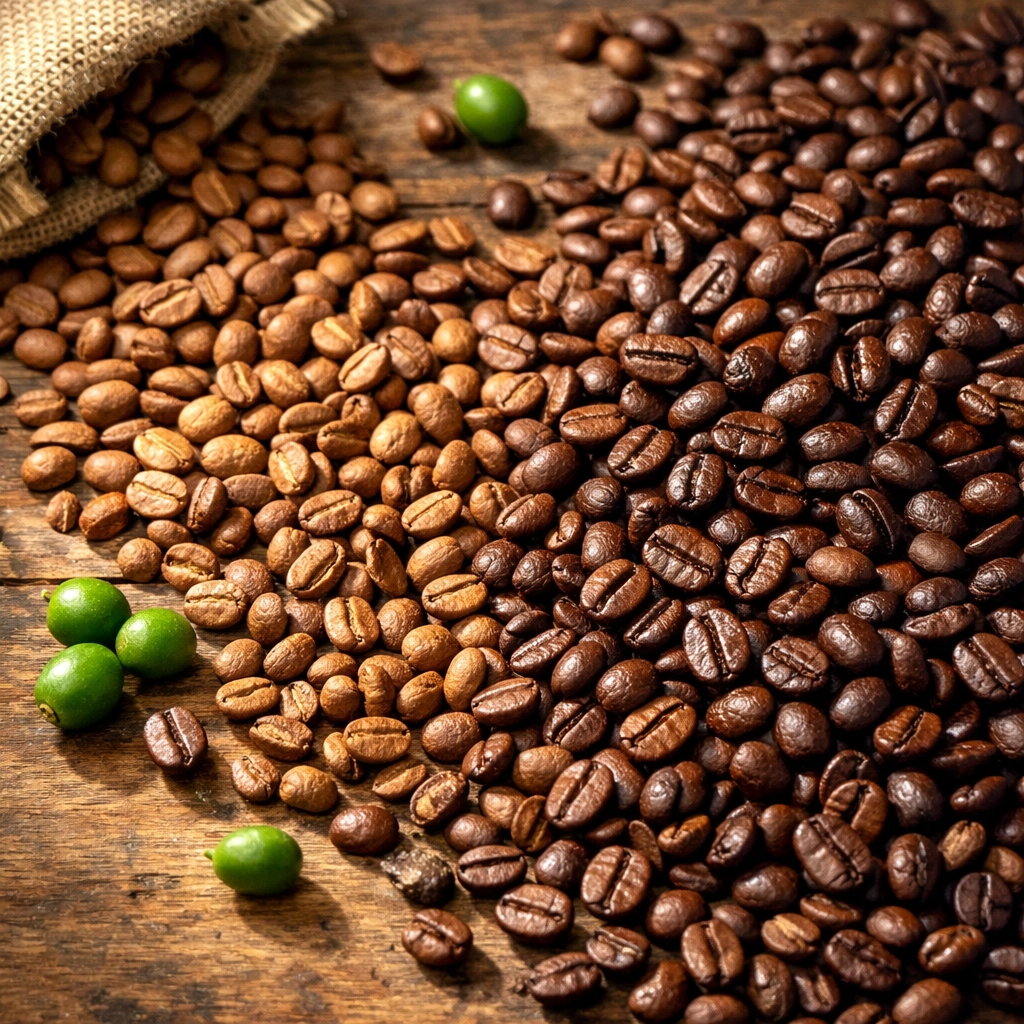
Single origins are often described with tasting notes that sound more like a fruit bowl than coffee: "blueberry," "jasmine," "citrus," "stone fruit." And these aren't just marketing fluff (well, mostly). When coffee is roasted to highlight its origin characteristics and brewed properly, you genuinely can taste these nuanced flavours.
The trade-off? Single origin coffees change with the seasons. Once a particular harvest runs out, that exact flavour profile is gone until next year. So if you fall in love with a Kenyan AA from a specific farm, you might be waiting months before it's available again. They also tend to be a bit more expensive due to their limited availability and the traceability involved in sourcing them.
So What About Blends Then?
Blends are where the roaster's artistry really shines. A blend combines beans from multiple origins : sometimes two, sometimes five or more : to create a balanced, consistent flavour profile that tastes the same all year round.
We craft blends with a specific purpose in mind. Maybe we want something that cuts beautifully through milk for lattes and cappuccinos. Or perhaps we're aiming for a well-rounded everyday espresso that won't assault your palate at 7 AM. Blends are engineered for consistency and versatility.
The flavour notes in blends tend toward the comforting and familiar: chocolate, caramel, nuts, toffee. These aren't boring flavours : they're just less… shouty than a bright Ethiopian single origin. They play well with others (milk, sugar) rather than demanding to be the star of the show.
Here's the practical magic of blends: when one origin in the blend goes out of season, we can substitute it with a similar coffee from elsewhere, maintaining that signature taste you've grown to love. It means your morning routine doesn't get disrupted by harvest schedules halfway around the world.
When Single Origin Makes Sense for You
Let's get specific. You should reach for single origin coffee if:
You drink your coffee black. This is the big one. Whether you're making pour-over, French press, AeroPress, or even filter coffee, single origins absolutely sing when nothing is added. All those delicate, complex flavours that make single origins special? They're most noticeable when milk and sugar aren't in the picture.
You enjoy flavour exploration. If you're the type who gets excited about tasting a coffee from Rwanda one week and Guatemala the next, single origins are your playground. Each bag is a mini coffee holiday, letting you explore how terroir affects flavour without leaving your kitchen.
You want to occasionally push your espresso boundaries. Some coffee lovers enjoy single origin espresso as an occasional palate refresher. Fair warning though : it requires more precise brewing technique. Single origins can be temperamental in the espresso machine, and the intense, concentrated flavour isn't for everyone. When dialled in properly, though? You can get this incredible complex fruit explosion that's genuinely exciting.
You're willing to adjust your brewing. Single origins often need more attention to detail. Different origins extract differently, so you might need to adjust your grind size, water temperature, or brew time to get the best from each bag.
When Blends Are Your Best Bet
Reach for a blend when:
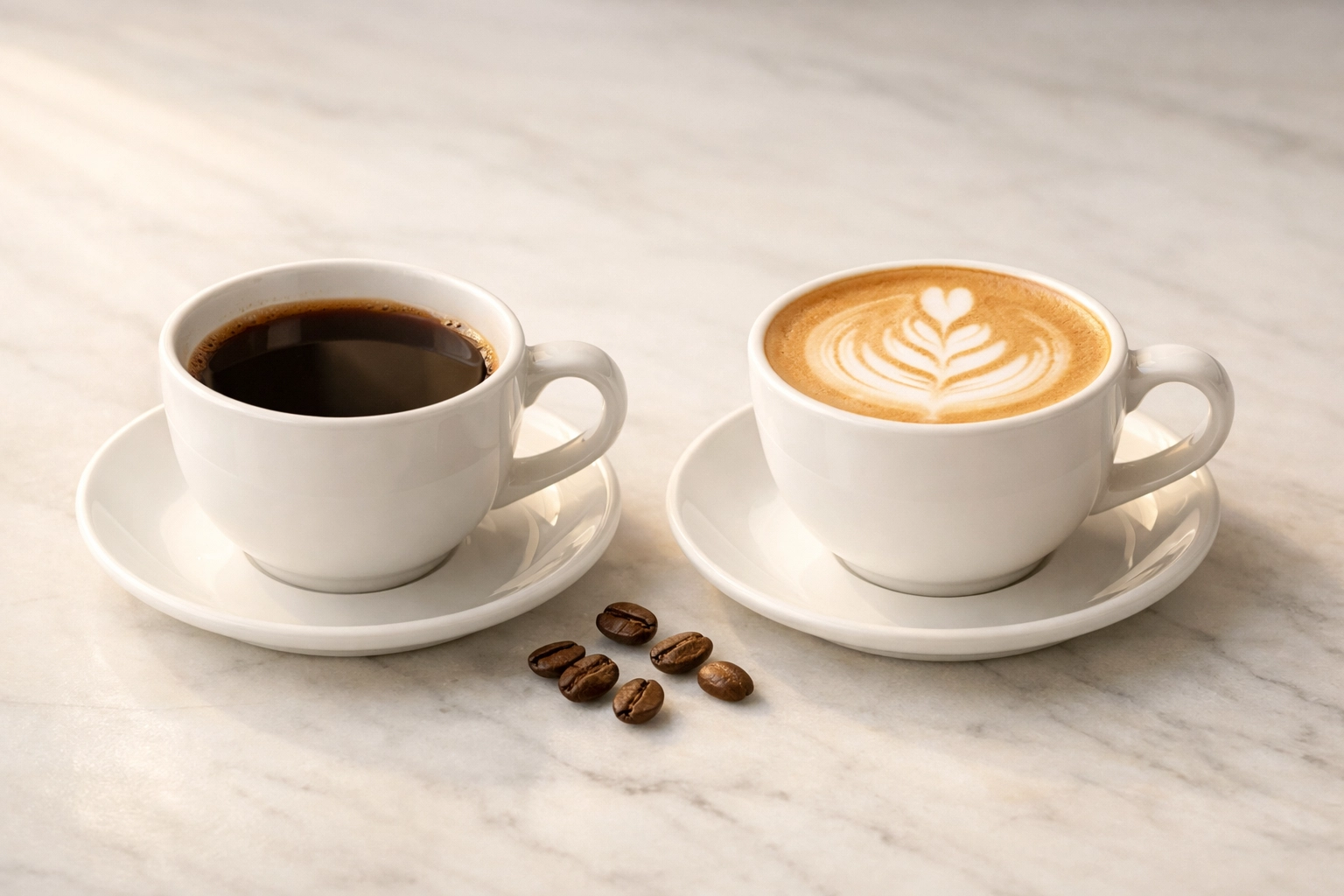
You're a milk drink devotee. If your daily ritual involves lattes, cappuccinos, flat whites, or any coffee that includes steamed milk, blends are designed for you. They're engineered to hold their own against milk without getting lost, while complementing those creamy, sweet flavours rather than fighting them. Those chocolate and caramel notes we mentioned? They're basically best friends with milk.
You want consistency. Maybe you've found a coffee you love and you want it to taste the same every single time you buy it. Blends deliver that reliability. No surprises, no seasonal disappointments : just the coffee you know and trust.
You're newer to home brewing. Blends are more forgiving. They typically have a wider "sweet spot" when it comes to extraction, meaning you've got more margin for error in your grind size and technique. If you're still getting comfortable with your equipment, blends won't punish you for slight inconsistencies.
You drink multiple cups a day. If you're a serious coffee drinker putting away three or four cups daily, the intense, complex flavours of single origins might become overwhelming. Blends offer balanced, approachable flavours that you can enjoy repeatedly without palate fatigue.
Budget matters. Generally speaking, blends are more affordable than single origins. If you're drinking coffee daily and watching your spending, a quality blend gives you excellent value without compromising on taste.
The Decision Framework: Ask Yourself These Questions
Still not sure? Let's make this practical with some simple questions:
What's your primary brewing method? Espresso with milk = blend. Pour-over, black = single origin. French press, black = single origin. Espresso, straight = probably blend (unless you're feeling adventurous).
How adventurous is your palate? Do you like trying new flavours and experiencing subtle differences? Single origin. Do you prefer knowing exactly what you're getting every time? Blend.
What time of day are we talking about? Many coffee lovers use blends for their reliable morning espresso and save single origins for a weekend pour-over when they can actually pay attention and savour it. There's no rule saying you can't have both in your cupboard.
What's your skill level? Be honest with yourself. If you're still mastering your equipment, blends will be kinder to you while you learn. Once you've got your technique down, single origins become more rewarding.
What We Offer at Limini Coffee
Here's where we should mention that we've got you covered either way. Our range includes both carefully crafted blends and rotating single origins, so you don't have to commit to one camp or the other.
Our single origin selection changes with the seasons, bringing in the best coffees from around the world as they become available. One month you might find a bright, fruity Ethiopian natural process, and the next a clean, balanced Colombian washed coffee. It's how we keep things interesting.
On the blend side, we've developed profiles that work beautifully for different purposes : whether you're pulling straight espresso shots or building milk-based drinks. The consistency means you can dial in your grinder settings and trust that the coffee will behave the same way bag after bag.
Can't We Just Have Both?
Honestly? This is probably the smartest approach.
Many home coffee enthusiasts keep a blend on hand for their daily milk drinks and espresso, then have a single origin for those moments when they want to slow down and actually taste their coffee. It's not indecisive : it's versatile.
Think of blends as your reliable everyday coffee and single origins as your weekend exploration. Or blends for morning routine and single origins for afternoon pour-overs. There's no coffee police checking that you've picked a side.
The beautiful thing about speciality coffee in 2026 is the sheer variety available. You're not limited to one type of coffee any more than you're limited to one type of food. Your coffee shelf can (and probably should) reflect how you actually drink coffee throughout the day and week.
The Bottom Line
If someone tells you single origins are objectively better than blends (or vice versa), they're missing the point entirely. Both have their place, and that place depends entirely on your personal preferences and brewing habits.
Single origins showcase unique regional characteristics and shine in black coffee preparations. Blends offer consistency, versatility, and are specifically designed to work beautifully in milk-based drinks. Neither is "better" : they're just different tools for different jobs.
The real question isn't which one you should buy. It's which one suits what you're making right now. And honestly? The best way to figure that out is to try both and see what your taste buds prefer.
Ready to explore both sides? Check out our full range of single origins and blends at Limini Coffee and see what calls to you. Your perfect cup is waiting : whether that's a complex Ethiopian pour-over or a comforting chocolatey latte made with our house blend.
The coffee world is big enough for both, and your cupboard probably is too.
Leave a Reply