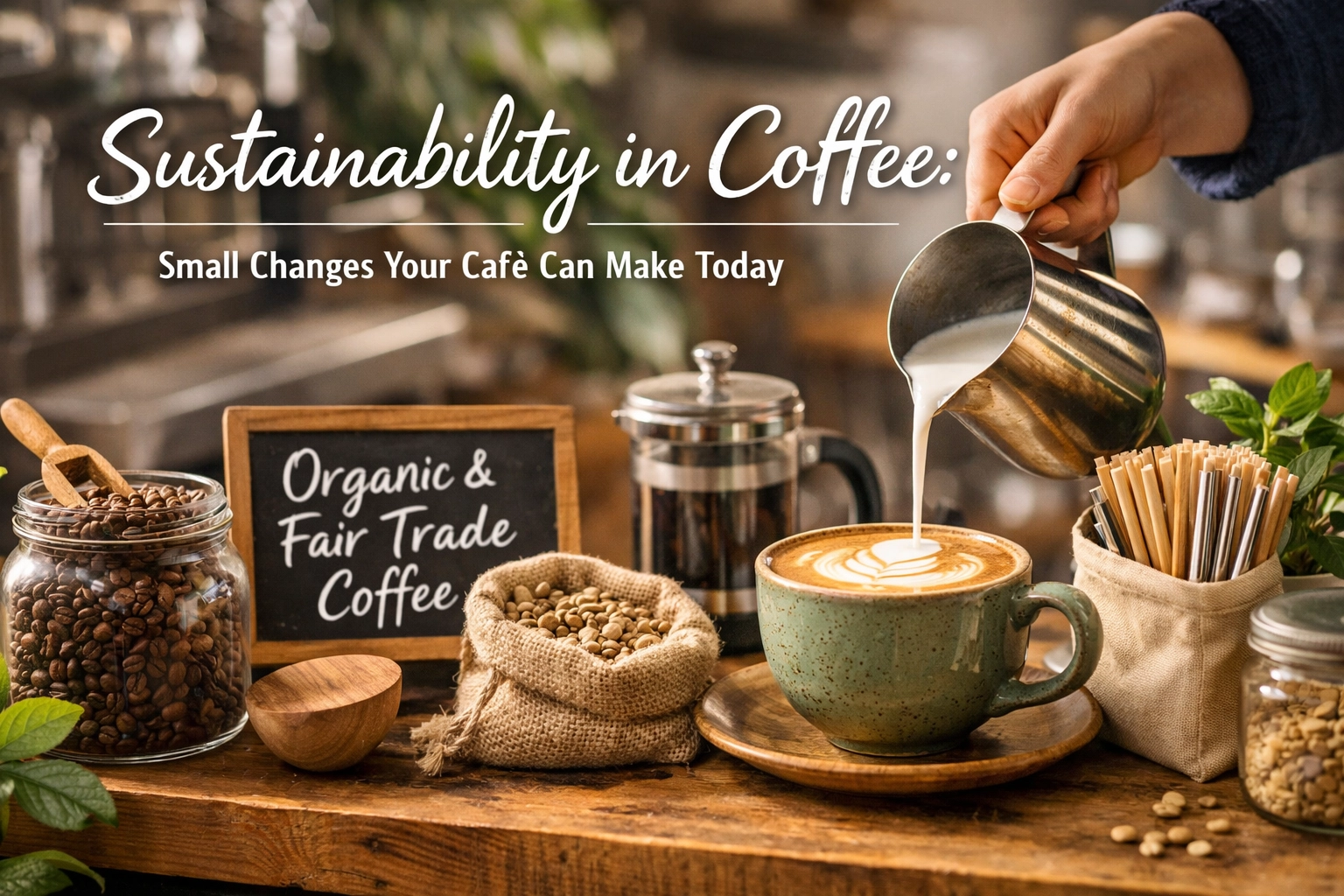
Let's talk about sustainability. We know, it's one of those words that gets thrown around a lot, sometimes losing its meaning in the process. But here's the thing: when it comes to coffee, sustainability isn't just a buzzword or a marketing angle. It's genuinely important, both for the planet and for your business.
The good news? You don't need to overhaul your entire operation overnight. Small, practical changes can make a real difference, and many of them will actually save you money while attracting more customers. So let's dive into what you can do today.
Why Sustainability Matters for Your Café
Before we get into the how, let's quickly address the why.
Your customers care. We're seeing more and more coffee drinkers actively seeking out businesses that align with their values. When you demonstrate genuine commitment to sustainability, you're not just doing good, you're building trust and loyalty with a growing segment of conscious consumers.
And it's not just about feel-good marketing. Sustainable practices often lead to cost savings through reduced waste, more efficient operations, and stronger relationships with suppliers. Plus, there's something deeply satisfying about knowing your business is contributing positively to the coffee industry and the communities that make it possible.
Start With Packaging: The Most Visible Change
If you're looking for quick wins, packaging is where to begin. It's visible, immediate, and your customers will notice right away.
Compostable Cups and Lids
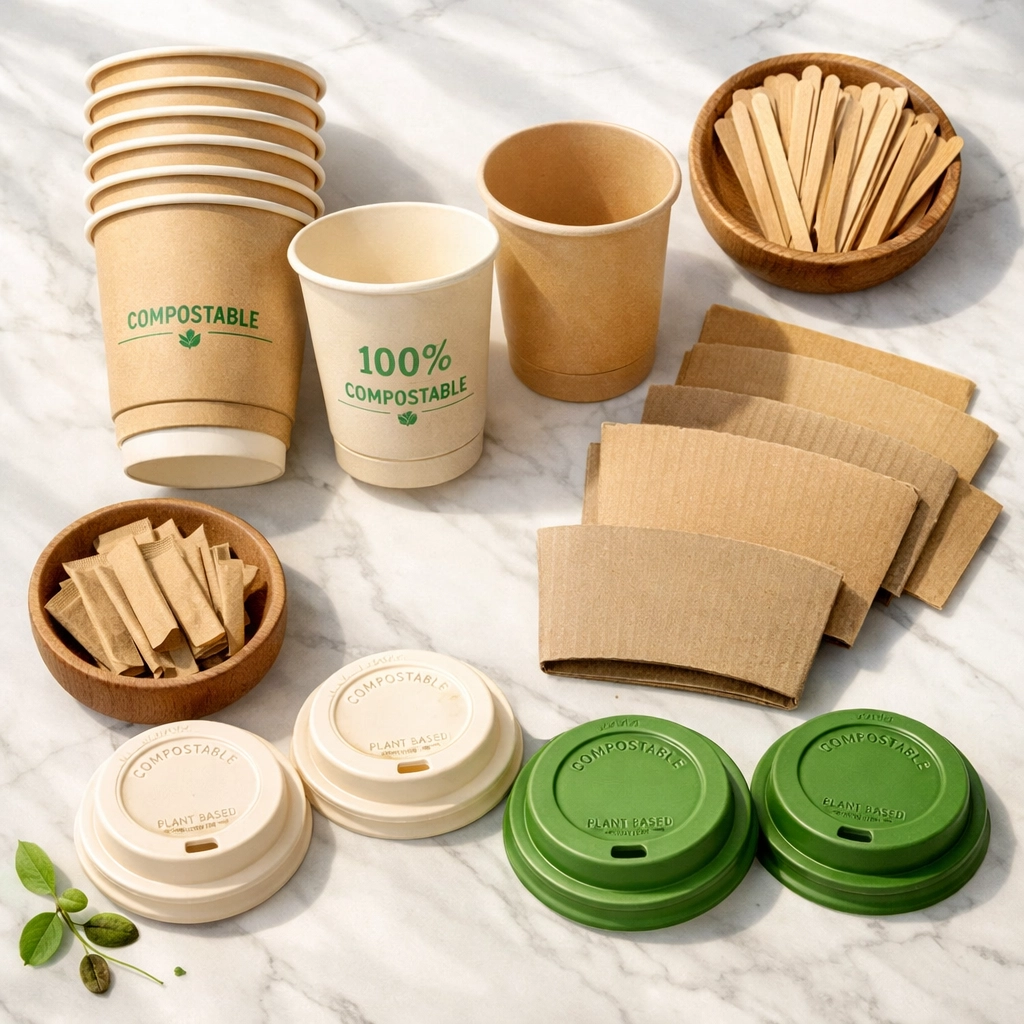
Switch out those plastic or foam cups for compostable alternatives made from plant-based materials like PLA, sugarcane, or responsibly sourced paper. Yes, they cost a bit more upfront, but the price difference has narrowed significantly over the past few years. More importantly, customers genuinely appreciate it: many are willing to pay slightly more for their coffee when they know it comes in eco-friendly packaging.
Don't forget the lids, stirrers, and sleeves. Wooden stirrers, recycled paper sleeves, and compostable napkins complete the package. These details add up to a cohesive sustainable approach that customers recognize and value.
The Reusable Cup Incentive
Offer a discount: even just 20p or 30p: for customers who bring their own cups. It's a simple change that reduces waste and makes customers feel good about their choice. Some cafés have even implemented borrow-a-cup programs where customers can take a reusable cup and return it later, though this requires more infrastructure to manage properly.
For dine-in service, actual ceramic cups should be your standard. Not only do they elevate the coffee experience (coffee genuinely tastes better from ceramic), but they eliminate single-use waste entirely for a significant portion of your service.
Waste Reduction: Beyond the Bin
Packaging is just the beginning. Let's look at what happens to everything else in your café.
Composting Programs
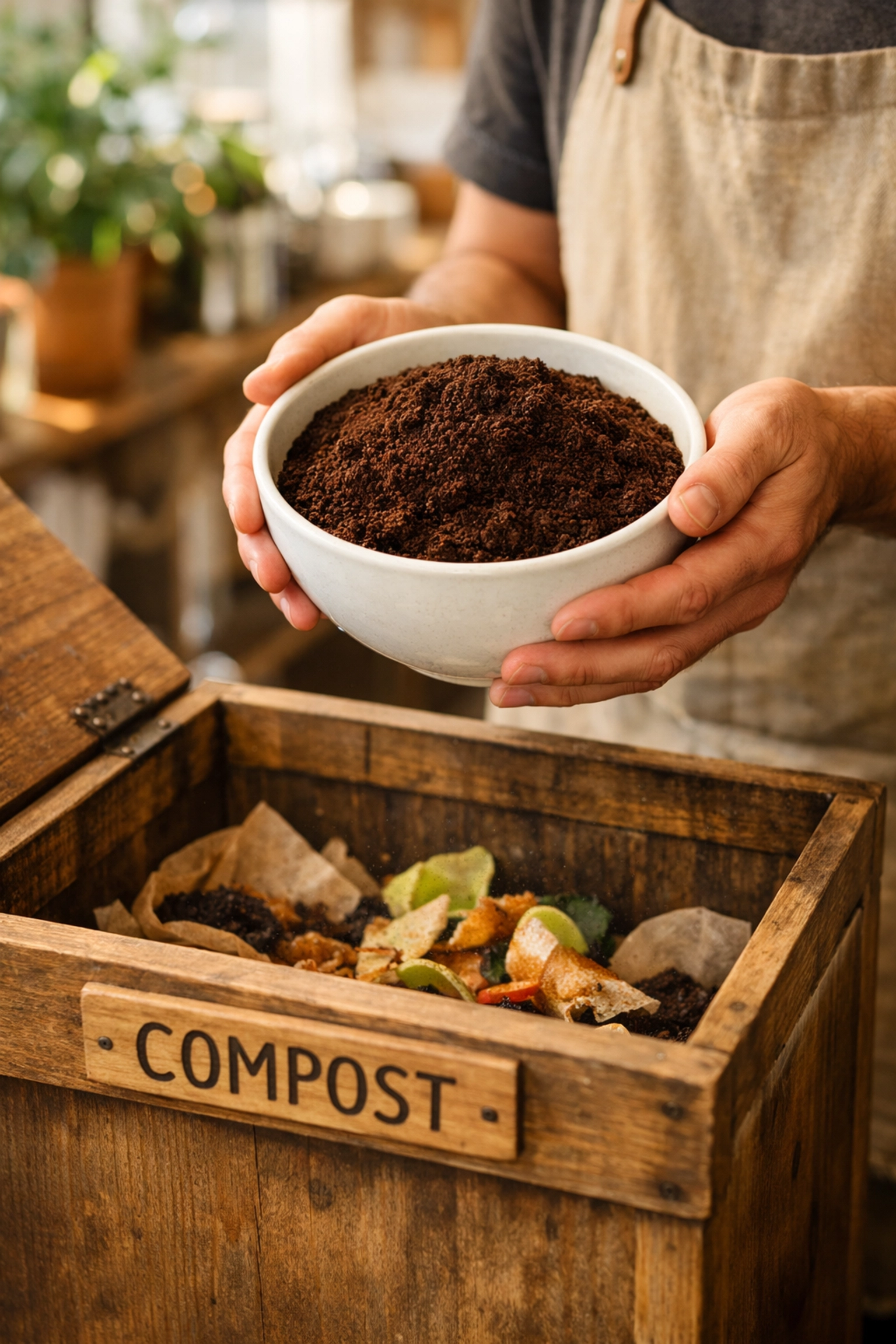
Coffee grounds are brilliant for composting, and you're generating loads of them every single day. Partner with a local composting service, or if you have space, set up a system to collect grounds for local gardeners or community gardens. Some cafés even offer free coffee grounds to customers: it's a nice gesture that reduces your waste stream.
Don't stop at grounds. Most organic waste from your café: food scraps, tea bags, napkins: can be composted rather than binned. It requires a bit of system setup and staff training, but once it's routine, it becomes second nature.
Bulk Purchasing and Reusable Supplies
Buy your supplies in bulk where possible. Milk in larger containers, syrups in bigger bottles, sugar in bulk bags rather than individual sachets. This dramatically reduces packaging waste while often saving you money.
Similarly, invest in reusable filters for your brewing equipment where appropriate, and consider cloth towels instead of disposable paper for cleaning tasks (though obviously maintain proper hygiene protocols).
Sourcing: Where Your Coffee Comes From Matters
This is where sustainability gets to the heart of what we do. The coffee you serve is the product of complex supply chains involving farmers, processors, exporters, and roasters. How those beans reach you matters enormously.
Choose Ethically Sourced Beans
Look for certifications like Fair Trade, Rainforest Alliance, or organic labels, but also: and this is important: look beyond the certifications. Ask your roaster about their sourcing practices. Can they tell you which farms your coffee comes from? Do they have direct relationships with producers? What prices are farmers receiving?
At Limini Coffee, we take sourcing seriously. We work to build transparent relationships throughout our supply chain and focus on coffees that are produced sustainably and ethically. We believe that genuinely good coffee requires genuinely good practices all the way through the chain: from farm to cup. You can learn more about our sourcing approach and see exactly where our coffees come from.
Tell the Story
When you know the story behind your coffee, share it with your customers. A simple card on the counter explaining where this month's featured coffee comes from, or notes on your menu about the farms you're supporting: these details matter to customers and they reinforce your commitment to sustainability.

Operational Efficiency: Doing More With Less
Sustainability isn't just about what you throw away or where you source from. It's also about how efficiently you run your operation.
Water Usage
Coffee shops use a surprising amount of water. Look for ways to reduce consumption without compromising quality. Regular equipment maintenance ensures you're not wasting water through leaks or inefficient systems. Some modern espresso machines have water-saving features worth considering when it's time to upgrade.
Train your staff on efficient cleaning practices. You can maintain excellent hygiene standards while being mindful of water use: it just requires awareness and good habits.
Energy Efficiency
Your espresso machine is likely your biggest energy consumer. Make sure it's properly maintained for efficiency, and consider whether you need it running at full power during slow periods. Some machines allow you to adjust temperature or even turn off group heads you're not using.
Lighting, refrigeration, and heating are other areas to assess. LED lighting, well-maintained refrigeration units, and proper insulation can significantly reduce your energy footprint (and your bills).
Engage Your Customers and Staff
Here's something we've learned: sustainability works best when everyone's involved, not just you making decisions from the top down.
Staff Training and Buy-In
Your team needs to understand not just the what but the why. Take time to explain your sustainability initiatives and the reasoning behind them. When staff genuinely understand and support these practices, they become ambassadors who can speak knowledgeably with customers.
Make it easy for them to do the right thing. Clear systems, proper labeling on bins, and straightforward procedures mean sustainability becomes routine rather than extra effort.
Customer Education
Use your social media, your signage, even conversations at the counter to share what you're doing and why it matters. Most customers appreciate the transparency, and many will actively support your efforts.
Consider hosting events or workshops related to sustainability: composting demonstrations, talks about coffee sourcing, or discussions about reducing single-use plastics. These position you as a community leader on these issues and strengthen customer relationships.

The Business Case: It's Not Just Altruism
Let's be honest about something: sustainability needs to make business sense, not just ethical sense. Fortunately, it often does both.
Conscious consumers actively seek out sustainable businesses. They're more likely to become regular customers, recommend you to friends, and pay premium prices for quality products served responsibly. Brand loyalty is significantly stronger among customers who feel their values align with yours.
Many sustainable practices also reduce costs over time. Less waste means lower disposal fees. Bulk purchasing reduces per-unit costs. Energy efficiency reduces utility bills. While some sustainable options cost more upfront, the long-term economics often work in your favor.
And there's the intangible but valuable benefit of staff satisfaction. People want to work for businesses they're proud of. Demonstrating genuine commitment to sustainability can help you attract and retain better staff: which, as any café owner knows, is worth its weight in gold.
Start Small, Build Momentum
The key message here is this: you don't need to implement everything at once. Start with one or two changes that make sense for your specific situation. Maybe that's switching to compostable cups, or setting up a composting program, or having a serious conversation with your coffee supplier about sourcing.
Once those changes become routine, add another. Then another. Sustainability is a journey, not a destination, and every step you take makes a difference.
The coffee industry faces genuine challenges around sustainability: from climate change affecting growing regions to economic pressures on farming communities. As café owners, we're part of that industry, and we have both the opportunity and responsibility to do our part.
But here's the encouraging bit: small changes really do add up. Your choices ripple outward: influencing your customers, your staff, your suppliers, and ultimately contributing to a more sustainable coffee industry overall.
So pick one thing from this article and implement it this week. Then pick another next month. Before you know it, you'll have transformed your operation into something you're genuinely proud of: and your customers will notice.
Leave a Reply