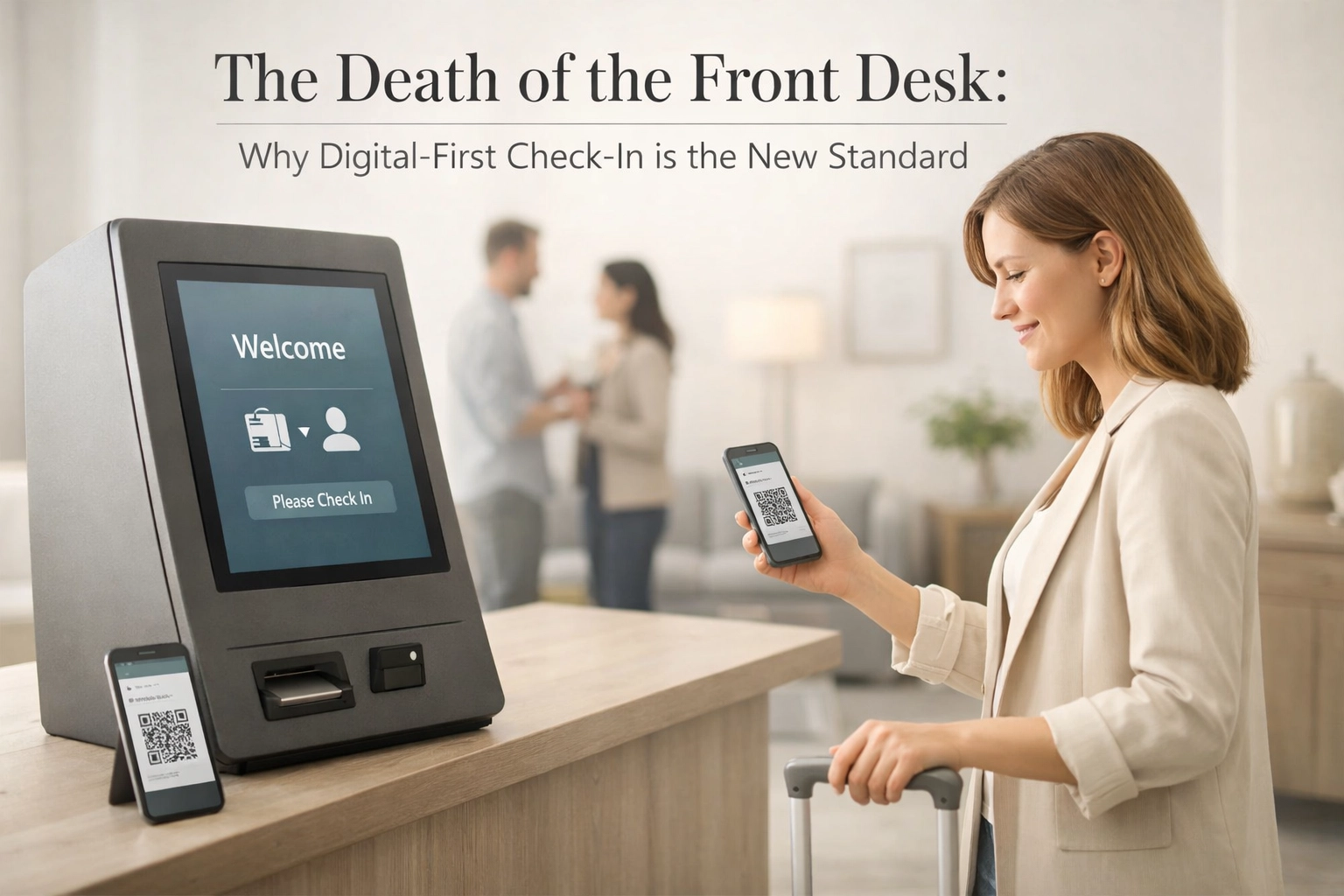
Arrive. Tap. Relax.
The traditional front desk is dead. Or at least, the version of it that involves standing in line for twenty minutes while an exhausted staff member types your name into a legacy terminal is. In 2026, guests don’t want a transaction; they want an experience. They want to skip the administrative hurdles and get straight to the reason they traveled in the first place.
We’ve seen the numbers. Properties using digital-first arrivals see a 20% increase in guest satisfaction scores within the first three months. It’s about speed. It’s about autonomy. It’s about providing a frictionless journey from the moment of booking to the moment the door clicks open: all from one innovative platform.
Guests are ready. Are you?
The barrier to entry for hospitality tech has officially dissolved. We’ve reached a point where 75% of guests are not just willing to use automated check-in: they actively prefer it. Think about it. We use our phones to buy coffee, board planes, and unlock our cars. Why should checking into a hotel feel like a trip back to 1995?
The Shift in Numbers
- 75% of guests prefer self-service check-in options.
- 63% of hotels have already moved to mobile keys or kiosks.
- < 2 Minutes is the new gold standard for arrival time.
The data is clear: convenience is no longer a "nice-to-have" feature. It’s the baseline. When a guest arrives at your property after a long flight, the last thing they want is a physical barrier, literally and figuratively: between them and their bed. Digital-first check-in removes the friction.
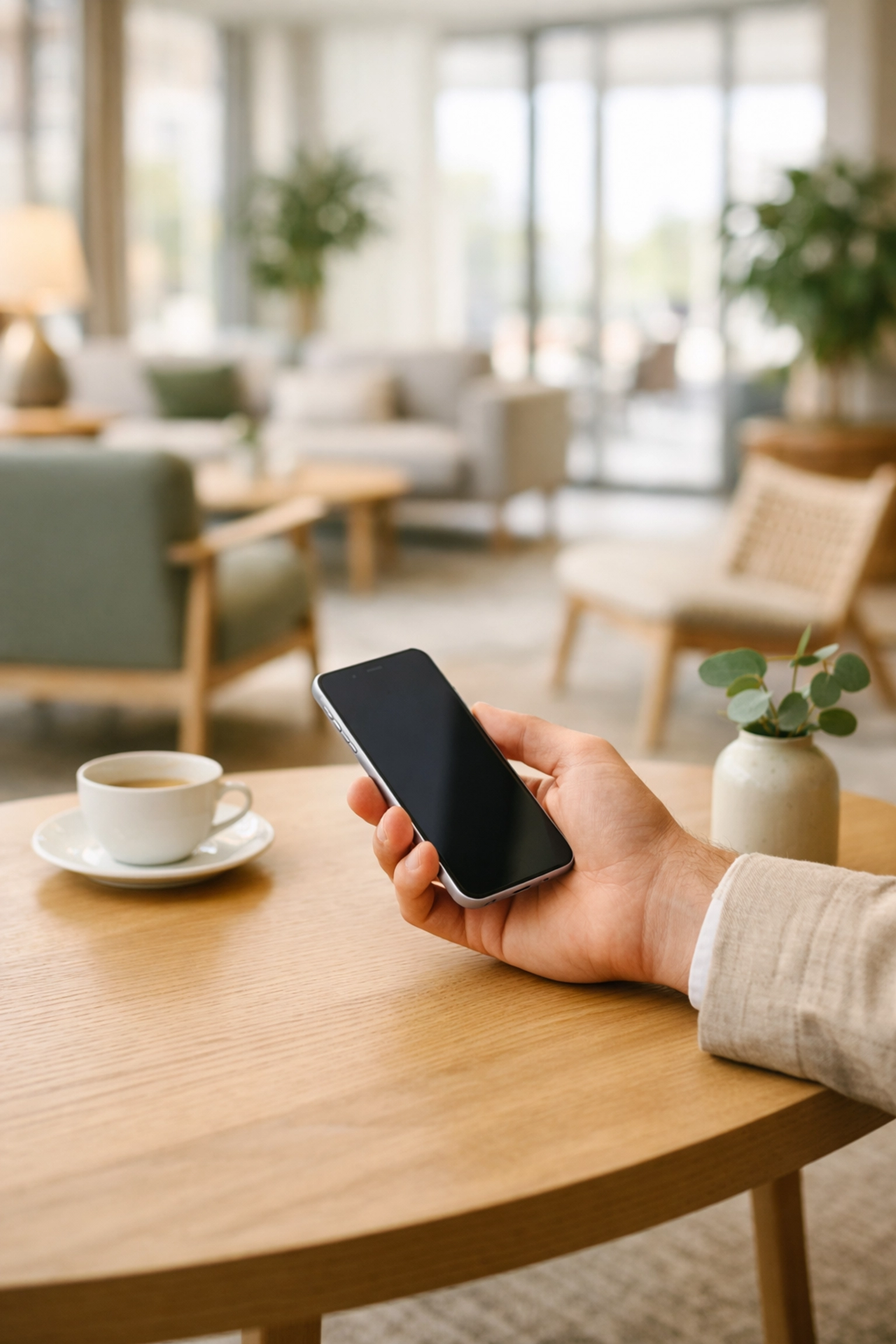
We believe the front desk shouldn't be a barrier
We think the lobby should be a social hub, not a waiting room. The traditional front desk acted as a gatekeeper, creating a bottleneck that stressed out both staff and guests. By moving the administrative heavy lifting to a digital interface, you open up the physical space of your hotel.
Why it matters:
- Eliminate the "queue culture" that kills the arrival vibe.
- Provide 24/7 check-in capabilities without increasing head count.
- Capture accurate guest data automatically.
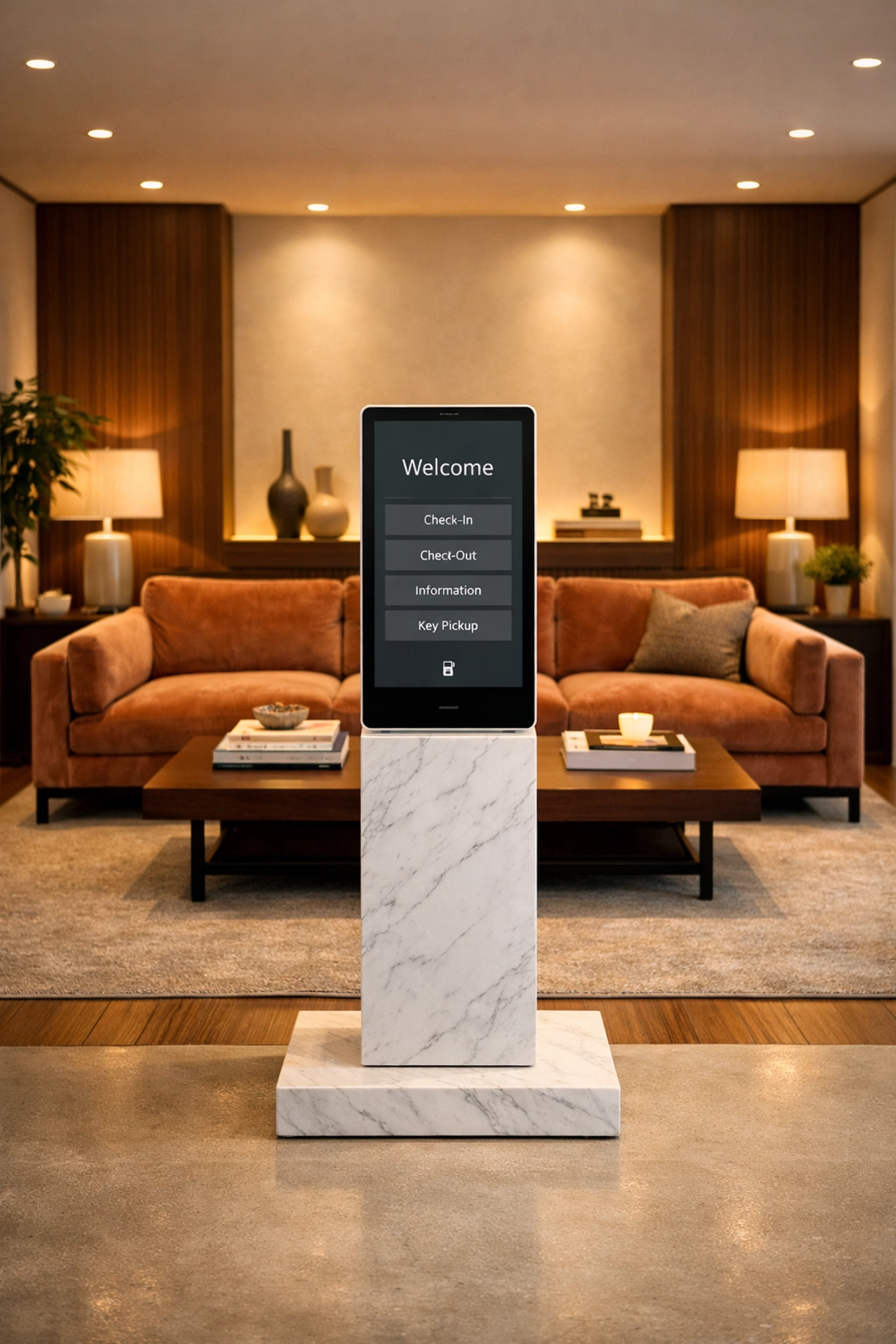
Our approach centers on the Mews Kiosk. It’s not just a screen; it’s a gateway. It handles the ID scans, the credit card authorizations, and the key cutting (or mobile key delivery) in seconds. This allows your lobby to transform from a sterile processing center into a vibrant lounge or a curated retail space.
"It used to take us six minutes to check in a guest. Now, they do it themselves in under sixty seconds, and our lobby feels like a five-star living room," says one of our partners in London. That’s the kind of transformation that moves the needle on your Net Promoter Score (NPS).
The evolution of the "Human Touch"
A common fear among hoteliers is that "digital-first" means "impersonal." We believe the exact opposite is true. When your staff is stuck behind a desk, staring at a screen and frantically typing, they aren't actually "interacting" with the guest. They are performing data entry.
By automating the mundane, you empower your team to be true hosts. Instead of "Can I see your ID?", the first interaction becomes "Welcome back, would you like a glass of sparkling water or a coffee?"
From Admin to Concierge
- Automate the boring stuff. Let the software handle the payments and signatures.
- Repurpose the lobby. Remove the big wooden desk and replace it with comfortable seating.
- Empower your people. Give your staff tablets so they can assist guests anywhere in the building.
This shift creates a more meaningful connection. Staff are no longer tethered to a workstation. They are in the lobby, greeting people, offering local recommendations, and noticing the small details that make a stay memorable. It’s high-tech meeting high-touch.
Mobile keys: The final piece of the puzzle
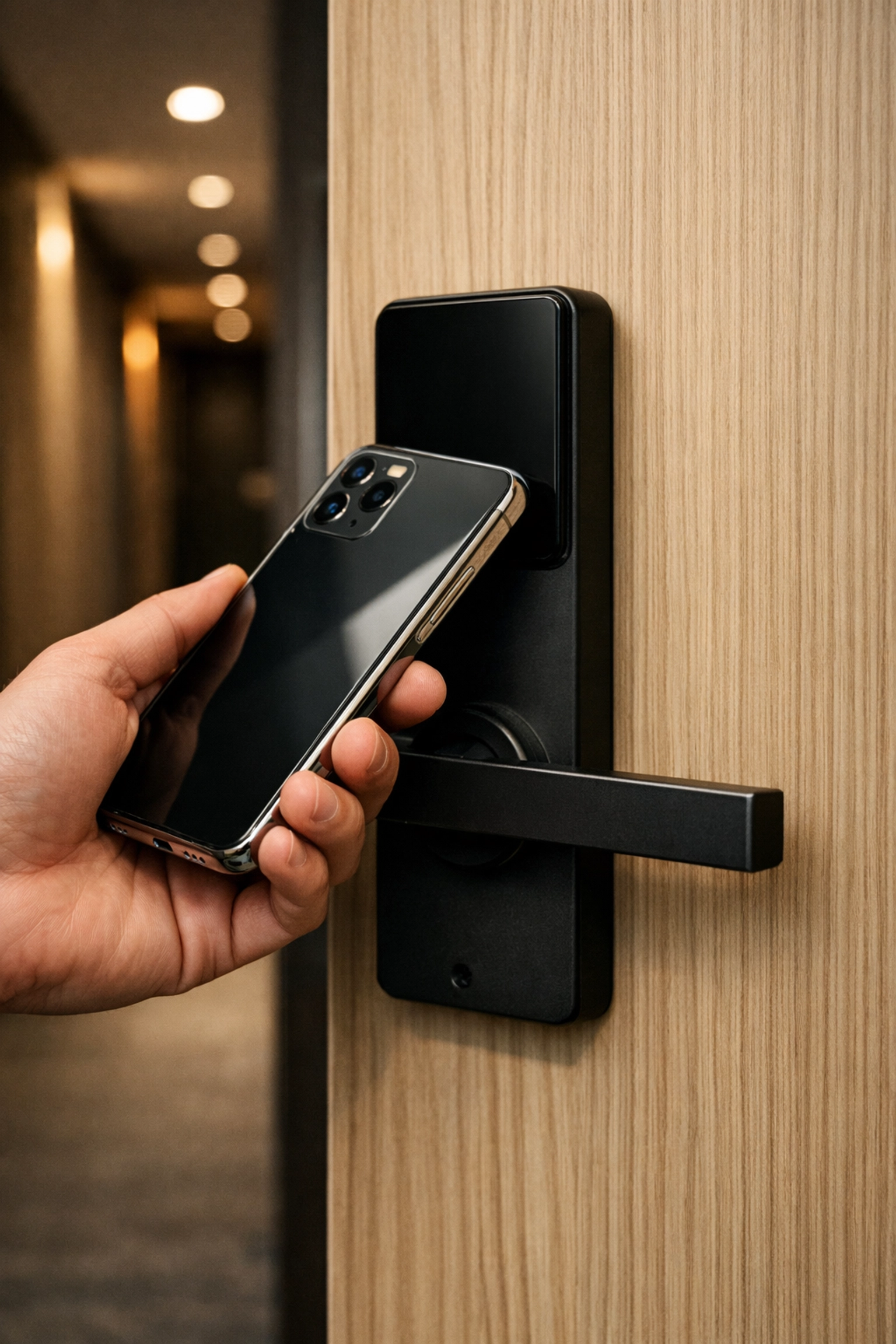
If you have a digital check-in but still require the guest to come to a desk to get a plastic card, you’ve only solved half the problem. Mobile keys are the "final boss" of the frictionless arrival.
Using Bluetooth or NFC technology, guests can receive their room key directly on their smartphone via your hotel app. They bypass the kiosk entirely if they choose, heading straight to their room. This isn't just a gimmick for tech-savvy Gen Z travelers; it’s a logistical masterstroke for business travelers and frequent flyers who value time above all else.
The benefits are immediate:
- Reduced plastic waste. Thousands of keycards saved every year.
- Improved security. Mobile keys are harder to lose and easier to deactivate.
- Seamless upsells. Use the digital key interface to offer room upgrades or late check-outs.
We see properties using mobile keys reporting a significant drop in lobby congestion during peak hours (usually 3:00 PM to 5:00 PM). It’s a smoother operation for everyone involved.
Revenue management in the palm of their hand
Digital check-in isn't just about speed: it’s a massive revenue driver. When a guest checks in via a kiosk or their phone, they are in a "buying" mindset. This is the perfect moment to offer an upgrade to a suite, a breakfast add-on, or a spa treatment.
In a traditional front-desk setting, staff often feel awkward or "salesy" when pushing upgrades, especially if there is a line forming behind the guest. A digital interface doesn't feel awkward. It simply presents an option: "Would you like to upgrade to a sea view for €30?"
Properties using the Mews Kiosk for automated upselling see an average of 15% higher ancillary revenue compared to manual front-desk offers. It’s consistent, it’s low-pressure, and it works: all from one [revenue-driving] platform.
Compliance and Security
Let’s talk about the less glamorous side: legal requirements. Depending on where your hotel is located, you might need to scan passports, collect tourist taxes, or have guests sign specific indemnity forms. Doing this manually is a recipe for human error.
Digital-first systems use OCR (Optical Character Recognition) to scan documents with near-perfect accuracy. The data is instantly synced with your PMS, ensuring you stay compliant with local laws without the paperwork headache. It’s safer, faster, and much harder to hack than a physical folder of registration cards.
"We saved 10 hours a week just on data entry and filing," says a boutique hotel manager using Mews. That’s ten hours that can be spent on guest experience or marketing.

The standard for 2026 and beyond
The hospitality industry is notorious for being slow to change, but the "Death of the Front Desk" is a shift that is already well underway. In 2026, a physical desk is increasingly seen as a relic: a sign of a hotel that hasn't kept up with the times.
Embracing digital-first check-in isn't about replacing people with robots. It’s about using technology to remove the barriers that prevent your people from doing what they do best: taking care of guests.
Ready to see it in action?
- Schedule a demo of the Mews Kiosk.
- Get your staff mobile-ready.
- Transform your lobby into a revenue-generating space.
The future of check-in is here, and it’s digital, mobile, and incredibly fast. Don't let your guests get stuck in 1995 while the rest of the world moves on. Give them the freedom to arrive on their own terms and watch your loyalty scores soar.
Leave a Reply