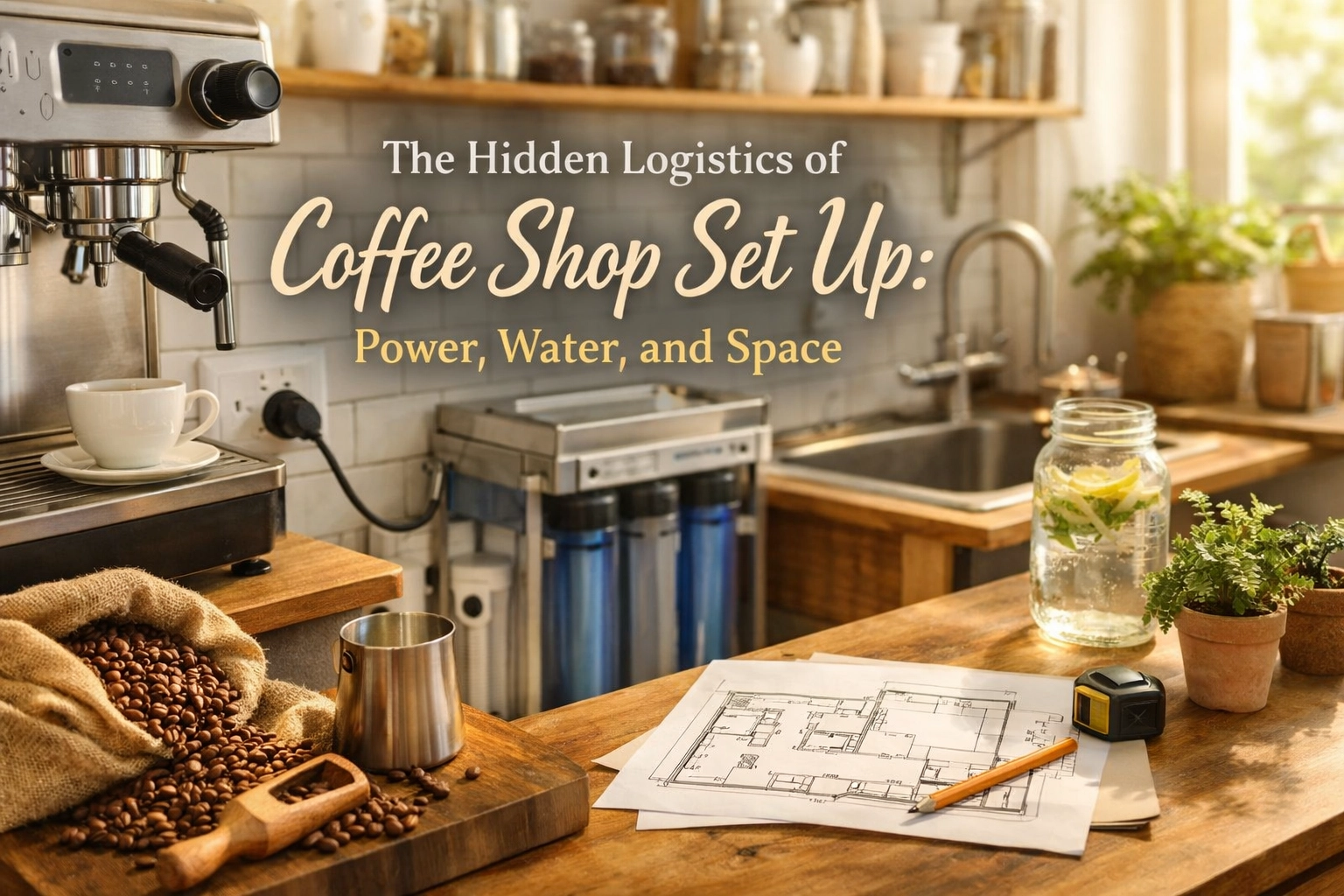
So, you’ve found the perfect location. The lease is signed, the mood board is overflowing with aesthetic tile patterns, and you can already smell the freshly roasted beans in the air. It’s an exciting time, isn't it? But before you start ordering those bespoke ceramic cups, we need to talk about the stuff that happens behind the scenes: the "un-glamorous" bits that can make or break your opening day.
Setting up a coffee shop is about more than just a passion for the craft; it’s a technical puzzle. If you don't get the power, water, and space requirements right from day one, you’ll likely face some expensive headaches down the line. We’ve seen it happen: a beautiful shop opens, and the moment the barista turns on the steam wand while the dishwasher is running, the lights go out. Not ideal.
At Limini Coffee, we’ve helped countless coffee shops find their feet, and we want to make sure your coffee shop set up is as smooth as a well-poured flat white. Let’s dive into the hidden logistics of power, water, and space.
Power: More Than Just a Plug in the Wall
You might think a standard socket is enough to run your shop. Unfortunately, it’s not that simple. Commercial coffee equipment is power-hungry. While your kettle at home might use a fair bit of juice, a multi-group commercial espresso machine is in a whole different league.
The Amperage Reality Check
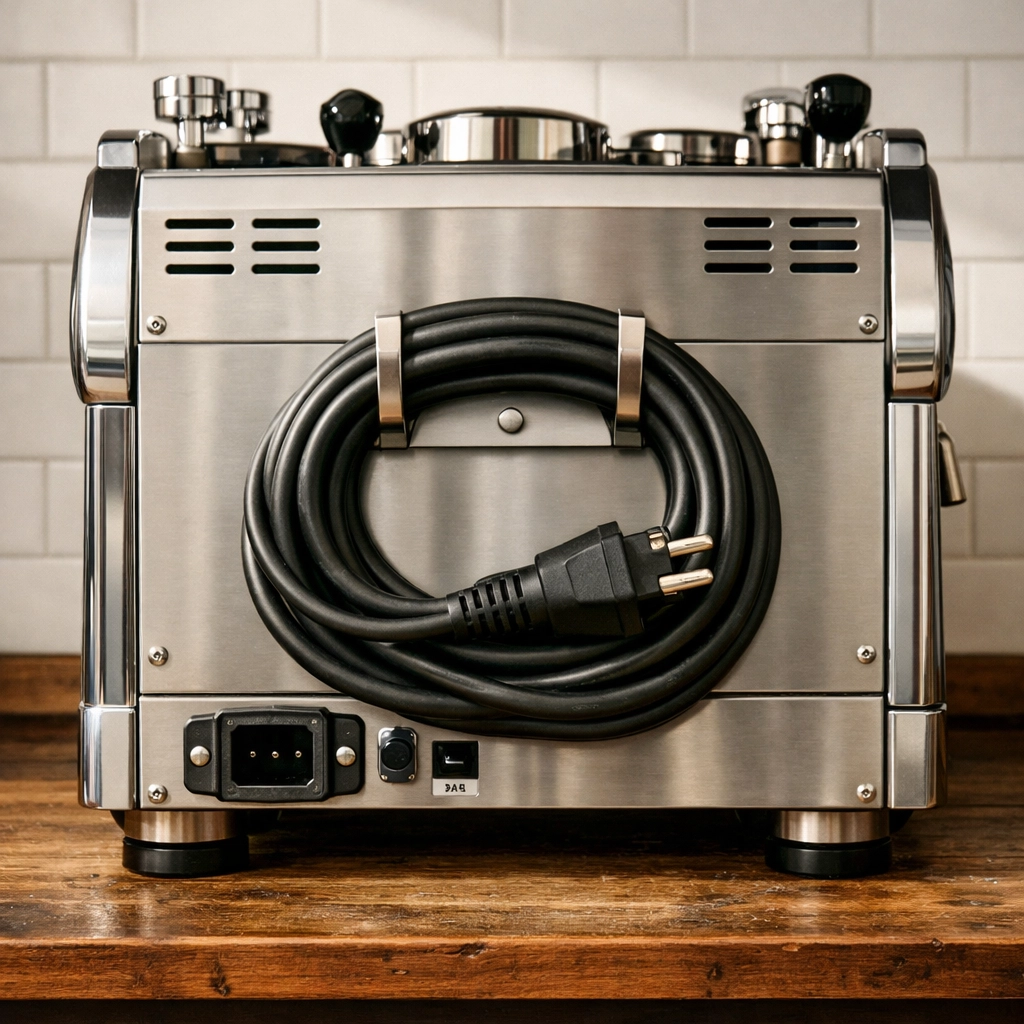
Most residential sockets in the UK provide 13 amps of power. However, a serious 2-group or 3-group espresso machine often requires a 20-amp or even a 32-amp single-phase supply. This means you can’t just "plug and play." You will likely need a qualified electrician to install dedicated circuits and industrial-grade sockets (often the blue "commando" style plugs) specifically for your machine.
Why is this important? Because of the wattage. A standard commercial machine can pull anywhere from 3,000 to over 6,000 watts. If you try to run that on a shared circuit with your panini press and milk fridge, you’re going to be tripping breakers every ten minutes. It’s worth checking the workings of machines like the La Spaziale to understand just how much technology (and power) is packed into these units.
Voltage Matters
In the UK, we generally work with 230V/240V. Some high-end equipment from overseas might have different requirements, but most professional gear sold here is ready for our grid. Just keep in mind that "dual voltage" units are common; they might use 240V for the heavy lifting (heating the boilers) and 120V/low voltage for the control panels and PIDs (Proportional Integral Derivative controllers, basically the digital brain that keeps your water temperature stable).
Don't Forget the Grinders
While the espresso machine is the big eater, don't ignore your grinders. A high-speed burr grinder might only pull 400 to 1,000 watts, but it needs a stable supply to ensure the motor doesn't burn out during a busy morning rush. We always recommend having separate circuits for your coffee equipment and your refrigeration. If a fridge compressor kicks in and causes a slight dip in power, you don't want it affecting the delicate electronics of your espresso machine.
Water: The Lifeblood of Your Business
Coffee is about 98% water. If your water isn't right, your coffee won't be right: it’s as simple as that. But logistics-wise, water isn't just about what goes into the cup; it’s about how it gets into the machine and where it goes afterward.
Plumbing In vs. Tank-Fed
Most professional setups require "plumbed-in" machines. This means a direct connection to your mains water supply. While some smaller machines have internal tanks, they aren't practical for a high-volume shop. You don’t want your barista stopping every ten minutes to refill a water reservoir.
When planning your counter, you need to ensure there’s a water shut-off valve easily accessible. If a pipe bursts or a seal fails, you need to be able to kill the water supply in seconds, not minutes.
The Silent Killer: Limescale
In many parts of the UK, the water is "hard," meaning it’s full of minerals like calcium and magnesium. While these are fine to drink, they are a nightmare for espresso machines. When water is heated, these minerals solidify into scale. Over time, this scale clogs your boilers, narrows your pipes, and eventually kills your machine.
This is why a high-quality water filtration system is non-negotiable. It’s not just about taste (though it helps with that, too); it’s about protecting your investment. We often talk about this in our wholesale partnerships: maintenance starts with prevention.
The "Waste" Problem
This is the one people forget most often: drainage. Every time your machine does a backflush or a barista rinses the drip tray, that water has to go somewhere. You need a waste pipe (usually a 40mm pipe) with a proper trap to prevent smells from coming back up.
If your counter is far from the main drains, you might need a "macerator" pump to push the waste water along. These are noisy and can be prone to failure if baristas accidentally drop coffee grounds down the sink, so we prefer a simple gravity-fed drain whenever possible.
Space: The Barista’s Dance Floor
Space planning is where the "art" of coffee shop set up meets the "science" of ergonomics. Imagine your barista as a dancer. Every movement should be fluid, short, and intentional. If they have to take three steps to reach the milk fridge and another four to get to the knock-box, you’re losing seconds on every drink. During a rush, those seconds turn into minutes of wait time for your customers.
The Golden Triangle
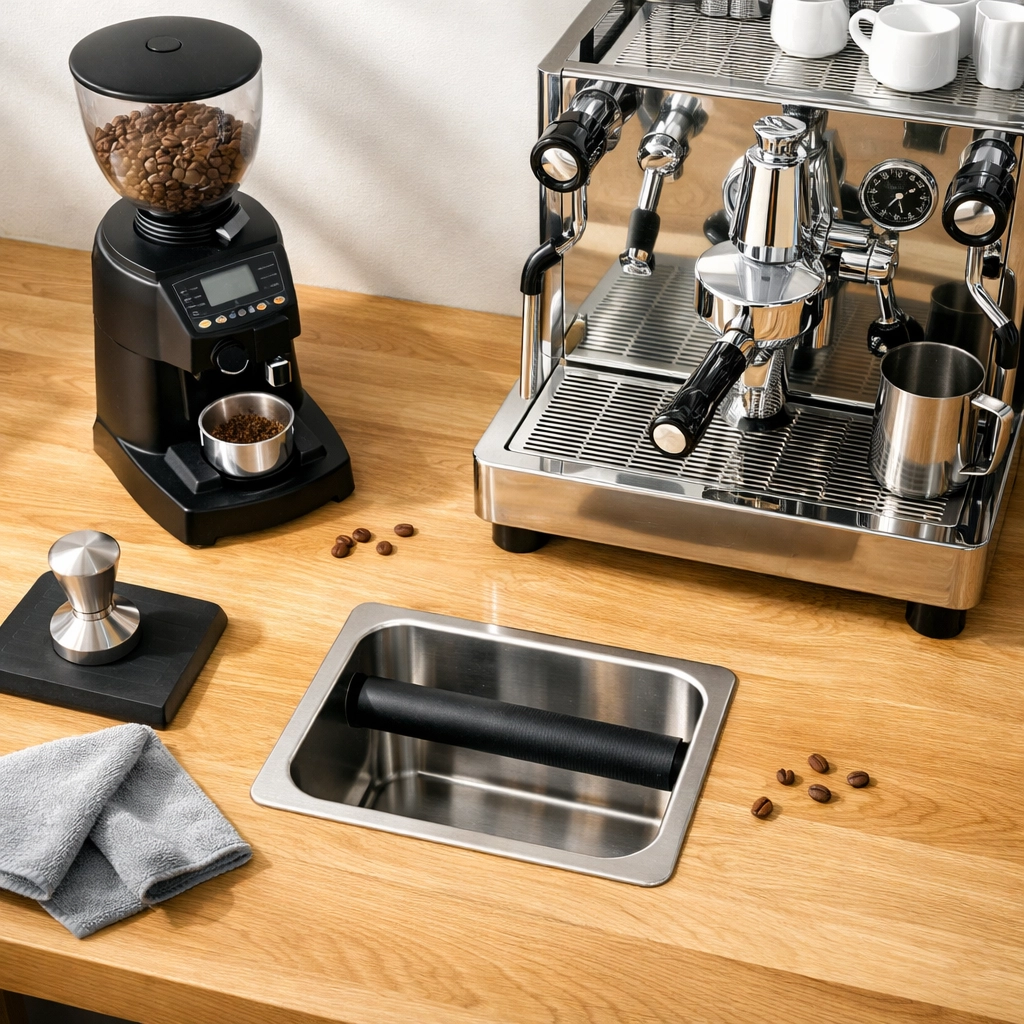
In kitchen design, there’s a concept called the "work triangle." In a coffee shop, it’s the flow between the Grinder, the Espresso Machine, and the Milk Station/Sink.
- The Grinder: Should be right next to the machine.
- The Machine: The heart of the operation.
- The Knock-box: Usually cut into the counter or sitting directly under the grinder/machine.
Counter Height and Depth
The standard counter height is usually around 900mm, but you need to consider the height of the espresso machine on top of that. If the machine is too high, the barista will be straining their shoulders to lock in the portafilters. Too low, and they’ll be hunching over.
Depth is equally important. A commercial espresso machine is a deep beast: often 500mm to 600mm. You need extra space behind it for the cables and hoses, and extra space in front of it for the barista to work. We generally recommend a counter depth of at least 800mm to 900mm for the main bar. If you’re at the stage of designing your layout, our guide on building a coffee shop and shop fitting is a great place to start.
Ventilation and Heat
Espresso machines are basically large radiators. They give off a lot of heat. If you tuck your machine into a tight corner with no airflow, it’s going to struggle. Even worse, if your milk fridges are tucked under the counter with no ventilation, their compressors will overheat and fail. Always leave a "breathing gap" around your refrigeration units.
The "Hidden" Costs of Maintenance
When we think about logistics, we also have to think about the future. Your equipment will need servicing. This means when you’re designing your beautiful custom cabinetry, you need to make sure a technician can actually get into the machine.
If a technician has to spend an hour dismantling your decorative woodwork just to reach a boiler valve, they’re going to charge you for that hour. We’re big fans of looking after your espresso machine properly, and that starts with making it accessible.
Storage Logistics
Where are the beans going? Where is the spare milk? Where do the 500 takeaway cups live? It’s tempting to use every inch of counter space for equipment, but you need "dead space" for prep and storage.
Imagine it's 8:30 AM on a Monday. You’ve got a queue out the door. You run out of cups. If the cups are stored in a back room upstairs, your workflow just died. Efficient storage means having the next "unit" of whatever you need within arm's reach.

Why This All Matters
It’s easy to get caught up in the romance of choosing the perfect beans: and trust us, sourcing our coffee is one of the best parts of what we do. But the technical foundation is what allows those beans to shine.
A machine that doesn't have enough power won't recover its temperature quickly enough, leading to sour, under-extracted coffee. Water that hasn't been filtered properly will mask the delicate notes of a single-origin roast with the taste of chlorine or minerals. A cramped workspace will lead to stressed baristas and messy drinks.
Basically, the "hidden" logistics are the skeleton of your business. You don't see them, but without them, everything collapses.
How We Can Help
If this all sounds a bit daunting, don't worry. We’ve been through this process hundreds of times. From advising on the best espresso equipment for your specific space to providing the barista training needed to run it all efficiently, we're here to help.
Whether you are just starting to look at floor plans or you’re ready to pull your first shot, remember that getting the basics right is the best gift you can give your future self. It’s the difference between a shop that struggles and a shop that thrives.
If you’re looking for a partner to help you navigate the tricky world of power, water, and great coffee, why not check out our wholesale options? We’d love to help you build something amazing.
Leave a Reply