
There is nothing quite like the smell of a fresh bag of speciality coffee arriving at your door. You tear it open, the aroma fills the kitchen, and you’re ready for that perfect morning latte. But then, you pull the shot, take a sip, and… ouch. It’s sour enough to make your eyes water. Or perhaps it’s so bitter it tastes like you’re licking a piece of charcoal.
Don't worry, we’ve all been there. Even the pros.
The truth is, making great espresso at home isn’t about luck or magic. It’s about a process we call "dialing in." It’s the systematic way we adjust our variables: grind size, dose, and time: to find the "sweet spot" where the coffee tastes balanced, sweet, and complex. At Limini Coffee, we believe that anyone can master this with a little patience and the right framework.
So, let's stop guessing and start brewing.
The Baseline: Where to Start?
Before we start turning dials on your grinder, we need a starting point. Think of this as your "home base." If you don't have a consistent starting recipe, you’ll be chasing your tail forever.
We generally recommend the "Golden Ratio" of 1:2. This means for every gram of dry coffee in your basket, you want two grams of liquid espresso in your cup.
Our Go-To Starting Recipe:
- Dose: 18 grams of dry coffee (assuming you have a standard double basket).
- Yield: 36 grams of liquid espresso.
- Time: 25 to 30 seconds.
Why this specific set of numbers? Because it’s right in the middle of the road. It gives the coffee enough room to express itself without being too concentrated or too watery. If you’re ever feeling lost, head over to our coffee brewing calculator to help crunch the numbers for different basket sizes.
Step 1: Pre-Shot Preparation
Consistency is the enemy of frustration. If your preparation changes every time, your results will change every time, even if you don't touch the grinder.
First, ensure your machine is fully warmed up. Most home machines need at least 15 to 30 minutes for the group head and portafilter to reach a stable temperature. If the metal is cold, it will suck the heat out of your brew water, leading to under-extraction (sour coffee).
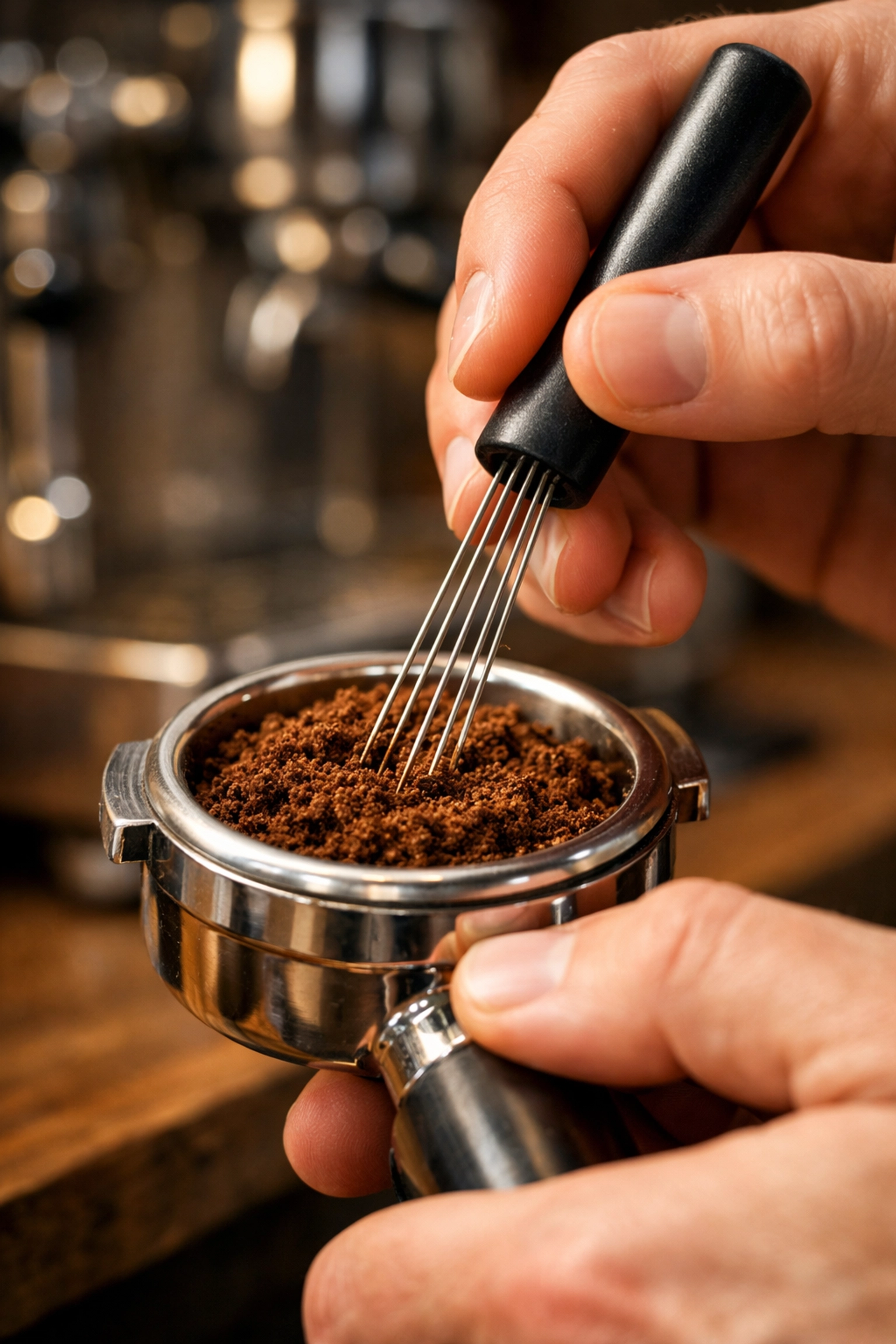
Second, we need to talk about the "puck." When you dose your 18 grams into the basket, use a WDT (Weiss Distribution Technique) tool: essentially a few thin needles: to stir the grounds. This breaks up clumps and ensures the water flows evenly through the coffee. Then, tamp firmly and level. You don't need to be a bodybuilder here; just push until the coffee resists back. We have a great deep-dive on the art of tamping if you want to perfect your technique.
Step 2: The Diagnostic Sip
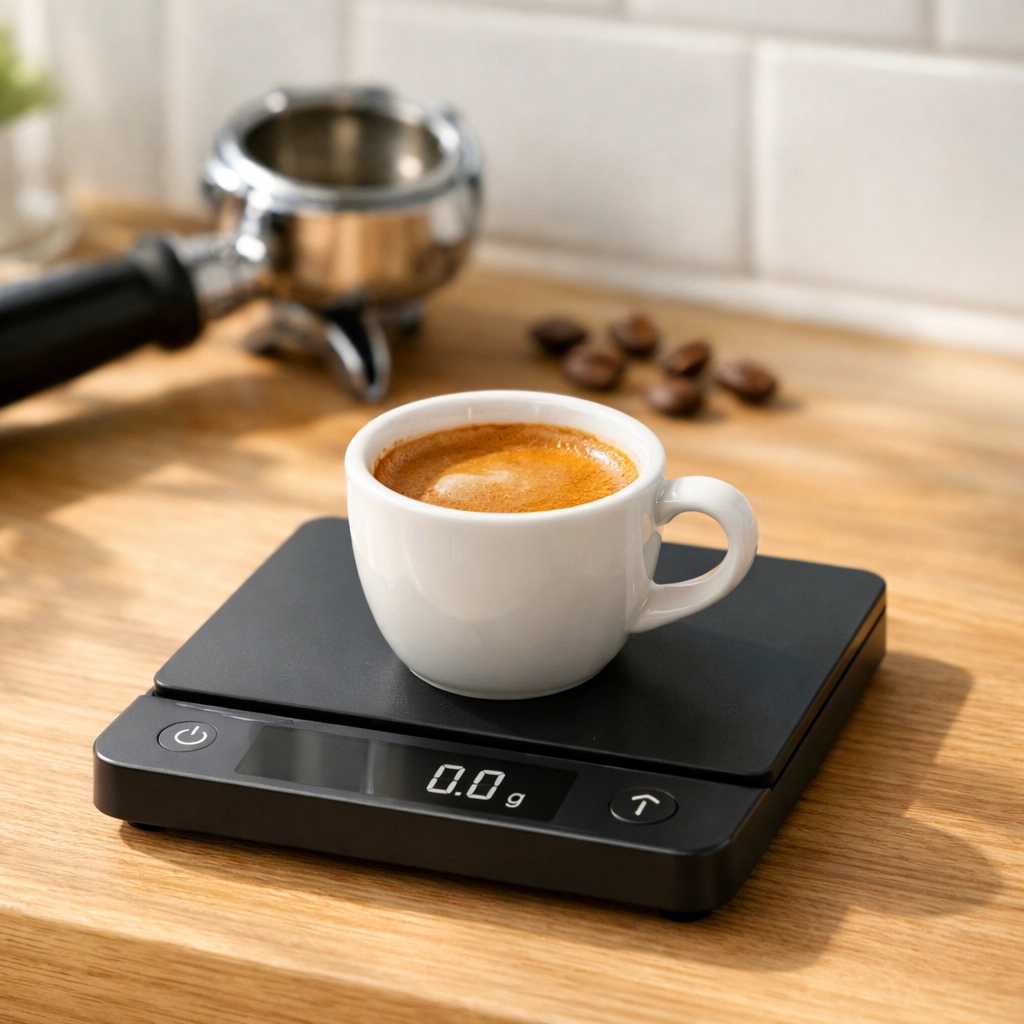
Now, pull your shot. Put your cup on a scale, start your timer the moment you hit the "on" switch, and stop the shot when you hit 36 grams.
Now, the most important part: Taste it.
Forget how it looks for a second. Crema is pretty, but it can be a bit of a liar (as we discuss in our article on crema). The flavor is the only thing that matters.
Is it Sour? (Under-extracted)
If the shot tastes thin, salty, or sharp (like a green apple or a lemon), it is under-extracted. This means the water passed through the coffee too quickly and didn't have enough time to pull out the sugars and oils. Usually, these shots finish in under 20 seconds.
Is it Bitter? (Over-extracted)
If the shot tastes harsh, dry, or "ashy," it is over-extracted. The water stayed in contact with the coffee for too long, pulling out the unpleasant, woody compounds. These shots usually drag on for 35 or 40 seconds.
Step 3: The One-Variable Rule
This is where most home baristas go wrong. They change the grind size and the dose and the temperature all at once. It’s chaos.
The Golden Rule: Only ever change one variable at a time.
Usually, that variable should be your grind size. We keep the dose (18g) and the yield (36g) the same, and we let the grind size determine the time.
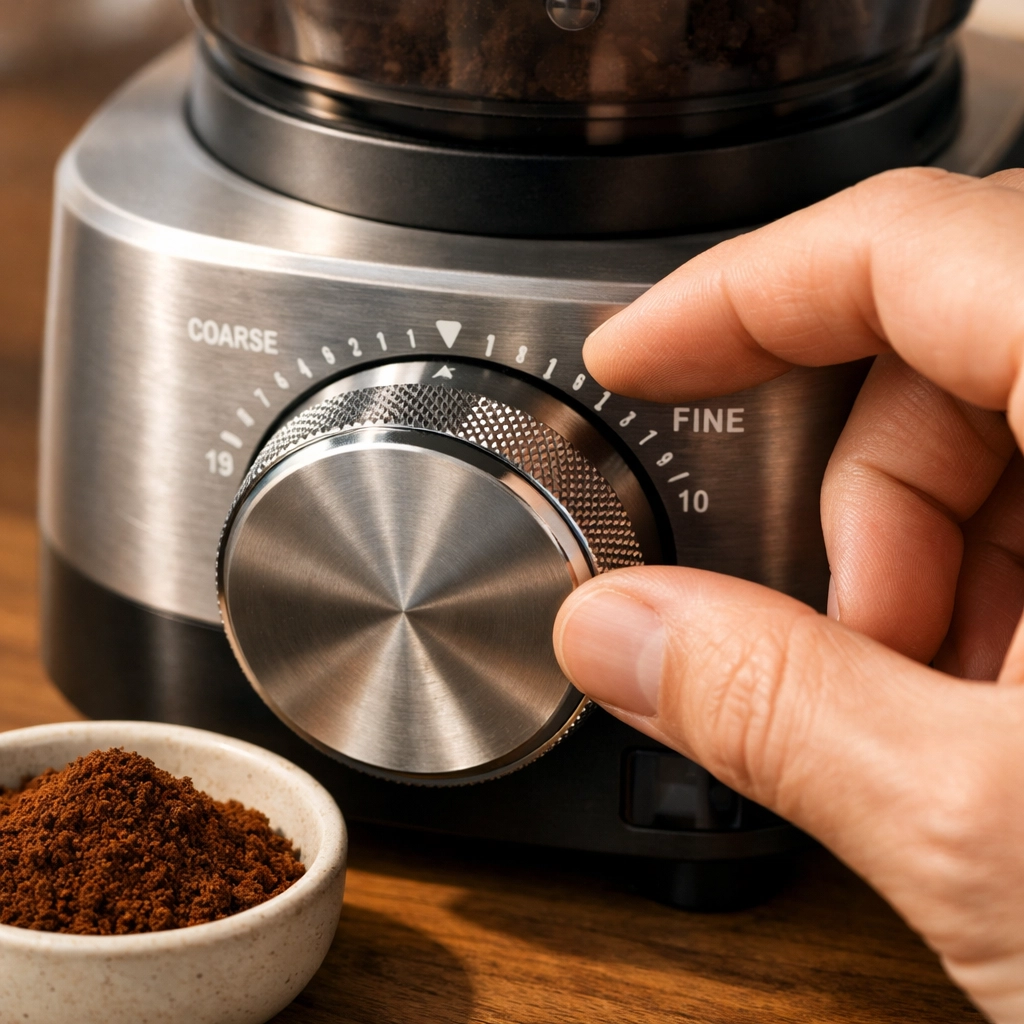
- To fix sour/fast shots: Grind finer. Finer particles pack closer together, creating more resistance for the water. This slows the flow and increases extraction.
- To fix bitter/slow shots: Grind coarser. Larger particles allow water to pass through more easily, speeding up the flow and decreasing extraction.
The Dial-In Dance: A Real-World Example
Let’s say you’ve just grabbed a bag of our fresh Limini Coffee beans. You set your grinder to what you think is the right setting.
- Shot 1: 18g in, 36g out. It takes 15 seconds. You taste it, and it’s sour enough to make you wince.
- The Fix: You adjust your grinder two "notches" or a small turn towards Finer.
- Shot 2: 18g in, 36g out. It takes 22 seconds. It’s better! Still a bit sharp, but the sweetness is starting to show up.
- The Fix: You go just a tiny bit Finer again.
- Shot 3: 18g in, 36g out. It takes 28 seconds. Boom. It’s creamy, sweet, and has a lingering chocolatey finish. You’ve found the sweet spot.
Essential Tools for the Job
You wouldn't try to build a house without a measuring tape, so don't try to dial in espresso without a few key tools.
- A Digital Scale: This is non-negotiable. You need to know exactly how much coffee is going in and how much liquid is coming out. If you're off by even half a gram, it changes the flavor.
- A Timer: Most scales have these built-in now. We aim for that 25-30 second window as a guide.
- A Bottomless Portafilter: These are fantastic for learning. They allow you to see the bottom of the basket. If you see "spurting" or uneven flow (channeling), you know your puck prep needs work, not necessarily your grind size.
- A Notebook: Write down your settings! Coffee is an agricultural product; it changes as it ages. A setting that worked on Monday might need a tiny tweak by Friday.
If you are just starting out and feeling overwhelmed by gear, check out our guide on choosing espresso equipment to see what we recommend for home setups.
Advanced Considerations: Temperature and Water
Once you’ve mastered the grind, you might want to look at the finer details.
Temperature: Most modern machines allow you to adjust the PID (the digital temperature controller). Generally, we brew between 88 °C and 95 °C (190 °F to 203 °F).
- Lighter Roasts: Usually need higher temperatures (93-95 °C) to help extract those stubborn sugars.
- Darker Roasts: Usually perform better at lower temperatures (88-91 °C) to prevent them from tasting too smoky or bitter.
Water Quality: If your water tastes bad, your coffee will taste bad. Coffee is 98% water, after all. If you live in a hard-water area, use a filter jug. It protects your machine from scale and makes the coffee taste significantly cleaner.
Why Is This Important?
We believe that the ritual of making coffee should be as enjoyable as drinking it. There’s a certain zen-like quality to the process once you understand the "why" behind the "how."
When you dial in a coffee perfectly, you aren't just making a drink; you’re experiencing the hard work of the farmers and the roasters. You’re tasting the specific terroir of a single-origin bean or the carefully crafted balance of a blend.
And look, if you’re finding all this a bit technical and just want someone to show you the ropes in person, we’d love to see you at one of our barista training sessions. We spend all day talking about extraction, milk texture (including understanding milk science), and how to make the perfect latte.
Wrapping Up
Dialing in is a skill, and like any skill, it takes practice. Don't be discouraged if your first few shots aren't perfect. Even after years in the industry, us here at Limini Coffee still have "off" days where the humidity changes and the grinder decides to be difficult.
The framework is simple:
- Keep your dose and yield consistent.
- Let the taste guide your grind adjustments.
- Change one thing at a time.
If you follow these steps, you'll move away from those "sink shots" and start pulling espresso that rivals your favorite local cafe.
Ready to start your journey? Grab some freshly roasted beans from our shop and let’s get brewing. Whether you’re looking for a bright, fruity African coffee or a deep, chocolatey South American roast, we’ve got something that will make the "dial-in" process well worth the effort.
Happy brewing!
Leave a Reply