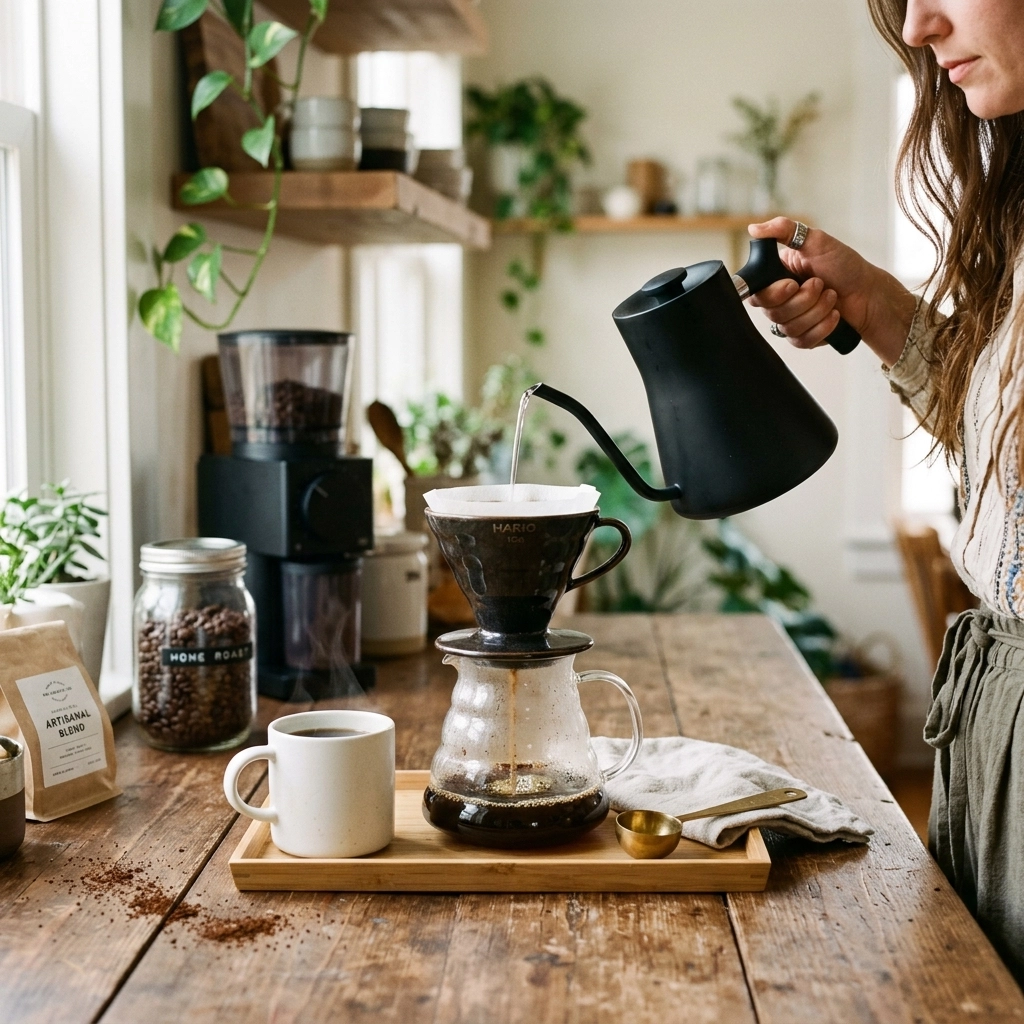
So, you’ve decided to take the plunge into the world of home brewing. Perhaps you’re tired of the "burnt toast" flavour of supermarket pre-ground, or maybe you’ve had a life-changing flat white at a local shop and thought, “I want to do that.”
Whatever the reason, we’re glad you’re here. Brewing incredible coffee at home isn't some dark art reserved for people with waistcoats and precision-engineered moustaches. It’s actually quite simple once you understand the basic principles. Here at Limini Coffee, we believe that everyone deserves a spectacular cup of coffee every single morning, and we’re going to help you get there.
If you're looking to upgrade your beans right now, you can find our full range of speciality roasts over at Limini Coffee. Trust us, starting with the right fuel is half the battle.
The Foundations: Why Most Home Coffee Tastes… Meh
Before we get into the gear, we need to talk about why home coffee often fails to live up to the hype. Usually, it comes down to four main culprits: old beans, bad water, inconsistent grinding, and "guesstimating" measurements.
Coffee is an agricultural product. Once it’s roasted, the clock starts ticking. Within a few weeks, those beautiful volatile aromatics start to fade. If you’re buying bags off a supermarket shelf that have been sitting there since the last leap year, you’re never going to get that vibrant, "pop" of flavour you find in a speciality cafe.
And then there’s the water. Think about it: a cup of coffee is about 98-99% water. If your water tastes like a swimming pool or is incredibly hard, your coffee will suffer. We’ll dive deeper into that in a bit, but for now, just remember: fresh is best.
The Golden Rules of Extraction
"Extraction" is a word you’ll hear a lot in the speciality world. Basically, it’s just the process of water dissolving the flavours from the coffee grounds.
If you under-extract, your coffee will taste sour, salty, and thin.
If you over-extract, it becomes bitter, dry, and astringent.
Our goal is to find that "sweet spot" in the middle where the acidity is balanced by sweetness and a clean finish. To hit that spot consistently, you need to control your variables.
1. The Ratio (The Recipe)
Stop using "scoops." A scoop of a dark roast weighs much less than a scoop of a light roast because the beans are more porous. If you want consistency, you need to weigh your coffee and your water.
A great starting point for most filter methods (Pour-over, French Press, Aeropress) is a 1:16 ratio. That’s 1 gram of coffee for every 16 grams of water. If you’re feeling lazy (we’ve all been there), you can use our coffee brewing calculator to do the math for you.
2. Temperature
We generally recommend brewing between 88°C and 95°C (190°F – 203°F). If you don't have a temperature-controlled kettle, just let your kettle sit for about 30 to 60 seconds after it finishes boiling.
Boiling water (100°C) can sometimes be a bit too aggressive, especially for darker roasts, leading to that "burnt" taste we’re trying to avoid. On the flip side, if the water is too cool, it won’t have enough energy to pull out the sugars, leaving you with a flat, sour cup.
The Must-Have Gear for Home Baristas
You don't need to spend thousands of pounds to make great coffee. However, there are a few items where we think spending a little more makes a massive difference in the cup.
The Burr Grinder
If you only buy one piece of equipment, make it a burr grinder. Blade grinders (the ones that look like little food processors) don't actually grind; they smash the beans into uneven shards. You’ll end up with big chunks (under-extracting) and fine dust (over-extracting) in the same brew. It’s a mess.
A burr grinder uses two revolving surfaces to "crush" the beans to a uniform size. Consistency is the name of the game here. Whether you're using a hand grinder or an electric one, a burr mechanism is non-negotiable.
Digital Scales
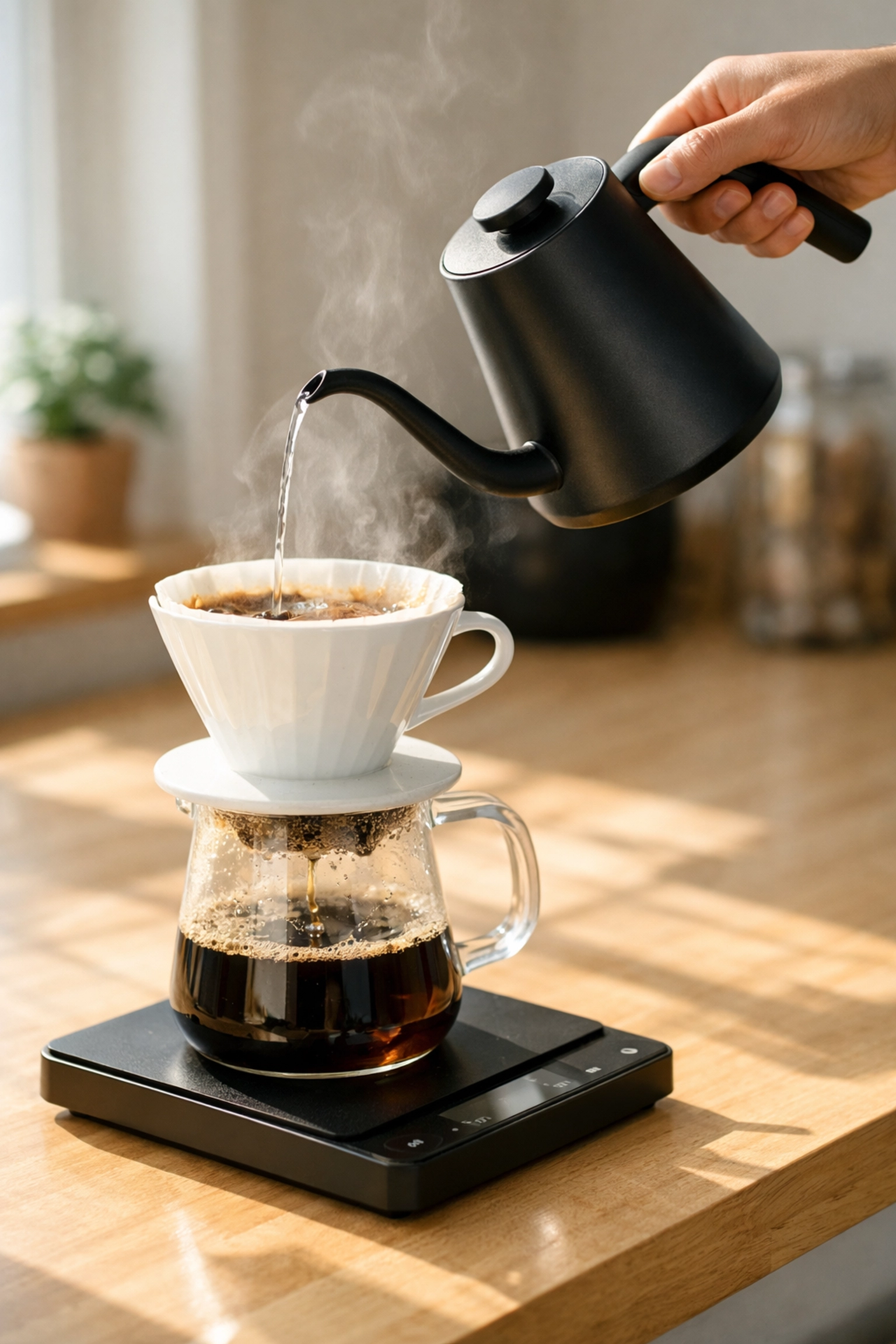
As we mentioned, weighing your coffee is the only way to ensure that Tuesday’s brew tastes as good as Monday’s. Any digital scale with a 0.1g or 1g increment will work perfectly. It’s a small investment that pays off instantly.
The Kettle
If you’re into pour-over coffee, a gooseneck kettle is extremely helpful. It allows you to control the flow and placement of the water with precision. If you’re just doing French Press, a standard kettle is fine, though we still recommend checking out the range of equipment over at Limini Coffee to see what fits your style.
Choosing Your Brewing Method
There is no "best" way to brew coffee: only the way that fits your lifestyle and taste preference. Let’s look at the heavy hitters.
The French Press (The Reliable Friend)
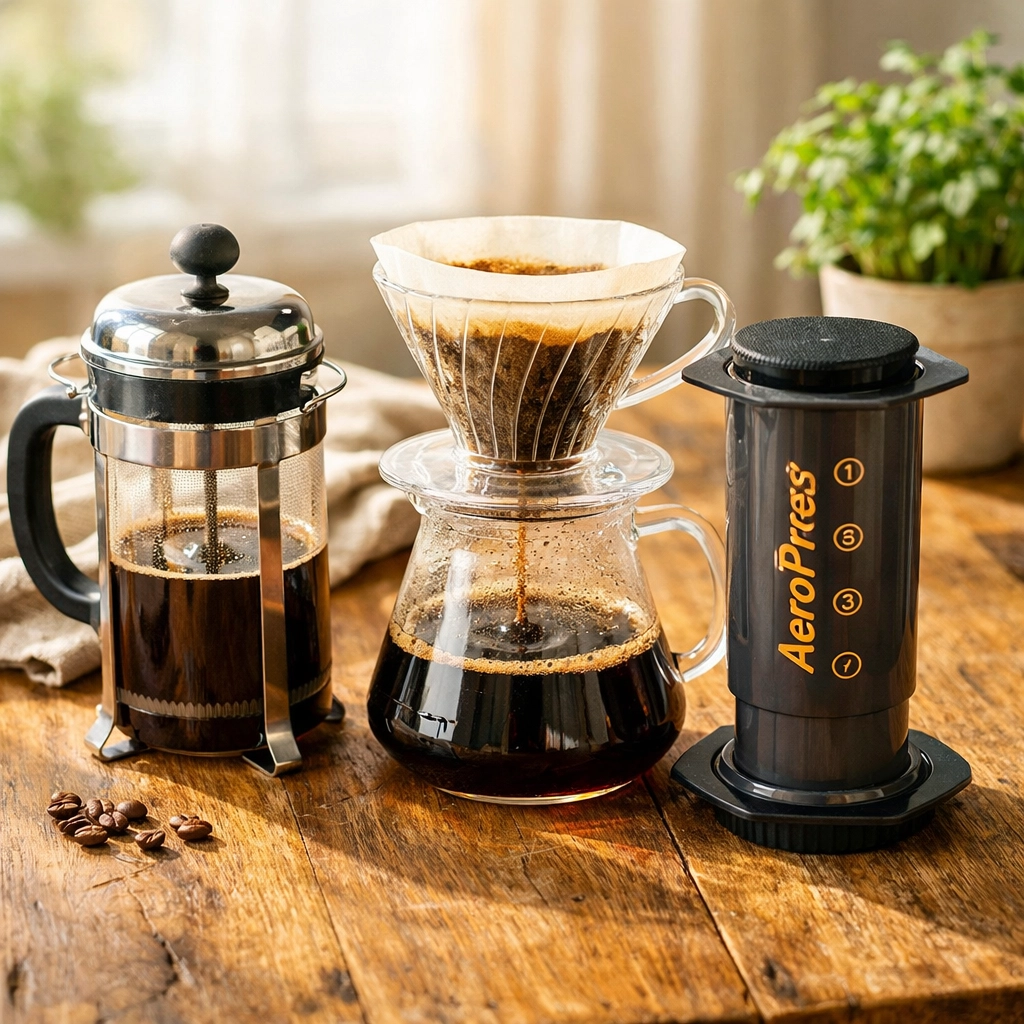
The French Press is a "full immersion" method. The coffee sits in the water for the entire brew time.
- Vibe: Heavy body, textured mouthfeel, very reliable.
- The Secret: Use a coarse grind (like sea salt) and let it steep for at least 4 minutes. We actually prefer a 5-6 minute steep for a cleaner cup. Don't be afraid to wait!
The Pour-Over (The Flavor Chaser)
Whether it’s a V60 or a Chemex, pour-overs use a paper filter to catch the oils and fine particles.
- Vibe: High clarity, tea-like body, highlights fruity and floral notes.
- The Secret: Use a medium-fine grind and pour in slow, concentric circles. It takes a bit of practice, but the results are incredibly rewarding.
The AeroPress (The Travel Buddy)
The AeroPress is indestructible and incredibly versatile. You can make anything from a concentrated "espresso-style" shot to a clean filter cup.
- Vibe: Forgiving, fast, and great for people who like to experiment.
Let’s Talk About Espresso
Espresso is the "final boss" of home coffee. It requires more precision, more expensive gear, and a bit more patience. If you’re thinking about going down the espresso rabbit hole, we have a whole guide on choosing espresso equipment to help you avoid the common pitfalls.
When brewing espresso, things like tamping and understanding crema become vital. It’s a steeper learning curve, but there is nothing quite like pulling a perfect, syrupy shot of our single-origin beans in your own kitchen. You can browse our espresso-friendly roasts here.
Water: The Hidden Ingredient
We mentioned this earlier, but it’s worth repeating. If your tap water tastes bad, your coffee will taste bad. In many parts of the UK, the water is "hard" (full of minerals like calcium and magnesium). While some minerals are actually good for extraction, too many will result in a chalky, dull cup and will eventually scale up your equipment.
We recommend using a simple water filter jug (like a Brita) at the very least. If you want to get really nerdy, you can look into bottled water with a low mineral content or even "third-wave water" packets that you add to distilled water. It might sound overkill, but the difference in flavour clarity is often shocking.
For a deeper dive into the science of how water interacts with other ingredients, you might find our understanding milk article interesting: the principles of chemistry are quite similar!
Sourcing Your Beans
You can have a £3,000 espresso machine and a master’s degree in chemistry, but if your beans are low quality, the coffee will be mediocre.
We take sourcing our coffee very seriously. We look for beans that have a story, a clear origin, and most importantly, incredible flavour. When you buy from a speciality roaster like Limini Coffee, you aren't just getting caffeine; you’re getting the result of a long chain of care: from the farmer to the roaster to you.
How to Read a Coffee Label
When you’re looking at a bag of speciality coffee, keep an eye out for:
- Roast Date: Within the last 2-4 weeks is the sweet spot.
- Origin: Is it a single origin (from one farm/region) or a blend?
- Process: Washed coffees are usually cleaner and more acidic; Natural process coffees are often funkier and fruitier.
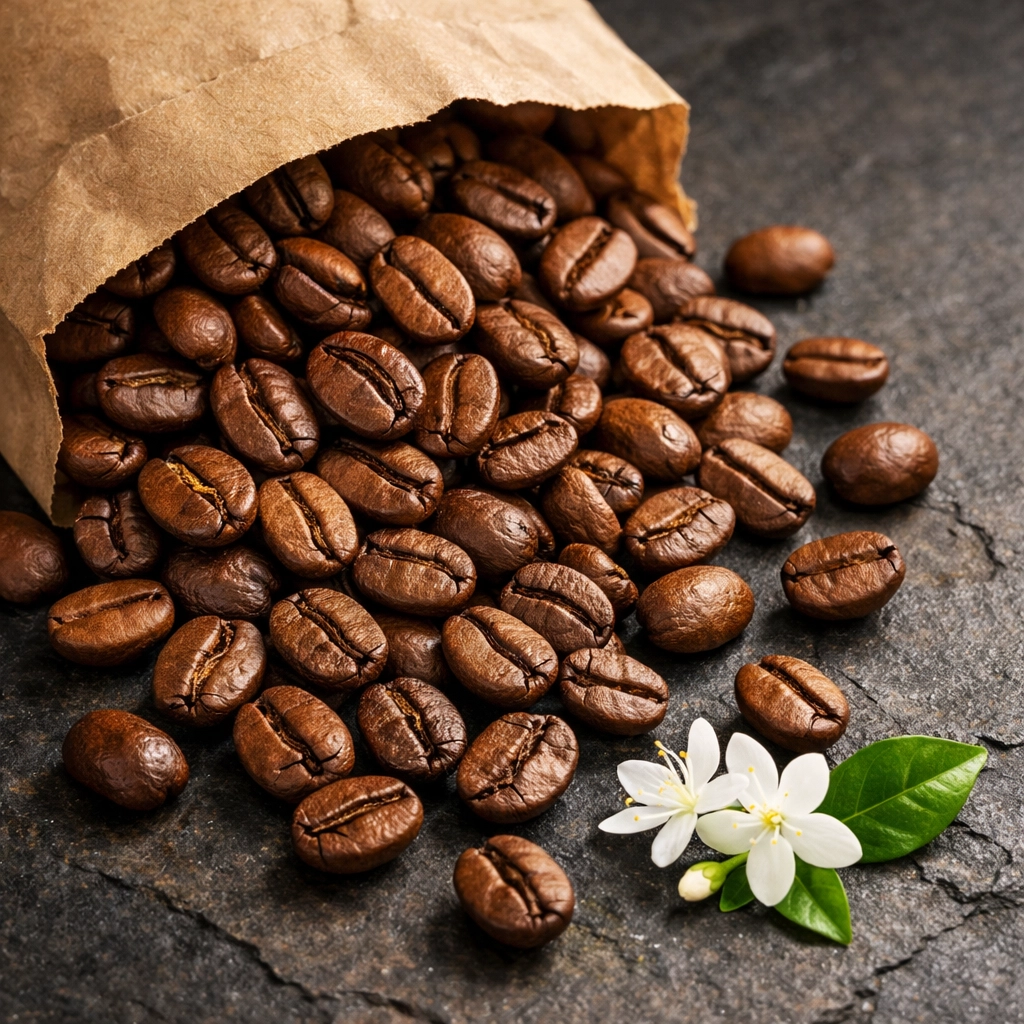
- Tasting Notes: These aren't added flavours; they are natural characteristics. If it says "Milk Chocolate and Caramel," expect a crowd-pleaser. If it says "Bergamot and Jasmine," get ready for something light and floral.
Troubleshooting Your Brew
Is your coffee not quite right? Don’t panic. Here’s a quick cheat sheet:
- Too Bitter? Your grind might be too fine, or your water too hot. Try grinding a bit coarser next time.
- Too Sour? Your grind is likely too coarse, or your water was too cool. Try a finer grind to increase extraction.
- Tastes Weak? You might need more coffee! Check your ratio and make sure you aren't using too much water.
- Tastes "Muddy"? This is often a sign of a poor-quality grinder producing too many "fines" (tiny dust particles).
Practice Makes Perfect (And Training Helps!)
Brewing better coffee is a journey. You’ll have days where you make the best cup of your life, and days where you accidentally forget to put the filter in (we've all done it). The beauty is in the process.
If you really want to fast-track your skills, we offer a range of barista training and an overall training overview for those who want to turn their passion into a professional skill. We love meeting home brewers and helping them unlock the full potential of their equipment.
So, what are you waiting for? Grab some fresh beans from Limini Coffee, dust off that French Press, and start brewing. We think you'll find that once you go speciality, there's no going back.
Happy brewing! 🙂
Leave a Reply