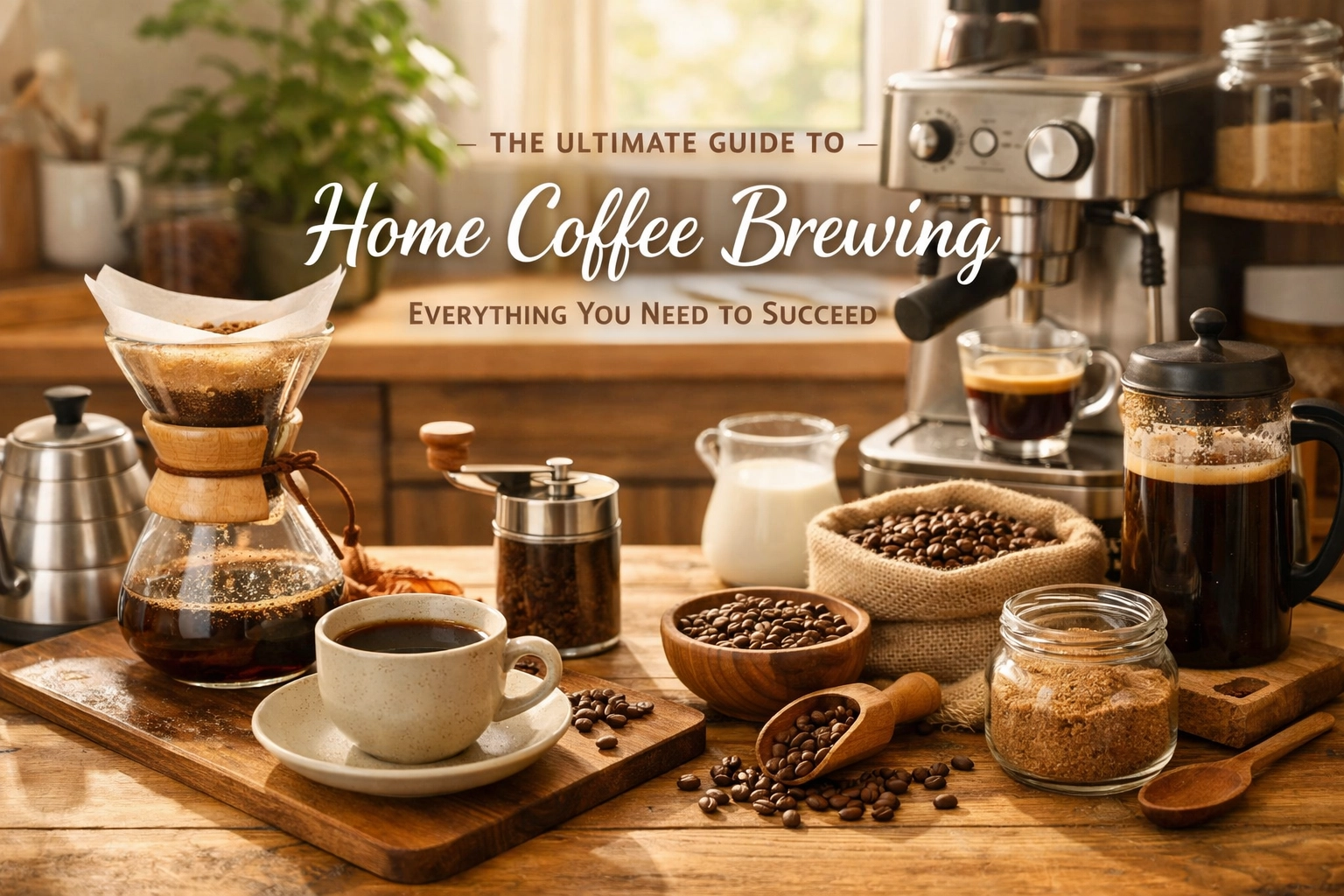
Let’s be honest: there is something remarkably satisfying about brewing a world-class cup of coffee in your pajamas. We’ve all been there: standing in the kitchen at 7:00 AM, waiting for the kettle to whistle, hoping that today’s brew hits that sweet spot of clarity and body.
Brewing coffee at home is part science, part art, and a whole lot of trial and error. But here’s the secret: you don’t need a degree in chemistry or a £10,000 commercial setup to get incredible results. What you need is a solid understanding of the variables and a bit of respect for the bean. Whether you are a pour-over purist or an espresso enthusiast, we’ve put together this guide to help you master the craft.
And if you’re looking to stock up on the essentials, you can find everything from brewing gear to the freshest beans right here at Limini Coffee.
The Holy Trinity of Brewing: Water, Ratio, and Grind
Before we even talk about fancy gadgets, we have to talk about the foundation. If these three things aren't right, the most expensive gooseneck kettle in the world won't save your morning.
1. Water Temperature and Quality
Coffee is roughly 98% water. If your water tastes like a swimming pool, your coffee will too. We always recommend using filtered water to ensure a clean slate for those delicate coffee flavours to shine.
Temperature is equally critical. You want to aim for between 195°F to 205°F (90°C to 96°C). Why? Because water that is too hot will scorched the grounds, resulting in a bitter, ashy cup. Water that is too cool simply won't have the energy to extract the delicious oils and acids, leaving you with a sour, thin mess. A temperature-controlled kettle is a game-changer here, but if you don't have one, just let your kettle sit for about a minute after it boils.
2. The Golden Ratio
How much coffee should you use? We’ve found that a ratio of 1:16 (one part coffee to 16 parts water) is the perfect starting point for most methods. This translates to roughly 60 grams of coffee per litre of water.
If you want to get precise (and you should!), check out our coffee brewing calculator to dial in your specific recipe.
3. The Grind Size
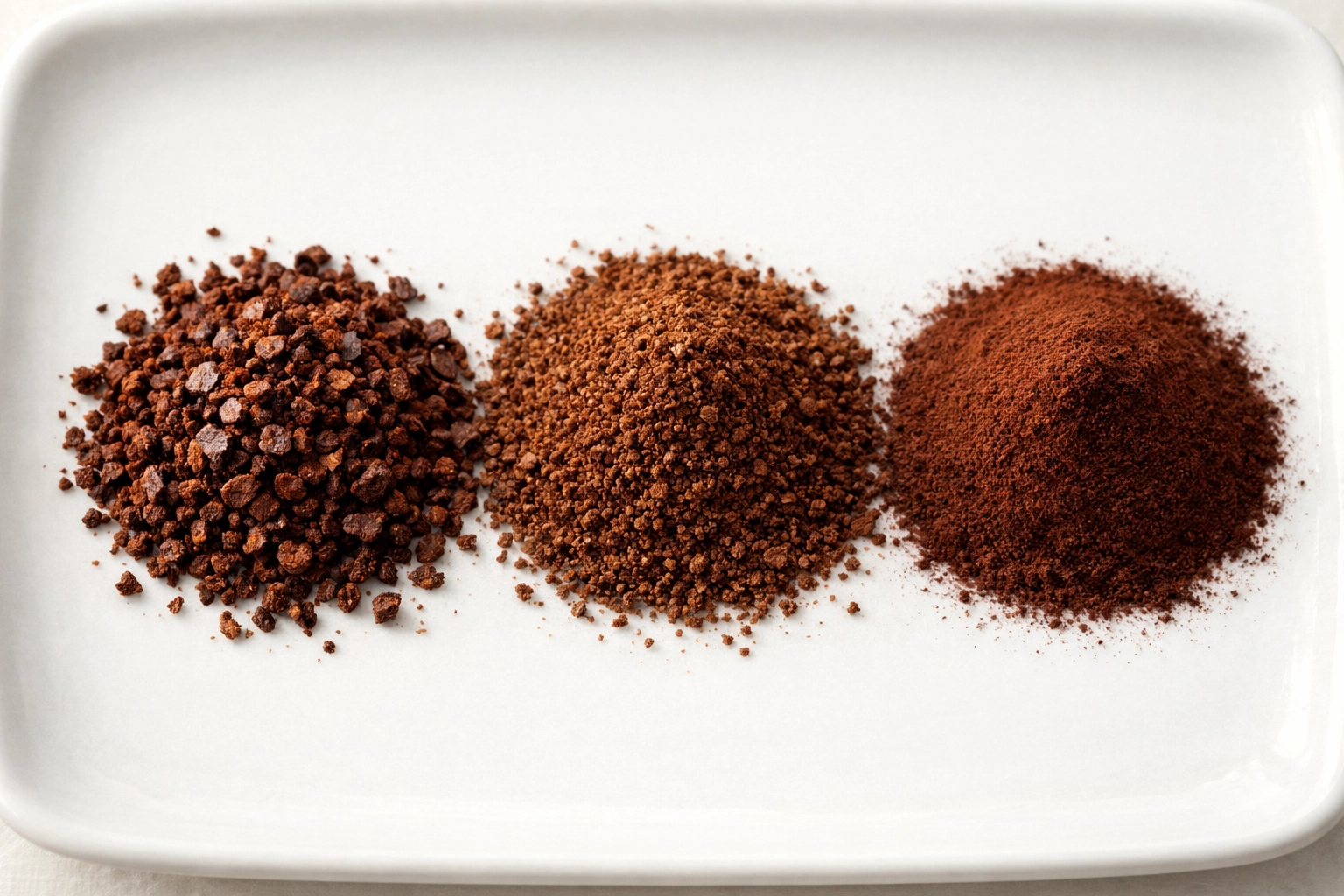
Think of grind size like a faucet. A coarse grind (like sea salt) lets water flow through quickly, while a fine grind (like powdered sugar) slows it down.
- Coarse: French Press
- Medium: Drip machines and some pour-overs
- Fine: Espresso and Moka Pot
Choosing Your Method: Which One Is Right for You?
Not all brewing methods are created equal. Some are forgiving and rustic, while others require the precision of a watchmaker.
The Pour-Over (The Purist’s Choice)
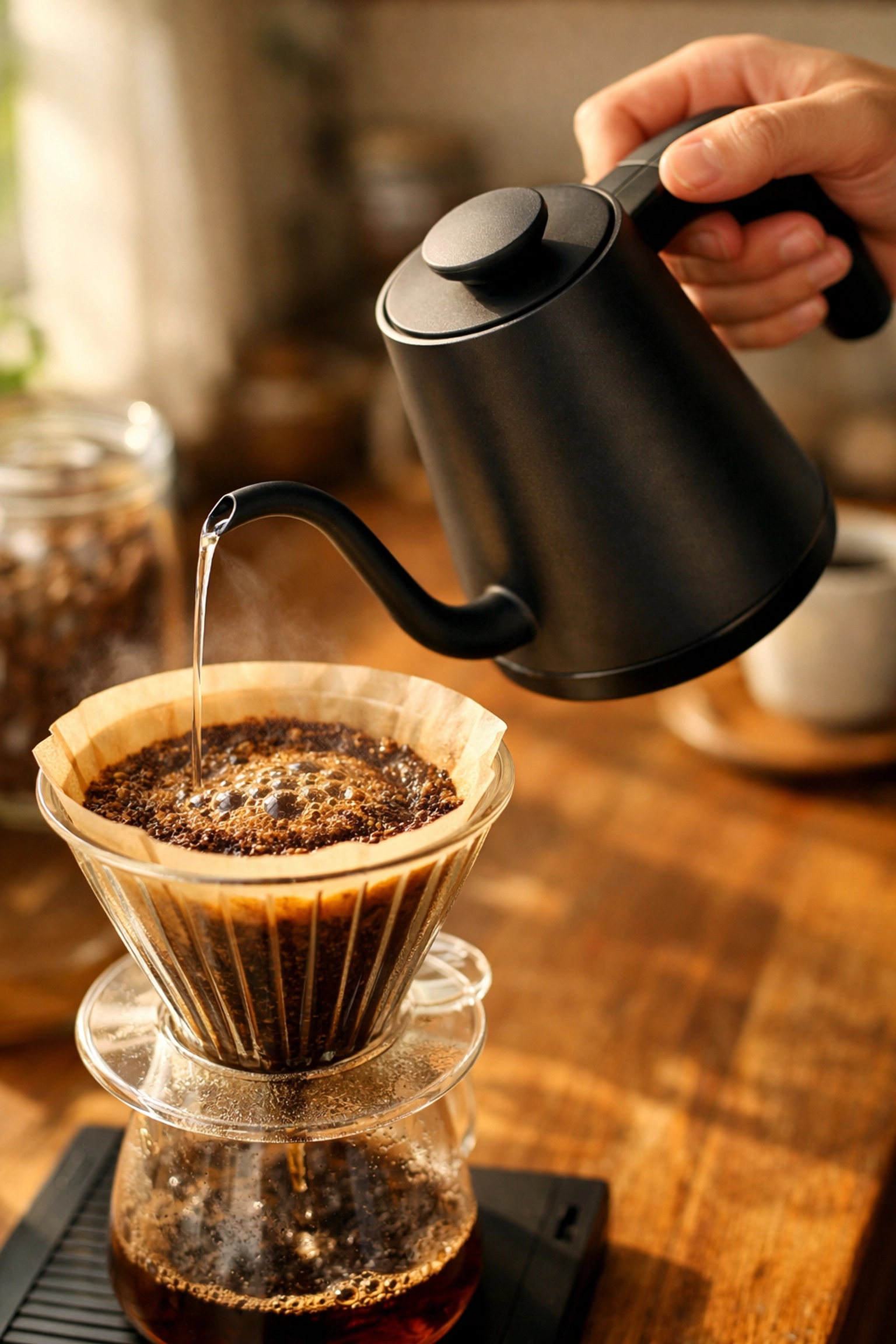
Pour-over brewing, using a V60 or Chemex, is perhaps the best way to experience the nuance of single-origin beans. It produces a clean, tea-like body and highlights acidity.
The Technique:
- Place your filter in the dripper and rinse it with hot water. This removes the "papery" taste and warms your vessel.
- Add your medium-fine grounds.
- The Bloom: Pour just enough water (about 50g) to wet the grounds and wait 30 seconds. You’ll see bubbles: this is the CO2 escaping. We call this "degassing," and it's essential for a better extraction.
- Slowly pour the rest of your water in concentric circles, avoiding the very edges. Aim for a total brew time of 3 to 4 minutes.
The French Press (The Reliable Classic)
If you like a heavy mouthfeel and a rich, bold cup, the French Press is your best friend. It’s an immersion method, meaning the coffee sits in the water for the duration of the brew.
The Technique:
- Use a coarse grind.
- Add your coffee, then pour in your hot water.
- Let it steep for 4 minutes.
- Give it a gentle stir at the top to break the "crust," then plunge slowly.
- Pro Tip: Pour the coffee out immediately after plunging. If it sits in the press, it will continue to extract and turn bitter.
The AeroPress (The Versatile Travel Buddy)
We love the AeroPress. It’s indestructible and incredibly versatile. You can make anything from a concentrated "espresso-style" shot to a clean filter cup. It’s also very forgiving of grind size.
Espresso (The Final Frontier)
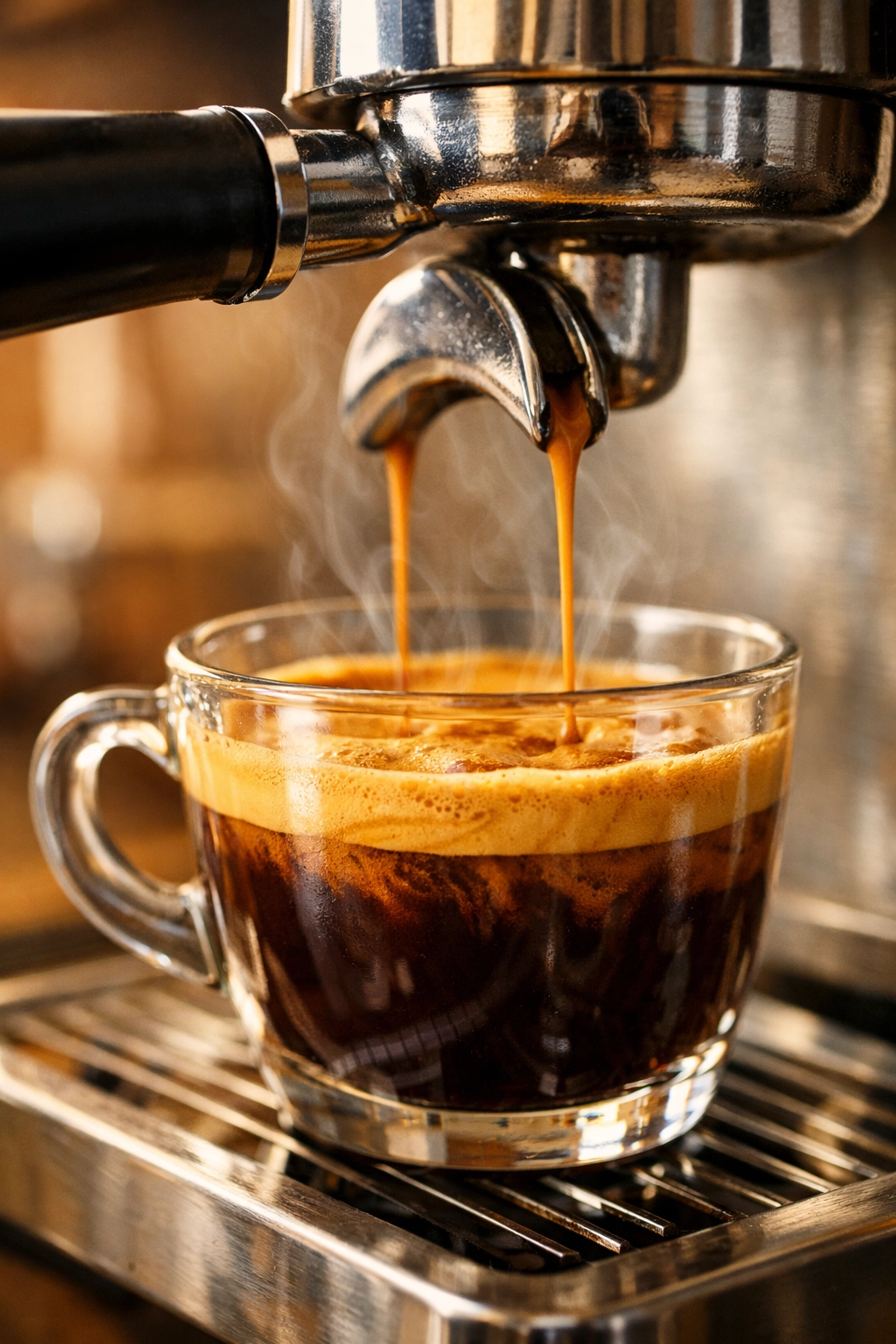
Making espresso at home is a hobby in itself. It requires pressure (usually around 9 BAR) to force water through a compact "puck" of finely ground coffee. If you’re just starting out, choosing espresso equipment can feel overwhelming, but focusing on a quality burr grinder is the most important step.
For those serious about the craft, understanding tamping and the role of crema will help you move from "okay" shots to café-quality brilliance.
Why Freshness Matters (And Where to Get It)
You can have the best technique in the world, but if your beans are six months old and from a supermarket shelf, your coffee will taste like cardboard. Coffee is a fresh agricultural product.
At Limini Coffee, we believe that coffee should be roasted to order. Freshness isn't just a buzzword; it’s the difference between a cup that tastes like "coffee" and a cup that tastes like blueberries, chocolate, or jasmine. When you buy through this link, you’re getting beans that have been handled with care from the farm to the roaster.
If you’re curious about where our beans actually come from, take a look at our process for sourcing our coffee. We take it quite seriously, so you don't have to worry about anything other than the taste.
Troubleshooting Your Brew
Is your coffee not tasting quite right? Don’t panic. Most issues can be fixed with a simple adjustment.
"My coffee is too bitter!"
- The Cause: Over-extraction. You've taken too much out of the bean.
- The Fix: Use a coarser grind, lower your water temperature slightly, or shorten your brew time.
"My coffee is too sour/weak!"
- The Cause: Under-extraction. You haven't taken enough out.
- The Fix: Use a finer grind, make sure your water is hot enough (at least 195°F / 90°C), or extend your brew time.
"My coffee feels 'thin' or watery."
- The Cause: Your ratio is off.
- The Fix: Use more coffee or less water. Check your measurements on a scale.
The Importance of the Ritual
Beyond the caffeine, the beauty of home brewing is the ritual. It’s that five-minute window where you aren't checking emails or worrying about the day ahead. You’re just focused on the weight of the water, the smell of the grounds, and the slow drip of the brew.
We’ve spent years exploring different methods, and honestly, we haven't noticed a difference in "quality" between a perfectly executed French Press and an expensive pour-over: they are just different expressions of the same bean. That is the beauty of coffee 🙂
If you find yourself getting really into the "theatre" of it all, you might enjoy reading about the theatre of coffee service or even considering some professional barista training to sharpen those skills.
Wrapping It Up
Mastering home brewing is a journey, not a destination. You’ll have days where you pull the perfect shot and days where you forget to put the filter in (it happens to the best of us). The key is to keep experimenting. Change one variable at a time, take notes, and trust your palate.
Ready to start your next brewing adventure? Head over to Limini Coffee to find your next favorite roast. Whether you’re looking for a chocolatey blend for your morning latte or a bright single-origin for your V60, we’ve got you covered.
Happy brewing!
Leave a Reply