
Saturday morning. The smell of butter sizzling in the pan. Fresh bread toasting. And that beautiful moment when you realize you have absolutely nowhere to be and all the time in the world to enjoy a proper brunch.
But here's the thing that most people miss: the coffee you choose matters just as much as whether you're making eggs Benedict or fluffy pancakes. And we're not just talking about brewing a good cup, we're talking about actually pairing your beans with your food like you would wine with dinner.
Sounds fancy? It's really not. It's just about understanding which flavors work together and which ones fight each other on your palate. So let's dive into the delicious world of coffee and brunch pairings, because your Saturday morning deserves better than just "whatever's in the cupboard."
Why Bother Pairing Coffee with Food?
You might be thinking, "Coffee is coffee, right?" Well, not exactly.
Different coffees have wildly different flavor profiles. Some are bright and fruity. Others are rich and chocolatey. Some have nutty undertones while others taste like they've been kissed by caramel. These flavors can either complement your food beautifully or completely clash with it.
Think about it this way: would you pair a delicate smoked salmon with a bold, spicy red wine? Probably not. The same logic applies to coffee. A bright, acidic Ethiopian coffee might be perfect with citrusy pastries but could taste a bit odd next to rich, savory bacon and eggs.
The goal is simple, create harmony on your palate where both the coffee and the food taste better together than they would separately.
Understanding Your Coffee Options
Before we get into specific pairings, let's quickly break down the main categories of coffee you'll be working with. Don't worry, this isn't a chemistry lesson.
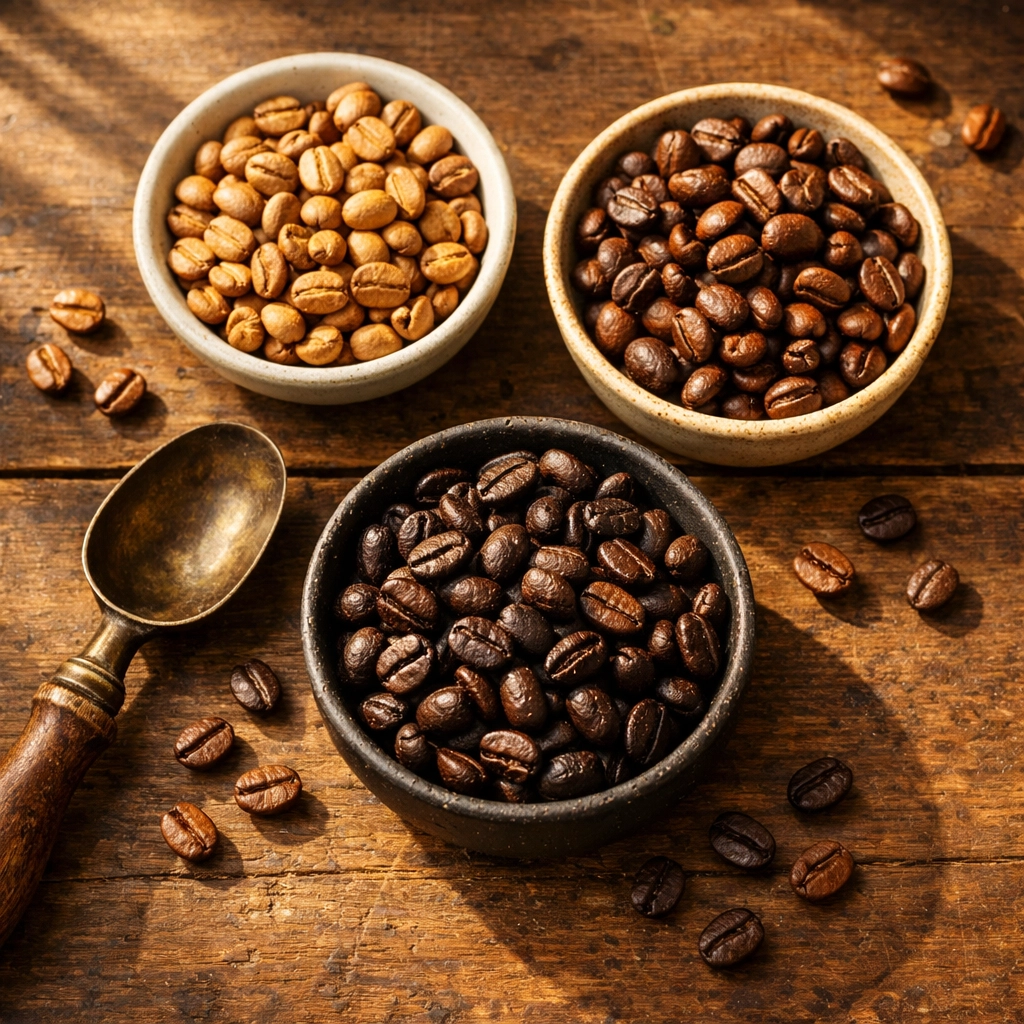
Light Roasts are where you taste the coffee's origin most clearly. They're bright, often fruity or floral, with higher acidity. Think berry notes, citrus, jasmine, sometimes even tea-like qualities. These beans are roasted for less time, preserving the unique characteristics of where they were grown.
Medium Roasts are the sweet spot for many brunch scenarios. They balance the bean's origin flavors with some of those developed roast characteristics. You get smoothness and body while still maintaining brightness. Chocolate, caramel, nuts, these flavors start showing up more prominently.
Dark Roasts are bold, full-bodied, and dominated by the roasting process itself. Lower acidity, heavier mouthfeel, with strong notes of dark chocolate, toasted nuts, and sometimes a pleasant bitterness. These are your traditional, robust coffees.
So which one is best for brunch? Honestly, all of them, it just depends on what you're eating.
The Sweet Stuff: Pastries, Pancakes, and French Toast
Let's start with the fun part, the sweet brunch items.
For pastries, croissants, and Danish, we love a medium roast with nutty, caramel notes. Why? Because butter. These baked goods are all about rich, creamy, buttery flavors, and a coffee with complementary sweetness and nuttiness just works. The coffee shouldn't overpower the delicate flavors of a good croissant but should provide a nice contrast to all that richness.
Pancakes and waffles with syrup call for something that can stand up to all that sweetness. This is where a slightly darker medium roast or even a smooth dark roast shines. You need body and depth to cut through the maple syrup. Look for coffees with chocolate or molasses notes, they'll create this beautiful sweet-bitter balance that keeps your palate from getting overwhelmed.
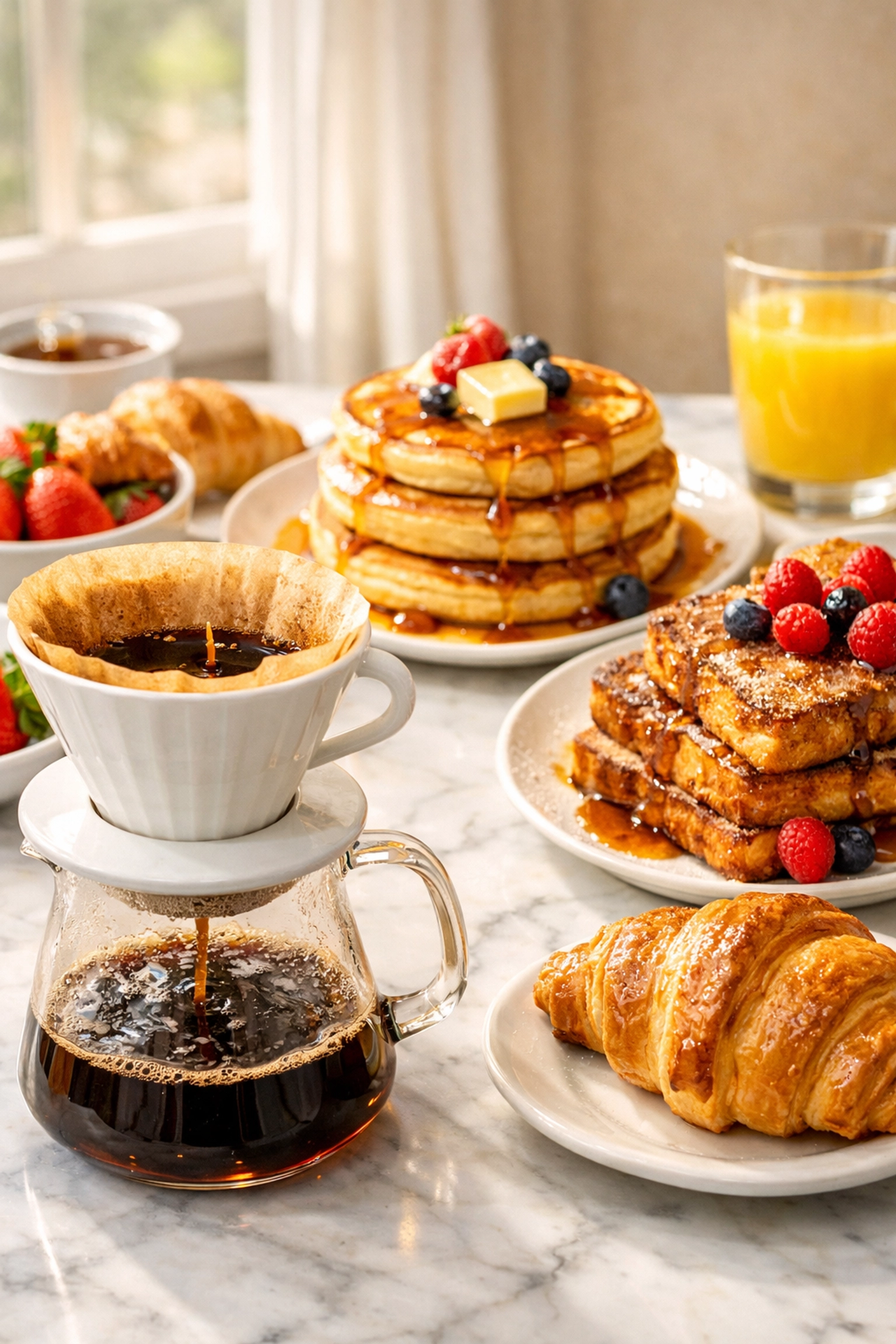
French toast and cinnamon rolls pair beautifully with coffees that have warm spice notes or dried fruit characteristics. A naturally processed coffee from Brazil or a washed Colombian with brown sugar notes? Perfect. The coffee should echo those warming spices without competing with them.
Here's a fun tip: if you're adding fruit to your pancakes, blueberries, strawberries, whatever, consider reaching for a lighter, fruitier coffee. A bright Kenyan or Ethiopian can create this lovely berry-on-berry situation that's surprisingly delightful.
The Savory Side: Eggs, Bacon, and All Things Salty
This is where things get interesting, and honestly, where most people don't think enough about their coffee choice.
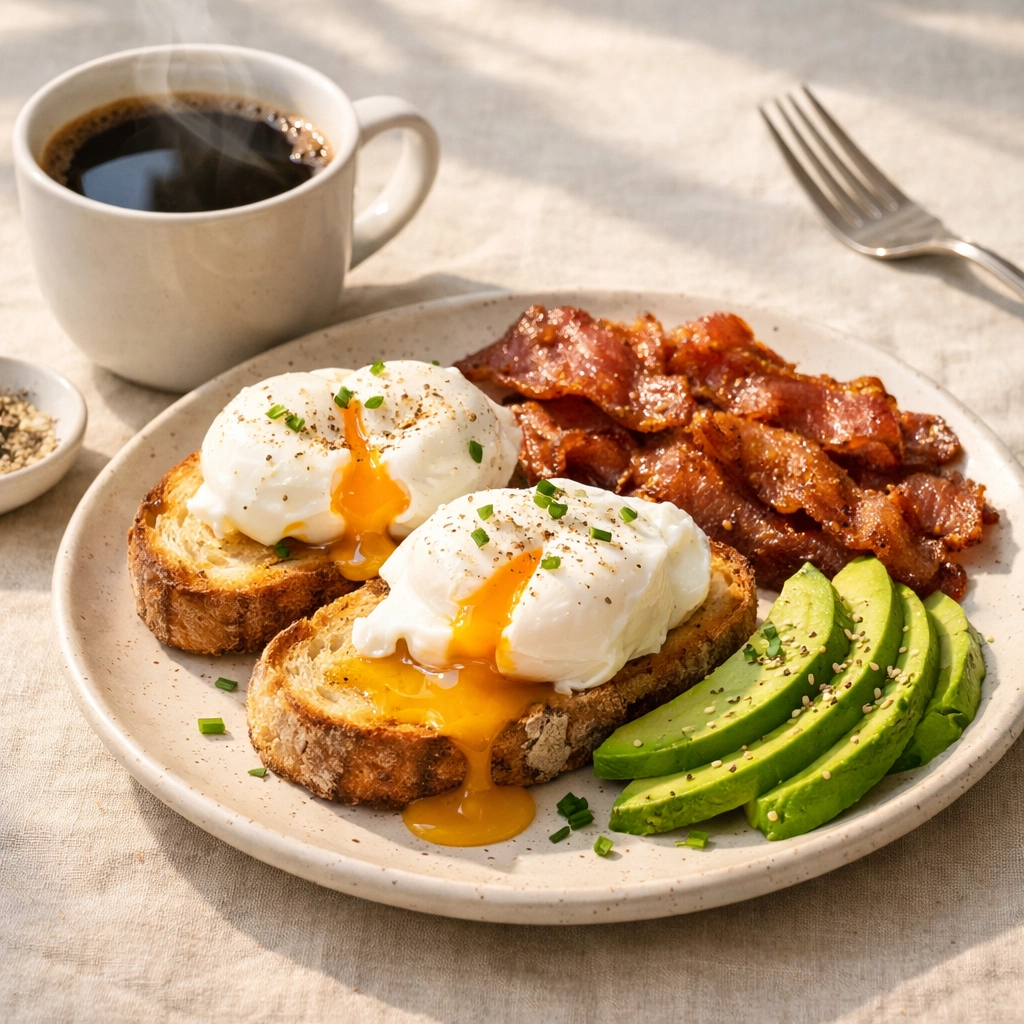
Eggs Benedict or any rich, creamy egg dish benefits from a coffee with good acidity to cut through all that hollandaise. A medium roast with bright citrus notes works beautifully here. The acidity refreshes your palate between bites, preventing that heavy, coated feeling you can get from too much richness.
Bacon, sausage, and other breakfast meats need a coffee that can match their intensity. We're talking fuller body here. A medium-dark roast with chocolatey, nutty notes complements the savory, salty, smoky flavors without getting lost. The coffee's natural sweetness also provides a nice contrast to the salt.
For avocado toast (yes, we're going there), you want something clean and balanced. The creamy, mild flavor of avocado doesn't need to be overpowered. A medium roast with good clarity and maybe some gentle fruit notes lets both the coffee and the avocado shine.
Smoked salmon and bagels are probably the trickiest pairing. The smokiness and saltiness of the fish, combined with cream cheese, needs a coffee that's smooth and won't compete. We'd suggest a medium roast with low acidity: nothing too bright or fruity. Think balanced, maybe with subtle chocolate or nut undertones.
The In-Between: Yogurt Bowls and Granola
Yogurt bowls with granola, fruit, and honey are having a moment, and they deserve thoughtful coffee pairings too.
For berry-heavy bowls, go lighter and brighter with your coffee. Those natural fruit acids in the yogurt and berries play nicely with a light to medium roast that has fruity notes of its own. It's like they're speaking the same flavor language.
Granola with nuts and honey calls for something with more body and sweetness. A medium roast with caramel or brown sugar notes echoes the honey while complementing the toasted nuts in the granola.
Practical Tips for Saturday Morning Success
So you're ready to start pairing: brilliant. Here are some practical things to keep in mind:
Brew method matters. A French press will give you a fuller body and more oils, which works great with heartier foods. A pour-over will be cleaner and brighter, perfect for lighter dishes. An espresso or Aeropress gives you intensity, which can stand up to bold flavors.
Don't overthink it. These are guidelines, not laws. If you love a particular coffee with a particular food, that's the right pairing for you. Your palate is unique, and that's the beauty of coffee.
Explore different origins. Browse the selection at Limini Coffee and try beans from different regions. Africans tend to be brighter and fruitier. Central Americans are often balanced with chocolate and nut notes. Indonesian coffees can be earthy and full-bodied. Each brings something different to your brunch table.
Temperature coordination is sneaky important. Your coffee should be hot enough to be enjoyed but not so scalding that you can't taste anything. Similarly, if your food is too hot, you won't pick up on the subtle flavor interactions. Let things cool just slightly: your taste buds will thank you.
Keep a coffee journal. Sounds nerdy, we know. But jot down what worked and what didn't. "Ethiopian Yirgacheffe with blueberry pancakes = amazing" or "Dark roast with fruit salad = not so much." You'll build your own personal pairing guide over time.
Mix and Match Your Own Adventure
Here's the thing about brunch: most of us aren't having just one thing. You've got eggs AND toast AND maybe a pastry because it's the weekend and rules don't apply.
So what do you do when you're having a mixed plate? Go for versatility. A medium roast with balanced acidity and moderate body is your friend here. It's the little black dress of coffee: works with almost everything. Something with chocolate and nut notes, maybe a hint of fruit, will complement both your savory eggs and your sweet jam on toast.
If you're doing multiple rounds (and honestly, who doesn't linger over Saturday brunch?), consider having two different coffees. Start with something brighter and lighter with your fruit and pastries, then move to something fuller-bodied when you switch to the eggs and bacon. Your palate will stay engaged, and you'll appreciate both the food and the coffee more.
The Bottom Line
Coffee and brunch pairing isn't about being pretentious or making your Saturday morning complicated. It's about paying attention to what tastes good together and making small, easy choices that elevate the whole experience.
Start with what you like. Experiment with different beans from Limini Coffee's range. Notice what works. Adjust accordingly. There's no wrong answer if you're enjoying yourself.
So next Saturday morning, when you're planning your brunch spread, think about the coffee too. Consider the flavors you're working with. Make an intentional choice. Your taste buds will notice the difference, and honestly, isn't that extra bit of thoughtfulness what makes a lazy Saturday morning feel special?
Now if you'll excuse us, we have some pancakes calling our name, and there's a beautiful medium roast Ethiopian that we think will pair perfectly. Happy brunching, and even happier coffee drinking.
Leave a Reply