
Let's be honest: weekends are when your café either shines or falls apart spectacularly.
Friday through Sunday represent roughly 40% of your week but often account for 60-70% of your revenue. The mums with prams, the laptop crowd, the brunch brigade, the "can I get that oat milk latte extra hot with an extra shot?" customers, they all descend at once. And if you're not ready, you'll spend your entire weekend in the weeds, watching your Google reviews plummet in real-time.
So how do you prep your café to handle the weekend rush without losing your mind (or your staff)? We've spent years working with café owners across the UK, and we've seen what separates the smooth operators from the cafés where the queue snakes out the door and nobody's smiling.
Here's what actually works.
Get Your Staffing Right (Or Everything Else Falls Apart)
You cannot, and we really mean cannot, handle weekend volume with your Tuesday staffing levels.
Start by pulling your till data from the last month. When do the rushes actually hit? For most cafés, it's 9:00 AM to 11:30 AM on Saturday and Sunday, with a secondary surge around 1:00 PM to 3:00 PM. Your staffing needs to reflect that reality, not what feels comfortable.
The minimum weekend setup: Two baristas on bar at all times during peak. Not one person trying to solo hero their way through 40 tickets while the grinder's running low. Two. This gives you redundancy if someone's sick, but more importantly, it lets you divide responsibilities intelligently. One person focuses on drinks, the other handles food orders, restocking, and customer service overflow.

We recommend overlapping shifts during your busiest period. So if your peak is 9:00 AM to noon, schedule one barista from 8:00 AM to 2:00 PM and another from 9:30 AM to 3:30 PM. That extra coverage during the chaos makes all the difference, and you're not paying for dead time before or after the rush.
And cross-train everyone. Your best Saturday barista should be able to work the register, clear tables, and restock milk without needing supervision. Flexibility is what saves you when things go sideways, and they will go sideways.
Your Layout Is Either Helping or Hurting You
Walk through your café right now and watch how your baristas move during a rush. Are they taking five steps to grab milk pitchers? Reaching across each other for cups? Fighting for space at the grinder?
Every unnecessary movement adds seconds. Multiply those seconds by 200 drinks on a Saturday morning, and you've added nearly an hour of wasted motion to your service time.
Station setup basics: Your most-used items, milk, cups, lids, syrups, need to be within arm's reach of the machine. If your barista has to turn around or walk away from the espresso machine to grab a cup, your layout is costing you money. Install shelving above or beside your machine. Use wall-mounted holder systems for cups if bench space is tight.
Think about customer flow, too. Do people know where to queue? Where to wait for drinks? If your collection point blocks the ordering queue, you've created a bottleneck that no amount of speed will fix. We've seen cafés dramatically improve throughput just by moving their pickup area two metres to the left.
And please, for the love of good coffee, make sure your menu is visible before customers reach the counter. Nothing slows down service like someone standing at the till for 45 seconds trying to decide between a flat white and a cappuccino while twelve people queue behind them.
Batch Prep Like Your Weekend Depends On It (Because It Does)
Friday afternoon is your secret weapon.
This is when you prepare for Saturday's chaos. Portion your syrups into squeeze bottles. Pre-weigh your coffee for bulk filter batches. Prep any food items that can be made ahead: cookie dough, sandwich fillings, muffin batter. Slice your cake portions and wrap them individually. Stock your fridges completely.
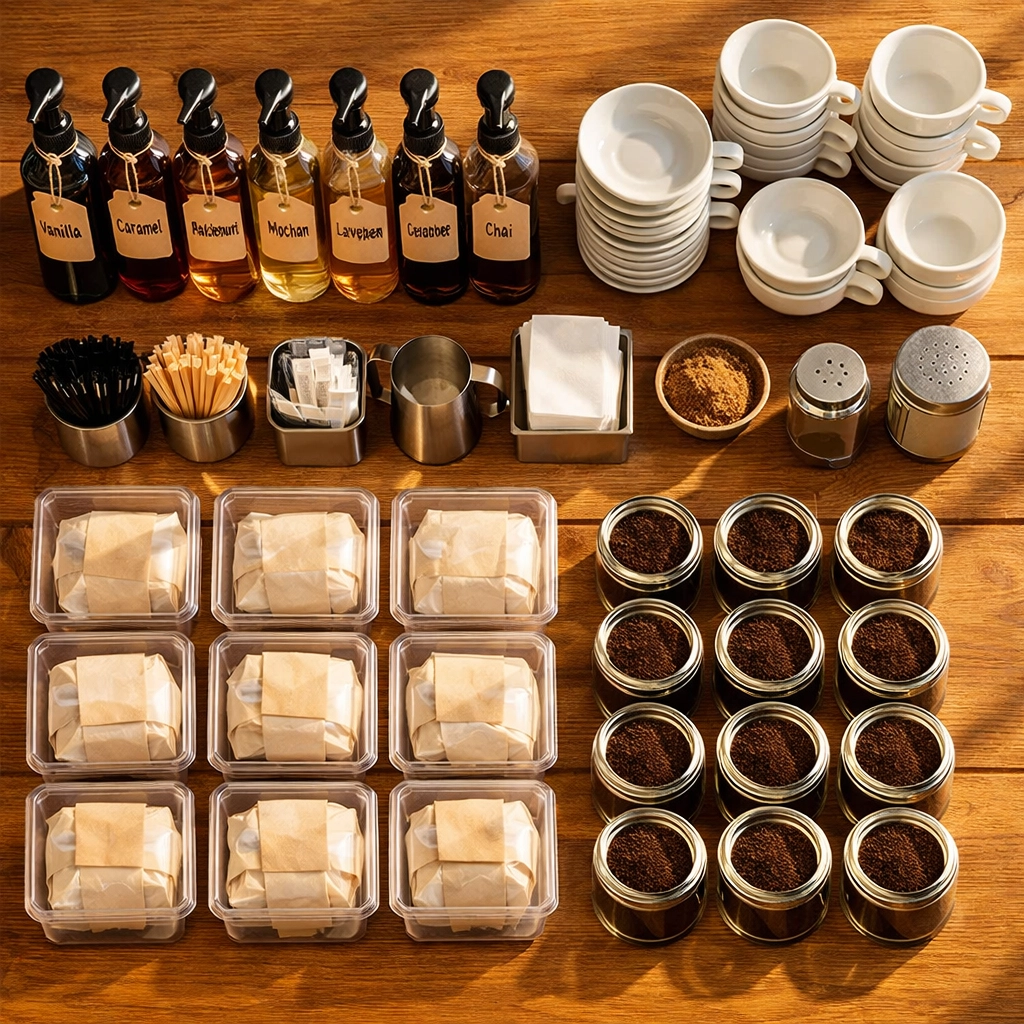
The goal is to eliminate every possible prep task from Saturday morning. Your opening barista should be able to walk in, fire up the machine, and start serving customers within 15 minutes: not spending half an hour slicing brownies and refilling syrup bottles.
We believe in the 80/20 rule here: identify the 20% of your menu that accounts for 80% of your orders. For most cafés, that's flat whites, cappuccinos, and lattes, plus maybe two or three food items. Make sure those items are prepped, portioned, and ready to fly out the door. Everything else can be handled as-needed.
Coffee supply is critical. Running out of your signature blend at 11:00 AM on a Saturday is a nightmare scenario. We've seen it happen, and it's not pretty. If you're working with Limini Coffee, you already know we can turn around wholesale orders quickly, but don't leave it to chance. Check your stock Thursday evening, not Saturday morning when it's too late.
Keep backup bags of your main blend on hand: at least enough to get through an entire weekend even if your delivery doesn't arrive. Fresh is best, absolutely, but having coffee is better than having no coffee.
Equipment Checks: The Boring Stuff That Saves Your Weekend
Saturday morning at 8:45 AM is not the time to discover your grinder burrs are worn out or your espresso machine is losing pressure.
Friday evening equipment routine:
- Clean your grinder thoroughly and check for any unusual sounds or inconsistent grinds
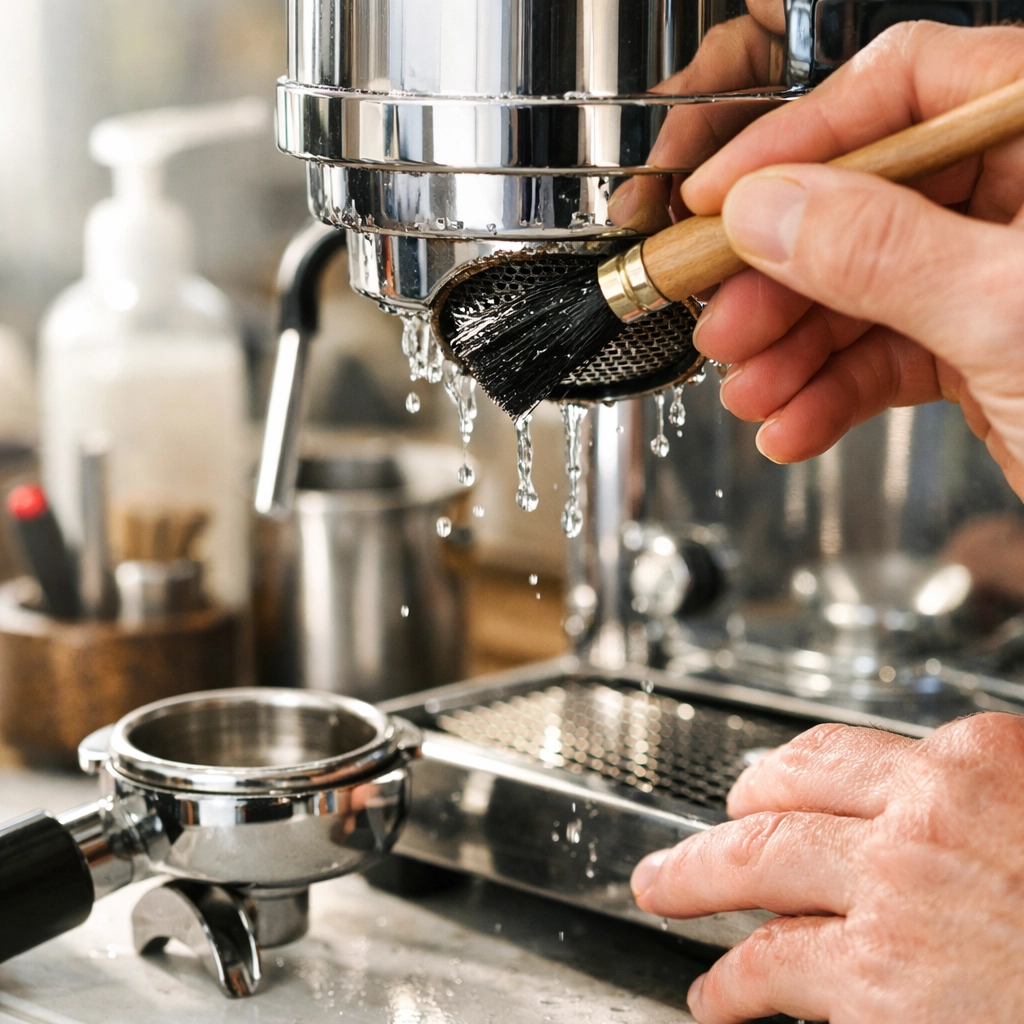
- Backflush your espresso machine and inspect group head seals
- Descale if you're due (you should be tracking this, not guessing)
- Check your steam wands aren't blocked and are producing consistent pressure
- Test your grinder calibration and dial in fresh for Saturday's service
- Ensure your water filter is functioning properly
- Check milk fridge temperatures (should be 3-5°C)
We see cafés skip these checks all the time, then wonder why their shots are pulling weirdly on their busiest day. Equipment maintenance isn't glamorous, but it's the difference between smooth service and panicked phone calls to your technician while 40 people wait for drinks.
Your grinder deserves special attention. If you're using a grind-by-weight system, verify the calibration. If you're dosing manually, make sure your timer is accurate and consistent. Inconsistent grinding is the fastest way to destroy shot quality when you're under pressure, and customers absolutely notice when their flat white tastes different than the one they had last Saturday.
If you need guidance on equipment setup or maintenance, Limini's training resources cover the technical details that matter for consistent quality during high-volume service.
The Quality Question (And Why Cutting Corners Will Haunt You)
Here's the tension: you need to move quickly during the weekend rush, but you can't sacrifice quality. Sounds impossible, right?
It's not. But it requires systems.
Standardization is your friend. Use dosing tools, tamping pressure guides, milk jugs with measurement lines: anything that reduces decision-making and variation. Your baristas shouldn't be eyeballing doses or guessing at milk temperature. The less they have to think about technique, the more they can focus on speed and customer service.
This is where proper training pays off. A barista who understands extraction theory doesn't panic when they need to adjust the grind mid-rush. They know what to look for, how to taste-test quickly, and how to make micro-adjustments without derailing service.
We're not saying you need to become robots. The beauty of specialty coffee is in the craft and attention. But there's a difference between thoughtful technique and chaotic inconsistency. During weekend rushes, thoughtful technique is what separates memorable customer experiences from "just another coffee shop."
Create station-specific checklists that live at each workstation. For the bar: check shot time, monitor crema quality, maintain steam wand cleanliness, monitor milk temperature. For the register: greet customers, repeat orders, upsell appropriately, manage the queue. This isn't about micromanaging: it's about maintaining standards when everything's moving at double speed.
Communication Systems That Actually Work Under Pressure
When you're slammed, clear communication becomes everything.
We recommend a simple cup-marking system that your entire team understands. Abbreviations are your friend: FW (flat white), C (cappuccino), L (latte), OAT (oat milk), XH (extra hot), XS (extra shot). Write it on the cup with a marker or print it on your till receipt. No confusion, no remade drinks, no wasted time.
Kitchen display systems are brilliant if you've got the budget. Orders appear on a screen the moment they're entered, eliminating the "did you hear me call out that order?" problem entirely. But even if you're working with handwritten tickets, the principle is the same: one system, everyone trained on it, no exceptions.
Verbal communication matters too. Agree on call-outs before the rush starts. "Two flat whites up!" means the drinks are ready for collection. "Checking shots!" means someone's adjusting the grinder and bar might pause briefly. These tiny verbal cues prevent collisions, mistakes, and that panicked feeling when nobody knows what anyone else is doing.

The Friday Pre-Shift Briefing (Five Minutes That Save Hours)
Right before you close on Friday, gather your weekend team. Five minutes. That's all it takes.
Cover the weekend weather forecast (sunny weather means patio service, rain means everyone's crammed inside). Mention any special events happening nearby that might drive traffic. Review who's doing what on Saturday and Sunday. Confirm that everyone knows the weekend specials or promotions.
This is also when you ask: "What do we need to make this weekend run smoothly?" Maybe someone's noticed the portafilter baskets are getting gunked up. Maybe the till system has been glitchy. Maybe you're low on takeaway cups. Better to hear about it Friday at 5:00 PM than Saturday at 9:30 AM when you're already in the weeds.
Your team should leave Friday feeling prepared, not anxious. That mindset shift matters more than you might think.
The Monday Morning Review
After the weekend dust settles, spend 20 minutes reviewing what happened. Pull your sales data. What sold well? What didn't move? Were there any stock issues? Equipment problems? Staffing gaps?
This isn't about blame: it's about continuous improvement. Maybe you realize you need more oat milk than you thought. Maybe that new pastry supplier isn't reliable enough for weekend volume. Maybe your Saturday afternoon barista is actually better suited for the morning rush.
The cafés that consistently nail their weekend service are the ones who treat it like an ongoing optimization project, not a weekly crisis to survive.
You've Got This
Weekend service will always be intense. That's the nature of the business. But intense doesn't have to mean chaotic.
With proper staffing, smart prep work, maintained equipment, and clear systems, you can handle the weekend rush without burning out your team or compromising on quality. Your customers will notice the difference. Your staff will be happier. And your till receipts will reflect the efficiency gains.
If you're looking to upgrade your coffee supply or need guidance on wholesale arrangements for your café, the team at Limini Coffee works with cafés across the UK to ensure consistent, quality coffee even during peak demand periods. Because running out of great coffee on a Saturday morning? That's not something you want to experience twice.
Now go prep for this weekend. You've got customers waiting, and they're going to love what you're serving them.
Leave a Reply