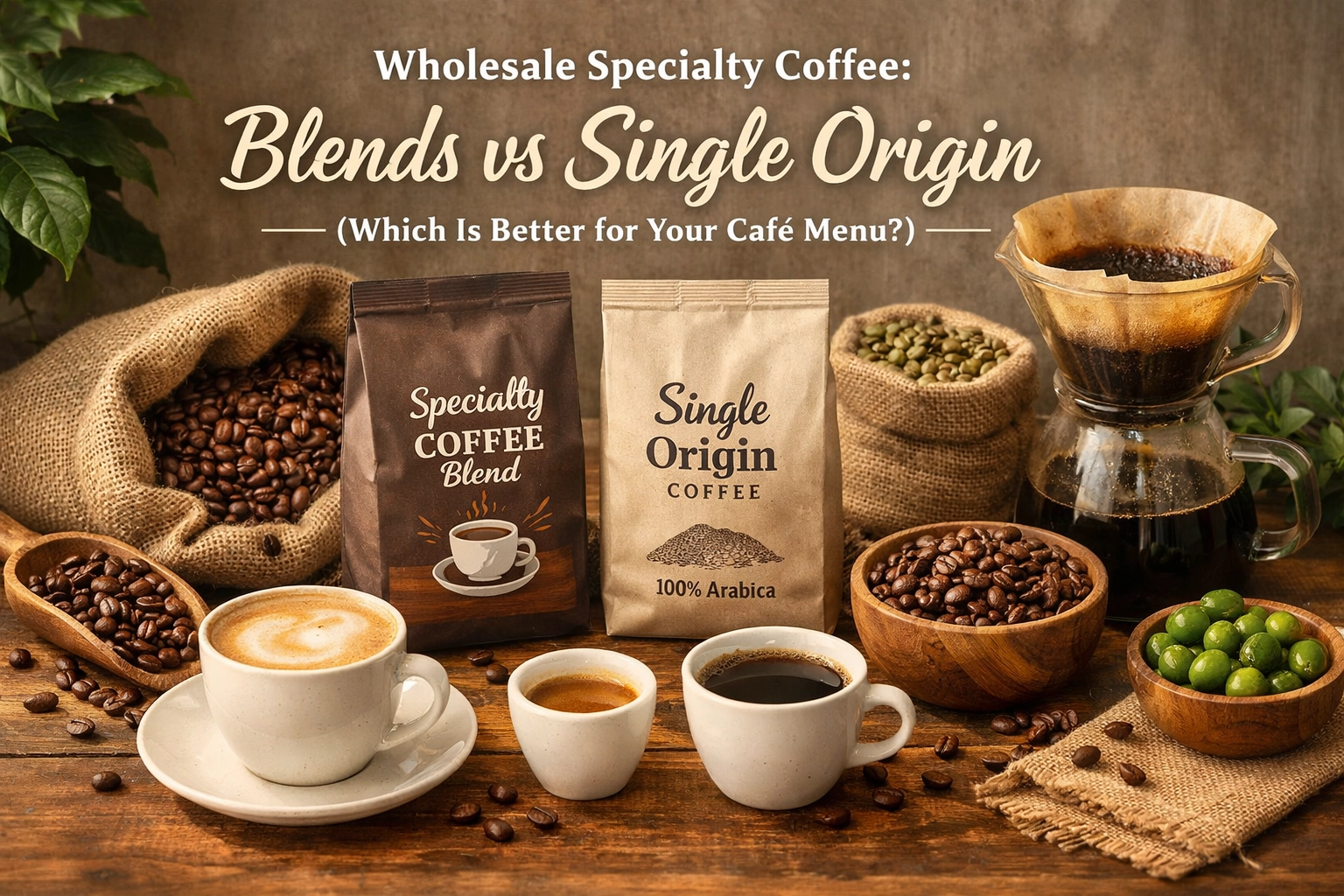
So you're building your café menu and staring down one of the most common questions in the specialty coffee world: blends or single origins?
It's not a simple answer. And honestly, anyone who tells you one is universally "better" than the other probably hasn't run a busy café during Saturday morning rush.
The truth? Both have their place. The real question is: which one fits your menu, your customers, and your operational reality?
Let's dig into it.
What Are Coffee Blends, Really?
A blend is exactly what it sounds like: multiple coffees from different origins combined to create a specific flavor profile. Think of it like a recipe. Your wholesale coffee roaster might combine a Brazilian base for body, an Ethiopian component for brightness, and a Guatemalan coffee for sweetness.
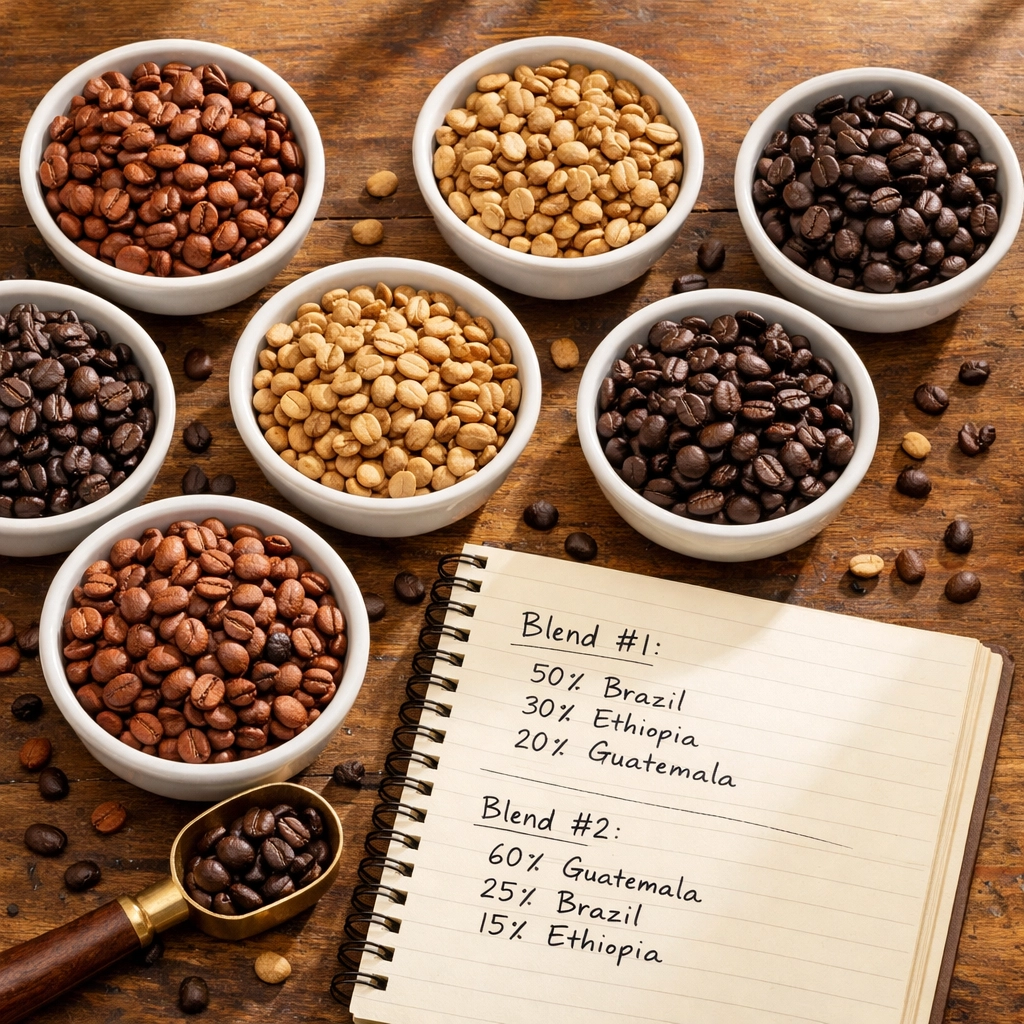
The genius of blends is in their design. Roasters create them so they can swap out component coffees based on seasonality and supply while maintaining the same taste month after month. That Brazil runs out in June? They'll substitute another coffee with similar characteristics, and your customers won't notice the difference.
This consistency is huge for commercial coffee shops. Your staff trains on one profile. Your regulars know exactly what they're getting. There's no seasonal surprise that throws off your milk ratios or confuses your less coffee-obsessed customers.
Single Origins: The Star Performers
Single origin coffee comes from one place: one farm, one region, one specific lot. It's traceable, specific, and proudly showcases its origin characteristics.
Ethiopian Yirgacheffe tastes nothing like Colombian Huila, which tastes nothing like Kenyan AA. That's the entire point. Single origins are about terroir, about celebrating what makes that particular coffee unique. The floral notes, the bright acidity, the distinct fruit flavors: these are features, not bugs.
For customers who care about sustainability and traceability, single origins offer complete transparency. They can learn exactly where their coffee came from, often down to the specific producer. That story matters to a growing segment of specialty coffee drinkers.
When Blends Make Perfect Sense
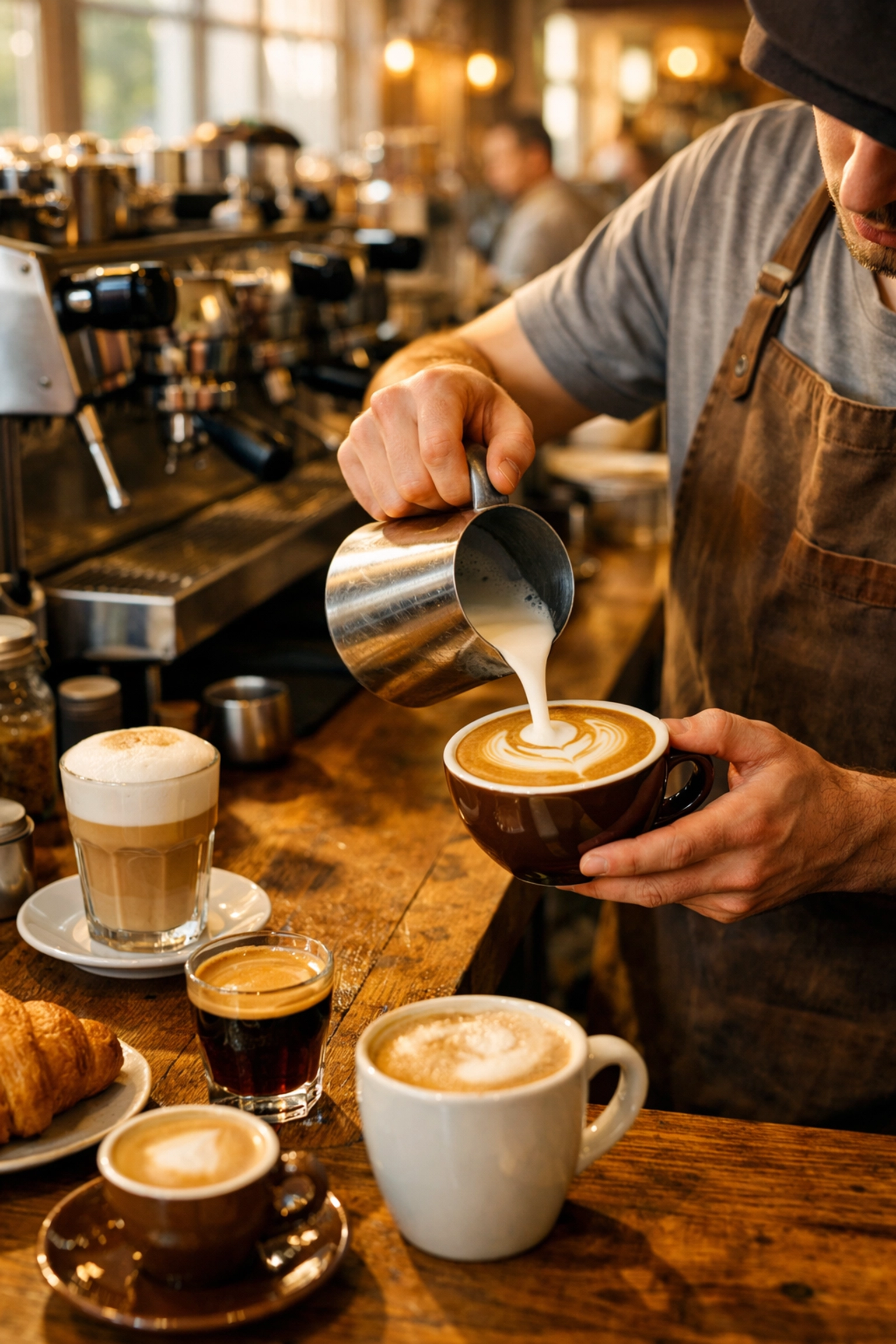
Let's be practical. If your menu is 80% milk-based drinks: lattes, cappuccinos, flat whites: you probably want blends as your workhorse.
Why? Blends are specifically formulated to hold their character when combined with milk. That carefully designed flavor profile won't disappear under steamed dairy or oat milk. You'll still taste coffee, not just sweet milk.
Blends are also more forgiving to brew. In a commercial setting where you've got multiple baristas with varying experience levels, consistency matters more than complexity. Blends produce predictable results shot after shot, which means fewer remakes and happier customers.
And let's talk about pricing. Wholesale specialty coffee blends typically cost less than single origins, allowing you to maintain quality while keeping your margins healthy. For your everyday house espresso, that matters.
Your beginner customers: the ones just stepping up from supermarket coffee: tend to prefer blends too. They offer well-rounded, approachable flavors without the pronounced acidity or unusual notes that might surprise someone expecting "normal" coffee.
When Single Origins Shine Brightest
If your menu emphasizes black coffee preparations, single origins are your friend. Pour-overs, filter coffee, Americanos, straight espresso shots: these are where single origins truly perform.
Without milk to compete with, all those complex, nuanced characteristics come through clearly. The citrusy brightness of a Kenyan coffee, the stone fruit notes of an Ethiopian natural process, the chocolate and caramel of a washed Guatemalan: these flavors tell stories that blends intentionally smooth over.
Single origins also position your café as a serious specialty coffee destination. They signal to informed customers that you care about quality, sourcing, and the craft of coffee. This perception justifies premium pricing when your costs are higher.
The trade-off? Single origins change. That's actually part of their appeal for coffee enthusiasts, but it requires more customer education and staff training. Your team needs to understand and communicate what makes each origin special, and your customers need to be comfortable with an evolving menu.
The Hybrid Approach (What Most Successful Cafés Actually Do)
Here's what we see working in practice: carry both.
Use a well-designed blend for your espresso-based milk drinks. This becomes your reliable, consistent house option that the vast majority of your customers will order. Train your staff on this profile until they can dial it in blindfolded.
Then offer single origins as filter coffee, pour-over, or a rotating "barista's choice" espresso option. This gives your curious customers something to explore without complicating your core operations.
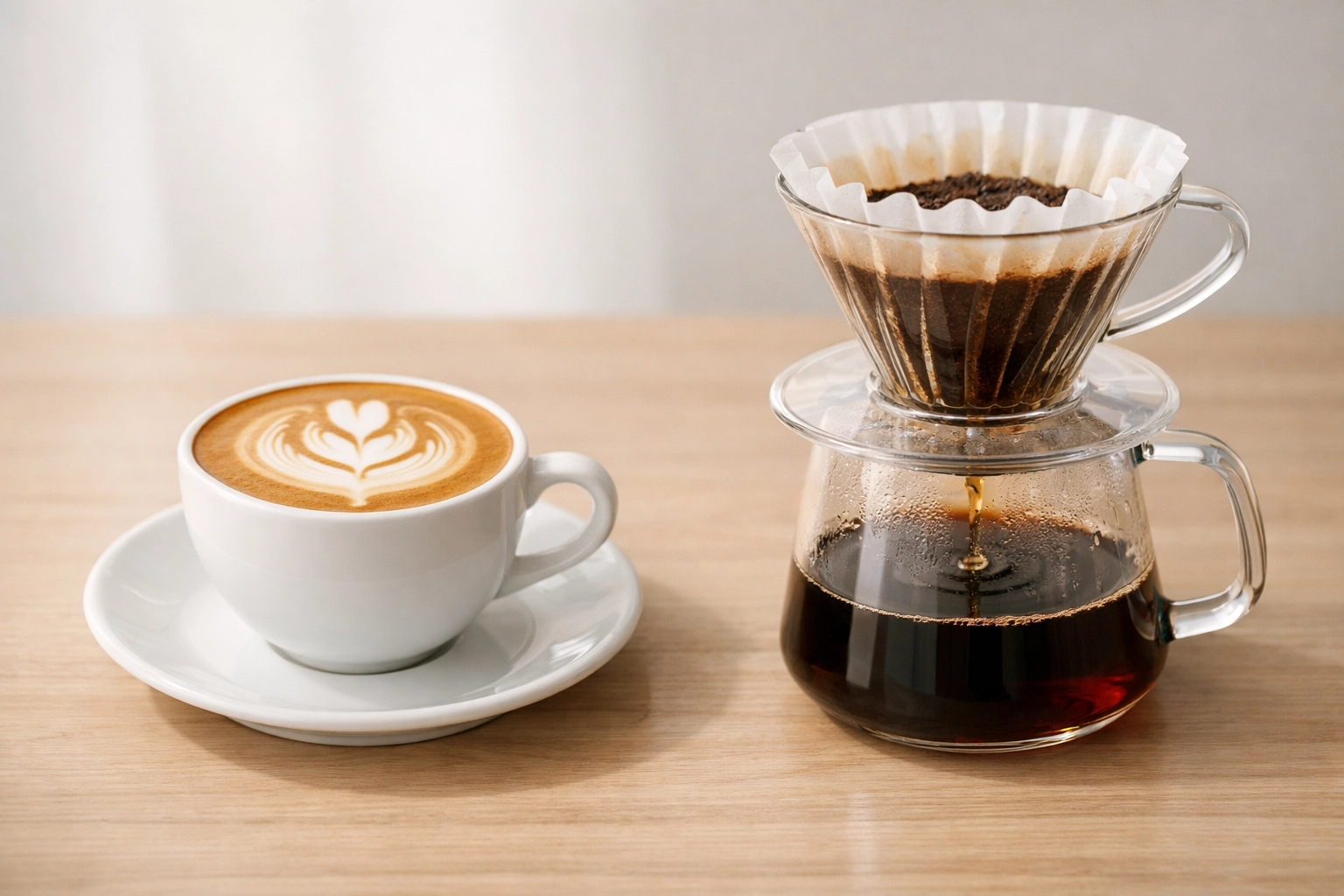
This strategy maximizes menu appeal without requiring excessive inventory. You're not juggling five different espresso options or confusing customers with too many choices. You're providing a solid foundation plus something special for those who want it.
The Quality Question
Here's something worth remembering: a high-quality blend will always beat a mediocre single origin.
The "blend vs single origin" debate sometimes creates a false hierarchy, as if single origins are automatically superior. They're not. A thoughtfully sourced and expertly roasted blend from quality wholesale coffee roasters often outperforms a lower-grade single origin that happens to have a single-country label.
What matters most is the quality of the green coffee and the skill of the roaster, not whether it comes from one place or five.
Sourcing Quality Wholesale Specialty Coffee
Whether you choose blends, single origins, or both, your relationship with your coffee supplier makes all the difference.
Look for wholesale coffee roasters who can provide consistency in supply, transparent sourcing information, and responsive customer service. You need suppliers who understand commercial coffee operations and can support your business as you grow.
If you're exploring quality options, we'd recommend checking out Limini Coffee's wholesale program. They work with café owners to find the right coffee profiles for specific menus, whether that's developing a custom blend or sourcing distinctive single origins. The team understands the balance between quality, consistency, and commercial reality.
Practical Considerations for Your Menu
Training requirements: Blends require less extensive training because they're more forgiving and consistent. Single origins need baristas who can articulate tasting notes and adjust brewing parameters for different coffees.
Storage and rotation: Single origins have shorter "fresh" windows and require more active inventory management. Blends typically maintain quality longer and simplify stock control.
Menu pricing: Single origins justify higher prices but require customer education to support those prices. Blends allow competitive pricing while maintaining specialty quality.
Equipment consistency: Blends work across various grinders and espresso machines with less dramatic differences. Single origins can perform very differently depending on equipment quality.

Customer base: Know your audience. A neighborhood café with regular morning commuters has different needs than a destination specialty coffee bar in a city center.
Making Your Decision
Start by honestly assessing your menu. What percentage of your sales are milk-based drinks? How experienced are your baristas? What's your customer demographic?
If you're primarily serving cappuccinos and lattes to customers who want reliable, delicious coffee without complexity, lean heavily on blends. Maybe 90% of your volume comes from one excellent house espresso blend.
If you're attracting specialty coffee enthusiasts who order filter and ask about processing methods, invest more heavily in single origins. Perhaps 60% blends for accessibility, 40% rotating single origins for interest.
There's no shame in choosing consistency and approachability. There's also no shame in going deep on origin-specific offerings. The shame is in choosing poorly roasted coffee from unreliable coffee suppliers, regardless of whether it's blended or single origin.
The Bottom Line
The blend versus single origin question isn't really about which is "better." It's about which serves your specific café's needs.
Blends offer consistency, forgiveness, and cost-effectiveness. They're ideal for milk-based drinks and high-volume operations. Single origins provide distinctiveness, traceability, and storytelling. They shine in black coffee preparations and specialty-focused menus.
Most successful cafés use both strategically. A reliable blend as the foundation, single origins as the specialty offering. This approach gives you operational consistency while still providing something special for curious customers.
The key is sourcing quality options from reputable wholesale specialty coffee roasters who understand commercial operations and can support your business long-term. Whether you choose one approach or blend them together (pun intended), make sure you're working with suppliers who prioritize quality, transparency, and partnership.
Your coffee menu should reflect your café's identity and serve your customers' needs. Start there, and the blend versus single origin question answers itself.
Leave a Reply