Streamline your operations. Empower your team. Maximize your margins.
Running a hotel shouldn't feel like a constant battle against your own software. In an industry where guest experience is everything, your technology should be the invisible hand that makes everything run smoother, not the hurdle your staff has to jump over every morning. We believe that a modern hotel tech stack is the difference between a business that merely survives and one that truly scales.
By moving to an integrated platform, properties see an average 15% increase in RevPAR and a 20% reduction in manual administrative work. It’s about creating a frictionless ecosystem where data flows freely, and your team finally has the time to focus on what they do best: looking after people.
All from one innovative platform.
The Heart of the Operation: Your Hotel PMS
We believe your hotel pms should be the brain of your business, not just a digital ledger. The old way involved a static database that lived on a server in a back room. The new way is a cloud-based hotel management software that connects every department in real-time.
When your PMS is built on an open API, it stops being a silo and starts being a hub. This connectivity allows for a level of automation that was previously impossible for independent hotels and mid-sized chains.
Why a modern PMS matters:
- It centralizes guest data for personalized service across all touchpoints.
- It automates the boring stuff: like night audits and profile matching.
- It provides a single source of truth for your entire operation.
"Since we switched to a cloud-based system, my front desk team saves at least 10 hours a week on manual data entry. They’re actually talking to guests now instead of staring at screens."

The Connectivity Framework: Ending the Data Silo
We think connectivity is the backbone of modern hospitality. If your systems don't talk to each other, your staff has to do the talking for them: usually via spreadsheets and frantic phone calls. An effective tech stack framework relies on seamless integration between your core systems.
When your channel manager, revenue management system (RMS), and booking engine are all synced with your hotel pms, magic happens. Rates update instantly. Overbookings become a thing of the past. Your inventory is always accurate, regardless of where the guest is looking.
The three pillars of integration:
- Real-time updates: Changes in occupancy should reflect across all channels in seconds.
- Two-way data flow: Your RMS should pull data from your PMS and push price updates back automatically.
- Zero manual entry: Reservations from OTAs should land in your system fully populated and validated.
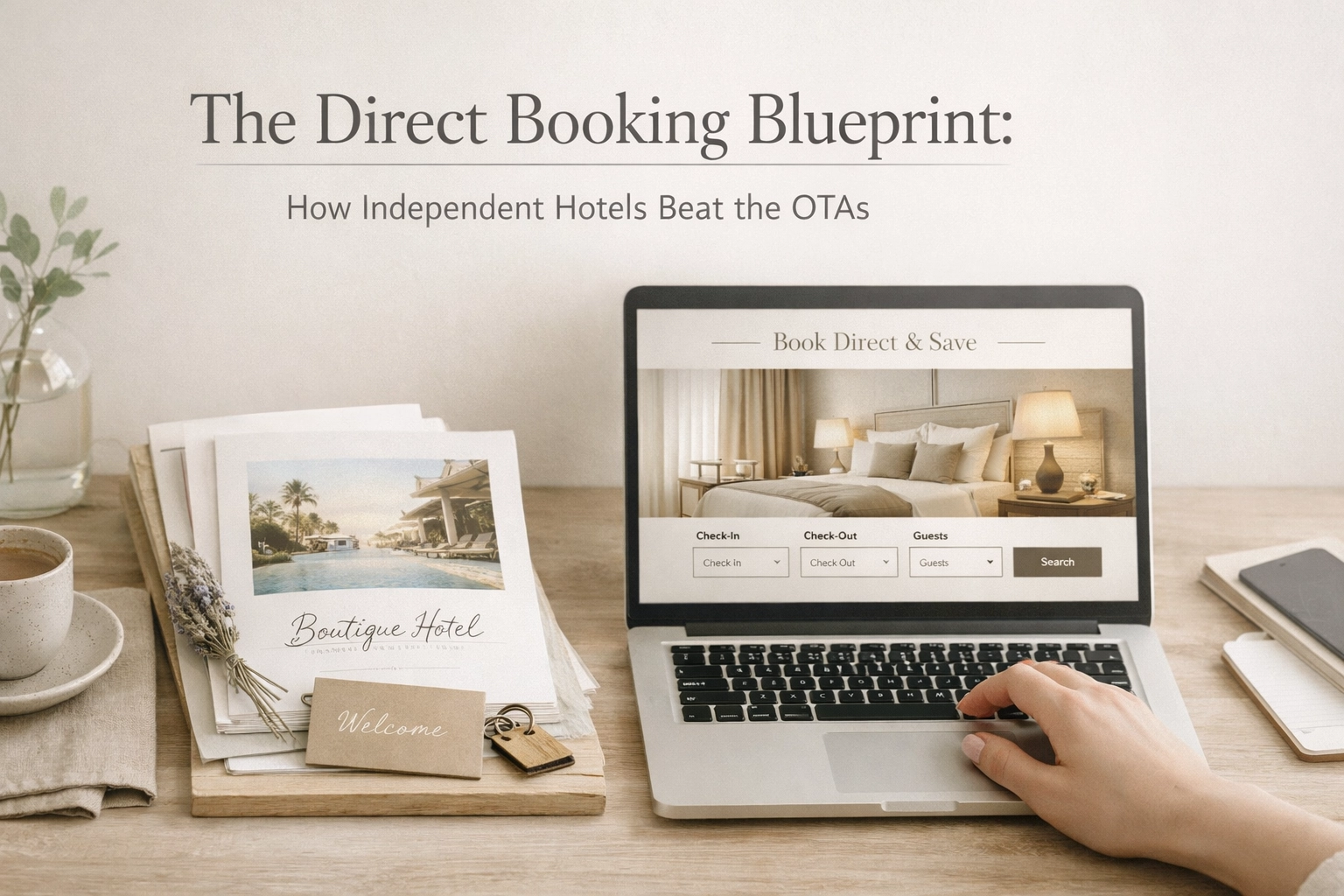
The Direct Booking Blueprint
We believe your booking engine should work harder than any OTA. While third-party channels are great for reach, your direct website is where your highest margins live. A "Direct Booking Blueprint" isn't just about having a 'Book Now' button; it’s about creating a guest journey that feels easier than going back to Expedia.
Modern booking engines integrated into your hotel management software allow for "attribute-based selling." This means guests can pick exactly what they want: a high floor, a late check-out, or a bottle of wine on arrival: during the initial flow.
How to grow direct revenue:
- Offer an intuitive, mobile-first booking experience.
- Provide instant confirmation and automated pre-arrival emails.
- Use loyalty triggers to encourage repeat direct bookings.

Revenue Management with AI Precision
We think pricing should be dynamic, not static. In 2026, setting your rates once a season is a recipe for leaving money on the table. An AI-driven Revenue Management System (RMS) analyzes thousands of data points: competitor pricing, local events, historical trends: to suggest the optimal price at any given moment.
This isn't about replacing your revenue manager; it’s about giving them superpowers. By automating the routine rate adjustments, your team can focus on high-level strategy and long-term growth.
The benefits of AI in revenue:
- React to market shifts 24/7 without human intervention.
- Maximize ADR during high-demand periods (like that surprise concert in town).
- Protect your occupancy levels during slower weeks.
The Silent Revenue Driver: Integrated Payments
We believe payments should happen in the background: completely invisible to the guest. Traditional hotel payments are a mess of paper receipts, manual card entry, and high fraud risk. By integrating payment processing directly into your tech stack, you eliminate the friction of the "check-out" process entirely.
Imagine a world where the guest simply walks out, and their card on file is automatically charged and the receipt emailed. No line at the desk. No "did you have anything from the minibar?" awkwardness. Just a seamless end to a great stay.
Why integrated payments win:
- They drastically reduce the risk of chargebacks and fraud.
- They speed up the check-in and check-out process by minutes per guest.
- They allow for secure, automated payment links for groups and events.

Housekeeping Secrets: Efficiency Through Tech
We think your housekeeping team is the most undervalued part of your operation. Too many hotels still use printed clipboards and walkie-talkies to manage room status. A modern hotel management software provides a mobile app for housekeepers that updates the PMS the second a room is marked clean.
This "secret" to efficiency isn't just about cleaning faster; it’s about smarter communication. When a guest checks out early, the housekeeper knows instantly. When a room is ready, the guest gets an automated SMS. It’s a win-win for everyone.
Housekeeping tech wins:
- Real-time room status updates for the front desk.
- Digital task lists that prioritize arrivals and VIPs.
- Direct reporting of maintenance issues through the app.
Four Steps to Build Your Framework
Building a tech stack can feel overwhelming, but it doesn't have to be. We recommend a phased approach that prioritizes the foundation before adding the "bells and whistles."
- Audit your current friction. Identify the tasks that take your staff the most time. Is it checking people in? Managing rates? Dealing with payments?
- Select an open-platform PMS. Choose a hotel pms that offers a marketplace of integrations. Flexibility is your biggest asset.
- Prioritize the staff experience. Before committing to a new tool, ask: "Will this make my team's life easier or harder?" If it's complicated to learn, it won't be used.
- Analyze and optimize. Once your stack is live, use the data. Look for trends in guest behavior and operational bottlenecks, then adjust your tools to match.

Scaling Your Success
The beauty of a modern framework is that it grows with you. Whether you’re adding a second property or expanding your current offerings (like a spa or coworking space), your technology should adapt without requiring a total overhaul.
We’ve seen properties go from manual spreadsheets to fully automated ecosystems in less than 30 days. The result? A happier team, more satisfied guests, and a healthier bottom line.
See what a modern platform can do for you:
- Reduce check-in time by 70%.
- Increase direct bookings by 20% or more.
- Save 4+ hours of admin work per day, per staff member.
Ready to build a setup that actually works for you? It’s time to move away from legacy systems and embrace a platform designed for the future of hospitality.
Get started with a smarter tech stack today and get you earning revenue in no time.