So, you want to start a coffee brand. We get it. There is something incredibly romantic about seeing your own logo on a bag of beautifully roasted beans, isn't there? But then reality hits: the cost of a commercial roaster (thousands), the warehouse space (expensive), and the stress of holding hundreds of kilos of stock that might go stale before you sell it.
That is where coffee dropshipping UK comes in.
Basically, dropshipping allows you to be the face and the brand while a specialist roaster, like us here at Limini Coffee, handles the "heavy lifting." We roast the beans, pack them in your branded bags, and ship them directly to your customer. You never even have to touch a coffee sack. It is a brilliant way to test the waters without betting the house.
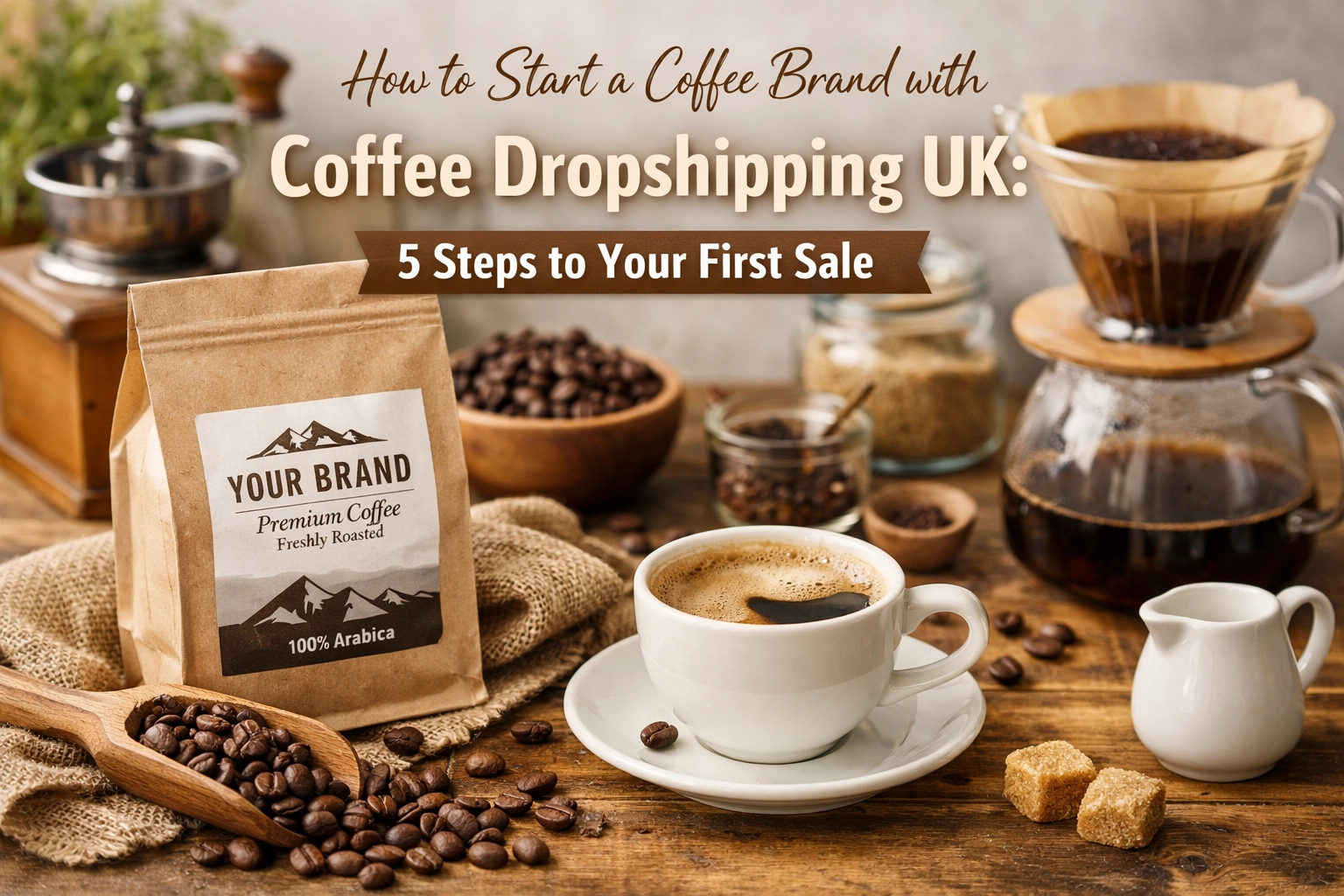
But how do you actually get from "cool idea" to that first notification of a sale on your phone? Let's break it down into five actionable steps.
Step 1: Find a Partner, Not Just a Supplier
In the world of coffee dropshipping, your supplier is quite literally your most important business partner. If they send out mediocre, stale beans, it’s your brand that takes the hit. If they take five days to ship an order, it’s your customer service inbox that blows up.
When you’re looking for a partner in the UK, you need to be picky. Extremely picky.
First, look for fresh roasting on demand. Coffee is a perishable product (mostly). We believe coffee is at its absolute peak between 2 and 4 weeks after roasting. If a dropshipper is sending out beans roasted three months ago, that is just a real shame. Your customers will taste the difference.
Second, check their White Label capabilities. Can they print your labels? Do they offer different bag colours? You want your brand to look premium. 
Finally, do they actually know their coffee? At Limini Coffee, we live and breathe speciality coffee. We’re talking about ethical sourcing, precise roasting profiles, and a deep understanding of the bean's journey. You want a supplier who cares about the coffee as much as you care about your new brand.
Step 2: Get the "Boring" Legal Stuff Right
We know, talking about business registration isn't as fun as designing a logo, but it is necessary. Since you are selling a food product in the UK, you have to play by the rules.
Most coffee entrepreneurs start by registering as a Private Limited Company. Why? Because it provides a layer of protection. If something goes wrong, it’s the company’s liability, not your personal savings. It’s worth the small setup fee for the peace of mind.
You also need to think about food hygiene. Even though you aren't physically touching the coffee (the beauty of dropshipping!), you are still a food business. You should register with your local authority as a food business operator. It’s usually free and involves a simple online form.
And don't forget your labels! UK trading standards are quite specific. You’ll need to include the weight (e.g., 250g), the type of coffee, and your business address. Your dropship partner should be able to help you navigate this, but the responsibility ultimately sits with you.
Step 3: Build a Store That Sells the Sizzle
You aren't just selling caffeine; you are selling an experience. Your website needs to reflect that.
We almost always recommend Shopify for coffee dropshipping UK. It is incredibly stable, handles payments beautifully, and most importantly, it usually integrates directly with your roaster's system. This means when a customer buys a bag of "Morning Glory Espresso" on your site, the order is automatically sent to the roaster. No manual data entry, no mistakes.

When building your store, focus on three things:
- Photography: Do not use generic stock photos. Get some samples from your supplier, grab a decent camera (or a modern smartphone), and take photos of the coffee in a real home setting. Show the texture of the beans, the crema on a fresh shot, and the way the bag looks on a kitchen counter.
- The Story: Why are you starting this brand? Are you focused on sustainable sourcing? Are you donating a portion of profits to dog rescues? Give people a reason to buy from you instead of the supermarket.
- SEO: Use keywords like "freshly roasted coffee beans UK" or "speciality coffee subscription." This helps Google find you when people are searching for their next caffeine fix.
Step 4: The Math, Pricing for Profit
Let’s talk numbers. If you don’t get your pricing right, you’re just running an expensive hobby.
In the UK speciality coffee market, a 250g bag of high-quality beans usually costs you (the brand owner) somewhere between £5.50 and £8.50, depending on the origin and the roasting complexity.
You need to factor in:
- The wholesale cost of the coffee.
- The shipping cost (Royal Mail Tracked 48 is a standard choice).
- The Shopify transaction fees (usually around 2% + 25p).
- Your marketing budget (how much does it cost you in ads to find one customer?).
We suggest aiming for a 50% to 100% markup on the wholesale price. If a bag costs you £7, you should be looking to sell it for £12.50 to £15.00. This might seem high compared to "commodity coffee" in the supermarket, but remember: you are selling speciality coffee. This is a premium product, roasted with care.
Don't compete on price. You will never be cheaper than the big-box brands. Instead, compete on quality, freshness, and the "theatre" of your brand. If you want to see what top-tier speciality coffee looks like, check out the wholesale range at Limini.
Step 5: The Hunt for Your First Sale
You’ve got the supplier, the website is live, and the coffee is delicious. Now, how do you get someone to actually buy it?
The "build it and they will come" strategy does not work in 2026. You have to go find your customers.
Start with your inner circle. Sell to your friends, your family, and your colleagues. Ask them for honest feedback and, more importantly, ask them to leave a review on your website. Social proof is everything. If a stranger sees that 10 people loved your "Peruvian Dark Roast," they are much more likely to click 'Buy'.
Leverage Social Media (The Right Way). Don't just post pictures of coffee bags. Post videos of the brewing process. Talk about the grind size. Show the "bloom" when you pour hot water over fresh grounds (88 °C to 95 °C is the sweet spot, by the way). People love to learn. If you teach them how to make better coffee, they will trust you enough to buy your beans.

Micro-Influencers. You don't need a celebrity. Find a local blogger or a "home barista" on Instagram with 1,000 followers who actually engage with their posts. Send them a bag. If they love it, they’ll tell their followers.
Handling That First Order (The Best Part)
Imagine the scene: You’re out for a walk, your phone pings, and it's an order notification.
Because you’ve set up coffee dropshipping UK correctly, here is what happens next:
- The order flows to your supplier.
- The master roaster sees the order and prepares the beans (often roasting them that very day).
- The coffee is placed in a bag with your logo on it.
- It’s boxed up and shipped via a tracked service.
- Your customer receives a package that smells like heaven, and they see your branding everywhere.
You have officially started a coffee brand.

To be honest, the hardest part is usually just starting. There will always be a reason to wait: waiting for the "perfect" logo or the "perfect" website. But in the world of coffee, fresh is always best, and that applies to your ideas too.
If you are ready to stop dreaming and start roasting (vicariously through us), we would love to help. We believe that everyone deserves better coffee, and your new brand could be the way they find it. You can explore our sourcing and roasting philosophy here to see if we’re the right fit for your vision.
Starting a business is a journey. It’s a bit like dialing in an espresso shot; it takes a few tweaks, a bit of patience, and a lot of passion. But once you get that first perfect flow, it is all worth it.
Ready to get brewing? Good luck( we can’t wait to see what you create. :))