
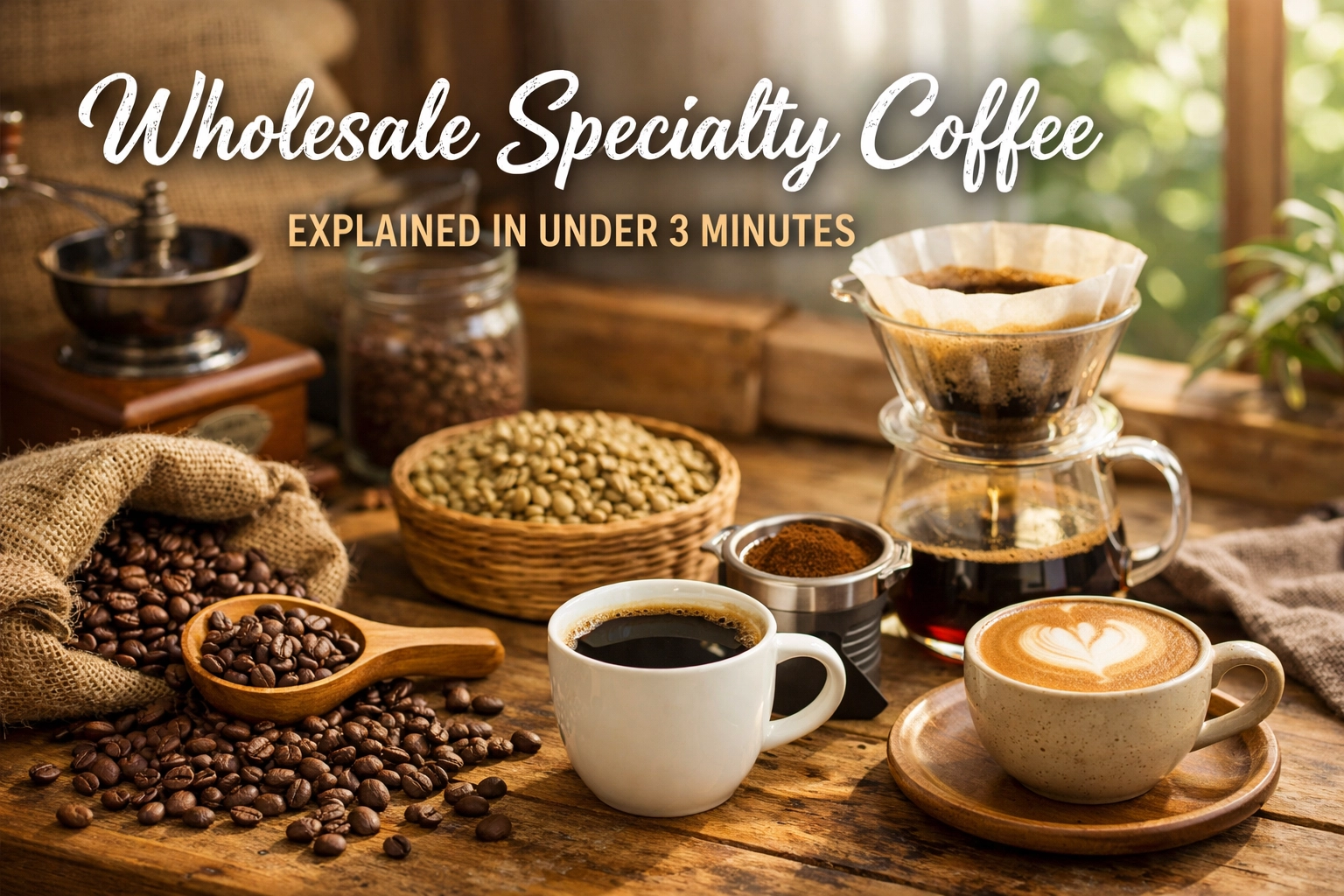
So, you’ve heard the term "specialty coffee" thrown around more than a bag of green beans in a shipping container. But what does it actually mean for you, your business, and that morning cup of sanity?
Is it just a fancy label to justify a higher price tag? Or is there something genuinely different happening in the roaster?
At Limini Coffee, we live and breathe this stuff. We believe that understanding specialty coffee shouldn't require a PhD in chemistry or a decade of trekking through the mountains of Ethiopia (though that sounds like a lovely holiday).
Here is the lowdown on wholesale specialty coffee, written to be understood in the time it takes your espresso machine to warm up.
What Makes Coffee "Specialty"?
Let’s get straight to the point. Specialty coffee isn’t just a marketing term; it’s a technical grade.
Think of it like wine. You have your table wine that comes in a box, and then you have your vintage Bordeaux. Both are technically wine, but the experience (and the work behind them) is worlds apart.
In the coffee world, we use a 100-point scale established by the Specialty Coffee Association (SCA). For a coffee to be officially labelled as "specialty," it must score 80 points or higher.
This grading is done by certified experts called Q Graders. They are basically the sommeliers of the coffee world. They look at everything: the fragrance, the aroma, the acidity, the body, and the balance.
The Rule of Defects
It’s not just about how good it tastes; it’s about how "clean" it is. To qualify as specialty, a 350g (about 12 oz) sample of green coffee beans must have:
- Zero category one (major) defects (like black beans or sour beans).
- No more than five category two (minor) defects.
Commercial-grade coffee? It’s a different story. It often contains a mix of ripe and unripe cherries, stones, sticks, and beans that have been nibbled on by insects. It sounds a bit grim because, well, it is. But that’s why commercial coffee is roasted so dark: to hide those flaws.

The Supply Chain: From Soil to Cup
The journey of a specialty bean is a meticulous one. It requires intentional decisions at every single stage. If one person in the chain drops the ball, the coffee loses its specialty status.
1. The Farmer: It starts with the right variety of coffee grown at the right altitude. Specialty coffee usually grows at higher elevations where the cooler temperatures allow the cherries to mature slowly, developing more complex sugars. The farmers hand-pick only the perfectly ripe red cherries.
2. The Processor: Once picked, the fruit has to be removed. Whether it’s washed, natural, or honey-processed, this stage is critical. If the beans sit in a fermentation tank too long, they go sour. If they aren't dried correctly, they grow mould.
3. The Roaster: This is where we come in. At our speciality coffee roastery, our job is to unlock the potential that the farmer worked so hard to create. We don't just "cook" the beans. We use heat to highlight the unique "origin character": the floral notes of a Yirgacheffe or the chocolatey sweetness of a Brazilian.
Why Wholesale Specialty Coffee is a Game-Changer for Your Business
If you’re running a café, hotel, or office, you might wonder if the extra cost is worth it.
The short answer? Yes. The slightly longer answer? It’s the best investment you’ll ever make for customer loyalty.
When you choose a wholesale coffee supplier, you aren't just buying beans. You’re buying a partnership. Here’s why specialty wins every time:
Quality and Consistency
Commercial coffee is a commodity. Its price fluctuates based on the stock market, and its flavour profile changes constantly because it’s a mass-produced blend of whatever is cheapest. Specialty coffee is traceable. We know the farm, the altitude, and the harvest date. This means the coffee you serve today will taste just as incredible three months from now.
Ethics and Sustainability
Because specialty coffee requires such high standards, farmers are paid a premium that sits well above the "fair trade" minimum. This isn't just a feel-good metric; it’s what keeps the industry alive. By paying more, we ensure the farmers can afford to keep producing the quality we love. You can read more about how we handle sourcing our coffee here.

Single Origin vs. Blends: Which is Right for You?
This is a question we get asked a lot. Should you go for a single origin or a blend?
Single Origin
This is coffee from one specific farm or region. It’s "pure." It showcases the unique terroir of that location.
- Best for: Filter coffee, pour-overs, or rotating "guest" espressos for the real coffee nerds.
- The Vibe: Adventurous and distinct.
Specialty Blends
We take two or more specialty coffees and combine them to create a balanced, reliable flavour profile.
- Best for: High-volume milk-based drinks (lattes, cappuccinos).
- The Vibe: Consistent, comforting, and crowd-pleasing. A good blend should cut through milk and provide a beautiful, rich crema.
We usually recommend starting with a solid house blend. It’s the backbone of any good coffee shop.
The "Secret Sauce": Equipment and Training
You can have the best beans in the world, but if your water temperature is off or your tamping technique is inconsistent, the coffee will taste "meh" at best.
Specialty coffee requires precision. We’re talking about:
- Water Temperature: Ideally between 190 °F to 203 °F (88 ºC to 95 ºC).
- Pressure: Usually around 9 BAR for espresso.
- Milk Texture: Getting that silky microfoam at exactly 140 °F / 60 ºC.
This is why at Limini Coffee, we don't just ship boxes of beans and wish you good luck. We provide comprehensive barista training and help you choose the right espresso equipment.
We’ve seen it time and time again: a business switches to specialty coffee, invests in their staff's skills, and suddenly, they aren't just a place that sells coffee. They are a destination.

How to Spot a Great Wholesale Partner
If you’re looking for a supplier, don't just look at the price per kilo. Look at the value. Here is what you should be asking:
- Do they offer training? (Because a trained barista is your best marketing tool).
- What is their roasting schedule? (Freshness is non-negotiable. Coffee is at its peak between 7 to 21 days after roasting).
- Can they help with equipment maintenance? (When your machine goes down on a Saturday morning, you need a partner who answers the phone).
- Are they nice people? (Seriously. You’re going to be talking to them a lot. It helps if they’re friendly).
We like to think we tick all those boxes. We’re a bit obsessed with the technical side, but we keep our brand tone warm and our advice practical. We want you to succeed because if you sell more coffee, we get to roast more coffee. It’s a win-win.
The Verdict
Specialty coffee isn't about being a snob. It's about respect. Respect for the farmer, respect for the bean, and most importantly, respect for the customer who is paying their hard-earned money for a caffeine fix.
Switching to wholesale specialty coffee is a signal to your customers that you care about quality. It’s the difference between a "good" coffee and a "life-changing" coffee.
If you’re ready to level up your coffee game, we’d love to help. Whether you’re just building a coffee shop or looking to upgrade your current offering, we have the beans, the gear, and the expertise to make it happen.

Check out our wholesale options here and let’s start making some better coffee together. ☕️
Quick Reference: The "3-Minute" Cheat Sheet
- Specialty Score: 80+ points out of 100.
- Defects: Virtually none.
- Flavour: Focuses on origin (fruit, chocolate, nuts) rather than "burnt" roast flavours.
- Impact: Higher pay for farmers, better quality for customers.
- Success Tip: Combine great beans with great training.