So, you’re looking for wholesale specialty coffee and suddenly everyone is talking about four little letters: EUDR. If you’ve spent any time in the industry lately, you’ve probably heard whispers of it in trade shows or seen it mentioned in frantic emails from suppliers.
It sounds technical. It sounds bureaucratic. And honestly, it sounds like another thing to add to your already overflowing "to-do" list as a coffee shop owner. But don't worry. We’re here to break it down.
At Limini Coffee, we believe that understanding the "boring" stuff is actually what makes the "exciting" stuff: like brewing a perfect shot of espresso: possible. EUDR (European Union Deforestation Regulation) is a big deal for the coffee industry. It’s all about making sure that your morning brew isn't contributing to the loss of our planet’s forests.
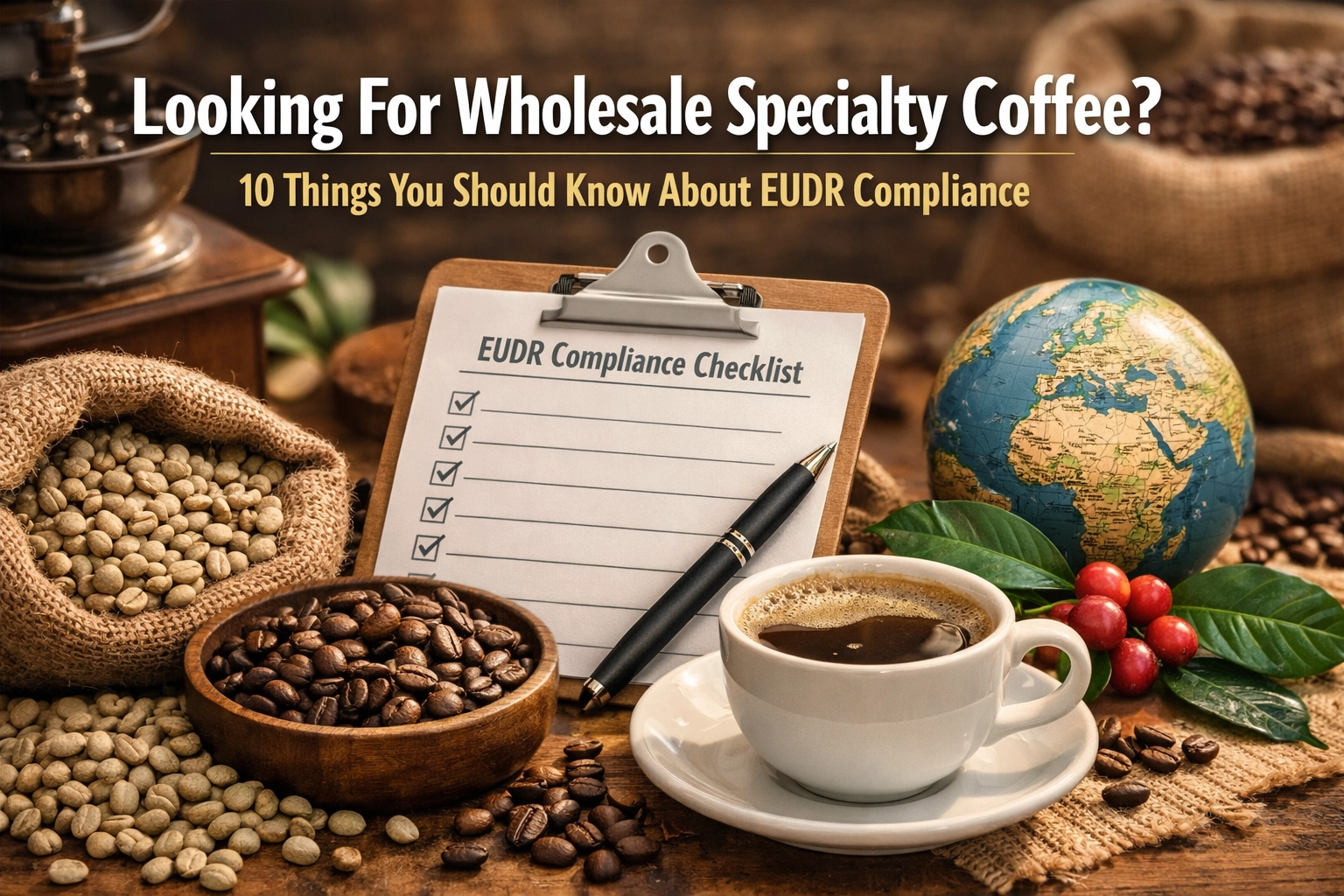
Whether you’re already part of our family or looking to switch your wholesale specialty coffee provider, here are 10 things you absolutely need to know about EUDR compliance.
1. There is a "Cutoff Date" That Matters
First things first: the date. Any coffee imported into the EU (and by extension, impacting UK markets due to supply chain alignment) must come from land that has not been deforested since December 31, 2020.
Why does this matter to you? Because it means that the "new" coffee farm that just cleared a patch of rainforest last year is a complete no-go. We only source from established farms that respect the environment. This date is the "line in the sand." If a supplier can't prove their coffee comes from land that was already agricultural before 2021, they’re going to have a very hard time staying in business.
2. Geolocation Data is Non-Negotiable
This is where it gets high-tech. The EUDR demands precise geolocation data, literally the GPS coordinates: for the plots of land where the coffee was grown.
Imagine a map where every single bag of beans can be traced back to a specific square of earth. It’s not enough to say "this comes from Brazil." We need to know exactly where in Brazil. This level of transparency ensures that no one is pulling a fast one and mixing "clean" beans with beans grown on recently deforested land.

3. Due Diligence Statements (DDS) are the New Passport
Every shipment of coffee now needs what's called a Due Diligence Statement (DDS). Think of it as a passport for your coffee. This statement includes the geolocation data, a risk assessment, and a declaration that the coffee is compliant with the law.
For you as a coffee shop owner, this means your wholesale specialty coffee partner needs to be incredibly organized. If the paperwork isn't right, the coffee doesn't move. At Limini, we’ve always been big on documentation, so this is just another way we ensure our standards stay sky-high.
4. It’s Not Just About Trees
While "Deforestation" is in the name, the regulation actually goes a lot deeper. To be EUDR compliant, the coffee must also comply with the legislation of the producing country.
What does that mean? It means the coffee has to be grown while respecting:
- Land use rights
- Labor laws and human rights
- Tax regulations
- Indigenous peoples' rights
Basically, it’s not enough to just keep the trees standing; you have to treat the people and the land with respect, too. We love this. It aligns perfectly with how we think specialty coffee should be sourced anyway.
5. Size Matters (For the Timeline)
You might be wondering, "When does this actually start?" The clock is ticking, but there are different lanes for different businesses.
Medium to large businesses have to be fully compliant by the end of December 2025. Small and micro-enterprises get a little more breathing room, with a deadline of June 2026. However, since coffee is a global commodity, the impact is being felt right now. We’re already working behind the scenes to make sure everything is ready well before those dates hit.
6. Your Records Need to Be Bulletproof
Under EUDR, everyone in the supply chain has to keep records for at least five years. This isn't just a "check the box" exercise. If an auditor knocks on the door, we need to be able to show exactly where that specific batch of roasted beans came from five years ago.
When you partner with Limini Coffee, you’re partnering with a roaster that takes traceability seriously. We track everything from the green bean arrivals to the moment it leaves our roastery in a bag destined for your shop.

7. Forest "Degradation" is Also a Big Deal
It’s not just about cutting down a whole forest. The regulation also covers "forest degradation." This refers to structural changes where a primary forest (a wild, untouched one) is converted into a plantation forest.
Even some "agroforestry" systems: where coffee is grown under trees: can be flagged if they involved converting a natural forest into a managed one after the 2020 cutoff. It’s a nuanced rule, but it’s there to protect the biodiversity of the planet.
8. Instant Coffee is the Weird Exception
Just a fun fact for your next coffee trivia night: soluble or instant coffee is actually exempt from these specific EUDR regulations for now. It only applies to green and roasted coffee.
Since you’re looking for wholesale specialty coffee (and we assume you care about quality!), this probably won't affect your menu. But it’s an interesting quirk of the law. We’ll stick to the fresh stuff, thanks!
9. We All Share the Responsibility
One of the most important things to understand is that the responsibility is shared. While the "operator" (usually the person importing the coffee into the EU/UK) has the biggest burden, downstream players like roasters and traders also have obligations.
This means that as a coffee shop, you need to be able to trust that your roaster is doing the right thing. If we don’t have our DDS in order, it could technically impact your ability to sell that coffee legally in the future. It’s a chain, and we’re the strong link you need.

10. Why Limini Coffee is Your Safe Bet
At the end of the day, you want to run a coffee shop, not a legal firm specializing in international environmental law. We get it.
Our approach to wholesale specialty coffee has always been about quality, transparency, and relationships. Long before EUDR was even a draft on a desk in Brussels, we were visiting farms and ensuring our coffee was sourced ethically.
We work incredibly closely with our importers and farmers to gather the required geolocation data and documentation. We conduct our own risk assessments to make sure that "specialty" doesn't just refer to the taste, but also the impact on the world.
So, what should you do now?
If you’re currently sourcing coffee and your supplier looks confused when you mention geolocation data, it might be time to have a chat. EUDR isn't something that can be ignored: it’s the new reality of the coffee industry.
The good news? It’s actually a win for everyone. It pushes the industry toward a more sustainable future and ensures that the specialty coffee you serve your customers is truly "clean."

If you're looking for a wholesale partner who is ahead of the curve and takes the stress out of compliance, we’d love to help. We handle the paperwork, the coordinates, and the due diligence, so you can focus on making that perfect latte art.
Running a coffee shop is hard enough. Let us handle the forests.
Want to learn more about how we source our beans? Check out our page on sourcing our coffee or dive into our wholesale specialty coffee services. We’re always here for a chat if you have more questions about EUDR or just want to talk about roast profiles! (Which is much more fun, let’s be honest).