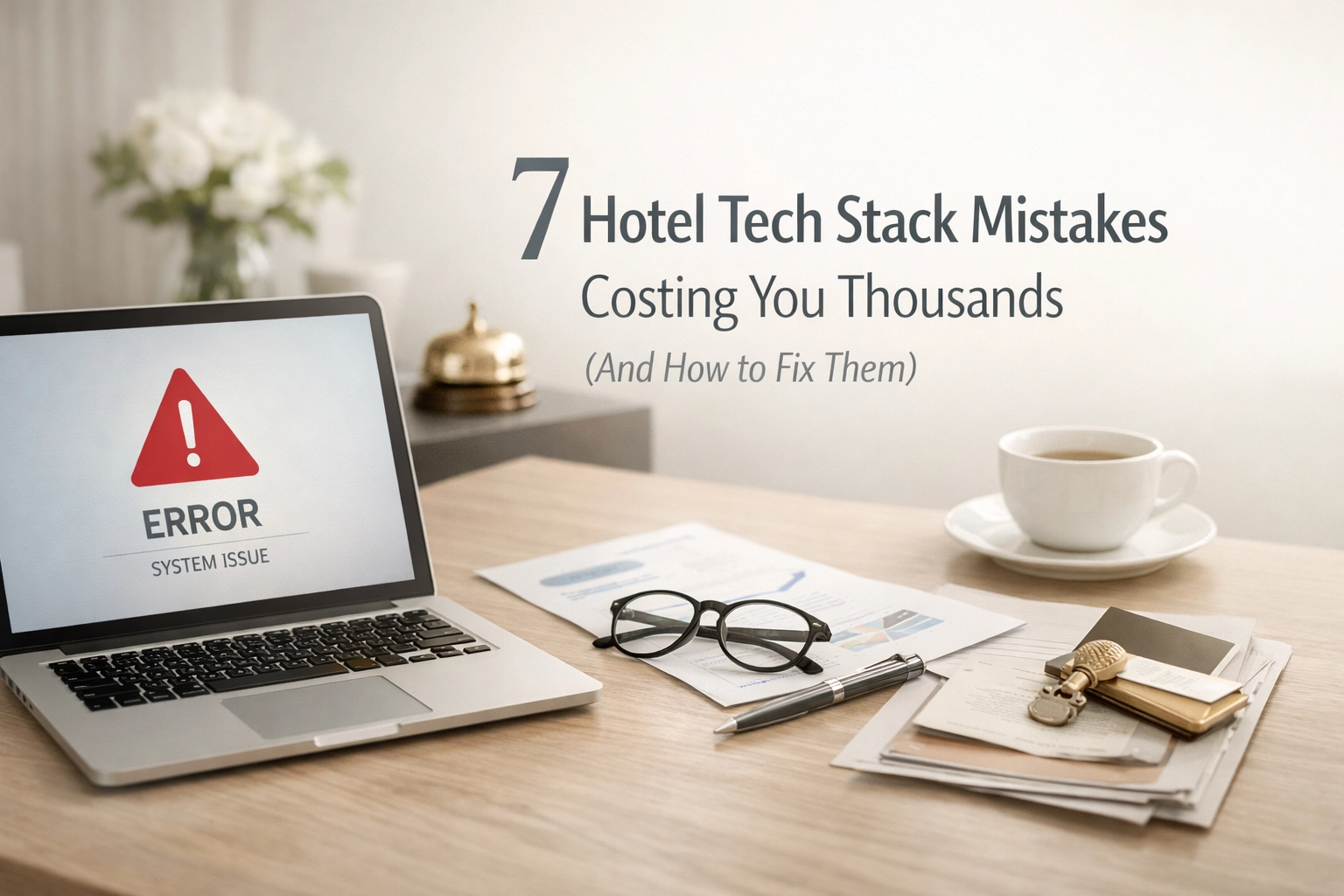
7 Hotel Tech Stack Mistakes Costing You Thousands (And How to Fix Them)
Your hotel tech stack should make money, not drain it. Yet most hoteliers are bleeding thousands in lost revenue, wasted staff hours, and frustrated guests: all because of easily fixable tech mistakes.
The average hotel loses 15-20 hours per week to manual workarounds caused by poor technology choices. That's nearly three full workdays spent copying data, fixing errors, and wrestling with systems that should be working for you.
Let's fix that.
Mistake #1: Running on Outdated Property Management Software
Your PMS is the foundation of everything. When it's outdated, everything else crumbles.
Legacy systems trap you in expensive contracts while delivering minimal value. Your staff wastes precious minutes clicking through multiple screens for simple tasks. Check-in takes forever. Guests queue up in your lobby, forming terrible first impressions before they've even reached their room.
Remote access? Forget it. Your managers can't check occupancy from home or respond to issues while away from the desk.
The fix: Migrate to a modern, cloud-based hotel PMS. Look for platforms accessible from any device with one intuitive dashboard for all operations. Your team should be fully operational within days, not months.

Mistake #2: Managing Reservations Without a Central System
Spreadsheets. Sticky notes. Three different booking tools that don't talk to each other.
This chaos leads to double bookings, manual updates across multiple channels, and communication errors that turn guests into angry reviewers. Your front desk spends hours cross-referencing systems instead of delivering hospitality.
The fix: Implement a unified reservation system that consolidates everything: OTA bookings, walk-ins, and direct website reservations: into a single calendar. Updates should happen instantly with automated confirmations. No more copy-paste marathons.
Mistake #3: Manually Updating OTAs Like It's 2010
You're manually logging into Booking.com, then Expedia, then Airbnb to update rates and availability. This tedious process creates overbookings, rate disparities, and lost visibility on major platforms.
When you finally update one channel, rates have already changed on another. It's a losing game.
The fix: Use a channel manager with 150+ OTA connections that syncs rates and availability in real-time. Your pricing integrity stays intact automatically. Set it once, let technology handle the rest.

Mistake #4: Operating a Patchwork of Systems That Don't Integrate
Your reservation system doesn't talk to your payment processor. Your housekeeping app operates in isolation. Your accounting software requires manual data entry from your hotel management software.
This fragmentation costs you hours every single day. Teams pull reports from multiple sources, rekey data, and fix errors that shouldn't exist. Critical insights arrive too late or never reach the right people simultaneously.
You've spent money on technology but created more work, not less.
The fix: Choose integrated platforms where tools work seamlessly together. Your hotel PMS, CRM, POS, and finance tools should be connected so data flows automatically. When one system updates, everything updates. Your team spends time improving performance, not fixing problems.
Modern platforms like Mews eliminate this fragmentation entirely, giving you one source of truth across all operations.
Mistake #5: Burning Money on Manual Processes Despite Tech Investments
You've invested in technology but staff still manually copy rates between systems, check availability by hand, and build reports in Excel. Data cleaning consumes hours that should go toward strategy and guest experience.
This is the silent budget killer: substantial tech spending with zero ROI because you're not using automation capabilities you're already paying for.
The fix: Automate repetitive tasks like invoicing, billing, and room allocations. Implement systems that handle automatic reconciliation, exports, and updates without human intervention. If your current platform can't do this, it's time to switch.
Ask yourself: Are you paying for features you're not using because they're too complicated to implement?

Mistake #6: Making Decisions Without Real-Time Analytics
Your reports take hours to produce. By the time you have numbers, they're already outdated. You pull data from your PMS, OTAs, channel manager, and revenue management system, then combine everything in Excel.
Different departments work from different numbers. Finance sees one occupancy rate while operations sees another. Decision-making becomes guesswork.
The fix: Invest in platforms offering real-time dashboards and analytics that provide a unified view across all properties and teams. Everyone should work from the same source of truth, updated continuously.
Revenue managers need instant access to rate performance. Housekeeping needs real-time room status. General managers need occupancy forecasts that update automatically. This isn't luxury: it's essential for profitable operations.
Mistake #7: Running Manual Guest Communications in 2026
Your confirmation emails are inconsistent. Check-in instructions go out late or not at all. Upsell opportunities slip through the cracks. Post-stay review requests never happen.
Guests judge your hotel from the moment they receive their confirmation email. Manual communications mean delays, mistakes, and missed revenue opportunities. No automation means no personalization at scale.
The fix: Automate guest communications including confirmation messages, check-in instructions, upsell offers, and post-stay reviews. Modern CRM systems should enable personalized experiences based on guest history and preferences.
Automation doesn't mean impersonal. It means consistent, timely, and relevant messaging that builds loyalty and drives repeat business.

The Real Solution: Consolidation
Notice a pattern? Most of these mistakes stem from one root cause: fragmentation.
Hotels cobble together separate systems for reservations, payments, websites, housekeeping, and accounting. Each system works in isolation, creating data silos and multiplying workload.
The solution isn't adding more tools. It's consolidating into integrated, modern platforms that automate workflows, eliminate manual data entry, and provide real-time visibility across operations.
Start by evaluating your current tech stack. Which systems duplicate efforts? Where does data flow break down? What manual processes could be automated tomorrow?
Then prioritize ruthlessly. Your hotel PMS and reservation system should be your first focus: everything else builds from that foundation.
Making the Switch
Changing systems feels overwhelming. The migration process, staff training, potential downtime: it's easier to stick with familiar frustration than embrace change.
But here's the reality: every month you delay costs you thousands in lost efficiency and revenue. Modern platforms like Mews offer fast onboarding and dedicated support to get you operational quickly.
The hotels thriving in 2026 aren't running on legacy systems held together with manual workarounds. They're using integrated hotel management software that handles complexity automatically, freeing their teams to focus on what actually matters: creating exceptional guest experiences.
Your tech stack should be invisible: quietly handling operations while you focus on hospitality. If you're spending more time managing your software than managing your hotel, something's broken.
Fix it now. Your bottom line will thank you.