Can you believe it’s already 2026? It feels like only yesterday we were all obsessing over Dalgona coffee and sourdough starters, yet here we are, in a world where your espresso machine might have more computing power than the Apollo 11 moon lander.
The coffee landscape has shifted massively over the last couple of years. We aren't just drinking "coffee" anymore; we’re consuming performance-enhancing beverages, exploring complex fermentation experiments, and demanding a level of transparency that would make a diamond auditor blush.
So, what’s actually happening on the ground? Whether you’re running a busy café or you’re a home enthusiast looking to upgrade your morning ritual, here is what we’re seeing as the biggest coffee trends for 2026.
1. The "Coffee with Benefits" Boom: Functional and Performance Brews
If you’ve been keeping an eye on the shelves lately, you’ll notice that coffee is working harder than ever. We’ve moved well beyond the simple caffeine kick. In 2026, functional coffee is the name of the game, with the market projected to hit nearly $8 billion by 2030.
What does "functional" actually mean? Basically, it’s coffee plus something else that makes your body or brain feel better. We’re talking about:
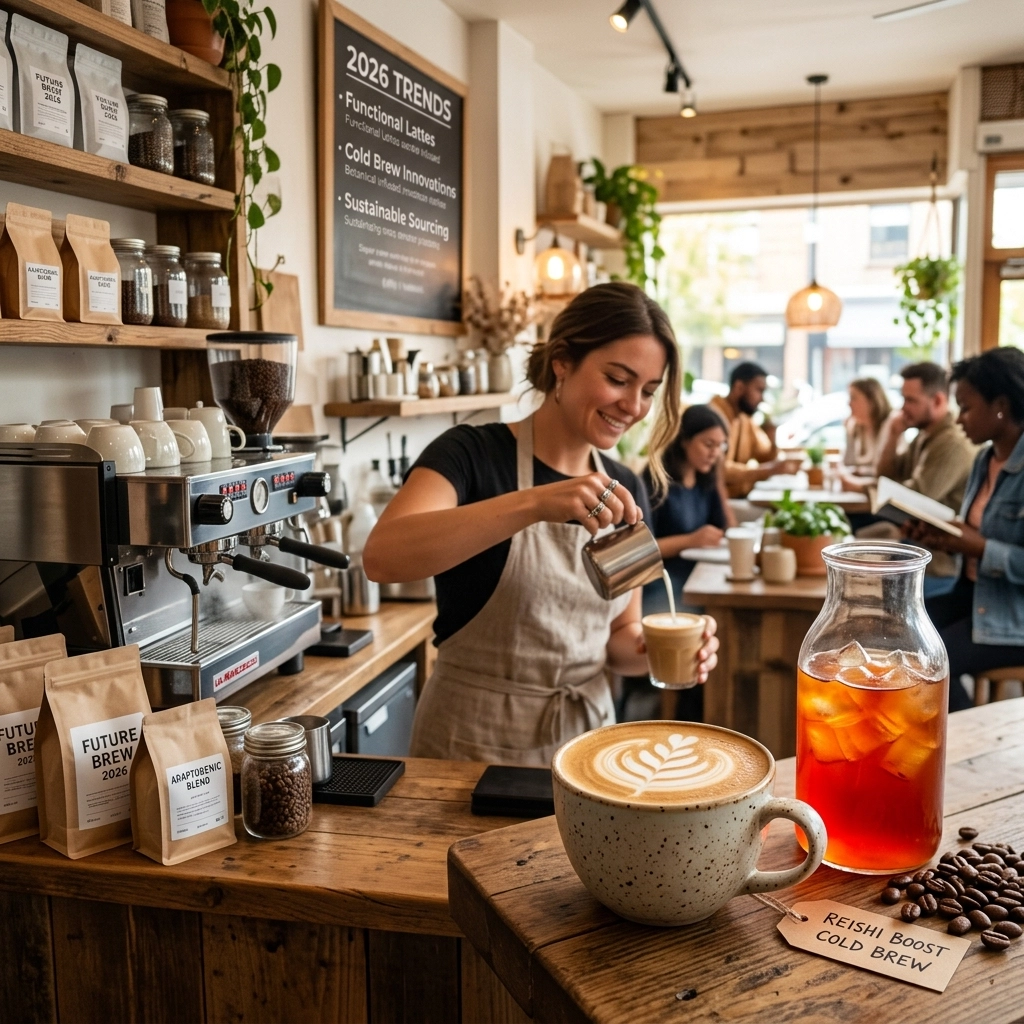
- Mushroom Coffee: Blends featuring Lion’s Mane for focus or Reishi for stress relief. And no, it doesn’t taste like mushroom soup, it tastes like a deep, earthy roast.
- Protein Coffee (or "Proffee"): This has jumped from a TikTok niche to a mainstream staple. Major chains are now offering high-protein milk upgrades (14g+ of protein per cup) aimed at the post-gym crowd.
- Adaptogenic Blends: Ingredients like Ashwagandha are being roasted right into the beans to help mitigate the "jitters" often associated with high caffeine intake.
We’ve found that customers are increasingly treating their morning cup as a wellness tool. If you’re looking to stock some high-quality beans to start your own functional experiments, check out what we have roasting over at Limini Coffee.

2. RTD (Ready-to-Drink) Goes Premium
Remember when canned coffee was the watery, sugary stuff you bought at a petrol station in an emergency? Those days are long gone. In 2026, the Ready-to-Drink (RTD) market is a $10 billion behemoth, and it’s finally gone "specialty."
We’re seeing nitrogen-infused cold brews in sleek cans that pour with a head of foam as thick as a Guinness. More importantly, roasters are putting their best single-origin beans into these cans. You can now get a canned Geisha or a co-fermented Colombian brew that tastes almost as good as if we’d pulled the shot for you ourselves.
The convenience factor is king. Whether it’s for a commute or a hike, the "premium can" is now a daily essential rather than a compromise.
3. High-Tech Brewing: AI and Precision in the Kitchen
The tech in our industry is moving at a frightening pace. We’ve seen a massive surge in smart brewing equipment that uses AI-assisted analytics.
For the home brewer, this means scales that talk to your kettle and grinders that automatically adjust their burr gap based on the age of the beans. For the café owner, it means machines like the La Spaziale range are becoming even more intuitive, allowing for precise temperature control (down to 0.1°C) and pressure profiling that ensures every single shot is identical.
Why is this important? Because it removes the guesswork. We’ve always said that consistency is the hardest part of coffee. With modern sensors monitoring flow rates and extraction yields in real-time, we’re finally reaching a point where "the perfect cup" isn't a fluke, it’s the standard.

4. Experimental Processing: The Science of Flavour
If you’ve looked at a bag of specialty coffee recently, you might have seen terms like "Anaerobic Fermentation" or "Thermal Shock." In 2026, the trend has moved toward Co-Fermentation.
This is where producers add fruit, spices, or even essential oils into the fermentation tanks along with the coffee cherries. Imagine a coffee that naturally tastes like fresh peaches or cinnamon buns because those ingredients were part of the chemical process during fermentation.
Some traditionalists think it’s "cheating," but we think it’s an incredible way to explore new flavour profiles. It’s all about transparency, though. The best roasters are providing traceable data on these fermentation cycles, so you know exactly how your coffee got that wild strawberry note.
If you want to understand the basics of how we source these unique lots, have a look at our sourcing philosophy.
5. Plant-Based 2.0: Clean Labels and Better Nutrition
Plant-based milk isn't "the alternative" anymore; in many shops, it’s the default. But the trend for 2026 is moving away from highly processed, watery almond milks and toward "whole ingredient" formulas.
Consumers are reading the back of the carton. They want:
- No added gums or thickeners.
- Higher protein content (matching dairy).
- Better frothability. (Because nobody likes a latte that separates in five seconds).
Oat milk is still the heavyweight champion, but we’re seeing a rise in potato milk (surprisingly creamy!) and blended milks (like Pea and Soy mixes) that are designed specifically to compliment the acidity of specialty espresso. If you’re struggling to get your plant-based milk to behave, our guide to understanding milk is a great place to start.

6. Matcha: The Green Giant
It’s impossible to talk about 2026 coffee trends without mentioning the one drink that isn't coffee at all: Matcha.
Matcha has evolved from a "trendy health drink" into a core menu staple that rivals the flat white. We’re seeing dedicated matcha bars and viral drinks that mix high-grade ceremonial matcha with strawberry cold foam or lavender syrups. For a coffee shop, having a high-quality matcha offering is no longer optional, it’s a major revenue driver.
7. Sustainability is No Longer a Buzzword
By 2026, "ethical sourcing" is the bare minimum. With new regulations like the EUDR (EU Deforestation Regulation) coming into full effect, every bean must be traceable to the exact plot of land it was grown on.
But it goes beyond just avoiding deforestation. We’re seeing:
- Climate-Resilient Varietals: Farmers are planting hybrids like Starmaya or Centroamericano that can survive rising temperatures and leaf rust.
- Circular Economy: Reusing coffee husks (cascara) for teas or turning spent grounds into biofuel or even "bio-plastics" for takeaway cups.
- Direct Trade 2.0: Moving beyond just paying a fair price to actually investing in the infrastructure of the farms.
We’ve always believed that the best coffee comes from the best relationships. You can read more about how we handle this in our About Us section.

8. The "Theatre" of Coffee
Finally, let’s talk about the experience. Since everyone can now make a decent espresso at home with modern pods or smart machines, the local café has had to step up its game.
In 2026, we’re seeing a return to theatre and ceremony. This means:
- Espresso Flights: Why have one coffee when you can have three small samples of the same bean roasted different ways?
- Tableside Pour-Overs: Making the brewing process part of the service.
- Education-First Spaces: Cafés that double as training centres, helping customers understand the "why" behind the brew.
If you’re thinking about opening a space that captures this vibe, our wholesale partnership is designed to help you with everything from equipment to staff training.

What Does This Mean for You?
Whether you're a casual drinker or a seasoned barista, the message for 2026 is clear: Quality and intentionality matter more than ever. People aren't just drinking coffee to wake up; they're drinking it to feel better, to support ethical systems, and to experience something new.
If you’re feeling a bit overwhelmed by all the tech and the new terms, don’t worry. At its heart, coffee is still about a bean, some water, and a bit of magic. We’re just getting better at the magic part.
Ready to upgrade your coffee game for 2026? Pop over to Limini Coffee and see what we’ve been roasting lately. We’d love to help you find your new favourite brew.
Happy brewing! 🙂