When you think of coffee, what’s the first country that pops into your head? For most of us, it’s Colombia. It’s the powerhouse of the coffee world, and for very good reason. If you’re running a café or thinking about starting one, Colombian coffee isn't just a "nice to have", it’s practically the backbone of the industry.
At Limini Coffee, we’ve spent years sourcing our coffee from the best estates, and we always find ourselves coming back to the incredible variety that Colombia offers. It’s reliable, it’s delicious, and it’s a total crowd-pleaser. But why exactly is it so special? And how can it help your business stand out?
Let’s dive into the world of Colombian beans and see why they deserve a permanent spot on your hopper.
The "Goldilocks" of Coffee: That Perfect Balance
One of the reasons Colombian coffee is so iconic is its incredible balance. It’s often described as the "Goldilocks" of coffee, not too acidic, not too bitter, but just right. For a café owner, this is gold. You want a coffee that satisfies the person who wants a cheeky afternoon latte as much as the coffee geek who only drinks black pour-overs.
Generally speaking, Colombian coffee is 100% Arabica. Because it’s grown at such high altitudes in the Andes mountains, the beans develop slowly, which leads to a more complex flavour profile.
What does it actually taste like?
If we had to sum up the Colombian profile in three words, it would be: Sweet, Nutty, and Bright.
- Sweetness: Think brown sugar, caramel, and sometimes even a hint of honey. This sweetness is what makes it so amazing in milk-based drinks.
- Acidity: It’s not a sharp, sour acidity. It’s more like a crisp apple or a bright citrus note. It cleanses the palate and keeps the cup from feeling "heavy."
- Nuttiness: You’ll often find notes of toasted almonds or hazelnuts. This provides a lovely, comforting base that customers absolutely love.
When we roast these beans here at Limini Coffee, our goal is always to highlight these natural characteristics. We keep it fresh and roast to order because, let’s be honest, stale coffee is just a real shame.

A Journey Through the Regions
Colombia isn't just one big coffee farm. The country is geographically diverse, and the different regions produce vastly different flavour profiles. This variety is what allows us to offer both consistent house blends and exciting single-origin options.
Huila: The Bright Spark
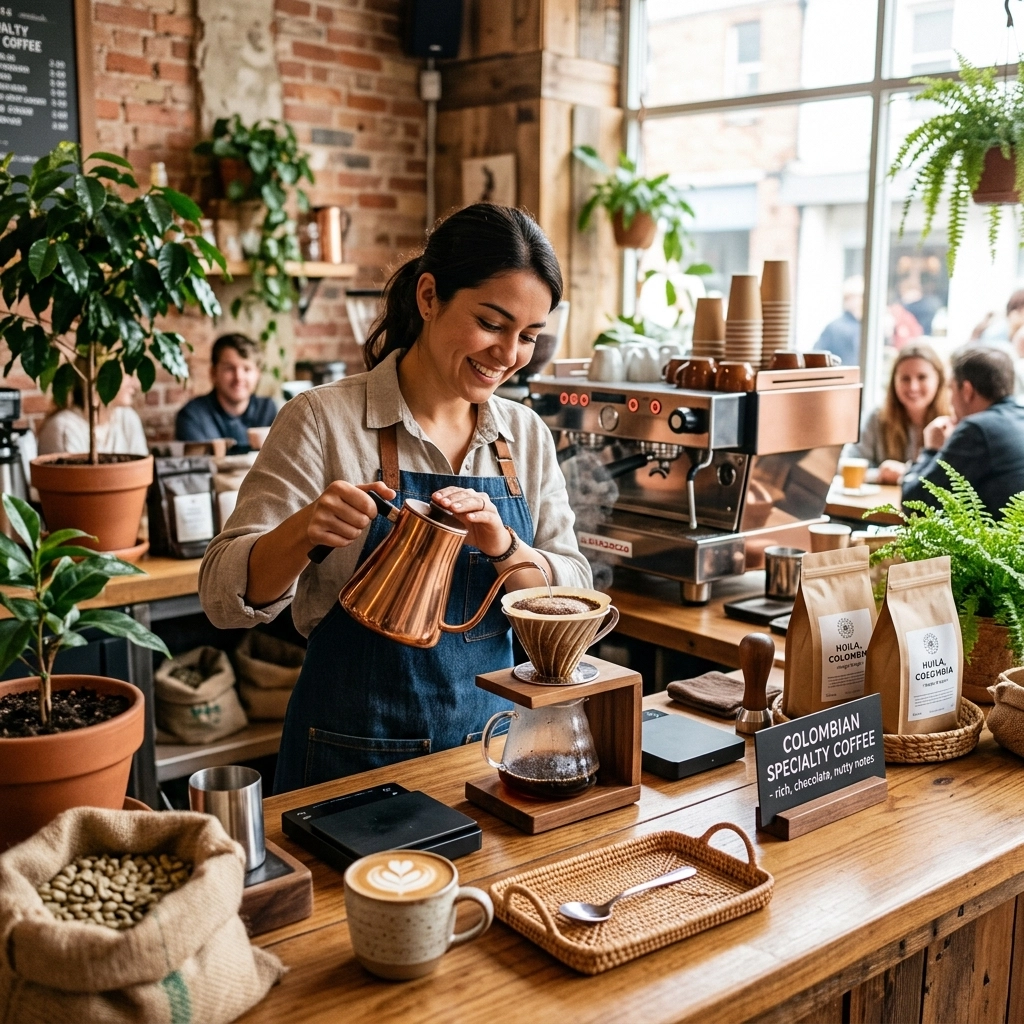
Huila is perhaps the most famous coffee-growing region in Colombia. The soil is volcanic, and the altitude is high. The result? A cup that is incredibly bright and fruity. If you’re looking for a single-origin coffee that will make your customers go "Wow," a Huila bean is a fantastic choice. You’ll get notes of red berries and a citrusy zing that is just brilliant as a filter coffee.
Tolima: Smooth and Chocolatey
Located just to the west of Huila, Tolima produces coffee that is a bit more laid back. It’s known for a heavy body and deep chocolate notes. This is the kind of coffee that makes people feel all warm and fuzzy inside. It’s perfect for those rainy Tuesday mornings when a customer just wants a big, comforting cappuccino.
Antioquia: The Versatile Workhorse
This is where the coffee industry in Colombia really took off. Antioquia produces a very balanced, consistent cup. It’s got that classic "Colombian" profile, caramel sweetness and a nutty finish. Because it’s so balanced, it’s an ideal component for espresso blends. It plays well with others and provides a solid foundation for the more "wild" flavours of other beans.
Nariño: Elegant and Floral
Down in the south, Nariño produces coffee at some of the highest altitudes in the country. The cool nights and warm days slow the maturation of the coffee cherries even further. This produces a cup that is very elegant, often with floral aromas and a very refined acidity. It’s the "fine wine" of the Colombian coffee world.
Why Your Café Needs Colombian Coffee
So, we know it tastes great. But why is it a strategic move for your business?
1. Versatility is Key
In a busy café, you need beans that can multitask. Colombian coffee is the ultimate multitasker.
As an espresso, it produces a beautiful crema (that silky, golden-brown layer on top). If you’re curious about what makes a good crema, check out our guide on understanding crema.
Because of its natural sweetness, Colombian coffee cuts through milk perfectly. It doesn't get lost in a flat white, but it also doesn't overpower the milk with too much acidity.
2. The Crowd-Pleaser Factor
Not everyone who walks into your shop is a coffee expert. Some people just want a "good cup of coffee." Colombian beans are familiar. They are approachable. They don't have the polarizing funkiness that some fermented natural-process coffees might have. By having a Colombian single-origin or a Colombian-heavy blend as your house coffee, you’re ensuring that the majority of your customers will be happy.
3. Year-Round Availability
Because Colombia has two harvest seasons (the main crop and the mitaca or "fly crop"), fresh Colombian coffee is available almost year-round. This is huge for consistency. You don't want to find a coffee your customers love, only to have it disappear for eight months.

Brewing the Perfect Colombian Cup
To get the most out of these beans, you need to treat them with a bit of respect. Whether you're using a lever or automatic machine, the basics remain the same.
The Espresso Recipe
For a medium-roast Colombian, we usually recommend a starting point of:
- Dose: 18g
- Yield: 36g – 40g (a 1:2 or 1:2.2 ratio)
- Time: 27–30 seconds
- Temperature: 93 °C to 94 °C (200 °F)
This recipe highlights the caramel sweetness while keeping the acidity balanced. If it tastes a bit sour or "thin," try grinding slightly finer or increasing your yield a touch. If it’s tasting bitter or dry, you might be over-extracting, try a slightly coarser grind.
Don't forget the importance of tamping! Consistency in your tamping technique is just as important as the coffee itself. If you’re struggling with your shots, we offer some pretty handy barista training to get your team up to speed.
Single Origin vs. Blends
You might be wondering: "Should I serve it on its own or as part of a blend?"
The Single Origin Route:
Serving a single-origin Colombian (like a Huila or Nariño) is a great way to showcase the unique terroir of the region. It tells a story. It gives your staff something to talk about with customers. It works brilliantly for V60 pour-overs or as a "guest espresso."
The Blend Route:
Most of the world’s best espresso blends contain a significant amount of Colombian coffee. Why? Because it provides "body" and "sweetness." It acts as the glue that holds the other flavours together. If you have a punchy, acidic Ethiopian bean, adding a smooth Colombian bean can round out the edges and make the espresso much more palatable for a wider audience.

Limini’s Commitment to Quality
Here at Limini Coffee, we don't just buy any old beans. We care about where they come from and how they are handled. Colombian coffee has a rich history, but it also faces challenges like climate change and fluctuating market prices. We believe in sourcing ethically and ensuring that the farmers are rewarded for the incredible work they do.
When the green beans arrive at our roastery, we use our expertise to find the "sweet spot" for each lot. We roast in small batches to ensure total control over the process. Freshness is everything in our world. We’ve all had that supermarket coffee that tastes like charcoal, that’s exactly what we avoid. We want you to smell that amazing aroma the second you open the bag.
Is Colombian Coffee Right for Your Shop?
In a word: Yes.
Whether you are a high-end specialty shop or a cosy neighbourhood café, Colombian coffee offers something for everyone. Its versatility, balanced flavour profile, and consistent quality make it one of the most reliable investments you can make for your menu.
If you’re looking to upgrade your coffee offering or need some advice on which Colombian region would best suit your customers, get in touch with us. We love talking shop and helping cafés find their perfect brew.
And remember, the coffee is only half the battle. How you serve it: the theatre of the café, the quality of the milk, and the smile on the barista’s face: is what keeps people coming back.
So, next time you’re looking at your coffee menu, give a little extra thought to those beautiful beans from the Andes. They’ve travelled a long way to get to your hopper, and they’re ready to make your customers very, very happy. ☕️