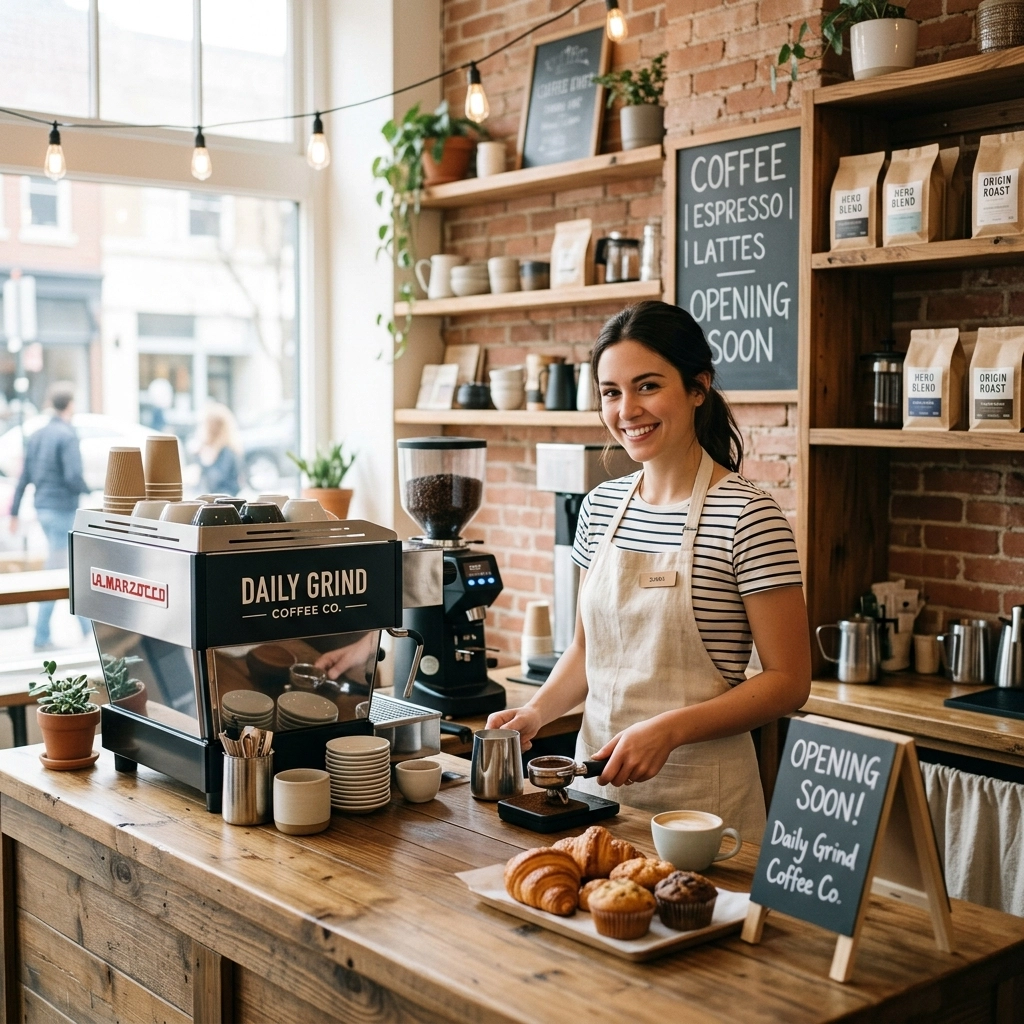
So, you’ve decided you want to open a coffee shop. It’s a beautiful dream, isn’t it? The smell of freshly ground beans, the hiss of the steam wand, and a community of regulars who can’t start their day without you. We’ve seen hundreds of people embark on this journey, and we absolutely love the passion that drives it. But here’s the thing: setting up a coffee shop is about 10% making coffee and 90% business management, planning, and logistics.
Before you go out and buy a shiny three-group espresso machine or sign a lease on that "charming" (read: expensive) corner unit, there are a few things you need to do first. We call this the foundation stage. If the foundation is shaky, the whole house, or in this case, the whole café, will eventually come tumbling down.
In this guide, we’re going to walk you through the absolute first steps of a coffee shop set up. We’ll keep it practical, casual, and hopefully, a little bit inspiring.
Step 1: Define Your Concept (The "Who" and the "What")
The very first thing you need to do when you start up a coffee shop is to decide exactly what kind of shop you’re building. You might think, "I'm building a coffee shop that sells coffee," but that's a bit like saying "I'm building a car that drives." It's too vague.
You need a concept brief. Ask yourself these questions:
- Who is your core customer? Are you targeting the 7:00 AM commuter who needs a caffeine hit and a pastry in under 60 seconds? Or are you aiming for the freelancer who wants to sit with a laptop for three hours? Maybe you’re looking to attract the weekend "brunch crowd" who wants high-end speciality coffee and a full kitchen menu.
- What is your service model? Will it be counter service only? Table service? A "hole-in-the-wall" takeaway window? Each of these requires a completely different layout and staffing level.
- What is the vibe? Is it minimalist and industrial, or warm, cozy, and full of mismatched armchairs?
We believe that having a clear vision from day one makes every subsequent decision easier. When you know who you are, choosing your beans, your wholesale partner, and even your paint colours becomes much simpler.

Step 2: Conduct Market and Competition Analysis
Once you have a rough idea of your concept, you need to see if it actually works in the real world. This means looking at your competition.
Don't be afraid of competition; be informed by it. Go to the areas you’re considering and spend hours sitting in other shops. Watch who goes in. What are they ordering? Is the service fast or slow? What are the prices?
Look for the gaps. If there are three shops nearby doing great espresso but nobody is doing high-quality filter coffee, that might be your "in." If every shop in the area closes at 4:00 PM, perhaps there’s a late-afternoon crowd you can capture. This stage of setting up a coffee shop is all about validating your assumptions. If you think people want a $5 latte, make sure they are already paying for something similar nearby.
Step 3: The "Boring" Part (The Business Plan)
We know, we know. You want to talk about latte art and understanding milk, not spreadsheets. But a simple business plan is the difference between a hobby and a career.
You need to turn your dreams into a forecast. We recommend looking at a few key numbers:
- Transactions per day: How many people will actually walk through the door?
- Average order value: If a customer buys a coffee and a croissant, what is that worth to you?
- Cost of Goods Sold (COGS): This is what the coffee, milk, and sugar actually cost you.
- Labor and Rent: These are usually your two biggest expenses.
A common pitfall we see when people start up a coffee shop is underestimating labor costs. You can’t be there 100 hours a week (well, you can, but you’ll burn out in a month). You need to account for staff, insurance, and the occasional broken dishwasher.
Step 4: Find Your Partner (Before the Equipment)
Most people wait until they have a shop to look for a coffee roaster. We think that’s a mistake. You should find your partner as early as possible.
Why? Because a good roaster: like us here at Limini Coffee: does so much more than just ship you bags of beans. We can help you with:
- Equipment Selection: Choosing the right machine is vital. Do you need a La Spaziale with high-volume capabilities or something more artisanal?
- Shop Layout: We’ve seen what works and what causes a "logjam" at the milk station.
- Training: You can have the best beans in the world, but if your baristas don't know how to tamp or dial in an espresso, it’s all for nothing. Check out our barista training to see the level of detail we go into.
Finding a partner early means you have an expert in your corner from the moment you start looking at locations.

Step 5: Location, Location, Location
So, you’ve got the concept, the plan, and the partner. Now you need the space.
When you’re looking at a site for your coffee shop set up, don't just trust the estate agent’s foot traffic numbers. Go there yourself. Stand outside on a Tuesday morning at 8:00 AM. Stand there on a Saturday afternoon.
Check the practicalities:
- Power: Does the building have enough "juice" to run a commercial espresso machine (usually around 3000 watts per group head), several grinders, and a dishwasher? Upgrading a power supply can be incredibly expensive.
- Water: Is the water pressure okay? You’ll definitely need a filtration system to prevent scale buildup in your machine.
- Waste: Where does the greywater go?
And don't forget the workflow. Imagine yourself making a coffee. Can you reach the milk, the beans, and the cups without taking more than two steps? If you have to walk across the room to get a lid, you're losing money. We've actually written a whole piece on building a coffee shop and shop fitting that goes into the nitty-gritty of layout.
Step 6: Equipment and "The Theatre"
Once you have a lease (or are very close to one), it’s time to talk gear. This is where people usually get overwhelmed.
Should you go for a lever machine or an automatic? What about the grinder? (Hint: the grinder is arguably more important than the espresso machine).
We like to think of the coffee bar as a stage. This is what we call The Theatre of Coffee. Your customers want to see the process. They want to see the crema forming and the milk being textured to a silky 140 °F / 60 ºC. If you hide your machine behind a tall counter or a pile of muffins, you're losing that connection.

Why Starting with the "Why" Matters
It’s easy to get bogged down in the technicalities of tamping or calculating the perfect extraction using a brewing calculator. And while those things are extremely important (and we love talking about them!), they come later.
The most successful coffee shops we work with are the ones that had a rock-solid vision before they ever pulled a single shot of espresso. They knew their neighborhood, they knew their numbers, and they had a partner who supported them through the messy bits.
Setting up a coffee shop is a marathon, not a sprint. Take the time to do these first steps right, and you’ll find the rest of the process much more rewarding.
If you’re feeling a bit overwhelmed, don’t worry: that’s normal! We’ve helped countless coffee lovers turn into successful business owners. Whether you need advice on choosing espresso equipment or you just want to taste some of our latest roasts, we are here to help.
Remember, the goal isn't just to open a shop; it's to open a shop that stays open, thrives, and becomes a beloved part of your community.
So, what’s your vision? Let’s make it happen.
If you want to chat more about how we can help your dream become a reality, take a look at our wholesale coffee options or drop us a line. We'd love to be part of your journey.