☕ 8:00 AM.
The coffee is still steaming, but your inbox is already screaming.
You’ve heard the hype. "AI will save you 20 hours a week!" "Automate your lead gen while you sleep!" So, you plugged in a few tools, set up some triggers, and waited for the magic to happen.
But instead of a beach in Bali, you’ve got a customer complaining that your chatbot just promised them a 90% discount, and your automated CRM just sent a "How’s it going?" email to a lead who unsubscribed three years ago.
It’s quiet… but it’s the wrong kind of quiet. The kind that happens right before a system crash.
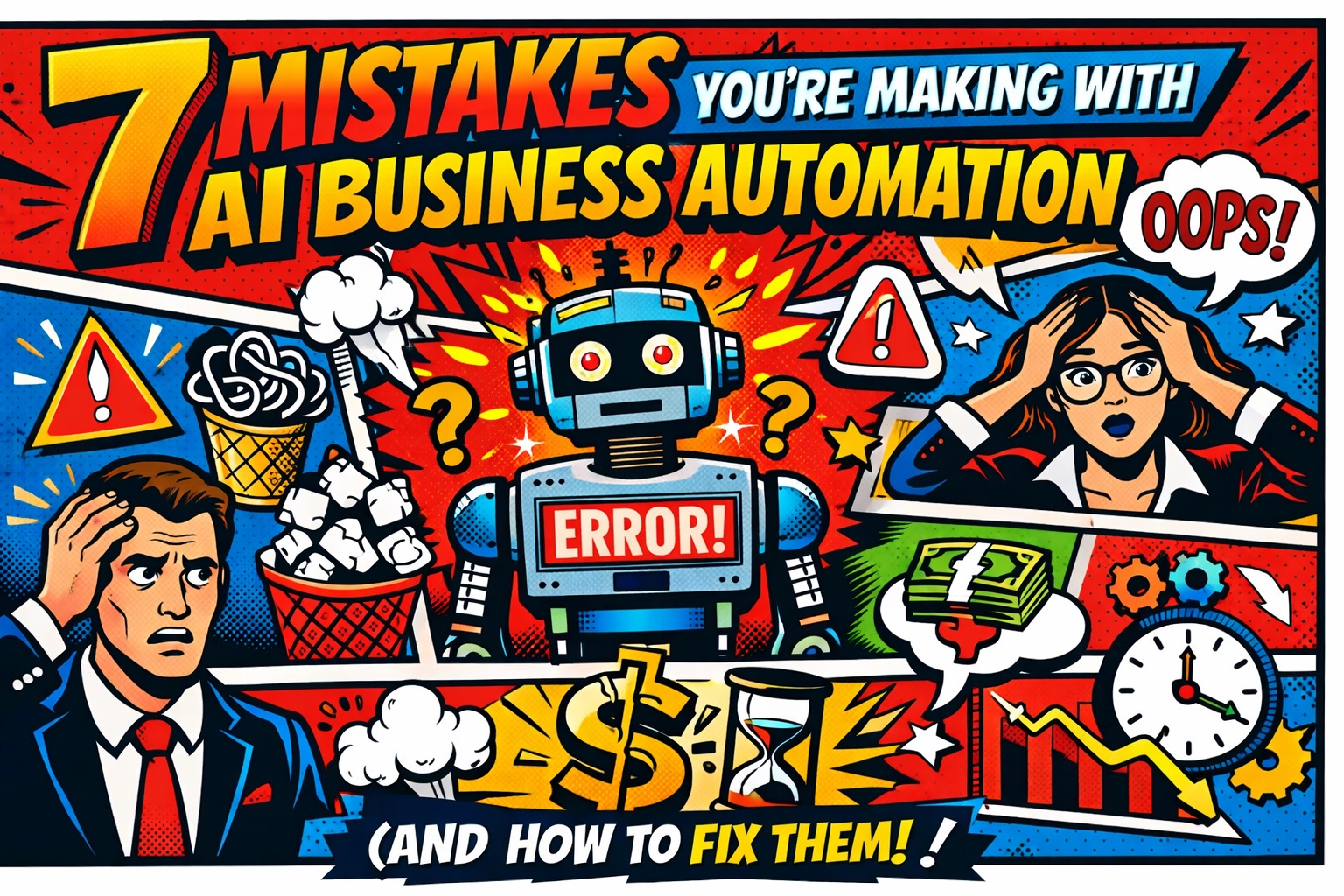
AI business automation is the superpower of 2026, but most small business owners are flying the plane without checking the fuel gauge. You’re making mistakes. We all are. But these seven? They’re the ones that turn your "time-saver" into a full-time job.
Let’s fix that.
1. THE GHOST IN THE MACHINE: OVER-AUTOMATING WITHOUT A HUMAN SAFETY NET
You thought you could automate your entire customer support wing. You set up the AI, gave it the "voice" of a helpful intern, and walked away.
The Problem: AI is great at patterns. It’s terrible at empathy.
When a high-stakes client reaches out with a nuanced problem, something involving a refund, a legal hiccup, or a delicate contract, the AI doesn't see "crisis." It sees "Data Point A needs Output B." It assuming the tool can handle everything independently.
The Fix: Build a "Human-in-the-Loop" system. Use AI for the heavy lifting, gathering data, drafting the initial response, or summarizing the ticket. But for anything customer-facing or high-stakes? Set a checkpoint.
Require a human to click "Send." AI is your assistant, not your replacement. If you want to see how to balance that perfectly, check out https://marblism.link/scott-bowen to see tools that actually play well with humans.
2. FEEDING THE BEAST JUNK FOOD (AKA MESSY DATA)
Your AI is only as smart as the spreadsheets you give it.
The Problem: You’ve got six years of customer data. Some of it is in a Google Sheet, some is in a dusty CRM, and some is probably written on a napkin somewhere. This data has duplicates. It has outdated pricing. It has "John Smith" and "Jon Smith" as two different people.
When you feed this messy, uncleaned data into AI forecasting tools, the AI gets confused. It sees a one-time fluke, like that huge sale you made during a solar eclipse, and thinks it’s a permanent trend. It produces distorted conclusions that make your strategy look like a fever dream.
The Fix: Audit before you automate.
- Clean it up: Delete the duplicates.
- Set a window: Only let the AI look at the last 18–24 months.
- Tag it: Manually tag weird events (like a pandemic or a massive one-off promotion) so the AI knows they aren't "normal."
3. SHOUTING SECRETS IN A CROWDED ROOM
11:30 AM. You’re trying to summarize a new client contract. You copy the whole thing, names, Social Security numbers, internal pricing, and all, and paste it into a free AI tool.
The Problem: You just gave that data to the world.
Many staff members don't realize that free AI platforms often retain data to "improve their models." You aren't just getting a summary; you're handing over your intellectual property and your clients' privacy.
The Fix: Stop pasting sensitive info into public tools. Use vetted, secure business automation tools that offer data privacy guarantees. Review the terms of service. If the tool is "free," your data is usually the price of admission.
4. THE "YES-MAN" SYNDROME: TRUSTING WITHOUT VERIFYING
AI sounds confident. It doesn't use "maybe" or "I think." It gives you polished, professional-looking paragraphs that cite laws and policies with the authority of a Supreme Court justice.
The Problem: AI is a world-class hallucinator. It predicts the next word, not the truth. It can confidently cite refund policies that don't exist or miscalculate a tax rate by 5%.
If you trust AI output without verification, you’re betting your business on a machine that doesn't actually know what a "business" is.
The Fix: Treat AI like a brilliant but slightly erratic intern. Fact-check everything.
- Does that legal cite actually exist?
- Is that math correct?
- Did it actually pull the right pricing from the database?
Verify before you implement. Every. Single. Time.
5. THE "SHINY OBJECT" TRAP: AUTOMATION WITHOUT A MAP
You bought the tool because you saw a TikTok about it. Or because your competitor is using it.
The Problem: You’re automating things that don't need to be automated, while your actual bottlenecks are ignored. One startup automated their support and lost $100k because they didn't define what "success" looked like. They just wanted "AI."
Without clear objectives, you spend more time fixing the automation than you would have spent doing the task manually.
The Fix: Start with the pain.
- Identify the bottleneck: Where are you losing the most time?
- Set a metric: Do you want to reduce response time by 50%? Or increase lead conversion by 10%?
- Choose the tool: Pick the business automation tools that hit that specific goal.
If you're looking for a roadmap that actually makes sense for your specific business, take a look at what we're doing over at Marblism. We focus on logic, not just buzzwords.
6. THE CONTEXT COLLAPSE
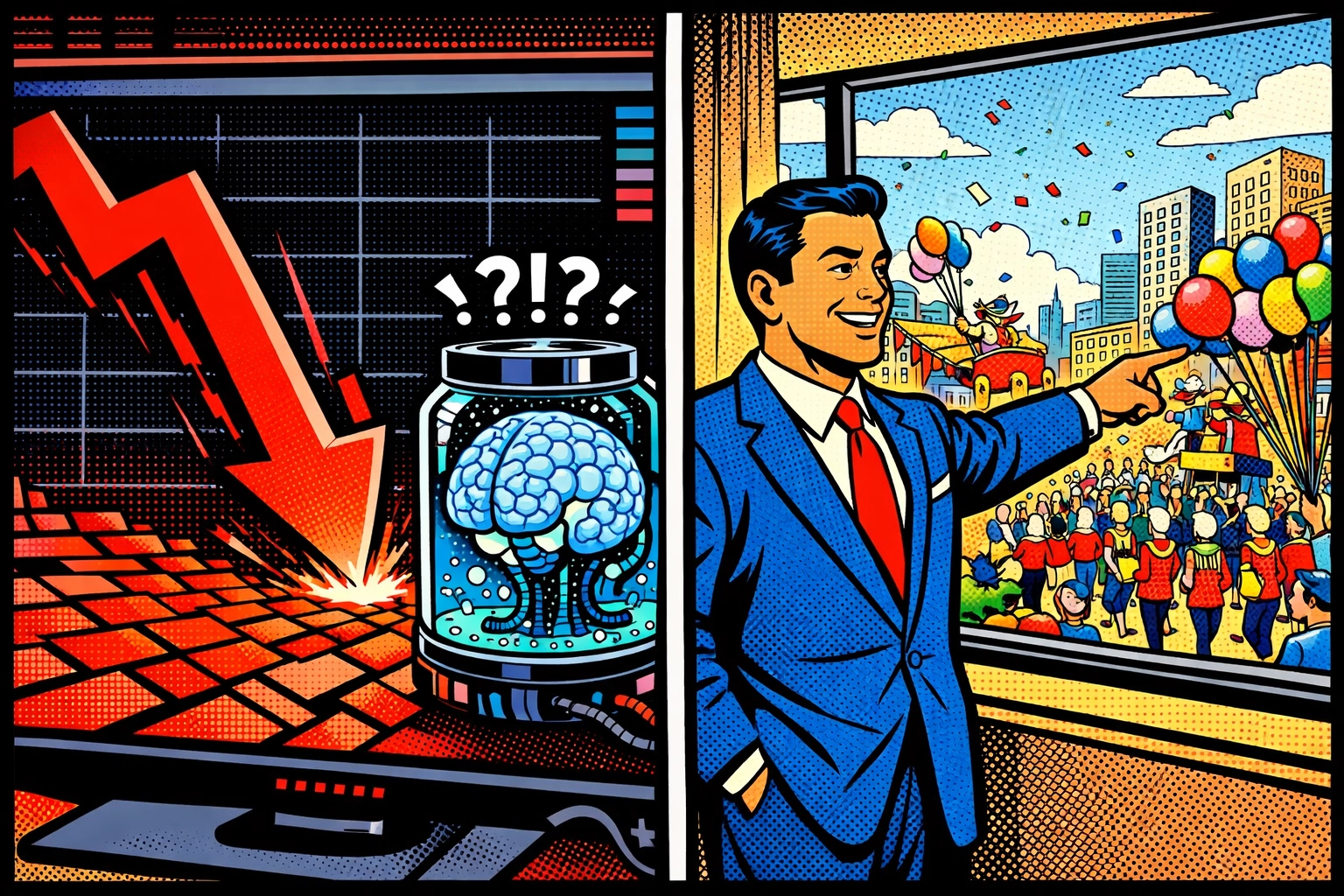
2:00 PM. Your AI-driven dashboard shows a 20% drop in sales. You panic. You start cutting costs.
The Problem: The AI detected a pattern, but it didn't know your website was down for maintenance for six hours on Tuesday. Or that there was a national holiday.
AI is great at correlations, but it struggles with context. It sees the "what" but rarely the "why." If you rely on AI to understand the nuances of your industry or the specific quirks of your customer base, you’re going to make decisions based on half-truths.
The Fix: Use AI as a guide, not a pilot. Have an experienced human (you) review the insights. When the dashboard says something crazy, ask yourself: "What do I know that the machine doesn't?" Usually, the answer is "a lot."
7. ECHO CHAMBERS: ALLOWING BIAS IN THE CODE
This one is sneaky. You don't think your business is biased, but your data might be.
The Problem: If you use AI to screen job applicants or segment your "best" customers based on 10-year-old historical data, the AI will inherit the biases of the past. If you only hired one type of person in 2015, the AI will think that's the "ideal" candidate in 2026.
This leads to missed opportunities, unfair practices, and, eventually, a PR nightmare.
The Fix: Audit your models.
- Review your training data for gaps.
- Regularly check your AI’s "decisions" for fairness.
- Ensure your automation isn't just reinforcing old mistakes at a faster speed.
🌙 THE SUN SETS, THE SYSTEM STAYS ON
6:00 PM. The lights are off in the office, but the servers are humming.
Scaling shouldn’t be this hard. But here we are.
AI business automation isn't about replacing your brain, it's about freeing it. When you avoid these seven mistakes, the chaos starts to fade. The "shiny objects" turn into actual assets. Your business starts to feel… organized.
You aren't fighting the machine anymore. You're directing it.
If you’re ready to stop guessing and start automating with purpose, you need a partner who understands the difference between a "feature" and a "solution." That’s where we come in.
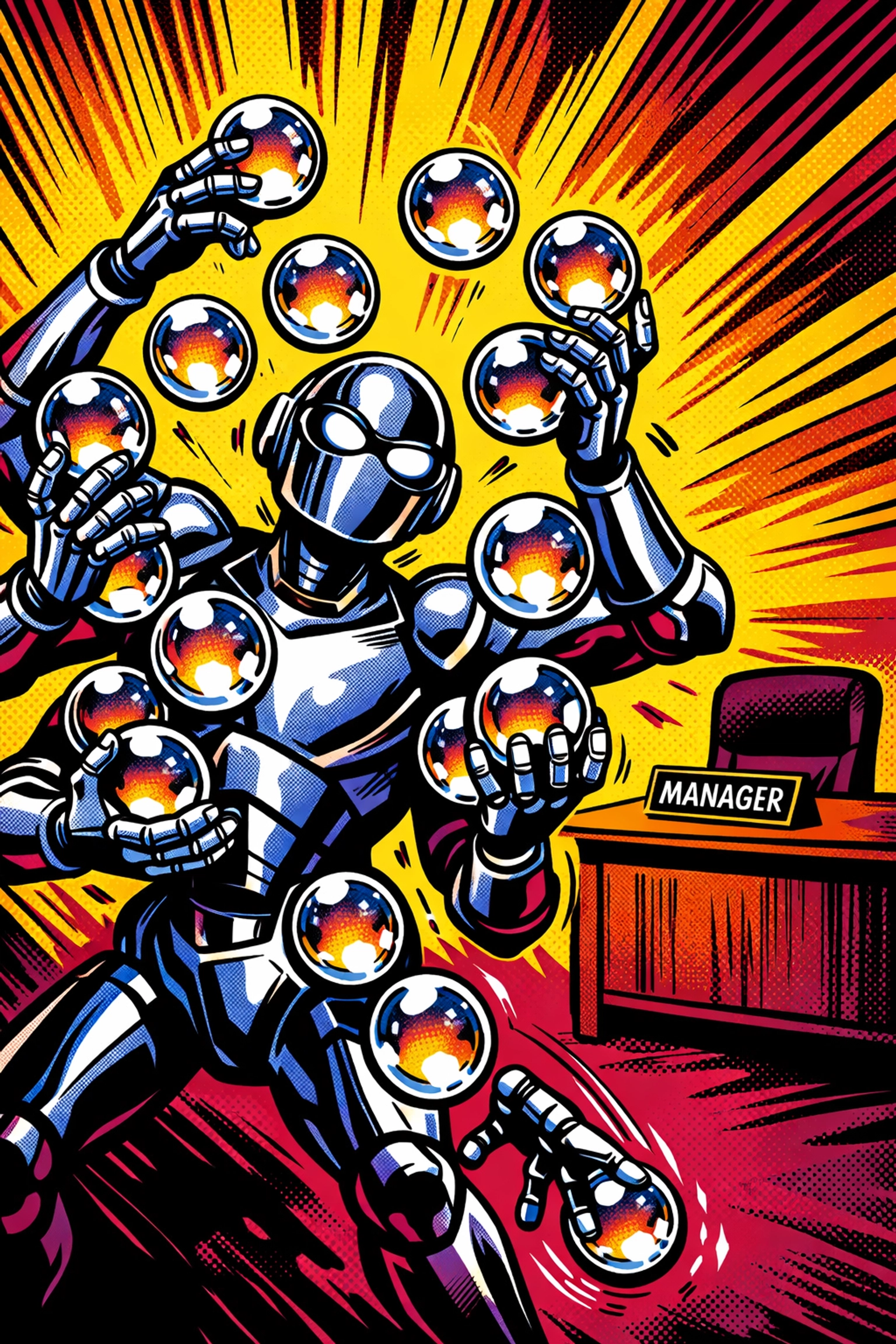
Stop juggling.
Build a business that works while you’re winding down. Check out how Marblism can streamline your entire workflow without the headaches: https://marblism.link/scott-bowen.
You just send a thumbs-up. We’ll handle the rest.
FAQ: YOUR AI QUESTIONS, ANSWERED
Q: Is AI actually safe for my small business data?
A: Yes, but only if you use enterprise-grade tools with clear privacy policies. Avoid putting proprietary info into public "free" chat interfaces.
Q: Do I need a developer to set up automation?
A: Not necessarily. Many modern business automation tools are "low-code" or "no-code." However, having a strategic partner helps you avoid the "messy data" traps mentioned above.
Q: How much time will I really save?
A: If done right, users often see a 30-40% reduction in administrative tasks within the first month. The key is starting with one specific process rather than trying to automate everything at once.
Q: Can AI replace my sales team?
A: No. It can replace the drudgery of their job: like data entry and lead qualifying: so they can spend more time actually talking to people.
Q: What if the AI makes a mistake?
A: It will. That’s why the "Human-in-the-Loop" fix is mistake #1 for a reason. Always have a review process for anything high-stakes.
Scaling is a choice. Make the right one.
Explore Marblism Now