
You can run day-to-day hotel operations, bookings, payments, and guest communications from one cloud platform designed for modern properties. Mews helps you automate routine tasks, reduce errors, and free staff time so you can focus on service and revenue.

This article will show how Mews handles reservations, payments, automation, and integrations through its app marketplace, and how those pieces work together to improve guest experience and pricing. Expect clear explanations of core features, security and payments, revenue tools, and what implementation and support look like so you can decide if Mews fits your property.
You’ll also get practical notes on scaling Mews across multiple sites and answers to common questions about setup, costs, and third-party connections.
Core Functionality of Mews
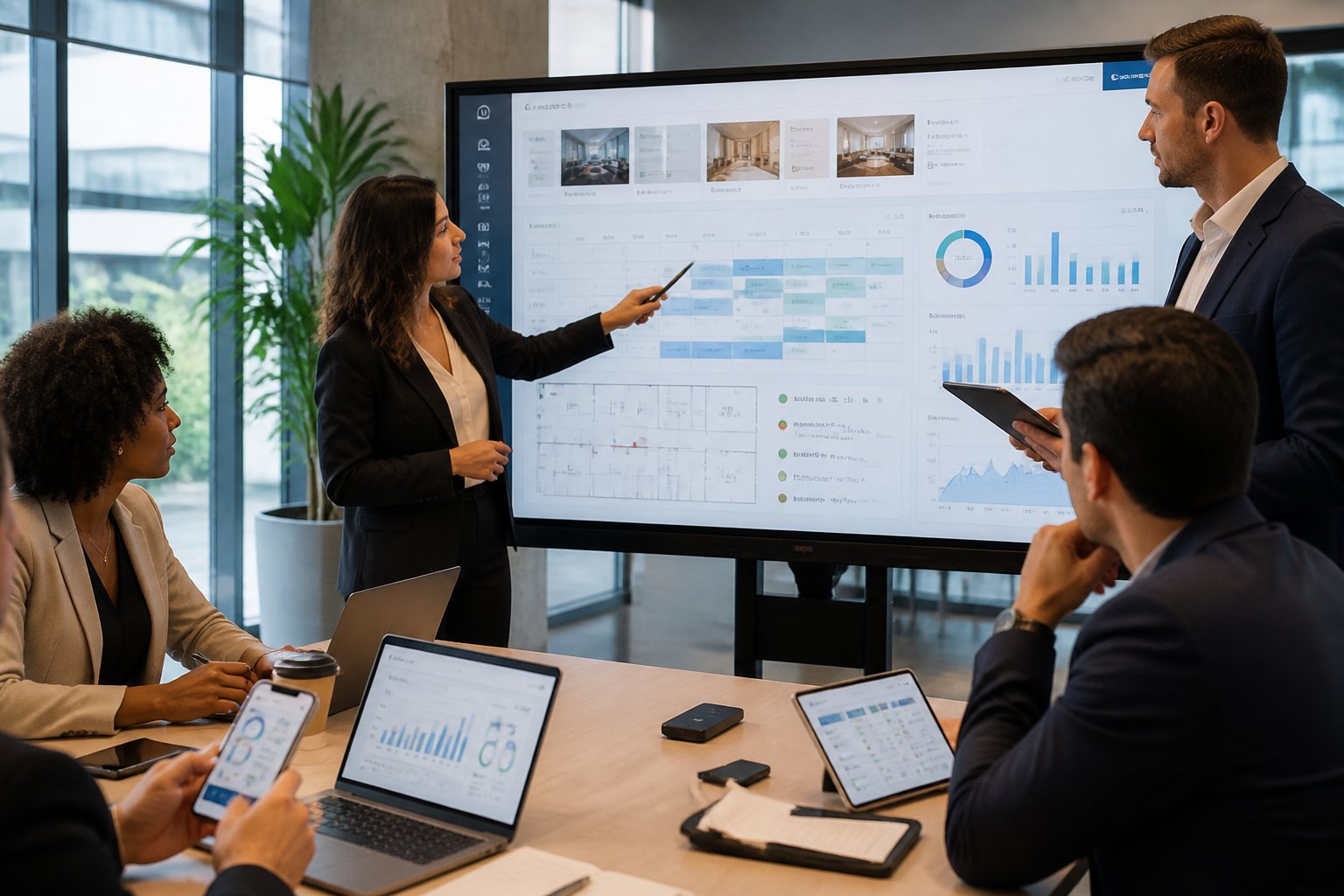
Mews centralizes daily hotel work into a single cloud platform. It handles bookings and pricing, tracks room status and tasks, and stores guest data so you can speed operations and personalize stays.
Reservation and Rate Management
You manage bookings, inventory, and pricing from one screen. Mews connects your front desk to online channels and your direct booking engine so updates propagate instantly. You can set room allotments, blackout dates, and length-of-stay rules to control distribution.
Rate plans and extras are configurable. Create base rates, non-refundable offers, and packages with add-ons like breakfast or parking. Automated rules adjust rates by date, channel, or booking window to protect revenue.
The booking flow links to payment processing. You can take deposits, store cards securely, and run authorizations at check-in. Reporting shows pick-up curves and channel performance so you can decide where to push rates or change allotments.
Housekeeping and Maintenance Coordination
You assign cleaning and maintenance tasks inside the PMS and track room readiness in real time. Housekeeping sees room status changes (dirty, clean, inspected) on tablets or mobiles, which reduces front desk calls and guest wait time.
Create task templates for room types and set priorities for urgent fixes. Maintenance tickets attach to a room and log actions, dates, and staff notes. You can filter tasks by floor, team, or time window for efficient route planning.
Housekeeping data links to reservations and guest notes. When a guest checks out early or requests late cleaning, the system updates schedules and notifies staff automatically. That keeps rooms available faster and lowers miscommunication.
Guest Profiles and Journey Tools
You build comprehensive guest profiles that include contact details, preferences, payment methods, and stay history. Profiles populate at booking and update after each stay so you can personalize future interactions.
Use the guest journey tools to automate messages. Send pre-arrival emails with check-in instructions, upsell offers during the booking, and post-stay surveys. Message templates save time and ensure consistent communication across channels.
Profiles tie into billing and folios to speed check-in and check-out. You can flag VIPs, record room preferences, and set consent for marketing. Those details help you tailor offers and track loyalty behavior without switching systems.
Related reading: learn more about the Mews platform and how it unifies operations on the Mews website (https://www.mews.com/en).
Integrated Payments and Security

Mews connects payments to bookings and operations so you can collect deposits, upsells, and final charges without juggling multiple vendors. It links payment flows to reservations, payouts, and reporting while protecting card data and meeting industry rules.
Mews Payments and Payment Processing
Mews Payments embeds payment processing directly into the PMS and POS so you can accept online and on-site card and alternative payments from one place. You can set automated prepayments for bookings to reduce no-shows, enable one‑click guest payments for fast check‑out, and process multicurrency transactions to bill international guests in their preferred currency. Daily settlement and central reconciliation cut the time you spend matching transactions. Mews also supports kiosk and virtual card detection, which helps you take payments at self‑service points and flag corporate virtual cards automatically. If you use third‑party integrations, the Mews marketplace offers connectors so payment flows stay consistent across channels.
Data Security and Compliance
Mews tokenizes card data immediately and stores only tokens, which lowers your exposure to raw card information. The platform follows PCI DSS requirements for card handling and implements PSD2-compatible flows in regions that need strong customer authentication. You get role-based access controls and audit logs so you can track who accessed payment records and when. Daily payouts and automated reconciliation reduce manual handling, cutting human error and fraud risk. For physical access, Mews can integrate with digital key systems so payments and room access tie to the same guest profile, giving you a clearer, more secure guest journey.
- Key security features:
- Tokenization of card data
- PCI DSS and PSD2-aligned processes
- Role-based access and audit trails
- Virtual card detection and automated reconciliation
For more on the embedded payment features, see the Mews payments overview.
Automation and Operational Efficiency
Mews helps you cut repetitive work, speed up guest services, and see live performance numbers so you can act quickly. It centralizes reservations, payments, housekeeping, and reporting in a cloud platform that reduces manual steps and shows current operations on dashboards.
Streamlining Manual Tasks
You can automate check-in, payments, and invoicing to remove routine front-desk work. The system posts charges, triggers confirmation emails, and updates room status automatically so staff spend less time on paperwork and more time with guests.
Automations also handle housekeeping assignments and maintenance tickets. When a guest checks out, the room status updates and cleaning tasks appear in the operations board. This reduces missed tasks and helps you turn rooms faster.
Mews integrates with payment gateways and self-service tools to cut manual reconciliation. That lowers errors from manual entry and speeds up payments during busy shifts. You keep audit trails so you can trace adjustments or refunds.
Real-Time Data and Reporting
You get live dashboards that show occupancy, arrivals, departures, and revenue per available room. Real-time reporting helps you adjust rates, reassign rooms, or open staff for rush periods based on current data rather than yesterday’s numbers.
Customizable reports let you pull daily housekeeping logs, payment summaries, or channel performance with a few clicks. You can schedule reports to email to managers or export data for deeper analysis.
Because the platform is cloud-based, data updates across your property and third-party integrations instantly. That ensures everyone works from the same figures and reduces time lost to reconciling spreadsheets.
Operational Visibility
You can view operational workflows in one place: front desk activity, housekeeping progress, outstanding maintenance, and pending payments. The unified view helps you spot bottlenecks, like slow check-ins or rooms blocked for long maintenance.
Role-based access lets managers and staff see only what matters to them. Supervisors can filter by shift or housekeeper to track productivity. This clarity helps you assign resources where they will reduce delays.
Integrated alerts and logs create a clear audit trail for changes to reservations, payments, and room status. That transparency speeds up issue resolution and improves accountability across your team.
Relevant reading: the Mews website describes its platform as an operating system for hospitality that ties together bookings, payments, and operations (https://www.mews.com/en).
Integrations and the Mews Marketplace
Mews connects your core property system to revenue tools, guest services, and distribution channels so your team spends less time switching apps and more time serving guests. The Marketplace gives you many certified options and an open API to build custom links when needed.
Hospitality Apps and Open API
You can browse more than 1,000 hospitality apps in the Mews Marketplace to add features like CRM, payments, access control, housekeeping, and F&B ordering. Many integrations require no connection fee, so you pay the app vendor rather than a gateway charge from Mews. That lowers upfront cost when you trial a tool.
If an app is not already listed, use Mews’ open API to build a direct integration. The API supports authentication, webhooks, and rate limits so you can push reservations, update guest profiles, and sync folios in real time. Developers can automate flows such as sending guest preferences to a CRM or posting restaurant charges to room accounts.
Advantages
- Fast deploy: certified apps often install with preset fields.
- Custom fit: API lets you map data fields to match your workflows.
- Live sync: webhooks reduce sync delays and duplicate entries.
Channel Management and Connectivity
You can connect Booking.com, Expedia, SiteMinder and other channel managers directly through the Marketplace to receive reservations and control inventory. Direct connections reduce errors because bookings flow straight into the PMS instead of relying on manual imports.
Channel management links let you:
- Push rates and availability from Mews to multiple OTAs.
- Auto-update inventory after check-in or a group block.
- Route payments and booking details into guest profiles.
Choose a channel manager integration that supports two-way updates and error logging. That prevents oversells and makes reconciliation easier when you compare OTA reports to your Mews booking ledger.
Tech Stack Flexibility
Mews is designed to sit at the center of your tech stack so you can mix best-of-breed tools. The Marketplace covers revenue management, BI, housekeeping, and guest messaging, letting you pick modules by function rather than buying an all-in-one suite.
Plan your stack by listing required touchpoints (bookings, payments, access, reporting). Then prioritize certified apps that sync with Mews to reduce custom work. If a certified app won’t meet needs, use the open API for a tailored connector. This approach keeps integration costs lower and lets you replace individual components without reworking the whole system.
Practical tips
- Start with channel and payment integrations.
- Add revenue management once data flows reliably.
- Use API connectors only for unique or internal tools.
Revenue Management and Optimization
You can automate pricing, track performance, and push bookings through your own engine to capture more revenue. The right tools help you set room rates that match demand, lift RevPAR, and reduce dependence on third-party channels.
Dynamic Pricing and Atomize RMS
You can use Atomize RMS, now part of Mews, to run dynamic pricing that reacts to demand, events, and competitor rates. Atomize pulls real-time data and historical patterns to recommend daily rate changes across room types.
Set rules for minimum and maximum prices, closed to arrival nights, and length-of-stay controls to protect margins during low demand. The system can auto-implement price updates in your PMS so you avoid manual errors and delays.
Use the RMS to test price moves for specific dates or segments. Track recommendation acceptance, revenue impact, and rate parity to refine your rate management settings over time.
RevPAR and Occupancy Maximization
Focus on RevPAR and occupancy rate together, not one at the expense of the other. You can raise RevPAR by increasing average daily rate (ADR) when demand allows, and keep occupancy healthy with targeted discounts during soft periods.
Monitor daily pickup, length of stay windows, and channel performance inside your PMS dashboards. Use segmented rules—corporate, groups, and transient—to price rooms differently by guest type and capture higher-value bookings.
Combine RMS recommendations with manual overrides when needed. Prioritize dates with high demand or local events to maximize revenue optimization for your property.
Direct Bookings and Booking Engine
Drive more direct bookings by using Mews booking engine features that support promotions, packages, and flexible rates. You can present real-time availability and dynamic rates with clear payment and cancellation policies to reduce abandonment.
Integrate the booking engine with your RMS so recommended rates show directly to guests. This keeps rate parity and increases the chance guests book on your site instead of OTAs.
Use targeted messaging, simple upsell flows, and instant confirmation to boost conversion. Track direct channel revenue separately so you can measure how booking engine changes increase revenue and lower distribution costs.
Guest Experience and Communication
You get faster service, more control, and clearer messaging across a guest’s stay. The platform ties check-in, room access, upsells, and feedback into one flow so staff and guests see the same information.
Contactless and Self-Service Options
You can offer contactless check-in through self-service kiosks or mobile check-in that reduce queues and speed arrival. Use self-service check-in on tablets or kiosks to capture ID, take payments, and issue digital receipts without front desk staff.
Digital keys let guests enter rooms from their phone. You can set key activation windows and revoke access remotely, which helps with late arrivals and early departures. Contactless payments work with tokenized cards and PCI-compliant processing to keep transactions secure.
Integrate these features into the Mews hospitality cloud to keep reservations, payments, and keying in one system. That reduces manual steps for staff and gives you detailed timestamps for each touchpoint.
Personalized Communication
You can send targeted messages before arrival to confirm preferences and offer upgrades. Use automated pre-stay emails or SMS to ask about arrival time, room requests, or parking, then push those answers into the guest profile.
During the stay, deploy a virtual concierge through in-app chat or SMS for requests like extra towels or late checkout. The system logs every message in the guest communications record so staff see past conversations and avoid repeating questions.
After checkout, trigger tailored follow-ups asking for feedback or offering loyalty points. Personalization uses stored data such as past stays, room type, and in-house charges to suggest relevant upsells or services.
Guest Satisfaction and Loyalty
You can track satisfaction in real time by collecting post-stay ratings and in-stay feedback prompts. Quick surveys tied to specific moments — check-in, housekeeping, checkout — let you fix issues before they hurt reviews.
Centralized guest profiles let you spot repeat guests and their preferences. Use that data to reward loyalty with targeted offers, room upgrades, or faster check-out paths that feel personal and efficient.
Link guest satisfaction scores to operational reports so you see which teams affect ratings the most. That helps you make changes that raise satisfaction, reduce complaints, and grow repeat bookings.
Implementation, Support, and Scalability
Mews focuses on quick onboarding, continuous support, and growth-ready features so your team spends less time on setup and more time running operations. You can move reservations, rates, and guest profiles into a cloud-native platform that scales across one property or many.
Data Migration and Onboarding
You get a structured migration plan that maps your current fields to Mews’ cloud schema. Provide exports for reservations, room types, rates, guest profiles, and folios. Mews supports common formats and can connect via APIs if you use systems like Opera Cloud or Cloudbeds, reducing manual re-entry.
Expect a phased approach: initial data audit, test import, validation by your team, and final cutover. Ask for sample imports and rollback steps so you can verify data integrity. Confirm how historical folios and payments will appear and whether payment tokens migrate.
Mews aims for fast go-lives; packaged onboarding can complete in days to weeks depending on property size. Plan extra time for staff training, rate plans, and channel connector tests. Keep a checklist for critical items: blackout dates, group blocks, and tax settings.
Customer Support and Training
You receive 24/7 support channels and in-app help to handle operational issues quickly. Mews publishes response-time goals and offers role-based training for front desk, revenue, and housekeeping teams to reduce service gaps.
Use a mix of live sessions, on-demand videos, and interactive sandbox access for practice. Training should cover check-in flows, payment capture, rate overrides, and housekeeping updates. Request documentation for integrations you run with channels, POS, and payment processors.
Track support performance with SLA metrics and ticket histories. Confirm escalation paths for urgent outages and ask about local-language support if you operate in multiple countries. Good onboarding pairs training with a support window after go-live for practical problem solving.
Multi-Property and Group Capabilities
You can centralize operations across multiple hotels while preserving property-level controls. Mews offers role-based access, shared rate plans, and consolidated reporting to simplify group management and maintain local tax and invoice rules.
Set up a management hierarchy: corporate accounts, property accounts, and user roles. Use centralized inventory and channel management for consistency, while enabling local overrides for promotions or yield strategies. This helps when scaling from a single Mews hotel to a multi-property portfolio.
For revenue and operations, consolidated dashboards show night audit, occupancy, and housekeeping across sites. Confirm how group reservations and master folios work, and test cross-property transfers if you move guests between locations.
Frequently Asked Questions
This section answers practical questions about features, integrations, pricing, onboarding, access, and real-user feedback. It gives clear, actionable details so you can judge fit, cost, and effort.
What features should you expect from a modern hotel property management platform?
You should expect front-desk tools for reservations, check-in/out, billing, and folios. Inventory and rate management tied to room types and packages must be built in.
Look for housekeeping and maintenance modules that track status and tasks. Reporting and revenue dashboards should show ADR, occupancy, and RevPAR in real time.
The platform should support guest profiles, CRM notes, and payment card vaulting for secure stored payments. Built-in invoicing, taxes, and multi-currency handling matter if you host international guests.
How does this platform integrate with online booking channels and a booking engine?
The system should connect to major OTAs and GDS via channel management to keep rates and availability synced. Real-time two-way sync prevents overbookings and mismatched inventory.
A native or partnered booking engine should let you accept direct reservations on your website and mobile. Look for no extra connection fees and APIs that let third-party tools read and write bookings.
Check whether the platform provides pre-built integrations for common payment gateways, rate shoppers, and revenue managers. Clear integration status and logs help you troubleshoot live channel issues.
What is the typical pricing model and total cost of ownership for this type of system?
Expect subscription pricing billed per property or per room, often monthly or annually. Some vendors charge additional fees for integrations, payment processing, and premium modules.
Factor in implementation fees, training costs, and any hardware you need at the front desk. Also estimate ongoing costs for support tiers, custom work, and potential transaction fees from payment providers.
Ask for a clear breakdown that shows base subscription, add-ons, and one-time setup costs so you can compare total first-year and multi-year expense.
What does the onboarding process look like, including training and implementation timelines?
Onboarding usually starts with data migration of rates, reservations, and guest profiles from your old system. Expect a project kickoff, configuration workshops, and data verification steps.
Training often uses a mix of live sessions and online guides. Small properties can go live in a few days to weeks; larger hotels or groups commonly need several weeks to a few months.
Vendors typically offer go-live support and a period of intensive assistance to handle early issues. Confirm who will handle mapping, testing, and final cutover to avoid surprise delays.
How do users securely access the system, and what should you do if you cannot sign in?
You should use role-based accounts with strong passwords and multi-factor authentication where available. Access logs and session controls help you audit who did what and when.
If you cannot sign in, first check your password and MFA device, then try password reset or account unlock options. Contact vendor support immediately if account recovery fails or you suspect an unauthorized access attempt.
Keep an admin contact list and documented recovery steps so you can restore access quickly without blocking operations.
What do customer reviews commonly highlight about reliability, support quality, and day-to-day usability?
Reviews often praise cloud-native systems for uptime and fast access across devices. Users note easier updates and no on-premise server maintenance compared with legacy software.
Common support feedback ranges from fast, knowledgeable responses to occasional delays during peak periods. Look for review comments about response times and account management quality.
Usability notes typically mention intuitive booking screens and reporting, but also call out learning curves for complex features. Trial the interface with your team to confirm it matches your daily workflows.
Mews documentation and community pages provide more onboarding and integration details if you want vendor-specific guidance: learn more on the Mews onboarding and help portal.