So, you’re finally doing it. You’re setting up a coffee shop.
It’s an exciting, caffeinated whirlwind of floor plans, paint swatches, and dreams of pouring the perfect rosetta. But then you hit the "Equipment" section of your to-do list and things get real, fast. Suddenly, you’re staring at price tags that look like car loans and technical specs that read like NASA blueprints.
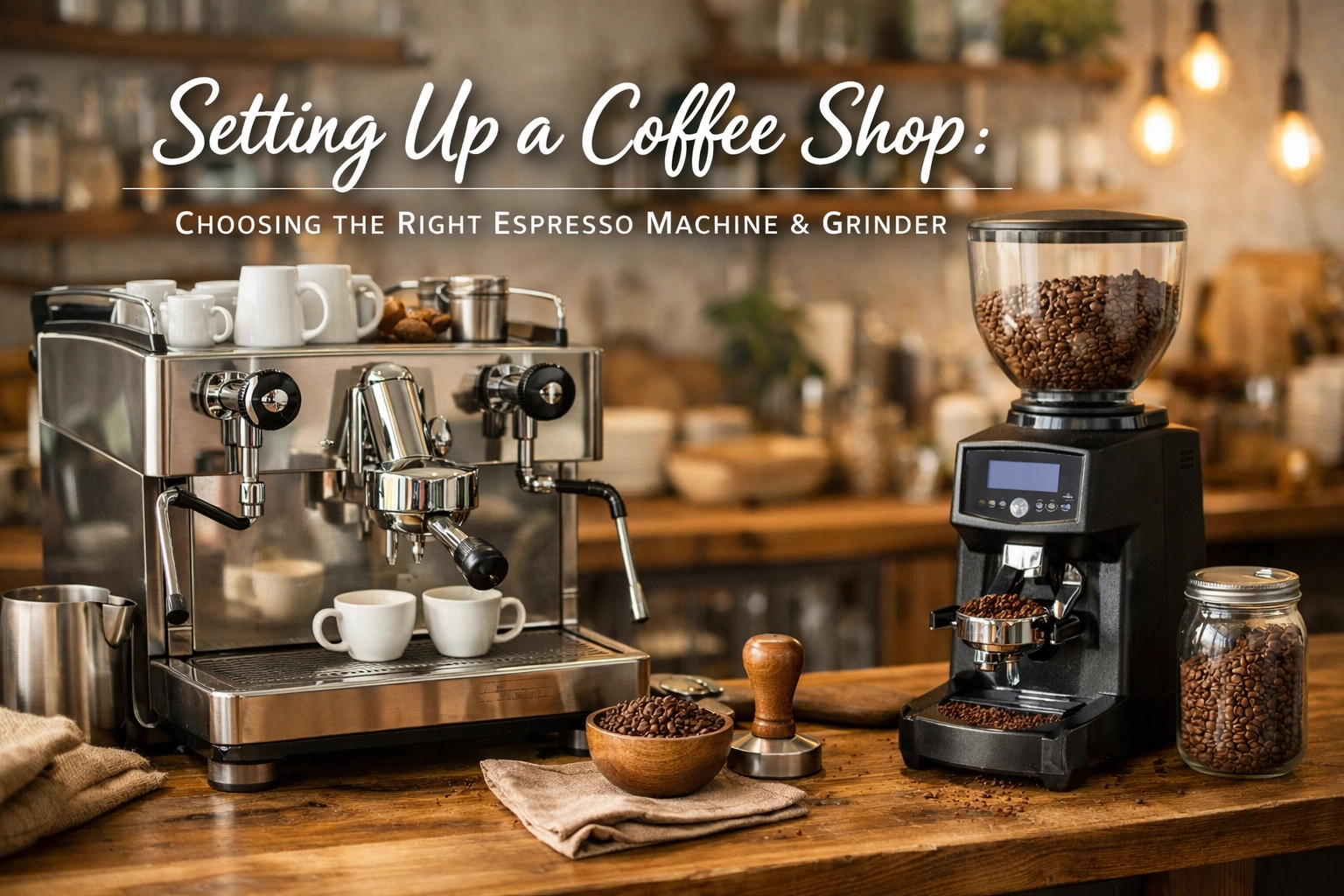
Choosing the right espresso machine and grinder is easily the biggest investment you’ll make for your bar. It’s the engine room of your business. If the engine fails, the ship doesn’t move. We’ve seen many a brave soul fall into the trap of buying the shiniest machine without thinking about their actual needs.
At Limini Coffee, we’ve helped hundreds of people navigate this journey. We’ve seen what works, what breaks, and what just gathers dust. Let’s break down how to choose the gear that actually fits your dream.
Start with the Magic Number: Your Volume
Before you even look at a chrome-plated lever machine, you need to answer one question: How many cups are you going to serve on a busy Tuesday morning?
Everything starts here. If you buy a machine that's too small, you’ll have a queue out the door and a very stressed barista. If you buy one that’s too big, you’ve wasted thousands of pounds that could have gone into your fit-out.
In the industry, we generally look at the number of "groups": the bits where the coffee comes out: to determine capacity:
- 1-Group Machine: 10–50 drinks a day. Great for low-volume delis or small offices.
- 2-Group Machine: 100–200 drinks a day. This is the "Goldilocks" zone. About 68% of the shops we work with use these. They offer the perfect balance of speed and footprint.
- 3-Group Machine: 200–300+ drinks a day. If you’re in a high-footfall city centre or near a train station, you’ll need the extra "real estate" so two baristas can work side-by-side.
It’s also about boiler size. If your boiler is too small, the water temperature will drop as you pull shots and steam milk simultaneously. This means your 10th coffee won't taste as good as your 1st. Not something we would recommend.

Decoding the Tech: Heat Exchanger vs. Dual Boiler
You’ll hear these terms thrown around a lot. Don't let them intimidate you.
Heat Exchanger (HX) Machines: These use one large boiler for steam and a tube running through it to flash-heat the brew water. They are the workhorses of the industry. Brands like La Spaziale (which we absolutely love at Limini) use unique systems that are incredibly stable and efficient. They are generally more affordable and easier to maintain.
Dual/Multi-Boiler Machines: These have separate boilers for brewing and steaming. This allows you to set the brew temperature to an exact degree: say 93.5°C: without affecting your steam pressure. It’s like having cruise control for your coffee.
Why is this important? Because different coffees shine at different temperatures. If you’re sourcing speciality beans from us at Limini Coffee, you might want that precision to really make those floral notes pop.
The Automation Spectrum: How Much Do You Want to Do?
Setting up a coffee shop involves deciding how "hands-on" you want to be. There are four main paths you can take:
- Semi-Automatic: You start the shot, you stop the shot. It requires a skilled eye and a keen ear. It’s great for "theatre," but can lead to inconsistency if the shop gets busy.
- Automatic/Volumetric: You press a button, and the machine stops when the programmed amount of water has passed through. This is our preferred choice for most shops. It frees the barista up to start steaming milk while the espresso pours.
- Super-Automatic: These machines do everything: grind, tamp, brew, and sometimes even froth the milk. They are fast, but you lose that artisan "soul." If you’re a speciality shop, this usually isn't the vibe you want.
- Lever Machines: The old-school way. They look stunning and pull incredible shots, but they require a lot of physical effort and skill. Check out our thoughts on lever vs automatic to see if you’re brave enough.

The Grinder: The Most Important Piece of Gear You’ll Buy
Here is a secret: Your grinder is actually more important than your espresso machine.
You can have a £15,000 machine, but if your grinder is producing inconsistent, clumpy "shrapnel," your coffee will taste bitter or sour. A good grinder produces a uniform particle size, which allows for an even extraction.
When you’re setting up a coffee shop, we strongly suggest looking at On-Demand Grinders.
In the old days (about ten years ago), grinders had "dosers": those chambers on the front that you clicked like a madman. The problem? Coffee sat in there, went stale, and got wasted.
On-demand grinders grind exactly what you need, directly into the portafilter, the moment you need it. Fresh is best. Always.
Flat Burrs vs. Conical Burrs
- Flat Burrs: These tend to produce a very uniform grind, leading to high clarity in the cup. They are great for highlighting specific flavour profiles.
- Conical Burrs: These produce a "bimodal" distribution (basically a mix of two sizes). This often results in a heavier body and that classic "thick" espresso mouthfeel.
We generally prefer flat burrs for most modern speciality setups, but to be honest, both can produce amazing results if they are high quality.
Don't Forget the "Boring" Stuff (That Actually Matters)
It’s easy to get distracted by shiny chrome, but when you're setting up a coffee shop, the infrastructure is what keeps you in business.
1. Water Filtration
Coffee is about 98% water. If your water is hard (looking at you, London), your machine will be dead from limescale within six months. A high-quality CTU (Calcium Treatment Unit) or Reverse Osmosis system is non-negotiable. It protects your investment and makes the coffee taste better.
2. Power Requirements
A commercial 2-group machine often needs a 20-amp or 30-amp single-phase power supply. You can't just plug these into a standard wall socket! Make sure you check this before you sign a lease on a building.
3. Workflow and Ergonomics
Where does the knock-box go? Is the fridge within arm's reach? We spend a lot of time on shop fitting and building because a bad layout can add 30 seconds to every drink. In a rush, that's an eternity.

Training: The Final Piece of the Puzzle
The best equipment in the world is useless if your team doesn't know how to use it.
We’ve seen people buy incredible gear and then treat it like a cheap pod machine. Understanding variables like dose, yield, and brew time is what separates a "cafe" from a "destination."
At Limini Coffee, we don’t just sell coffee and machines; we live and breathe training. We believe that a confident barista is a happy barista. If you want to dive deep into the craft, take a look at our training overview. We can teach you everything from basic milk texturing to the complex science of crema.
The Verdict
Setting up a coffee shop is a marathon, not a sprint. When it comes to equipment:
- Be realistic about your volume. Don't buy a 3-group monster for a 20-seat cafe.
- Invest in the grinder. If you have to choose between a better machine or a better grinder, pick the grinder every single time.
- Think about maintenance. Buy a brand that has local engineers and available spare parts. This is why we are such big fans of La Spaziale.
Building a shop is a big step, but you don't have to do it alone. If you're feeling overwhelmed by the choices, why not reach out to us? We love talking shop (literally) and helping people get their dream off the ground.
And remember, the equipment is just the tool. The heart of the shop is you, your team, and the amazing coffee you’re about to serve.
Good luck( you’ve got this!) ☕️