
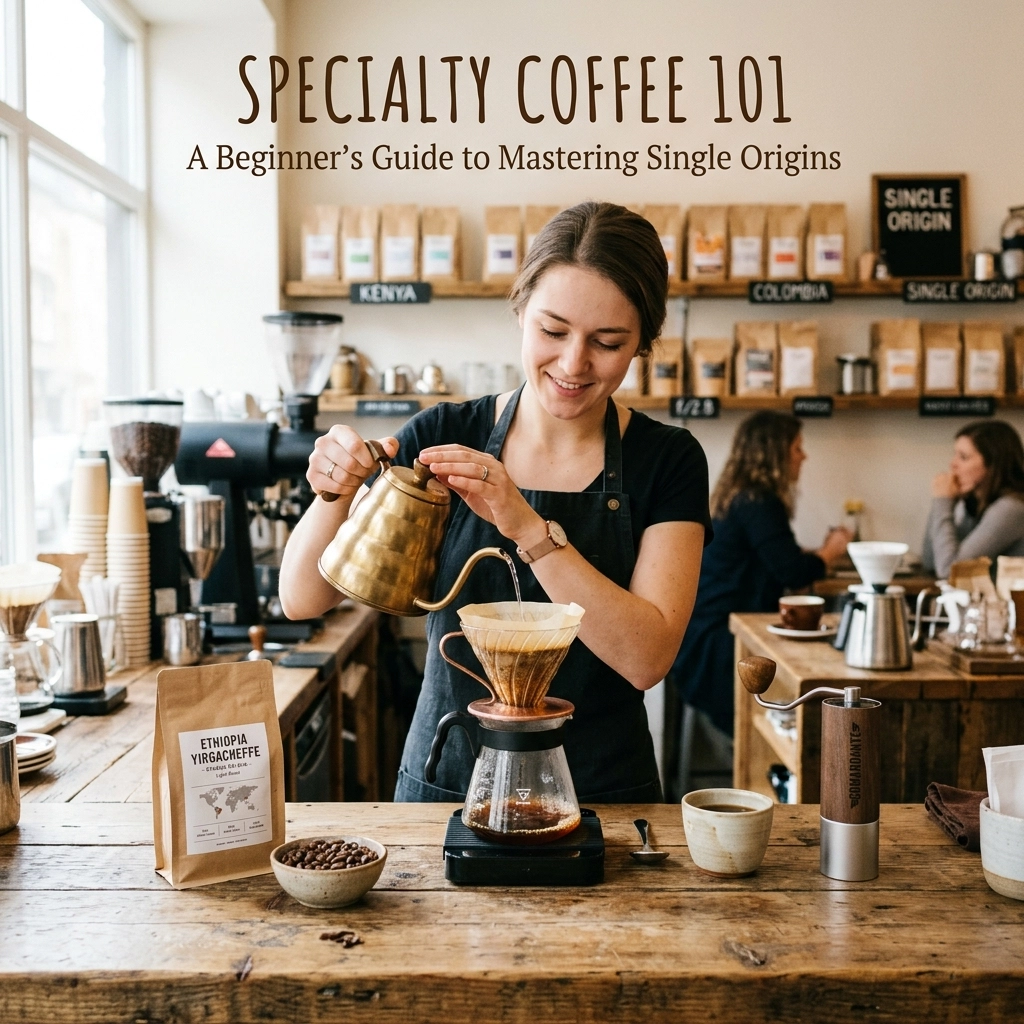
Ever walked into a specialty coffee shop, looked at the chalkboard, and felt like you needed a PhD in geography just to order a black coffee? We’ve all been there. You see terms like "Single Origin," "Micro-lot," and "Natural Processed" flying around, and sometimes it’s enough to make you just want to point at the bean with the coolest looking label and hope for the best.
But here’s the thing: once you crack the code of single-origin coffee, your home brewing game changes forever. It’s the difference between drinking "just coffee" and experiencing a specific moment in time from a specific hillside in Ethiopia or Colombia. At Limini Coffee, we live for these nuances, and we want to help you master them too.
So, let’s strip away the pretension and get into what single origin actually means, why it tastes the way it does, and how you can brew it like a pro in your own kitchen.
What Exactly is "Single Origin"?
In the simplest terms, single-origin coffee is coffee that comes from one place. But "one place" can be a bit of a sliding scale. It could mean a single country (like Brazil), a specific region (like Huila in Colombia), a single cooperative of farmers, or even a single estate or "micro-lot" from one specific part of one farm.
Why do we care? Because coffee is a crop, much like wine grapes. When you buy a "blend," you’re getting a curated mix of beans from different places designed to create a consistent, repeatable flavor profile. Blends are great: they’re the "comfort food" of the coffee world. But single origins? They are the explorers. They represent the radical transparency of the coffee world. Nothing is hidden by blending; you are tasting the raw characteristics of the soil, the weather, and the processing of that specific location.
If you’re looking to start your journey, we always recommend grabbing a bag of fresh roasted beans from Limini Coffee to see the difference for yourself.
The Magic of Terroir
You’ve probably heard wine lovers talk about "terroir" (pronounced ter-war). It’s a fancy French word that basically means "a sense of place." In coffee, terroir is everything. It encompasses the altitude, the soil chemistry, the amount of rainfall, and even the surrounding vegetation.
Imagine a coffee cherry growing at 2,000 meters (about 6,500 feet) in the mountains of Ethiopia. At that altitude, the air is thinner and cooler. The coffee tree grows more slowly, which gives the beans more time to develop complex sugars and organic acids. This usually results in a cup that is bright, floral, and acidic.
Compare that to a bean grown at a lower altitude in Brazil. The warmer climate leads to faster maturation, resulting in a bean that is denser in nutty, chocolatey, and low-acid flavors.

Decoding the Flavor Map
While every farm is different, certain regions tend to produce specific flavor "vibes." Knowing these will help you choose your next bag from Limini Coffee without feeling like you’re gambling.
1. Africa: The Bright & Floral
If you like coffee that tastes like tea, jasmine, or a bowl of fresh berries, look toward Africa.
- Ethiopia: Often considered the birthplace of coffee. Expect blueberry, citrus, and floral notes.
- Kenya: Famous for its "wine-like" acidity and bold blackcurrant flavors. It’s punchy and unforgettable.
2. The Americas: The Crowd Pleasers
This is where you’ll find those classic, balanced cups that everyone loves.
- Colombia: The gold standard for balance. You’ll get caramel sweetness with a nice apple-like acidity.
- Brazil: Usually lower in acidity with heavy notes of peanut, dark chocolate, and spice. Perfect for those who find African coffees "too sour."
3. Asia & The Pacific: The Earthy & Bold
- Sumatra (Indonesia): These are often processed in a unique way called "Giling Basah," which gives them a heavy body and earthy, spicy, or even tobacco-like notes.
Understanding Processing: Washed vs. Natural
This is a big one. You’ll see "Washed" or "Natural" on almost every bag of high-quality single origin. This refers to how the fruit (the cherry) is removed from the seed (the bean).
Washed (Wet) Process: The fruit is stripped off immediately using water. This "cleans" the bean, allowing the inherent flavor of the seed to shine through. These coffees are usually "clean," bright, and have a light body. If you want to taste the terroir perfectly, go washed.
Natural (Dry) Process: The coffee cherries are laid out in the sun to dry with the fruit still on the bean. The bean essentially "ferments" inside the fruit. This imparts massive fruit flavors: think strawberry jam or tropical punch: and a much heavier, creamier mouthfeel. Some people love it; some think it tastes a bit funky. (We personally love the funk!)

Brewing Your Single Origin: Precision is Key
When you’ve spent money on a beautiful bag of single-origin beans, you don't want to mess up the extraction. Single origins are often roasted lighter than blends to preserve those delicate floral and fruity notes. This means they can be a little trickier to brew.
The Pour-Over Advantage
For most single origins, we believe the pour-over (V60, Chemex, or Kalita Wave) is king. Because these methods use a paper filter, they strip away the oils and fine particles, leaving you with a "sparkling" clarity. You’ll be able to pick out that hint of peach or that touch of bergamot much more easily than in a French Press.
The Espresso Challenge
Brewing single origin as espresso is the "hard mode" of coffee. Because espresso is a concentrate, it amplifies everything: including acidity. A bright Kenyan coffee might taste like a delicious lemon tart as a filter coffee, but as an espresso, it could taste like a battery-acid-covered lemon.
If you’re diving into espresso, check out our guide on choosing espresso equipment to make sure your kit is up to the task. You'll want a machine with good temperature stability to handle those lighter roasts.
Water Temperature Matters
For lighter roasted single origins, don't be afraid to go hot. We usually recommend starting around 92 °C to 95 °C (198 °F to 203 °F). If the water is too cool, you won't extract enough sweetness, and the coffee will taste thin and sour.
If you're unsure about your ratios, we actually have a coffee brewing calculator on our site to help you get the math right every time.
How to Read a Coffee Bag Like a Pro
When you’re browsing the Limini Coffee store, look for these four things:
- Roast Date: Fresh is best. Period. We recommend using your beans between 7 and 30 days after roasting. If there’s no roast date, put it back.
- Elevation: Usually listed in MASL (Meters Above Sea Level). Anything over 1,500m is likely to be high-acidity and complex.
- Variety: Look for names like Bourbon, Typica, or Caturra. It’s like knowing the difference between a Merlot and a Pinot Noir.
- Tasting Notes: These aren't ingredients! We haven't added chocolate or cherries to the bag. These are just descriptors of the flavors naturally present in the bean.

Why Consistency is Your Best Friend
The biggest mistake beginners make is changing too many things at once. If your coffee tastes a bit bitter, just change one thing (like grinding slightly coarser) and try again.
We’ve spent years training baristas and home enthusiasts, and the one thing that separates the pros from the amateurs is the use of a scale. Weigh your coffee, weigh your water, and time your brew. It sounds nerdy, but it’s the only way to ensure that when you hit that "God Shot" or that perfect cup, you can actually do it again tomorrow.
If you ever feel like you've hit a wall, you might want to look into barista training. It's not just for people who want to work in shops; it's for anyone who wants to take their home setup to the next level.
Wrapping Up the Journey
Mastering single-origin coffee isn't about becoming a snob; it's about becoming an explorer. It’s about realizing that coffee isn’t just a caffeine delivery system: it’s a incredibly complex fruit that tells a story about where it came from.
So, next time you're looking for something new, skip the supermarket "Italian Roast" and head over to Limini Coffee. Pick a region you’ve never tried, grab your scales, and start brewing. You might just find your new favorite flavor.
And remember, the best coffee in the world is the one you enjoy drinking. Don't let anyone tell you otherwise. Happy brewing!