So, you want to make better coffee at home? We’ve all been there. You buy a bag from the supermarket, it looks fancy, it says "premium" on the front, but when you brew it… it’s just a bit meh. It’s bitter, it’s flat, and it lacks that soul-stirring aroma that hits you when you walk into a proper speciality cafe.
The secret isn’t some hidden magic trick. It’s actually quite simple: freshness.
In this guide, we’re going into the deep end of fresh roasted coffee. We’ll talk about why the roast date is the most important thing on your bag, how to choose the right beans, and the gear you actually need to stop making "okay" coffee and start making "wow" coffee. If you’re ready to level up your morning routine, you can grab some of our freshest roasts right here and follow along.
Why Fresh Roasted Coffee Changes Everything
Have you ever wondered why coffee in a cafe tastes so different? Most of the time, it comes down to the time elapsed since the beans left the roaster.
Coffee is a fresh agricultural product. Once those beans are roasted, the clock starts ticking. Carbon dioxide begins to escape the beans, a process we call degassing, and as it leaves, oxygen moves in. This leads to oxidation, which is a fancy way of saying the coffee is going stale.
When you buy a bag from a shelf that’s been sitting there for six months, those delicate oils and volatile aromatics (the stuff that makes coffee smell like blueberries, chocolate, or jasmine) are long gone. What’s left is the woody, bitter structure of the bean.
We believe the "sweet spot" for coffee is usually between 5 to 21 days after roasting. This gives the beans enough time to degas so they don't taste "fizzy" or overly acidic, but they’re still packed with all those vibrant flavors. At Limini Coffee, we roast to order, ensuring you get that peak flavor window every single time.

Understanding the Beans: Single Origin vs. Blends
When you’re browsing for coffee, you’ll usually see two main categories: Single Origin and Blends. But which one should you choose for your home setup?
Single Origin
This means the coffee comes from one specific place, a single farm, a single washing station, or a specific region within a country. Single origins are like a snapshot of a specific terroir. They are often roasted lighter to preserve the unique characteristics of that soil and climate.
- The Vibe: Adventurous, bright, fruity, or floral.
- Best for: Pour-over (V60, Chemex), AeroPress, or black coffee drinkers.
Blends
A blend is a mix of different beans designed to create a consistent, balanced flavor profile. We spend a lot of time sourcing our coffee to find beans that play well together. A good blend will have a solid "base" (usually for body and sweetness) and a "top note" (for a bit of acidity and interest).
- The Vibe: Reliable, chocolatey, nutty, and smooth.
- Best for: Espresso, milk-based drinks (lattes, cappuccinos), and those who want a "classic" coffee taste.
If you’re just starting out, we recommend trying one of each. You might find you love the citrusy punch of an Ethiopian Yirgacheffe, or perhaps the comforting, velvety hug of a Brazilian-based blend. You can explore our full range of both here.
The Essential Gear for Home Success
You don't need a £10,000 setup to make incredible coffee, but you do need a few "non-negotiables."
1. The Grinder (The Most Important Part!)
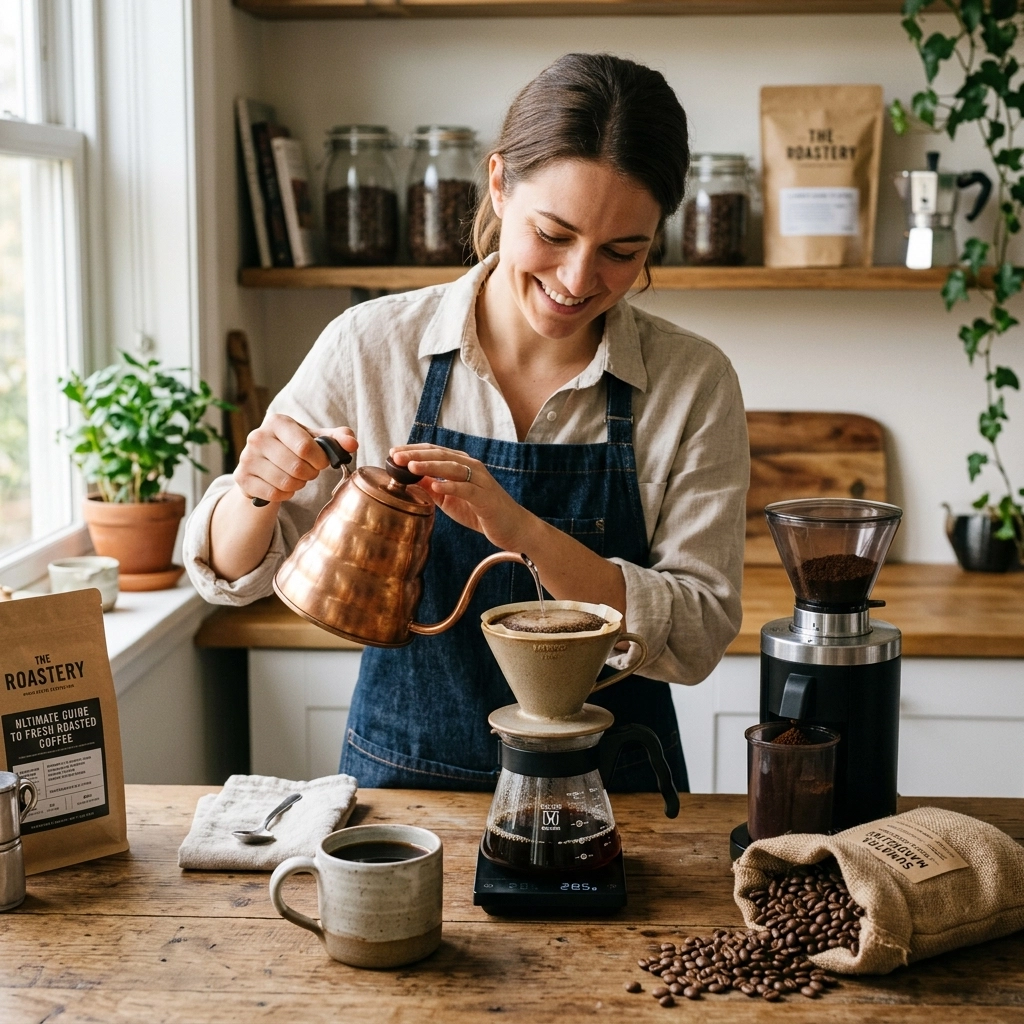
If you buy nothing else, buy a decent burr grinder. Why? Because coffee starts losing its flavor within seconds of being ground. If you buy pre-ground coffee, you’ve already lost the battle. A burr grinder (not a blade grinder, which just smashes the beans into uneven shards) ensures a consistent particle size, which leads to an even extraction.
2. A Digital Scale
Stop using scoops. Please.
Coffee beans vary in size and density. One scoop of a dark roast might weigh 12g, while a scoop of a light roast might weigh 16g. For consistency, you need to weigh your coffee and your water. A simple digital scale that reads to 0.1g will change your life. We usually recommend a starting ratio of 60g of coffee per 1 litre of water (or 1:16.6). To make it easier, you can use our coffee brewing calculator.
3. Fresh Water
Coffee is about 98-99% water. If your water tastes like chlorine or is incredibly "hard" (full of minerals), your coffee will taste dull. We suggest using a simple water filter jug. It’s a small step that makes a massive difference in clarity of flavor.

Mastering the Brew: Temperature and Technique
So you’ve got your fresh beans from Limini, your grinder is ready, and your scales are out. Now what?
Temperature Matters
Don’t use boiling water. Pouring 100°C water directly onto coffee grounds can scorch them, leading to a bitter, ashy taste. We prefer a temperature range of 92°C to 96°C (about 197°F to 205°F). If you don’t have a temperature-controlled kettle, just let your kettle sit for about 2 minutes after it boils.
The Bloom
When you first pour water over fresh coffee, you’ll see it bubble and swell. This is the "bloom." It’s the carbon dioxide escaping. We recommend pouring a small amount of water (about double the weight of the coffee) and waiting 30 seconds before continuing. This allows the water to actually penetrate the grounds rather than being pushed away by gas.
Extraction: The "Goldilocks" Zone
- Under-extracted: If your coffee tastes sour, salty, or thin, you haven’t taken enough out of the beans. Try a finer grind or hotter water.
- Over-extracted: If it tastes bitter, dry, or astringent, you’ve taken too much out. Try a coarser grind or slightly cooler water.
- Just right: Sweet, balanced, and a pleasant aftertaste. That’s the dream!
Espresso at Home: A Different Beast
If you’re venturing into the world of home espresso, things get a bit more technical. Espresso requires high pressure (usually 9 BAR) to force water through a compact "puck" of finely ground coffee.
Choosing the right equipment is vital. Are you looking for a lever machine for that old-school feel, or an automatic for convenience? We have a great guide on choosing espresso equipment if you're feeling overwhelmed.
One thing people often struggle with is the "crema", that golden-brown layer on top. While it looks pretty, it’s mostly just CO2 bubbles trapped in oils. If you want to dive deep into the science, check out our article on understanding crema.
And remember, tamping is key! You want a level, firm surface so the water doesn’t find a "channel" to whistle through. We’ve got some tips on proper tamping technique here.

How to Store Your Coffee (Don't Put It in the Fridge!)
We hear this all the time: "I keep my coffee in the fridge to keep it fresh."
Please, don't.
Coffee is porous. It’s like a sponge for smells. If you put it in the fridge next to half an onion and some old cheese, your morning brew is going to taste… interesting. Plus, the moisture in a fridge can cause condensation on the beans every time you take the bag out, which ruins the oils.
The Golden Rules of Storage:
- Keep it airtight: Use the bag it came in (if it has a one-way valve) or an airtight container.
- Keep it cool: A dark cupboard is perfect.
- Keep it dry: Away from the steam of the kettle or dishwasher.
- Buy small and often: Instead of a 1kg bag that lasts two months, buy 250g bags that last two weeks.

The Limini Way: Why We Care
At the end of the day, coffee is about enjoyment. Whether you’re a total nerd measuring every gram or someone who just wants a decent mug of joe before the kids wake up, we’re here to help.
We don't just roast beans; we’re obsessed with the whole process. From barista training to helping people build their own coffee shops, we live and breathe this stuff. We believe that everyone deserves to drink better coffee, and it all starts with that bag of fresh roasted beans.
If you ever feel stuck, or if your milk steaming is looking more like soap bubbles than silk, have a look at our guide on understanding milk. Or better yet, come see us for some training.
So, are you ready to stop settling for mediocre coffee? Head over to our shop, pick out a bag that sounds delicious, and let’s get brewing.
Grab your fresh beans here: https://www.liminicoffee.co.uk/?af=1471531379787
Happy brewing! It’s quite a unique and brilliant journey once you start exploring the real potential of the bean. That is the beauty of coffee 🙂