
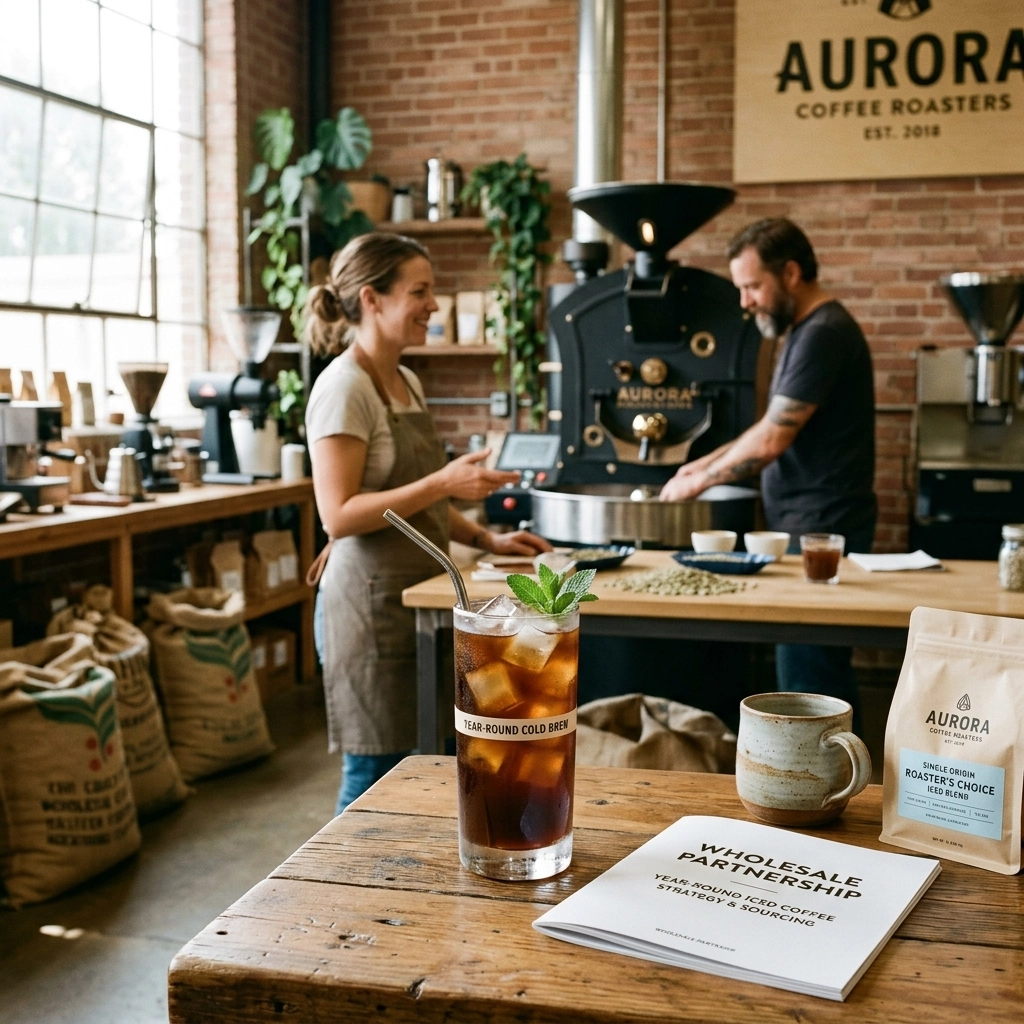
Do you remember when iced coffee was strictly a June-to-August affair? It used to be that as soon as the first leaf hit the ground in September, baristas would pack away the plastic cups, dust off the pumpkin spice, and settle into a long winter of steaming milk. But times have changed. Walk into any thriving independent cafe in the middle of a January frost, and you’ll likely see someone huddled in a thick coat, happily sipping an iced Americano.
This isn't just a quirky consumer trend; it’s a fundamental shift in how we run our businesses. For those of us in the industry, the rise of year-round chilled caffeine has completely rewritten the rulebook on how we manage our bars and, more importantly, how we work with our wholesale coffee roasters.
At Limini Coffee, we’ve seen this transition firsthand. It’s no longer about surviving the "summer rush." It’s about maintaining a consistent, high-quality cold menu that performs just as well when the heating is on as it does when the sun is out. If you’re looking to level up your supply chain, checking out our wholesale options is a great place to start.
The Death of the "Iced Coffee Season"
Why are people drinking cold drinks when it’s 2°C outside? It sounds a bit mad, doesn't it? But if you think about it, we spend most of our lives in climate-controlled environments. Our offices are warm, our cars are heated, and our shops are cozy. The "refreshment" factor of a cold drink is no longer tied to the outdoor temperature.
Moreover, iced coffee, specifically cold brew, has become a lifestyle choice. It’s often perceived as smoother, less acidic, and more "sessionable" than a hot flat white. For a coffee shop owner, this is brilliant news. It means your revenue streams are becoming less volatile. You aren't praying for a heatwave to hit your targets; you have a steady demand for chilled beverages throughout the year.
This shift means you can't treat iced coffee as an afterthought anymore. You can’t just use your "leftover" beans or the bottom of the bag for your cold brew. Your customers expect the same speciality quality in their iced latte as they do in their espresso. This is where your relationship with your roaster becomes critical.
Changing the Conversation with Your Roaster
In the old days, you’d call up your roaster in May and say, "Right, we need some extra bags for the summer." Then, come September, you’d scale way back. This "feast or famine" approach is a nightmare for stock management, both for you and for the roaster.
When you commit to a year-round iced program, your ordering patterns become much more predictable. We love predictability. It allows us to plan our green coffee buying more effectively and ensures that we always have the freshest possible crop ready for you.
So, how does this change the way you work with us?
- Consistent Volume: Instead of massive spikes, you move toward a higher, steadier baseline. This often puts you in a better position for wholesale pricing and delivery schedules.
- Specialised Profiles: You might start talking to your roaster about beans specifically for cold extraction. Some coffees that are "okay" as a hot latte can taste quite dull when chilled. You need beans with enough character to punch through the ice.
- Stock Rotation: You’re no longer sitting on "summer" packaging or specific "iced brew" beans that go stale in the cupboard over winter. Everything stays fresh because everything is moving.

Consistency is King (Even at Sub-Zero)
Have you ever noticed that an iced latte can taste vastly different from one shop to the next? The problem is often dilution. When you pour hot espresso over ice, you’re instantly melting a portion of that ice, which waters down the drink.
If you want your customers to keep coming back in December, that drink needs to be perfect every single time. This requires a technical understanding of your coffee. At Limini, we’re big fans of data. We talk about things like TDS (Total Dissolved Solids) and extraction yields because they represent the difference between a "good" coffee and a "wow" coffee.
When you work with a wholesale partner like Limini Coffee, we don't just send you bags of beans and wish you luck. we help you dial in those recipes for cold applications. Whether you’re using a La Spaziale machine to pull shots for iced lattes or setting up a 24-hour cold brew steep, the chemistry changes.
Cold temperatures mute our perception of sweetness and acidity. This means the coffee you use for iced drinks needs to have a very specific profile. We usually recommend something with a heavy body and clear chocolate or caramel notes: our speciality blends are designed to hold their own even when chilled and diluted.
Stock Management: The Practicalities
Let's talk logistics. Running a year-round iced program means you need to manage more than just beans. You’ve got cups, lids, straws (hopefully compostable!), and potentially kegs or dispensers.
From a bean perspective, the "year-round" approach actually simplifies your life. You aren't trying to guess when the weather will turn. You can maintain a consistent par level of stock. We’ve found that shops who embrace iced coffee in winter actually have less waste. Why? Because if they find themselves with a slight surplus of espresso beans nearing their "peak freshness" window, they can pivot and turn that stock into a batch of cold brew.
Cold brew is an excellent way to manage inventory. Because the concentrate stays fresh in the fridge for several days, it acts as a buffer. If you have a surprisingly quiet Tuesday, your cold brew is still good for Wednesday. Compare that to milk, which has a much stricter shelf life once steamed! Speaking of milk, understanding how different types react to cold coffee is vital: you can read more about that in our article on understanding milk.
Why Limini Speciality Beans Shine in the Cold
Not all coffee is created equal, especially when ice is involved. Some lighter roasts, which are stunning as a pour-over, can become unpleasantly sour when served cold. Conversely, very dark "supermarket" roasts just taste like ash and charcoal once chilled.
We focus on the "sweet spot" of roasting. We want that natural sweetness to be the star of the show. When you make an iced latte with our beans, you’ll notice a creamy, silky mouthfeel that doesn't need three pumps of syrup to be palatable.

If you’re doing cold brew, the long immersion process extracts flavors differently than hot water. It bypasses many of the acidic oils and focuses on the deeper, sugar-browning notes. This is why our sourcing process is so rigorous. We look for coffees that have a high inherent sweetness. When that sweetness is concentrated in a cold brew, it's almost like drinking a liqueur. It’s rich, complex, and incredibly addictive for your customers.
Training Your Team for the "Cold Shift"
If your baristas treat iced drinks as a "lazy" option, your quality will slip. There is a real art to the perfect iced coffee. It’s about the order of operations: Ice first? Milk first? Should you shake the espresso to create a foam (shakerato style)?
This is where barista training becomes a year-round necessity, not just a one-off event. Your team needs to understand the "why" behind the recipes.
- Dilution Control: Using the right amount of ice so the drink stays cold without becoming a watery mess.
- Tamping Consistency: Even for iced drinks, the quality of the puck matters. Check out our guide on tamping for a refresher.
- Visual Appeal: In the age of social media, an iced drink needs to look good. We’re talking about those beautiful "clouds" of milk swirling into the dark coffee. We call it "theatre," and it’s a huge part of why people buy iced drinks even when it's cold outside. You can read more about the theatre of coffee here.
Equipment: Is Your Bar Ready?
If you're going to commit to year-round iced coffee, you might need to rethink your espresso equipment. Do you have enough refrigeration space? Do you have a dedicated grinder for your cold brew beans?
Using the same grinder for your main espresso and your cold brew can be a faff, especially if you're constantly switching grind sizes. Many of our wholesale partners find that investing in a second, dedicated grinder for "alternative" brews (like iced filter or cold brew) pays for itself in workflow efficiency alone.
And don't forget the ice! If you’re selling iced Americanos in December, you need a reliable ice machine that isn't going to give up the ghost. It's often the most overlooked piece of kit in a coffee shop, but it's the one that can bring your entire iced program to a grinding halt.

The Bottom Line
Embracing year-round iced coffee isn't just a gimmick to sell more drinks; it’s a strategic business move. It stabilizes your relationship with your wholesale roaster, makes your stock management more predictable, and meets your customers exactly where they are: which, apparently, is drinking cold coffee in a snowstorm.
By moving away from seasonal thinking, you open up a world of consistency and quality. You stop being a "hot coffee shop that does iced drinks in the summer" and start being a "speciality coffee destination" that masters every temperature.
We believe that the best way to navigate this shift is through a genuine partnership. We don't just want to be your supplier; we want to be the folks you call when you’re trying to figure out why your cold brew batch tasted slightly "off" this morning (it was probably the water temperature, but let's chat about it!).
If you’re ready to see how a speciality roaster can transform your beverage program, take a look at what we do at Limini Coffee. Whether it's the middle of July or the depths of January, we're here to make sure your coffee: hot or cold: is the best it can possibly be.
So, is your menu ready for the next "iced" customer walking through your door today? Because they're coming, coat and all. Be ready for them.