
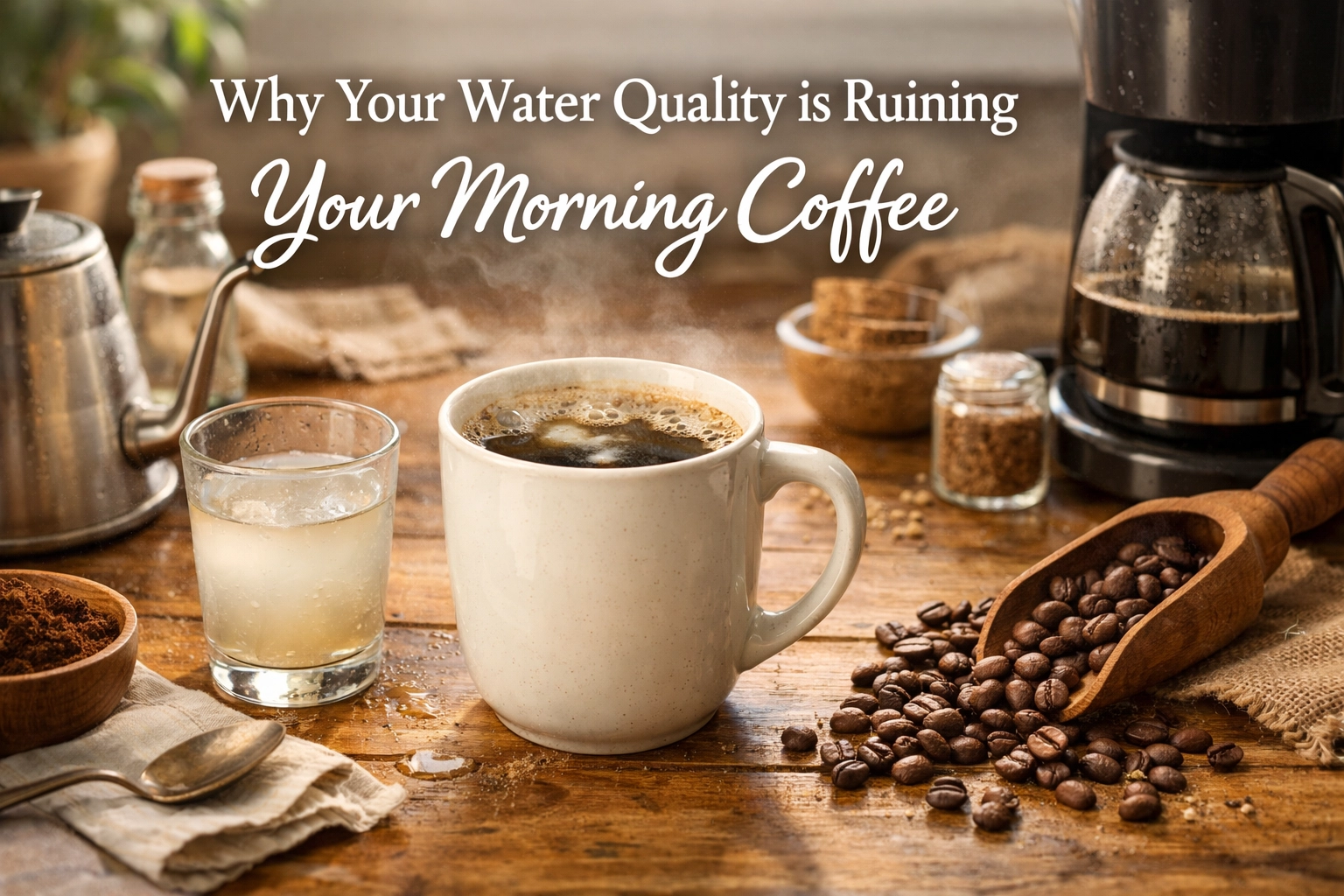
So, you’ve done everything right. You’ve spent a decent chunk of change on a high-quality burr grinder. You’ve mastered the art of the pour-over technique. You’ve even gone ahead and ordered a fresh bag of speciality beans from us here at Limini Coffee. You brew your cup, take that first expectant sip, and… it’s just fine. Not amazing. Not "singing" with notes of jasmine or chocolate like the bag promised. Just okay.
What gives?
Well, we hate to be the bearers of bad news, but the culprit is likely the very thing you use to fill your kettle: your tap water. We often treat water as a blank canvas, a neutral liquid that just carries the coffee flavour. But in reality, water is the most important "ingredient" in your brew, making up roughly 98% of your filter coffee and about 90% of your espresso.
If your water is working against you, it doesn't matter how good our roasting is or how precise your brewing gear might be. Your coffee is going to taste flat, bitter, or just plain weird.
It’s Not Just "Wet Stuff"
When we talk about water quality, we aren’t just talking about whether it’s safe to drink. Your tap water is a complex chemical soup. It contains minerals, gases, and chemicals that interact with the ground coffee beans during the extraction process.
Extraction is basically a chemistry experiment you run in your kitchen every morning. Water acts as a solvent. It’s essentially a magnet that pulls out the delicious oils, acids, and sugars from the coffee grounds. But here is the kicker: different minerals in the water pull out different things.
If your "magnet" is already covered in other stuff (too many minerals), it can’t pick up the coffee flavours. If it’s too weak (not enough minerals), it might only pick up the harsh stuff. It’s all about balance.
The Mineral Tug-of-War: Magnesium vs. Calcium
You’ve probably heard of "hard" and "soft" water. This refers to the concentration of minerals, specifically calcium and magnesium.
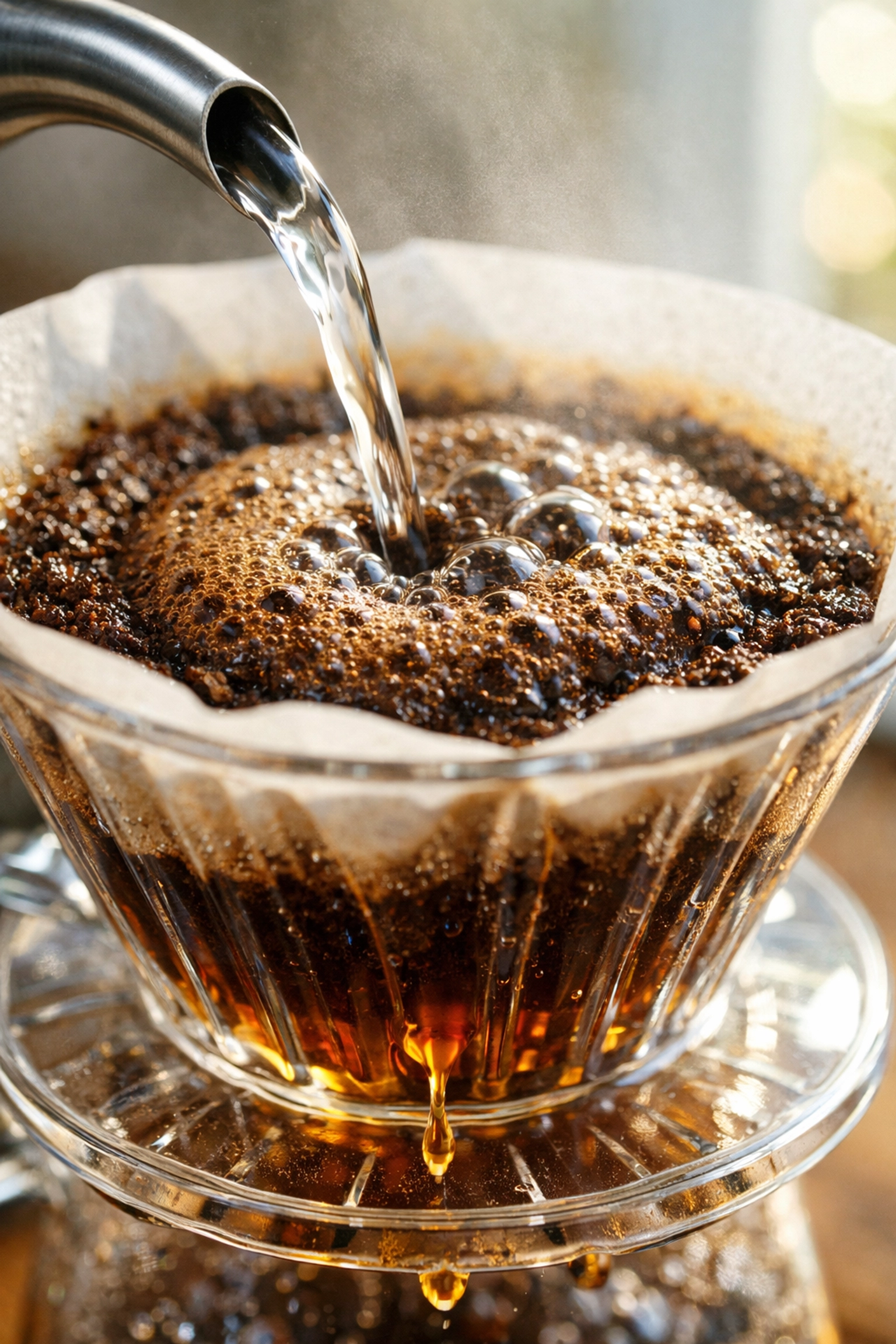
Magnesium is the MVP of coffee extraction. It’s a small, highly charged ion that is incredibly good at sticking to the flavour compounds in coffee, especially those bright, fruity, and acidic notes we love in speciality coffee. If your water has a decent amount of magnesium, your coffee will likely taste vibrant and complex.
Calcium, on the other hand, is a bit more of a heavy-handed character. It’s good at extracting the heavier, creamy, and bitter notes. In the right amount, it provides body. In the wrong amount, it makes everything taste chalky and dull.
And then there’s bicarbonate (alkalinity). This is the "buffer." It’s basically the referee that decides how much acidity shows up in your cup. If you have too much bicarbonate, it will neutralise all the delicious acids in the coffee, leaving you with a cup that tastes like cardboard. Boring.
Hard Water: The Heavy Hitter
If you live in a hard water area (looking at you, London and the South East), your water is packed with calcium and magnesium. While you might think "great, more magnets!", the problem is that hard water is often too efficient.
When water is very hard, it extracts everything. It pulls out the good stuff, the bad stuff, and the "I-wish-I-didn't-taste-that" stuff. This usually results in a cup that is overwhelmingly bitter and lacks any clarity. You won't be able to taste the delicate floral notes of a high-altitude Ethiopian bean; it will all just taste like "strong coffee."
The other massive downside to hard water? Limescale. It’s the silent killer of espresso machines. It builds up on heating elements and inside pipes, eventually leading to a very expensive repair bill. If you're using a home machine, we always recommend keeping an eye on your maintenance routine.
Soft Water: The Silent Killer of Flavour
Now, you might think the solution is to use "soft" water. Maybe you’ve got a water softener installed in your house. Unfortunately, that’s often just as bad for coffee.
Most domestic water softeners work by swapping calcium and magnesium for sodium (salt). This makes the water "soft" for your skin and your pipes, but it’s terrible for extraction. Remember our magnesium magnet? Well, sodium isn't very good at pulling flavour out of coffee.
Coffee brewed with softened water often tastes "flat," "muted," or strangely "salty." It lacks body and that satisfying "zing" on the tongue. It’s like watching a movie with the brightness turned all the way down. You can see what’s happening, but you're missing all the detail.
The Chemical Cocktails: Chlorine and Beyond
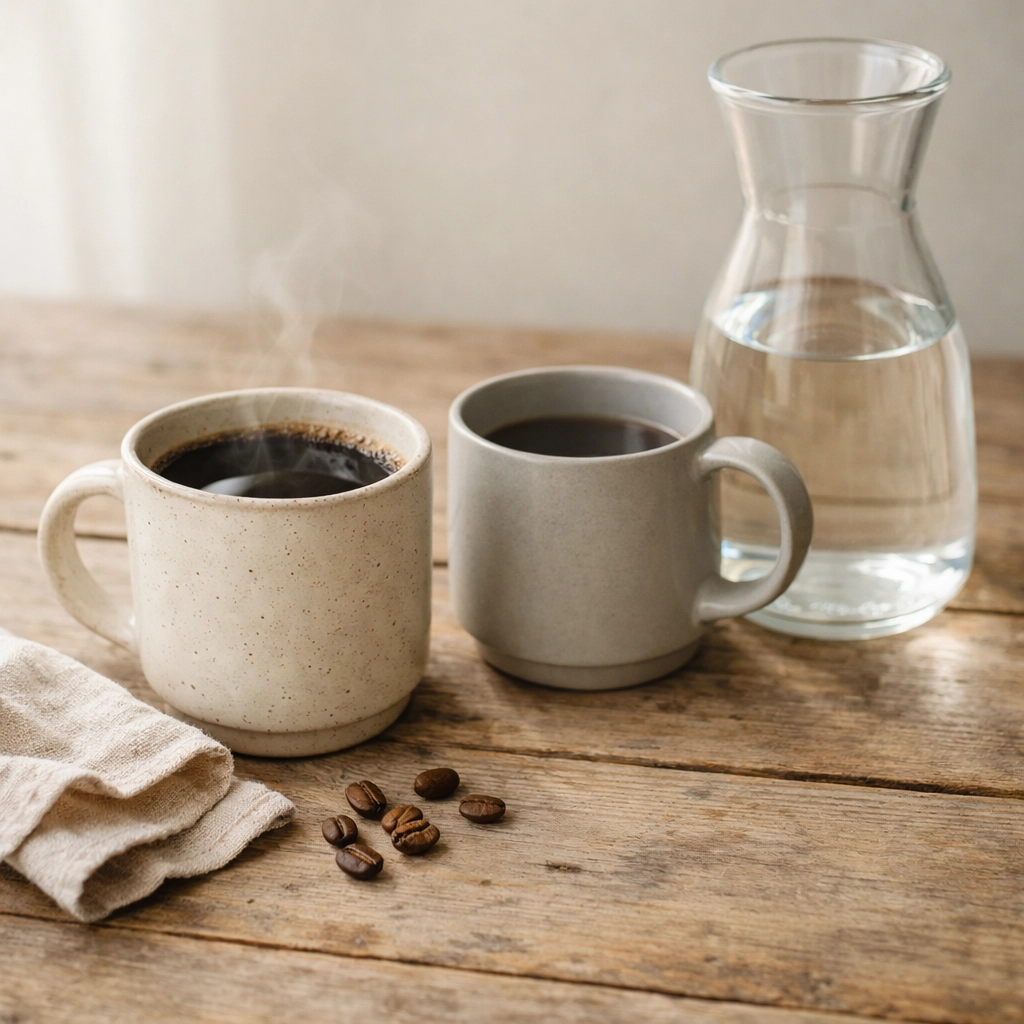
Even if your mineral balance is perfect, you might still be dealing with the "swimming pool" effect. Most municipal water supplies use chlorine to keep the water safe from bacteria. While this is great for public health, it’s a disaster for your morning brew.
Chlorine has a very distinct, sharp, chemical taste. Even in tiny amounts, it can react with the phenols (aromatic compounds) in coffee to create something called chlorophenols. These taste medicinal, kind of like a hospital hallway or a plastic bandage. Not exactly what you want with your morning croissant.
Then there are "off" flavours from old pipes, metallic notes from copper or lead, or "earthy" tastes from organic matter. If your water doesn't taste good straight from the tap, there is zero chance it will make a good cup of coffee.
pH Levels: Finding the Sweet Spot
Water pH measures how acidic or alkaline your water is. Ideally, for coffee, we want water that is as close to neutral as possible (pH 7.0), though a range of 6.5 to 7.5 is generally acceptable.
If your water is too acidic (below 6.5), it can make the coffee taste sour and sharp. If it’s too alkaline (above 7.5), it will flatten out the coffee’s natural acidity, making it taste dull and lifeless.
It’s worth noting that the pH of your water can actually change as you heat it, making this a tricky variable to control at home without serious lab equipment. But generally, if you get the mineral content right, the pH usually falls into line.
Saving Your Gear (And Your Tastebuds)
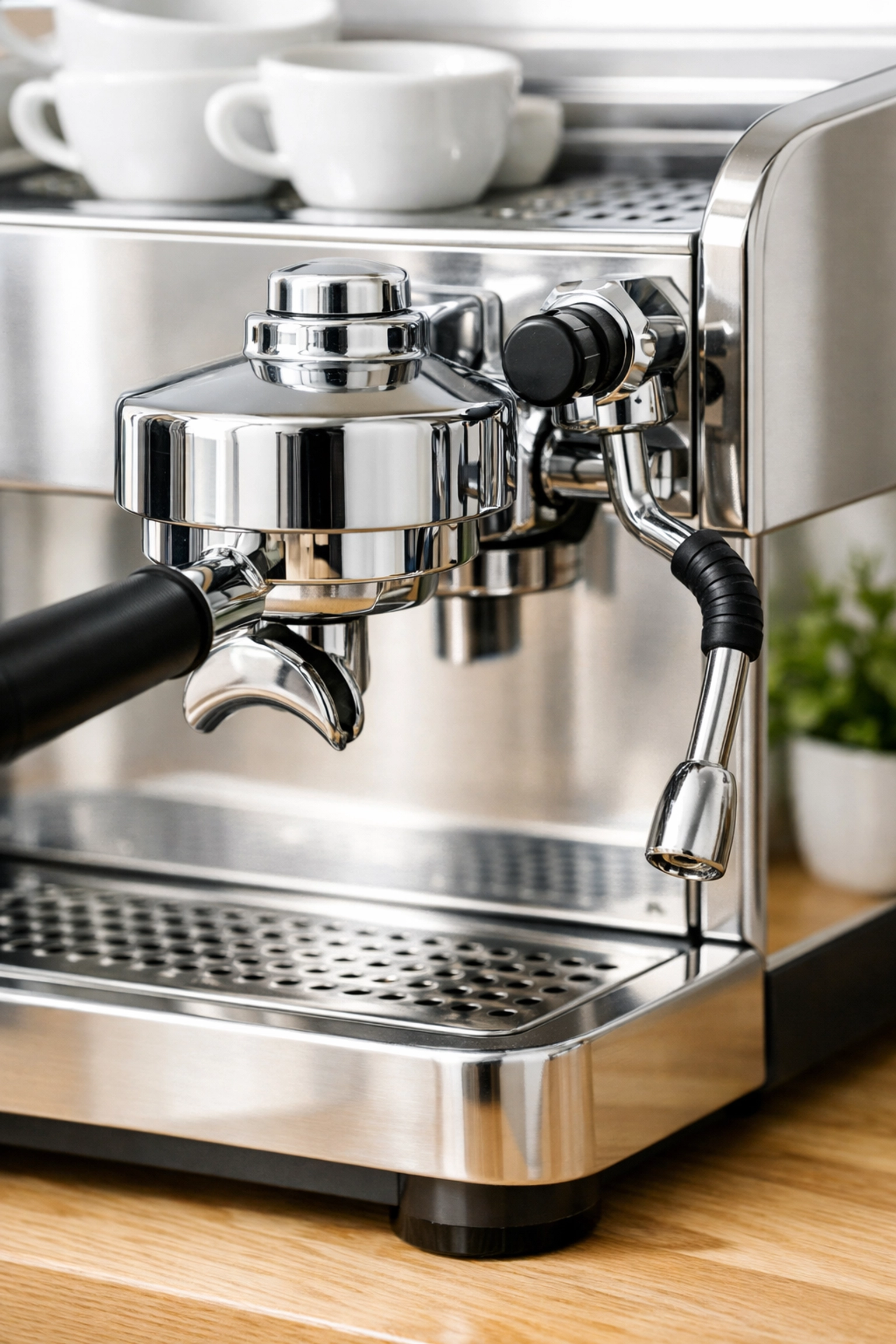
We can't talk about water without talking about machine health. If you've invested in a proper espresso setup, the last thing you want is a boiler full of white, crusty scale.
Scale acts as an insulator. It means your machine has to work twice as hard to heat the water to the correct temperature (usually around 88 C to 95 C). Eventually, it will clog the tiny pathways in your group head or damage your sensors.
If you're brewing at home, treat your water as a form of insurance for your machine. It’s much cheaper to buy a filter than it is to replace a heating element.
What Can You Actually Do?
Okay, so tap water is the enemy. What are your options? You don't need a PhD in chemistry to fix this, but you do need a plan.
1. The Filter Jug
A basic Brita-style filter jug is a good start. It will remove chlorine and some heavy metals, which will immediately improve the taste. However, most standard jugs don't do a great job of balancing minerals for coffee specifically. They are better than nothing, but not the ultimate solution.
2. Specialist Coffee Filters
There are now filter jugs designed specifically for coffee, like the Peak Water jug. These allow you to adjust the "strength" of the filtration based on how hard your tap water is. They are a fantastic middle ground for the serious home brewer.
3. Bottled Water
This is a bit of a minefield because not all bottled water is created equal. Some (like Volvic) are legendary in the coffee world for having a mineral profile that is "just right" for extraction. Others are too hard or too soft. If you go this route, check the label for "Total Dissolved Solids" (TDS). You’re looking for something in the 75-150mg/L range.
4. Remineralized Water (The "Geek" Option)
This involves taking pure, distilled water (which has zero minerals) and adding back a specific blend of minerals. Products like "Third Wave Water" come in little sachets that you drop into a gallon of distilled water. This gives you "perfect" coffee water every single time. It’s consistent, it’s easy, and it will make your Limini Coffee beans taste incredible.
The Verdict
Is it a bit obsessive to worry about the chemistry of your water? Maybe. But if you’re already buying high-quality, ethically sourced speciality coffee, why would you want to mask its flavour with chlorine and limescale?
Next time you brew, try a little experiment. Brew one cup with your standard tap water and another with a bottle of Volvic or filtered water. We bet you’ll be able to tell the difference immediately. The acidity will be brighter, the sweetness more pronounced, and the finish much cleaner.
Once you fix your water, you’ll realize that your brewing skills were actually better than you thought: it was just the "secret ingredient" holding you back.
If you're looking to dive deeper into the world of coffee (and perhaps learn how to handle that water like a pro), why not check out our Barista Training courses? We cover everything from the chemistry of the bean to the science of the pour.
Until then, keep your kettles clean and your water filtered!