
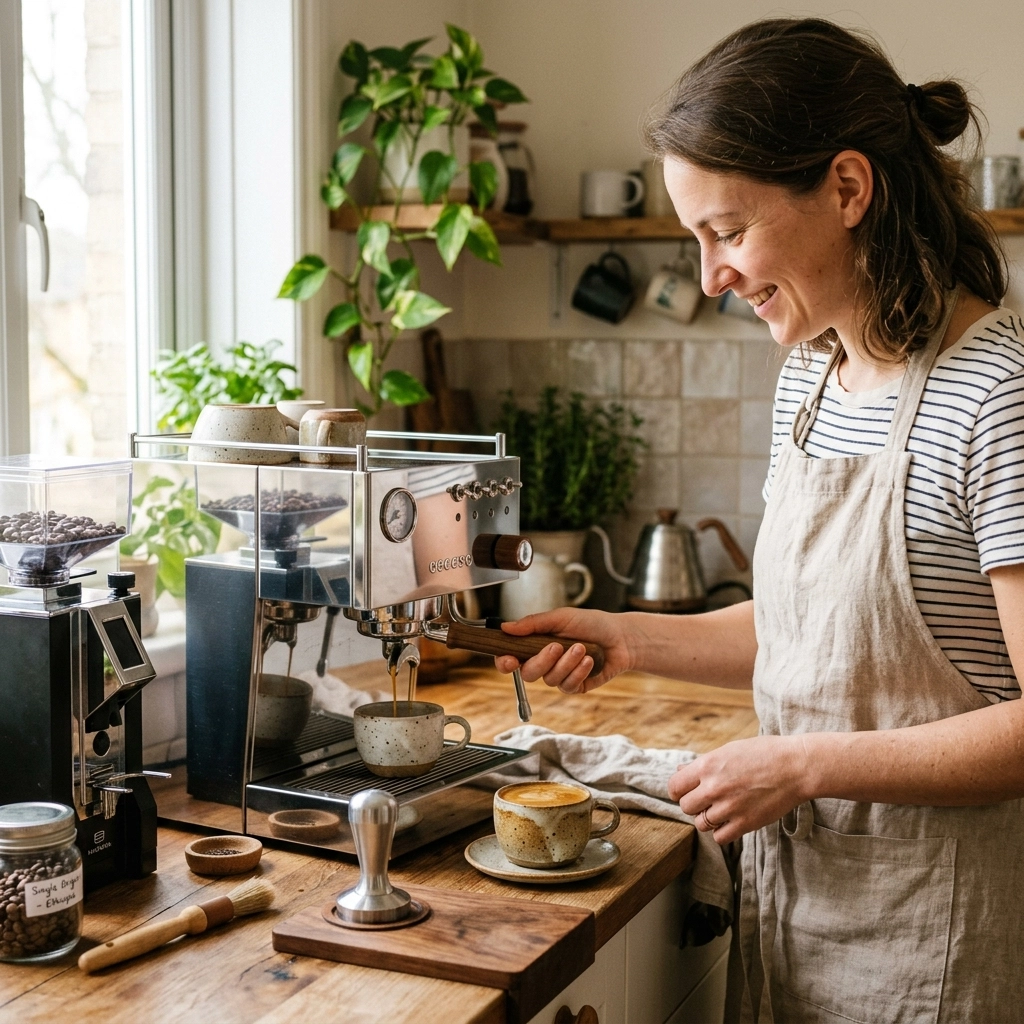
So, you’ve finally done it. You’ve invested in a home espresso machine, cleared off a dedicated "coffee corner" on your kitchen counter, and you’re ready to channel your inner Italian barista. But then the first shot happens. It’s thin, sour, and frankly, a bit of a disappointment. We’ve all been there, it’s practically a rite of passage for every home brewer.
The truth is, brewing great espresso at home is part science, part art, and a whole lot of trial and error. But we’ve noticed that most people get stuck because they try to change everything at once. If you want to stop making "okay" coffee and start making "wow" coffee, you need a plan.
Here is our quick-start guide to the things you should do first to transform your home espresso game.
1. Start with the Foundation: Fresh Beans
We cannot stress this enough: you can have a five-thousand-pound machine, but if your beans are stale, your espresso will be mediocre. Espresso is a high-pressure extraction method that amplifies every single flavor in the bean: both the good and the bad.
When we talk about "fresh," we don't mean "I just bought it from the supermarket." Supermarket coffee is often months old by the time it hits the shelf. For espresso, we believe the sweet spot is between 5 to 14 days after the roast date. This allows the coffee to degas (release CO2) so it doesn't taste overly "fizzy" or metallic, but it still retains all those lovely volatile oils that create a thick, syrupy crema.
If you’re looking for that perfect start, we always recommend checking out our freshly roasted coffee beans at Limini Coffee. Choosing a single origin or a well-crafted blend makes a world of difference. You can read more about how we go about sourcing our coffee to understand why those first few days after roasting are so critical.
2. The Grind: Your Most Powerful Tool
If your espresso tastes like battery acid (sour and sharp) or like an ashtray (bitter and dry), the first thing we look at is the grind size.
Espresso requires a very fine grind: think of the texture of fine table salt or granulated sugar. If the grind is too coarse, the water rushes through too quickly, leading to under-extraction (the sour stuff). If it’s too fine, the water struggles to get through, leading to over-extraction (the bitter stuff).

The Golden Rule: One Variable at a Time
When you’re dialing in your grinder, only change the grind size. Don't touch the dose (how much coffee you put in) or the temperature. Just the grind.
We recommend using a high-quality burr grinder. Blade grinders are great for spices, but for espresso, they produce uneven chunks that make a balanced shot impossible. If you’re still in the market for gear, have a look at our guide on choosing espresso equipment to see what fits your workflow.
3. Precision Matters: Get a Scale
We think one of the biggest mistakes home baristas make is "eyeballing" the dose. You might think you’re putting in the same amount of coffee every time, but a difference of just 0.5 grams can completely change the way a shot pours.
So, do this: buy a small digital scale that measures to 0.1g.
- The Dose: Aim for a standard double shot, usually between 18g and 19g of coffee.
- The Yield: Aim for a 1:2 ratio. This means if you put 18g of coffee in, you want about 36g of liquid espresso out.
Using a scale takes the guesswork out of the equation. If you want to get really nerdy (which we love), check out our coffee brewing calculator to help you find those perfect ratios.
4. The Art of the Tamp
Tamping is simply the act of compressing the coffee grounds into an even "puck." This ensures that the water passes through the coffee evenly. If the puck is slanted or has cracks, the water will find the path of least resistance: this is called "channeling," and it’s the enemy of good espresso.

How to tamp correctly:
- Level the grounds in your portafilter with your finger or a distribution tool.
- Hold the tamper like a doorknob.
- Apply firm, level pressure until you feel the coffee resist. You don’t need to use all your body weight; about 15kg of pressure is plenty. The most important part is that it is level.
A lot of people ask us about the "polish" (spinning the tamper at the end). While it looks cool, it doesn't actually do much for the flavor. Just focus on a flat, even surface. You can find a deeper dive into this in our article on tamping.
5. Watch the Clock (and the Crema)
Once you lock that portafilter in, hit the timer. A standard double shot should ideally take between 25 to 30 seconds to reach your target yield (that 36g we mentioned earlier).
- Too fast (under 20 seconds)? Your grind is likely too coarse.
- Too slow (over 35 seconds)? Your grind is likely too fine.
While you're watching the clock, keep an eye on the crema. It should be a rich, hazelnut color with a thick consistency. If it’s very pale and thin, your water might be too cool, or your beans might be getting a bit old.

6. Temperature Control: Heat Everything Up
Espresso machines need to be hot. Not just the water in the boiler, but the metal of the group head and the portafilter itself. If you pull a shot through a cold portafilter, it will suck the heat right out of the water, leading to a sour, under-extracted mess.
We recommend turning your machine on at least 15–20 minutes before you plan to use it. To speed things up, we often pull a "blind shot" (running water through the portafilter without coffee) to get the metal up to temperature.
Ideally, your brewing water should be between 92 °C and 96 °C (197 °F to 205 °F). If your machine has a PID (temperature controller), this is easy to manage. If not, the "blind shot" method is your best friend. For those interested in the more technical side of how machines manage this, our page on La Spaziale workings is a great resource.
7. Don't Forget the Milk
If you’re making lattes or cappuccinos, the espresso is only half the story. To be honest, we see a lot of people ruin a perfect espresso by stretching the milk too much or getting it way too hot.
Aim for a "wet paint" texture: glossy, smooth, and with no visible bubbles. The temperature should be around 60 ºC to 65 ºC (140 °F to 150 °F). Anything hotter and you’ll lose the natural sweetness of the milk.
If you're struggling with your microfoam, we’ve put together a comprehensive guide to understanding milk and another on the differences between lattes and cappuccinos.

8. Cleanliness is Next to Coffee-Godliness
Espresso is oily. Those oils stick to the shower screen, the portafilter, and the baskets. If you don’t clean them, those oils go rancid and make every subsequent shot taste bitter and "dirty."
- Every shot: Wipe the basket dry before dosing and flush the group head after brewing.
- Every day: Backflush your machine with water.
- Every week: Backflush with a dedicated espresso cleaner.
Proper maintenance and looking after your machine is the only way to ensure your coffee tastes as good in year three as it did on day one.
Summary: Your Quick Checklist
If you're ready to start brewing right now, here is the "Do This First" checklist:
- Buy freshly roasted beans from a speciality roaster.
- Use a burr grinder and aim for a "fine sand" texture.
- Weigh your dose (18g) and your yield (36g).
- Tamp level and firm.
- Aim for a 25–30 second extraction time.
- Make sure the machine is fully warmed up.
Brewing espresso is a journey. It can be frustrating at times, but there is nothing quite like the feeling of pulling a perfect, syrupy shot that tastes better than anything you can buy on the high street.
If you feel like you need a bit of hands-on help, we’d love to see you at one of our barista training sessions. We spend all day talking about extraction, and there's nothing we love more than helping a home enthusiast find their "aha!" moment.
And remember, if you need gear, beans, or just a bit of advice, Limini Coffee is always here to help you on your coffee journey. Happy brewing!